Traversing Lore’s Indian European American Menu in Five Dishes
Published:
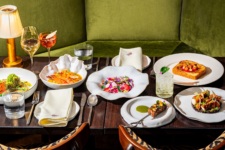
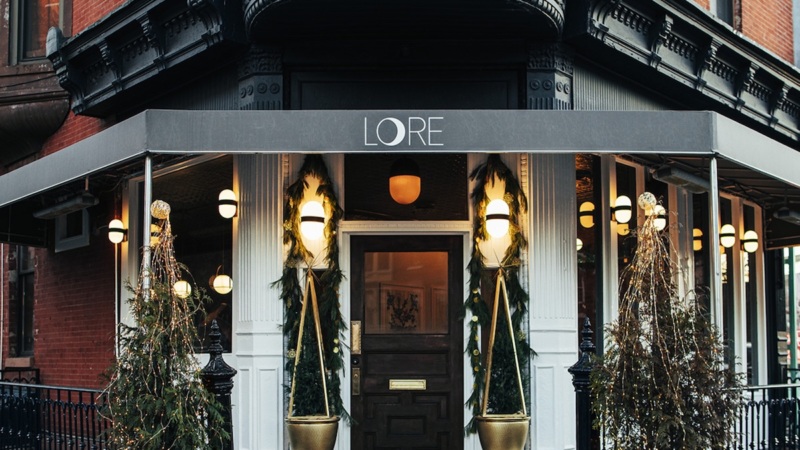
Lore is a restaurant that’s hard to categorize. There are clear Indian influences: Chef Jayesh Kumar is from Mangalore, and the dosa on the menu has been touted as one of the best in the city. But as one scans the menu beyond the dosa, the dishes travel all over the map. Currently, you will find fish and chips, sea bream ssam, ribeye steak au poivre, and duck leg confit, and at another time, there was Afghan chicken. These dishes are found across the globe, but they’re very much at home in Brooklyn, says Kumar.
Still, one will notice more than a few Indian touches, like coconut in the steak au poivre sauce that’s served with masala butter, and a lobster tail served with upma. Aside from the traditional masala dosa, all the other dishes are Indian-ish: They offer creative twists and fusion-style renditions, like mushroom uttapam with wild mushroom ragout, and a butter-less butter chicken with a sauce made from cashew cream.
Despite “fusion” becoming a dirty word in cooking, Kumar is using his eclectic background to create some of the most unique dishes in Brooklyn. Kumar moved from India to Switzerland in 1989 for hospitality and culinary school, and after landing in places like Dubai and England — and ingesting European and Continental techniques and sensibilities — he ended up back in Basel, Switzerland, where he opened three restaurants over the next 20 years.
In 2019, he met his future wife, who is from Brooklyn, and the two decided to move to New York. Lore opened on a quiet corner in Park Slope in 2021, smack in the middle of the pandemic, and quickly became a neighborhood staple. A few years later, neighborhood regulars form the backbone of the customer base, but it’s also typical to see patrons who found out about the restaurant through word of mouth, or its recent inclusion on Michelin’s Bib Gourmand list.
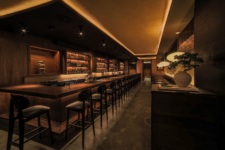
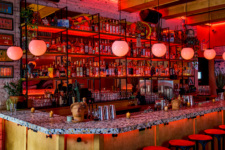
Kumar recently doubled down on the neighborhood, opening a cocktail bar called Folk around the corner. Just like Lore, many of the drinks and small plates are Indian-inflected, but the menu is global.
Here’s a closer look at Lore’s most popular dishes, beloved by regulars and considered non-negotiables for any newcomers.
More From Resy



The Resy Rundown
Lore
-
Why We Like It
Lore refuses to be put in a box. Instead, the kitchen just produces delicious, innovative, global food that can be hard to find anywhere else. There’s also a $47, three-course, prix-fixe dinner — an excellent deal. -
Essential Dishes
Fermented dosa; crispy squash; sea bream ssam; seared scallops; duck confit. Plus, the chocolate ganache cake with vivid spirulina ice cream. At brunch, don’t miss the kimchi uttapam or biscuits and gravy. -
Must-Order Drinks
Try the housemade chai. Among cocktails, The Basho, with Mars Iwai 45 Whisky, gunpowder, jaggery, bitters, and maple smoke, is a winner.
-
Who and What It’s For
Park Slope neighborhood locals; anyone looking for a casual-yet-memorable dining experience, including families, friend groups, and couples. Expect to see lots of regulars, but you’ll be welcomed equally as effusively even if it’s your first time in. -
How to Get In
Reservations drop on Resy two weeks in advance. -
Fun Fact
All of the cocktails have literary references, with each named after a (non-European, non-American) poet and a line from their work written above the description of the drink.
1. Fermented Dosa
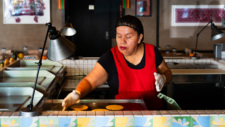
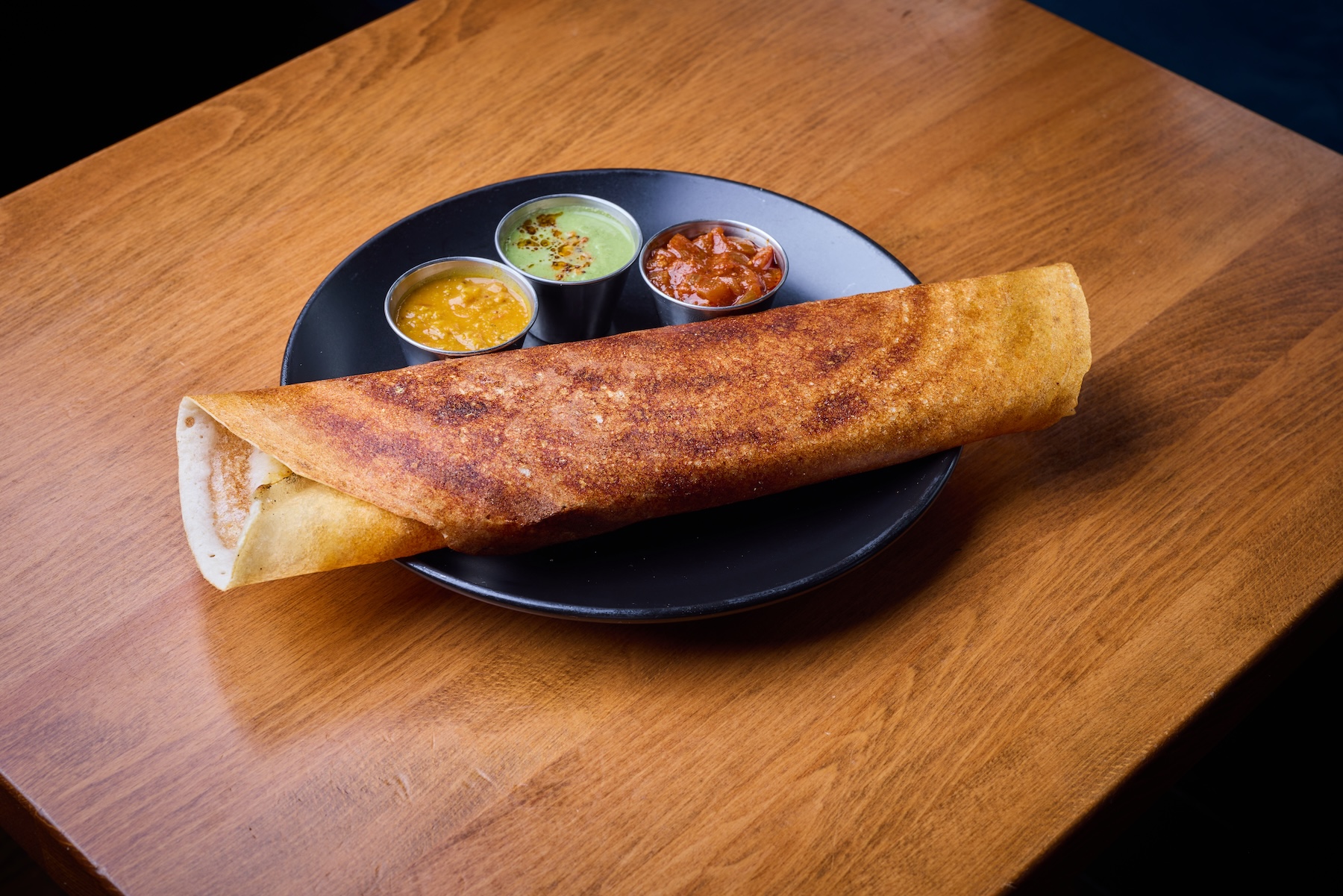
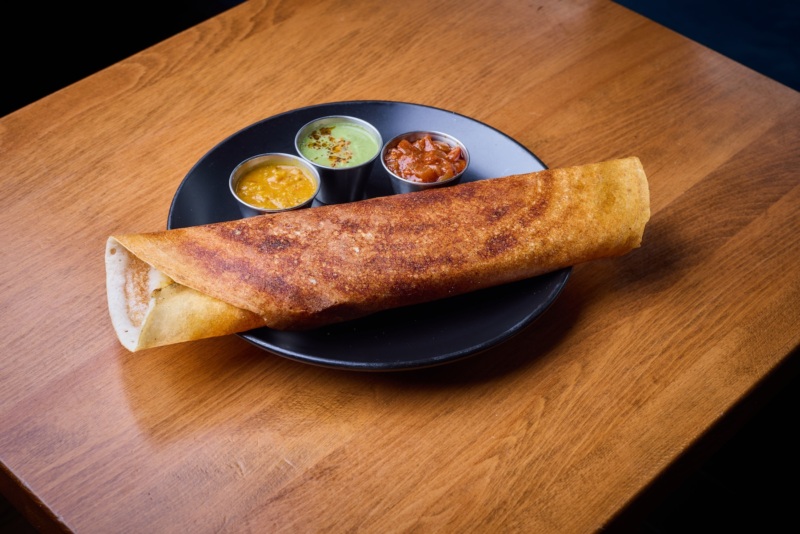
The dosa, a staple of South Indian cuisine, is filled with masala potatoes and served with a coconut and mint chutney, a tomato chutney, and sambar. It’s a sharable starter, but can also be a main, should you want it all to yourself. It’s so beloved that, this past summer, Kumar started a weekend stall at Smorgasburg in Prospect Park, called Dosa Brooklyn, where he served nothing but dosas.
Dosas were a staple of Kumar’s childhood in Mangalore.“We used to eat dosas at least four days a week with potatoes, with lentils, with sambar, with chutneys, and sometimes with the leftovers from the day before, like a fish curry. Dosa was like a carrier, and we could put in whatever we wanted.
“And I said when I started the restaurant, we need to have the dosa there, because there is no good dosa in New York, that feels like home,” says Kumar. “I’ll never take it off the menu.”
Making the dosa isn’t simple, though; it’s a three-day process. “We soak the rice, lentils, and fenugreek, and then blend it after eight hours, and then keep it for at least 24 hours for it to ferment. And that’s the reason why you have that crispy on the outside and fluffy on the inside texture.
“And, and the masala potatoes are very special, because my father used to make that. It was his recipe, and it’s also from Mangalore itself. It’s typical Mangalorian,” says Kumar.

2. Delicata Squash
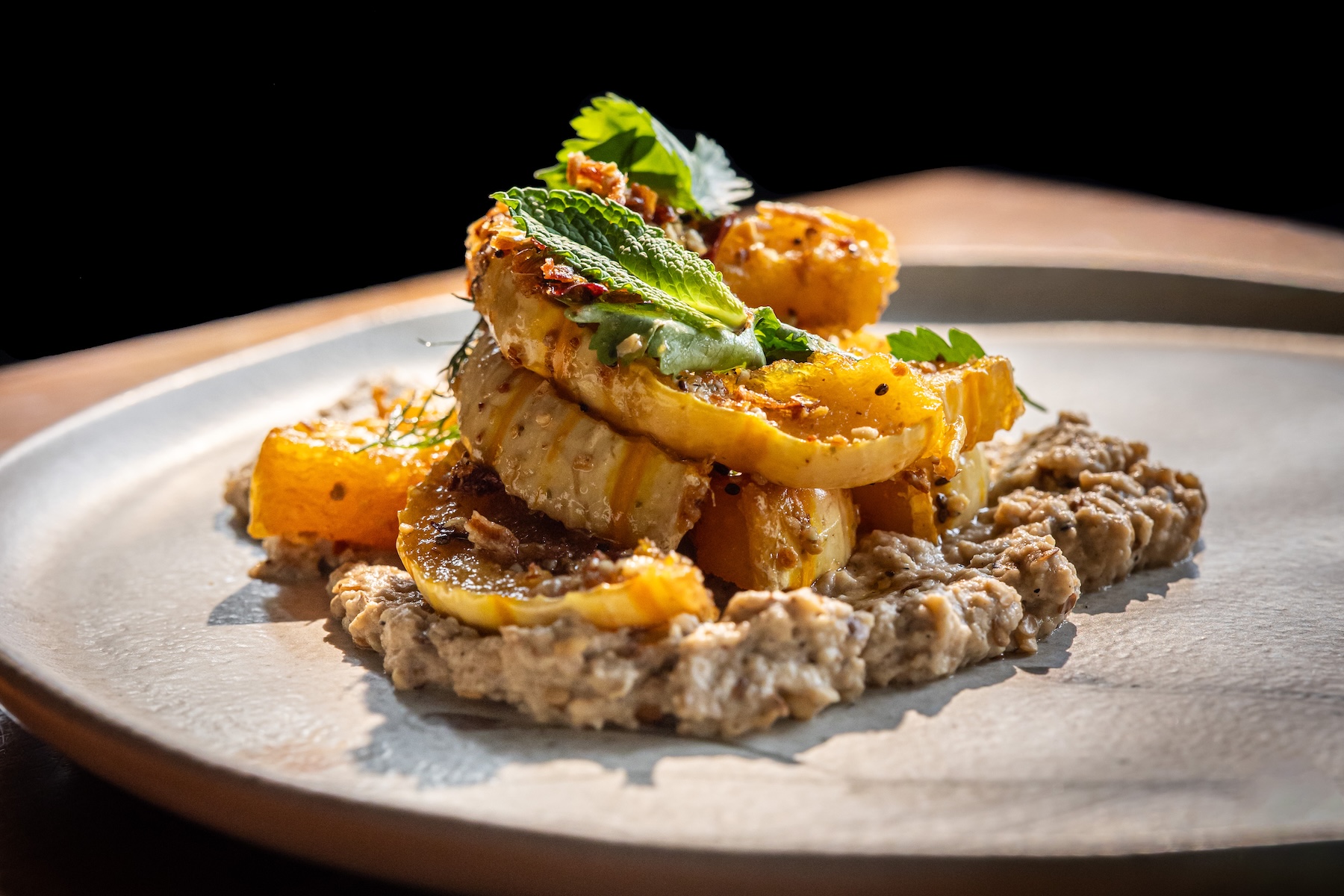
The delicata squash at Lore, another starter, is seasonal and presents crispy-on-the-outside, tender-on-the-inside squash drizzled with chile crisp and crispy squash seeds, on a bed of housemade baba ghanoush. This dish was inspired by Kumar’s wife, Daria.
“When I first met Daria, and she invited me to Brooklyn, she actually made this amazing dish with squash,” says Kumar. “I’m not a big fan of squash. And I’m like, this is so crispy, and it’s got an amazing texture inside.”
During the pandemic, the two decamped to upstate New York for a time, before they opened the restaurant. While they were there, Kumar experimented with making a squash dish, adding baba ghanoush as a base, and employing the same technique that Daria had used for the squash: season, roast, and double-fry.
3. Seared Scallops
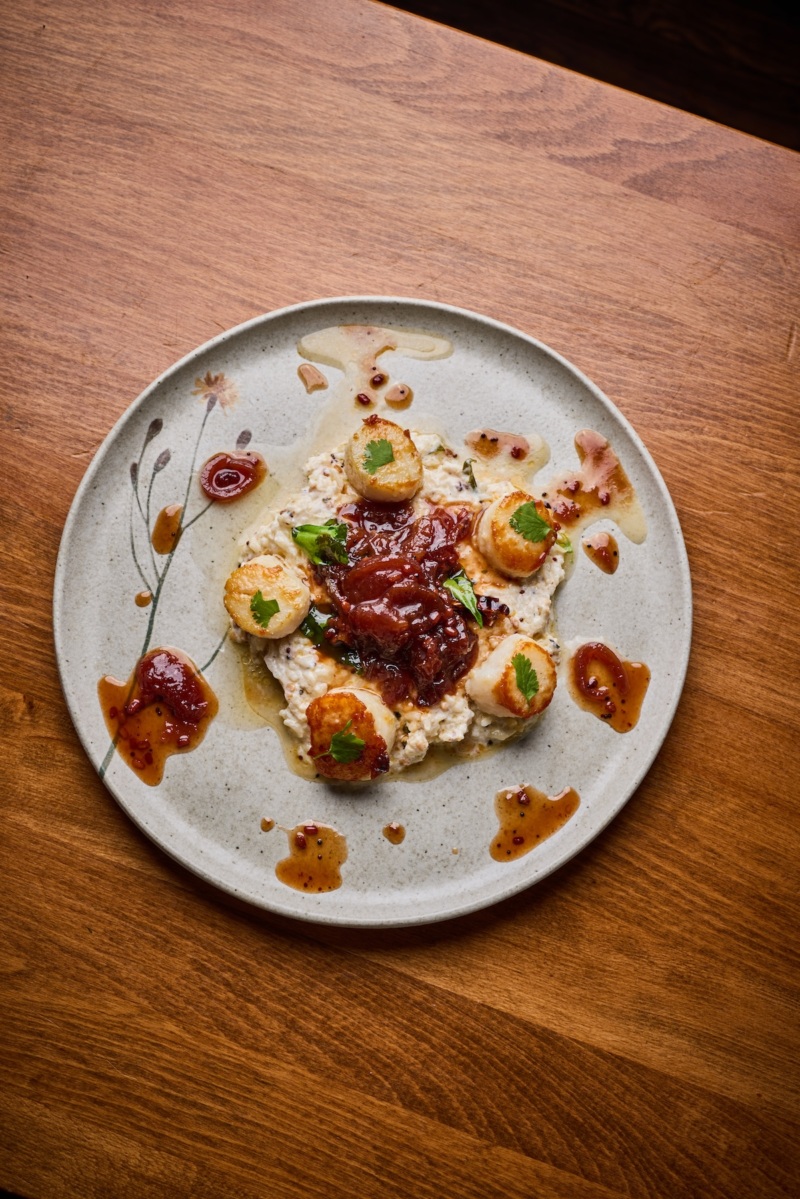
This entree sounds like an odd mix of flavors at first read: “Seared scallops with tadka-spiced yogurt rice, housemade plum chutney, curry leaves.” It’s the perfect example of Kumar taking Indian dishes from his childhood and melding them with European techniques and ingredients.
“Whatever leftover rice was there when I was growing up, my grandmother used to make a dish with it with curds — with yogurt — and we used to call it curd rice. It starts with tadka — tempered oil with lentils, mustard seed, red chiles, and some garlic and curry leaves, and that goes into the rice with yogurt and some salt. That would be served with some mango pickles or some fried fish for lunch the next day, and that was like a soul food for us.
“So I said, we’ve got to do something with this dish,” says Kumar. “One day, I got some samples from a fish purveyor; he sent us some scallops from Montauk. I marinated them with ginger-garlic oil and seared them. And then we had some plums, so I made a chutney out of the plums, and I plated it with the scallops, the plums, and the rice. And the combination was so good that I said, we’ve got to put it out there. But I wasn’t sure what people would think about it — it’s the most-selling dish right now on the menu!”
4. Sea Bream Ssam
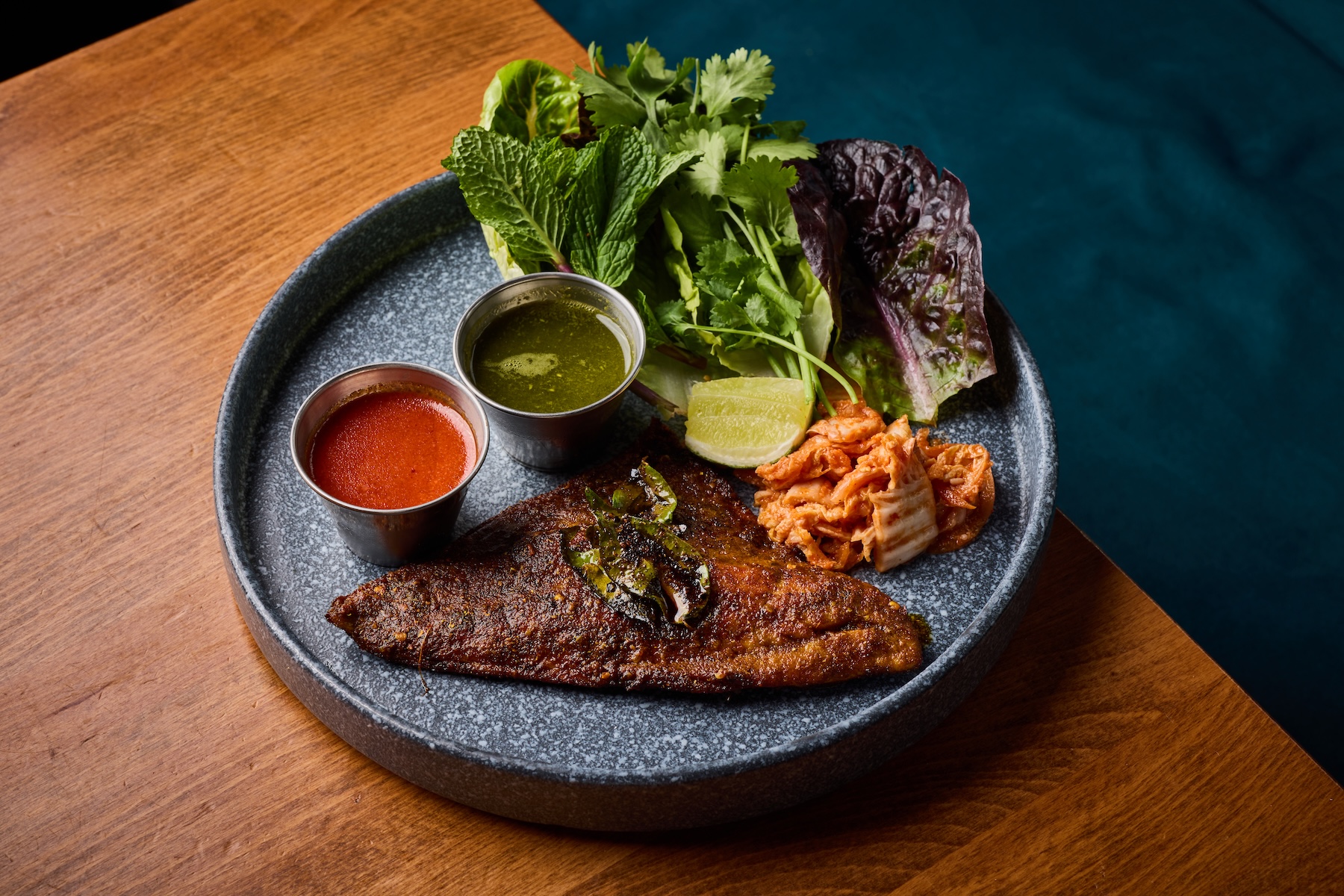
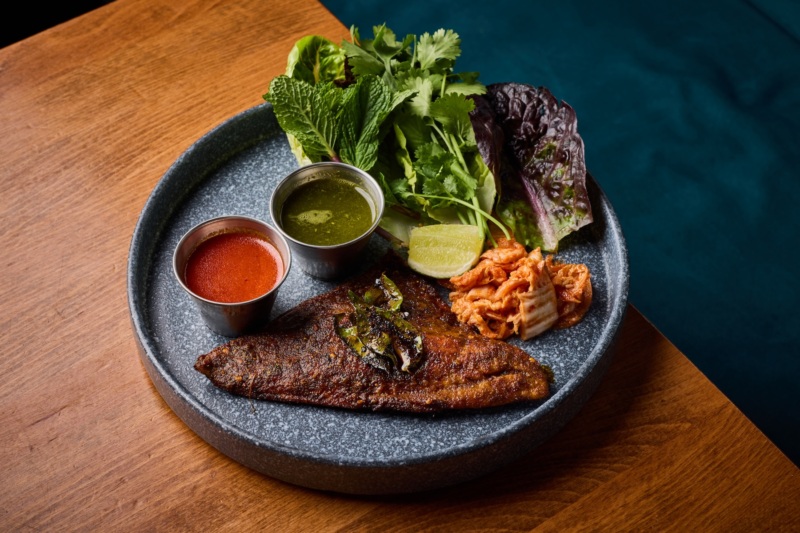
Another staple fusion dish that’s been on the menu since the beginning, the sea bream ssam has clear Korean influences, but also uses a marinade made of a Malabar (the Indian coast from Karnataka to Kerala) spice mix, including fennel, chile, garlic, ginger, and coriander.
“We marinate the fish and then we use it as a ssam, which is from a totally different area of this world — Korea,” says Kumar. “I used to love this particular restaurant in Basel, it was a Chinese restaurant, but they had this dish, which was a Korean ssam, that they made with duck breast, and they had the kimchi, and little sauces on the side, and there was a piece of lime, and there were so many herbs, and it was such a fresh dish. It was so easy to eat, and there were no frills, just a tasty dish.
“I wanted to try something, but I wanted to use some of my own ingredients — the Malabar spices — to balance the dish. It’s very light, but at the same time, you have this fulfilled feeling because of the marinade, which has so many spices. It’s very subtle, but it’s still got the kick.
The sea bream is accompanied by lettuce, kimchi, lime, and fresh herbs, with a gochujang-onion puree with white balsamic as a hot sauce, and an Indian chutney with mint, cilantro, green chile, and curry leaf.
5. Duck Confit
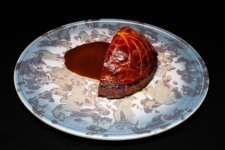
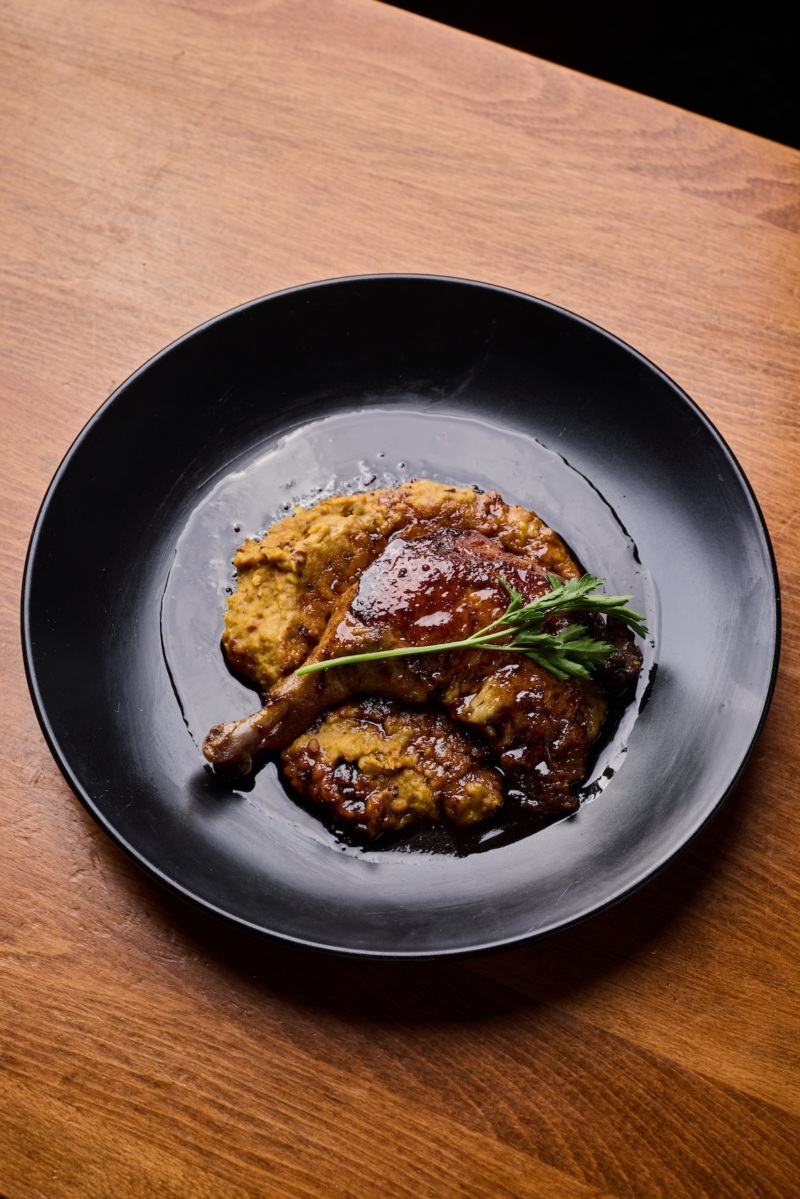
This dish was born of Kumar’s time in Basel, which nears the borders of Germany and France. He often went to a charming restaurant in Rixheim, France, that focused on the German-French cuisine of the Alsace region. One night, the chef served him a special of duck confit, and it stuck with him.
“I had had duck confit before, but this particular duck confit, he cooked it at 70 degrees Celsius, but overnight, really slow, and just let it be, and the next day, it just falls off the bone. It had this pink color inside and that brown skin. And then he had celeriac, carrot, and a puree made with these different things, and a sauce, which was from the duck bones, which he made, and it was just insane,” says Kumar. “So I asked him how he did it, and he said, a duck confit, or any confit, is cooking slow it in its own fat, but you can put whatever you want in there to get the flavors. And that stuck in my mind.”
This, of course, inspired some Indian flavors for Kumar’s version. “I used garam masala in the fat, and some ginger and cardamom, and I wanted to have some puree. I had just had cannellini beans at Café Carmellini, and I loved them. So I said, let’s use ginger, fresh turmeric, and cannellini beans, and I made a puree out of it,” says Kumar. “And then I made a sauce out of coconut aminos with some ginger, garlic, and some butter. Now, I sell about 70 duck confits in a week — which is a big deal for a 25-seat-restaurant.”
Lore is open for dinner from 6 to 10 p.m. Tuesday through Sunday, and for brunch from 11 a.m. to 2 p.m. on Saturday and Sunday.
Devorah Lev-Tov is a food, beverage, wellness, and travel journalist with bylines in The New York Times, Food & Wine, Bon Appétit, Eater, Vogue, and more. She is the author of the recent book, 150 Spas You Need to Visit Before You Die. She lives in Brooklyn with her husband and two children. Follow her dining adventures (usually at a reasonable hour) on Instagram. Follow Resy, too.