Hungry Thirsty Keeps the Flame of Thai Cooking Alive and Well in Carroll Gardens
Published:
When Ugly Baby announced that it would be closing last year, the collective outpouring of grief was immediate. Sirichai Sreparplarn opened the restaurant in 2017, back when a Thai spot without pad Thai or green curry was still a relative anomaly in the city. From day one, Sreparplarn’s menu pulled no punches with its menu of regional Thai dishes, refusing to tamp down the spice levels or intensely funky flavors of pla ra (fermented fish sauce) or sataw (stink beans). His gamble paid off and New York’s Thai dining scene is all the better for it today.
Luckily for us, Sreparplarn decided to pass the space over to two of his employees. Napat “Angie” Ruangphung and Thanatharn “Sun” Kulaptip opened Hungry Thirsty in the former Ugly Baby building in Carroll Gardens in January. Comparisons between the two restaurants are inevitable, particularly since chef Prasert “Tee” Kanghae cooked in Ugly Baby’s kitchen for the final month. And regulars will be relieved to see versions of a few Ugly Baby stalwarts on the menu, such as the kang som khoong (sour southern Thai-style curry with prawns), panang beef shank, and khoong muk kai kem (shrimp, squid, and salted duck egg).
Hungry Thirsty is its own entity, but it embraces Ugly Baby’s uncompromising ethos. Absolutely everything is made from scratch and served more or less the way it would be in its home region. “Our purpose is really to serve home-cooked Thai street food. We make all of our own curry pastes,” Ruangphung says. “This is the kind of food that we would eat as a family. It’s the kind of thing your grandma would cook for everyone.”
Here are seven of the dishes Ruangphung thinks you should order at Hungry Thirsty.
The Resy Rundown
Hungry Thirsty
-
Why We Like It
Unpretentious and welcoming, Hungry Thirsty is all about Thai dishes executed with a lot of love. Come here for street food stalwarts like pad krapow, or for regional specialties that are tough to find in New York. -
Essential Dishes
Order the crowd-pleasing pla tod nam pla, along with the khoong muk kai kem for diners nostalgic for Ugly Baby. Chef Kanghae hails from Trang originally, so the southern-style curries are a strong suit. -
Must-Order Drinks
Craft beers, including offerings from New York heavy hitters like Talea Beer Co. and Grimm Artisan Ales, and the Sawasdee IPA from Thai craft brewer Pheebok.
-
Who It’s For
Homesick Thai expats and anyone unfazed by chile heat should visit for a great casual dinner or low-key date-night. -
How to Get In
Reservations drop 15 days in advance at noon. -
Pro Tip
While a solo diner could easily polish off the pad krapow for dinner, in true Thai fashion, most of the dishes here are designed to be shared. Bring a group of friends to try as much of the menu as possible.
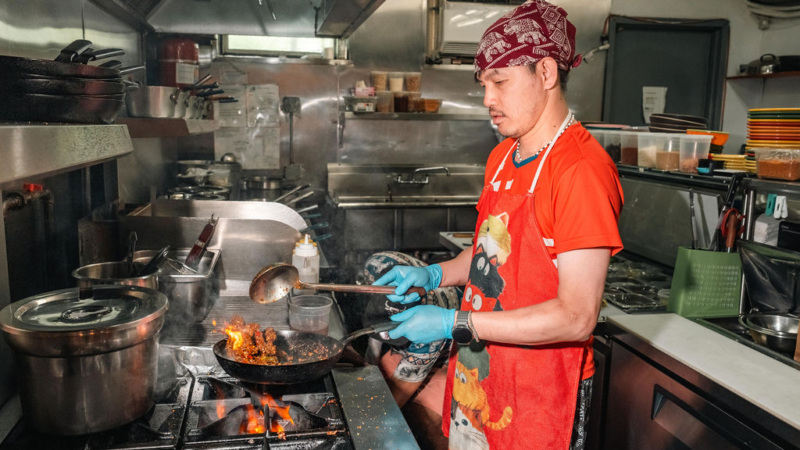
Photo by Ben Hon for Resy
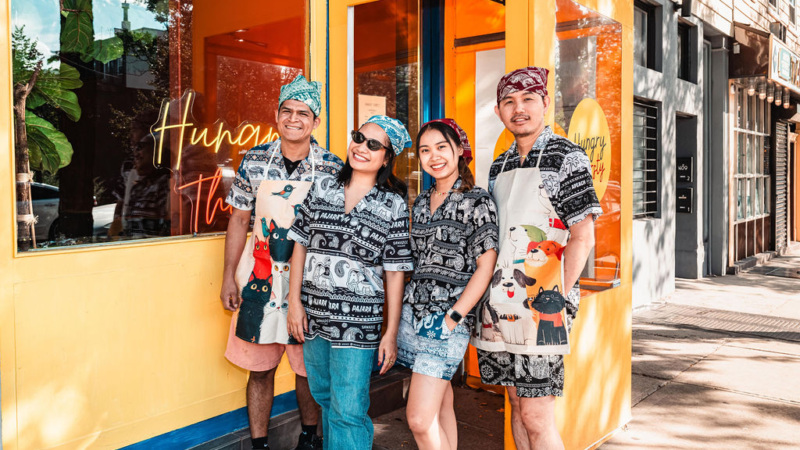
Photo by Ben Hon for Resy

Photo by Ben Hon for Resy
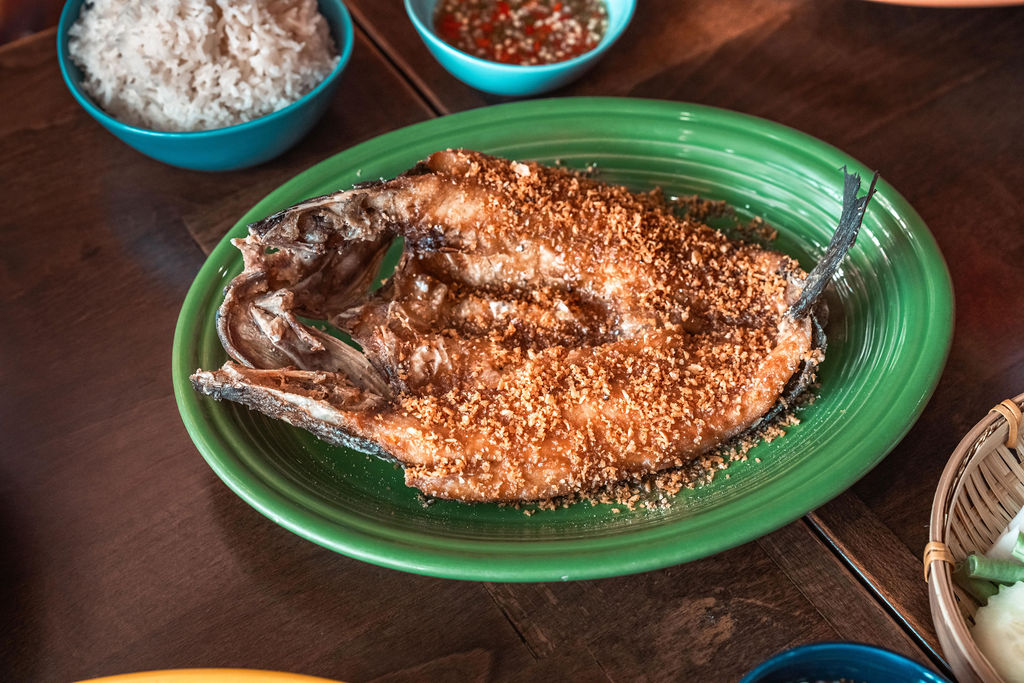
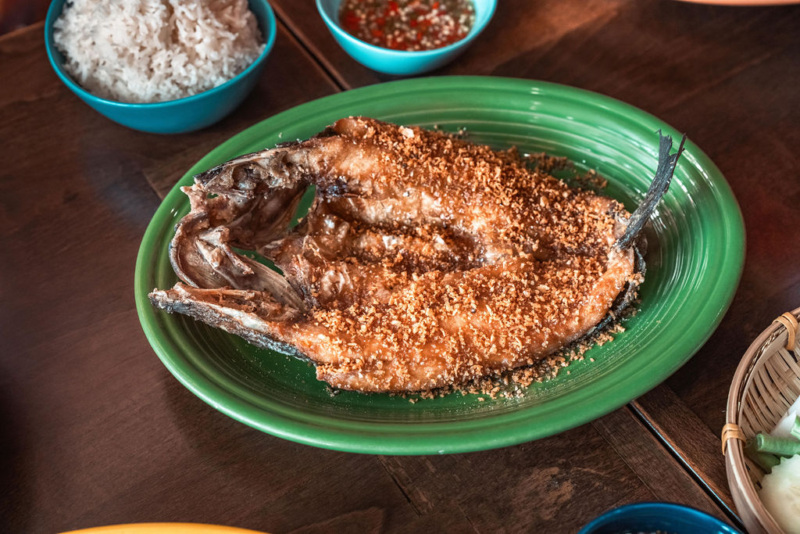
1. Pla Tod Nam Pla
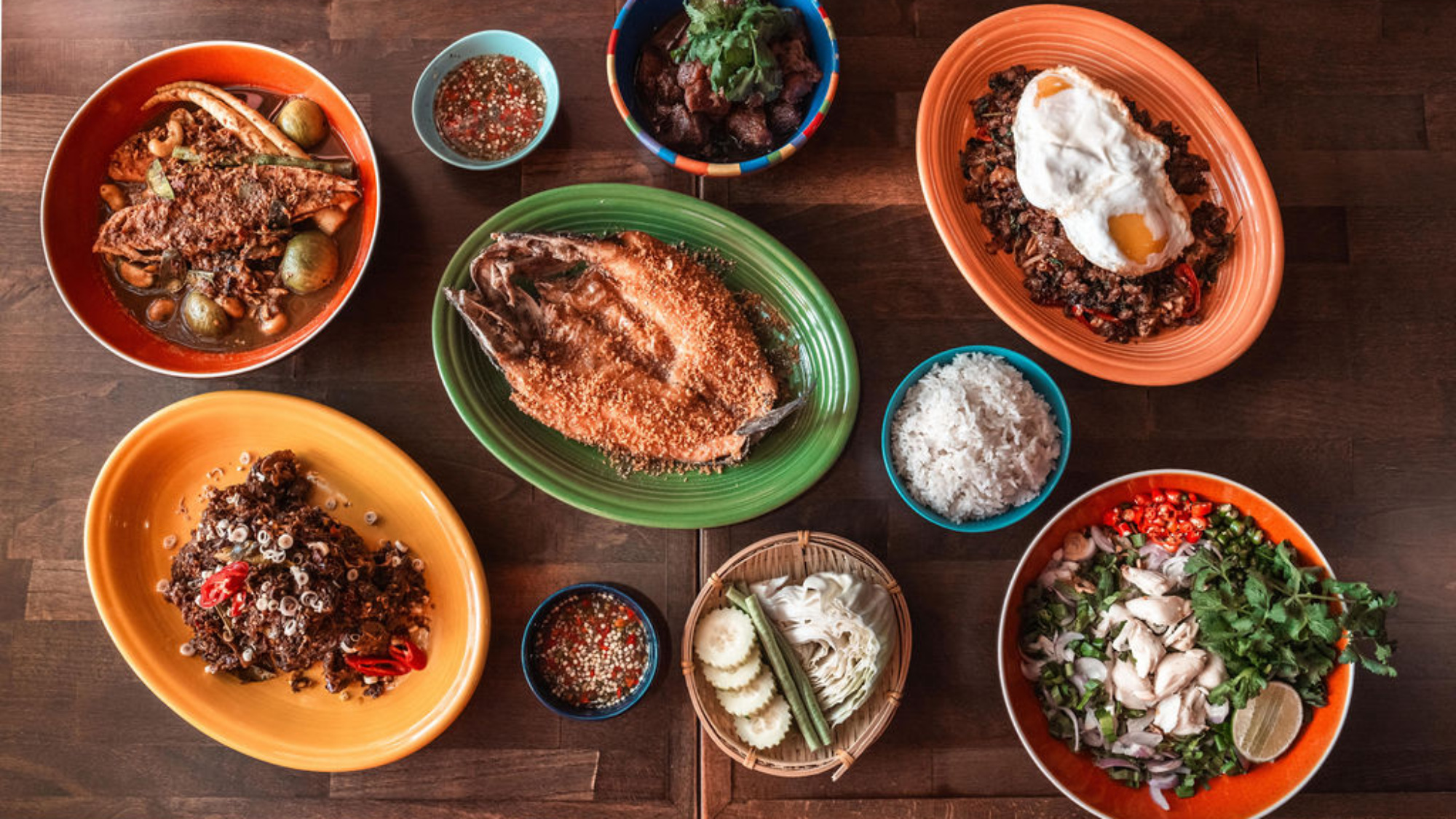
Order the whole fried branzino and don’t be surprised if the table next to you follows suit. “I would say this is our best-seller,” Ruangphung says with pride. “It’s just really good. There are some nights when I’ll see it on almost every table.”
Aside from the fact that it’s a visual showstopper, the pla tod nam pla packs in waves of flavor. The whole butterflied fish is fried until it develops a brittle, audibly crunchy crust, then is showered in crispy fried garlic. Nom pla, a slightly sweet, fish sauce-based dipping sauce with bird’s eye chiles, rounds it all out.
2. Pad Krapow
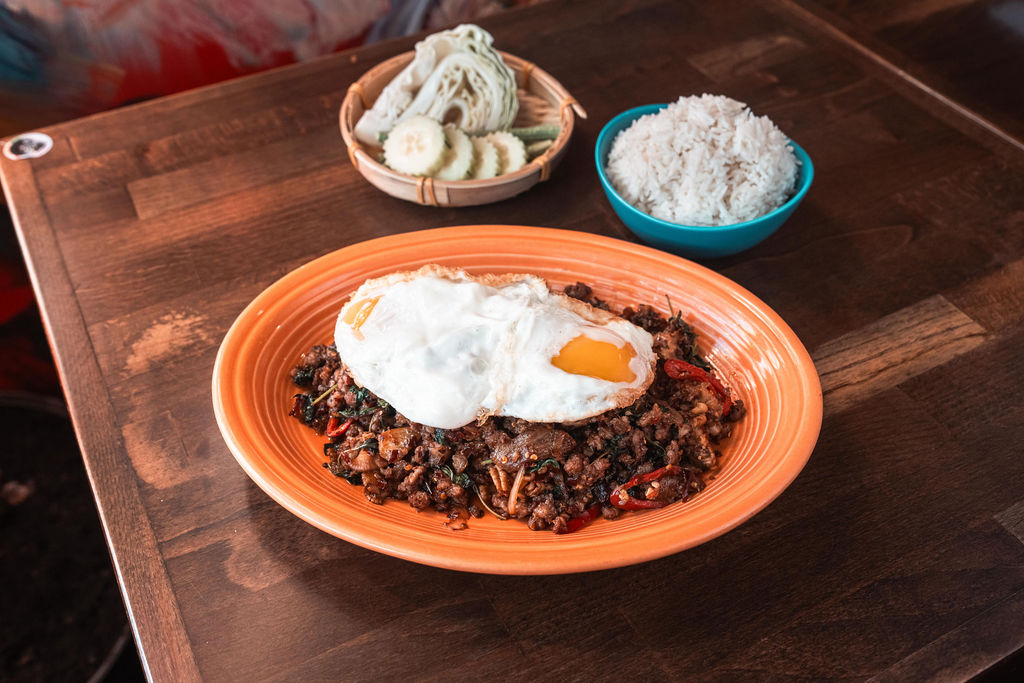
Pad krapow moo, or stir-fried pork with holy basil, ranks high in the pantheon of Thai comfort foods. In Bangkok, you’ll find pad krapow everywhere, from fancy restaurants and 7-Elevens to the coal-fired woks of street hawkers. It’s the ultimate on-the-go breakfast, office lunch, or quick, nourishing dinner.
While pad krapow is hardly unknown in the United States, according to Ruangphung, it’s not always made correctly here. Although it’s an improvisational dish by nature — chicken, beef, tofu, or seafood can all stand in for the moo (pork) — one ingredient is non-negotiable: krapow, or holy basil.
“A lot of cooks here use regular basil instead of holy basil,” Ruangphung says. Ocimum tenuiflorum, known as tulsi in India, bears little resemblance to basil or even what’s sold as “Thai basil” in the U.S. The flavor is kickier, almost peppery, with a hint of cloves and licorice. “[Holy basil] can be hard to find on the market and it’s really expensive, but we only use that one to keep it authentic.”
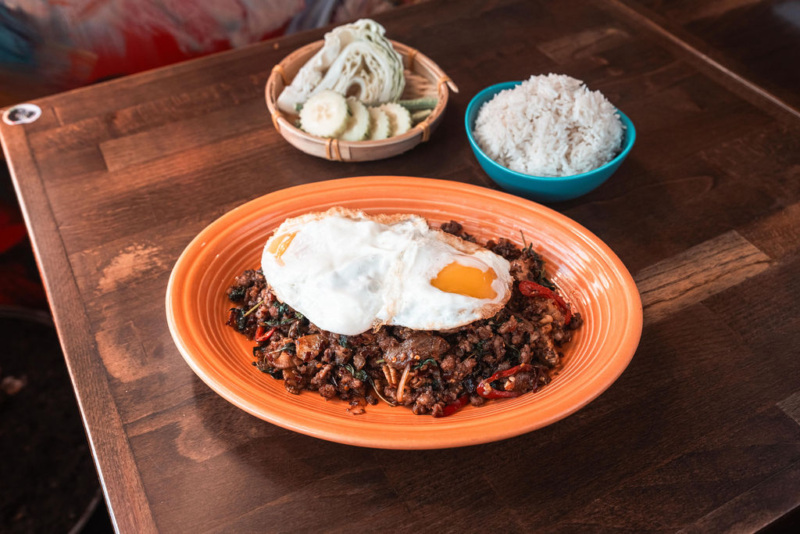
In keeping with that spirit, Hungry Thirsty’s pad krapow includes a powerful hit of bird’s eye chiles. Two shallow-fried eggs — cooked in mere seconds in shimmering oil until the edges are crisp and the yolks molten — grace the top. The pro move here is to smash the yolks into the pork, emulsifying them into a sauce.
3. Kua Kling
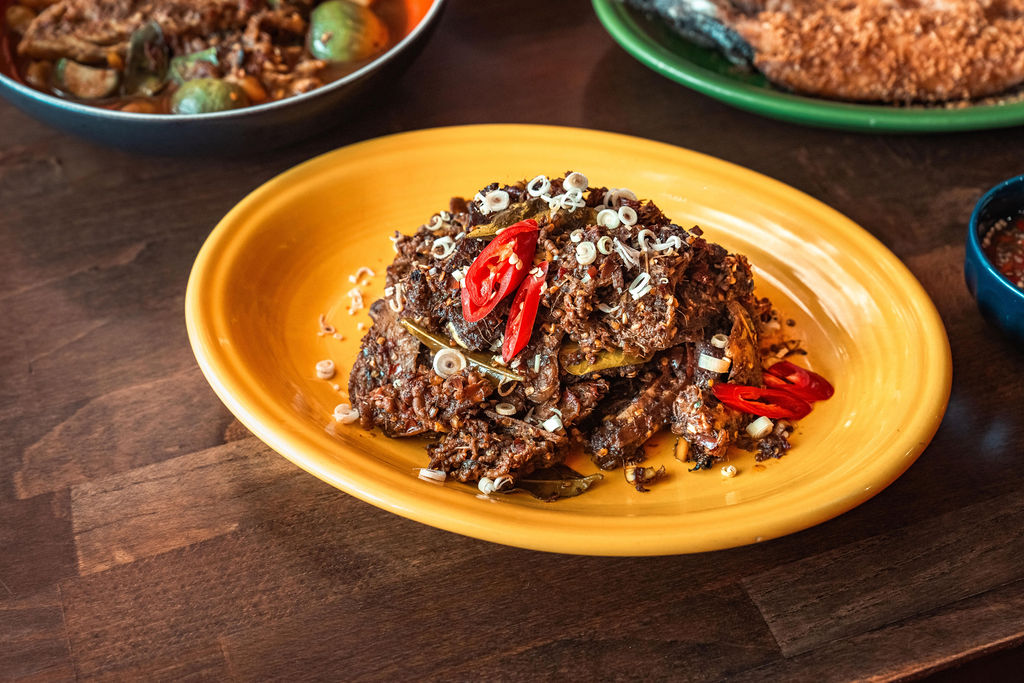
Fearless diners should try this “brutally spicy” southern Thai specialty. Kua kling is essentially a dry curry, in which a fragrant curry paste is stir-fried rather than simmered. As the fat from the meat renders, it helps fry the spices, releasing their aromatic oils. “This is for the ones who like it burning hot,” Ruangphung says. “It’s the spiciest dish we have on the menu so far. A lot of people come here just to try it.”
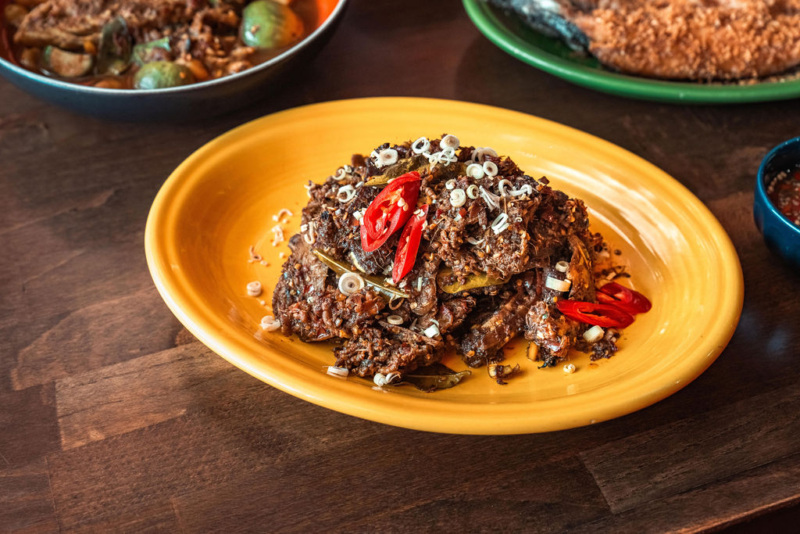
As with pad krapow, the seasonings are what define kua kling rather than the protein. Although it’s most commonly made with pork, southern Thailand’s large Thai-Muslim population opts for beef. At Hungry Thirsty, the meat of choice is thinly sliced beef short ribs, which brilliantly soak up the flavors of makrut lime leaves, young green peppercorns, lemongrass, and, of course, lots and lots of chiles.
4. Khao Ka-yum Pu
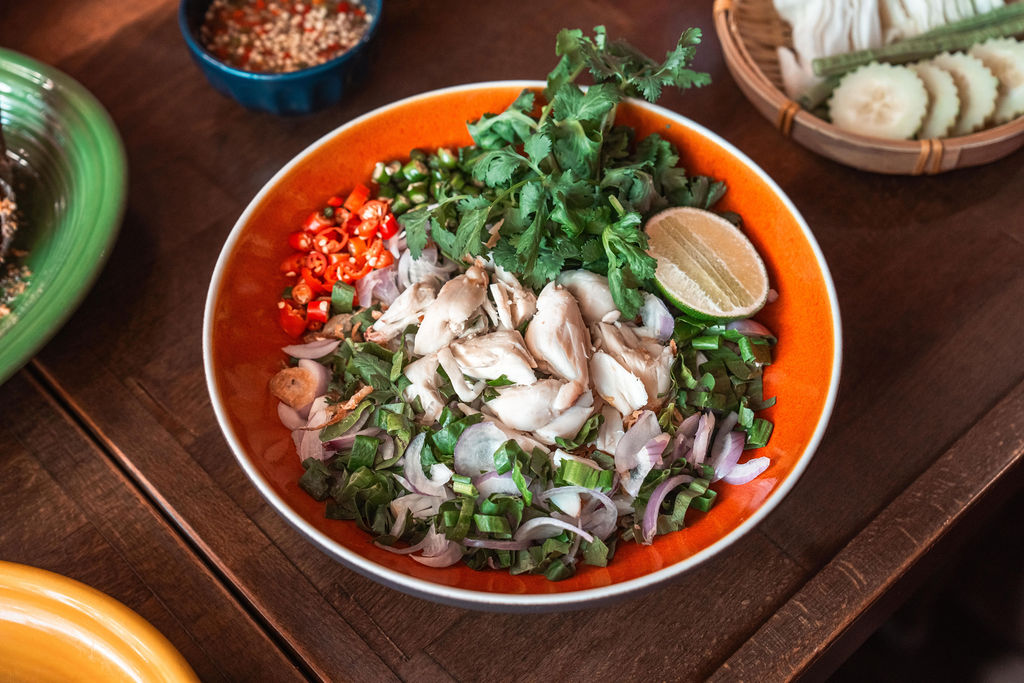
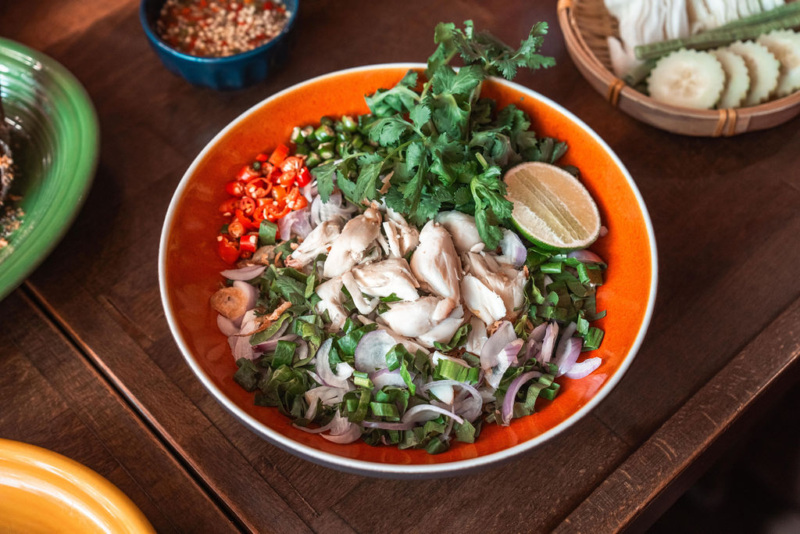
Another of Ruangphung’s favorite dishes hails from Rayong, a sleepy coastal fishing region a few hours from the Thai capital. Khao yum, or rice salad, is one of those dishes that’s greater than the sum of its parts. These carefully composed salads, which have Malay influences, often consist of a half-dozen or more ingredients artfully prepared and arranged on the plate.
Hungry Thirsty’s khao ka-yum pu is topped with a hefty portion of crab, plus fried garlic, cilantro, raw onions, and a formidable number of minced red and green bird’s eye chiles. Squeeze a lime over it all, then gently toss it all together to marry the flavors. According to Ruangphung, this dish is particularly popular during the warmer months and tends to sell out.
5. Kang Tai Pla
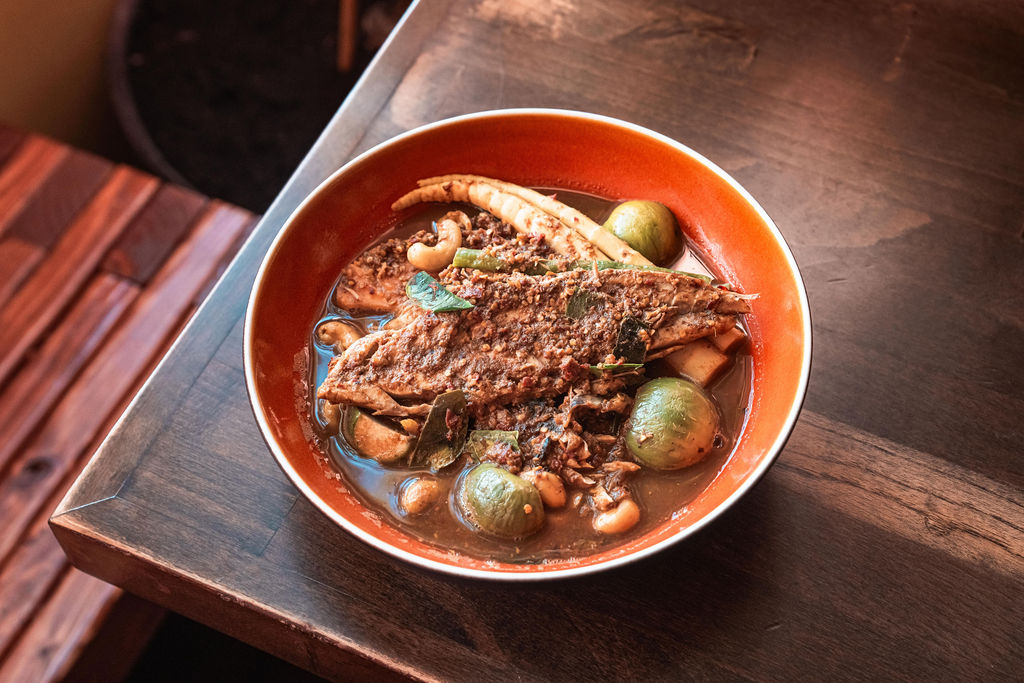
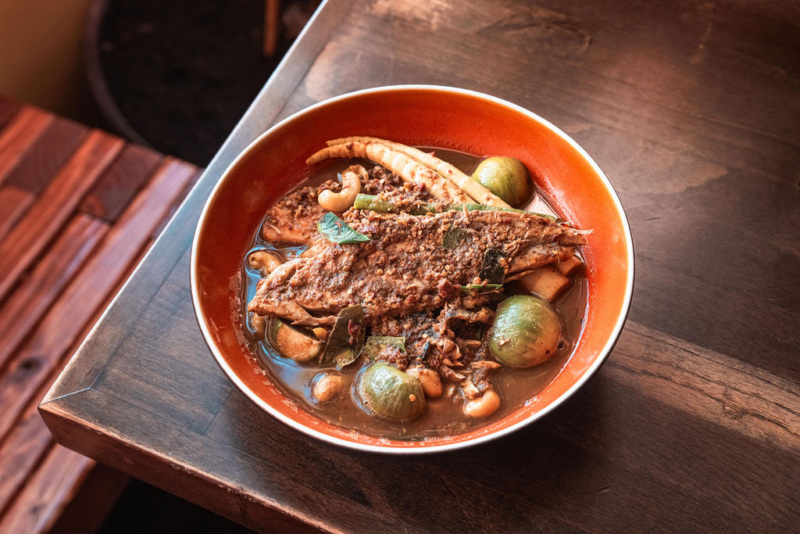
Kang tai pla, or fermented fish curry, is a deep cut that Ruangphung says can even be divisive in Thailand. “Not all Thai people like this one,” she says. In fact, just last year Thais were irked to learn that the website TasteAtlas ranked it as the “worst rated food in the world.” Undaunted, Ugly Baby put kang tai pla on their menu a few months later, gleefully dubbing it “World’s Worst Food, Our Favorite.”
“It’s really spicy and really fishy,” Ruangphung says. “But if you love it, you really love it, and we wanted to bring it here so that people have the opportunity to try it.”
Fermented fish entrails, or tai pla, are what give this curry its powerful funk. The fact that it’s traditionally made with an oily fish — snakehead or catfish in its native country, mackerel here —adds to the already potent flavor profile. Like kang som khoong, there’s no coconut milk in the thin, bracingly spicy soup.
6. Moo Waan
At a certain point in the meal at Hungry Thirsty, there’s an excellent chance your taste buds may be begging for mercy from all the bird’s eyes. Thankfully, not everything here packs the capsicum punch of, say, the kua kling.
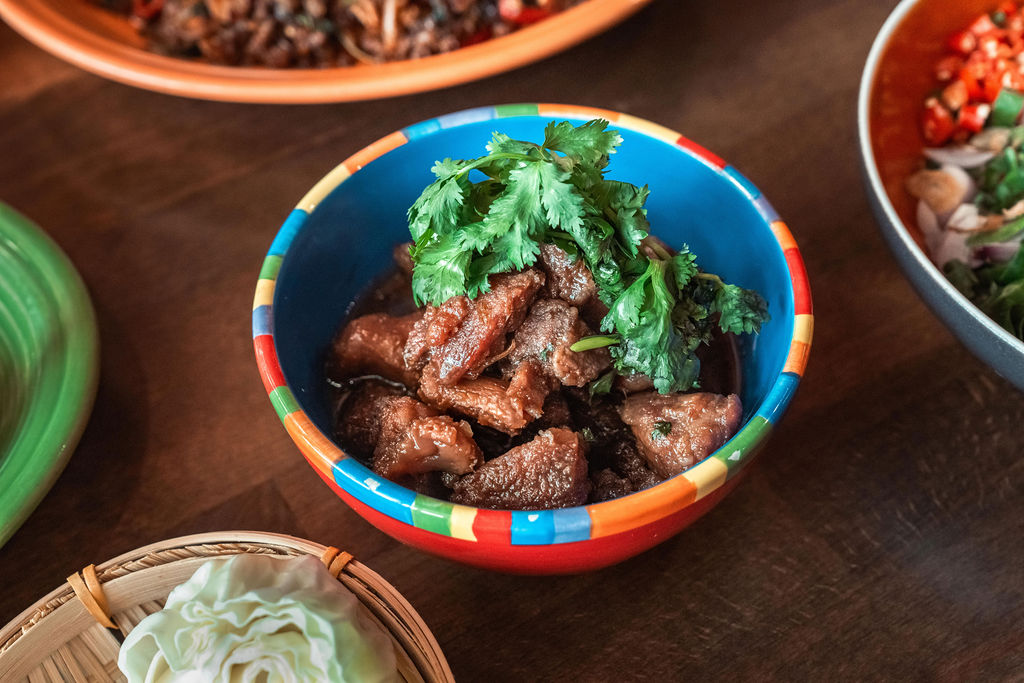
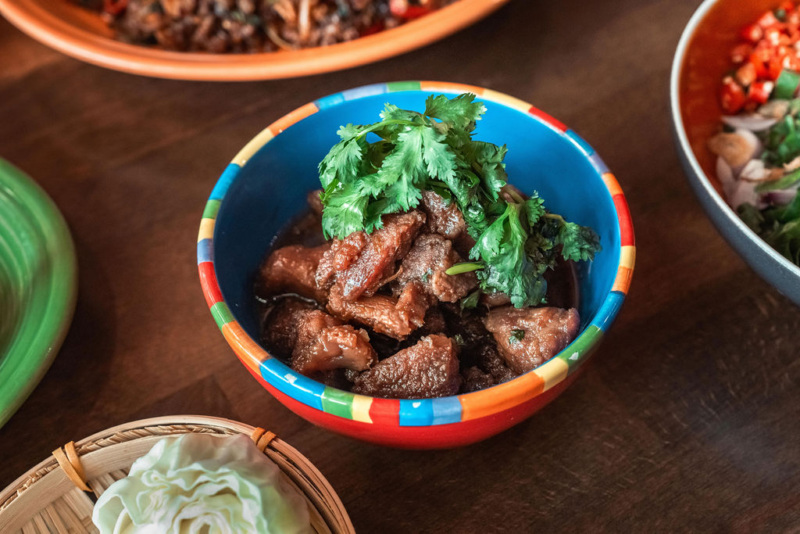
When diners want a break from the Scoville-topping curries, Ruangphung points them in the direction of moo waan, or caramelized pork shoulder. “It’s going to help,” she says with a laugh. “We put it on the menu because so much of our food is spicy, but the caramelized pork is going to heal everything.”
To make it, the kitchen slow braises pork shoulder with palm sugar, soy sauce, garlic, and other seasonings for up to four hours, or until the meat is tender and sports a glistening sheen. Sweet, saucy, and decidedly rich, it’s superb comfort fare.
7. Nam Ngiao (Seasonal)
Khao soi, northern Thailand’s famed dish of egg noodles swimming in a coconut curry broth topped with fried noodles, has become almost as common on New York menus as pad Thai. While it’s indeed beloved, it’s hardly the only noodle dish popular in Chiang Mai and Chiang Rai.
Nam ngiao is a complex curry usually served with khanom jeen (fermented rice vermicelli) or other rice noodles. Northern Thailand’s cuisine overlaps heavily with that of neighboring Myanmar and Laos, and this dish is no exception; these noodles have their roots in the Burmese Shan State.
“A lot of people know khao soi from Chiang Mai, but not that many people know about nam ngiao and we want them to try it,” Ruangphung says. The dish is a study in contrasting textures. There’s fermented soybean paste for umami, custardy cubes of pork blood for an intensely savory note, then beansprouts, tomatoes, and cilantro for brightness. Pickled mustard greens help cut through the richness, while pork rinds add serious crunch.
Hungry Thirsty’s version also incorporates spareribs and chicken feet, plus a few ingredients seldom seen on American Thai menus, such as dried red cotton flowers. “The key is to mix it all together, so you get everything in one bite,” Ruangphung says. “It’s very unique.”
The dish isn’t available on the current menu, but Ruangphung promises, “We’ll definitely bring nam ngiao back in the future.”
Hungry Thirsty is open for dinner Thursday to Monday from 5 to 9 p.m.
Diana Hubbell is a James Beard Award-winning food and travel journalist whose work has appeared in The Washington Post, The Guardian, Atlas Obscura, VICE, Eater, Condé Nast Traveler, Esquire, WIRED, and Travel + Leisure, among other places. Previously based in Berlin and Bangkok, she currently lives in Greenpoint, Brooklyn. Follow her on Instagram.
Ben Hon is a New York-based photographer. Follow him on Instagram. Follow Resy, too.