Stone & Soil Is Not Your Typical Japanese Cocktail Bar
Published:
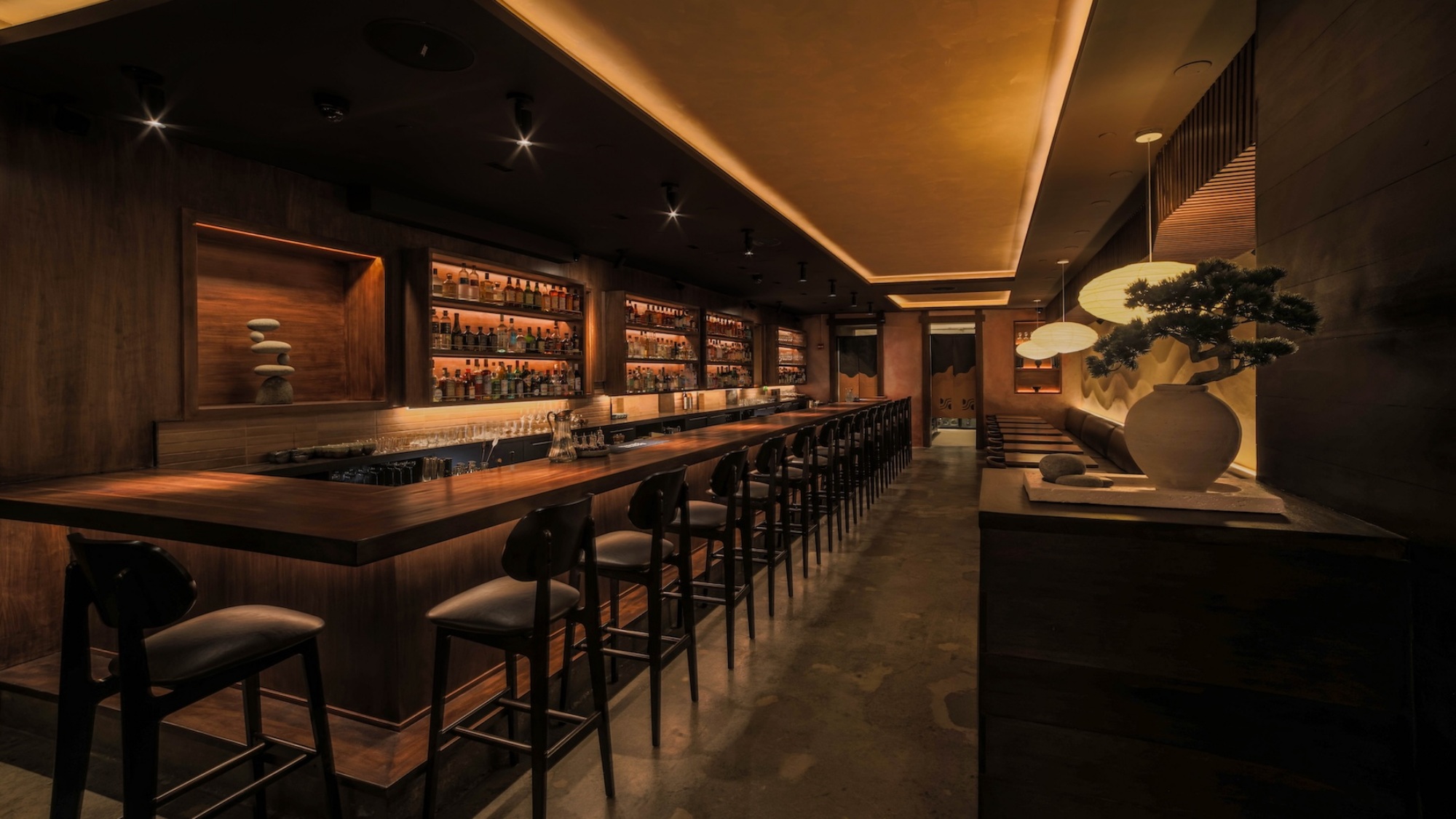
It’s easy to walk right past Stone & Soil. Located on an otherwise unremarkable stretch of East 28th St. on the edge of Lexington, set back from the street, the venue’s almost rustic exterior might be mistaken for a garden design shop, or possibly a spa.
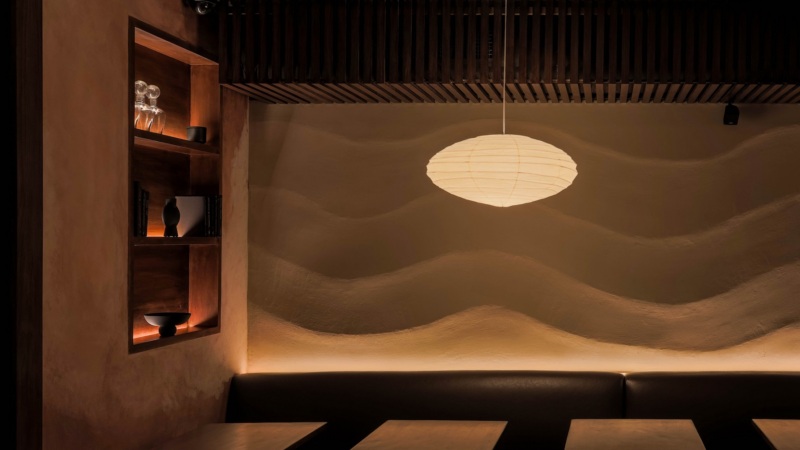
“We wanted to make it like a small Kyoto village house,” says creative director and partner Rio Azmee. “You turn around and say, this doesn’t look like New York. We want people to have their own interpretation of what it is.”
Stone & Soil opened on Feb. 3 within the Park South Hotel, although it has a separate entrance from the hotel and isn’t intended as a hotel bar. It’s helmed by Azmee and Hirotomo Akutsu as beverage director and partner (both formerly with New York’s Bar Moga), along with Kanvar Singh, founder and CEO of KS Hospitality Group (which oversees food and beverage concepts within the Park South Hotel), and Jimmy Rizvi, co-founder of Bungalow and GupShup.
The small space seats 50 — 16 at the bar, 22 at a handful of tables, and 12 in a communal living room-like space up front — and centers Japanese-style bartending, minimalism, and sustainability. That extends to both the design and the menus — many ingredients are upcycled, such as a creamy spread made from sake lees and a fermented drink that uses the skin and leaves of a pineapple after its flesh has been juiced. Meanwhile, the interior references “Japandi” design (Japanese minimalism meets Scandinavian functionality) and uses recycled leather and wood.
We talked with creative director Rio Azmee about three drinks and two dishes not to miss at Stone & Soil.
Must be 21 years of age or older to consume alcoholic beverages. Please drink responsibly.
The Resy Rundown
Stone & Soil
-
Why We Like It
It’s chill and serene, with attentive (but not overbearing) hospitality and a menu of sustainable drinks and small dishes that feel fancier than typical bar snacks. -
Must Order Drinks
Try the Black Boulevardier topped with an elaborate dehydrated fig tuile; the pungent, dirty martini-style Daikon + Dashi; or the Pink Tango, a sustainable, Paloma-like drink that takes seven days to create. -
Essential Dishes
Small dishes include cheese-stuffed “Jenga fries,” stacked like the namesake game tiles and meant for dipping; koji-fermented wagyu steak; creamy lemon-sake lees; and the lobster “oyster,” which looks like an oyster but is actually a “shell” made from crisped black rice and squid ink, filled with lobster and tarragon.
-
Who and What It’s For
Bar-goers seeking a little peace and quiet, aficionados of Japanese-style bartending, and first dates where you both actually want to talk will love it here. While the bar is technically within the Park South Hotel, it’s not affiliated with the hotel and can’t be accessed from the hotel — in other words, this isn’t a hotel bar. -
How to Get In
Reservations drop on Resy three weeks in advance, and about a quarter of the seating is held for walk-ins. -
Fun Fact
The bar’s ice is sourced from Kuramoto, one of the oldest ice-making companies in Japan. The ice is custom-made to fit in the bar’s handmade glassware from Kimura, another Japanese company. The bar also hand-carves 300 ice diamonds daily, used to chill cocktails as well as neat spirits pours.
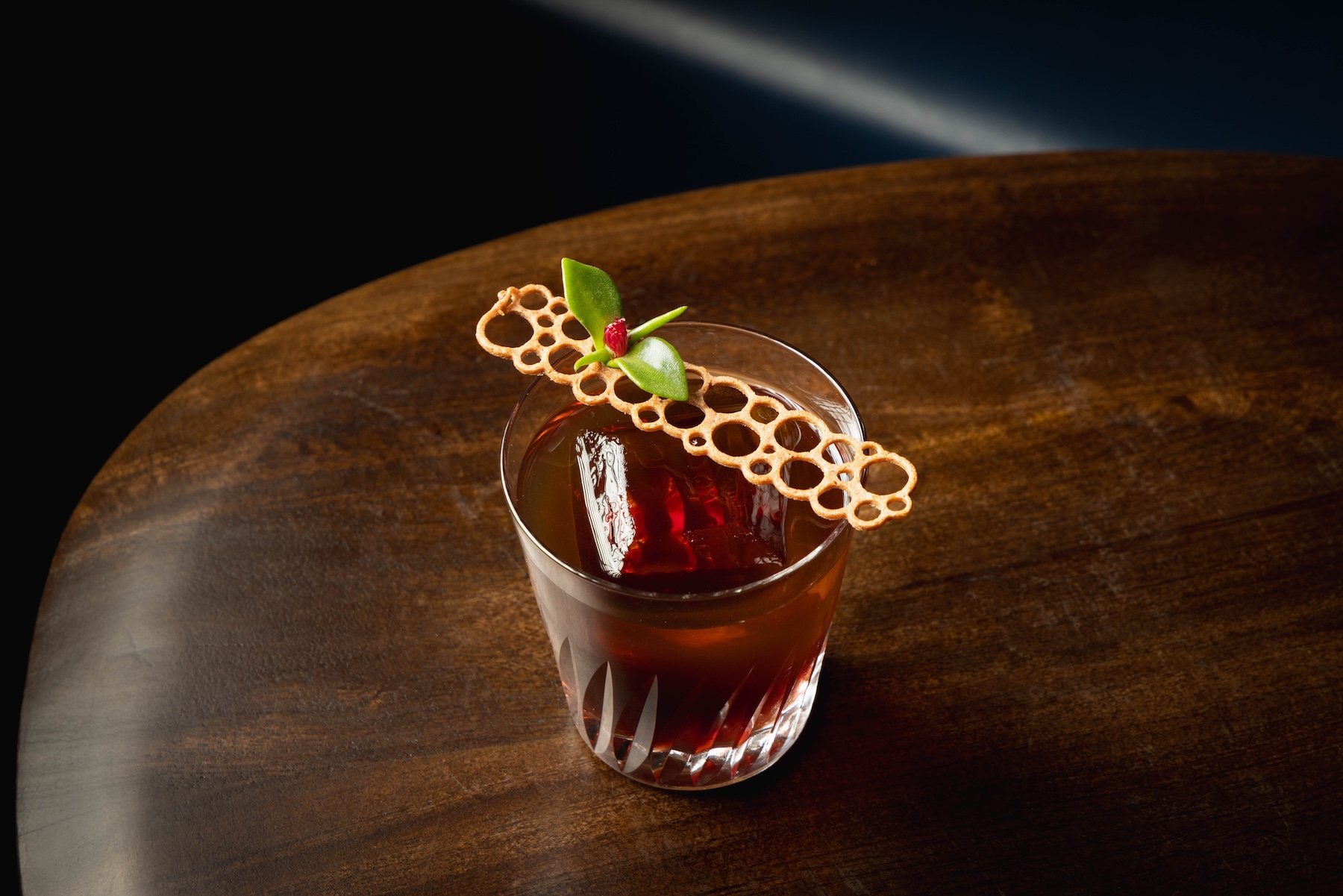
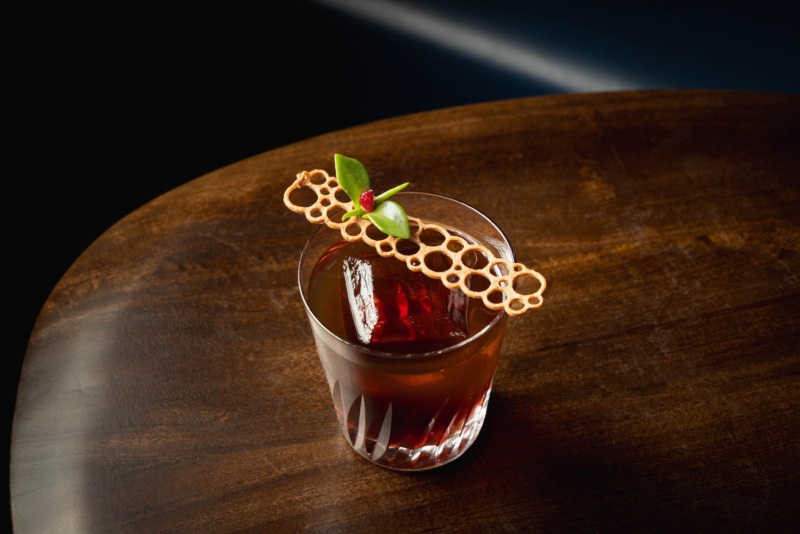
1. Black Boulevardier
Visually, this drink is a showstopper, overlaid with a dehydrated fig tuile and Nordic “ice flower” that’s not just for show.
“We don’t believe in unnecessary garnish,” says Azmee. “Anything we put in a glass is supposed to be consumed by the customer.”
This boulevardier starts with bourbon, infused with raw figs and spices for 48 hours, plus Gran Classico, Cynar, and sherry. Once strained from the bourbon, the figs are dehydrated to concentrate the remaining flavors, then mixed with sugar and flour to create a paste, which is spread into a mold to turn it into a lacy, cookie-like tuile. The edible “ice flower” adds the finishing touch, and has a savory, slightly salty flavor.
“We recommend people take a bite of the ice flower for salinity and savory flavor, then the tuile for sweetness, then sip from the cocktail for bittersweet,” Azmee says. “Then, with all three flavors in your mouth, that’s the first sip we want you to have.”
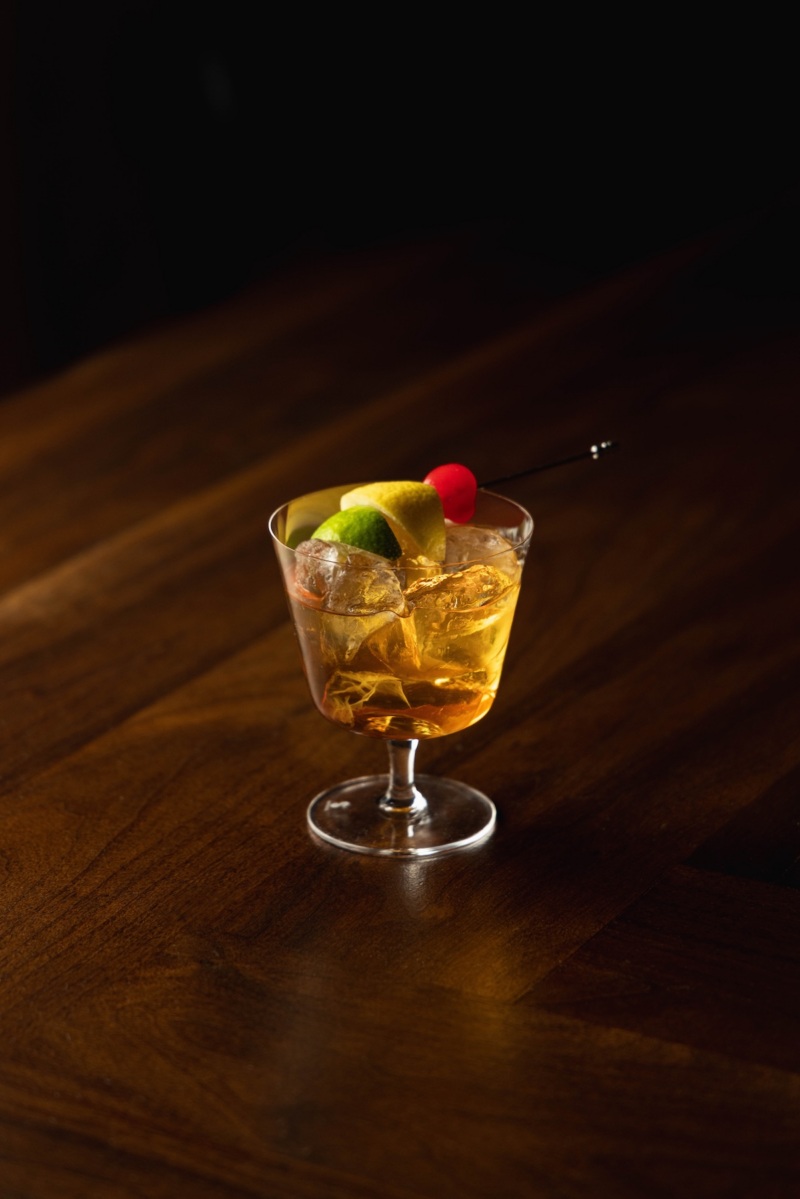
2. Rum It Up
The prep for this tropical-leaning milk punch goes hand-in-hand with the Pink Tango (more on that below). After pineapples are juiced for the Rum It Up, the leftover skins and leaves are set aside. Then, the fresh juice is mixed with Planteray rum, kokuto (a brown sugar from Japan), sherry, and Savoia, an orange-y Italian aperitif, plus coconut cream and coconut milk. Lime juice is added to help curdle the milk, so the solids can be strained away, leaving a clear, silky crowd-pleaser that Azmee describes as “a hybrid between a piña colada and a sherry cobbler.”
3. Pink Tango
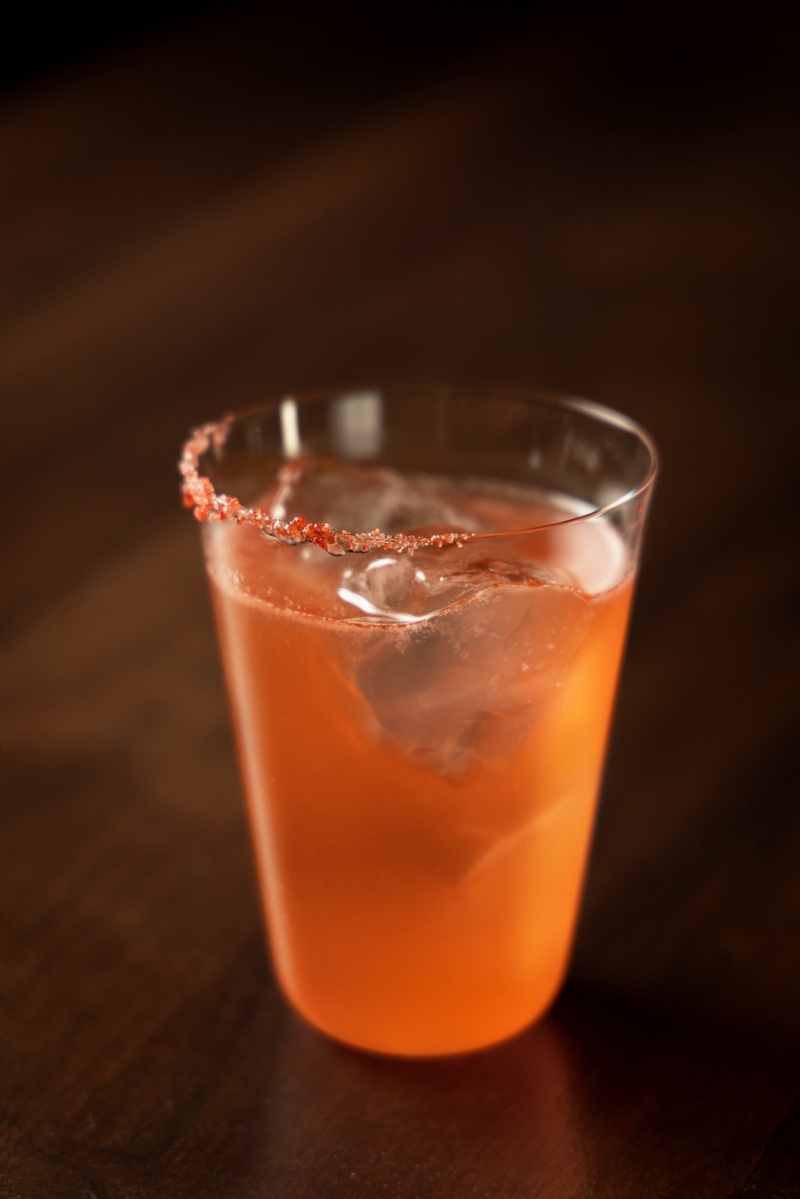
“The Pink Tango takes seven days to create,” Azmee explains. It starts with a pineapple, which is juiced and used for the Rum It Up cocktail (see previous drink). Once the flesh is removed, the rest of the fruit — including the skin and leaves — are carefully washed and sanitized, then fermented with koji.
“It’s a hybrid between Japanese and Mexican fermentation techniques,” he says. After a three-day fermentation period with koji, and a 24-hour rest period, the ferment is mixed with water and spice, akin to Mexico’s tepache, and allowed to ferment a further three days. The end result is “a little sweet and spicy.”
Mixed with mezcal, Campari, and lime, the drink is topped up with pink grapefruit soda, akin to a pineapple Paloma. The finishing touch is a Campari “rock candy rim,” with sugar and salt. “It’s bold and crushable, with relatable flavors,” Azmee says.
4. Lemon Sake Lees
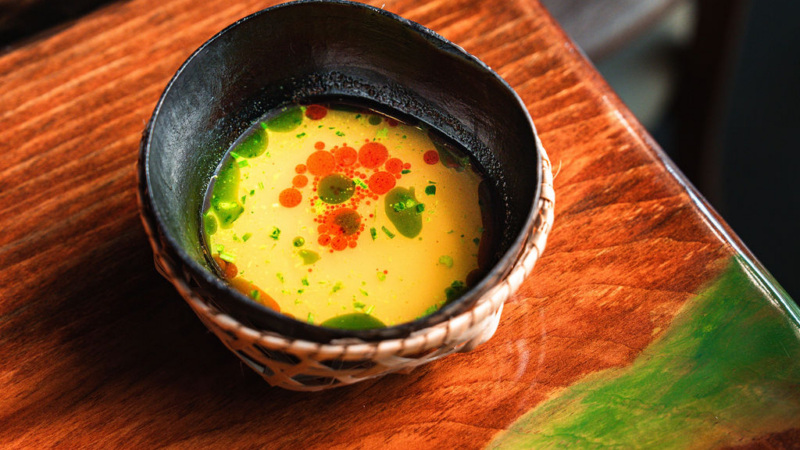
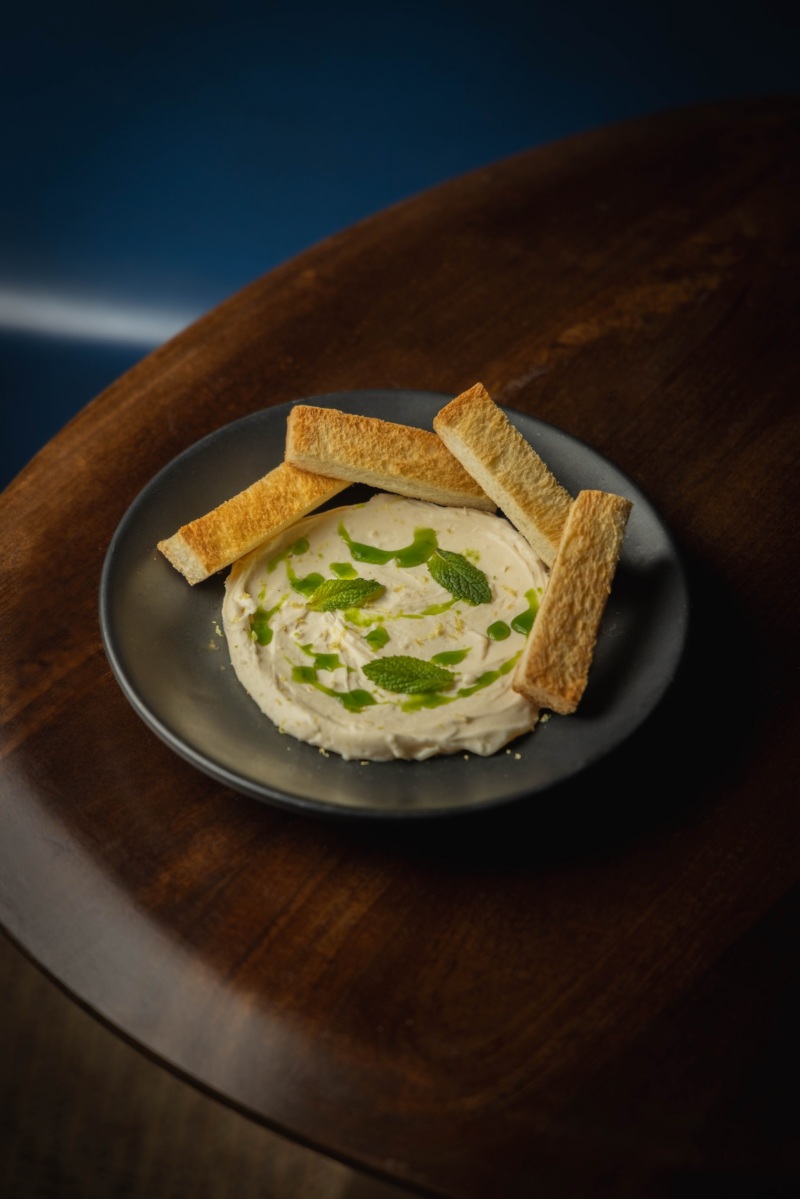
Creamy and citrusy, dotted with vivid green herb oil and mint leaves, this dish upcycles sake lees, a byproduct of sake-making, which is often discarded.
Although sake isn’t served at Stone & Soil, the idea came to Azmee after visiting sake breweries, where he learned that many Japanese villages collect the “mashed potato-looking” lees, and use it to bake bread. “I collaborated with Hakkaisan Brewery, which opened a brewery upstate last year,” he recalls. “I got two pounds of it. The texture reminded me of cream cheese. We added some cream to it, some seasoning, some herb oil.” It’s served with rectangles of toasted Japanese milk bread to scoop it up.
“We turned a little appetizer out of something that is usually tossed and forgotten about,” he says.
5. Koji-Fermented Wagyu Steak
“Our concept is simple,” says Azmee. “I wanted food that you don’t get at other cocktail bars, and also food you’d find in Michelin-style restaurants.” That translates as no noodles, no rice bowls, and no “sandos.”
Hokkaido-born chef Hisanori Yamamoto, who previously worked at Ristorante Pegaso in Tokyo and Icca in New York, was the consulting chef behind this and other dishes. “We wanted something upscale, but with sustainable roots and culture,” Azmee says. “Relatable and palatable and people already know of it, but [in] our presentation.”
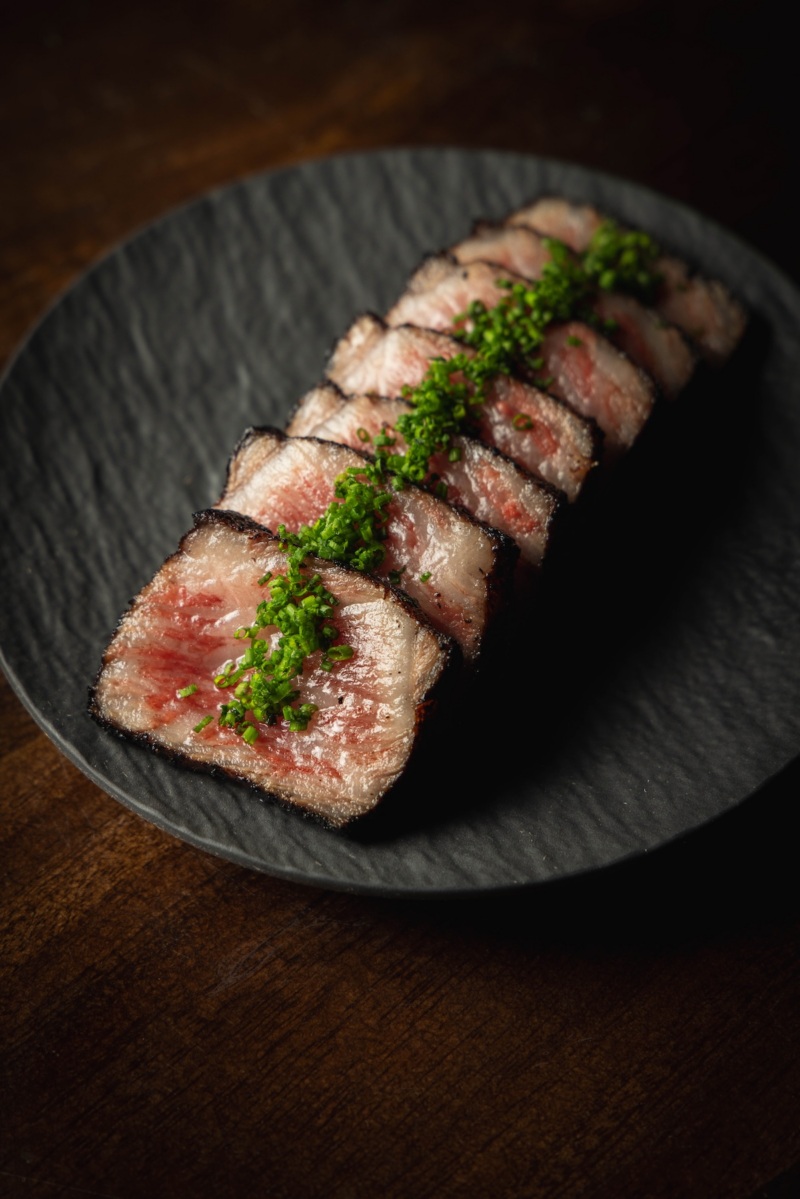
That extends to the wagyu steak. Instead of a 30-day aging process, the meat receives a faster, 10-day fermentation using two types of koji, a mold that encourages the fermentation of rice for sake and soybeans for soy sauce, among other ingredients, and is known for adding complex aromas and flavors.
“We wanted the dry-aging process, but not a whole meat room — we’re not a steakhouse,” Azmee explains. After marinating in the enzymes for a week until the meat turns a miso-brown hue, followed by a three-day resting period, the wagyu is ready to go. “No miso added, no additional seasoning. We want the meat to be the star, cooked to order.” Pro tip: Only five of the koji-fermented steaks are available each day. “When we sell out, that’s it.”
Stone & Soil is open Tuesday to Thursday from 5 p.m. to midnight and Friday to Saturday from 5 p.m. to 1 a.m.
Kara Newman is a New York City-based writer, editor, and cocktail book author. Follow her on X and Instagram. Follow Resy, too.