MORE FROM RESY


The Menu Is About Connections, Not Mashups
Look closely at DixiePura’s menu and you start to notice certain echoes. Rice, for example, appears again and again. Gould grew up eating it at breakfast as well as dinner—alongside eggs, sausage, bacon, and biscuits in the morning, perhaps pepper steak later on. In Singapore, rice became another way into an unfamiliar place: the dishes she gravitated toward at hawker stalls reminded her of what she already knew.
At DixiePura, that thread continues in smoked Southern curry chicken with Hainanese-style rice, Korean fried chicken with black rice, and garlic-ginger-scallion fried rice. Gould is interested in the overlaps: rice as sustenance, fried chicken as comfort, long-cooked greens, smoke, spice, pickles, chiles, garlic, and ginger. “It became a melting pot of culture,” she says of DixiePura’s evolution.
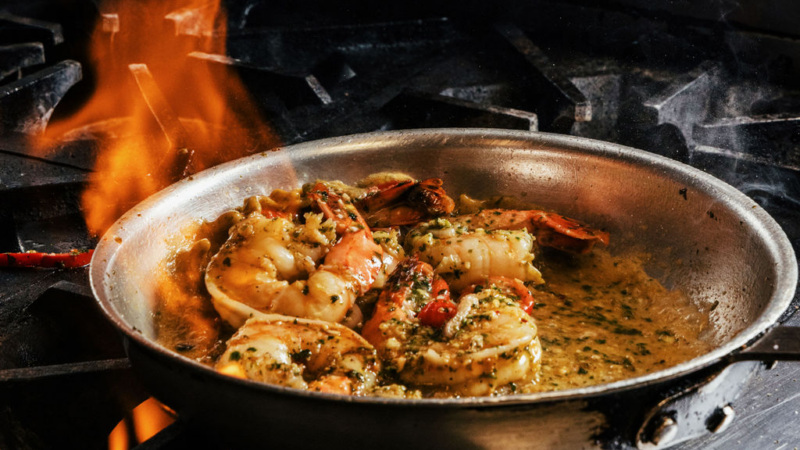
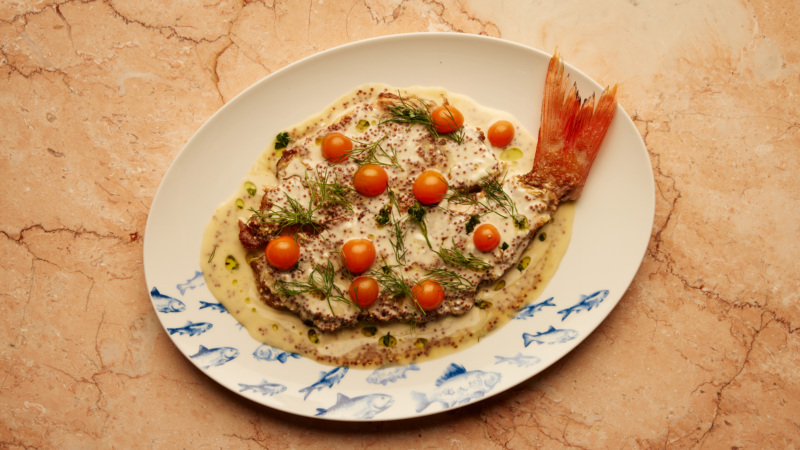
The dinner menu makes those conversations especially vivid. Southern five-spice pork belly burnt ends come with grit fries, Creole-style do chua (Vietnamese pickled vegetables), chile pepper aioli, and Carolina mustard. Southside pork adobo pairs smoked rib tips with pancit. Pepper prawns and grits bring together crawfish, bacon, epis (a Haitian herb-and-pepper seasoning paste), and Thai aromatic pepper cream. A whole charred catfish gets ponzu, chile oil, wilted broccoli, and herb noodles.
It’s a lot of geography on one menu, but it doesn’t feel random. Gould’s menu is all about making connections.
If You Order One Dish to Understand DixiePura, Make It Ernie’s Fingers
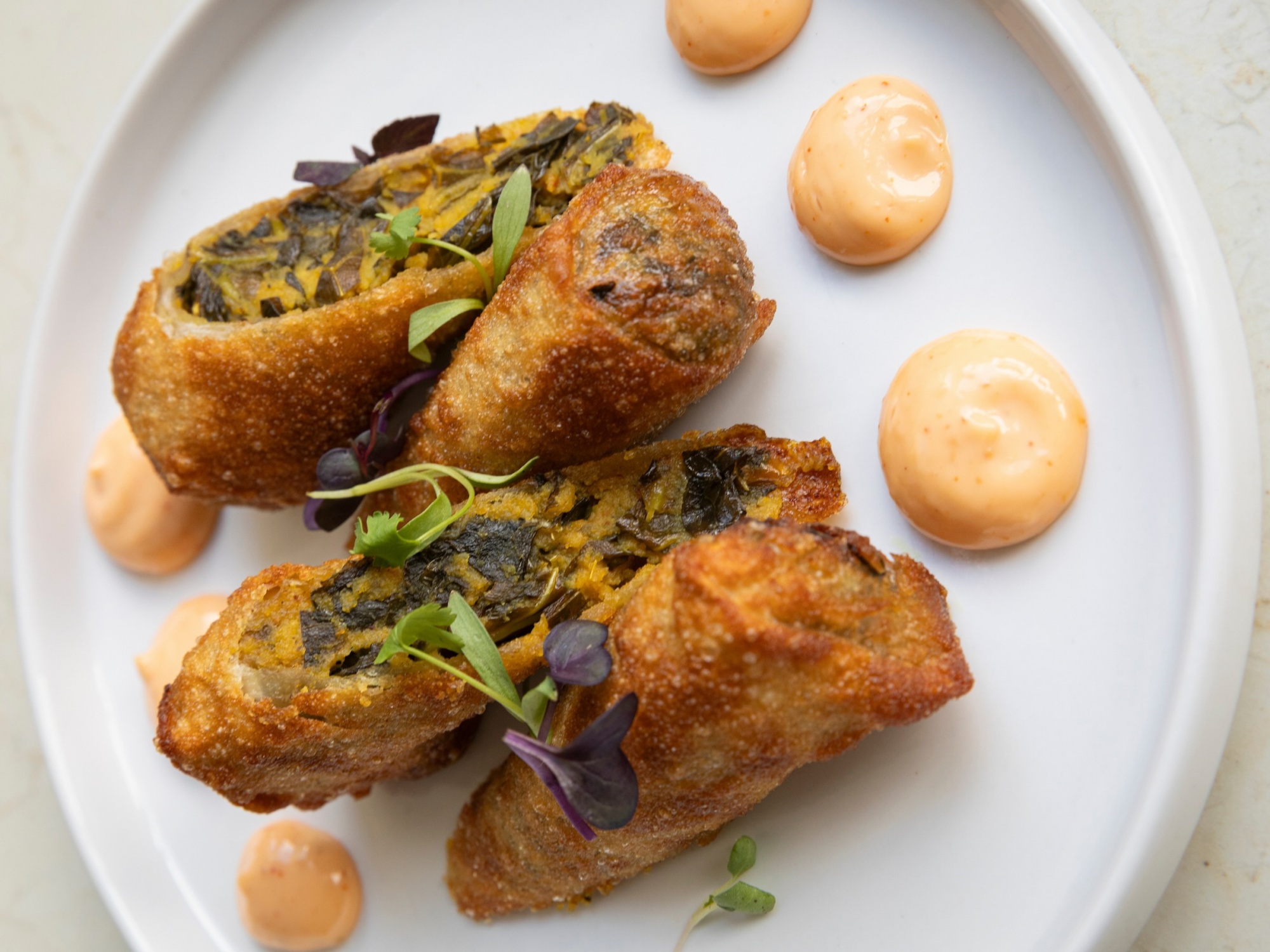
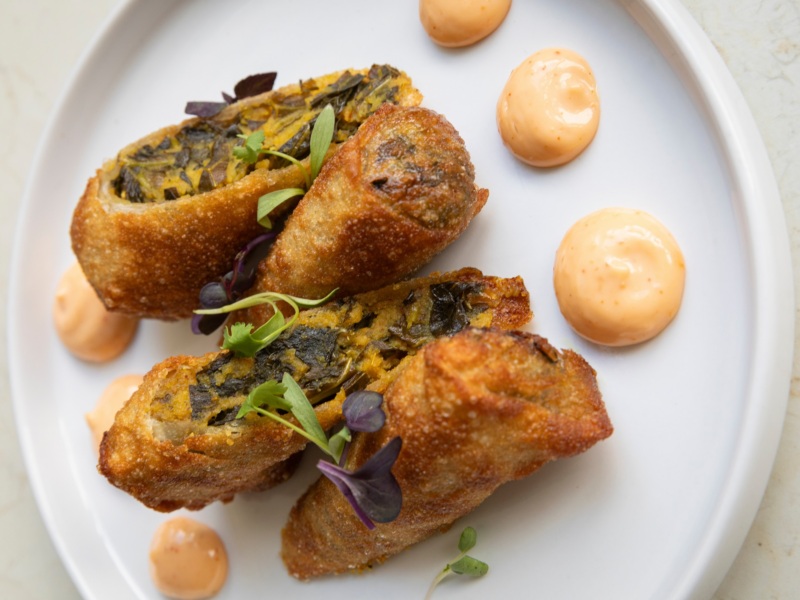
Ernie’s Fingers might be the clearest expression of what Gould is doing here. The dish begins with a memory of her grandmother, Ernie, feeding Gould and her cousins greens and cornbread together. Years after her grandmother died, Gould dreamed that Ernie was feeding her again. She translated that image into a signature appetizer.
At DixiePura, collard greens are braised with Gould’s Southern curry blend, a mix of more than 20 spices, then tucked with sweet buttermilk cornbread into an egg roll wrapper and served with a remoulade inspired by Vietnamese salad. The greens have spice and depth; the cornbread brings sweetness; the whole thing is fried to a satisfying crisp. “That dish itself,” Gould explains, “captures Singapore, but also Southern culture.” It also captures something more intimate: the way a dish can honor a person who isn’t there anymore.
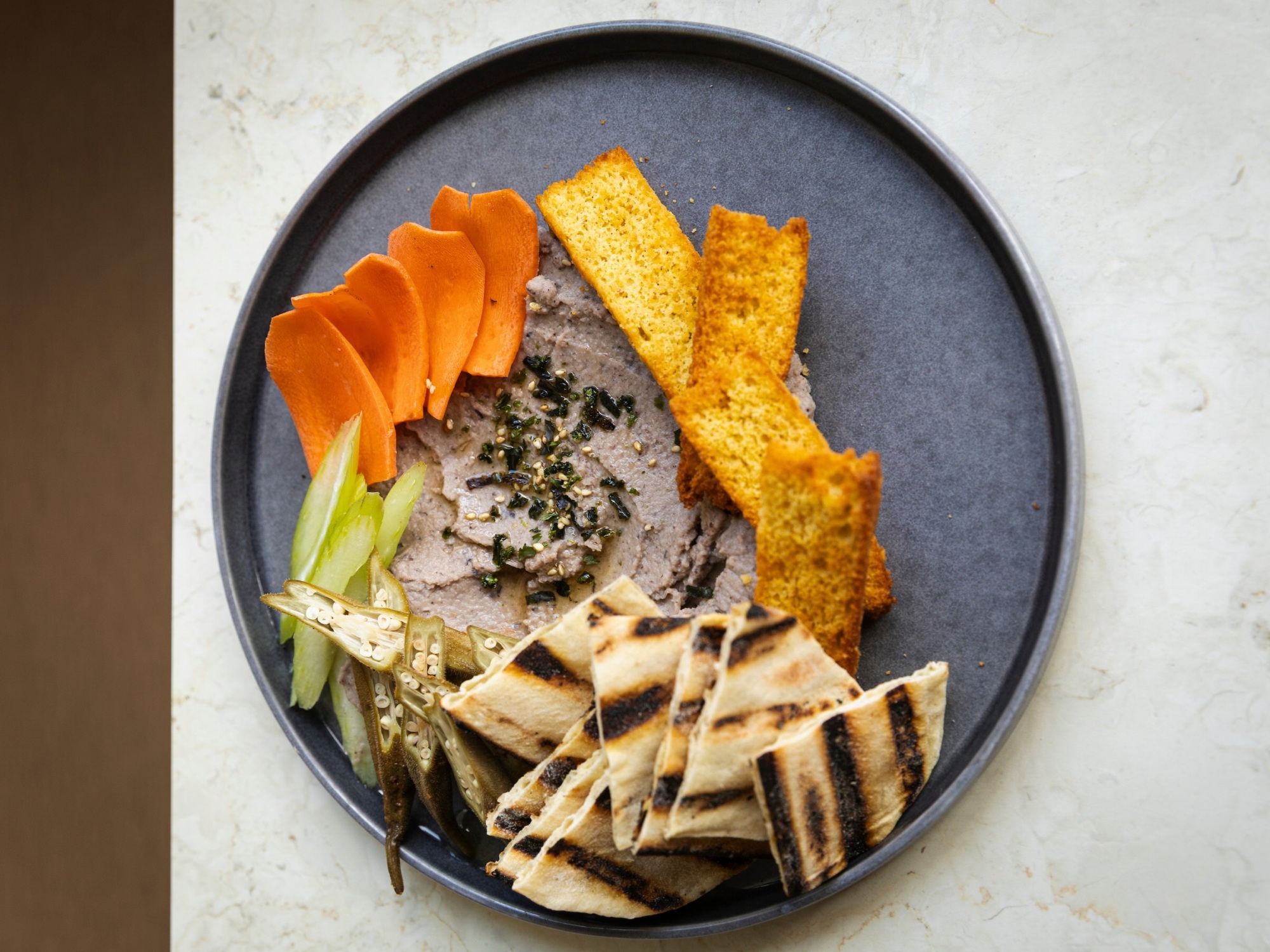
Elsewhere, black-eyed peas become hummus with cornbread crostini, pickled roots, and garlic naan. Pimento mac and cheese gets a splash of Uncle Nearest rye in the four-cheese Mornay. Candied yams find their way into buttermilk biscuits with cinnamon-brown-sugar honey butter. The food is playful, but the memories underneath it are serious.
Flavor Starts With Aromatics (Lots of Them)
Gould’s relationship with seasoning changed dramatically after she was diagnosed with chronic kidney disease in her early twenties. Suddenly, she had to think differently about sodium and about the food she knew and loved. She had been trained to cook; she hadn’t necessarily been trained to make food delicious under those constraints.
So she taught herself. She developed her own spice blends, including compound seasonings that build layers of flavor without relying solely on salt. Today that philosophy runs through DixiePura. “Everything starts with aromatics,” she says. The kitchen goes through garlic, ginger, lemongrass, herbs, chiles, and spices in abundance, and even grows some herbs and vegetables behind the restaurant.
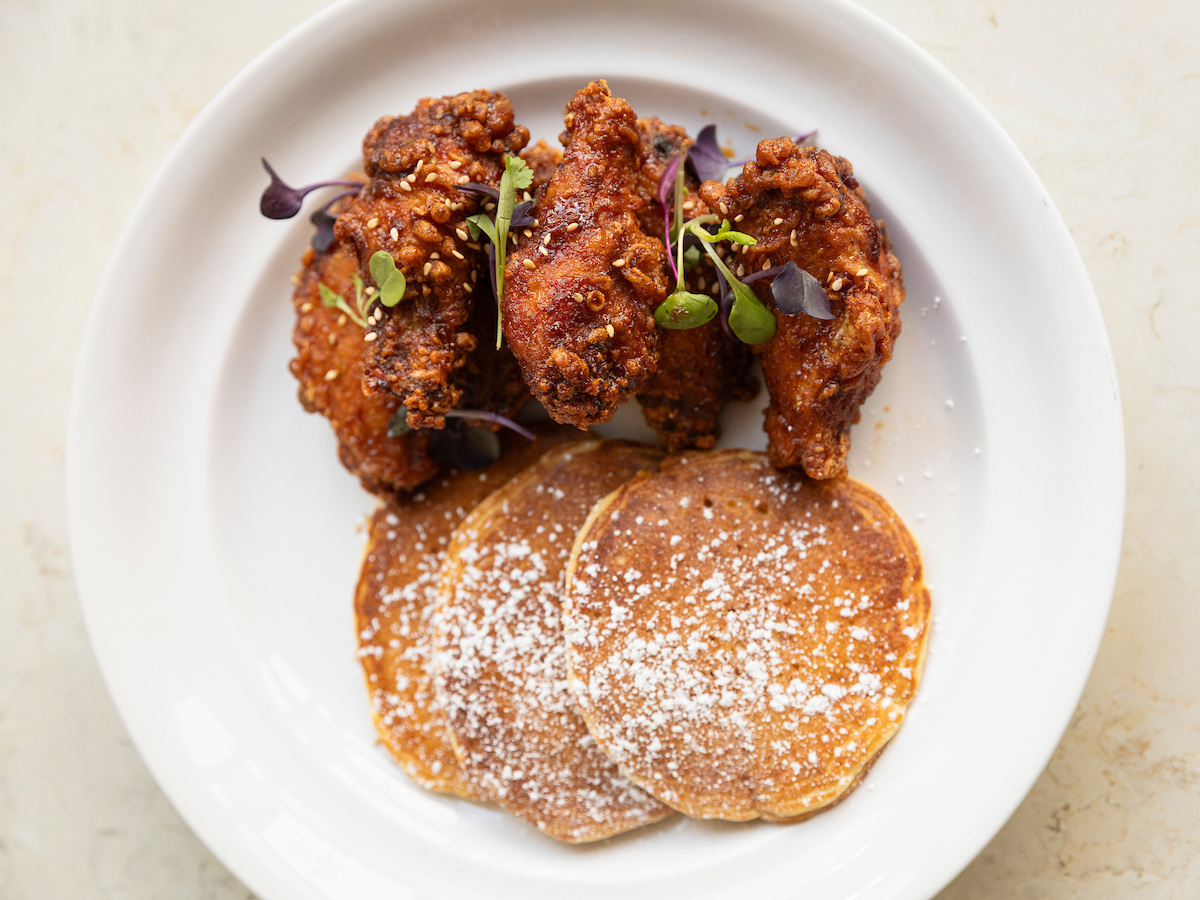
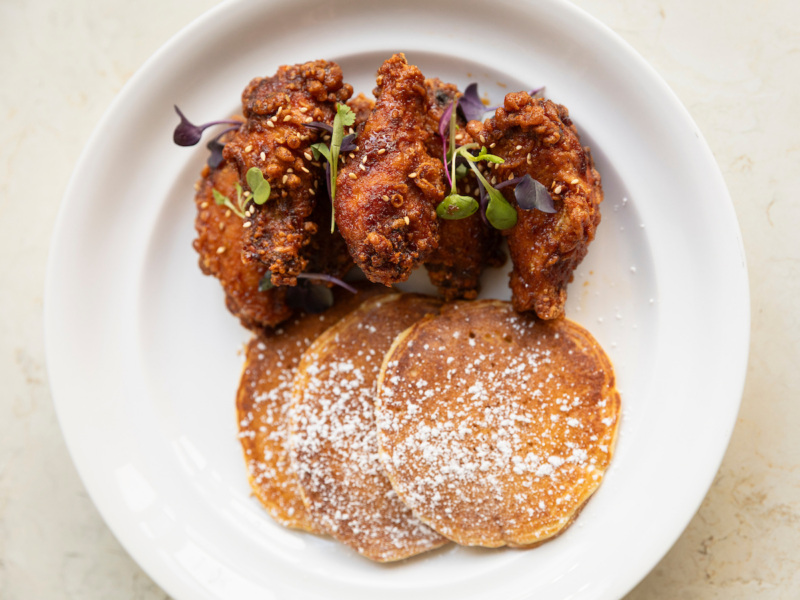
You can taste that exuberance all over the menu: smashed cucumbers glossy with chile oil and sesame; Korean fried chicken coated in soy, garlic, epis, and chile butter; cumin-pepper lamb sharpened with pepperpot chimichurri. The cooking isn’t restrained in flavor. There’s smoke, acid, sweetness, funk, warmth, crunch, and heat. Gould’s solution was never deprivation, but to figure out how many ways there are to make something taste good.
The Drinks Lean Strong, Fresh, and Southern
The same sense of personality carries over to the bar. Gould gravitates toward small-batch and community-minded spirits, with Black and female-owned Uncle Nearest Tennessee whiskey appearing throughout the cocktail list. The Southern Bourbon Punch combines Uncle Nearest 1884 with sweet vermouth, orange liqueur, and Cherry Heering; guests have compared it to a dressed-up Old Fashioned. The Stone layers Uncle Nearest 1856 with housemade hibiscus sugar, lemon, and orgeat.
There’s also the Tropic Smoke, with mezcal, Campari, passion fruit, lime, and pineapple, and the Black Beauty—named for Gould’s sister—a Sidecar-style mix of Hennessy, Cointreau, and lemon. Fresh juice matters to Gould, and these are not shy cocktails. As she jokes about The Stone, people drink it quickly because it tastes so refreshing, and then she has to remind them, essentially, that’s still bourbon.
The cocktail list is joined by a concise selection of wines like Black Girl Magic Riesling, plus Nemonade, a refreshing nonalcoholic drink made with butterfly pea flower tea and fresh-squeezed lemon.
The Room, and the Restaurant, Belong to Bronzeville
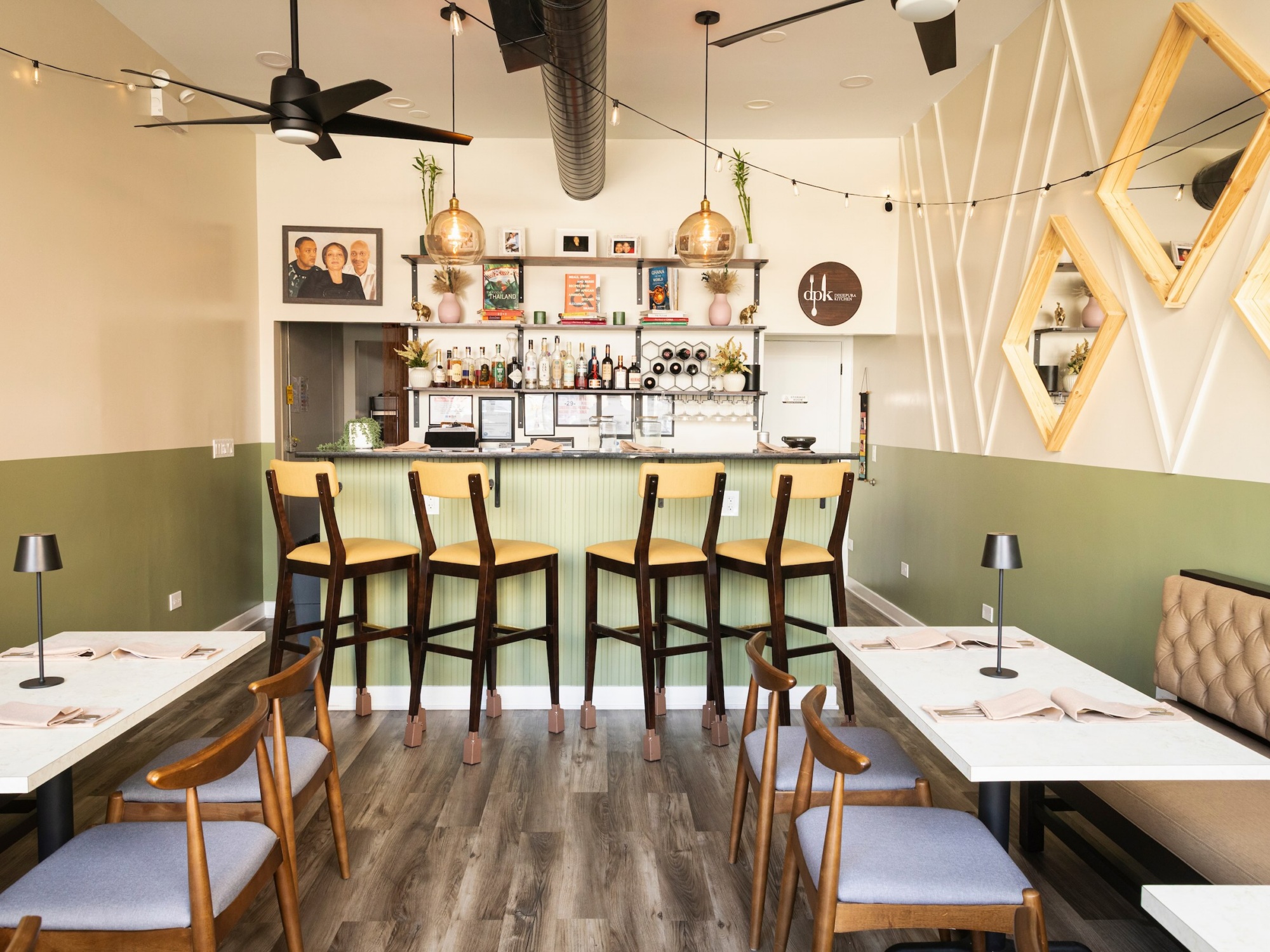
DixiePura is intimate, and Gould designed it to feel more like a home than a polished, anonymous dining room.Sage and mustard tones warm the space. There are candles and plants, family photographs, artwork celebrating Black hair, and books pulled from Gould’s own shelves. A brick-wall image stands in for the exposed brick she had always imagined in her future restaurant. Two bamboo plants have been with her since an early pop-up, when opening her own place still required a substantial leap of faith.
There’s intention everywhere, but also softness. And Gould extends that feeling beyond the design. Guests are sometimes surprised to find her coming out of the kitchen to talk, sit, and hear what they thought of dinner. “My whole thing is to always be touchable to my community,” she says. That community matters especially because Gould remembers growing up on the South Side with relatively few restaurant options beyond fast food and neighborhood takeout. Later, teaching at Dunbar, she watched students eat chips for breakfast and began insisting they cook from scratch. That educator instinct survives at DixiePura, which hosts children’s cooking classes, including sponsored spots for local families.
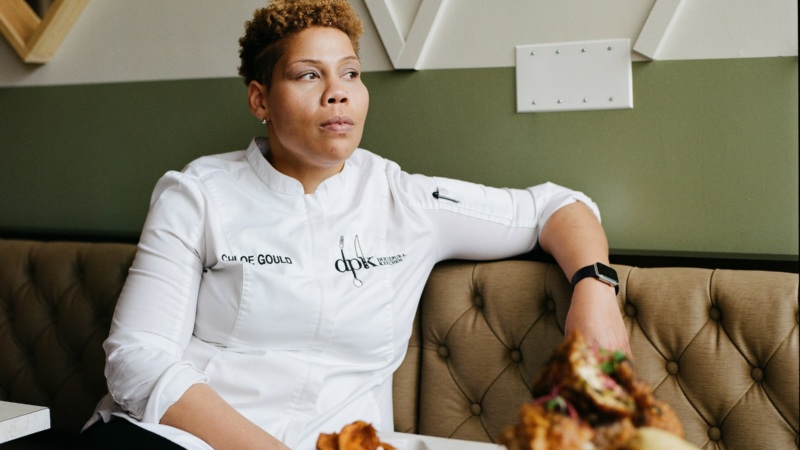
Gould also sees the restaurant as a bridge: a place rooted in Bronzeville that draws diners from the North Side, the suburbs, and beyond. She’s still a little amazed that they come. But the goal was never simply to create a destination restaurant in her old neighborhood. She wanted to make something that belonged here, a restaurant capable of celebrating Southern cooking, Singapore hawker stalls, family, memory, and all the unexpected connections between them.
DixiePura traveled a long way to end up just a few blocks from where Gould started. Which feels exactly right.
Hannah Howard is the author of the memoirs Feast: True Love in and out of the Kitchen and Plenty: A Memoir of Food and Family. She writes for Food & Wine, Travel + Leisure, and Bon Appetit. She recently moved from New York City to Chicago, where she lives with her family. Follow her on Instagram. Follow Resy, too.