Cerdito Muerto Feels Right at Home in Pilsen
Published:
In Pilsen, 18th Street is layered with murals, family-run businesses, and decades of Mexican American culture. Cerdito Muerto, a homey Mexican cocktail bar and kitchen just off the main drag, feels right at home — probably because its owner never really left.
Emidio Oceguera was born in Chicago and raised in the same building where the restaurant now operates. Oceguera’s father, a Mexican immigrant, ran the place as a pool hall, with the steadfast support of Oceguera’s mother, until his passing in 2013.
The hospitality gene runs deep for Oceguera. After earning degrees in culinary arts and hospitality management, he went on to build his résumé across Chicago’s dining scene, recently serving as general manager of Chicago Cut Steakhouse. After years working his way up in other businesses, he felt ready to reimagine his childhood home into the restaurant he always envisioned, and in the summer of 2025, that vision finally became a reality.
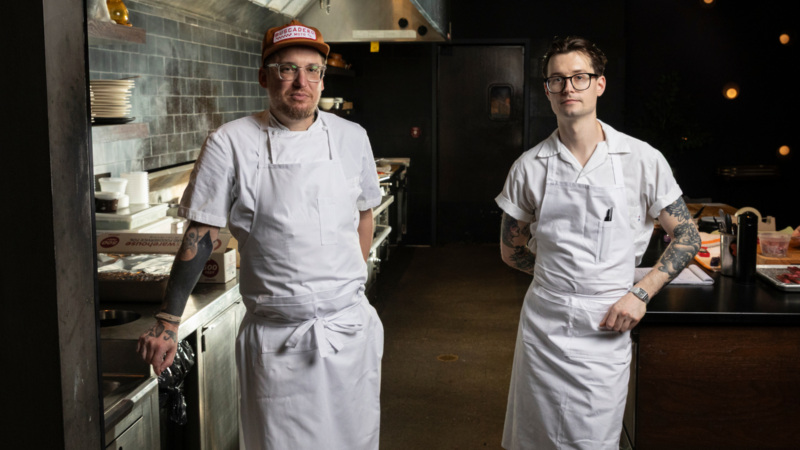
To help bring his vision to life, he brought on chef Becky Carson, former executive chef at the Ramova Grill and Taproom and a fellow Pilsen resident, a natural fit in part because of her respect for the neighborhood and its Mexican culture. Carson learned family recipes from Oceguera’s mother while building other dishes on the menu that stay true to those flavors without overcomplicating them.
Like the building’s plain, green exterior, Cerdito Muerto is simple but intentional — from the food to its name. Cerdito Muerto, which translates to “dead piglet,” references both Oceguera’s father’s farming roots and Día de los Muertos, the Mexican holiday that celebrates the dead. In this tradition, death isn’t morbid. It’s about honoring ancestors: an idea embedded throughout the restaurant.
Here’s what you need to know about this new iteration of Pilsen history.
MORE FROM RESY

A standing invitation to a lively dinner party
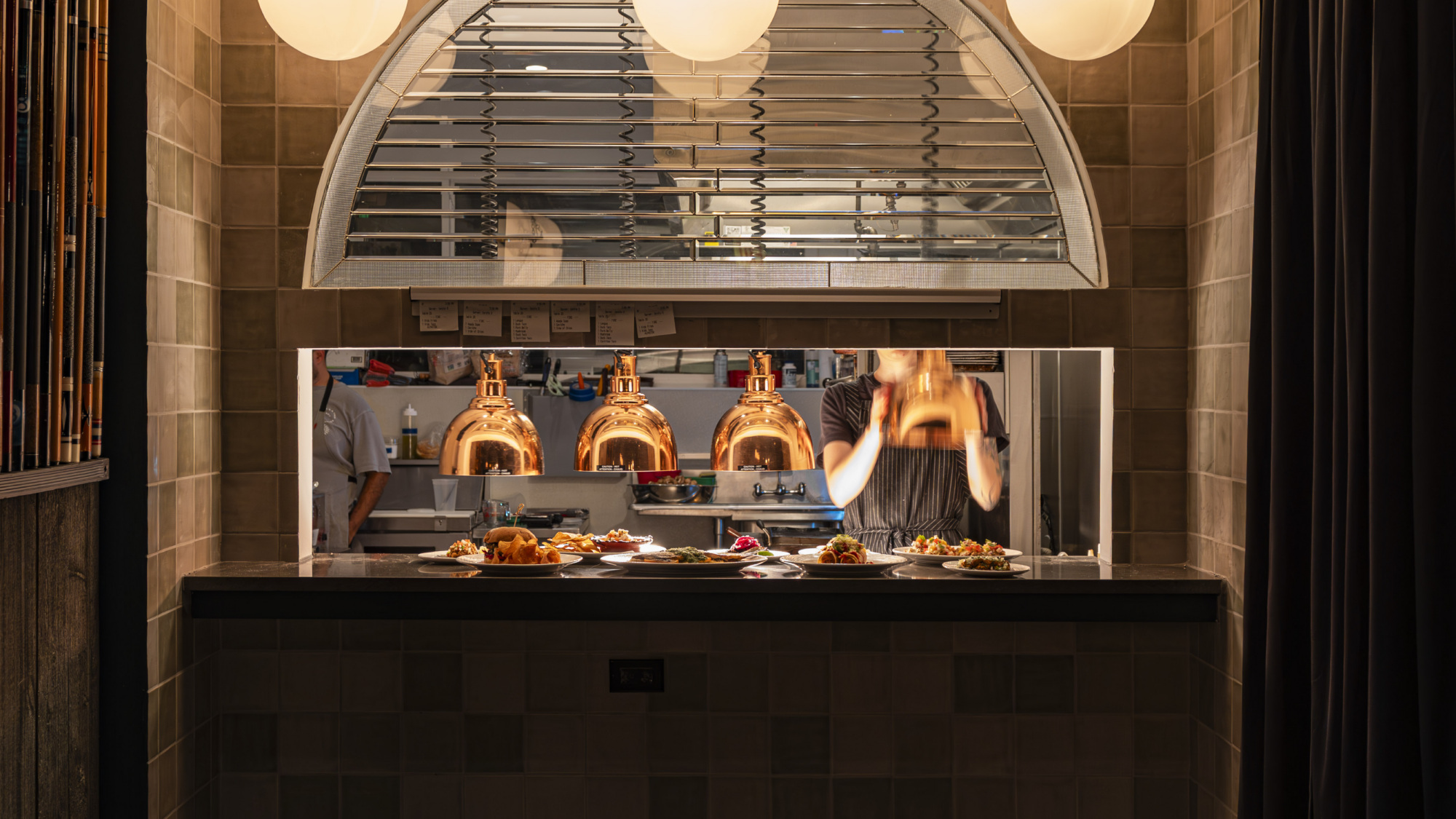
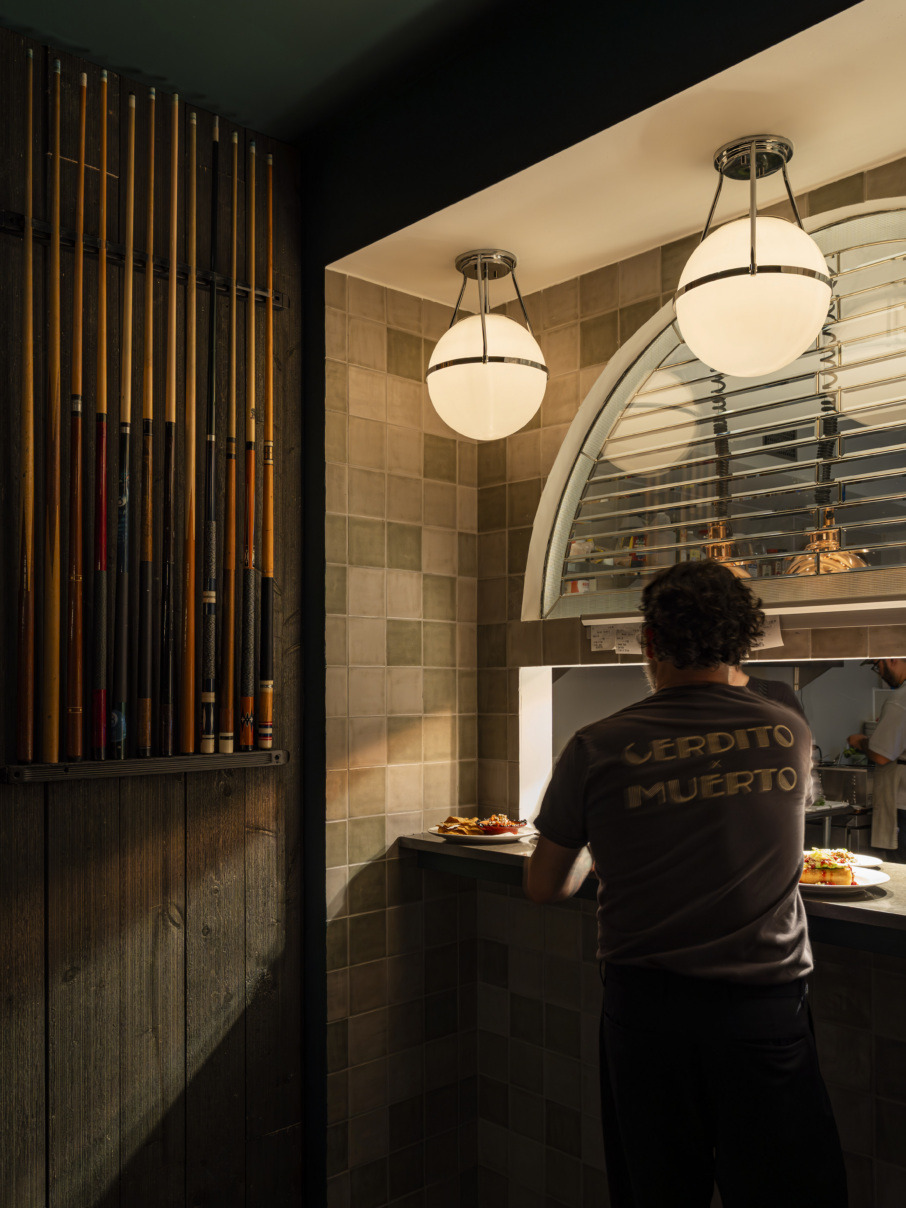
Stepping inside Cerdito Muerto feels more intimate than your typical neighborhood bar. A narrow candlelit hallway leads to the host stand, where hopefully you’ve made a reservation, because there’s a total of 30 seats in the place. Turning the corner, you’re greeted by a mounted set of pool cues, a nod to its pool hall history, and a glimpse into the small but mighty kitchen.
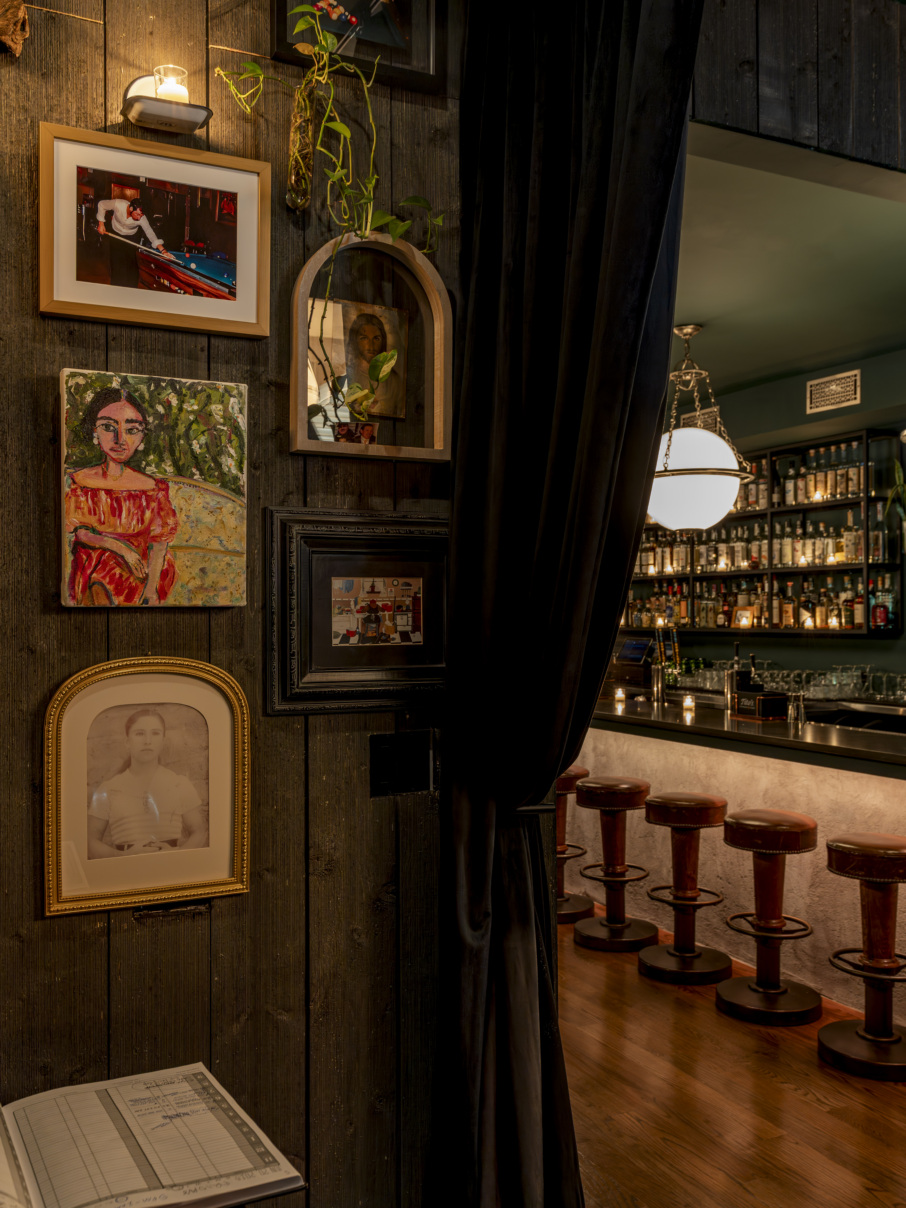
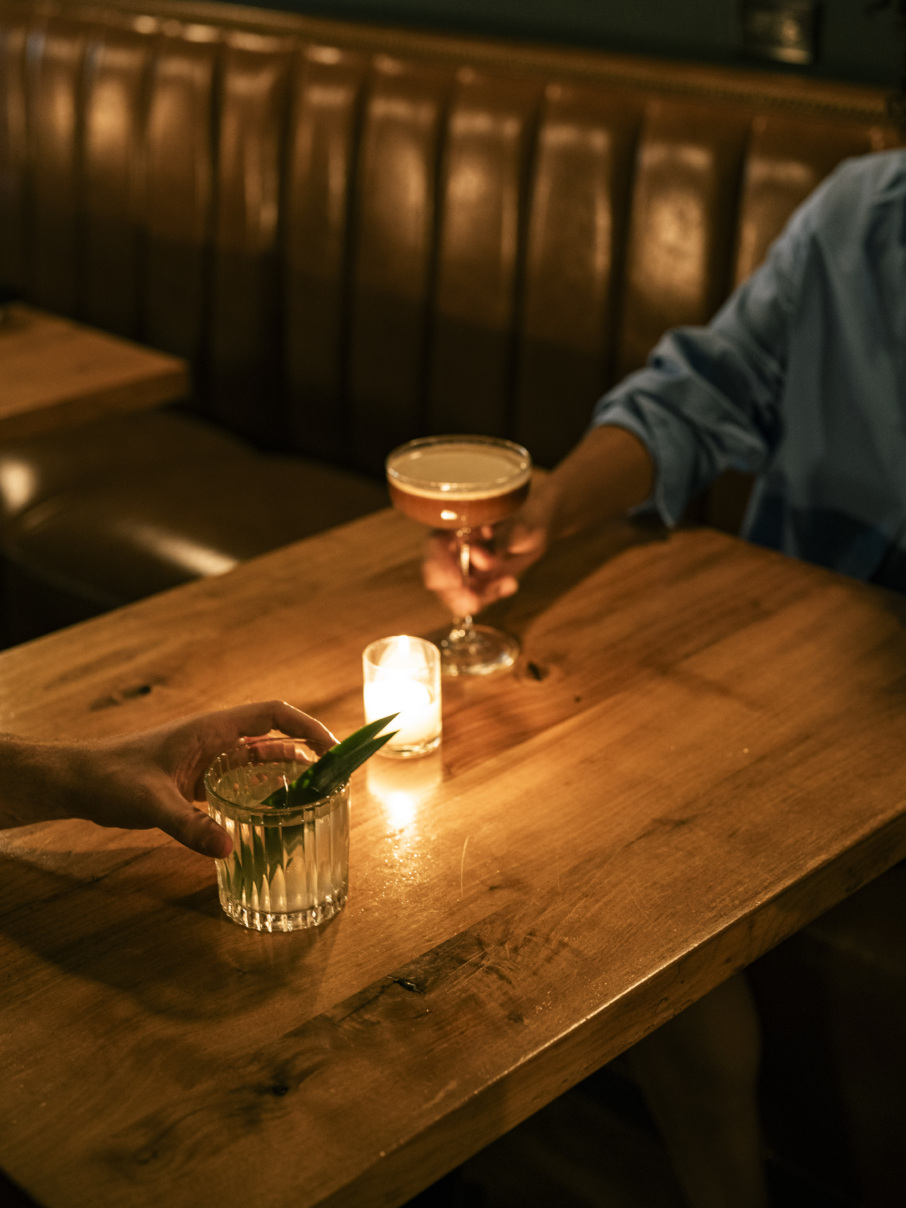
In the dimly lit dining room, a long booth runs the length of the wall, paired with small, votive-lit tables. The bar, adorned with 100-odd bottles of Tequila and mezcal, stretches along the right, creating a space for lively but close-knit conversation.
The walls feel like a personal archive, with artifacts like a Chivas banner from the ‘80s, vintage Mexican movie posters, family photos, and collected artwork from Oceguera’s trips to Mexico — not unlike what you’d find in someone’s living room. The same ‘“welcome to my home” aesthetic extends to the single-person bathroom, where there’s no mirror because, as Oceguera explains, you don’t need to look perfect when “you’re at the crib.”
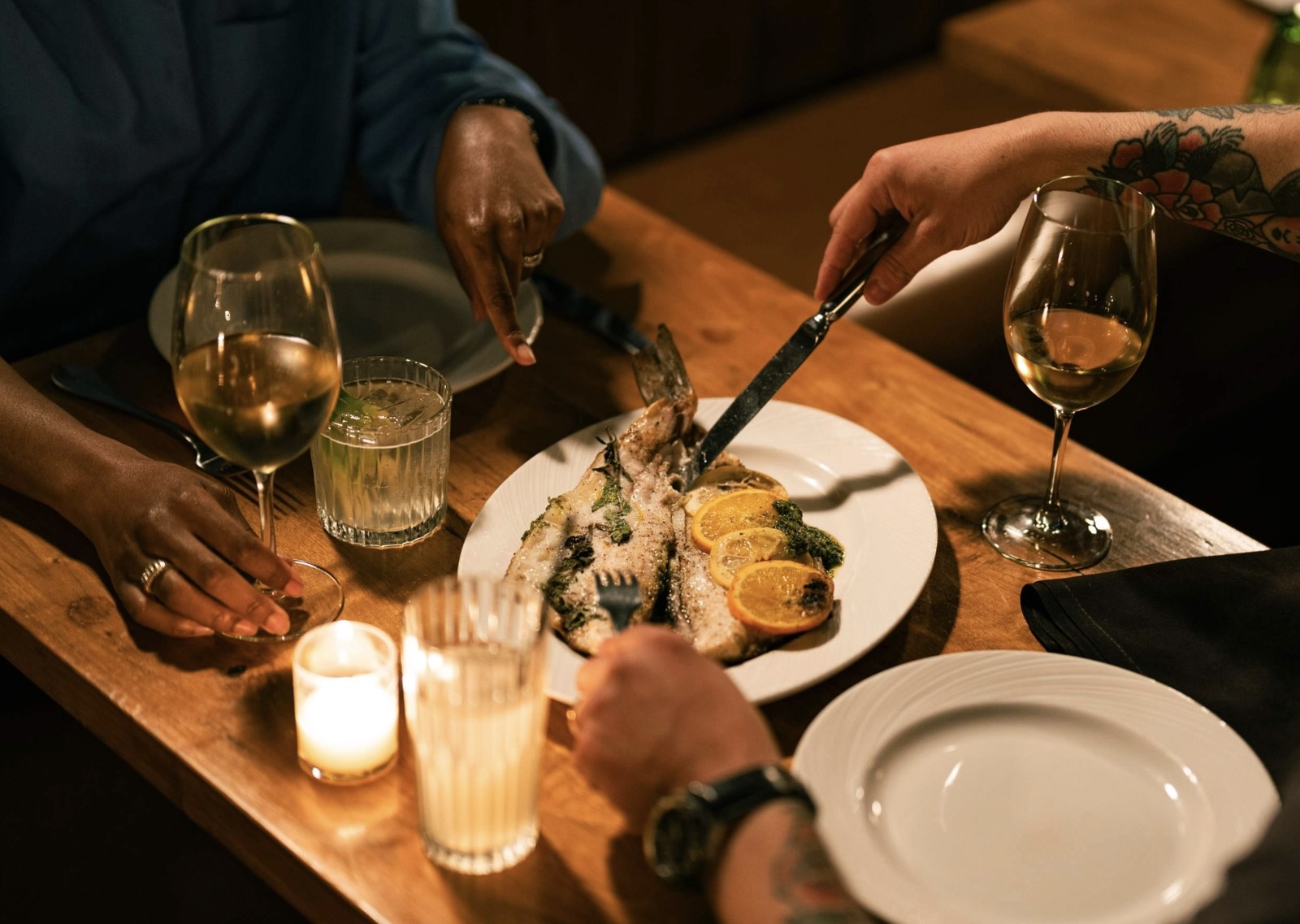
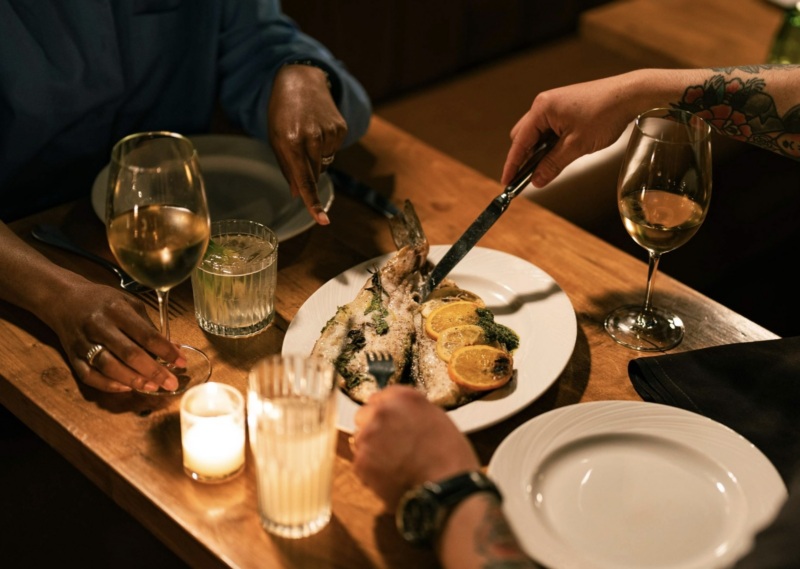
This is Mexican-American cuisine by way of Pilsen
Cerdito Muerto doesn’t chase the usual expectations of a Mexican restaurant, nor does it try to represent the entirety of the country’s cuisine. You won’t find chips and guacamole or a margarita on the menu because “there’s just more to us than that,” says Ocoguera. “I don’t know all of Mexico,” he adds. “I know Jalisco and Michoacán. My parents were farmers and ranchers, and that’s the food I grew up with.”
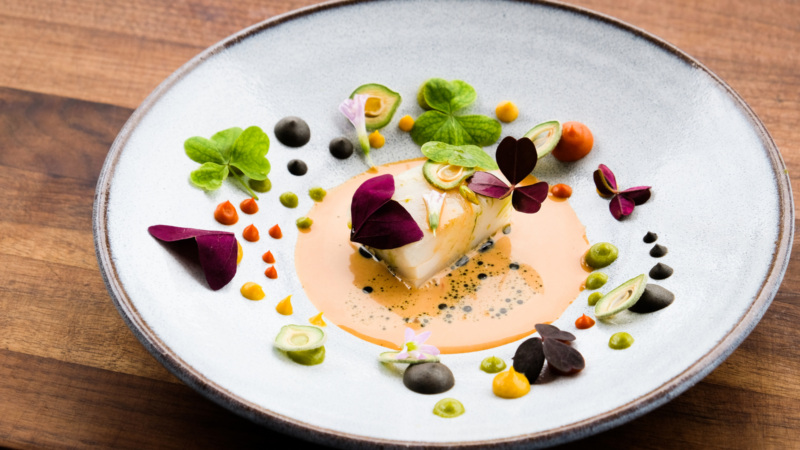
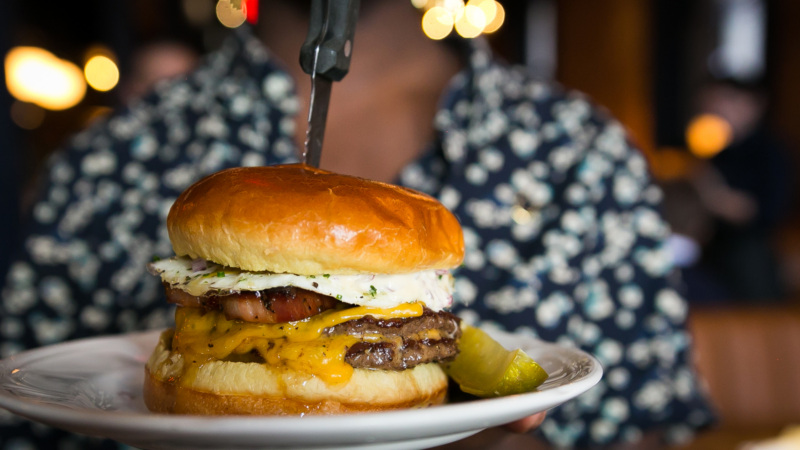
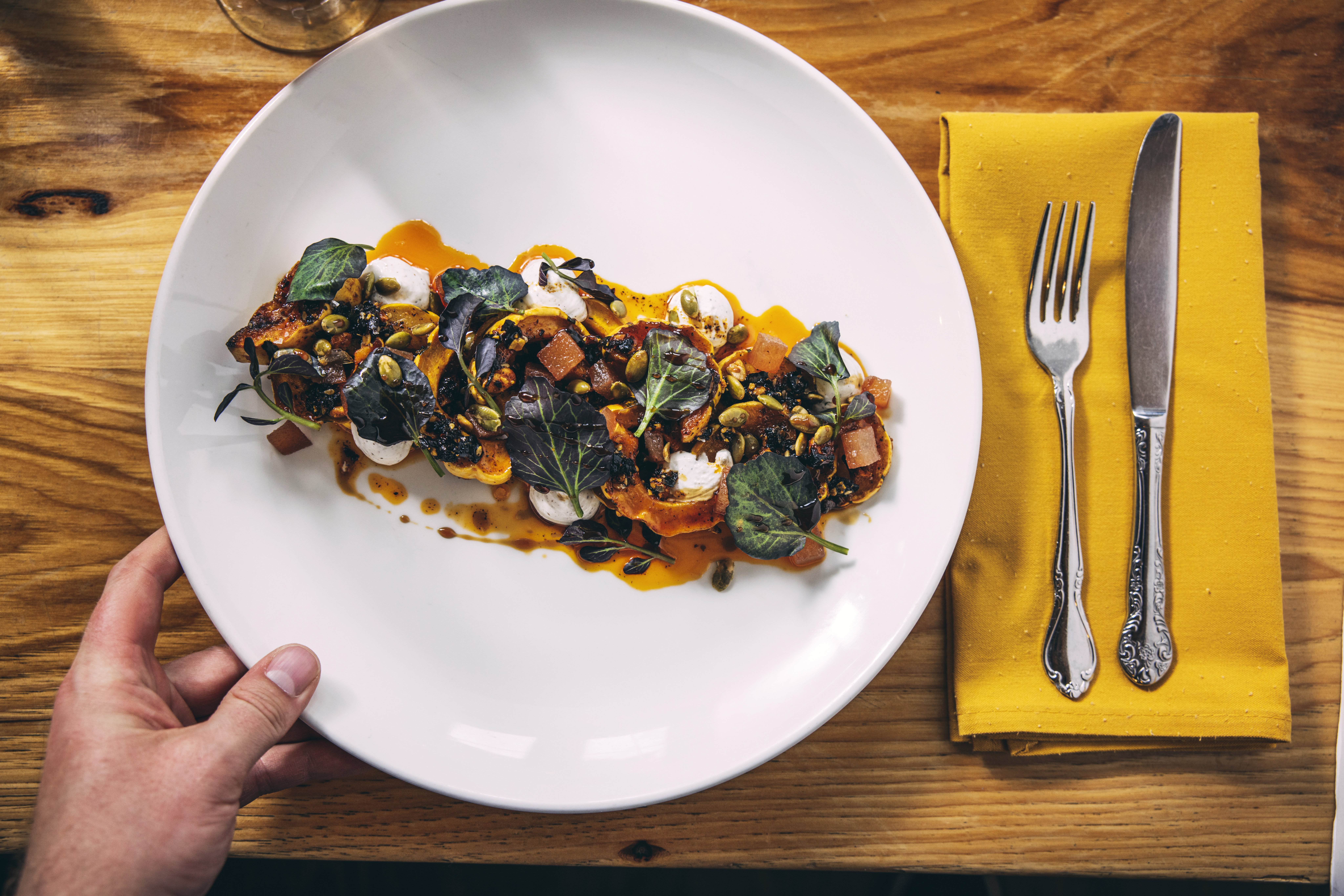
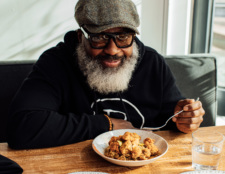
The menu takes a modern, sophisticated approach. You won’t find a messy plate of anything here. Oceguera calls it “polite food,” the kind of dishes you’d feel comfortable eating on a first date. Carson balances that sensibility with the challenge of translating family recipes in a restaurant setting and in a kitchen staffed by only herself and a talented sous chef named Carlos.
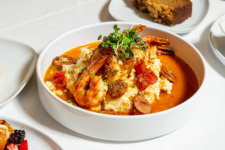
One example of how it all comes together are the duck nachos, which arrive as six individual, carefully assembled bites, with meat from duck legs cooked carnita-style with garlic, orange peel, and “a lot of lard,” says Carson. The meat is pulled apart, and placed over chips with black beans and Chihuahua cheese. The citrus salad on top “is kind of like a pico de gallo, but with jicama, orange, and mint,” she adds.
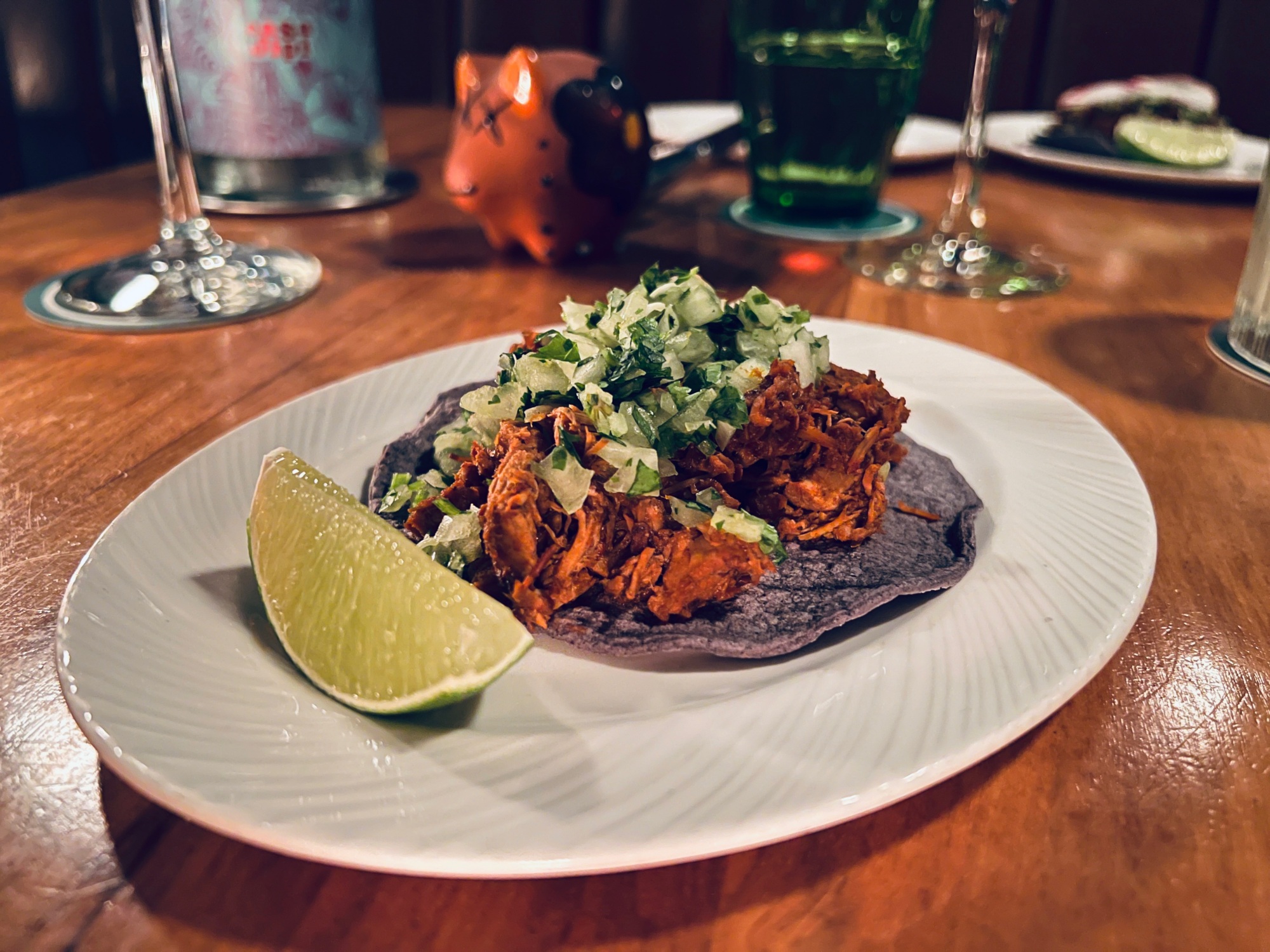
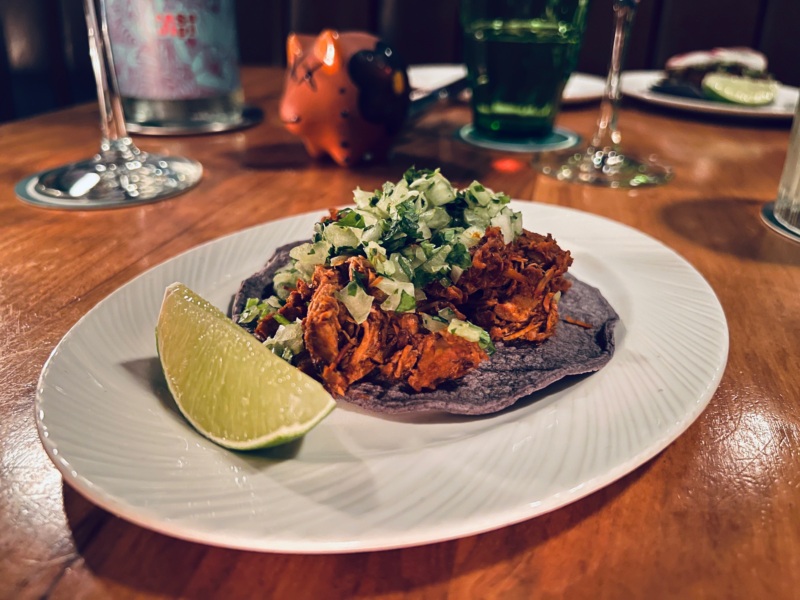
Two of the tacos on the menu come from family recipes. The birria taco and Mama Coco’s al pastor taco are recipes from Oceguera’s mother, who on occasion descends from her home above the restaurant to help out in the kitchen. Out of respect for Oceguera’s mother’s signature dishes, Carson doesn’t share too much detail about the tacos’ preparations, just that the birria is processed from a whole goat and given a very long, traditional braise. The al pastor is simply marinated and roasted, and served sans pineapple, a departure from many regional variations.
Ingredient sourcing at Cerdito Muerto stretches across the Chicagoland area. The tacos come on five-inch blue corn tortillas from the nearby El Popocatepetl Tortilleria. Goat for the birria comes from Nea Agora Packing Co. on Taylor Street. Pork for the al pastor is sourced from Catalpa Grove Farm, and produce often comes through South Water Market vendors who bring in ingredients from Mexico.
The bar is a love letter to agave
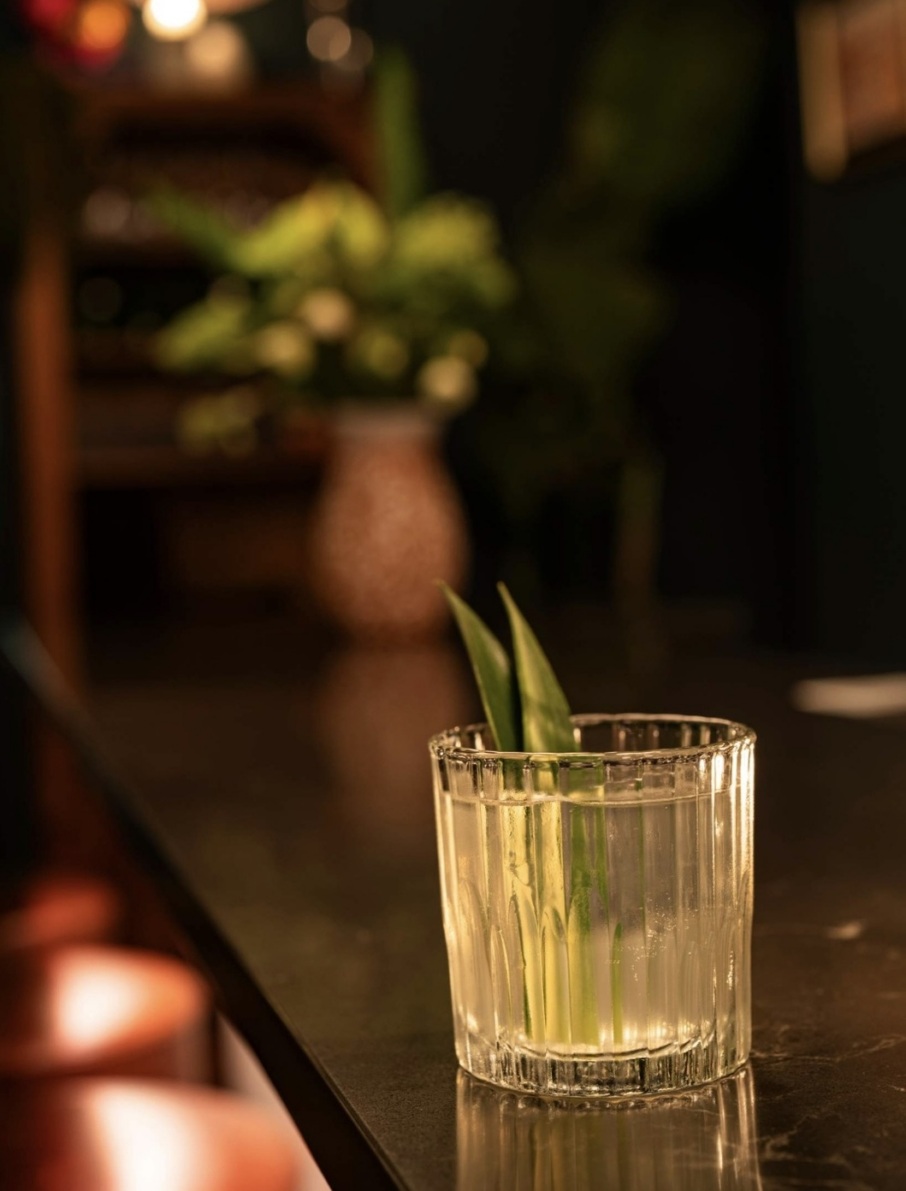
The food at Cerdito Muerto is unmissable, but the cocktail menu is stacked with standouts, too. The espresso Martínez, for example, is a Tequila-based answer to the espresso martini. The house-made cordial serves as the base of the drink, though it took months to refine, and every batch is still slightly different. “A cocktail just has to be balanced,” says Oceguera. “If something’s overpowering everything else, it doesn’t work.”
The paloma gets an even more hands-on treatment. Rather than relying on bottled grapefruit soda, the bar makes its own version of Squirt from scratch. Grapefruit juice is freshly squeezed, clarified, and force-carbonated — a labor-intensive process that replaces the familiar soda with something more precise.
Oceguera remains true to his vision for the restaurant in the way he stocks the bar. “90 percent of my bar is Mexican owned and a Mexican spirit,” he says. “The ownership part is very important for me…I don’t need a celebrity brand here. I don’t need a brand that doesn’t really serve the people that ‘make the juice.’”
Like everything else at Cerdito Muerto, the bar is a labor of love that belongs to the neighborhood, brought to life by one of its proud native sons.