10 Years In, The Loyalist Burger Still Draws Crowds
Published:
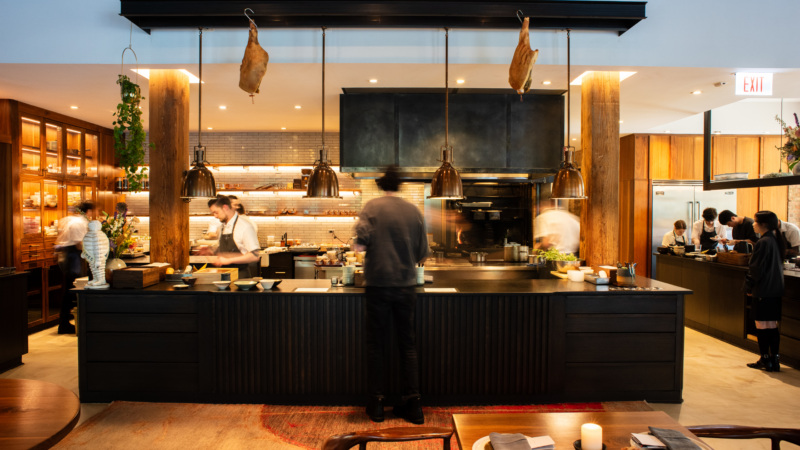
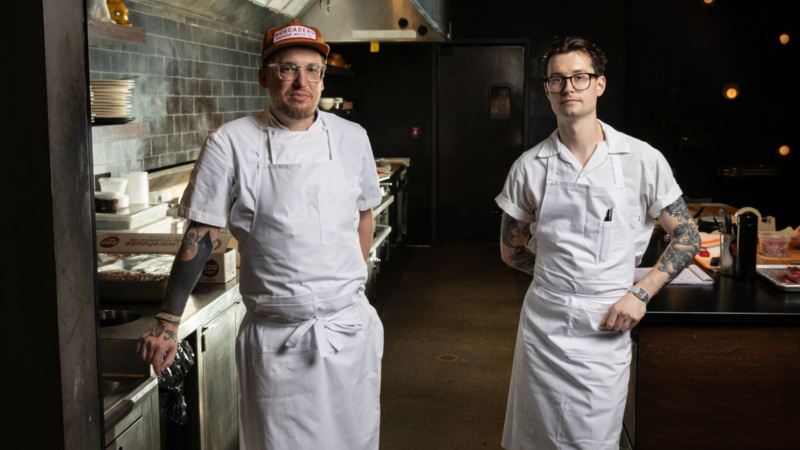
When you have a three-Michelin starred restaurant, you’re constantly evolving, changing, updating. You source top ingredients — whether high-quality local produce or uni, caviar, and wagyu from around the world. Even your more casual gastropub below said starred restaurant delivers at the same high standard. Such is the case with the West Loop’s Smyth and The Loyalist, both celebrating a decade in business this year.
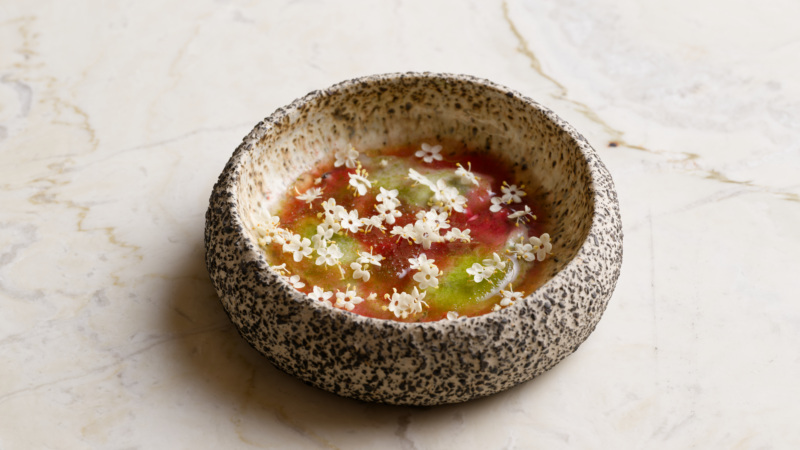
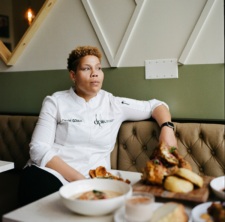
The ever-changing, ever-inventive tasting menu at Smyth draws diners from around the globe to experience chef John Shields’ creative fare. The Loyalist tends to feel more like a locals’ spot, and many visit specifically for its signature dish: The Loyalist OG Burger.
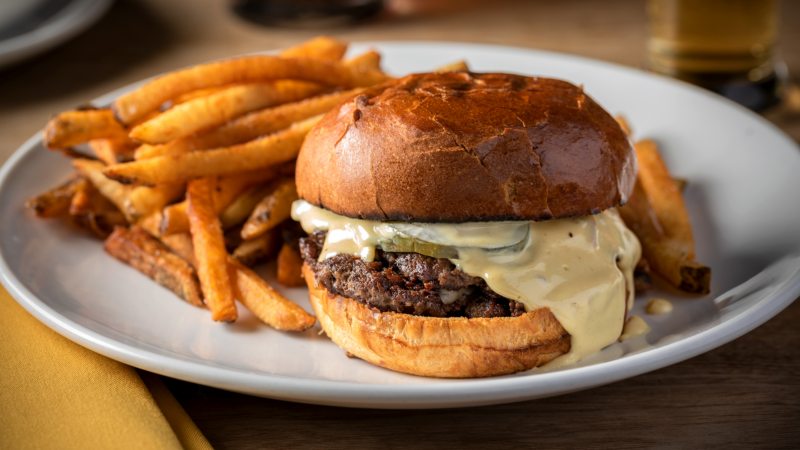
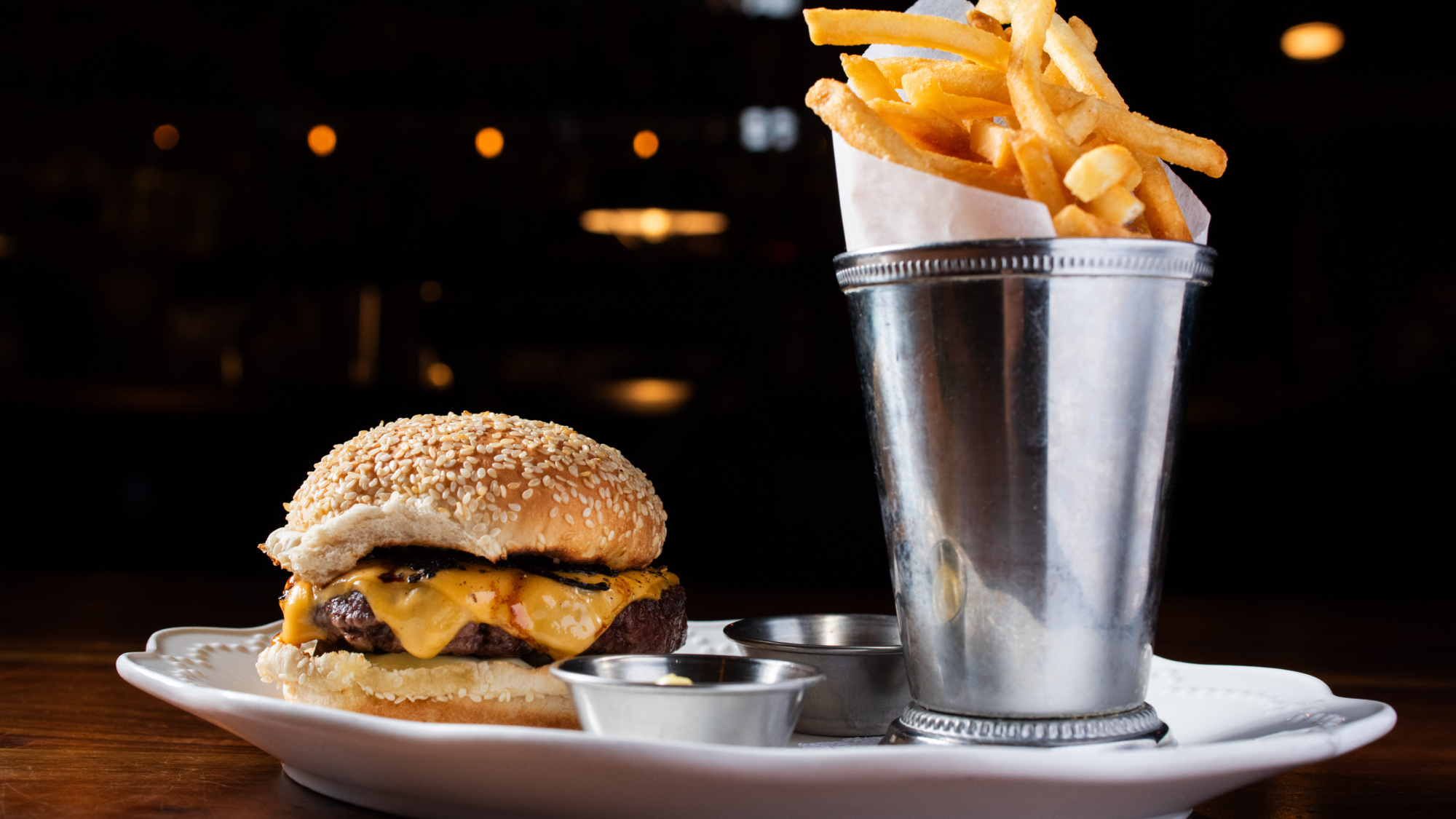
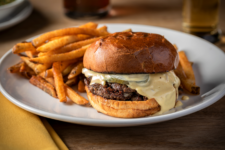
Priced at $28, it’s seemingly simple: a hearty beef patty and a Martin’s sesame seed bun, topped with American cheese and pickled and charred onion. This burger has been hailed as one of, if not the, best in Chicago. But what makes it so good? Why is this one such a standout in a city teeming with quality burgers?
We talked with Shields about his inspiration behind the burger (and its newer sibling, The French Smash), his dream of of opening a standalone burger restaurant, and why, 10 years in, the iconic dish still draws so many people each night.
MORE FROM RESY
Why do you think the Loyalist burger is so beloved?
I don’t totally know [laughs], but I always said it needs to be a little messy and a problem to eat. There’s the right amount of sauce and juice. That’s what I wanted for it and I wanted people to have a connection to it. I didn’t want heroics and pageantry with the experience, just something more focused on techniques and the flavor. That was always important to me from the beginning. It felt more honest.
What was your inspiration for it initially?
A diner-style burger. All I knew growing up was fast food burgers. When I decided to get serious about it, I was lucky to have it come together pretty quickly. I picked a sauce — the onion mayo — and I thought it would be simple enough: onion, pickles, burger, and cheese. Nothing more than that. The onion factor was key for me. I enjoy a burger that has onion, whether raw or cooked. We combine various amounts and ways of doing onions and it’s similar in flavor to a White Castle burger.
Is the hype still there 10 years in?
It’s died down for sure, and it should. There are other great burgers out there. We’ve seen a few that are similar and that makes sense. In some ways I wish I could change the burger. I mean, I could. We talk about it. I’m ready to move on from it. Well, not move on, but tweak it. Make it better. Offer other stuff. I love making burgers. If I had the place to do it, I would do various styles of burgers, like Hamburger America’s George Motz, who is so inspirational. I love his passion. But we don’t have the space, physically, to expand the burger section very much.
What kind of beef are you using? What goes into the patty?
I can’t tell you! Just kidding. It’s beef chuck and short rib. The key is grinding your own beef. We had some bacon in it in the beginning, but we got so busy we couldn’t keep up with that for the patty. We now just render bacon with butter and brush a little on top. Pickled onion, onion aioli, two slices of American cheese. When the beef is down on the grill, we put onion slices next to it, add pickles and a little semi-homemade Marmite.
Do you make the buns?
No, we use Martin’s rolls. We tried making them, but there’s no way to keep up.
How many burgers do you sell in a typical night or week?
It varies, but right now around 100 to 120 a night.
How do you keep the burger consistent night after night with that many being ordered?
That’s hard to answer. I just think it’s diligence. It’s been on for 10 years and it’s easier to stay consistent. We don’t change much about it. It’s just staying on top of stuff: the ordering, the labor involved with producing it. That’s it. That’s the only way. You can’t set it and forget it.
Does it ever become too much, and have you considered taking it off the menu?
The only way we could is to maybe take off the main floor and only serve at the bar, or do a limited amount per night. But we’re 10 years in and we’re too far in with it to do that to people. We’d be better off just closing the restaurant. It’s a blessing and a curse. I love every bit of it. I wish I could charge the amount it’s worth.
The burger was $15 when you opened in 2016 and now costs $28. What do you think it’s actually worth?
It should be $35. First, beef is expensive. With the $35 price point, about $3 to $4 is almost a corkage fee for taking up the table every night. We have so many tables that just get burgers and the check average goes down. That was fine for many years, but it’s become a different story. The margin is tightening up. I don’t want to charge $35. I don’t want to go up based on its reputation — that goes against what I believe in. But that is what it’s worth.
Why did you add the French Smash?
It went on two or three years ago as another option. There’s sometimes an off-menu secret burger and we finally decided to put it on the menu after Covid. We did a wagyu neck burger because we had a Japanese chef who came in around 2019 and people went nuts for that. It was $65 and worth every penny.
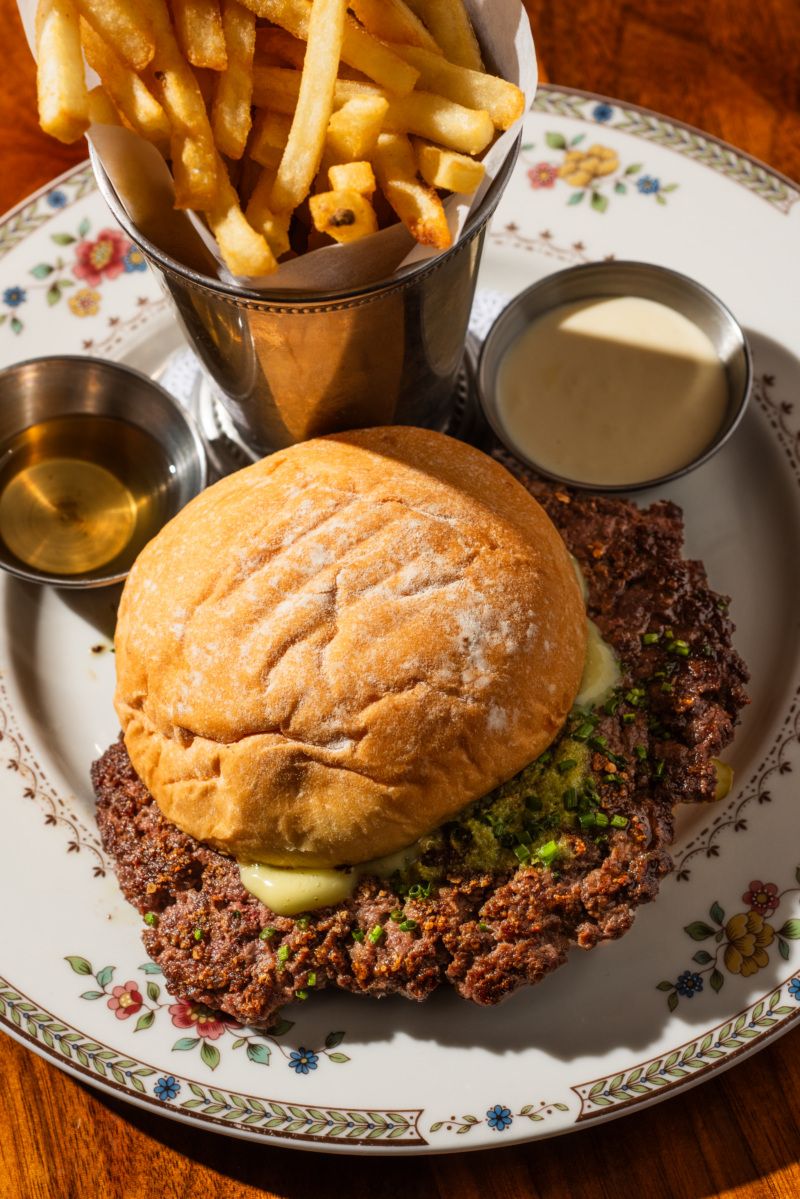
We did other variations of what I felt like doing at that moment. We did one with mushroom mayonnaise with pickled peppers and lettuce and it was so damn good. The French Smash came around when we decided to try something different. It has no cheese, but it does have the Mornay sauce on the side, with escargot butter. That has Pernod, tarragon, parsley, chive, and shallot in it, but not actual escargot. It’s like an ode to a Wisconsin butter burger.
Does cooking the burger ever inspire anything you’re doing at Smyth or the other way around?
Always both. The onion mayo we use for the OG burger originated as a shallot mayo I was making [for a dish at Smyth], and the escargot butter we melt into a mussels dish. Everything is always part of something else.