After 11 Years in Bridgeport, The Duck Inn Doubles Down on What it Does Best
Published:
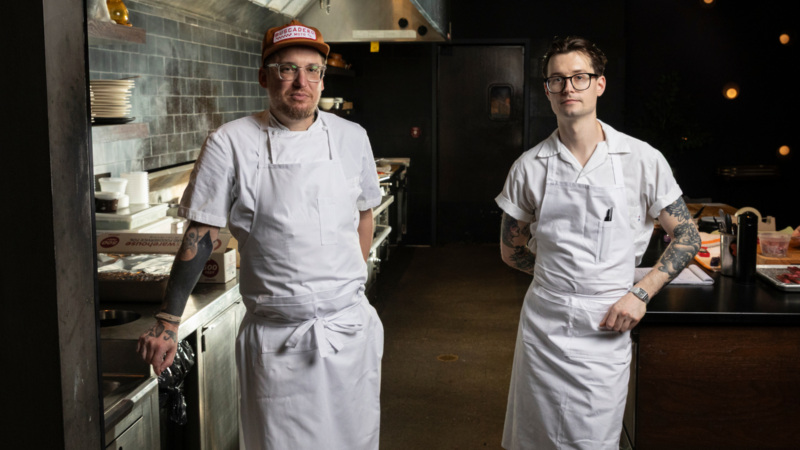
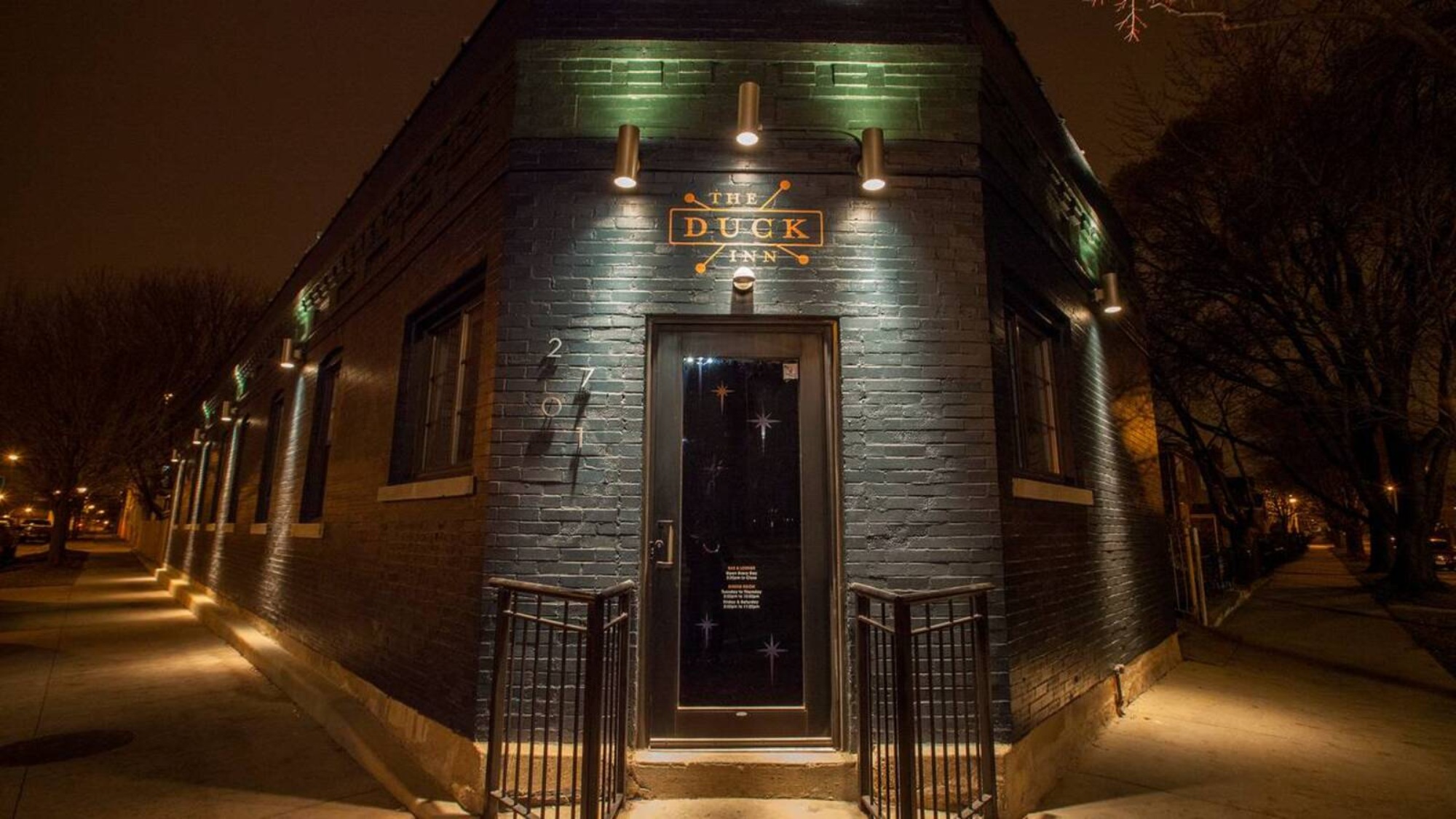
Since opening The Duck Inn in 2014, chef-owner Kevin Hickey says not much has changed, except that “we’re doubling down on what I think is our identity.” The former pre-Prohibition era corner tavern is a cozy and comfortable neighborhood mainstay with a killer back patio and retro homey vibes inside the black brick façade.
Hickey, the former Four Seasons chef, came full circle when he opened the seasonally driven gastro-tavern (named for a restaurant owned by his great-grandmother) in Bridgeport, where he was born and raised. “You can still get a Hamm’s for $4 and a cheeseburger, and you can get a $95 bone-in ribeye, whole branzino, or fresh pasta,” he says.
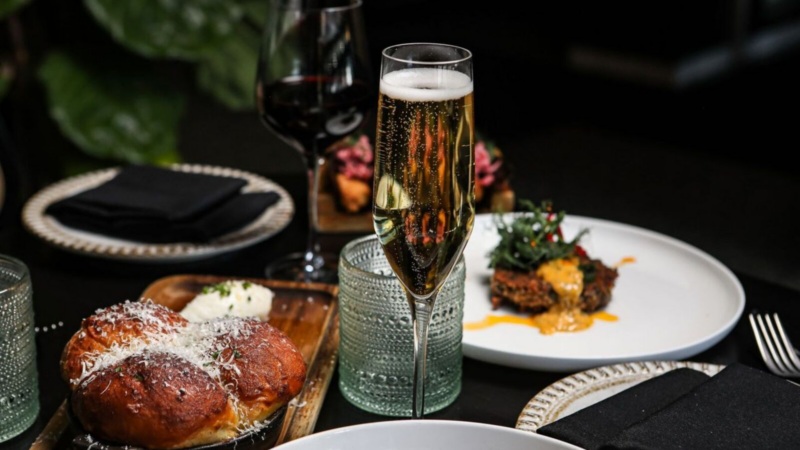
Luckily, the rotisserie duck dinner with duck fat potatoes is still a menu staple, along with that famous Chicago hot dog. The neighborhood favorite is also known for fantastic cocktails by partner and beverage director Brandon Phillips, the 90-seat patio that comes alive in summer, and the cozy dining room and bar.
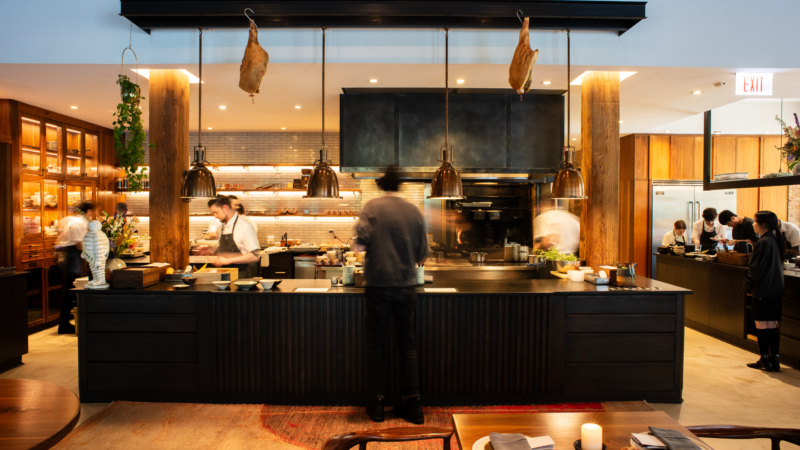
One thing Hickey wishes he could change? The size of the original kitchen, a diminutive 300 square feet. “We’re at a maximum. The kitchen is bursting on a Saturday night in July. When you’re putting 200-250 people through this little restaurant, it’s pretty challenging,” he says. We talked to the chef about the secret to his success, his restaurant decor pet peeve, and the unexpected place you may find him this holiday season.
MORE FROM RESY
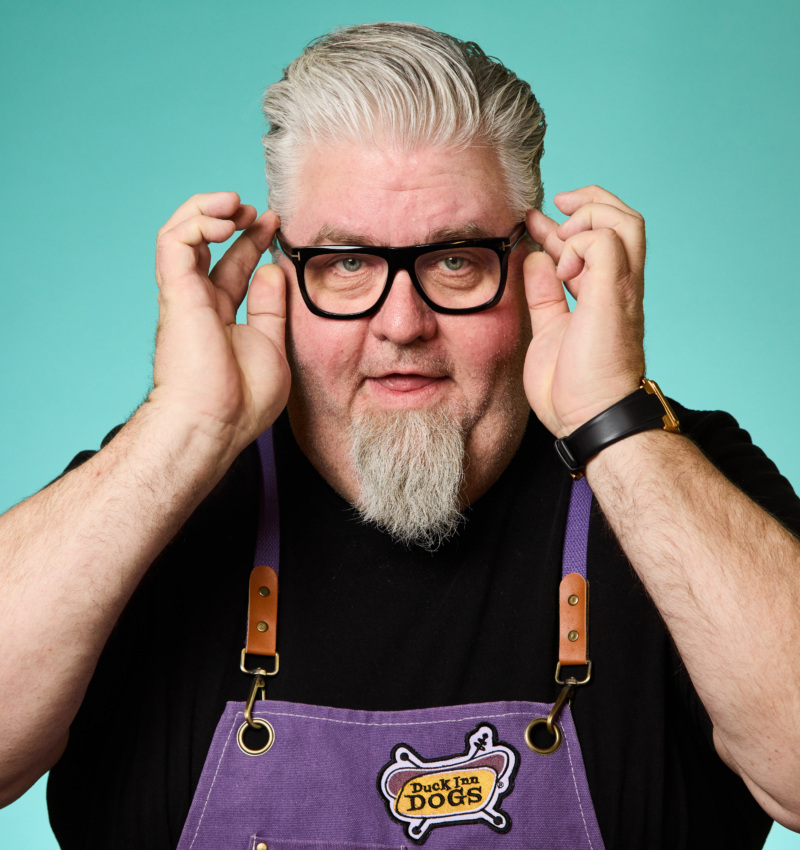
What has been the secret to the Duck Inn’s success?
I think a large part of our success is a combination of two things. One is having been here for 11 years, which is like 150 in restaurant years. So we’re very much considered old school, which is hilarious, but I think that helps because we’ve been around for so long and people have heard of us. I feel like customers don’t want the dining experience to change too much. I also think our location, which in the first few years was a huge hindrance, has now become our asset. Not only have the demographics of our surrounding areas changed so much that there are more of our customers nearby than ever before, but there’s also nothing else right around us.
What have you seen change about customer’s dining habits?
People are definitely dining out earlier. We still have not come back from the pandemic. We’ll do 225 people on a Saturday night, all in by 8:15 p.m. It’s tough as we’re not getting anyone at 9 p.m., and I hear that throughout the city. But Chicago’s always been kind of an early night town compared to New York or San Francisco, where you’ve got two to three seatings a night. I travel to Europe and wonder how restaurants make it. They make it because they’re full at 10:30 p.m. I just came back from Greece and we were going out to dinner at 7:30 and we’re alone, but by the time we’re done at 9:30-10, they’re packed and have another seating to go. And we’re thinking we’re being very continental going out to dinner at 7:30 p.m.
What about how people are ordering?
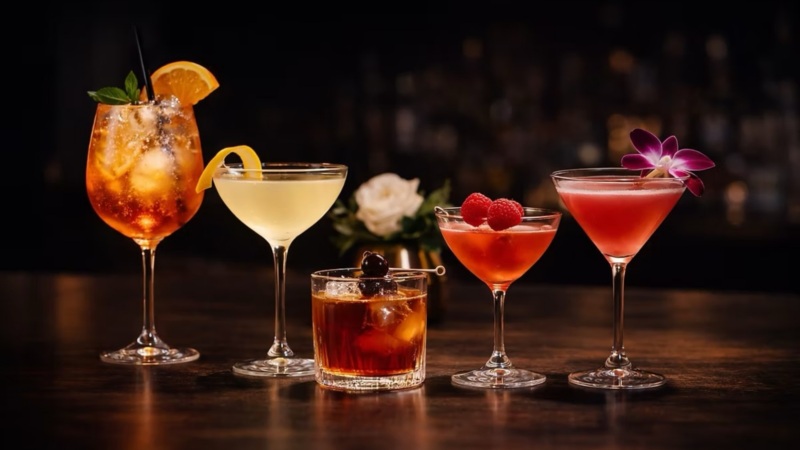
I think the biggest change in ordering and menu mix is on the drink side. When we opened we had six really cool beers, and Miller High Life and Hamm’s. We had our cocktails and wine, and that was the menu for five years. Now, you better have a substantial N/A program that is creative and interesting and just as thoughtful as the regular cocktail menu. THC-based drinks are important, seltzers of some sort, N/A beer, and cider. We still try to carry as many one-off, unique beers, but we also have a big section of really high-end European beers because the 800-year-old Belgian Trappist monks aren’t going anywhere. My partner Brandon [Phillips] treats the beverage program just like a chef — he’s prepping nonstop, everything is made in house and is very seasonal. Our beverage program unfortunately maybe flies a little under the radar because everybody’s talking about the restaurant, our history, the duck, and the hot dog.
How did that hot dog get so famous?
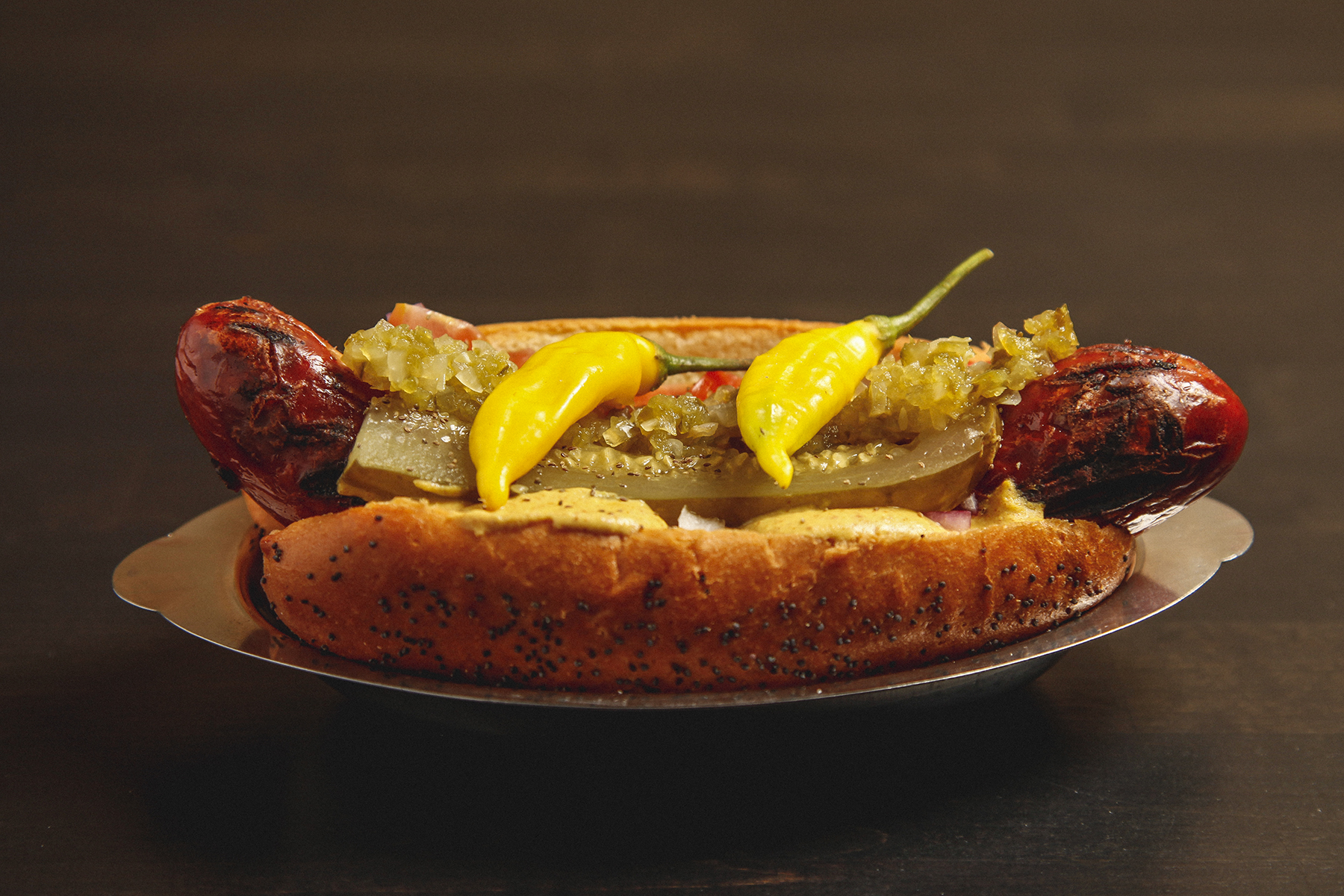
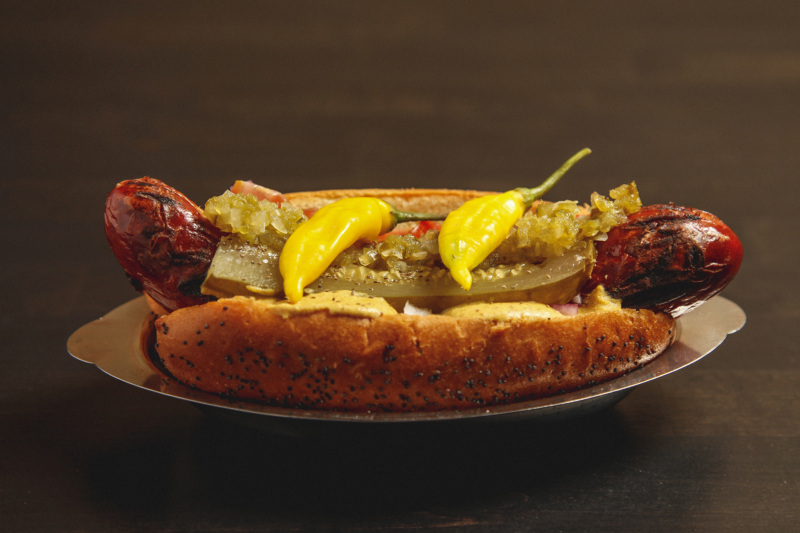
I started doing it at The Four Seasons Chicago during a Crosstown Classic event for Common Threads. I created a hot dog and I did it five years in a row with different competing chefs. The hot dog just kept growing into a legend and eventually made it onto the bar menu. When I opened The Duck Inn I knew I had to bring it with me, but I had to make it a little different from the Four Seasons because they kept it on the menu. I formulated a new recipe using duck fat and beef fat with a 100-year-old sausage-maker in Bridgeport called Makowski’s Real Sausage. We sell 150-175 hot dogs a week.
Are there dining trends you hope to see more of in 2026?
I hope I see Chicago move the meter a bit on how often we go out to eat … So long as people go out to eat more, and on nights other than Friday and Saturday and times other than 7 p.m. That’s what I’d love to see.
When you look at restaurants now, what gets you the most excited?
A restaurant with cozy, intentional atmosphere. Lighting is huge for me. I cannot stand a restaurant that doesn’t pay attention to lighting—when the lights are jacked up super high or there are dark spots. And then as far as food goes, I want a restaurant to do what they do best. If they’re going to get very creative that’s great, if not just keep it simple. The most exciting restaurant for me food-wise right now is Mirra, which is a mashup of Mexican and Indian. It’s the most exciting thing I’ve put in my mouth the last couple of years.
How do you drive revenue in winter?
We’ve always offered stuff during the week to get people in on off nights, and we’ll continue to do that. Monday nights are “burger lab,” where everybody can create their own burger. Tuesday nights we do a prime rib dinner with half off bottles of wine, Wednesday nights we’ve been doing pizza in the wood-burning oven when it’s warmer out, and fried chicken on Thursdays. We’ve done pasta nights in the past. I really want to do Parmigiana night, rotating chicken, eggplant, or pork chop Parm. I also want to do a cool affogato. I’ve been obsessed with affogato for the last 40 years.

How can other restaurants thrive in the winter?
You’ve got to make it feel like the season. My wife does all the decor and the garden, so for fall she replanted flowers and put baskets in front of the restaurant with fall foliage and pumpkins. We’re closed on Thanksgiving and Christmas but we offer cook-at-home holiday dinner feasts. During Covid, they did spectacularly. We don’t sell as many now, but we still sell a lot. Goldbelly is a big thing for us all year long, we sell hot dogs and rotisserie duck packages. I don’t know if you’ve ever seen this place at Christmas time, but it’s insane. We go over the top with decorations and music, and people love it. You’ve got to roll with the seasons and the climate and give people a reason to come out. Just doing business as usual in a city like Chicago isn’t going to cut it in winter.
What is a successful restaurant to you?
One that continually makes their customers happy. We’re in the business of hospitality and I think that’s what worries me most about the restaurant industry: a lot of the trends are anti-hospitality. I was born and raised in old fashioned hospitality. I hear a lot of different language being used by staff sometimes about all these people walking in acting entitled and my response to that is always, well, the moment they walk in the door, they’re entitled to have a hospitable experience. So you should be greeting them warmly and welcoming them into your space, and providing a great experience. So if the sidewalk’s not clean and the front door is not clean, and you don’t greet them with a smile and they don’t get the table they reserved reasonably close to when they reserved it, then we’re failing before we’ve even started.
Why is hospitality so important to today’s diners?
They’re coming out for an experience. They can cook at home and the home cook is 100 times better than he or she was 10, 15, 20 years ago. They have so many more resources and so much better food to buy than ever before. They can figure out how to make themselves a beautiful piece of fish, or they can go out and buy a beautiful cut of pork and take it home and watch a YouTube thing, so why should they go out to eat? Because we’re going to give them more than what they’re having at home. The food is only a small part of it; it’s the atmosphere, it’s the service, it’s the hospitality.
Liz Grossman has been a Chicago-based writer, editor and storyteller for 25 years. She’s the former editor-in-chief of Plate magazine and co-founder of the nonprofit storytelling series, Between Bites. Her writing has appeared in Newsweek, Chicago, Robb Report, Flavor & the Menu, and more. Follow her @elizabites_Chi, and follow @Resy while you’re at it.