2. The menu is focused on Korean-Chinese food, executed with French technique and a New York point of view.
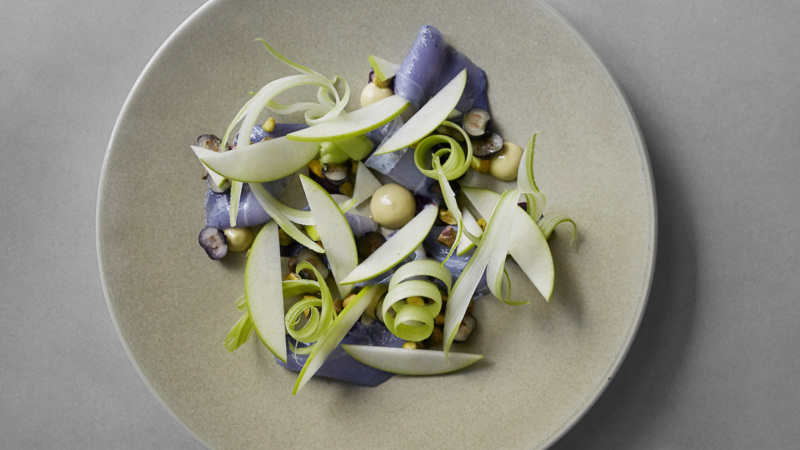
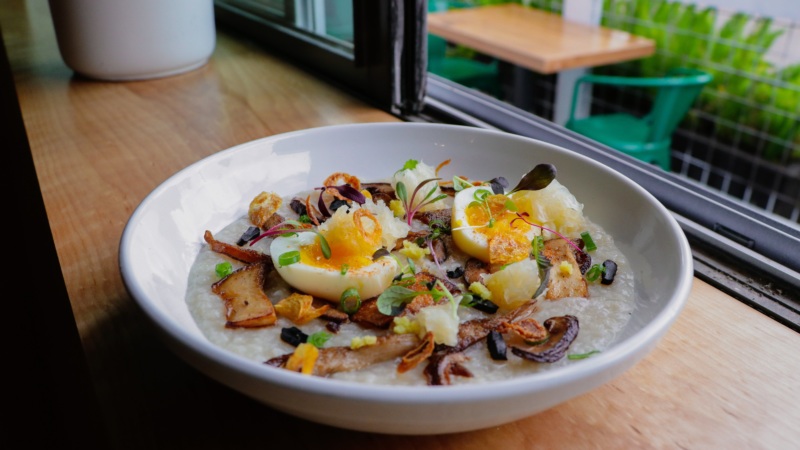
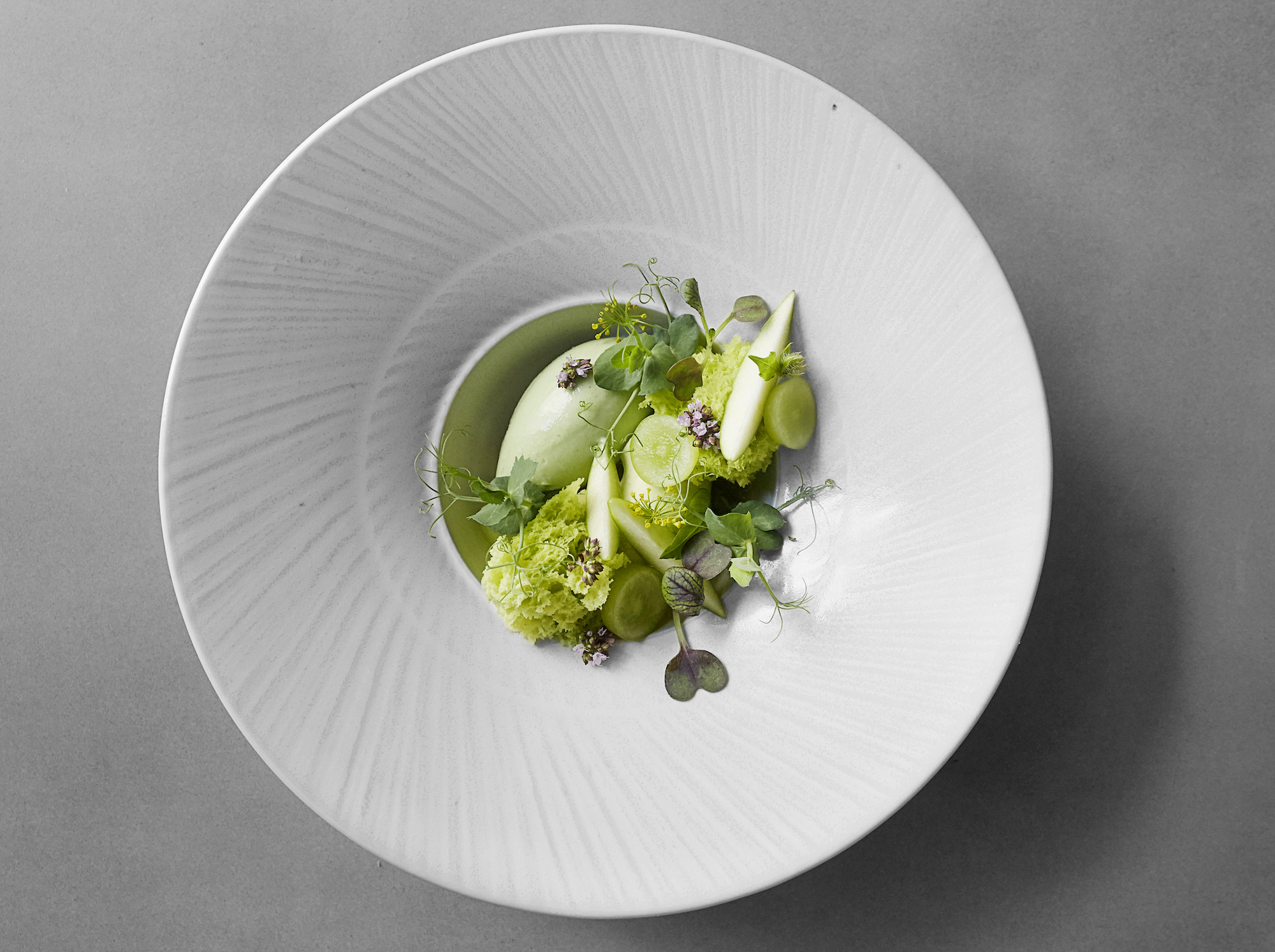
Joomak Banjum offers two tasting menus — the six-course Ugly Duckling Tasting ($125), and a four-course menu ($85) with four options for each course — that showcase the team’s signature take on Korean-Chinese cooking. “There are three different kinds of cuisine in one dish here,” Kim says. “There’s Asian cuisine, French cooking technique, and a New York feel.” For instance, for the jajangmyeon, a noodle dish with a black bean ragu common in Korean-Chinese restaurants, Kim didn’t want to make “the noodle everyone’s making. With my background in pastries, I used to make sourdough bread a lot, so I thought, ‘why don’t we make the noodles out of sourdough?’” Instead of the classic black bean sauce, Skiber incorporated his Long Island roots through a clam sauce with caramelized onions and parmesan. Other dishes include blueberry-cured sea bass, a pop-up favorite, and a truffle kung pao chicken. “A customer recently asked me, ‘What is New York cuisine?’” Kim says. “There are no borders.”
3. A commitment to fine-dining quality doesn’t mean stuffy service.
The name Joomak Banjum means “tavern” and “Chinese restaurant” in Korean, and the tavern ethos is very much at the restaurant’s heart. After New York’s lockdowns, “we wanted to do the tavern because we’d been missing so many of our industry friends. We wanted to know what’s going on and who’s doing what — this industry has a lot of gossip,” Kim says, laughing. As he explains, part of the rationale behind the tasting menu was to have less inventory, keeping food costs down and guests’ checks lower while still serving high-quality ingredients. As general manager Forrest Foster recalls of his time at The Modern, “I’d approach tables wearing a bespoke suit, and it wouldn’t matter how friendly or down-to-earth I am, there was a barrier that couldn’t be broken. I want to provide an environment where people feel like they’re supposed to be there.”
4. The wine program is all about exploration.
One way Foster hopes to help create this welcoming atmosphere is through the wine list, which offers a wide range of price points but isn’t organized by cost. “I wanted to make sure people could read the whole list, and find something within your budget in every section.” He notes a focus on South African and Australian wines, particularly from the Yarra Valley in Victoria, where, he says, “there are a lot of winemakers who worked in Burgundy making incredible wines that people are totally underexposed to.” He sees the list as ever-evolving, responding to his own vision and the tastes of the clientele. “Ultimately, I’m able to have a program that’s educational, and people are looking for that experience, which is amazing,” he says.
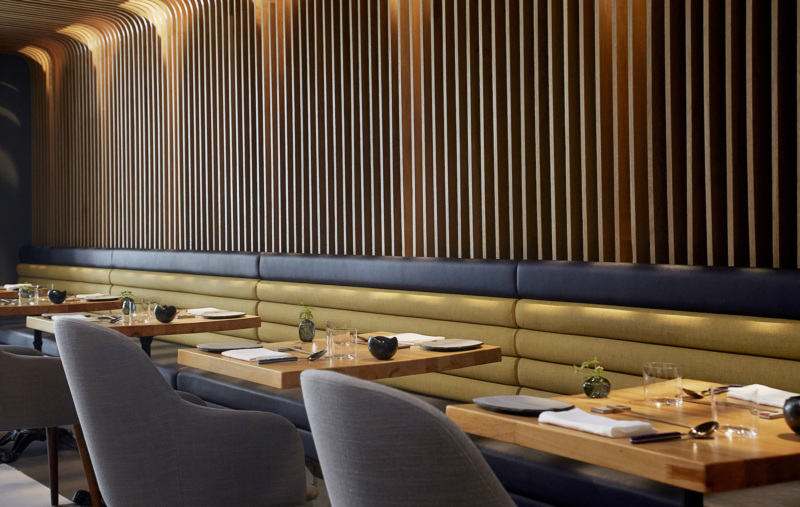
5. The space is warm and low-key.
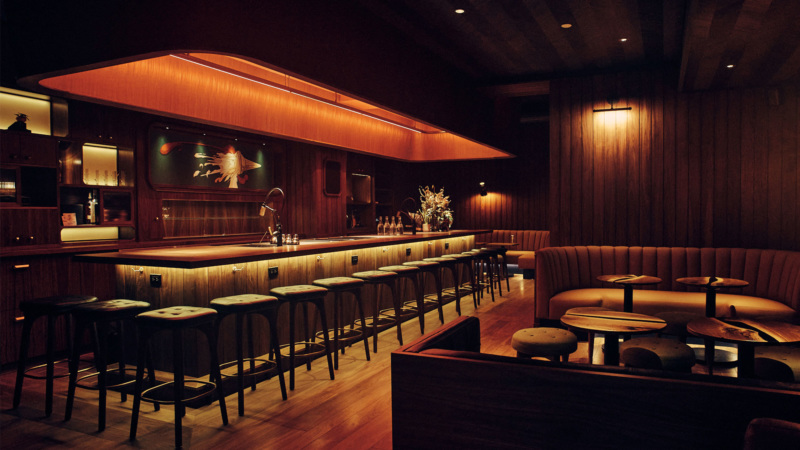
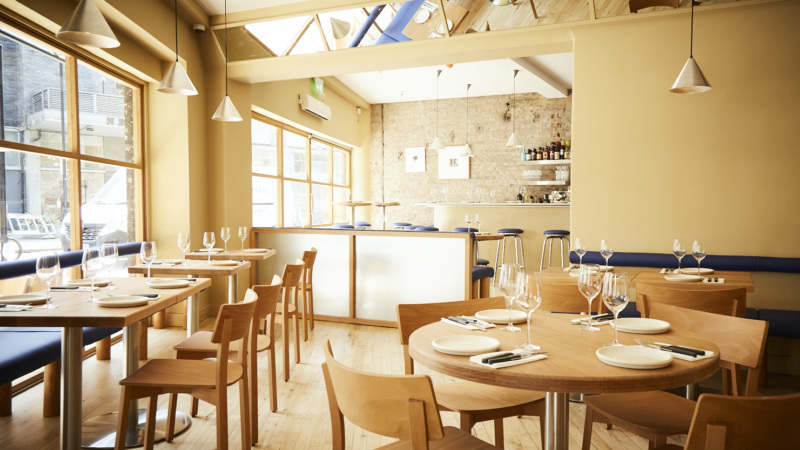
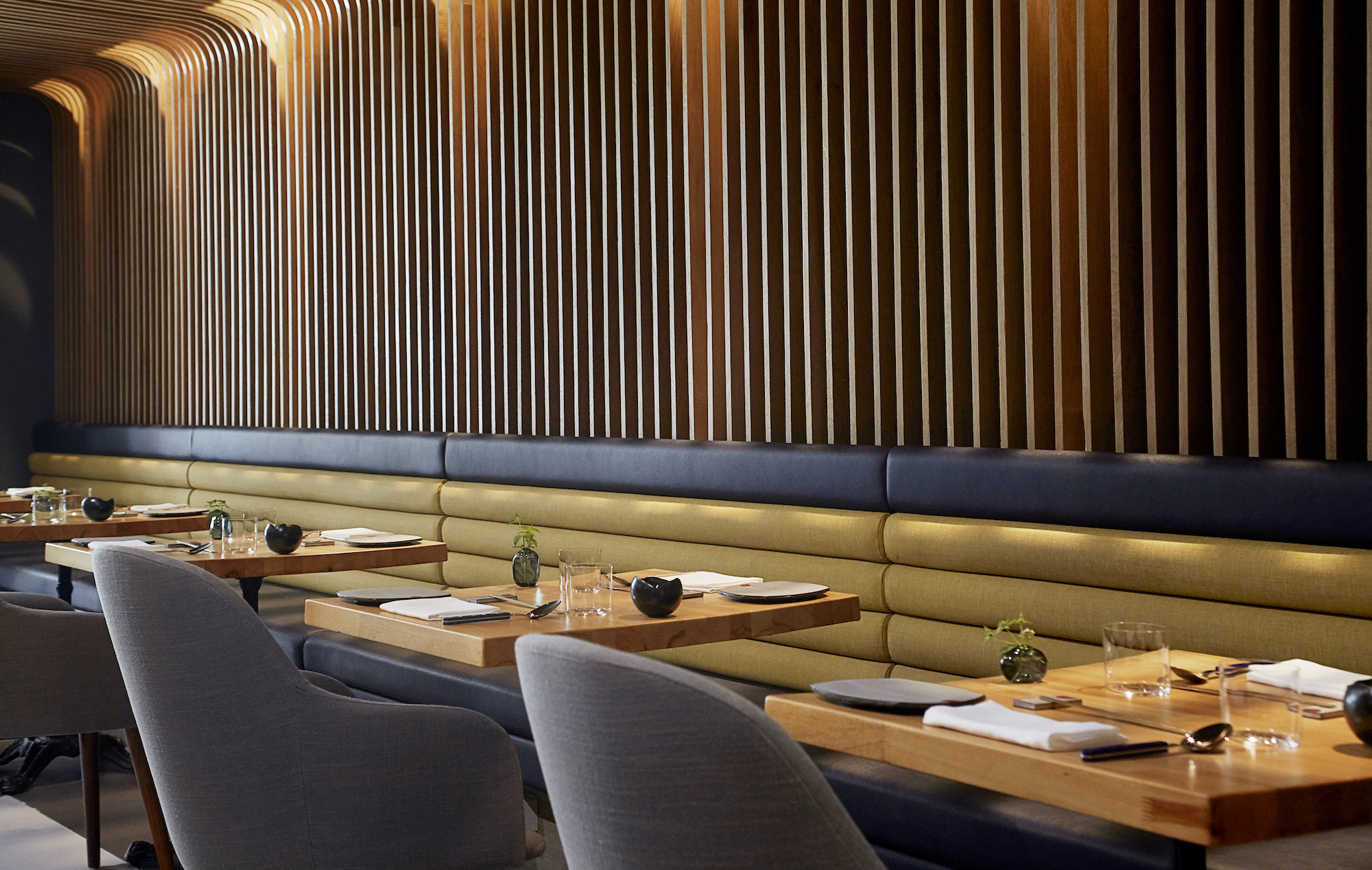
The team focused on adding what Nam calls “neutral, natural” materials like marble, concrete, and wood to upgrade the previous Konbini interiors. “I really wanted to use wood because I want the space to be inviting,” Nam says. “I didn’t want that cold vibe that a lot of fine dining restaurants tend to do.” Kang adds: “We’re a very tight-knit team here, and we want everyone to feel that, and for guests to feel like they’re in their second home.”
Lauren Vespoli is a New York-based freelance journalist who has contributed to The New York Times, Vox, Atlas Obscura, and more. Follow her on Twitter. Follow Resy, too.