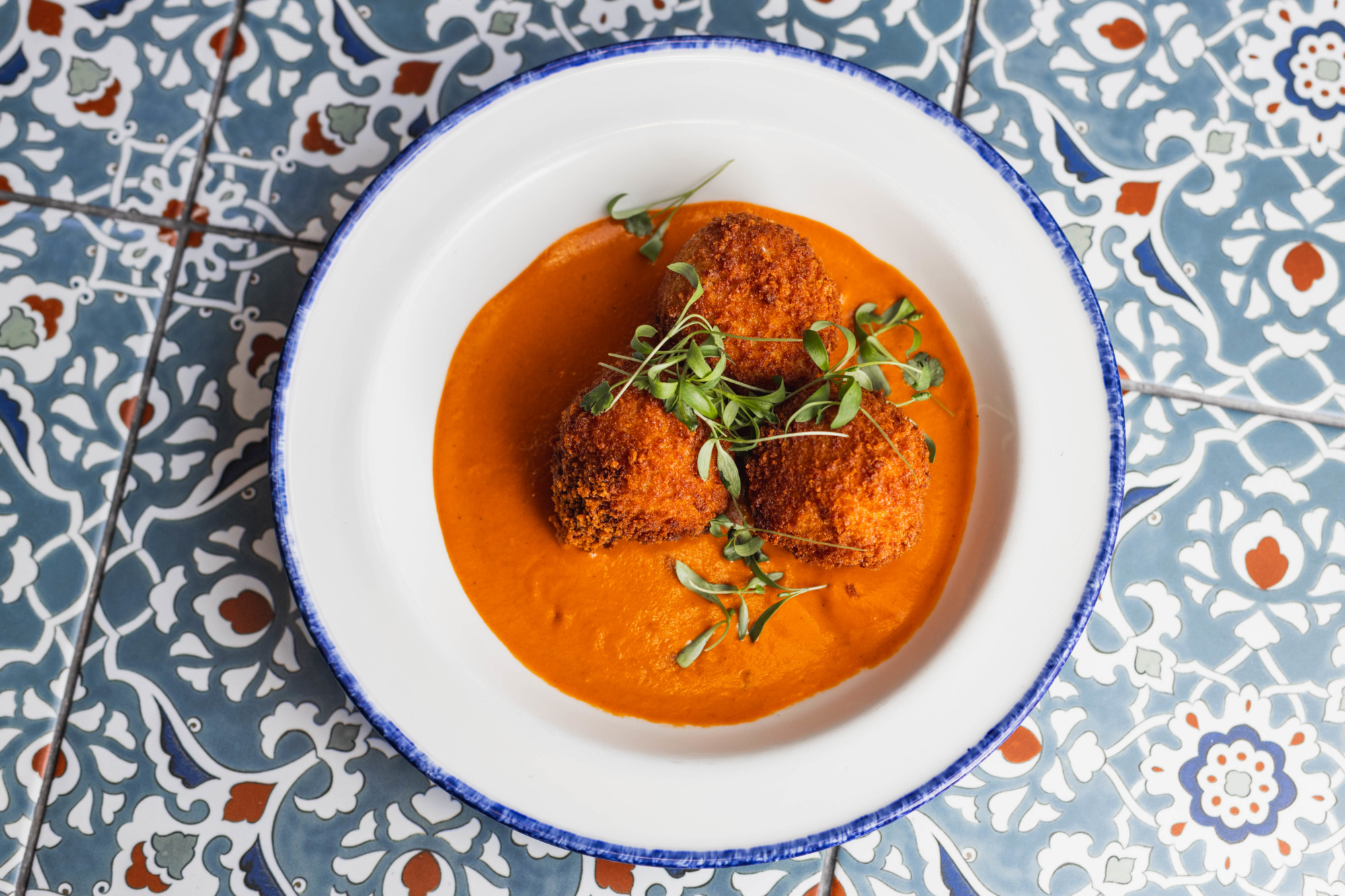
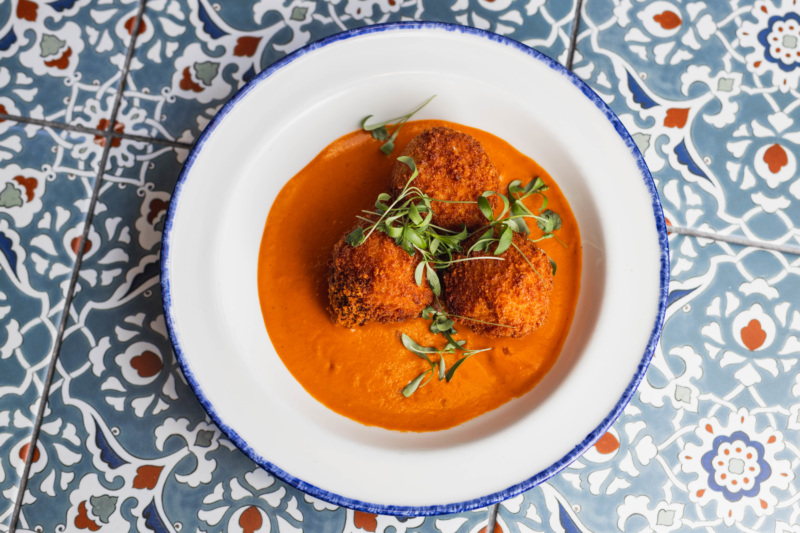
Butter Chicken Croquettes
“This appetizer is one of our top sellers, and it has the perfect combination of Portuguese and Indian influences. The croquette itself shows the Portuguese side, and of course butter chicken is one of the most iconic Indian dishes of all time.
We marinate the chicken for 48 hours in a tandoor, which lets the ingredients simmer down slowly. For the first 24 hours, we marinate the chicken with ginger, garlic paste, and salt. For the second day, we add chile peppers and yogurt to tenderize the chicken. Then we mince it, add cheddar cheese and breadcrumbs, and fry it into little balls.
It’s served with our makhani sauce, which is a real fan favorite. It takes eight hours to make, just because we add each ingredient and let it cook down slowly before adding the next, for more complexity. It’s a rich, creamy, tomato-based sauce with roasted red pepper, butter, and cream. You get the crunchiness from the croquettes and the creaminess from the sauce, and it’s just the perfect snackable option to enjoy with a drink.”
Samosa Bomb
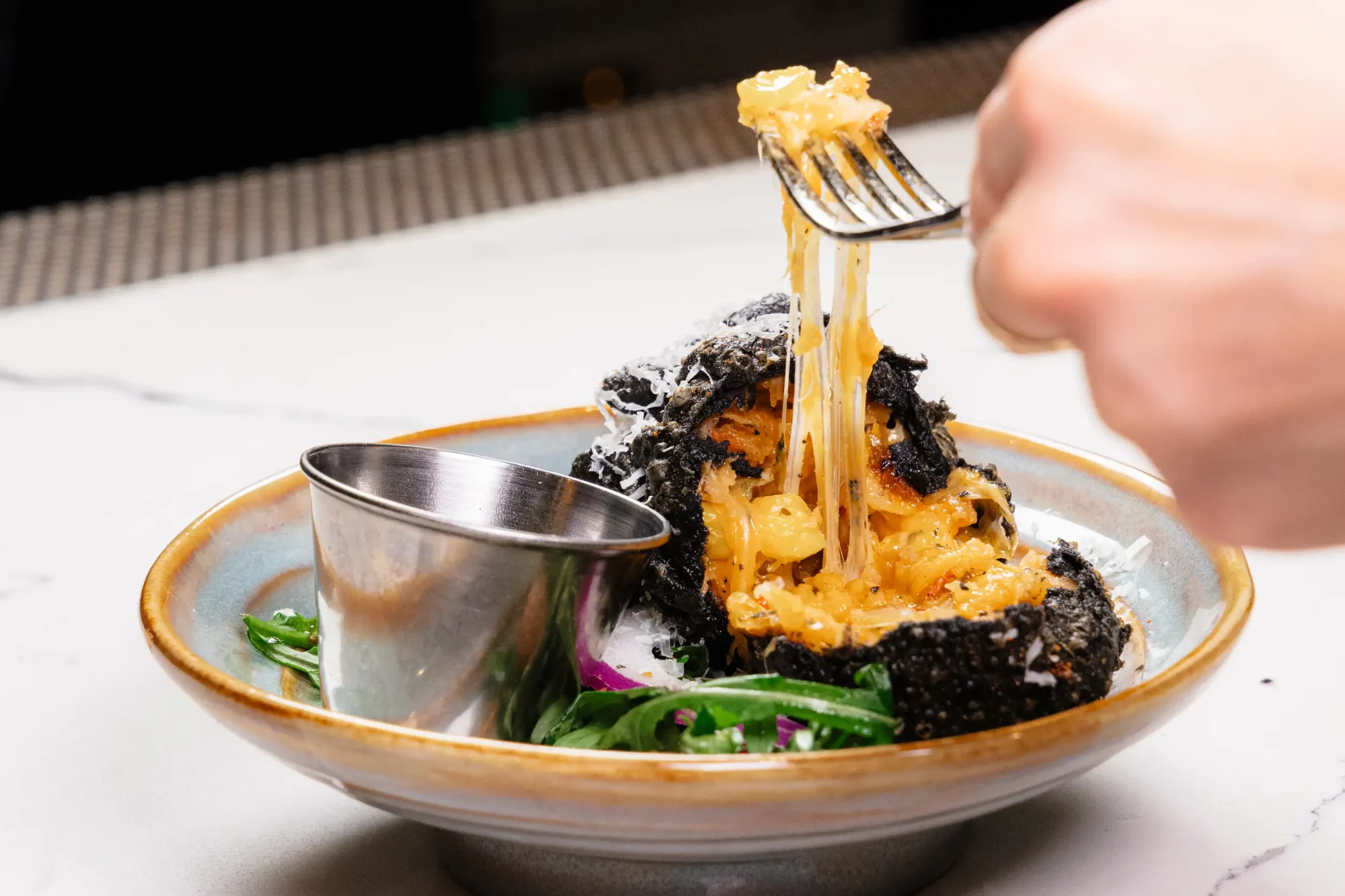
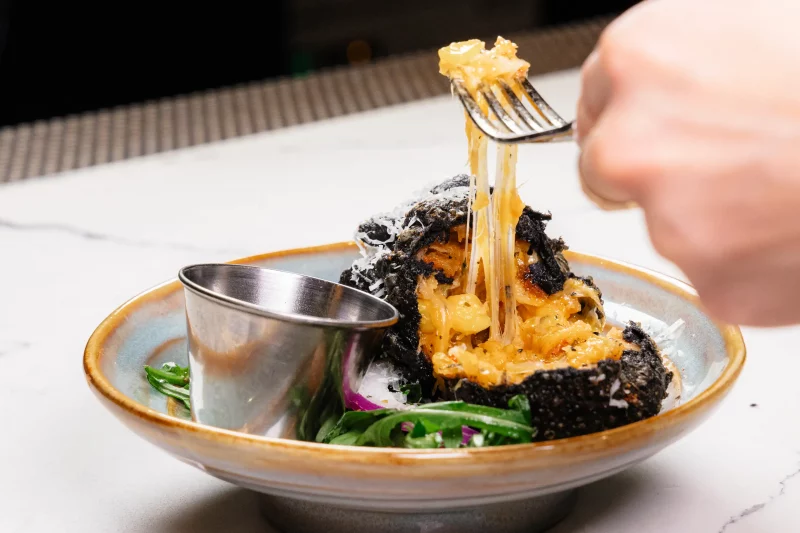
“I’m sure you’re familiar with samosas. Everyone knows samosas. They’re usually filled with a potato and pea mixture and some restaurants will actually just buy them frozen because they’re a lot of work to make in-house, between the dough, the filling, and the frying. But Bobby wanted to do something more unique because our customers tend to like things that are a little bit more fun and interactive.
He calls this a samosa bomb because it comes out looking like a bomb. You’re like, “Whoa, what is that?” when it arrives, but it tastes exactly like a samosa. There’s activated charcoal in the dough which gives it that black color, then it’s filled with sweet cooked corn, ginger, onions, mint leaf, chili and Black Bomber extra mature Cheddar. It’s shaped into a round bomb shape and flash-fried, and served with a mint chutney which has coriander, mint, lemon juice, ginger, and garlic.”
Railway Lamb Curry
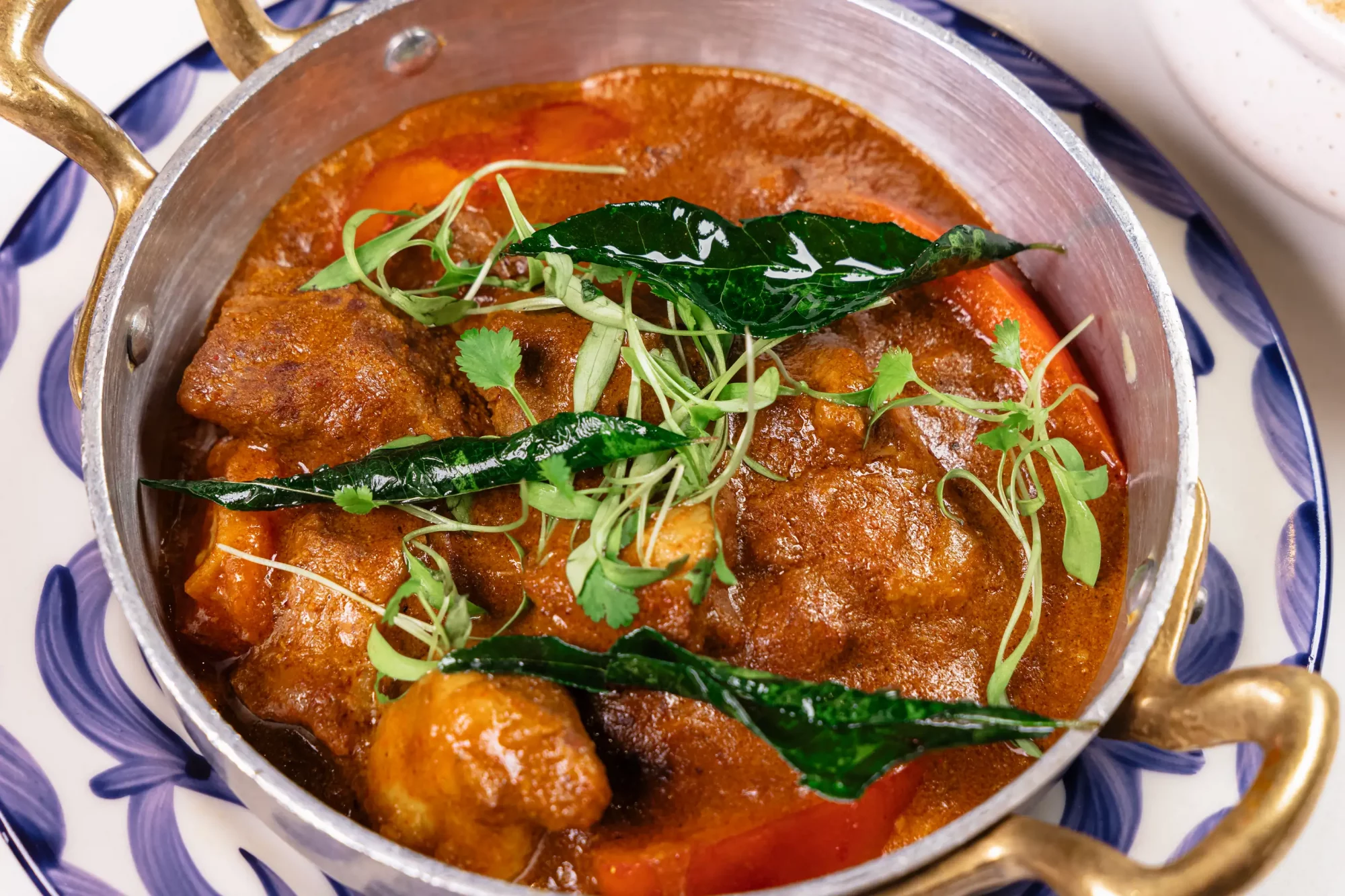
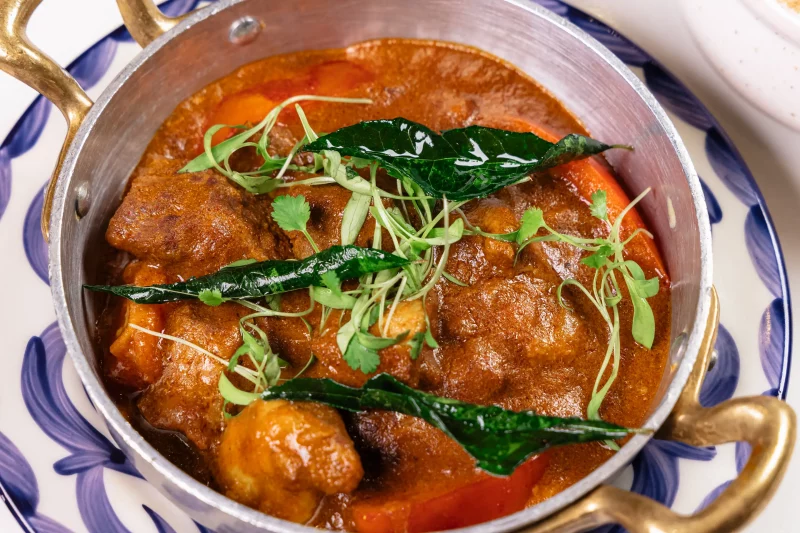
“This one is inspired by a good story. India is a lot like Europe in the sense that people travel long distances on trains to get from state to state. Railway Lamb Curry is actually served on these trains, so it’s a nostalgic homestyle dish for a lot of Indians. It’s just something that travels very well and even tastes better the next day.
Ours is made-to-order. We pressure cook lamb shoulder with turmeric powder, chile powder, coriander, green chiles, onions, and chicken stock. Then we add sliced fresh tomato and curry leaf before it’s served. The curry can be eaten with either malabar paratha, which is similar to a flatbread, or with pao bread, which is a soft, pillowy bun similar to a Hawaiian roll that’s popular in Goa. For this curry, there’s no cream or coconut milk to soften the spice, so you do get that bite in this one.”
Prawn and Chorizo Fried Rice
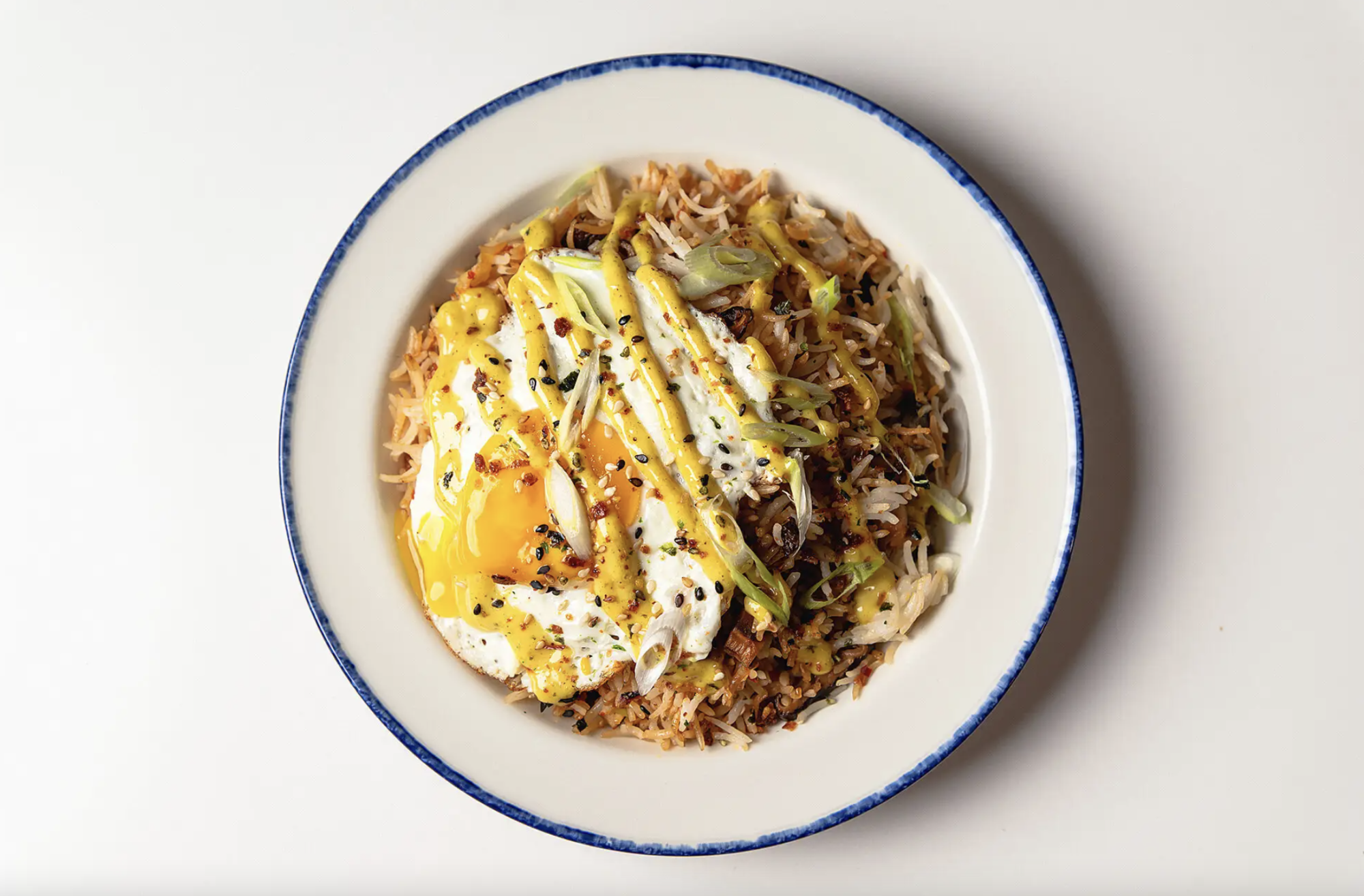
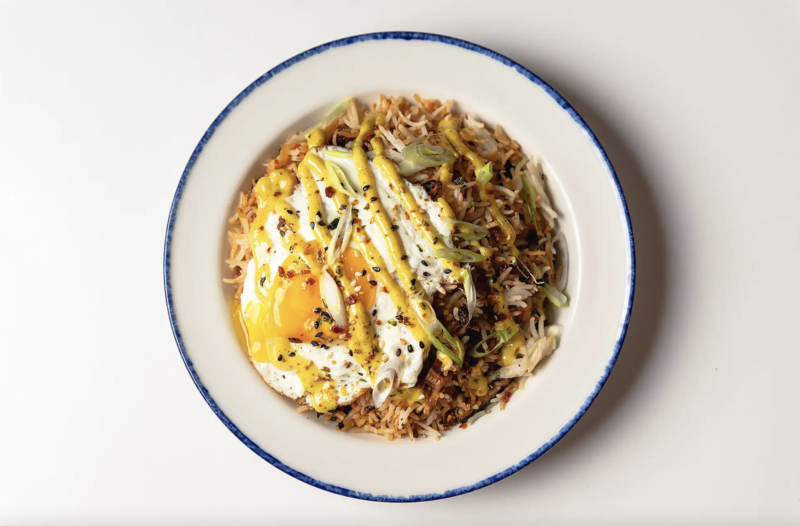
“Chorizo is an ingredient that was brought over by Portugal. So again, it’s something that’s very prevalent in Goa, but not so much in the rest of India. Since Goa is a party city, you’ll see a lot of street food carts selling chorizo paleo (paleo just means fried rice) at 3 a.m. for people leaving the clubs. And then of course Goa is also known for seafood, so that’s why those prawns are in there as well.
This dish is made to order so we can stir-fry the Spanish chorizo, prawns, basmati rice, and scallions, then we add a fried egg on top and serve it with a drizzle of madras curry aioli. (We also have a vegetarian version available with mushrooms, pictured.) We make the aioli in house, flavoring it with madras chile powder that has spices like turmeric, coriander, and curry leaf.”
Pork Vindaloo Sliders
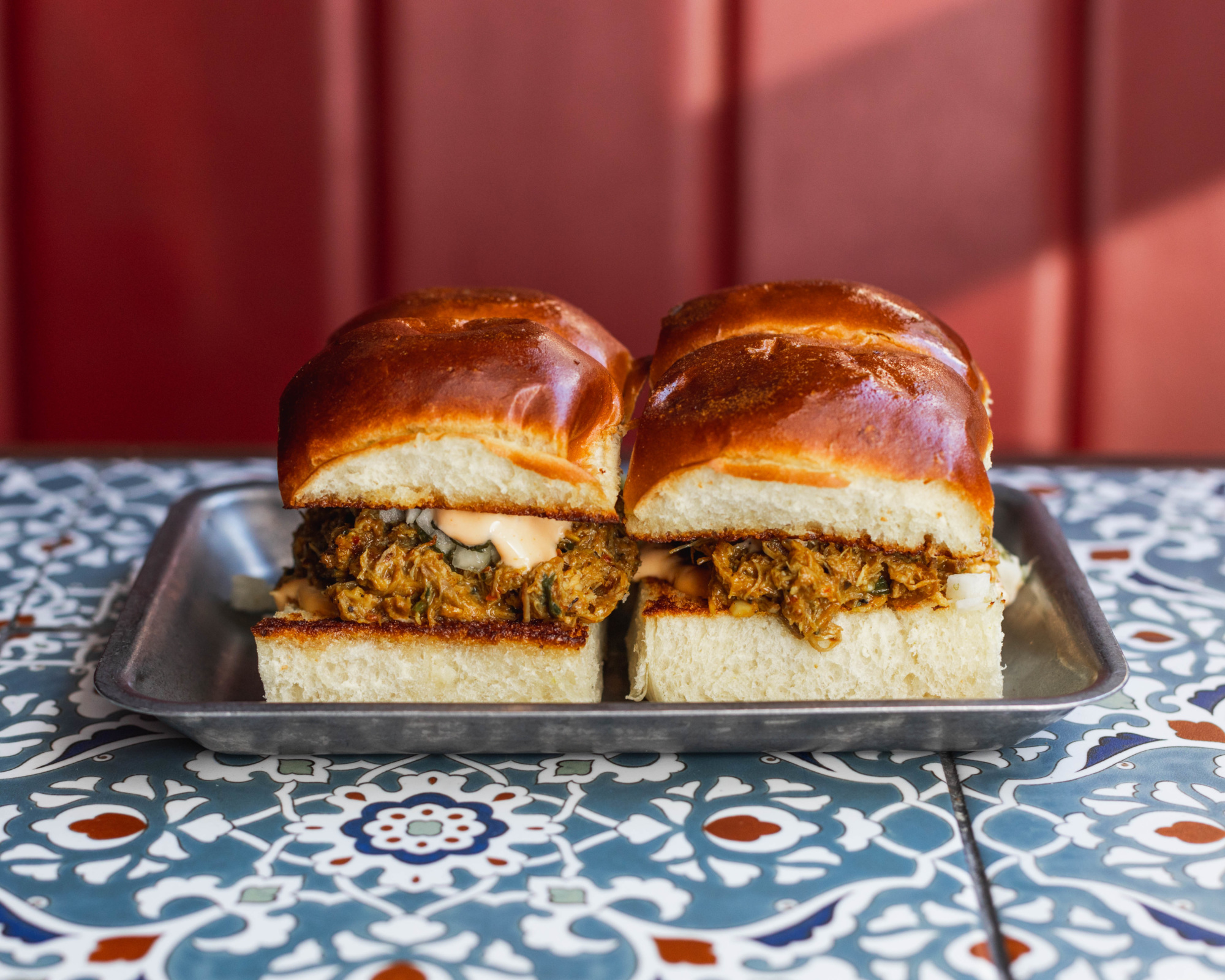
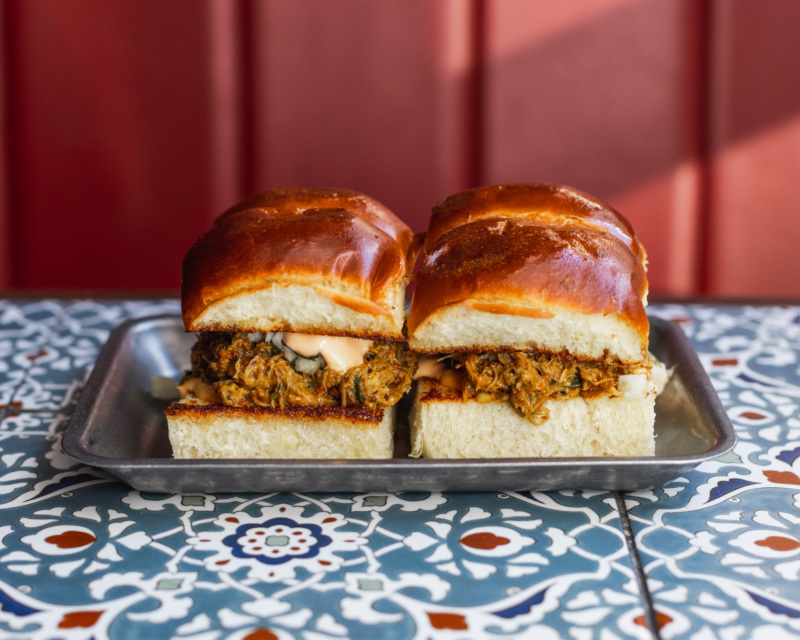
“This has a good story. Vindaloo, which many people believe is a traditional Indian dish, actually comes from Portugal. Portuguese explorers preserved their meat in vinegar and wine, and when they came to Goa, the Goans put their own spin on it by adding spices and chiles. Goans use a lot of vinegar and coconut milk to add richness, as opposed to butter and cream. The vindaloo dish that you see on many Indian menus is usually served as a curry, but we made it into sliders.
We slowly braise the pork for hours until it falls apart, then it’s cooked in coconut milk with vindaloo paste: a mixture of jaggery, tamarind, cloves, coriander, kashmiri chile white vinegar, malt vinegar, cloves, and Kashmiri chile—it’s almost like a barbecue sauce. We also make a vindaloo mayo by combining some of that vindaloo paste with our homemade mayo. It’s served on that soft pao bread I mentioned earlier. We then top it with a jicama salsa which has jicama, pineapple, salt, and lemon juice. The salsa just adds that little bit of acid, and citrusy notes so it’s not too heavily spice focused.”
Elanor Bock is a Chicago-born professional writer, dancer, and Renaissance woman. Follow her on Instagram. Follow Resy, too.