How Emelina Is Dreaming Cuban Food Forward
Published:
For Emelina chef-owner Osmel González, food was a part of his life long before he imagined a career in a restaurant kitchen. Growing up in Cuba, meals were anchors of family life: breakfast, lunch, and dinner eaten together at home with his mother’s cooking setting the standard. González studied food chemistry and worked in a factory producing ham, chorizo, and other charcuterie products. He was surrounded by food and its processes, even if he didn’t yet consider what he was doing as “real cooking.”
That changed after he moved to Miami at age 22. Impressed by González’s cooking at a family barbecue, a friend who owned a party rental business suggested he start a catering company she could recommend to clients. At first, he learned recipes from YouTube, turning out homestyle Cuban food alongside simple dishes like chicken piccata and mashed potatoes. One early experiment still sticks with him: warming guava marmalade with caramelized shallots to make a dipping sauce for croquetas.
“That was a very special moment, when you see that someone likes something you’ve done with your hands,” González says.
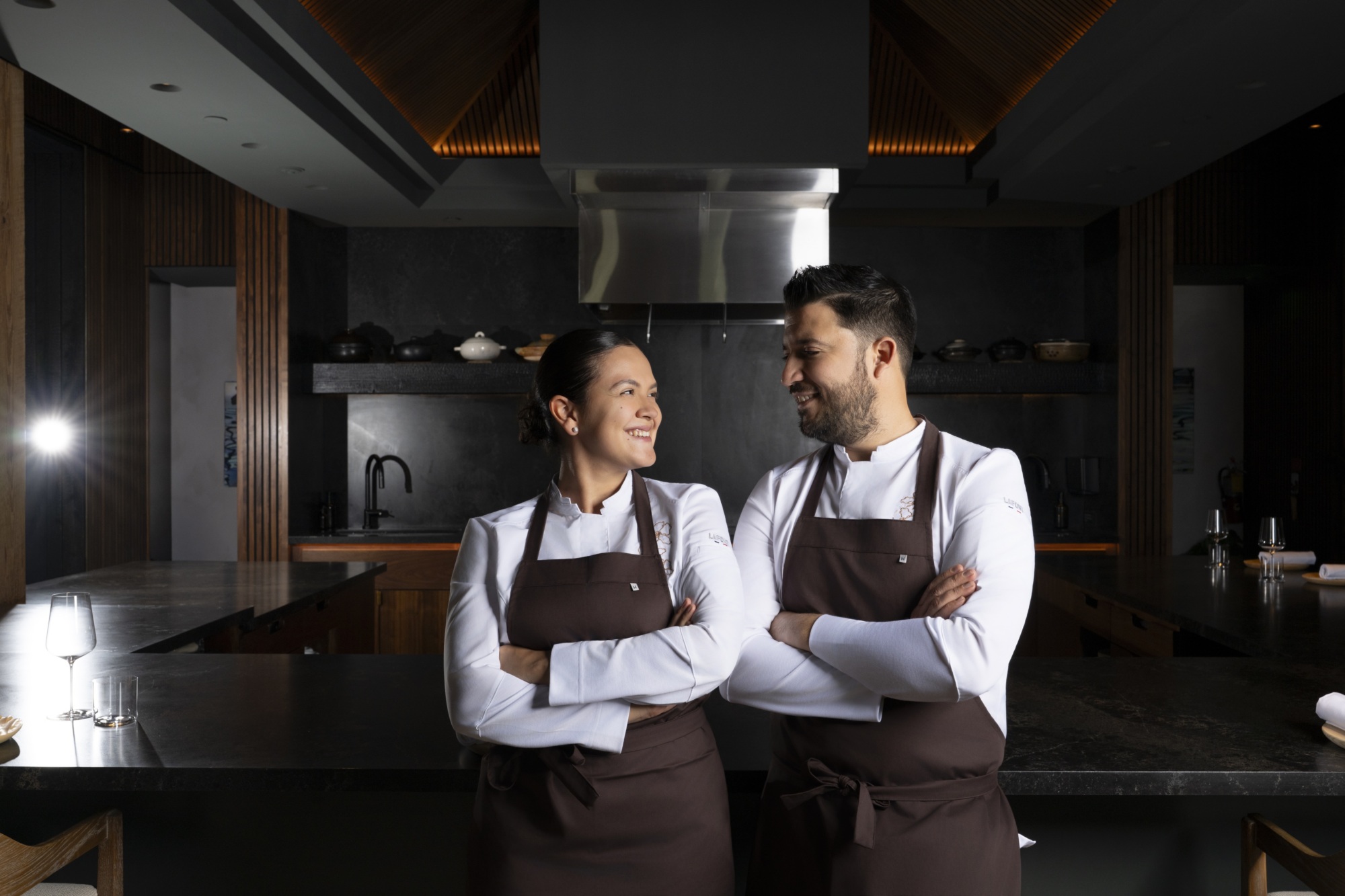
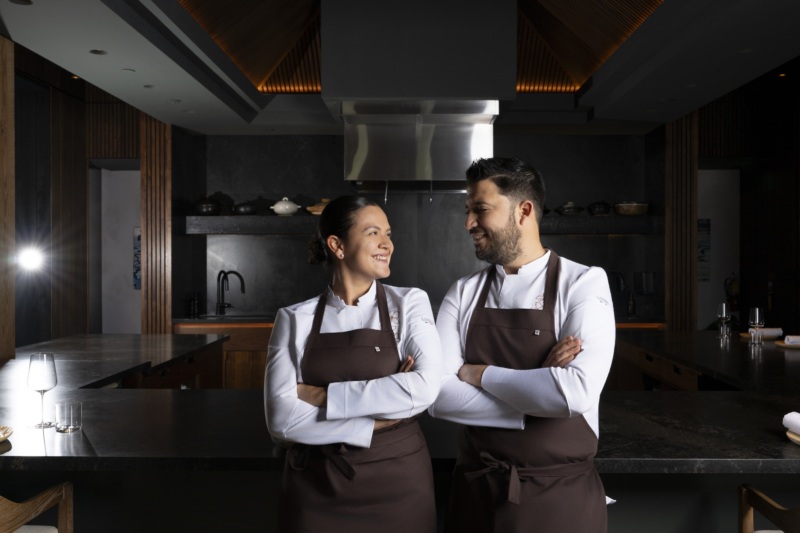
Chef-owner Camila Salazar’s route to the kitchen began in Colombia. She had been studying law before an illness interrupted her plans. While recovering, she found herself drawn to cooking programs and eventually changed course, enrolling in culinary school. After working in kitchens in Colombia and New York, she came to Miami through a work-study cultural exchange program at Jean-Georges Vongerichten’s Matador Room. That was where she met González.
From there, their personal and professional lives became intertwined. They pursued new cooking opportunities together, including time at three Michelin-starred restaurants Disfrutar in Spain and, later, SingleThread in Northern California. They worked different stations and sometimes had different schedules, but continued choosing the same kitchens, absorbing the same techniques and developing a shared language around food. Their years in California, in particular, left a lasting imprint, deepening their appreciation for seasonality, local producers, and Japanese approaches to craft and hospitality. “Our time in California really changed our life. We had a before and after California,” Salazar says.
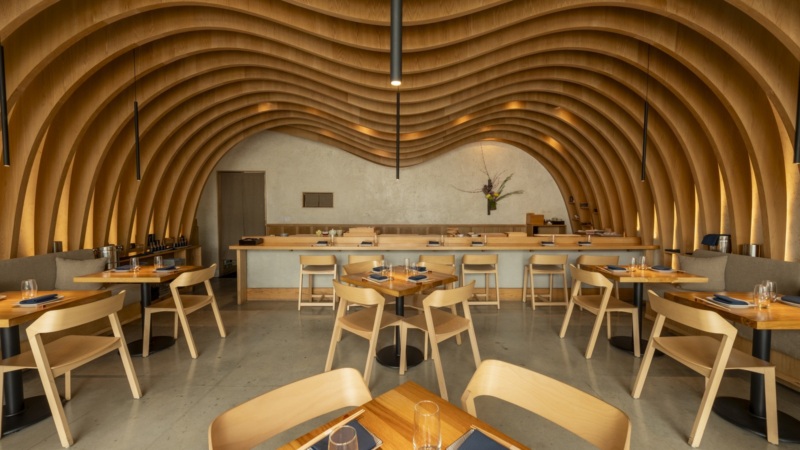
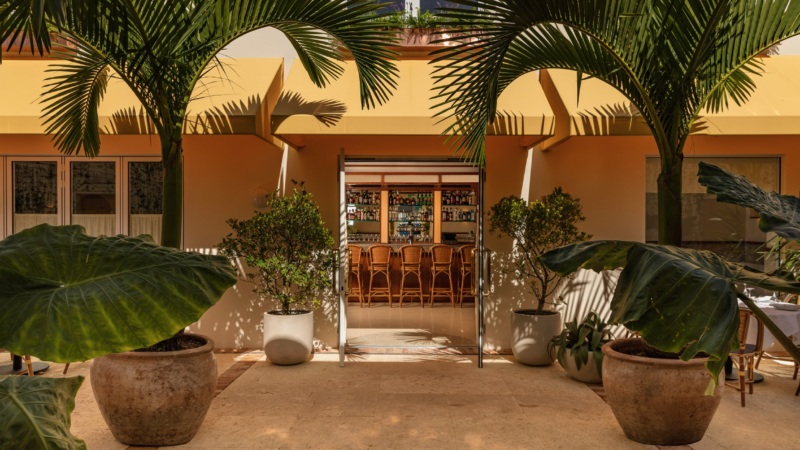
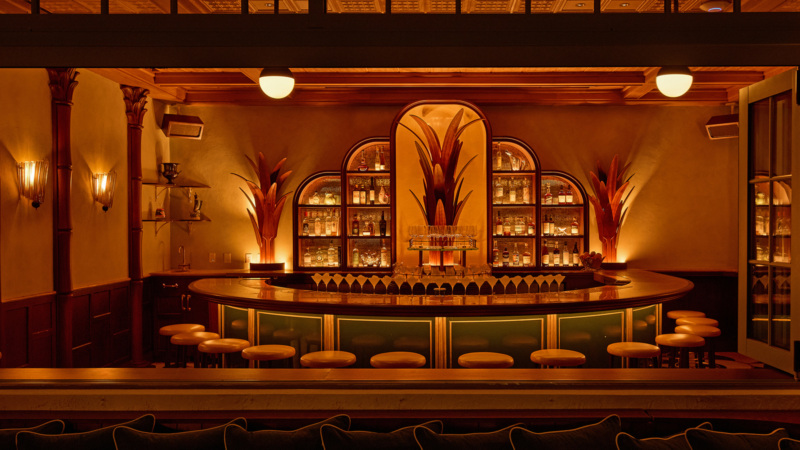
Those experiences eventually converged at Emelina, their intimate 16-seat chef’s counter restaurant in West Palm Beach that opened this year in partnership with APM Restaurant Group founder Alvaro Perez Miranda, known for Japanese hospitality concepts Ogawa, Hiyakawa, and Midorie 79th.
González and Salazar had originally imagined Emelina as a casual, classic Cuban restaurant. Then they found a small, refined space with a chef’s counter and saw another possibility: A fine dining restaurant that could ask what Cuban food might have become in an alternate timeline, without the current regime in power. What if, instead, Cubans had greater access to ingredients and opportunities for cultural exchange?
We sat down with González and Salazar to talk about the food memories that shaped them, building a life and career side by side, sourcing from Florida producers, and their evolving vision behind Emelina.
Note: This interview has been edited for clarity and brevity.
More From Resy






What are some of your favorite dishes and food memories from growing up in Cuba?
Osmel González: I was born in ’89, right before the Special Period started in Cuba. That was when the relationship between Cuba and Russia kind of ended, and Russia stopped giving everything to Cuba. When we had this Special Period, as they call it, there was no food, there was nothing. Cuba was going through this really rough time, and that’s when I was growing up.
Still, my mom was a great cook. My dad, to this day, doesn’t like anyone else’s food but hers. My mom would make this fried chicken, and she would put nutmeg in the mix. She called it “special chicken.” Every time she would make that, it would be the best day for me.
In my family, being at the table has always been very important. We never ate in front of the television or separately. It was always like, we’re sitting for lunch, we’re sitting for dinner, and even breakfast. So that was very important for us, to always be at the table together as a family.
What is it like working and running a business alongside your romantic partner?
Camila Salazar: The lifestyle you have when you’re a cook is really different from everyone else’s. It’s long, 16-hour days. You are always busy on important days like New Year’s and Mother’s Day, so I think it’s like doctors: It’s really difficult to date outside that culture, because they need to understand what you go through. That’s why you see so many couples in the industry, because they understand each other. And for us, we’ve always worked together, so it’s weird when we’re not working together.
González: We met working at the same restaurant, and from there, every job we took, we would go together. We would work in different stations, or sometimes have different schedules as well, but it was always at the same place. So we got used to being together and seeing each other in the kitchen. And I guess now it’s hard just to imagine doing something different.
How was the idea for Emelina born?
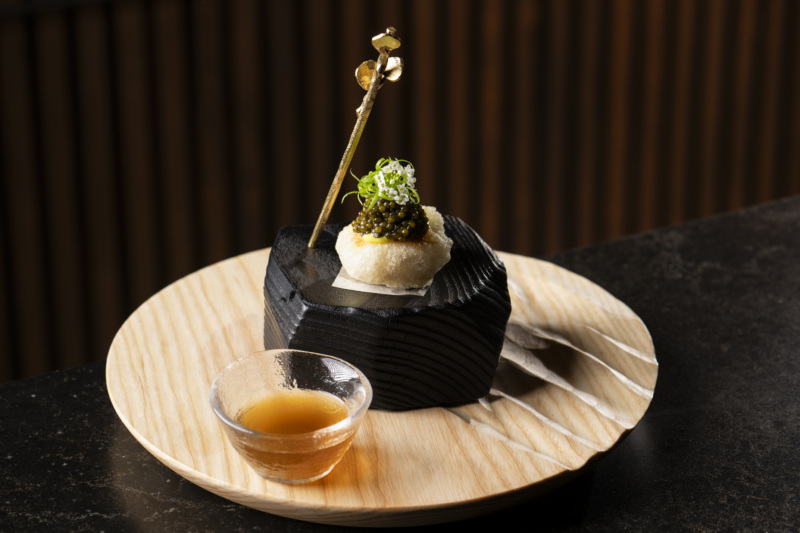
González: When we wrapped up the EntreNos pop-up in Miami and went looking at spaces to open a new restaurant, we came up with multiple concepts that we thought would be good depending on what the space was. And one of those was Emelina. The initial idea for Emelina was to be a classic Cuban restaurant: just Cuban food the way we know it.
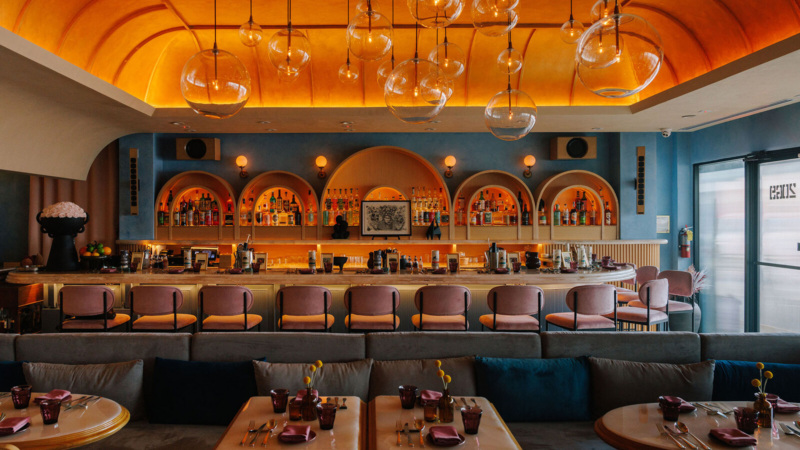
But when we came up here to West Palm to see the space that we have now, it was very refined, beautiful, with a small chef’s counter. Then we started to question: “OK, so what are we going to do with this?”
We’d been doing fine dining for most of our careers since we left Miami. We always thought that we would open a fine-dining restaurant one day, maybe in our 40s, not this early. Now the opportunity was right there in front of us to return to it. We evolved the idea of Emelina from being just a classic Cuban restaurant to something that would take on this idea of what Cuban food could be if we’d had the chance to travel, experience other cultures and flavors, and then bring that knowledge back to the island.
Can you tell us more about that philosophy behind Emelina, and how you’re reinterpreting Cuban cuisine?
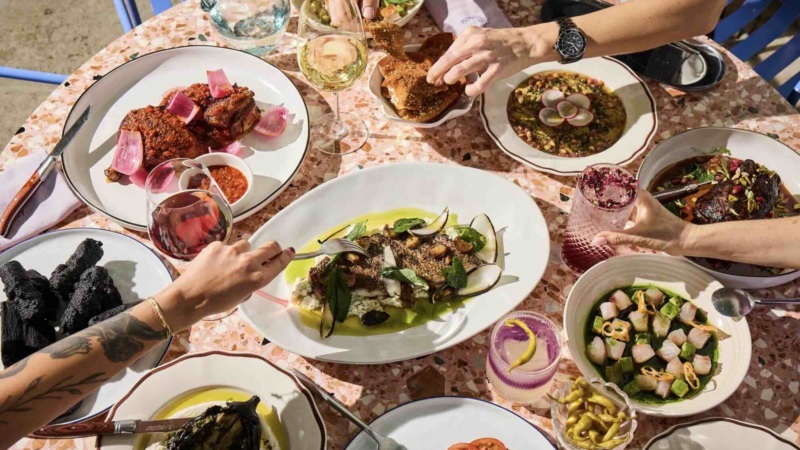
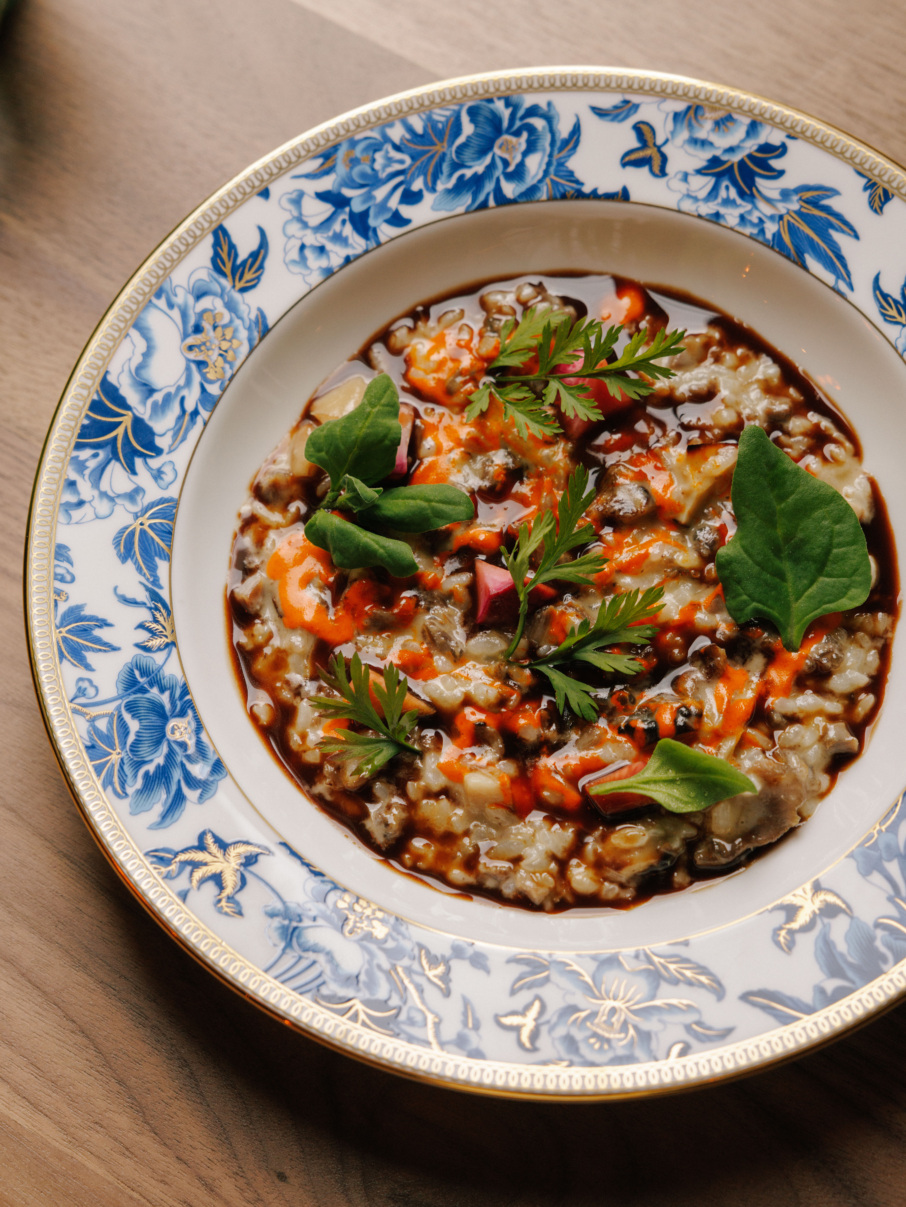
González: We are utilizing the same ingredients that we have in Cuban cuisine — we’re just presenting them in a different way. The idea is that we’re going back to the Cuba that we dare to dream about. This is our dream of what Cuban food could be, or could have been.
Obviously, every chef will have their own dream and vision and execute it differently. Some people will stay closer to traditional Cuban food and that is totally fine — we really love our roots and our traditions.
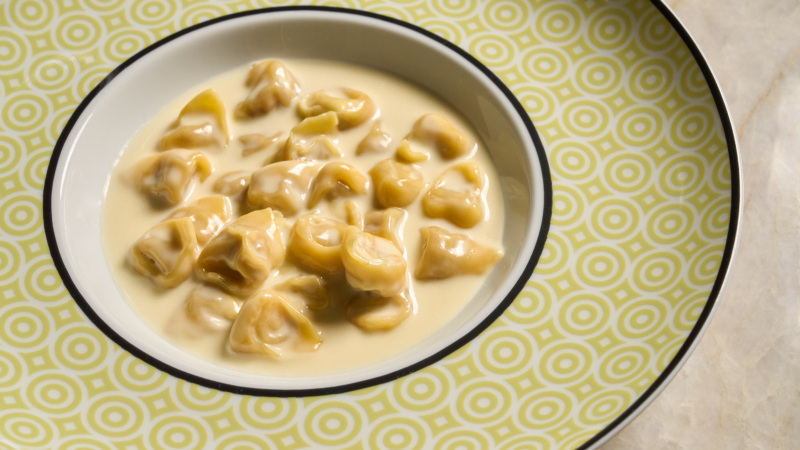
But for others like ourselves, we would like to bring new techniques to our traditions. We have rice and beans on the menu, it just looks different. If you taste our beans, then you’ll be like, “Oh my god, these taste like Cuban beans.” It’s just presented in a beautiful way.
Cuban food used to be very rich, and every region had its own way of doing things. When I grew up, I hated tourists because they were allowed to eat everything that we couldn’t have. And it was really tough. There was no seafood on our plates because you couldn’t get seafood. People in Cuba don’t have access to seafood unless you are from a fishing town next to the coast.
We’re a Cuban restaurant that doesn’t have pork on the menu. It doesn’t mean that we will never have it. But right now, we don’t have pork on the menu. Why? Because we have the ability to choose what we put on the menu, to choose what we’re going to eat.
In Cuba, we couldn’t just go out and buy a steak and have a barbecue on Sundays. But now, we’re here. We’re in a free country. We can choose what we eat. And we’re choosing to put a steak on the plate and dream of how we could have been eating a steak in Cuba. We’re doing it in a more fine-dining way.
That’s the story we’re telling with the food. Cuban food has not evolved — because there was just no food. People were just trying to survive instead of being able to get creative with food.
Why is it so important to you to source from local farmers and purveyors?
González: Having a connection with them is very important. Sourcing from local, small producers gives us the opportunity to make sure that we are bringing the best ingredients we can to the table, and also support small farms and producers.
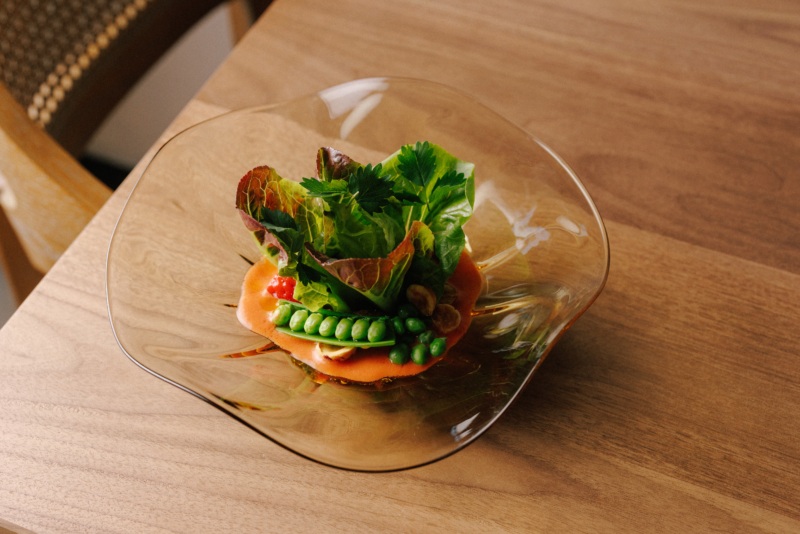
We’ve always had this mentality that we’re going to go with the flow, and that applies to our menu, too. For example, at Emelina, we don’t think about a dish and then go out looking for the ingredients. Since we work with small farms and local producers here in the area, we contact them first. We see what ingredients they have, and depending on what they have available, then that’s how we put the menu together. The farm and the season are telling us what to cook, not the other way around.
Tell us about a favorite dish on the current menu that you’re excited about and the inspiration or ingredients behind it.
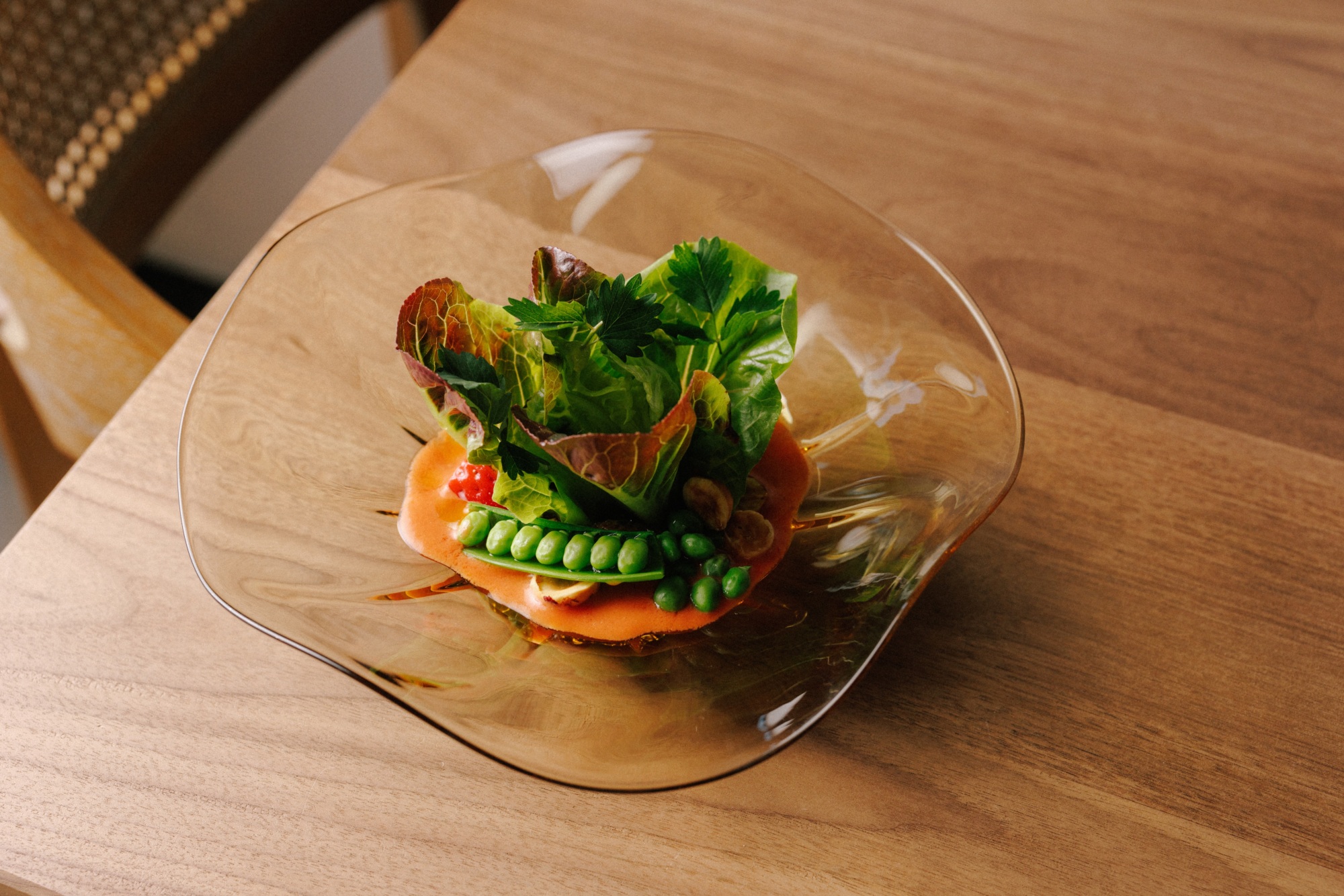
González: The salad dish has been fun to come up with because it’s all about the summer fruit. We have mango, sapodilla, lychees, dragon fruit.
We use local milk from Florida to make ricotta cheese and turn that into a smoked ricotta cream to go with the fruit. And we turn sapodilla into a barbecue sauce. We brought in some country ham from Benton’s Hams in Tennessee to balance the sweetness of the fruit, and pecans from North Florida as well. Then we add local herbs and a guava preserve that we made last summer [during guava season]. Before we even opened Emelina, we were preserving a lot of ingredients.
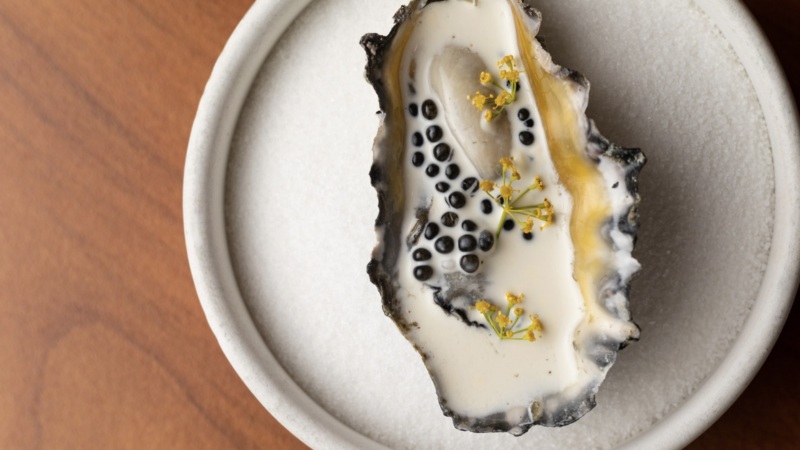
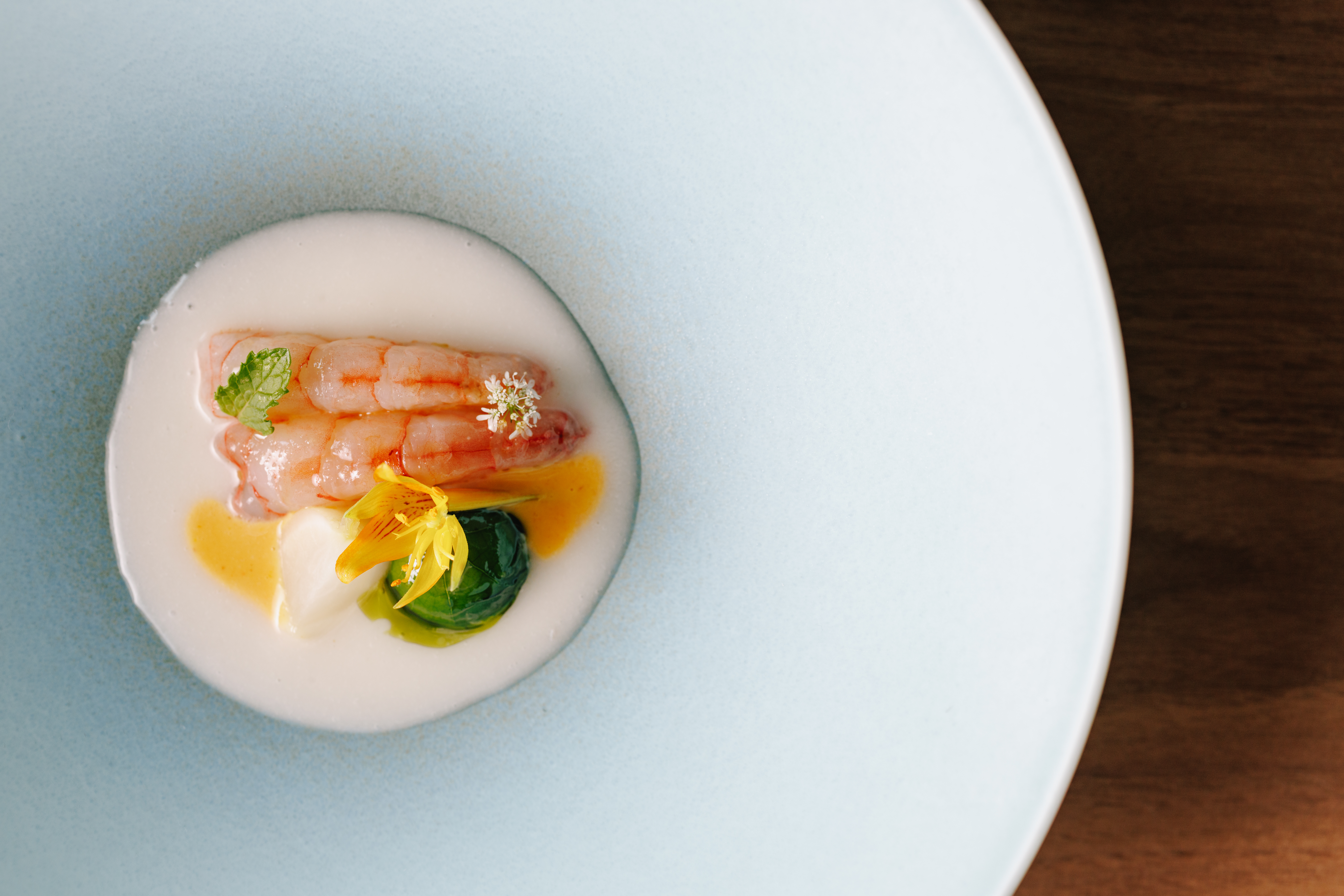
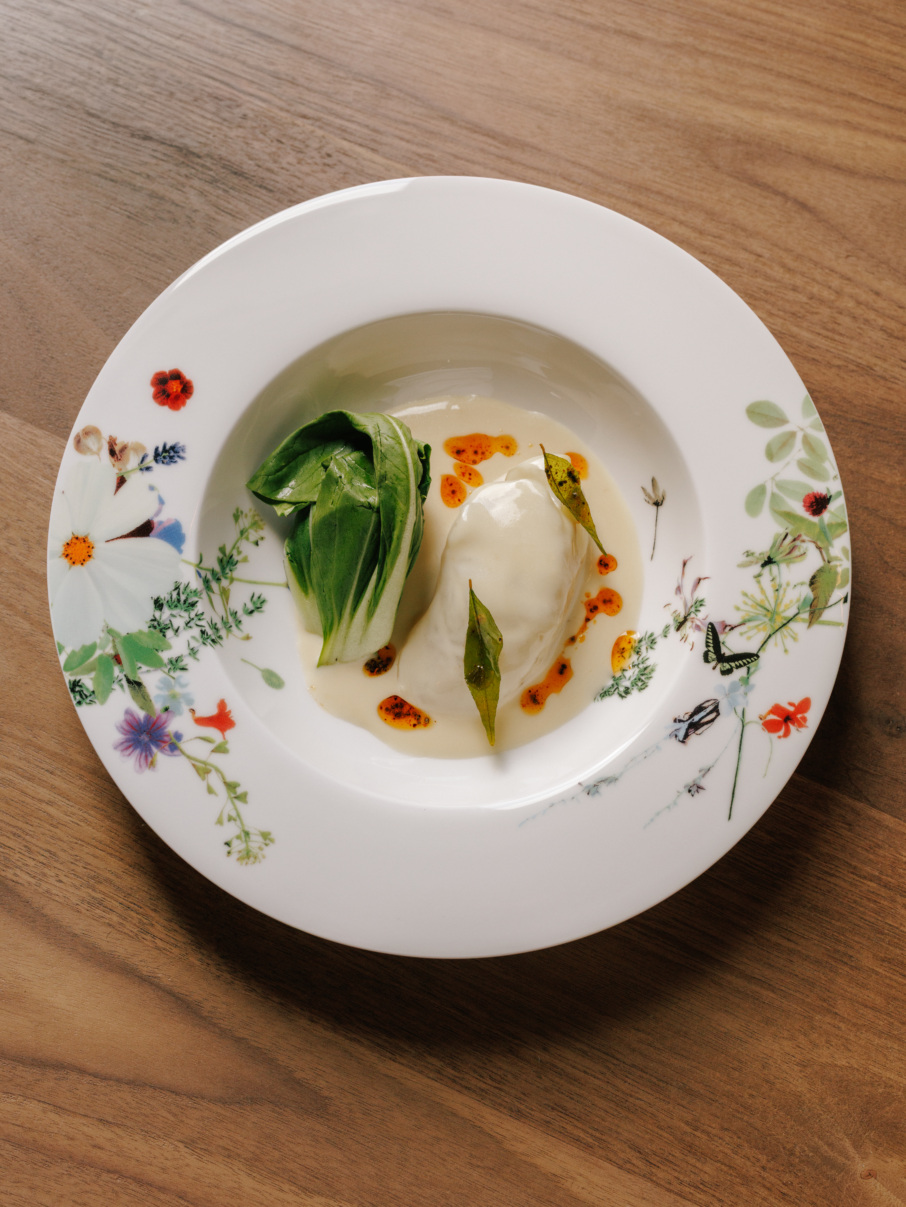
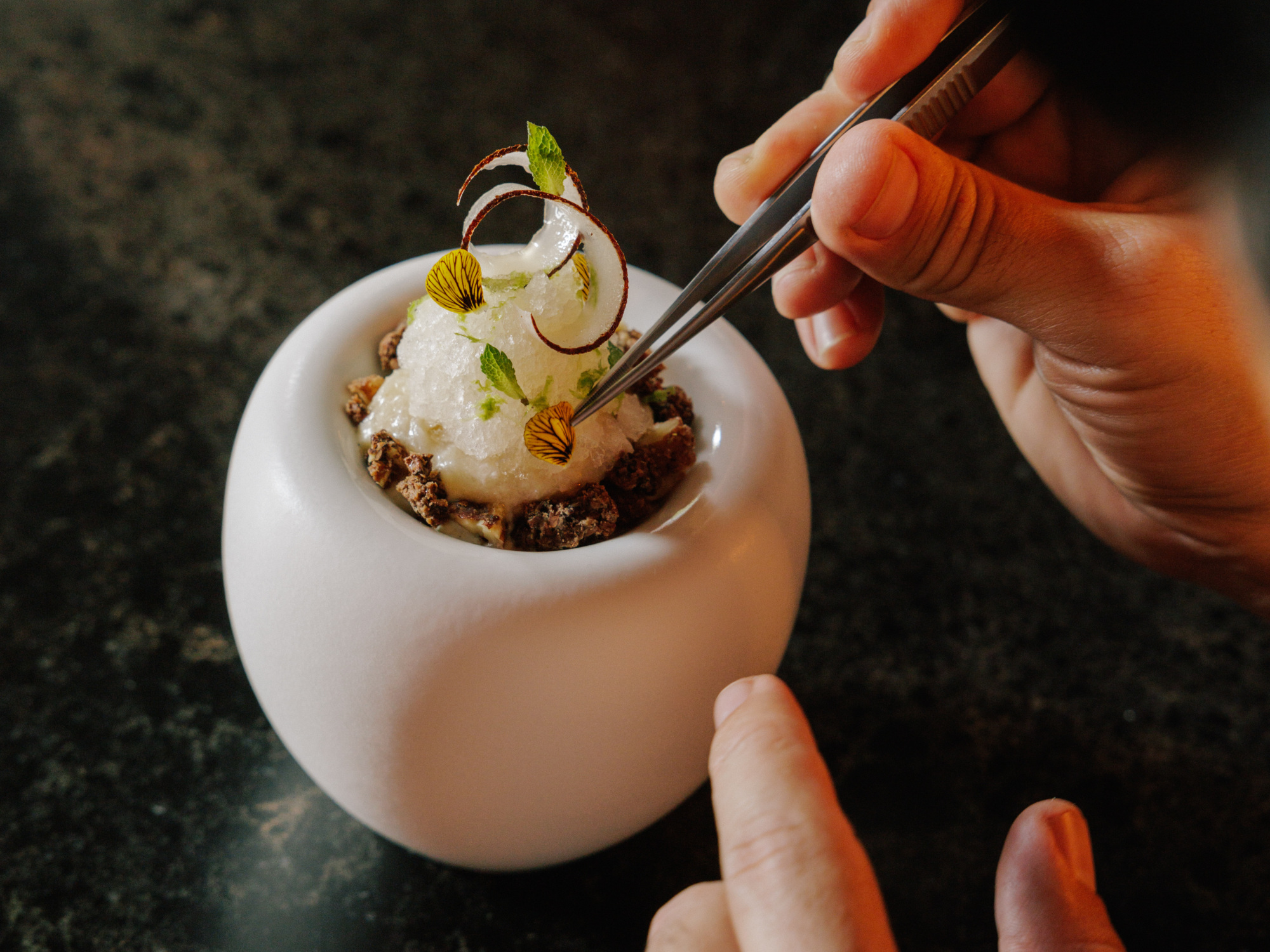
Salazar: I really like the Yuca & Oyster dish. It’s so well balanced and delicate, but at the same time, so flavorful. That for me is just perfect, also while highlighting everything from here in Florida.
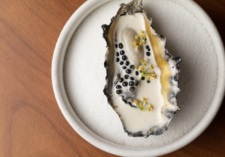
We pickle Treasure Coast oysters and then poach them. We use the yuca three different ways: perfectly crisp fried yuca, a yuca cream with herbs and preserved lemon, and finish it with a yuca foam.
We use a technique we learned back in our time at SingleThread. There, they do it with potatoes and uses an enzyme to eat all the starch to become super creamy and delicious. I remember our faces when we first learned this technique. We looked at each other and were like, “Oh my god, this would be perfect with yuca,” because yuca has a lot of starch. So when making a purée, it becomes gummy, almost like mochi. Once all the starch disintegrates from the yuca, it becomes this creamy, beautiful purée.
It comes with a side of boniato bread because people want something to scoop up every inch of the sauce at the bottom. Boniato is one of the most important roots back in Cuba, but it can also be found in Colombia. It’s really easy to plant and cultivate there.
People just love that dish. For me, it’s my absolute favorite. It’s just so well balanced. Initially, it’s acidic, it’s creamy, it has a lot of flavor. At the same time, it’s a little bit sweet, it has crunch, it has a foam. It’s just delicious.
Has the yuca dish been a mainstay on the menu?
González: We put that dish on the menu when we opened, and we haven’t been able to touch it since. We’re often asked, “What do you think is your signature dish?” Well, I don’t think it’s my decision. I think it’s the guests’ favorite, right? Our guests are the ones who show us what the signature dish is, and I think that yuca dish is the one.
Salazar: Yuca is also a staple of Cuban cuisine. Yuca is everywhere, every time you have a Cuban meal.
How did it feel when you first learned Emelina had earned a Michelin star, especially so soon after opening? Was there a first person you called with the news?
González: There’s a funny story about that. We found out a week before the ceremony because Michelin came to shoot a video with us. Alvaro was there that day to welcome them and we thought they were just coming to shoot photos. But when we were shooting the cooking part, he had to go.
At the end of that day, when we were just finishing the shoot, [Michelin Guide’s Director called and] told us that we had been awarded a Michelin star. But Alvaro wasn’t there, so we decided not to tell him.
Salazar: They were actually shooting an interview with us, but they interrupted and gave us the news. It was a surprise. But we were like, it’s not going to be the same if we just call Alvaro ourselves and say, “Hey, we earned a star.” We wanted him to have that same feeling, the same surprise.
González: During the Michelin ceremony, they played the video of us from that shoot and Alvaro was looking at us like, “Wait, you guys knew?”
Salazar: He wanted to be mad about it, but he couldn’t.
González: I think it was the right way to do it. I told him, “If I had called you and I told you on the phone, the magic would have been gone.”
Salazar: It was the longest week of our life because we couldn’t tell anyone.
González: Yeah, we were very surprised. And honestly, we’re very grateful now because we needed a push like this for the business. Summer here is very, very slow, and we opened not too long before summer. If we didn’t have the star, summer would have been really bad for the business. So we’re really grateful that this happened because we needed this push to be able to get through summer and for the business to succeed.
Emelina is open Tuesday to Saturday from 5 to 8:30 p.m.
Lyssa Goldberg is a Miami-based freelance writer and content strategist. She loves telling stories about food, wellness and travel, and you can find her byline in Parade, American Way, Mashable, Miami New Times, Time Out and more. Follow her on Instagram and Twitter. Follow Resy, too.