America’s Hotel Restaurants Embrace a Bold New Era
Updated:
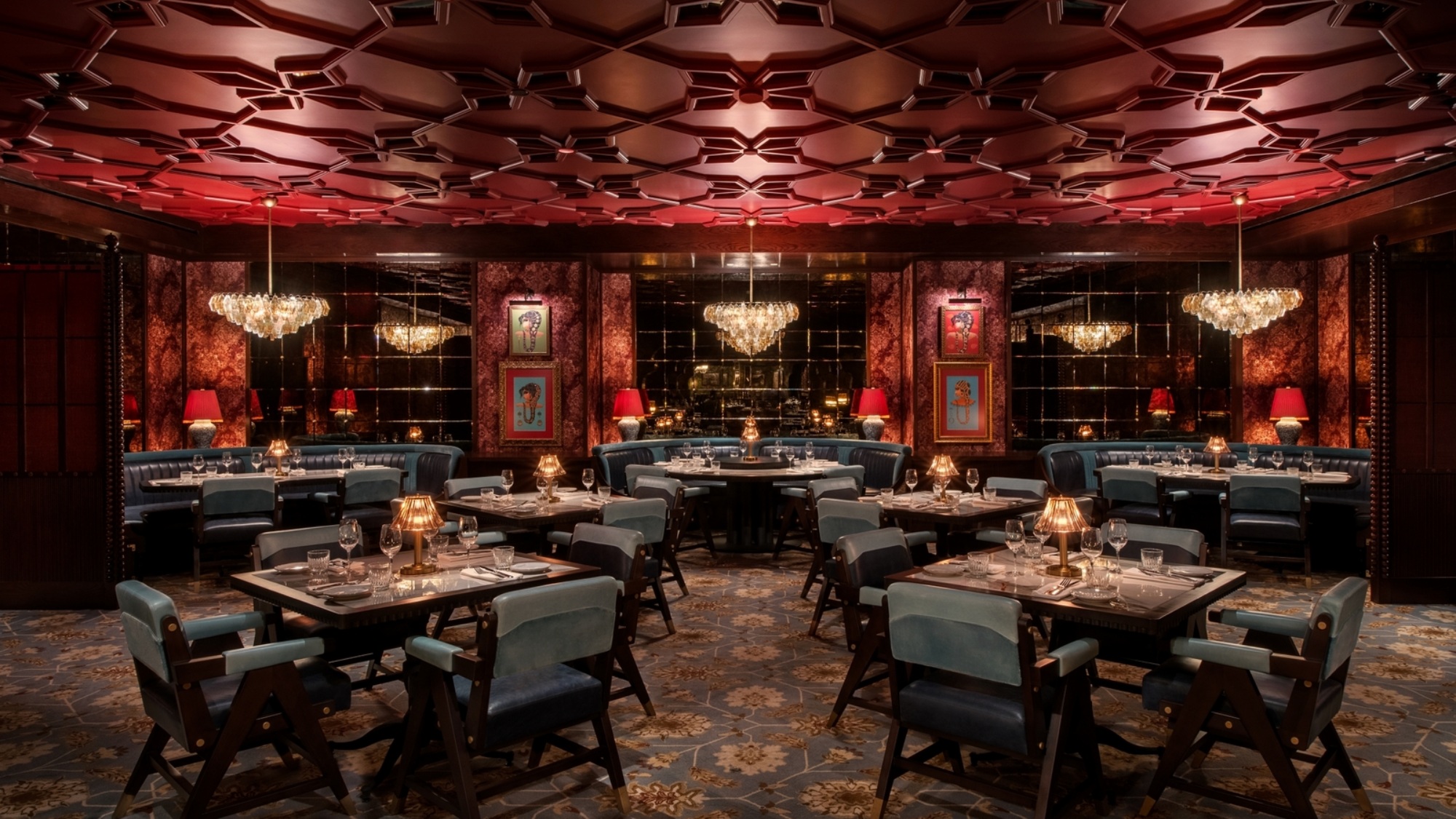
The opening of Dōgon in Washington D.C. in fall of 2024 was notable in more ways than one. Yes, the 200-seat space wasn’t just another notch on chef Kwame Onwuachi’s accolade-heavy belt, but instead an opportunity to delve deeper into his culinary heritage and highlight a piece of the city’s history — specifically one that had largely been brushed under the rug.
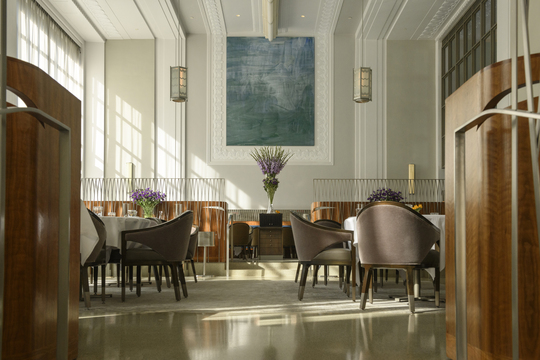
Onwuachi chose to pay tribute to both West Africa’s Dōgon tribe and to astronomer and D.C. surveyor Benjamin Banneker. The restaurant’s astronomically-inspired design is sleek and immersive, and dishes like wagyu short rib awaze and roasted carrot tigua with pickled onion and a West African peanut stew-inspired sauce meld Onwuachi’s influences with distinctive cultural storytelling.
All of that was important, but there was one other thing: Dōgon is a hotel restaurant, or at least a restaurant in a hotel — situated in the Salamander on Maryland Avenue, steps from the National Mall. This has not by and large been the narrative of hotel restaurants on these shores, at least for a long time. True, travel and dining go hand in hand. But somewhere along the way in American history, hotel restaurants got separated from the rest of the industry and evolved, in large part, into a useful but often inferior subset of the dining universe. Today, the majority look like restaurants, sound like restaurants, and mostly act like restaurants, yet somehow their adjacency to hotel rooms makes them more of a utility, like internet access, and less of a destination.
And yet Dōgon has a growing set of company, which is to say the post-pandemic years have brought something that we’ve been awaiting for a long time: the seeds of a glorious new era of American hotel dining.
Resy Presents
An Appetite for Adventure
- 40 Restaurants Across America Worth a Journey in 2025
- The Omakase at Neo Mixes In East And West And Everything in Between
- How Lutèce Became America's Perfect Take on the Neobistro
- How to Spend a Perfect 72 Hours Eating Your Way Through New York
- How to Spend a Perfect 72 Hours Eating Your Way Through L.A. in 2025
- How to Spend a Perfect 72 Hours Eating Your Way Through D.C.
- How to Spend a Perfect 72 Hours Eating Your Way Through Atlanta
- How to Spend a Perfect 72 Hours Eating Your Way Through Chicago in 2025
- How to Spend a Perfect 72 Hours Eating Your Way Through Miami
Certainly the last few years have made the case for one, as chefs have begun to use their hotel spaces to tell more personal stories and dive deeper into the culture of their locales. This newest cohort of hotel restaurants — including Onwuachi’s Maroon at Sahara Las Vegas, and Lex Yard from chef Michael Anthony in New York’s newly renovated Waldorf Astoria — feels very specific, and very individual.
There are other factors that have brought us here. Vegas, for one thing, with its early commitment to luring top chefs to the desert starting nearly a quarter-century ago. A realization that a buzzworthy restaurant is in fact a good business move for a hotelier, for another.
Perhaps less obviously, there is also what seems to be an understanding of history, namely how the legacy of the hotel restaurant is in fact a glamorous, important one. After all, for many decades, hotel dining was considered to be a bellwether of local culture and even fantastical glamour. New York City’s Plaza Hotel — the self-proclaimed most famous hotel in the world — was once a place where dressing to the nines for Sunday brunch full of celebrity sightings, and enjoying luxe food on gold-encrusted china, were expected.
Also, nearly anywhere else you go in the world, a great chef’s résumé almost certainly involves time in hotels — even Eleven Madison Park’s Daniel Humm got launched via his cooking at the Gasthaus zum Gupf, a relais in Appenzell, not an atypical way for a Swiss chef to get a start. But America, for the past several decades, seems not to have gotten the memo. Even today, you’re more likely to encounter restaurants with sprawling, nonspecific menus that accommodate romantic dates and family brunches alike. Or laden buffets that offer the same dishes in every city — the grazing equivalent of AirSpace. As Eater’s Sam Nelson put it, uncharitably, “hotel restaurants are often a trap, mediocre establishments serving overpriced food to business travelers with expense accounts and tourists who don’t know any better.”
That seems harsh. True, there’s distance to go, but a slew of destination-worthy, chef-driven hotel restaurants have appeared in the wake of the pandemic. From La Padrona at Raffles Boston to Cote at the Venetian Las Vegas, travelers and locals alike have newfound reason to dine in U.S. hotels, whether they have a room key or not.
An American Tradition of Storied Spaces
The return of meaningful hotel dining couldn’t come soon enough — namely because it is also a return to a longstanding tradition of the grand third spaces that American hotels once provided.
The end of the 19th century spawned a desire for luxury accommodations that dovetailed with the rise of fancy French cuisine. This was thanks in part to chef Auguste Escoffier’s partnership with London’s Savoy Hotel (which was built in response to American luxury hotel development) in 1890, and eventually, his work at the Ritz in Paris. Dishes like peach Melba and cherries jubilee, along with Escoffier’s brigade system and the codification of the five mother sauces, continue to influence kitchens across the globe today. The new standard was clear: Excellent dining was nonnegotiable in any hotel worth its salt.
This only got magnified with the turn of the 20th century, when the Michelin Guide was introduced in France to promote dining (and tire sales). New York responded to the flurry of European action with establishments like the Waldorf-Astoria — and its Waldorf salad! — and the newly revamped Plaza Hotel. San Francisco followed suit, leaning on chefs to help bolster their new properties with signature dishes that were at the forefront of culinary innovation. The Palace Hotel enlisted chef Jules Harder (formerly of New York’s Delmonico’s), whose legacy lives on in green goddess dressing, while both crab Louie and celery Victor can be credited to San Francisco’s St. Francis Hotel.
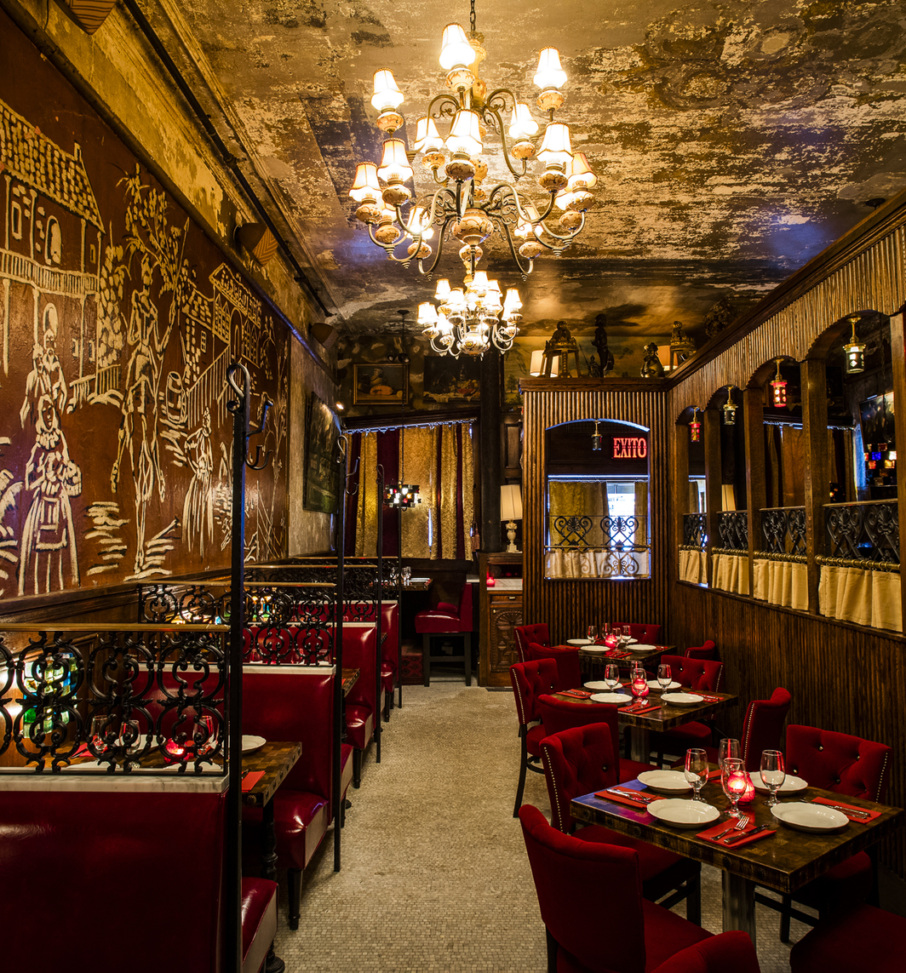
Dining has always been a fixture, if perhaps less poshly, at New York’s Hotel Chelsea, since the building opened as a co-op in 1884. Once the building converted into a hotel, the restaurant became El Quijote, which opened in 1930 as a 200-seat operation that was frequented by both locals and travelers — and, notably, midcentury celebrities from Arthur Miller to Janis Joplin.
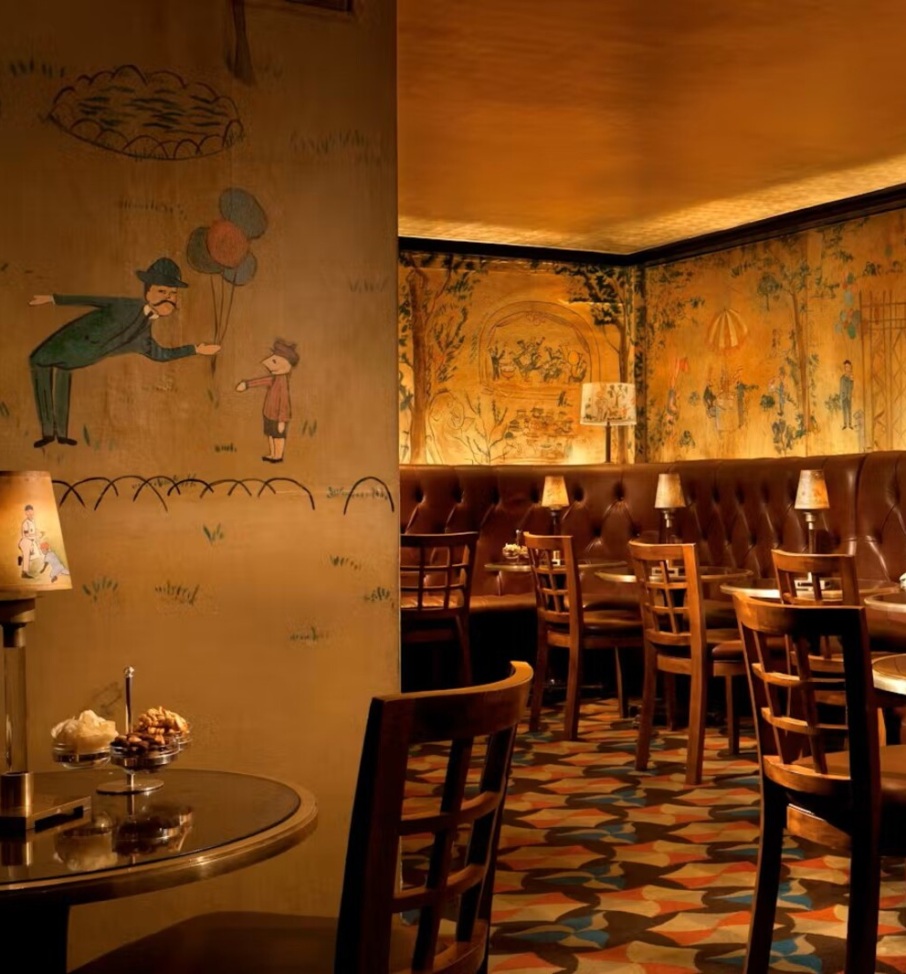
Fueled by prohibition, Miami’s The Surf Club also opened in 1930 and quickly became a hot spot for beachside booze and extravagant dinner events. Post-repeal, The Sazerac Bar landed at The Roosevelt in New Orleans and became one of the city’s lively social centers. And after changing ownership in 1944, New York’s Carlyle was resurrected with the addition of Bemelmans Bar, and eventually, Café Carlyle. The bar drew (and continues to draw) crowds for its expertly chilled martinis accented by Ludwig Bemelmans’ original Madeline murals. This is a bit different from the tropical kitsch at Tonga Room & Hurricane Bar at Fairmont San Francisco, although a visit there is still a lot of fun, faux plants, live rain show, and all.
What Happens in Vegas …
Even as that energy began to flag in most American cities, it found a dramatic resurgence in one: Las Vegas. Once everyone had survived Y2K, or failed to be swept up in a rapture, the first few years after the millennium brought an influx of visitors coming to Sin City to eat. Strip hotels tapped renowned chefs to bring star power, and chefs jumped at the opportunity to find a clientele of transient, deep-pocketed diners. After making a name for himself in San Francisco, chef Michael Mina joined forces with the Bellagio to bring his restaurant, Aqua (since renamed Restaurant Michael Mina, and still a fixture) to Sin City. Joël Robuchon had a similar desire to see his name in neon, and brought his self-named restaurant to MGM Grand Las Vegas, and expanded into another space in the building with L’Atelier de Joël Robuchon two years later. Daniel Boulud made his first appearance in the city in 2005 with db Brasserie at Wynn Vegas, and the following year, Caesars Palace tapped chef Guy Savoy to bring his popular New York- and Paris-based Restaurant Guy Savoy to the desert. The Michelin Guide surveyed the city in 2008 and 2009, affirming the market as a serious place for food.

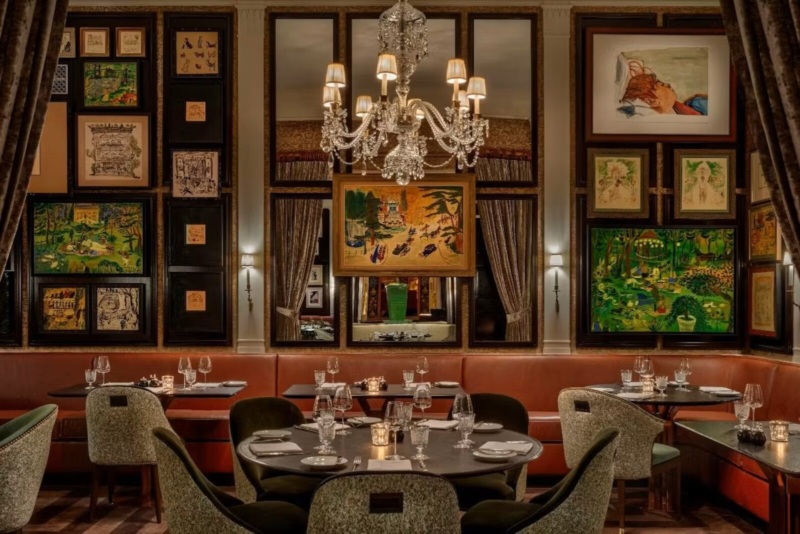
If these were specific to Vegas, with its notably global clientele, more hotel groups in recent years have come to acknowledge the need for quality dining. The Four Seasons made property restaurants a priority 15 years ago, collecting a couple dozen Michelin stars along the way. And since, “the hotel has become a dining experience,” says Philipp Blaser, Four Seasons’ senior vice president for food and beverage. Still, of the Four Seasons’ 25 Michelin-starred restaurants, only four are in the U.S.
Hotel Dining 3.0
While Vegas framed the opportunity, there was still distance to cover. In most American hotels, notable chefs were still tasked with building restaurants that aimed to serve familiar dishes, rather than storytelling and experience through personally-inspired and boundary-challenging menus.
The hotel has become a dining experience.— Philipp Blaser, Four Seasons’ Senior Vice President for Food and Beverage
Which brings us to the next big leap forward: In the wake of the 2008 financial crisis, there was once again a push to polish up the experience at hotels — including with the 2012 opening of New York’s The NoMad Hotel, along with its restaurants — conceived by Eleven Madison Park’s Humm and former restaurateur Will Guidara. The project was an attempt to shift the standard, with a distinct vibe and menus that purposefully went against the typical approach to hotel dining. This was also an era when chefs were eager to find deals that could help them cut down on one major cost: rent. To have a hotel invite you to set up shop was, bluntly, a financially smart move.
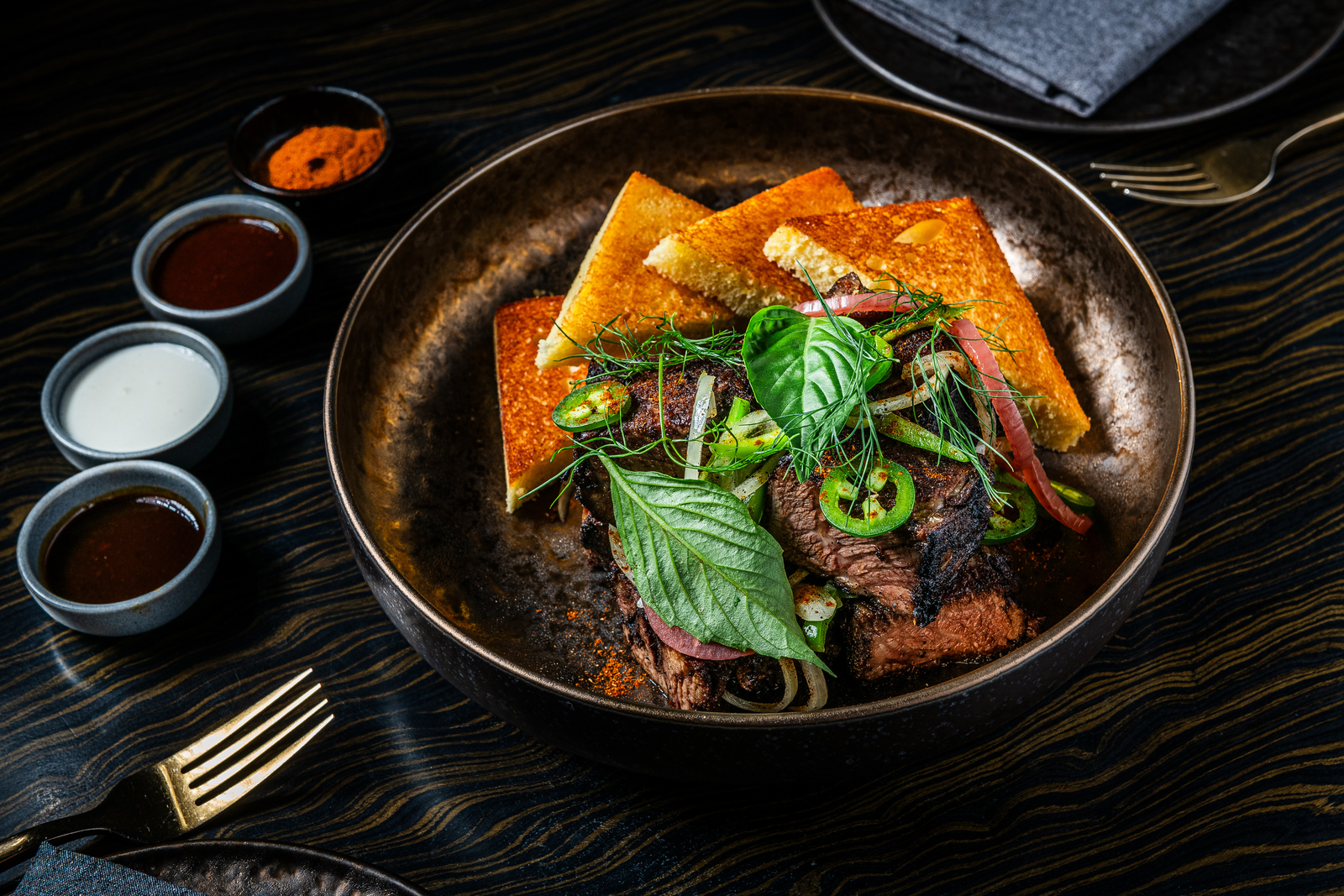
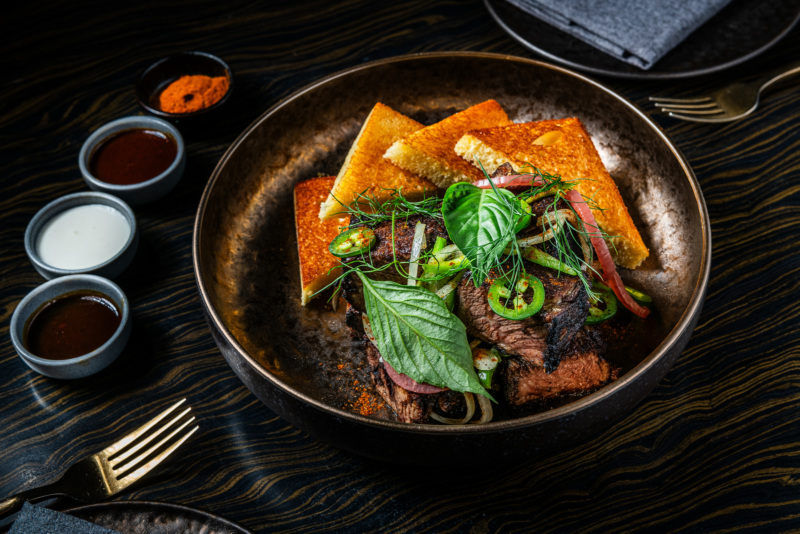
A very similar energy appeared again coming out of COVID. In 2021, Jean-Georges Vongerichten, by then no stranger to hotel partnerships, carried on his hotel fondness with Drusie & Darr by Jean-Georges in Nashville at The Hermitage Hotel. For the first time, the chef took inspiration not from his past but from the city’s history and the food of America’s South. As Vongerichten told The Tennessean, “It’s not just bringing something that we do in New York.” There, crudos get a kick of chile, steaks are smothered in tamarind sauce, and rigatoni and meatballs come on a pizza. The resulting bites aren’t found anywhere else in Vongerichten’s empire.
The Carlyle in New York also revamped its dining offerings that year with Dowling’s, giving guests a chic room to enjoy seasonal fare and extravagant tableside service … plus Bemelmans’ signature martinis.
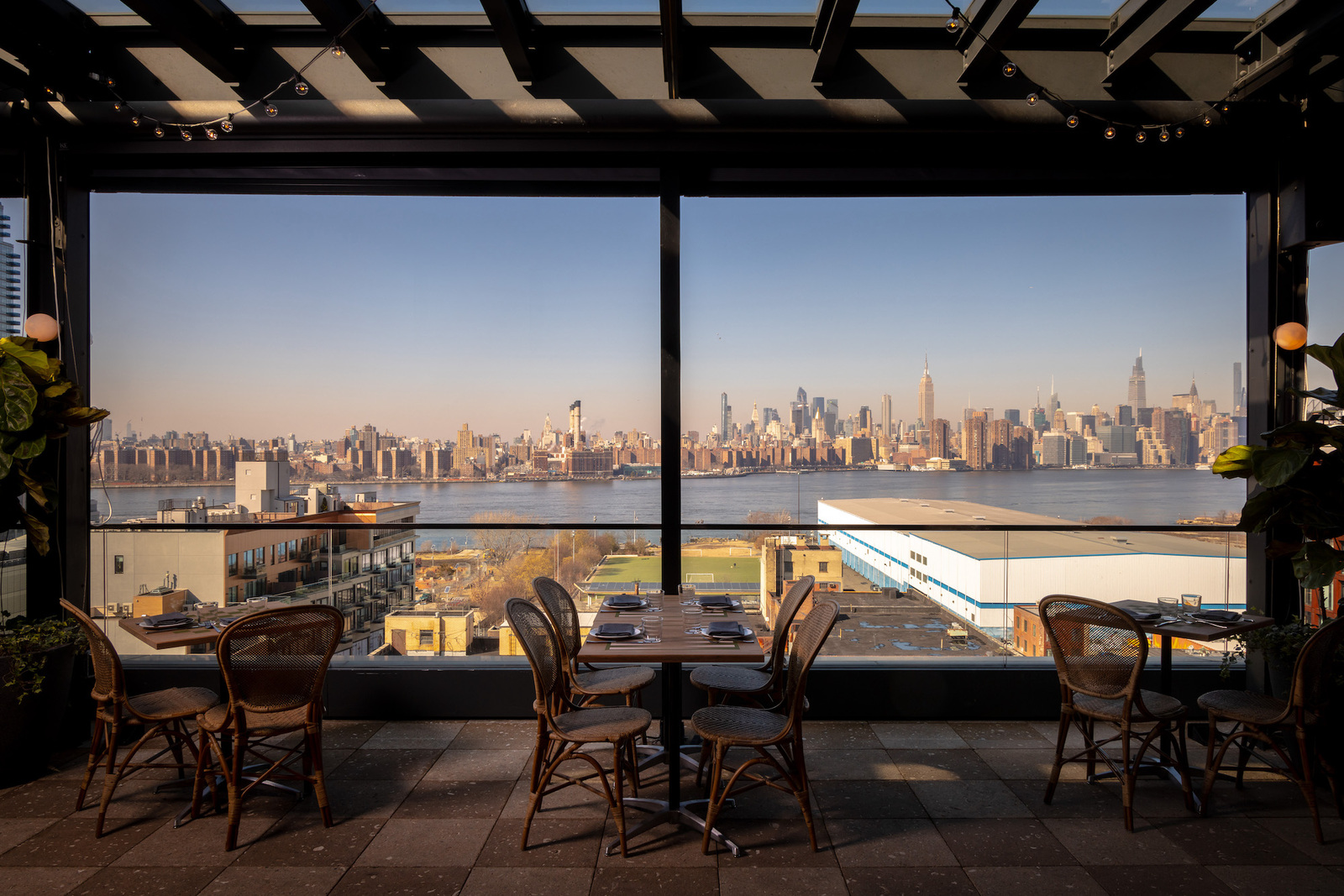
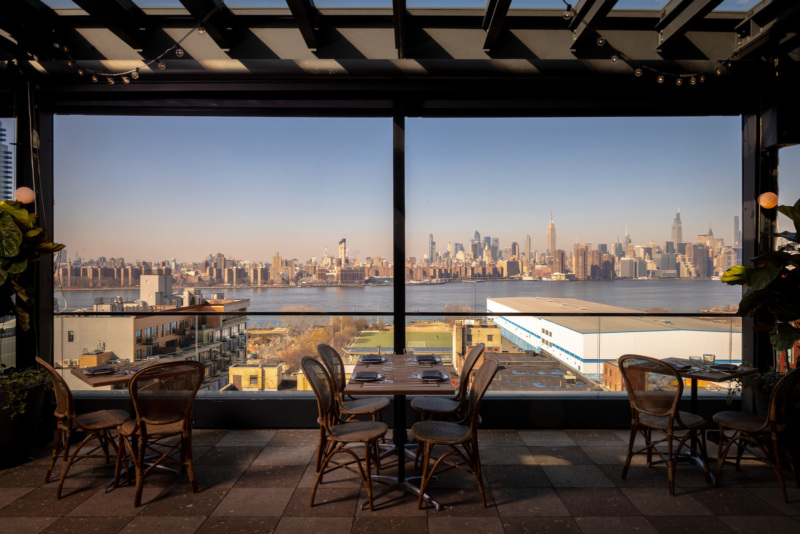
Meanwhile, a pitch from The Hoxton Hotel sold chef Michael Solomonov on bringing another iteration of his beloved Philadelphia-based Laser Wolf to Brooklyn. With its focus on Israeli-style grilling, the charcoal-scented, deeply spiced flavors of the restaurant were a perfect match for the hotel’s lively rooftop space. The project also gave Solomonov two other outlets: Jaffa Cocktail and Raw Bar and K’Far Brooklyn, which complete a Solomonovian trifecta.

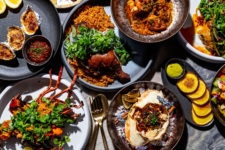
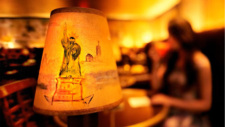
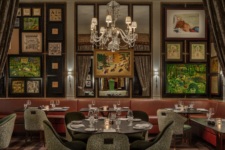

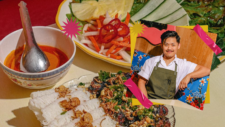
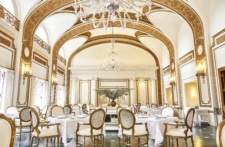
And after being closed for renovation from 2018 to 2022, El Quijote reopened with a polished space and a recommitment to tuned-up Spanish classics. With chef Jaime Young of Sunday Hospitality (Sunday in Brooklyn, Rule of Thirds) at the kitchen’s helm, they maintained the beloved essence of the restaurant — the rich, dark interiors, vivid murals, and references to a certain Man of La Mancha — but with paella that’s perfectly tender and topped with seafood, pintxos, croquettes, and jamón ibérico by the slice. (And Amy Schumer and Hailey Bieber replacing the previous generation of celebs.) The hotel doubled down on dining the following year with Café Chelsea, an all-day affair inspired by New York City’s storied brasseries.
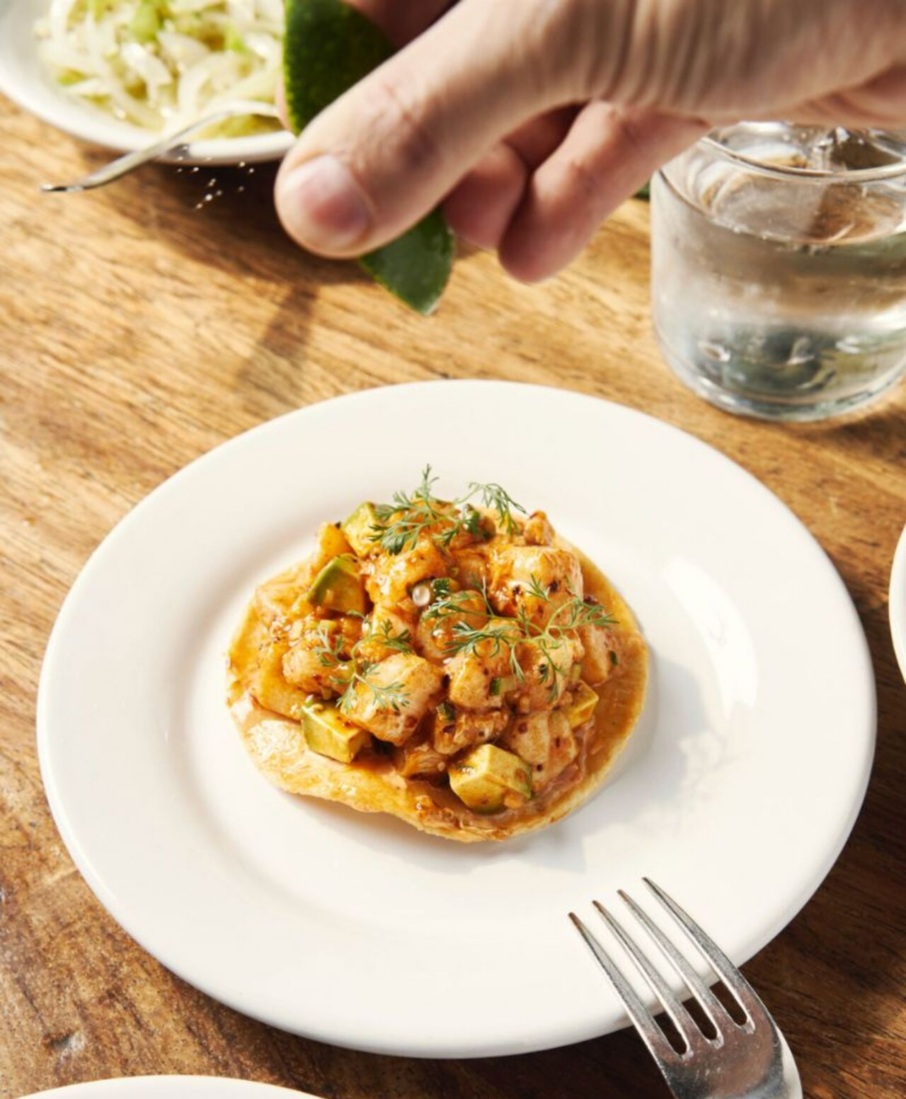
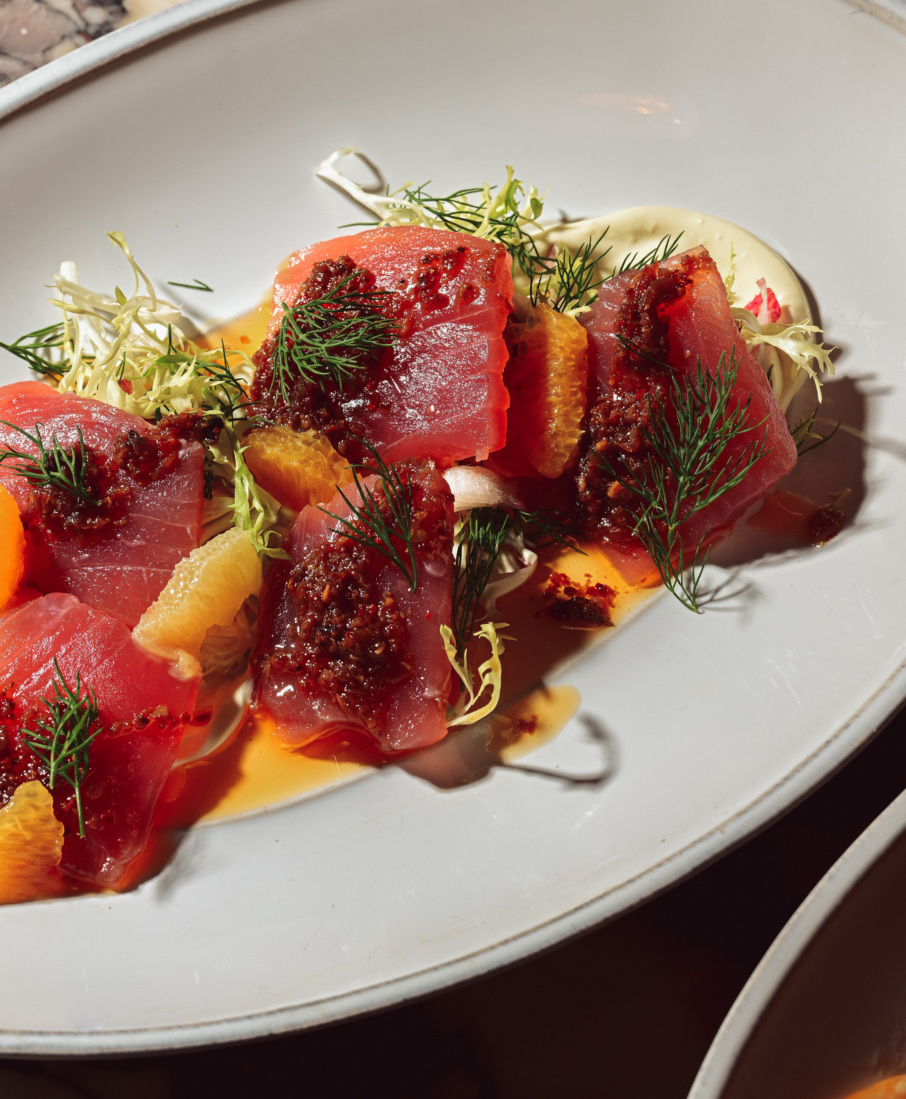
And, because French cuisine always resurfaces at some point, recent years have seen a share of Gallic restaurants that, perhaps, are an evolution of the great Escoffier hotel tradition. At Brass and The Tusk Bar at The Evelyn hotel, chefs Jeremiah Stone and Fabián von Hauske Valtierra carry on the legacy of the New York brasserie with “moules frites” that is actually a dish of Sherry-marinated mussels and smoked pimentón on fresh fried panisse, and steak au poivre that comes with Armagnac-prune purée and Stilton cheese.
Getting Personal
While many of these chefs relied on a hotel-wide takeover with multiple concepts to build their brand and customer base, other chefs have found success in bringing independent operations into existing spaces by way of creative partnerships. With Maroon, Onwuachi translated his Caribbean African American cuisine to Vegas by way of a steakhouse format, and in Minneapolis, chef Nathan Kim’s dynamic Korean-meets-French fare has given the restaurant at the Hewing Hotel, Tullibee, a new life.
Or consider the progress in Charleston, long a dining destination with spots like Charleston Grill at The Charleston Place, which now hosts residencies like its current collaboration with Daniel Humm. And recent entries like Frannie & The Fox at the Emeline are leading a Lowcountry hospitality charge, as well as south of the city, in Johns Island, where chef Michael DeCicco (previously running the Surf Club kitchen under Keller) runs Linnette’s; the menus tweak Southern American classics, whether with collard green hushpuppies or brown butter crab rice with yuzu hollandaise. And Jason Stanhope, no stranger to selling what makes Charleston special and having earned himself a James Beard Award for his work at FIG, was enlisted by The Pinch Hotel to construct the opening menu for Lowland, the multi-room restaurant at their downtown 19th-century carriage house hotel, with dishes like crispy South Carolina quail with buttermilk, sesame, and chervil.
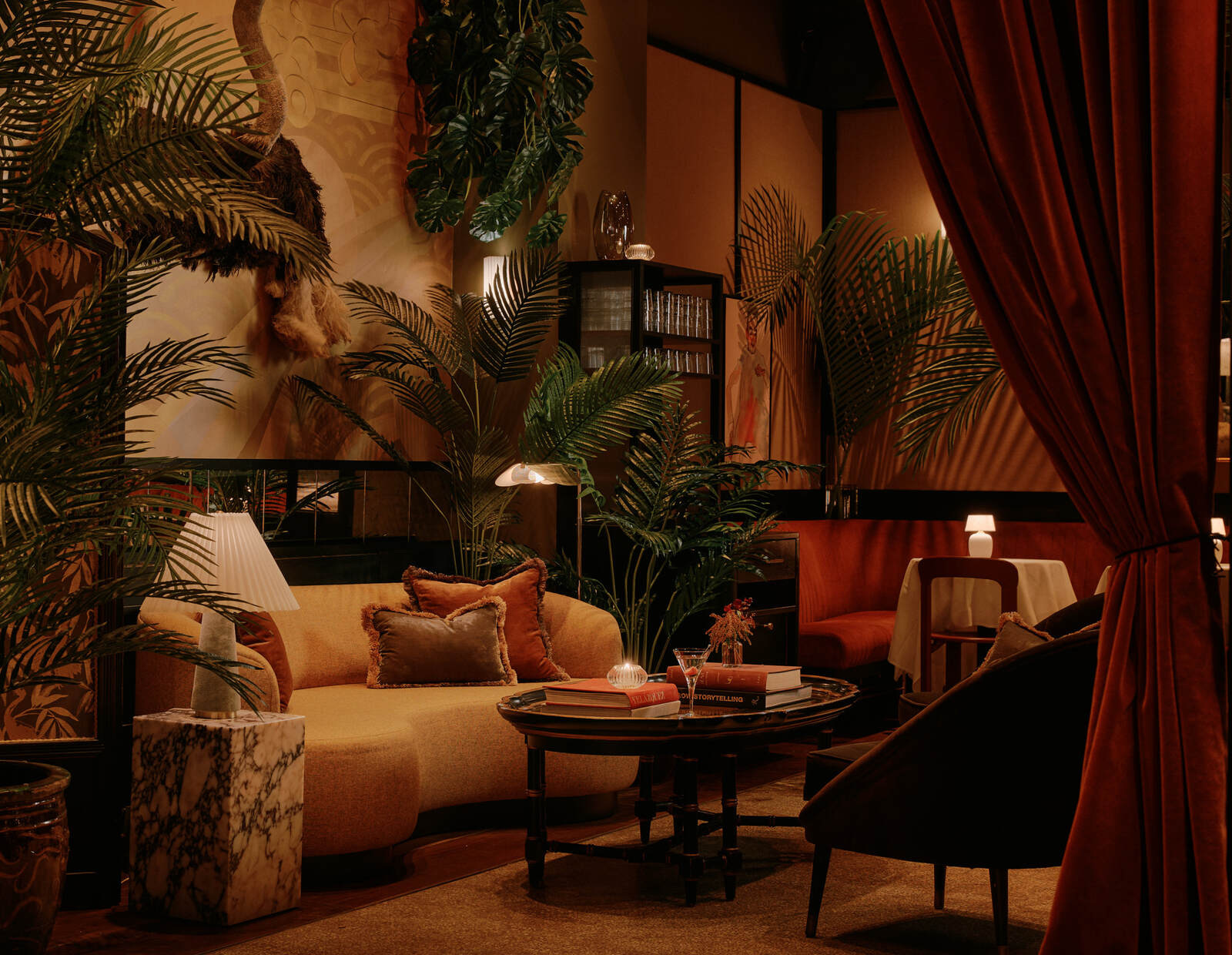
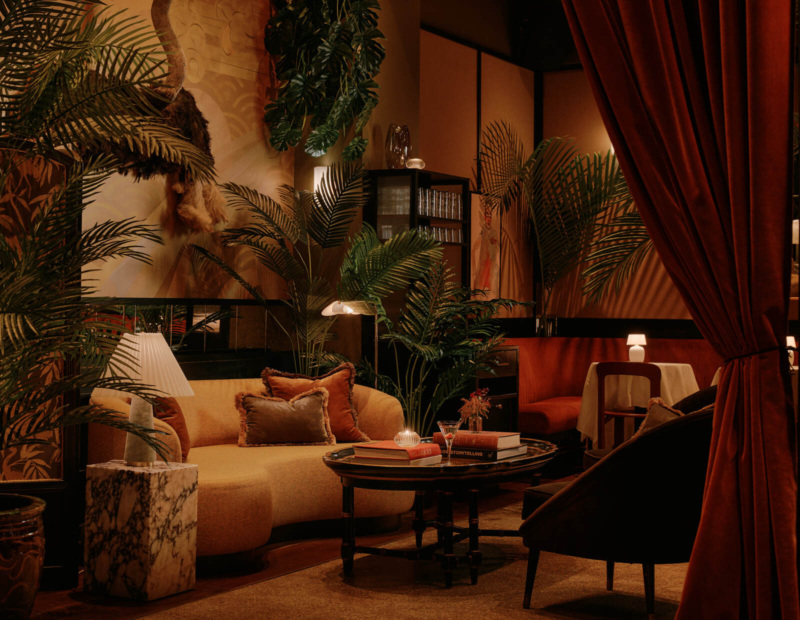
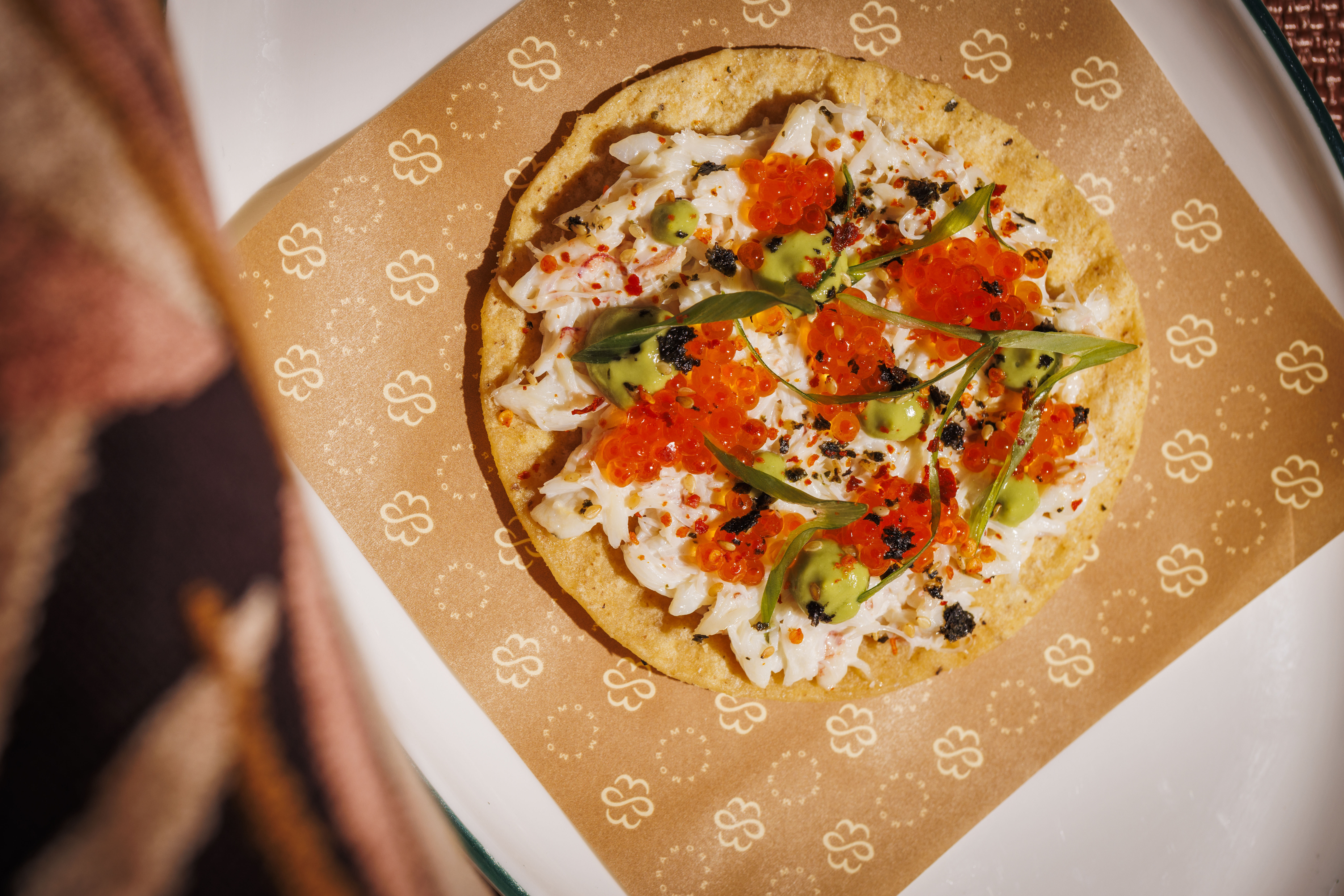
Now it seems Vegas is finally getting its groove back. In the last year alone, restaurants like Maroon and Cote have contributed to a flurry of openings across the city: Last fall, London’s popular two-Michelin-starred Gymkhana brought its Indian cooking and clubhouse-style vibes to the Aria Resort, and this spring, acclaimed chef Gabriela Cámara transplanted her seafood-forward fare from Mexico City to the Fontainebleau with Cantina Contramar. Both openings mark the chef’s first forays in the States — with grand spaces on the Strip, no less — fortifying the city’s global-scale impact.
So, while we’ll surely continue to fantasize about the hotel restaurants of days past, at the same time, we can be thankful to have entered a new era — one that that better reflects the dynamics of culinary excellence this country now has to offer. The diversity of hyphenated American cultures is well represented in dining today, with opportunities presented to a wider array of talent. And hotels now get to be part of that — supporting chefs in cooking more personal food while easing their bottom lines. As diners on the road, we’re actually returning to a time when a hotel meal can be part of our adventure. As locals, we can again revel in beautiful third spaces that speak more honestly to the souls of our cities. It’s what the hotel restaurant was always meant to be for.