To Become a Pizza Nation? It Took a Village
Published:
For various reasons, you might have forgotten what 2008 brought us. It was the year of “Yes, We Can,” of Katy Perry’s “I Kissed a Girl,” of the Snuggie, and the debut of the App Store. Twitter was in its infancy, and Uber was still a year away.
Also that year, a pizzeria called Roberta’s debuted in Brooklyn’s outer reaches. Roberta’s chef Carlo Mirarchi was more or less self-trained but was inspired by the fine-dining world. Yet the medium for greatness at Roberta’s would be pizza — wood-fired in a hand-me-down oven from Fossano, Italy — not hewing to one traditional style or other, very much its own discrete creation. It would take time for the news to spread, but eventually chefs and cognoscenti hewed a path to the Morgan Avenue stop on the L train. (Roberta’s food offerings also deepened.) With all love to the dollar slice, this would soon become the touchstone for a new definition of “New York pizza.”
Certainly Mirarchi and his business partners weren’t first to this feast. By that point, a Jersey guy named Anthony Mangieri had been running his accept-no-substitutes Una Pizza Napoletana since 1996, and collecting fans in Manhattan since 2004. (Mangieri would become the ultimate pizza journeyman, traveling to San Francisco for much of a decade, lured like many of us by the siren song of California produce, then returning to New York to reopen in the wake of the pandemic.) And Mangieri himself was late to the game in the Bay: a chef named Sharon Ardiana had already leveled up the area with beautiful sourdough pies and Chez Panisse-worthy vegetables at her own S.F. pizzeria, Gialina. (She too was late to that game: Alice Waters’ locavore temple had long served its own wood-fired pies at its upstairs café.)
But Roberta’s wasn’t just about pizza. It was about pizza in context. Something about the restaurant captured the imagination — great and novel pies served in a hipster-overload part of Bushwick, with cocktails and tiki parties on the patio and the ability to be emblematic of an aesthetic that now feels almost too familiar.
Indeed, you might say Roberta’s was the catalyst that helped to usher in the glorious state of pizza in America today. For make no mistake — we live in the best of pizza times. It’s not just that spectacular pies can be found from coast to coast. It’s that they keep showing up in some thoroughly unexpected places. We have, at long last, become the pizza nation we were always destined to be.
Resy Presents
Pizza Nation
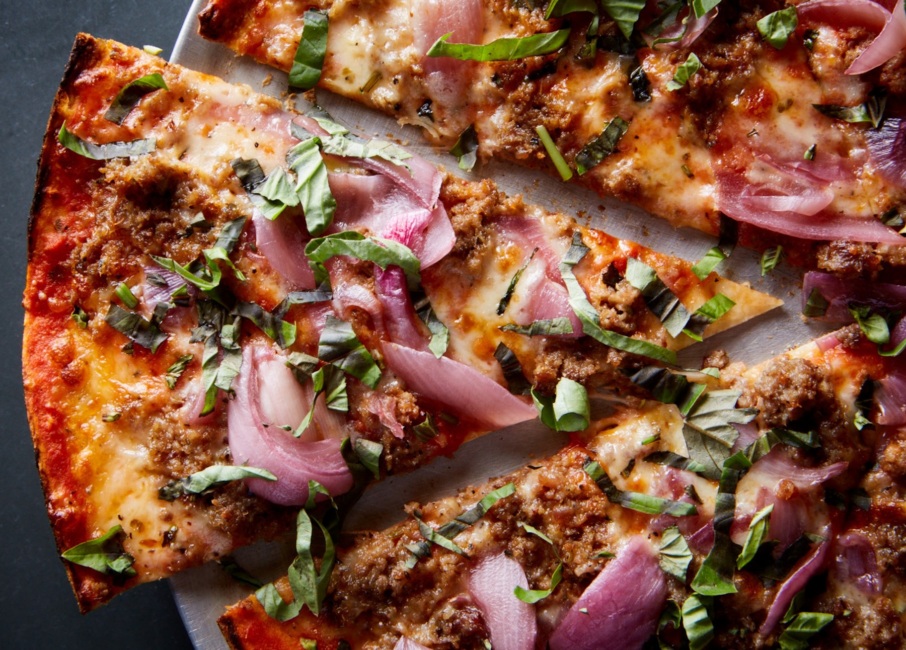
- To Become a Pizza Nation? It Took a Village
- Everywhere You Should Be Eating Pizza in New York
- The Ultimate Resy Guide to Outstanding Pizza in Philly
- The Resy Guide to the Best Pizza In Los Angeles (Yes, Los Angeles)
- A Deep Dive Into Miami’s New Pizza Scene
- It’s a Pizza Ranch World, And We’re Just Lucky to Live In It
- Pizza, Perseverance, and the Aloha Spirit: Sale Pepe’s Maui Journey
- How Del Popolo Became an Essential S.F. Pizza Destination
The road here has been longer and more complex than anyone would have imagined. I’m not even talking about pizza’s arrival from Italy at the turn of the 20th century, a food so irresistible it provided a cultural bridge for those who brought it. (See also tacos, falafel, bulgogi.) I’m thinking instead of how pizza transformed from its mass-consumed mannerisms at the end of the 20th century — a thousand birthday parties at a thousand Chuck E. Cheeses — to its extraordinary current state.
Even in early 2000s, a lot of us were fixated on bright spots of great pizza across the land. In 2003, a guy named Adam Kuban launched a blog called Slice, documenting the vicissitudes of pies across New York. I dipped my own hand in a couple of years later, endeavoring to capture the state of American pizzadom, and spent a lot of time talking with pioneers of the era, including Brian Spangler of Apizza Scholls in Portland, Ore.; Carla Leonardi at Seattle’s Cafe Lago, who graciously let me apprentice behind her counter; and of course the legendary Chris Bianco of Phoenix’s Pizzeria Bianco, who had by that point been a force of nature for more than a decade.
What they had in common was to see pizza-making for what it truly was: baking at the highest level. Like any great baker, they applied intellectual rigor and precision to the task of improving a beloved but often mediocre form. That through line was, incidentally, not missed on bakers, including the author Peter Reinhart, whose 2003 book “American Pie” framed an emergent pizza world that would sound awfully familiar to today’s reader.
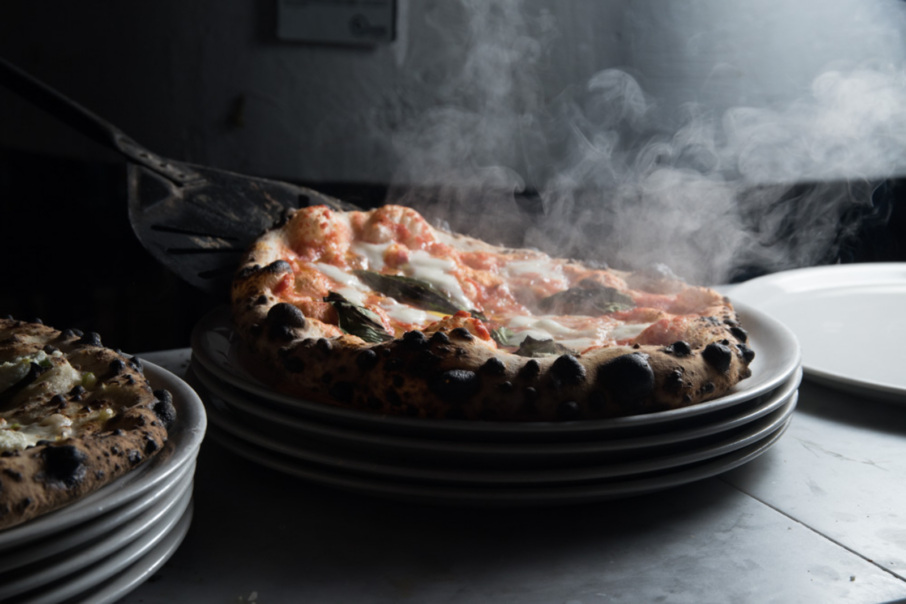
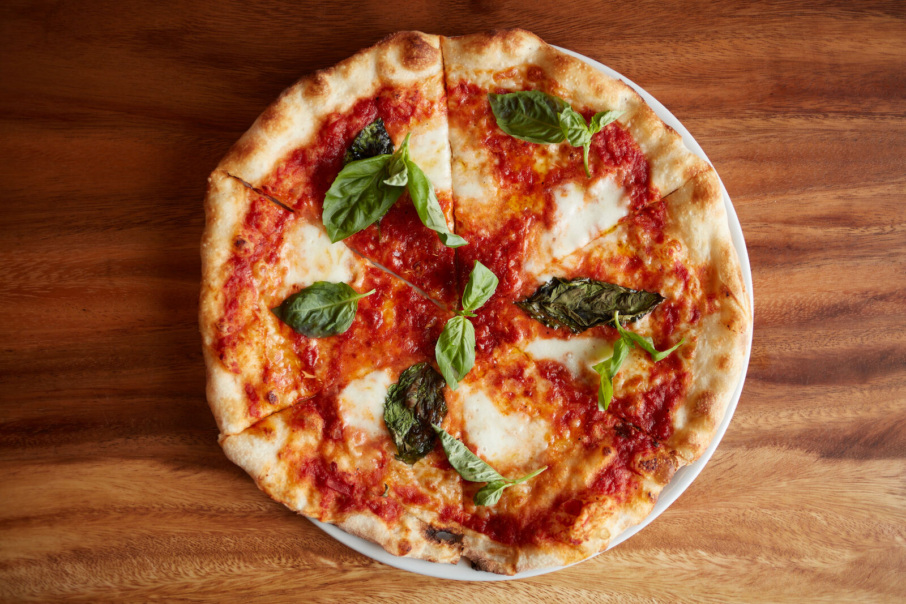
So, by the time Roberta’s rolled around, it was already part of a second wave of postmodern pizzadom. In San Francisco, that included Jon Darsky’s Del Popolo, which began in 2012 as a battle tank of a food truck (parked across from my office), which in turn joined pioneers like Piccino (2006) and Pizzeria Delfina (2005), and would be joined by others like Beretta, which glommed onto Roberta’s formula of pizza plus fancy cocktails. New York was enjoying a similar wave, with the arrival of joints like Kesté, and Motorino, which eventually took over Mangieri’s space in the East Village. That energy occasionally cropped up in other cities, too — like Philly, where a brewer and pizza geek named Joe Beddia decided to go pro in what would become Pizzeria Beddia, now one of the nation’s iconic pie joints. Or Jersey City, where a guy named Dan Richer threw cross-river shade when his pizzeria, Razza, was dubbed the best in New York. And of course uber-baker Nancy Silverton directed her energy to opening Pizzeria Mozza in Los Angeles, which was, at the time, a pizza desert.
Pizza today, as we move into the second quarter of the 21st century, has become an emblem of how a quintessential American food — adopted from elsewhere and made our own — can become a medium for the pursuit of perfection.
The point is that the narrative we sometimes are told — that American pizza magically shifted from a humble pie to its current glory — isn’t quite true. It is the result of wave upon wave of progress, from a couple of generations of dedicated pizzaioli, and at least a quarter-century of hard work. It took dozens if not hundreds of bold souls who, while American gastronomy overall was ascending, decided to redirect that energy to one of the nation’s most populist, cherished foods.
We owe them an enormous debt, because pizza today, as we move into the second quarter of the 21st century, has become an emblem of how a quintessential American food — adopted from elsewhere and made our own — can become a medium for the pursuit of perfection. It is American exceptionalism, writ in dough and baked in fire (or gas, or electric).
Don’t believe me? Go look around Paris today and you’ll find a city in thrall with pizza … inspired not by their Italian neighbors but by American verve, whether the finessed sourdough pies at Maine native Dan Pearson’s Oobatz, or the slice-shop joys of Rori. When a famous American pizzaiolo slid into my DMs to get my verdict on Rori’s grandma-style slice (spoiler: it’s great) I knew pizza had become America’s new and best cultural ambassador.
◼️
The beauty of this ascendancy is that American pizza is a truly inclusive force. As with all great foods on these shores, pizza lends itself to, if not appropriation, the best sort of cultural dialogue. Other cultures can mesh with pizza culture, and in turn claim the form as their own. Witness this at, say, Pijja Palace in L.A., which hybridized Indian American flavors (think green-tomato tikka masala as a topping) with the ethos of a sports bar. Or head to South Philly and find Valentin Palillero and Eva Mendez of San Lucas Pizza, who merged the neighborhood’s Italianate roots and Mexican coevolution into pies topped with mole and al pastor. Nothing about these translates as gimmick, because the results are exceptional. San Lucas’ al pastor pie was one of the most irresistible things I’ve eaten this year.
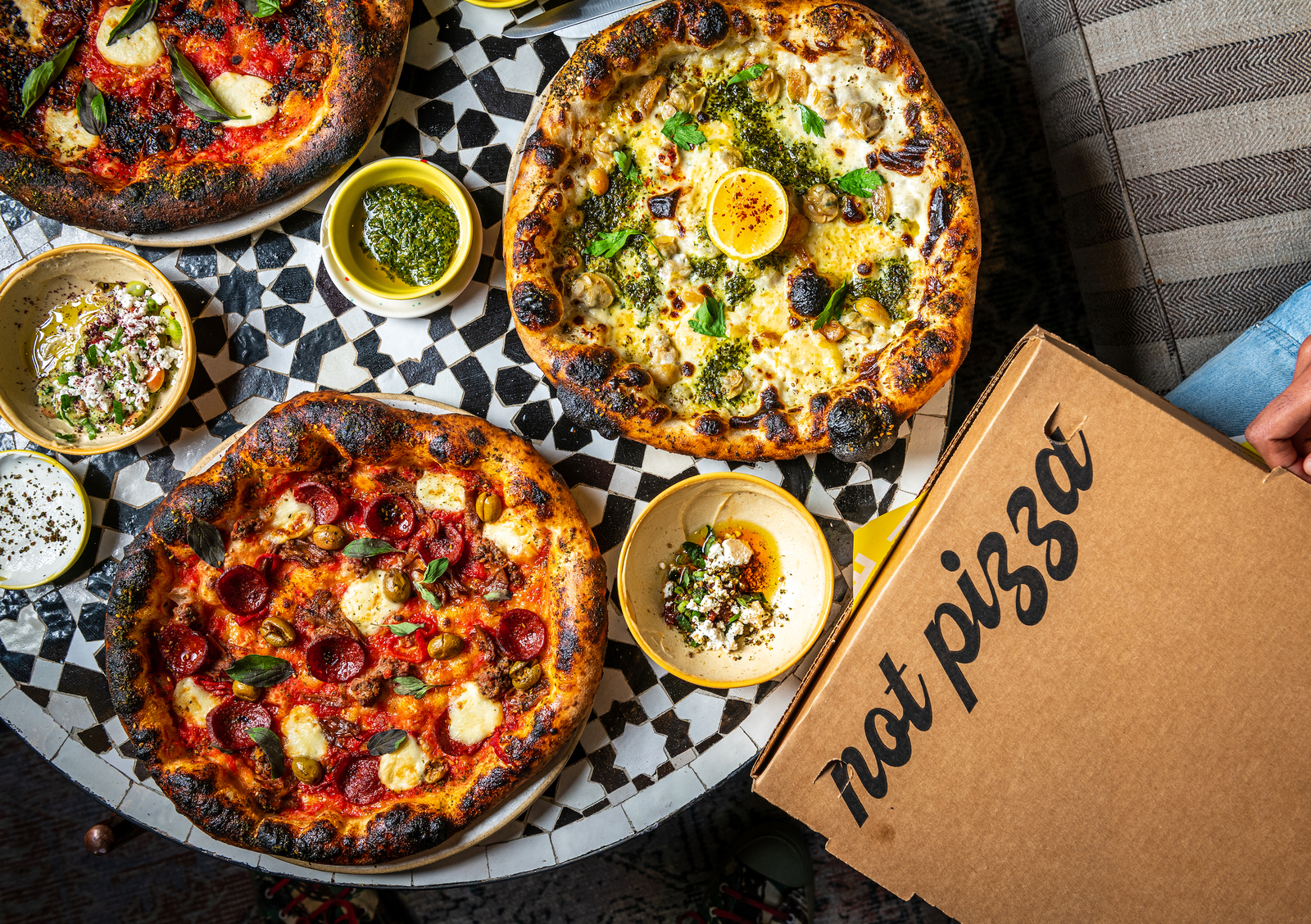
That merely reflects how pizza, in the broad definition, transcends its southern Italian origins. The grand flatbread tradition has many roots, no different than pasta, and you could reasonably argue American pizza owes as much to lahmacun, manakeesh, flammekuchen, or tlayudas as it does to Neapolitan pride. Hence at South Philly’s Stina, Turkish-inspired pide easily swap for calzone. And in Washington, D.C., Michael Rafidi channels his Palestinian roots into flatbreads whose definition is captured in his cafe’s full name: Yellow (not) Pizza.
I think pizza has become such common currency in no small part because of the late 20th-century ubiquity of not great, but totally OK, pizza. We pizza lovers today exult in a foodstuff baked into our consciousness since childhood. (Pun totally intended.) Almost certainly, your history of dining out — add air quotes as you like — began with whatever your local checked-tablecloth haunt was, which is exactly what Pizza Hut discovered when it empowered a revival of its Classic franchises.
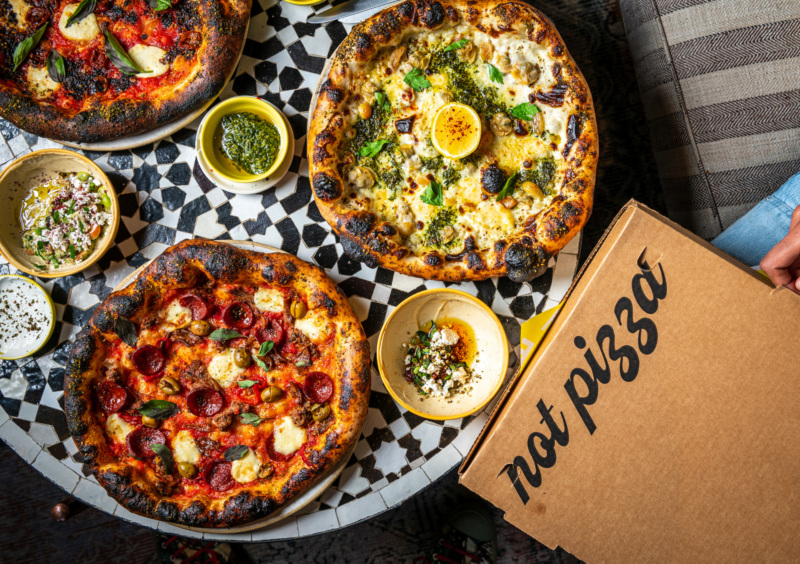
One other element is driving this current pizza moment. While a lot of chefs stand willfully on the shoulders of those who came before, today’s pizza maestri are adamant that they stand besides and not above their predecessors. Pizza game recognizes pizza game, almost to a fault. If you chat with Mark Iacono of New York’s Lucali (or his brother Chris, whose nearby Giuseppina’s is an underdog treasure) they’ll readily acknowledge a debt to Di Fara and Totonno’s and L&B Spumoni Gardens, and all earlier Brooklyn artisans. Chat up Joe Beddia, and he’ll not only rhapsodize about historic Philly pies from Tacconelli’s, and the deep history of Trenton-style tomato pies, but also to drag you out for a pie at an upstart like Char, where Viraj Thomas leveraged his Covid-era hobby to make some of the city’s current top pies.
Indeed a hallmark of today’s pizza culture is that what not long ago were inflamed arguments over style or format or toppings feel picayune. Sure, you can still find claims from would-be purists evangelizing that only adherence to true Neapolitan tradition is acceptable, a nifty bit of propaganda advanced by the Associazione Vera Pizza Napoletana, Naples’ pizza police, who even today are still on about this silliness. (Chiudi il becco!)
Mercifully, such exclusionary hooey feels largely left in the past, probably because it violates pizza’s inclusionary spirit. Same with semantic squabbles over, say, pineapple. Really, what did Hawaiian pizza ever do to hurt you? (No coincidence one of Roberta’s iconic early pies was a Hawaiian, or that San Lucas offers a Hawaiian with jalapeños, which is the correct way.) And look, given the current state of things, is a dip in ranch dressing the hill you want to die on?
That open-arms approach makes pizza emblematic of where the state of dining is headed today. Sure, let’s debate whether white-tablecloth dining and 30-course new Nordic tasting menus have a future. But pizza? Pizza ain’t going anywhere. Pizza meets you where you’re at. You don’t need to know the proper texture for a soubise, and you sure don’t need to discern the difference between “distant thunder” and “first cherry blossoms” among the 72 Japanese kaiseki-worthy microseasons. Even the most effete pizzas — take Wolfgang Puck’s smoked salmon pie at Spago, a dish with more ’80’s energy than a reservation at Dorsia — are still pretty delicious.
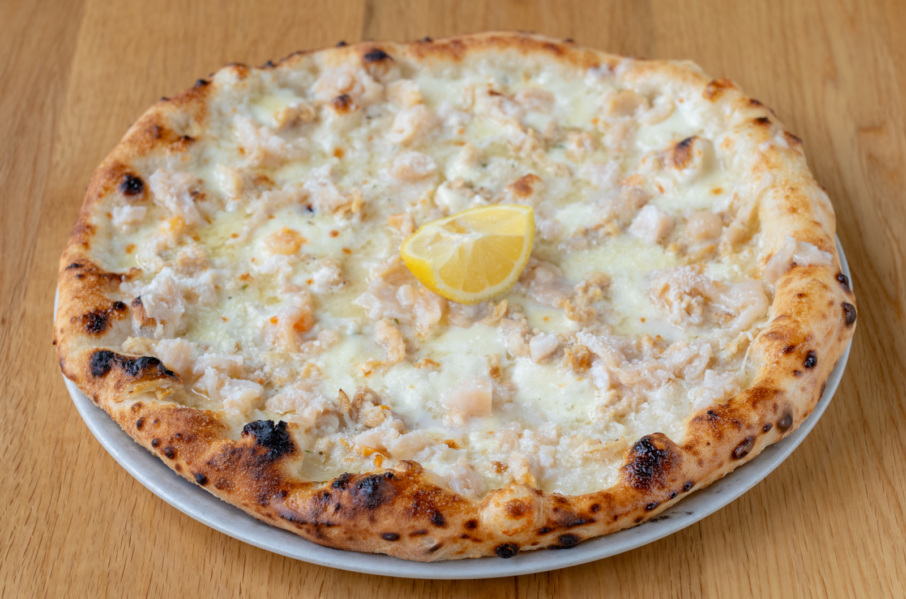
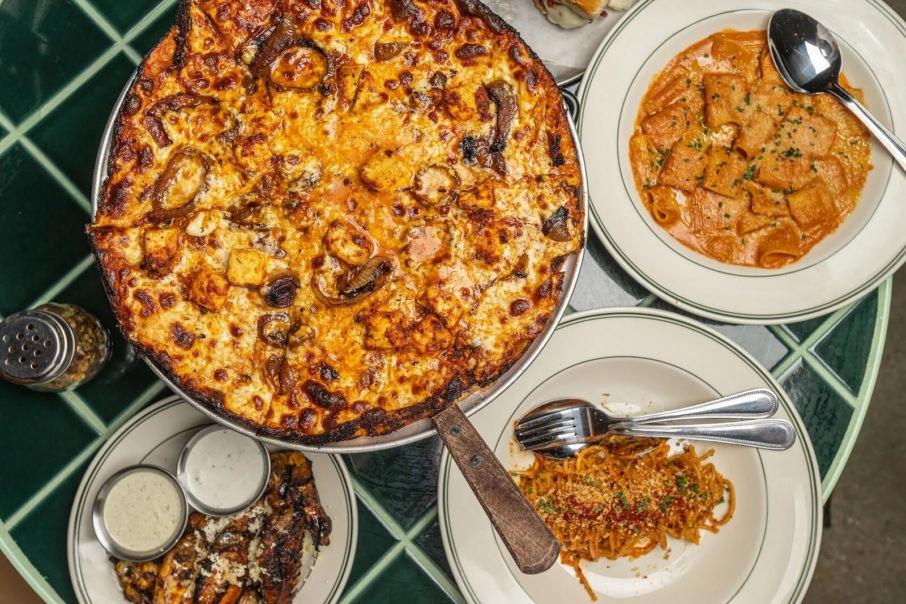
Let’s consider, too, a notably unique element of today’s pizza boom: its broad geography. If the American pizza revolution began in a handful of (mostly coastal) cities, pizza exceptionalism now thrives in most corners of the country. Los Angeles, for instance, is witnessing an unprecedented blossoming — whether more classic stylings at Quarter Sheets in Echo Park, Tokyo-inspired nuances at Pizzeria Sei, or dozens of others. Miami, too, has found its own sort of pizza magic, with standouts like Fratesi’s and La Natural. In Portland, Apizza Scholls now has company from the nationally lauded Lovely’s Fifty Fifty and the newly arrived Yum’s, from Brooklyn (and Ohio) transplant Miriam Weiskind.
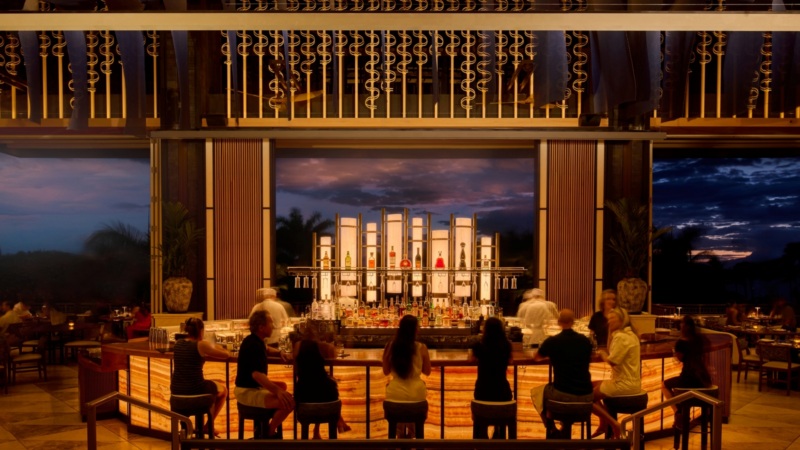
Go to Minneapolis and you’ll find Ann Kim still fortifying that city’s pizza scene (and now trying to perfect wings, too). Go to Fresno, Calif., and you’ll find a deep fan base for Jimmy Pardini’s Annesso Pizzeria. Go to Indianapolis, to North Carolina (to Charlotte, and Bird Pizzeria, or to Raleigh). And speaking of Hawaiian pizza, take a visit to Sale Pepe on Maui’s west side, where Qiana and Michele Di Bari offer their hybrid of Milan-Brooklyn energy, and pineapple is not on the menu.
For that matter, consider Blackbird, whose sublime pies are served alongside vegetable-forward sides like parsnips with chimichurri and avant-garde wines like Spain’s Tajinaste and California’s Scar of the Sea. An homage, maybe, to Roberta’s and Brooklyn’s pizza ascendency. Except you’ll find it in downtown Bozeman, Mont. Our pizza bounty indeed reaches all corners.
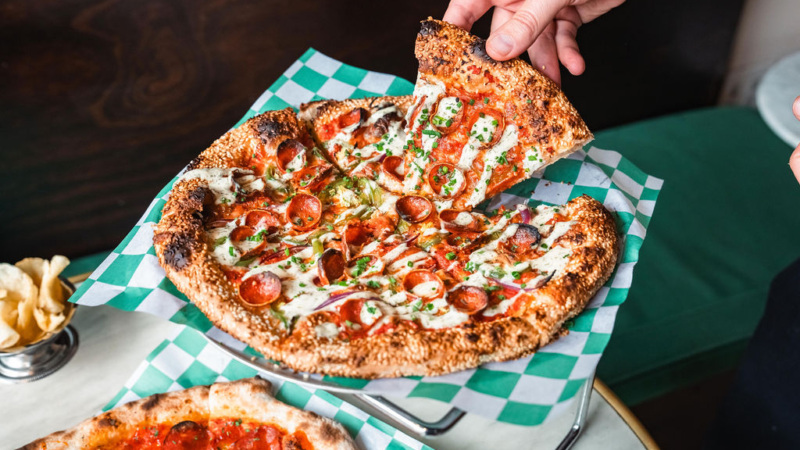
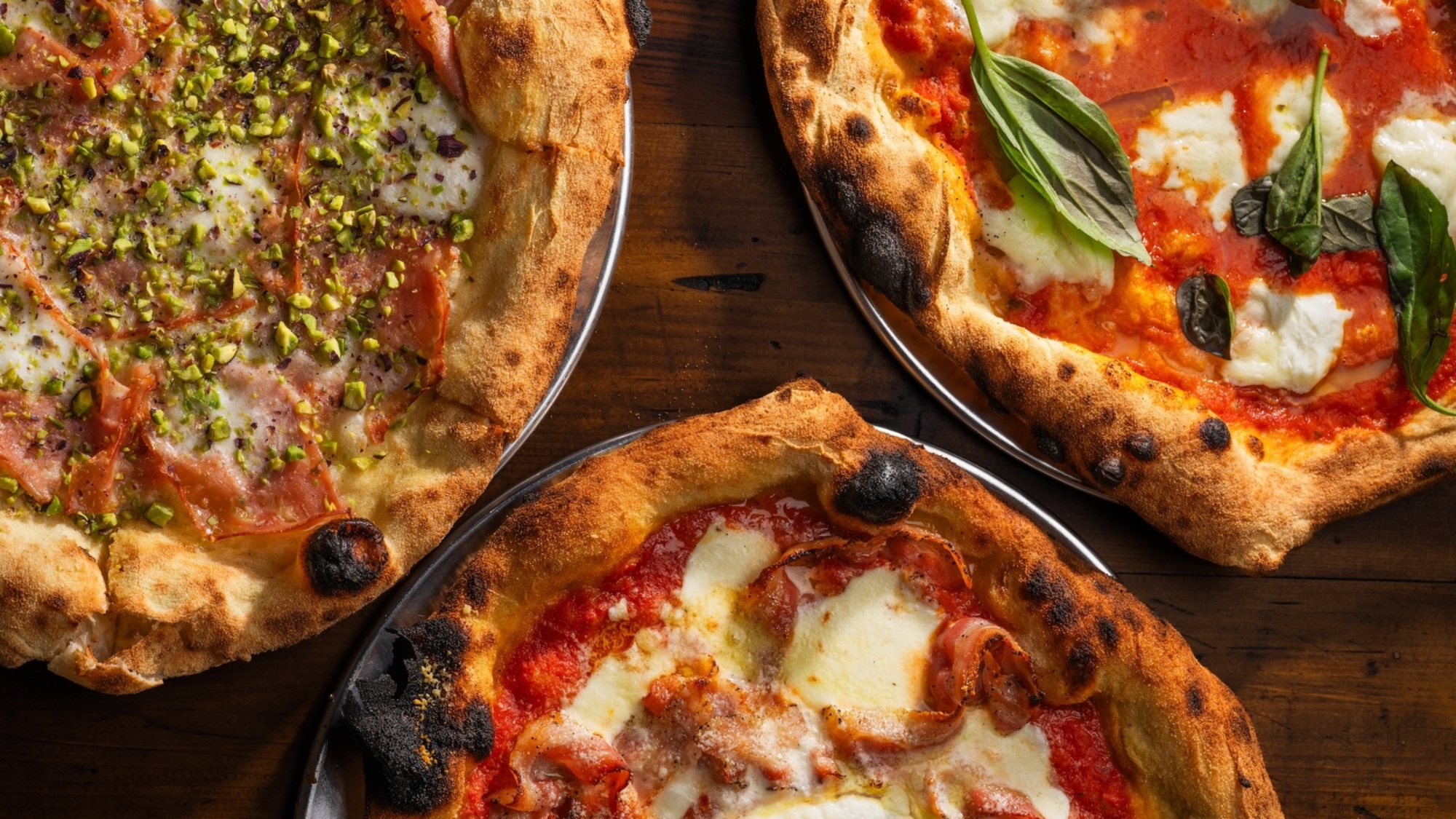
I was thinking about places like these as I sat down recently for one final pie at Del Popolo, which moved to the edge of San Francisco’s Union Square over a decade ago, but recently announced it would shut its doors. The domed oven still turned out lovely, tender neo-Neapolitan pies. Mine, topped with hot salami and Mama Lil’s pickled peppers, brought just enough heat and pucker, its puffy crust, as always, almost weightless. I enjoyed it with a glass of skin-contact vermentino from Lodi, the sort of postmodernist combo that didn’t really exist when Roberta’s opened its doors in 2008. It was a reminder that pizza is both a harbinger of progress, and brings out the best in all of us. And for that, I was immensely grateful.
Jon Bonné is Resy’s managing editor, a two-time James Beard Award winner, and author of “The New French Wine” and other books. He has written about pizza for two decades, and appreciates a good garlic knot. Follow him on Instagram. Follow Resy, too.