Updated:
Every great meal should be a journey. Not necessarily in that four-hour-tasting-menu, Willy-Wonka, land-of-pure-imagination way. But it should transport you — to a Bangkok night market, or to your grandmother’s kitchen, or a thousand other places.
For that reason, we believe every journey should involve a great meal. And since it’s time to make travel plans for this summer and beyond, that also means it’s time to think about great restaurants worth including in your trip — perhaps even those meaningful enough to build a trip around.
Restaurant as destination? The notion is hardly new. Over a century ago, a certain tire company created a guide to support that idea, hoping to lure people out on the road. And a voyage to dine doesn’t have to be grandiose; Anthony Bourdain taught us this. Food as pleasure can be as easy as noodles slurped on plastic stools in a simple joint in Hanoi. (OK, it helps if the leader of the free world is on the stool across from you.) But it’s no coincidence: When we talk of the places we go, those stories are laden with memories — of a perfect seafood plate on the beach at Luquillo, of the moment you unwrap a pound of brisket in Texas hill country.
To honor restaurants that create such memories, we’ve compiled a list of 40 around the country worth making a special journey for. They come in all shapes and sizes. You might find yourself at Holbox in L.A.; which has taken the marisqueria to an art form, or at Somaek in Boston or Lei in Manhattan’s Chinatown. Or perhaps at D.C.’s Lutèce, or even Emeril’s in New Orleans, providing their distinctive take on French cooking as it thrives in the 21st century. And many provide exclusive dining access to eligible American Express® Card Members via Global Dining Access by Resy. Terms apply.
Taken together, they define some of the most compelling examples of what American dining is today.
So whether your plans involve a trip across town, or across the country, these 40 restaurants will make your journey a bit more memorable. Get booking, and get out on the road to eat.
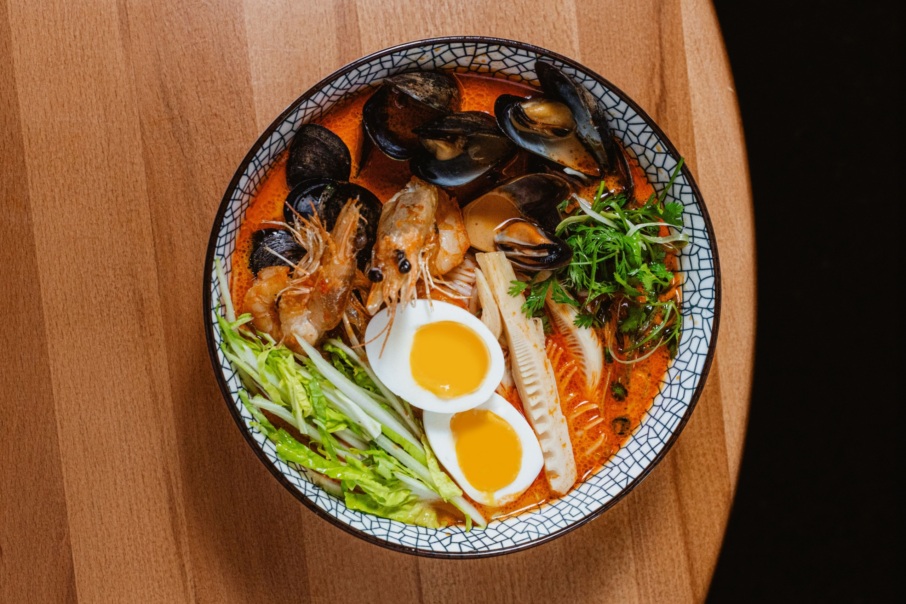

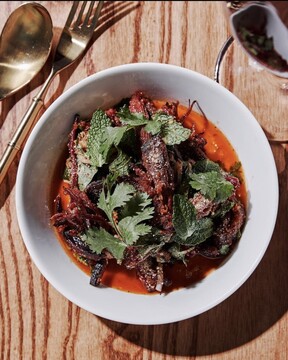


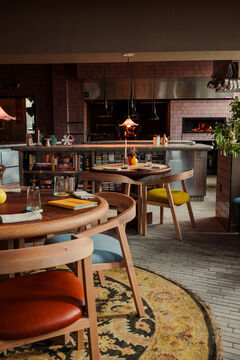


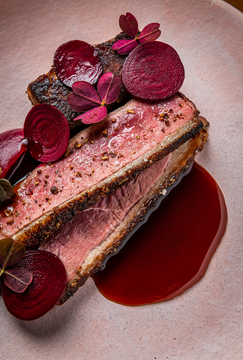


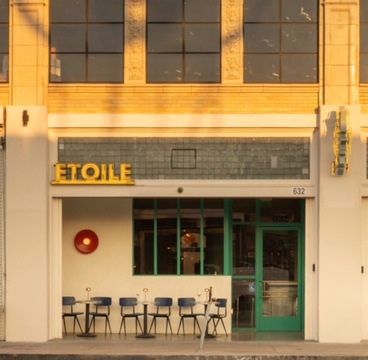



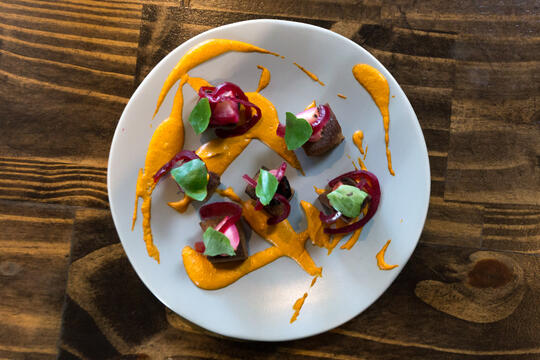


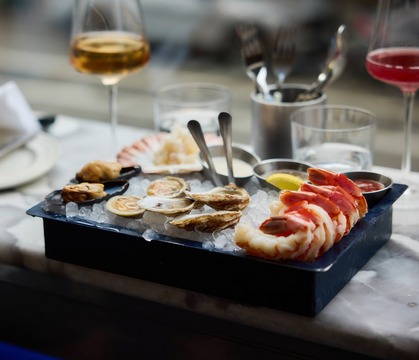
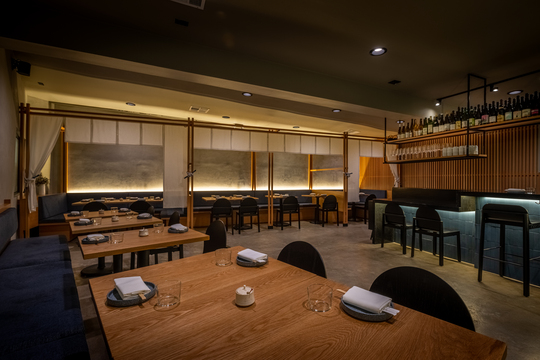


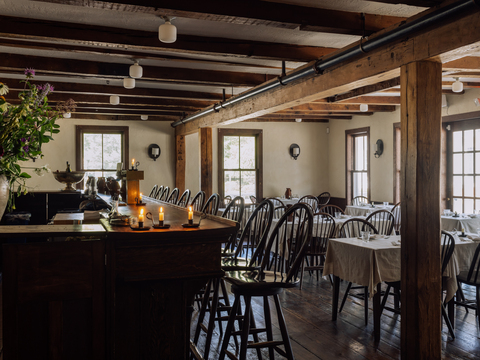

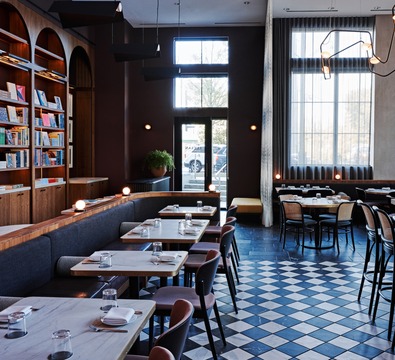

Mercado La Paloma is a bright spot in a still-evolving part of South Central — a new generation of entrepreneurial market. That makes it, perhaps, the perfect setting for chef Gilberto Cetina’s seafood wizardry. On the surface, you might peg Holbox as a very good modern marisqueria, its ceviches and aguachiles easily reaching the top of the charts even for L.A., a city where these have become art forms. But that’s just a departing point for Cetina, who uses familiar forms — a coctel de camarones, a tuna tostada — to manifest the extraordinary depths of flavor he’s mastered. The visible dry-aging cases should give it away: He was early to a technique that has become the new must-do for serious fish, in L.A. and elsewhere. The deep cuts, so to speak, are all on offer: tangy blood clams, punched up with vinegar and the smoke of morita chiles; Santa Barbara sea urchin still alive when the kitchen prepares it; and of course a twice-weekly tasting menu that takes you on a tour through Cetina’s remarkable worldview, including a penchant for sauces of immense depth. If the inspiration were Japanese, this would be omakase of the highest order. Instead, it’s tribute to why the mariscos tradition deserves equal reverence.
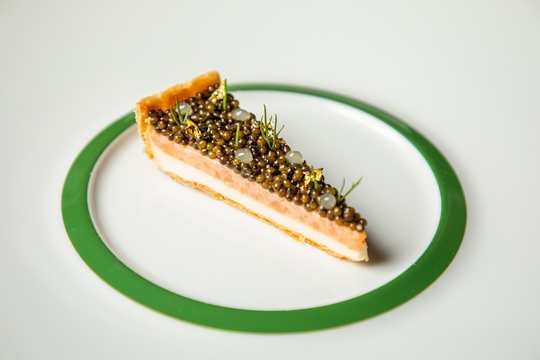
Been to Emeril’s lately? It’s ok if you haven’t — as much as the Lagasse name is etched into American food culture, Emeril himself was part of a TV era that’s long been subsumed by social media, the internet, all that. Of course, his flagship restaurant has been a mainstay of New Orleans dining all along, and lately it has gotten a bit of a glow-up with the arrival of E.J. Lagasse, Emeril’s son, who now runs the kitchen and has brought some new, finessed touches — in a tasting menu that offers his own take on French-Creole cooking: an oyster stew with Herbsaint cream, boudin with Creole mustard, and importantly, a savory salmon cheesecake with kaluga caviar. The wine program too is all strengths right now, and is complemented with a new wine bar that offers access to the list’s deep cuts with more casual bites. So while we love all the new energy in New Orleans, we’re also here for a classic to get some fresh energy.
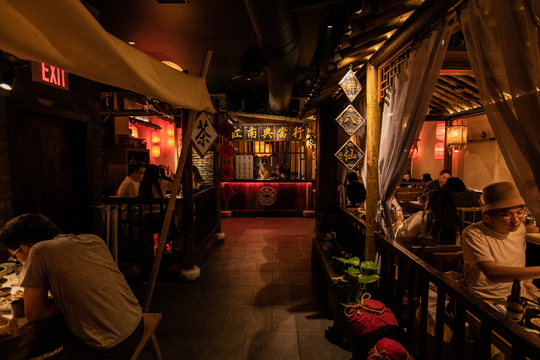
Doyers Street is for sure one of New York’s more atmospheric streets, a bent stub of a thing, smack in the midst of Chinatown. Perhaps that’s why it has received more than its share of attention, in part because of the iconic Nom Wah. But right next door, this postage-stamp sized wine bar has also garnered astonishing praise — with good reason. Annie Shi, one of the country’s most talented and engaging wine pros (and cofounder of King) built this as a way to tap into both her roots and her wine knowledge. The result is one of New York’s most flat-out charming haunts in years; a Chinese American menu that’s entirely sui generis (as with slices of celtuce in red vinegar, or slices of Jinhua country ham with seasonal fruit), matched with a remarkably curated list from Shi and her team. Champagne is clearly an object of desire here, but that just prefaces deep cuts in Europe, California and even China. It all adds up to one of the quintessence of wine bars’ welcome renaissance today.
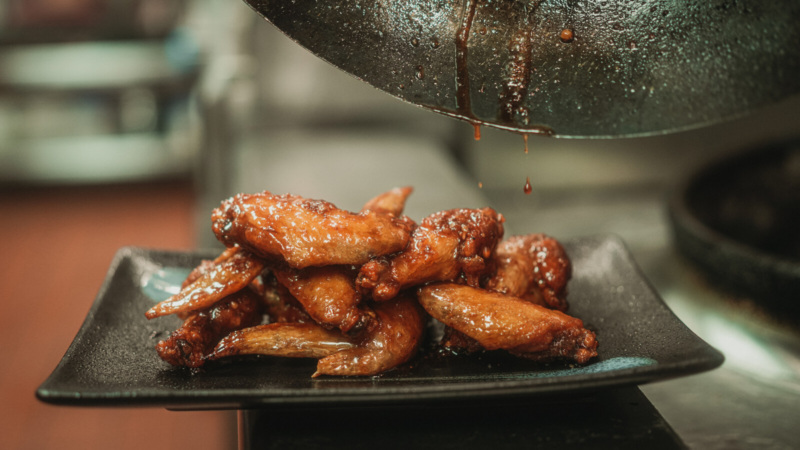
Tam Pham and Harrison Ramhofer have created a quintessential “only in America, only right now” restaurant — improbably in Miami except that city’s lack of Vietnamese cuisine options was in fact their inspiration. The counter with the chrome-edged stools, the beverage cooler, the aesthetic worthy of a Martin Parr photo. (Pham does the restaurant’s photography himself, just to add to his list of talents.) The notion is Vietnamese drinking food, whether that amounts to fish-sauce caramel wings or a “sizzling pork belly situation” (direct words from the menu) or a “jungle steak tartare” that takes full advantage of the aggressively verdant herb rau ram. It’s all meant to accompany a deft roster of naturally-tilting wines, plus sake, beer, and a soursop daiquiri. Tam Tam is distinct proof that you can build a restaurant around just exactly the things you like — and it can be both delightful and important.
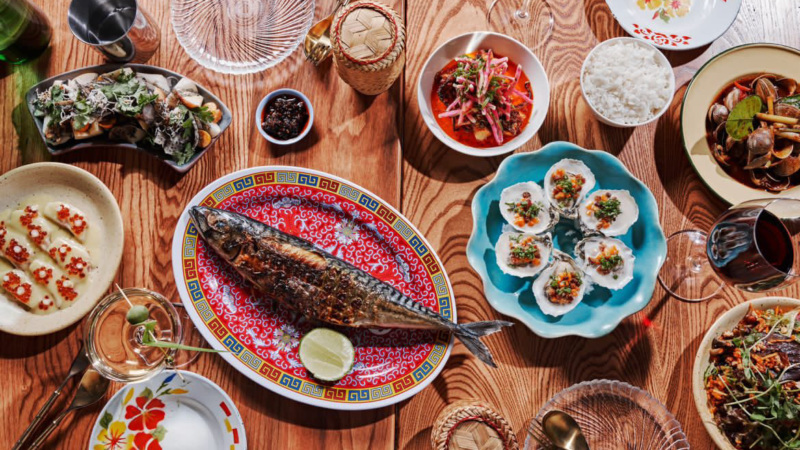
Thai food keeps evolving and transforming across the country in ever more wonderful ways, but even with that, there’s something special about what Parnass Savang and Rod Lassiter have created with Talat. Since their early days in pop-up mode, they have been exploring and playing with how Thai techniques and flavors intersect with Georgia ingredients and Southern foodways — which has made their Summerhill brick-and-mortar a welcome destination. The offerings are always changing: one night could bring soft-shell crab, another might have steak with a Thai Atlantan remix on chimichurri, or yum phonlamai, a savory fruit salad, garnished with Georgia pecans. The cocktails and wines lean to avant-garde, the hospitality is very Southern, and as if to drive the point home, there’s always on-message swag — like a trucker hat with Talat rendered as a 7-Eleven logo. (“Talat” means market, so there you go.)
It’s hard to quantify Koji Club as a restaurant, given a footprint of just 250 square feet. But Alyssa Mikiko DiPasquale chose this tiny boîte, in the improbable locale of the Charles River Speedway, a complex of former horse stables, for her evangelism of the beauties of sake. Pasquale has an uncanny ability to turn Americans onto the charms of that most enigmatic Japanese drink — which is why Koji Club presents more like a neighborhood bar, albeit one with an epic curation of drinks, and a snackable menu: saltines with green-pepper miso and cream cheese, and the occasional bento box. The net effect is one of those perfect hospitality spaces — where you’re gently able to consider the unfamiliar in ways that feel welcoming, as though it’s just an evening with friends. The good news is that DiPasquale has plans to expand, so the magic she brings to her current space will be accessible to at least a slightly larger crowd soon.
The aesthetics of Nick Tamburo’s East Village space are indeed dark and close-in, more or less the polar opposite of the whitewashed, faded-blue driftwood aesthetic of your typical New England seafood joint.But New England — namely southern Massachusetts, where Tamburo grew up, before cooking at nearby spots like Claud — is indeed the inspiration here. This yields an charmingly off-kilter remix of staples — chowder is reimagined as an irresistible sort of quahog-studded soupy risotto, a whole fried whiting may the most unabashedly anatomical fried fish you’ll encounter this side of Paris’ Clamato (yet it somehow has been liberated of its bones) — as well as novel creations that will stick in mind. Add in the wine stylings of Nikita Malhotra (an alum of Momofuku Ko), currently a deep dive into Champagne, and you have the makings of a net-new standout that will surely inspire replicas far and wide.
You could say that Michael Rafidi’s personal brand is joy, which is a word that doesn’t come up too much right now where the Middle East is concerned. Rafidi is Palestinian by origin, but Albi, like all the chef’s projects across Washington, D.C., takes a broader and more expansive view of Levantine cooking, as with hummus topped with Maryland crab and green garlic, or a shareable barbecued lamb with cinnamon-tinged kefta and summer squash. This makes Albi the perfect evolution of a cuisine that finally is catching traction on these shores — one even more distinctly telegraphed by Rafidi’s recently opened La’ Shukran, where dishes like lamb belly fried rice sit alongside an arak-focused cocktail program and a natural wine program with a serious backbeat.
What’s crucial about Sunny’s isn’t just that they nail a particularly enticing take on the modern steakhouse. It’s how much fun they’re having at doing it. This tracks, given it’s from the team that built the dynamic, cocktail-forward Jaguar Sun, one of Miami’s most earnestly thrilling spots during its six-year run. Sunny’s, which began as a pandemic pop-up, is a worthy successor. Steakhouse classicists feel comfortable here, with a wedge salad and a plump shrimp cocktail in a quintessentially retro metal bowl. Steaks and sauces come in a handy range of cuts and selections (OK, the pineapple hot sauce isn’t so traditional). But, it being Florida, fish earn equal billing, like dorade with a caper vinaigrette; the cocktail program is elite (don’t miss the the page of DIY martinis) as is a forward-thinking wine list. We have indeed returned to golden days for the American steakhouse, and Sunny’s is one of the finest specimens among a strong, growing cohort.
The return of Torrisi in late 2022 — or rather the reappearance — marked an auspicious moment for New York dining. It was less a homecoming of sorts for Major Food Group after the Carbone era than a full-circle moment: Rich Torrisi bringing back his uniquely adaptive Italian American cooking, with a platform that reflects his and Mario Carbone’s incalculable impact on dining. Torrisi 1.0 planted a flag for many things that now define how we eat. Torrisi 2.0 reflects its times, too — more Carbone-y glitz, more confidence. And it’s a love letter to its town: Cucumbers “New Yorkese” tips a hat to the Jewish pickling traditions of the Lower East Side. A lobster-studded capellini Cantonese nods to both nearby Chinatown and Little Italy. The net effect celebrates of how American cuisine at its best hybridizes and amplifies the breadth of our traditions, into things that are delicious and uniquely ours.
Junghyun and Ellia Park’s rise to the top of New York’s restaurant ladder has been nothing short of astonishing — having pretty well set the bar for neo-Korean cooking in this city (and far beyond). Their tasting-menu Atomix transits in multi-star realms; Seoul Salon replicates the Korean sool. And yet it’s their original restaurant, Atoboy, that arguably best shows how they helped to redefine modern Korean American dining — in much the same way that, say, Baroo does in L.A. The $75 prix fixe (service included) remains a perfect progression through the Parks’ ethos: a dish of Korean pear is rounded out with almonds and Piave cheese; pork belly and cauliflower are punched up with pungent, fermented jeotgal. The kimchi is always subtle and the optional fried chicken to finish is never really optional. And the beverage program is equally progressive — a space where grower Champagne, soju, and skin-contact savagnin can happily commune.
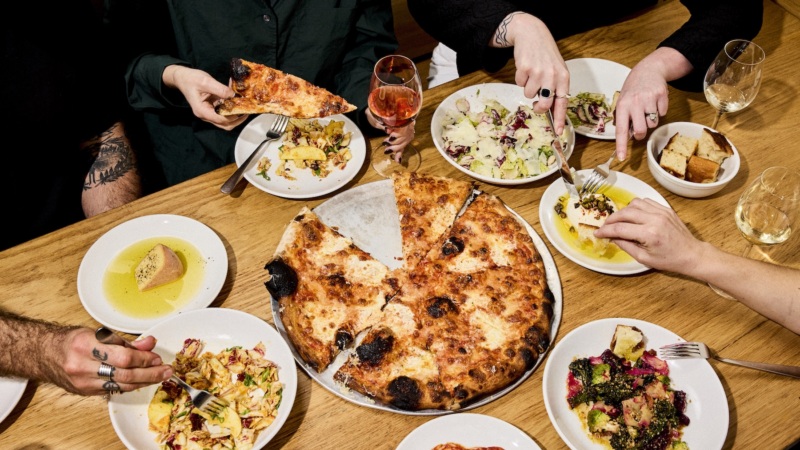
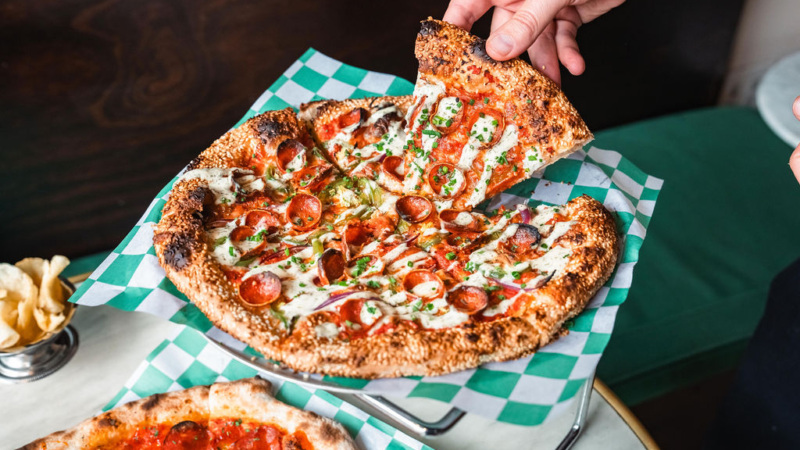
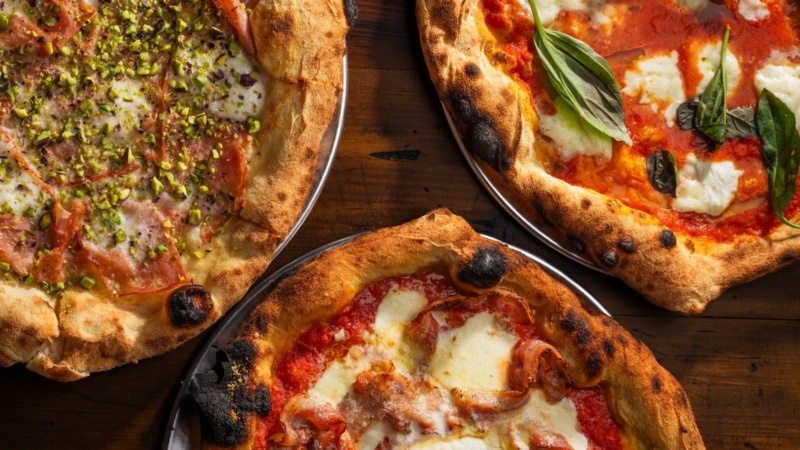
The style and quality of Beddia’s pies — Northeastern in their mien, some hybrid of New York and Jersey and New Haven, which is not an inaccurate description of Philly’s pizza DNA — remain as excellent as they were from their early pop-up days. They are, crucially, substantial and unfussy, still baked in electric ovens, mostly classic (the arrabbiatta is the sleeper hit) but always with a seasonal twist.
They’re also now served with a couple of epic salads — Beddia is quietly a salad maestro — plus beans that overtly quote Paris wine bar La Buvette, and a tightly edited roster of natural-minded wines that reflect Beddia’s own obsession. That plus his rendering of tomato pie, a mandatory start to a meal, and the The Hoagie Room, make Beddia an ongoing anchor of the city’s burgeoning, evolving, and epic pizza scene.
The working dynamic between the chefs Matt Conroy and his wife Isabel Coss is something to behold. Having been at the top of New York’s culinary ranks (Cosme, Oxomoco, Agern) they moved to D.C. on the cusp of the pandemic and launched this refurbed Georgetown storefront — which over five years has become the quintessence of the American form of the French neobistro. In Paris, that implies exceptional food in a humble space, and Conroy and Coss are excellent students of the form, as evidenced by their annual research trips to Paris. The result is bold, boundless French cooking, in dishes like skewered duck hearts with a three-day jus and mandarinquat — Conroy’s latest twist on duck à l’orange. But their love of Mexican cooking shows up in the brightness of flavors, among other things, and while they explore that more overtly at Pascual, opened last year, Lutèce is its own wonderful icon of progressive French cooking, for a cuisine often still seen by Americans in old-fashioned terms.
Some restaurants become destinations by chance; Passerelle feels very much like it was designed to be one, in the best way. Consider the players: French luxury retailer Printemps, which chose to open five dining concepts inside its new flagship U.S. store, then chose Gregory Gourdet, whose Kann drew crowds to Portland, Ore., for his Haitian-inspired cooking. In other words, this is a department store (even if Printemps insists it’s not!) café unlike any you’ve seen. There is utter brilliance in tapping Gourdet to channel his vision of French cooking, not just through a Haitian prism but through Senegal, Morocco, and the many flavors of the Francophone world. White asparagus with a tomato-ginger relish and Creole cream is the sort of reconsideration of flavors that feels tonally perfect coming from a chef as thoughtful as Gourdet; same with glazed duck done with pineapple, cane syrup, and dirty rice. Pommes frites sit comfortably next to black-eyed pea fritters. And all in one of the biggest design stunners in a while. Was this a space tailored to draw you to visit? Sure. And it overdelivers.
When Rintaro opened in 2014 in the Mission, it sounded like a quintessentially Bay Area thing: Chez Panisse alum applies that philosophy to Japanese izakaya food. San Francisco always has more creativity in its restaurants than longevity, especially with the headwinds of recent years. But here we are a decade later, and Sylvan Mishima Brackett’s restaurant keeps going from strength to strength (including a deservedly lauded cookbook last year). The open kitchen and pristine sourcing remain at the heart of Rintaro, and the results are impeccable, whether yakitori simply grilled over binchotan (get the chicken thigh with sancho) or his version of a tamago omelet, or the long-simmered oden. There is something restorative about the clean, precise flavors always on display, and yet the raucous heart of an izakaya is in effect, too. California bounty is beloved because it always evolves, and Brackett has found a perfect stage to demonstrate that.
Kismet’s backstory sounds like one of those only-in-L.A. tales … so of course it starts in Brooklyn, from which Sara Kramer and Sarah Hymanson brought their sensibilities with Middle Eastern cooking, honed at the understated Glasserie in northern Greenpoint. Among other things, Glasserie’s heralded rabbit dish evolved into new forms when it hit Pacific time — one of many ways they merged their tastes with Californian sensibilities. Kismet today is ever more vegetable focused, with dishes like roasted maitake with chickpeas and yogurt sharing space with lamb ribs with smoked plum sauce. There’s tahdig as a side dish, and lime-leaf cashews to snack on. And the current release of their new cookbook reflects just how perfectly the two found a way to offer their own unique take on Angeleno aesthetics. Indeed, Kismet today more or less defines modern SoCal cooking.
Steven Satterfield’s Miller Union remains at the top of the pack for Atlanta dining, but often less known is the talent of his business partner Neal McCarthy, who assembled one of the country’s great wine lists there. The obvious move, then, would be to open a wine bar — and Madeira Park is just that, harnessing two of the city’s longtime talents, plus sommelier Tim Willard. The chill format allows Satterfield to cook the kind of beautifully simple food he does best — leeks vinaigrette with anchovies, snapper with a celery-fennel remoulade, a bistro steak with a beet Bordelaise. And the wine program is a stunner, encompassing the avant-garde of old world and new — plus, yes, a roster of Madeiras that reveal their food-friendly nature.
D.C. has a remarkable tradition of Indian cooking, one of the best places in the Western hemisphere to find it. And the community of chefs there has allowed for brilliant creations like Daru, opened by two veterans of the local industry: Suresh Sundas, formerly the tandoor chef at Rasika West End, where he worked with Dante Datta, a Bengali cocktail maestro who also worked at Ellē. The menu is willfully nontraditional in the best way, what with chicken tikka tacos and a reshmi kebab that incorporates blue cheese and sour cherries. Not everything strays so far from canon, as with a dough-topped wild mushroom biryani, but the net effect is the sort of restaurant that smiles politely at whatever you have to say about “authenticity,” and then serves you a bison momo, or one of Datta’s nuanced, spicy cocktails, and goes about its business being exactly what it wants to be.
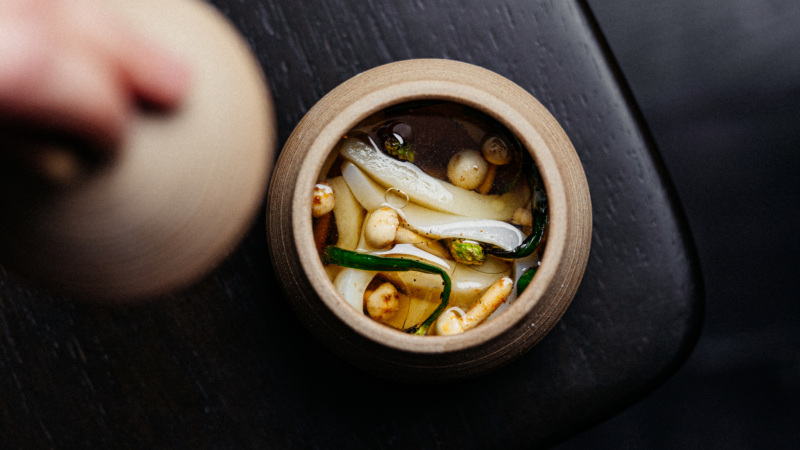
It’s fair to say New York has a conflicted relationship with Mexican cooking, but recent years have indeed brought postmodern examples to the fore in the city. And Fidel Caballero’s Chinatown spot is one of the most ambitious efforts to date to do what he calls “progressive Mexican.” Caballero has brought both a journeyman’s perspective (cooking at Contra and Rhodora in NYC, The Bistro in Shanghai and elsewhere) and his upbringing near Ciudad Juarez, by the Texas border, to a menu that wanders globally —shimeji mushrooms and udon noodles — while maintaining deep flavor references to Chihuahua’s desert aesthetics and flavors. (Think steak in a guajillo chile jus.) Most of all, there are Caballero’s magnificent flour tortillas, made from Sonoran wheat and chicken fat. They accompany the menu, but you can also get an order, with a side of recado negro butter, and have a moment of transcendence.
The East Coast is the usual culprit when it comes to homages to modern French — namely Parisian — cooking. But L.A. has its own proud Francophilia, as witnessed by this recent Melrose arrival. That it’s wine driven almost goes without saying, but in this case there’s serious firepower behind the wine leanings, namely in the form of Jill Bernheimer, whose Domaine L.A. was a seminal natural wine destination. There’s a raft of talent here, including food from Travis Hayden, with his wine-adjacent résumé (Rustic Canyon, Voodoo Vin) and Bernheimer’s front-of-house colleague Julian Kurland. The expected items are here: steak frites and a roast chicken. But yams with a guajillo sabayon and Jimmy Nardello peppers leans pretty Californian, and then there’s Hayden’s signature, a Caesar beef tartare. And Bernheimer has been playing at the natty-wine roulette table long enough to know how to master the stakes.
It’s not that chef Paolo Dungca lacks for ambition — his career has taken him through the kitchens of key D.C. spots like Restaurant Eve, to say nothing of the groundbreaking Bad Saint. But like its spiritual sibling Kasama in Chicago, Kayu reflects Dungca’s vision for a cuisine that’s very much its own creation. A new location has brought changes, including a shift to an à la carte menu. Innovations like his “dinuguan” pork chop (using burnt coconut in place of pork blood) has shifted to more laissez-faire options, like scallops with dirty rice and egg-yolk jam, and a lamb rack kare kare, given extra gravitas from roasted eggplant. Dungca continues to be at the forefront modern Filipino American cooking.
Travis Lett seems to have a preternatural sense of what L.A. wants to eat, at least judging from the enduring success of Gjelina when he was there. Here, Lett has turned his talents to an all-day Cal-Japanese izakaya, although that doesn’t quite capture what he’s up to. Yes, there’s meat grilled over binchotan, and his form of fresh ramen (manila clams with yuzu and chiles, in one recent bowl), plus gyoza and handrolls and all the expected items. But also a deep roster of produce-forward plates that reveal Lett’s true talents — baby bok choy with sesame miso, charred cauliflower with leeks, and so on. Indeed, the vegetables may have gotten the most notice here, which stands to reason when you think about how Lett’s skills made Abbot-Kinney a global destination for modern Californian farm-to-table standards.
There’s good reason that Greg Vernick remains one of the foundational lights of modern Philly cooking: He has a sense of how Mid-Atlantic flavors can truly shine. That’s appeared more recently at his Vernick Fish, but his original spot remains packed, with good reason. Dishes like rock shrimp in a rice porridge with an accent of ginger show attention to both the edges of flavor and texture — in that case it presents like risotto but lands like very exquisite shrimp and grits. A celery root Milanese with a celery agridolce will have you paying homage anew to that vegetable. Small items “on toast,” like beef tartare with horseradish, could compose a whole perfect meal themselves. And the wine program remains one of the city’s best — a model of endless curiosity. The OG Vernick is a reminder that sometimes simplicity and a keen eye to detail can deliver more than whatever the latest cuisine du jour might be.
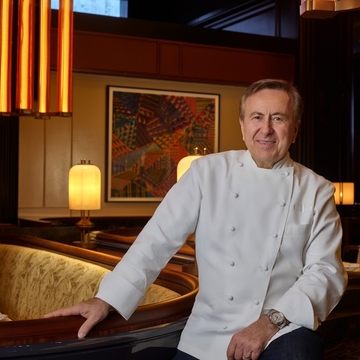
If Daniel Boulud doing a steakhouse seems almost too obvious an assignment, perhaps that’s because it’s … brilliant? The maximalism of the American steakhouse seems precisely the thing for the iconic French chef to embrace, as a means of channeling his soigné nature at a time when soigné feels like a rarity. Tête d’Or is designed to be a stunner — bring the in-laws and dazzle them — and it nails the assignment. The trappings are lavish, in a velvety French way. The seafood towers do indeed scrape the sky. The steaks embrace both French and American cuts (don’t miss the queue de filet, or tenderloin tail) — and there is, natch, a wagyu prime rib trolly. Sauces? You know au poivre is here, along with good old horseradish cream. Fries, bien sur; in fact, six kinds of potatoes, to keep Parmentier happy. A “French wedge” salad includes smoked beef tongue. And if you didn’t have Daniel Boulud on team Tableside Caesar on your bingo card … guess again.
Anyone dining in Boston in the past couple decades has likely eaten Jamie Bissonnette’s food — at, say, Toro, Coppa, Little Donkey, and more. His latest efforts, though, have gone a different direction … very different. Somaek is a very traditional take on Korean cooking, not fusiony Korean but a studious take on classics. What gives? In short, this is a family affair, namely the work of Bissonnette and his mother in law, Soon Han, Somaek’s consulting chef. This makes Somaek very much the opposite of an accomplished chef taking on a new cuisine as a lark; it is a deeply personal project for him, a chance to learn anew at a time most chefs are mentoring others. Of course, he is still one of Boston’s best chefs (and is overseeing neighboring Temple Records and Sushi @ Temple Records) which makes Somaek’s takes on Korean classics like bibim guksu a delight to enjoy.

Chef Diana Davila remains at the forefront of the new guard of Mexican American cuisine, a position that shows itself best through both the sheer diversity of her menu at Mi Tocaya, a standout in a city that has long been pushing Mexican cooking forward, but also the stories she weaves into the descriptions. You might see her fondness for Baja reflected in an aguachile punched with shrimp and uni, or romanesco tossed in a version of sikil pak, the ancient seed-based spread, made with gooseberries. The steak burrito that’s a modern Chicago classic remains, too, along with their take on quesabirria, using traditional goat and aged melted queso. Heritage and sources matter a lot here, with plenty of corn and other ingredients coming from single origins, but the culinary language always feels familiar.
Every now and then, a restaurant defies easy categorization in the most wonderful way, and José Olmedo Carles Rojas has created just that, blocks from the Pacific. Carles Rojas also runs the acclaimed Panama City restaurant Lo Que Hay, and the thesis behind Si! Mon is his interpretation of Panamanian cuisine through an L.A. lens, which itself is enough to bust out of any usual culinary buckets. But that doesn’t capture the totality of what he’s up to — as evidenced by dishes like a smoked fish dip that taps trout roe and guajillo peppers, plus taro and plantain chips, for a result that feels like eight cultural threads woven together. Or kampachi in a banana leaf, accented with coconut oil and makrut lime leaves — again, like all of L.A. on a plate. A market fish comes with pequín salsa and miso butter, and of course there’s the much-craved tuna yuca tostada with black lime. It’s all somehow daring and comforting at the same time, which is a most extraordinary feat.
There’s a reason this compact boîte in a strip mall in Little Haiti — accented with its neon exclamation point outside — has become an epicenter of modern Miami cooking, even drawing a Michelin star: chefs Alex Meyer and Luciana Giangrandi have found a particularly chill and South Floridian form of bistronomy, here channeled through astonishing takes on Italianate cooking. Their cooking is twisted nuovo Italian of the best sort: beef tartare gets the tonnato treatment; black tagliolini is punched up with crab and vin jaune; a fra diavolo take is applied to lamb ribs. The net effect is a refreshing prism on how Italian American cooking has evolved with confidence and verve. And the duo are keenly aware of this lineage, as with Luci’s chopped salad — their interpretation of Nancy Silverton’s perfect version at L.A.’s Mozza.
If Chinese restaurants still get stuck with tired narratives — humble mom-and-pop, or soaring to second-generation gastronomic wonder? — CheLi represents a third path: distinctive, ambitious, regionally rooted in China today. In its case, the hook is the food of Jiangnan province; the only giveaway that you might not be in Shanghai is a faux-rustic village decor. But the (long) menu moves from strength to strength: Launch into classic starters like wine-soaked chicken, or linger on exceptional dim sum (pro tip: get the black-swan durian crisps), but make sure to dive deeper — for the now well-known longjing shrimp, poached in tea and served in a fog of dry ice; or a sweet-and-sour “squirrel” fish, so named for its flipped-up tail. In addition to a Flushing outpost, the location on St. Marks Place, in the heart of old East Village punk territory, evidences how NYC has embraced a grown-up, expansive view of Chinese cooking.
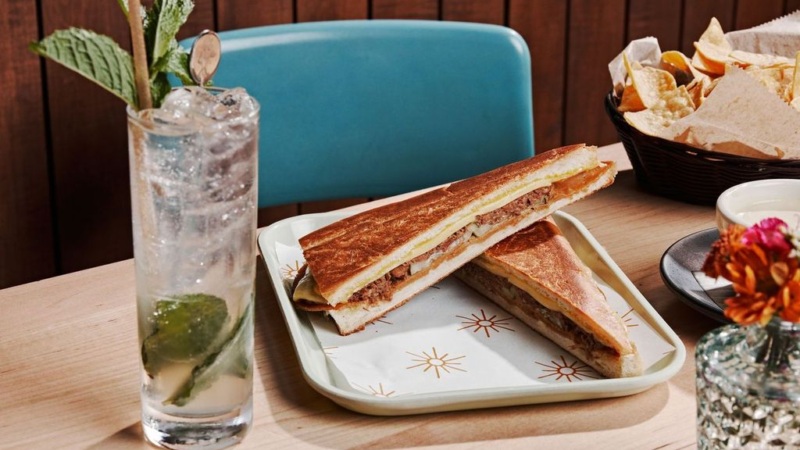
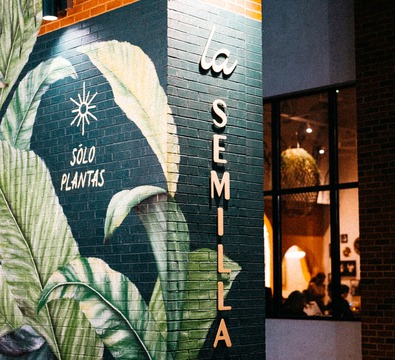
If there’s a common thread to tie together Cuban and other Latin American cuisines, it might be … pork. But Sophia Marchese and Reid Trapani’s vegan restaurant in an emerging East Side neighborhood found quick acclaim for, perhaps, going straight in the other direction. The flavors from Marchese’s native Cuba, plus Mexico and beyond, are compellingly and playfully evoked, in a tropical setting that reflects the ATL’s perennial party vibe. In Trapani’s hands, jackfruit lechon becomes its own marvelous thing, the heart of a Cubano sandwich, and lion’s mane mushrooms get the spotlight in the marinated (usually) beef dish bistec de palomilla. Add in a jazzy cocktail list leaning to rum and agave, and you have a very model of plant-based cuisine, with no apologies.
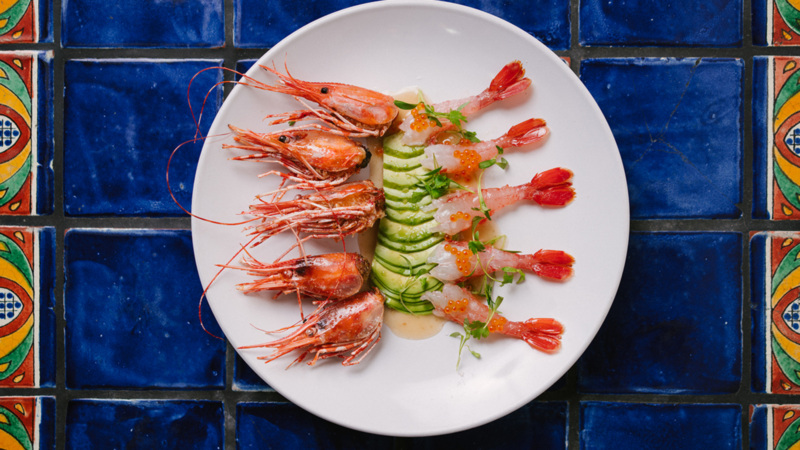
We are believers in not putting too much into nomenclature, and Joshua Pinsky and Chase Sinzer seem to be in a similar place. Is the Momofuku Ko alums’ hit Claud really just a “wine bar”? Is its upstairs sibling Penny just a “seafood counter”? In either case, the answer is “kinda.” Also, “Who cares?” On its face, yes, Penny is a seafood counter, with crimson shrimp and tidily garnished razor clams. But there’s Dover sole with bone marrow, and a crave-worthy ice cream sandwich (!). And, importantly, an erudite wine list that mirrors Sinzer’s epic work at Claud. The deep cuts of Loire and Burgundy whites reflect the seafood assignment, but reds get consideration too — all in a tilt that embraces natural-wine cult hits and important references alike. Do you want to graze a bit, drink, and move into your evening? Sure. Want to eat with gusto? They got you. Penny renders terminology irrelevant; spots this rewarding don’t need to wear labels.
Niki Nakayama has a precise understanding of how L.A. likes to dine. Her restaurant, n/naka, effectively defined kaiseki dining in the city. Yet she and her wife and partner Carole Iida-Nakayama don’t stand on ceremony — especially at their izakaya. Top chefs have learned to dabble in less fussy options, and on the surface, the menu at N/Soto sounds almost routine: nigiri and sashimi; grilled skewers; karaage; chawanmushi. That obscures the craftsmanship you’ll find at its highest level. (Get the housemade tofu.) It also obscures how downright fun it is to dine here. The duo take “izakaya” at face value; food on the plate can feel almost thrown together, until of course you drink some sake; take a bit of, say, miso-baked bone marrow; and are struck silent. Nakayama once worked at Mori Sushi, where Morihiro Onodera low-key built a pinnacle of L.A. Japanese cooking. N/Soto follows in that wonderful tradition.
Lenoir somehow simultaneously demonstrates deep ambition, while feeling quirky and quaint, as Austin was when it was truly still weird. That magic touch is thanks to Todd Duplechan and Jessica Mahe, who named it for the wine-grape rootstock found in the nearby Hill Country. That, plus the fact the backyard is the Winegarden, should tip you off to its reputation as one of Texas’ best spots to drink wine — and Erika Wong’s current list continues that, with German orange wine and New Zealand rosé and European classics, too. The menu always flirts with being Texan (chicken fried eggplant with baba ganoush, melon and tomato salad with watermelon nuoc cham) without ever being obvious, which sums up the Austin ethos pretty well.
The team at Galit has been charming us for years with their interpretation of Middle Eastern cooking, and some of the best hummus in Chicago (and possibly the country). And now Zach Engel and Andres Clavero have followed it up with this new entry next door. By day Yaya fulfills its cafe vibes, including with sandwiches and pastries. By night it feels like a more freeform riff on Galit’s cooking — with Mediterranean as a baseline but also French and Southern accents woven in. Thus pimento cheese sits next to black garlic tehina among the dips, a tomato salad comes with Comté and baguette croutons, there’s chow chow for a pork schnitzel, and duck confit with lentils. (And even a lunchtime version of a jambon fromage!)
A revival of Colonial-era cooking was not likely on anybody’s dance card, but that has in fact come to be (see also the slow-burn success of Jody Williams’ Commerce Inn). This one can be credited to Clare de Boer, one of the founding chefs at New York’s King and Jupiter, who found a Revolutionary-era tavern a couple of hours north up the Taconic Parkway. The choice is perhaps more evident given de Boer’s history cooking at London’s River Cafe, a font of new British cooking, and Pine Plains’ location in the Hudson Valley, some of the world’s richest agricultural land. This reveals itself in dishes like pot-roasted vegetables with barley, and a halibut with butterball potatoes, artichoke and a salsa verde, along with hearty, archaic sounding fare like mussels cooked in cider, braised rabbit, and a substantial fish pie. This might all sound a bit simple, unless you’re familiar with de Boer’s cooking at King, which exulted in simple-sounding pleasures that were profound in their flavors.
Translating to “village” from Italian, Borgo marks the first Manhattan-based venture from Brooklyn restaurateur Andrew Tarlow, the face behind Diner, She Wolf, and other highly regarded Kings County establishments. Decked out with old-school martini carts and a wood-fired oven, the space feels posh and yet the cooking feels wonderfully … if not rustic, perhaps just unfussy enough while also being exactly what you want to eat, as with the lasagna with Sungold tomatoes, or a chicken cacciatore done in that wood oven. Crucially, it also features the wine stylings of Lee Campbell, who for some two decades has been a treasure in New York’s wine scene, an epic run that yielded her a 2026 Beard award.
Buckhead may not be the most academic Atlanta neighborhood, but believe us when we tell you that if you’re a book lover, it’s worth a trip to see Katie Barringer and Jordan Smelt’s clean, well-lighted place. Here’s a bibliophile’s dream: Barringer, who formerly ran the city’s beloved Cover Books, has filled the wall shelves with a deft selection of titles that lean to design, art, food, and wine. If many restaurants use books as props, these are very much meant to browse and buy. That could just be a novel twist, no pun intended, except that Smelt (ex Cakes & Ale) runs a great room and has built one of the city’s top wine programs, and chef Jason Paolini’s plates are compelling studies in flavor — a tiny bit French, a smidgen New Southern, but mostly just eye-opening, as with a merlot-braised cabbage with dashi and baby shrimp, or roast duck with creamed collard greens (and foie gras, natch).
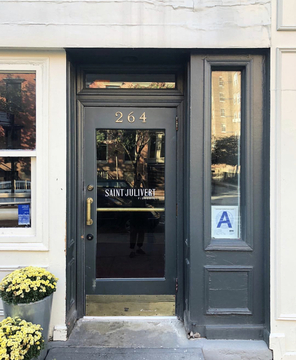
Alex Raij and her husband Eder Montero are longtime staples in New York’s restaurant community, with their Spanish-inflected cooking at Txikito and La Vara. If their seafood-focused Saint Julivert feels uncategorizable, that might be because it is the creation of restaurateurs who are comfortable in their own skin. Raij refers to it as a “jewel box,” which seems apropos: a tiny, trim space with not an inch wasted. And while Raij was inspired by Parisian wine bars, years before the current deluge of Frenchy wine spots, the food here has global reach: cured wild shrimp with kumquat and poblano could evoke Sinaloa or southeast Asia; put them on your table next to sorrulitos, a Puerto Rican sort of hush puppy; and the cod pot pie. The last is a Raij masterpiece, more British than the British could devise, yet with sofrito and curry-leaf aioli. Add in her natural-tilting wine list, quirky desserts (mezcal flan, anyone?) and you have ecumenical cooking of the highest order.
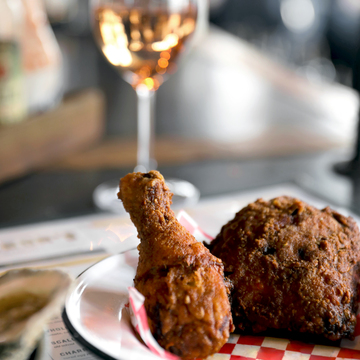
There’s a reason that those who know dining come to Charleston with one non-optional stop. In part, that’s because oysters are pretty much a mandatory part of a visit (with no shortage of options, including The Ordinary and Darling Oyster Bar), but Leon’s has long springboarded into a realm of its own. Yes, there are fine bivalves. But you’re also here for fried chicken that has earned Leon’s much of its reputation. And with all that, you’re here for an astonishing selection of grower Champagne to complete the trifecta. (Add on a coconut daiquiri or michelada with a Miller High Life pony chaser to complete the effect.) Like we said, there’s good reason Leon’s is more or less on perennial Notify.
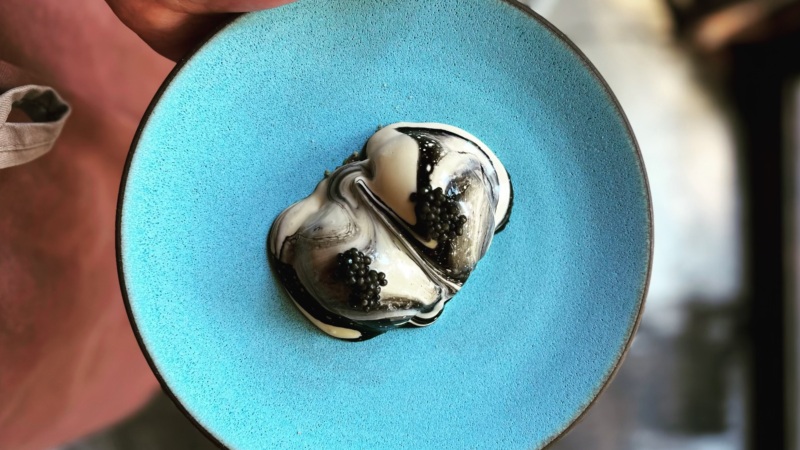
It is a happy surprise this Williamsburg staple is celebrating a full decade. In 2015, the whole Four Horsemen thing felt plenty Brooklyn: James Murphy, yes of LCD Soundsystem, is opening a wine bar? A natural wine bar? Fast forward past a Michelin star, a pandemic, and several rounds of natural-wine hype, and 4H is thriving, stronger than ever. Chef Nick Curtola’s understated cooking has quietly turned up the volume all along; what started as pristine smallish plates have evolved into gorgeous haute-cuisine homages, as with an oeufs mayonnaise dish last year that was both abstract expressionist masterpiece and runaway Instagram hit. While the restaurant suffered a major loss when partner and wine director Justin Chearno died suddenly in 2024, his ecumenical tone for the wine program has continued. Both fervent naturalists and wine traditionalists can drink side by side here, with a list that’s wonderfully well-priced, and a vibe that’s as Williamsburg as ever — just maybe a bit more mature.