10 Changes That Defined the Last Decade of Dining in America
Published:
Resy turns 10 years old this summer, and we’re celebrating with a cross-country series of special experiences. A lot has happened in the last 10 years, to say the least, and to mark the occasion, we’re reflecting on some of the major dining events that have shaped the dining world.
It wasn’t quite a decade ago that Esquire proclaimed: “The restaurant world is changing. Thank God.” Those words were both prophetic, and not prophetic enough. At the time, it felt like America’s culinary culture had finally begun to mature. We’d accepted that a great meal perhaps didn’t need serviettes or svelte servers in skinny ties, or any old-fashioned benchmarks of propriety. We’d embraced tapas, communal tables, haute burgers, the rise of the mixologist, and any number of things that the new century brought.
What we couldn’t have imagined was how all that change would be put on overdrive in the following decade. The old rules of dining weren’t just shifted, they were obliterated — thanks in part to a nasty coronavirus that upended our lives for several years. The very fabric of “great” was rewoven, in terms of traditions and cuisines and what constituted a memorable night out.
But far more changed. Restaurant critics and food writers had to reinvent themselves amid a rapidly shifting media landscape. The industry itself, again pushed by the pandemic and other forces, began to take a serious look at its shortfalls and problems — including a culture that gave famous chefs latitude to behave badly.
While all this was starting to take place, an upstart reservations platform dipped its toe into what had been a pretty staid part of the industry. Resy launched as a way to help the best diners connect with the best restaurants, and as we’ve grown, that mission has not changed, even if the tactics for scoring a great seat have grown endlessly more complicated. (Translation: Go set your Notify.)
As we put the 10th candle in our birthday cake, we wanted to take a look back at how dining in America has changed, ultimately for the better. Here are 10 things we couldn’t have predicted a decade ago.
No. 1
The Reservation Becomes the Main Event
It would be both self-serving and disingenuous to say that 2014 marked the Rise of the Reservation — although, yes, Resy had a role to play. In fact the origins came earlier, namely in 2008, when David Chang’s Momofuku Ko unveiled an online reservation system that would pave the way for all that came after. Ko’s system had its critics, but it also declared that obtaining a seat to dine was an accomplishment in itself, and that not all bookings fit the same-sized widget.
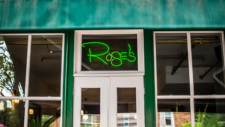
In other words, Ko — and its many successors, Resy included — helped serious diners unlock Expert Level. That’s the narrative you know. What might be less visible is how this sea change also helped restaurants who weren’t clamoring to be part of the World’s 50 Best. Your beloved local could now tap into technology to make life smoother for itself and its customers. The very analog means of power brokering at the host stand became at least somewhat democratized. Which is probably why line-up-and-wait hotspots like Rose’s Luxury in Washington, D.C., eventually opted to take reservations. They appreciated that the game had changed.
This all would get a dramatic boost after 2020, and the pandemic. When dining returned — remember contract tracing forms — the demand for the most cherished spots had grown exponentially. And as we rediscovered the joy of being in cherished third spaces, we also adapted to a very digital way of getting through the door.
No. 2
We Eat Like Paris Now, or Maybe Paris Eats Like Us?
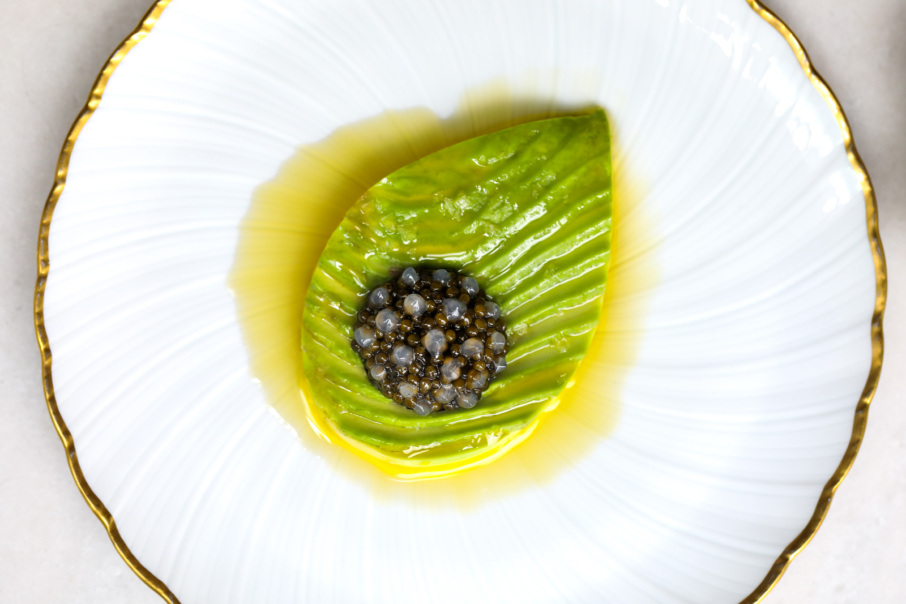
You can sum up the tonal shift of dining in 2024 versus 2014 in a single dish: the oeufs mayonnaise at New York’s Four Horsemen. Traditionally, oeufs mayo were the humblest of workingman’s bistro dishes — a bar snack, basically. But chef Nick Curtola artfully upended this notion: a single jammy egg, enrobed in a black-and-white swirl of mayonnaise and squid ink that resembles paint being mixed on a palette, topped with Osetra caviar. It’s gorgeous, it’s low-meets-high, it comes with its own little in-joke: eggs on eggs. (The yum khai dao at Bangkok Supper Club does much the same.)
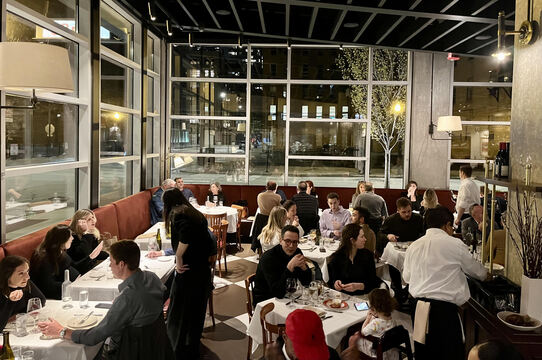
Curtola’s dish encapsulates the how the formality of “fine dining” has had the air let out of its tires. It hugs both high and low; it is freeform jazz versus classical; and it happens to encapsulate where culinary brilliance in France lies today: in néobistros, essentially low-key storefronts repurposed by ambitious chefs. This is relevant because so much American dining history is based on mimicking the French. As it turns out, the French had a message for us: Chill!
Those paying close attention had seen this coming. The white-tablecloth worldview was already facing headwinds by the mid 2010s, spurred by moments like Pete Wells’ infamous “bong water” review of Per Se. The pandemic further framed a growing sentiment: great food and conviviality, not formalism, were key. Dining should be fun.
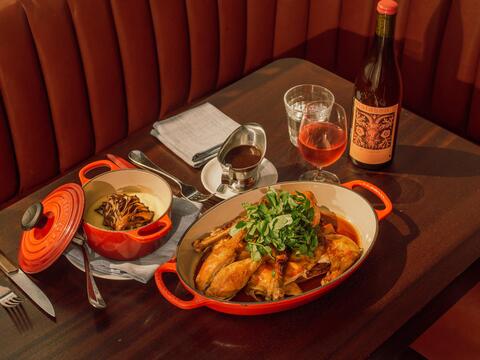
American chefs, or some of them, had been paying attention. Curtola, and Four Horsemen, were emblematic of the néobistro crossing the Atlantic, but you could spot many Yanks at Parisian tables, taking mental notes. It wasn’t even that classic cooking was being abandoned, so much as being allowed to be more impressionistic — form separated from function. If anything, this has helped usher in a new, glorious, laid-back view of French cooking, at Obélix in Chicago; Frenchette, Libertine, Place des Fêtes, and Bar Bête in New York; Routier in S.F. and Troubadour in California Wine Country; My Loup and Amourette in Philly.
And this form turned out to be perfect for the 2020s. We’d cycled through French mimicry, the molecular era of El Bulli, the proteanism of the New Nordic. If France could just let great food be great, couldn’t we do the same? The net result, in 2024, is an American dining culture that feels transformed, and transformative. Felipe Riccio, whose Houston restaurant March interprets various Mediterranean traditions in an haute way, might have captured it best. ““Fine dining isn’t going away,” he said. “Is it changing? Yeah. But guess what, so is casual dining.” That we find it ever harder to draw firm lines between the two shows the current state of grace.
No. 3
Fine Dining Has Diversified
Form wasn’t the only thing that changed. The content, if you will, changed too — with dining at its most exalted becoming far more diverse than it was even a decade ago. Other traditions and backgrounds have, crucially, been allowed not only to come into the kitchen, but to define it.
The examples are almost overwhelming. A perfect one is Atoboy, which opened in New York in 2016. Junghyun and Ellia Park’s first restaurant was so transformative that its impact was, perhaps, not fully appreciated at first. Its early descriptions as “a banchan tasting menu” weren’t untrue, but also overlooked the Michelin-level cooking Junghyun had done at Jungsik and elsewhere, and revealed how many of us didn’t understand the deeper thread: Banchan were more than just snacks on the side — they defined much of Korean cooking. Yet, soon enough, we determined that this was Korean cooking of the highest order. By the time the Parks opened their next project, Atomix, their vision was ready to join a star-filled firmament.
You could say much the same of Enrique Olvera’s Cosme, which opened in 2014, and immediately rewrote the tale of Mexican cuisine in America. Same with Earl Ninsom’s Langbaan, which opened in Portland in 2014, and Kalaya in Philadelphia. And many others, on either side of the pandemic. Indian cooking has Copra in San Francisco and Indienne in Chicago and lately Bungalow in New York, to say nothing of the force of nature that is Unapologetic Foods (Semma and Dhamaka and beyond). Atoboy would have company on the West Coast, as Baroo evolved from a strip-mall sensation to one of Los Angeles’ most eloquent dining experiences. Filipino cooking, long cherished for its earthier delights, would be anointed by the success of Kasama in Chicago, Hiraya in Washington, D.C., Charleston’s Kultura, L.A.’s Lasita, and Philly’s Tabachoy. For that matter, Minneapolis chef Sean Sherman ushered in a new era for indigenous foodways when he opened Owamni.
The multivalent traditions of Black cooking in America would, too, find prodigious ways to shine — at Kann in Portland, where Gregory Gourdet turned his “Top Chef” fame into a platform for the wonders of reconsidered Haitian cooking; at Dakar NOLA, where Serigne Mbaye viewed the complexities of Southern and Creole cooking through his Senegalese lens; at Tatiana, where Kwame Onwuachi flexed his success in fine dining to devise a love letter to the flavors of New York.
In each case, this was the restaurant functioning not simply as a vehicle for artistry — an old trope, and a tired one — so much as a vehicle for personal expression and storytelling. That, quietly, was perhaps the greatest shift in dining: The chef was less tortured artist and more storyteller, creating dinner not as magic but as narrative.
There was at least one other shift: The very rare air of the tasting menu would be matched by the ubiquity of omakase as the 2020s unfolded. Sushi became the new power dining. (Functionally, the bro-makase era began in 2017, when “Billions” featured Wags dressing down a junior camper at the counter at Sushi Nakazawa.) This was, actually, a lesson that Ko had also taught: that there’s no status symbol quite like the intimacy of a dozen or fewer people gathered around a counter.
No. 4
Third Culture Is Now the Culture
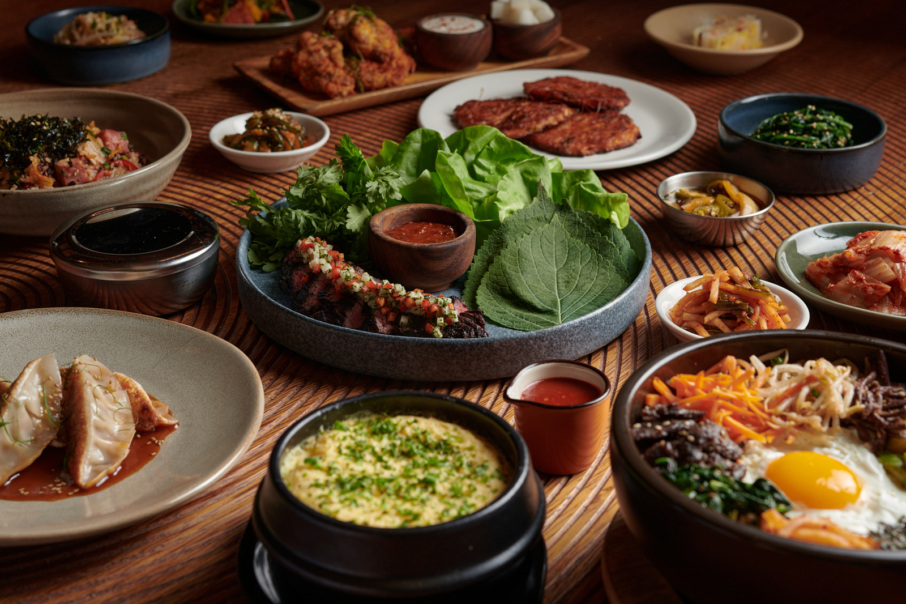
That more cuisines and traditions have been embraced by dining explains half the tale. The other half is found on both sides of a would-be hyphen: So many cuisines blossoming today are not merely replications, but rather uniquely American evolutions of original diaspora cuisines.
This helps to explain why Korean food is oftenmore accurately Korean American — at places like Han Oak in Portland and Kim’s in Minneapolis. This is, in fact, a quintessentially American food tale: an immigrant culture thrives and transforms as subsequent generations come of age. Italian cooking was no different a half-century ago. But the diversification today is glorious. We not only embrace regional Chinese cooking at CheLi in New York, but also the transformative power of Chinese American cooking at New York’s Golden Diner and Bonnie’s, at Jackrabbit Filly in Charleston, at Little Fatty in L.A. or at Chef’s Special Cocktail Bar in Chicago.
Speaking of L.A., that’s where you’ll find Pijja Palace in all its multihyphenate glee, and where Justin Pichetrungsi converted his family’s 40-year-old Thai restaurant, Anajak Thai, into a laboratory of hyphenated deliciousness — whether through an omakase or his iconic Thai Taco Tuesdays. From there, draw a dotted line to how Tracy Chang in Boston merged her dual inspirations of Japan and Spain to create a tapas bar like no other at Pagu; or how Yuan and Carey Tang have populated the menu at D.C.’s Rooster & Owl with dishes like scallion naan with sesame hummus.
While we’re on the matter of hummus, consider how we’ve become a hummus nation. Middle Eastern food is thriving everywhere, driven by pioneers like Mike Solomonov at Philly’s Zahav and Dizengoff, or Fares Kargar at Delbar, who created a Persian-inspired third place that draws all Atlanta. Whether it’s Shukette in New York or Saba in New Orleans or Galit in Chicago, there is now quite literally an appetite for the communal breaking of (pita) bread.
It’s equally telling that the Bay Area — where not long ago, the dominant ethos was the legacy of Chez Panisse — is a font of this third-culture cooking. Today you might book a table at Besharam (Indian), Kin Khao (Thai), Mister Jiu’s (Chinese), Rintaro (Japanese), Californios (Mexican), Prubechu (Chamorro), or many other spots. In sum, they represent a New California cuisine — one that grasps the old farm-to-table ways but incorporates a universe of other references and foodways and flavors.
No. 5
A Moment for Reckoning and Reform
It was 2017 when Mario Batali would be exposed for his behavior, the first of many restaurant figures to fall as #MeToo took hold. This was, at last, a moment when what was common knowledge of bad acts by powerful chefs and restaurateurs would finally come into the open.
The industry continues to debate just how much systemic change has come from that era, but what’s clear is that it is now an active part of the conversation in restaurants, not just about sexual misconduct but broader abuses of power. And it has, undeniably, provided an opening to frame the long struggles and hard-won accomplishments of women chefs and restaurateurs. There has, too, been a long-awaited consideration of the belated rise of chefs of color at the top the industry — the arrival of which has paved the way for many of the changes described just above. At the same time, not just the pandemic but also the racial reckonings of 2020 prompted a level of appreciation for chefs and restaurants who had long pursued their own traditions and inspirations — whether the historic value of Chinatowns and their food, or Black chefs who had fought to define their own paths.
COVID also reminded us all that restaurants are all too ephemeral — and can go away when not treated as a keystone of a neighborhood and community. Restaurateurs themselves realized a need to support their employees, to value that this is an industry with long hours, low pay, and high expectations, and that a safe environment and care for mental health remain crucial.
No. 6
The Pop-Up Becomes the New Opening
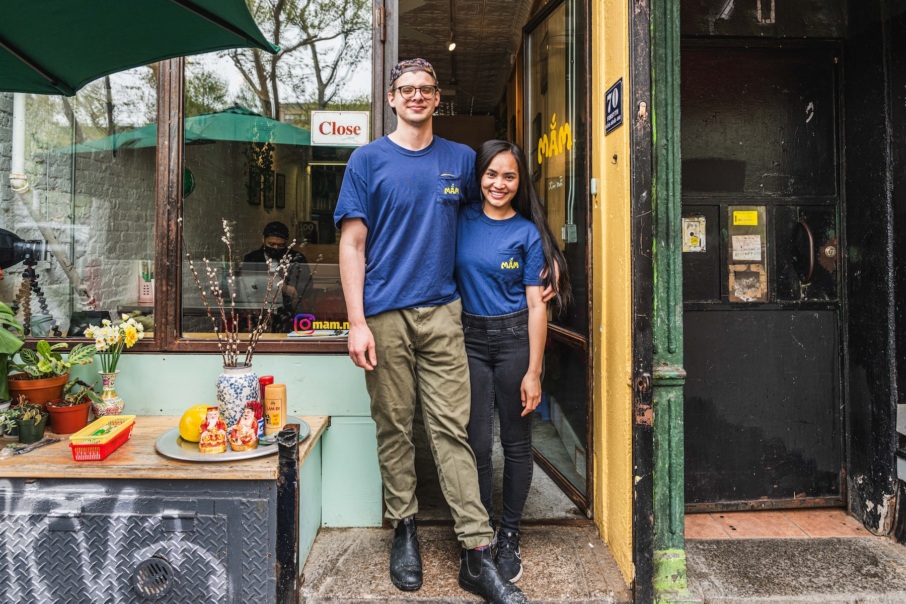
The restaurant pop-up is the child of many parents: fashion (pop-up stores of the late ‘90s, the x-collabs of the 2010s); itinerant chefs (Ludo Lefevbre and Ludobites in the mid-2000s); the underground dinner parties of the 2000s; the embrace of the food truck and the bar residency. They had already found a footing early in the last decade, as when Mission Chinese Food set up shop in an existing restaurant, Lung Shan, in 2010. (Because history repeats itself, MCF returned as a pop-up this year in New York.)
Today, the pop-up is nearly a fact of life for an ambitious young chef, driven by a collision of tough realities about restaurants in the post-COVID world. If the néobistro was how you could pursue your bliss without luxe trappings, the pop-up downshifted one step further — as a way for emerging talent to try out new ideas without the very expensive commitment of a real brick-and-mortar.(Paris, again, had a part to play here, namely with the groundbreaking Fulgurances, which opened in 2016 and sprouted an offshoot in Brooklyn.)
Quite simply, goes the logic, why should a chef be stuck to one address, or an address to one chef? Why should the huge gamble of opening a restaurant be the only way to show your skills? That such logic has paid off can be seen in the big and growing roster of permanent restaurants that started this way — Mắm, Saigon Social, Little Grenjai, and Pecking House in New York; Superkhana International in Chicago; and King BBQ in Charleston (an outgrowth, in that case, of Jackrabbit Filly). They are all proof that gradual steps might be the best ones.
No. 7
Hype Is Now a Main Course
Whether the minimalism of nouvelle cuisine or kaiseki, or the tweezer dreams born in Copenhagen, the restaurant world often likes to believe that less is more.
Not in 2024. Today we live in a blitz of maximalism — whether L.A.’s Poltergeist or the neon glitter of Shuggie’s Trash Pie + Natural Wine in S.F., or the nonstop circus of El Presidente in D.C. Its apotheosis is probably the literal theater of New York’s Carbone and Torrisi, each channeling a vision of Italian American food turned up to 11. Yes, you can credit (or blame) the internet, namely social media. For sure, that gave us the instant hype of Dominique Ansel’s Cronut. But to be fair, that was just a follow from the mania for “Top Chef” and “Chef’s Table,” which gamified cooking and built a framework for hero worship. And coming out of the lean years of the pandemic, let’s be honest, we all wanted to have fun. So, shrimp Parm? Yes please! (Thank you, San Sabino.) Foie gras macarons? Don’t mind if we do, Obélix. And don’t forget the full-court 1980s leopard-print press at Major Food Group’s Dirty French Steakhouse, a restaurant that would do Tony Montana proud, or the rooftop party at Atlanta’s Palo Salto. We are here for every last fancy Jell-O shot of it.
Resy 10
No. 8
Without Becomes the New With
OK, more doesn’t always have to be more. Let’s consider the rise of less.
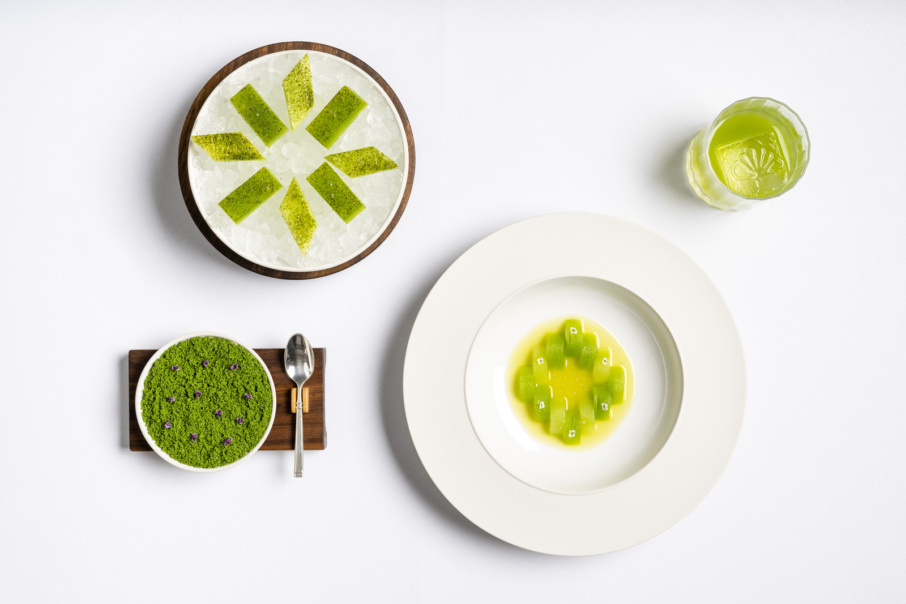
As in less meat, and the embrace of plant-based and plant-forward dining. The big-ticket item is, of course, Eleven Madison Park, which went vegan, as it were, in 2022. The pleasures of sunflower butter and tonburi “caviar” were arguably incidental to chef Daniel Humm’s bigger message: that dining at all levels needed to be mindful of its impact on the planet. But this was a message that had been percolating up for a long time, as with Amanda Cohen of the pioneering Dirt Candy, who had championed plant-based cooking years before many of her counterparts, or the work of Dan Barber at Blue Hill Stone Barns. And it would be reflected across a range of cuisines, including those once largely affiliated with meat, like Mexican and Cuban at La Semilla in Atlanta or Jajaja in Brooklyn, or Shenarri Freeman’s take on soul food at New York’s Cadence, or the West African stylings at Ubuntu in L.A. (Or, for that matter, the ever-spreading popularity of Planta.)
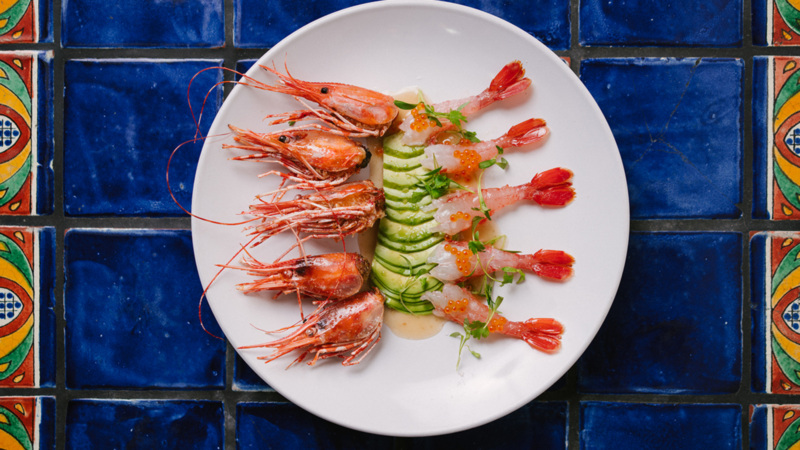
Plants weren’t alone in this spotlight. Seafood, too, finally dropped its second-class status. This showed itself not just at the ever-spreading popularity of the seafood counter — whether Little’s Oyster Bar in Houston, Penny in New York, The Ordinary and Leon’s in Charleston, Hank’s Oyster Bar in D.C., or the bicoastal charms of Saltie Girl; or the rise of the haute-cevicheria, like Ensenada in Brooklyn, Chicago’s Mariscos San Pedro or Silver Lake’s Ceviche Project. It also could be seen in restaurants that birthed a sort of pescatarian daring: Saint Julivert and Foxface Natural in New York; Si! Mon on Venice Beach; mfk in Chicago. If you needed more evidence that fish is the new meat, look no further than the proliferation of dry-aging techniques once reserved for slabs of beef — inspired by Liwei Liao of L.A. fish market The Joint and Josh Niland of Sydney’s Saint Peter.
These years, too, brought long-awaited succor to those who might avoid certain items on the plate. A decade ago, allergies and sensitivities were largely viewed as an inconvenience; today they’re incorporated as part of the reservations process. And, finally, after decades of being relegated to sparkling water, those who choose not to drink — or to be sober-curious — could finally find solace. Boosted by the popularity of zero-proof spirits, restaurants realized that a well-made cocktail didn’t necessarily require alcohol.
No. 9
Farewell Suit and Pin, Hello Shaker and Porrón
Speaking of drinks … beverages in restaurants had certainly begun to evolve by 2014. Cocktail culture was surging; Death & Co.’s seminal recipe book was published that fall. The recession years had forced tough questions about the role of the sommelier, and wine on the table. For many restaurants, it was a dedicated role that began to seem like an indulgence.
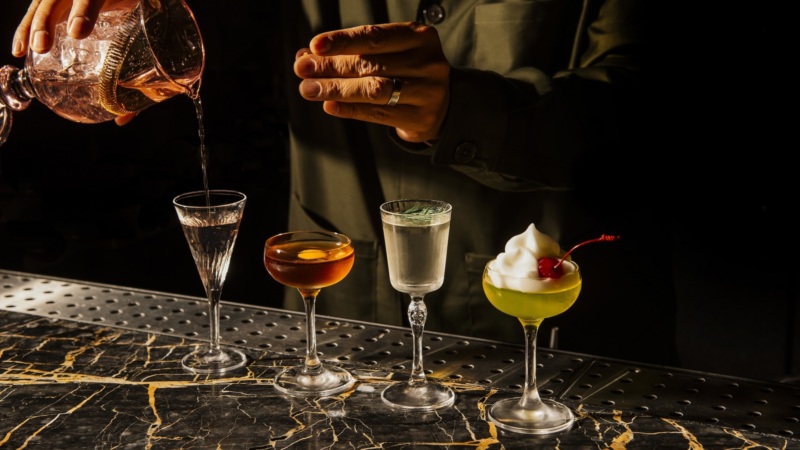
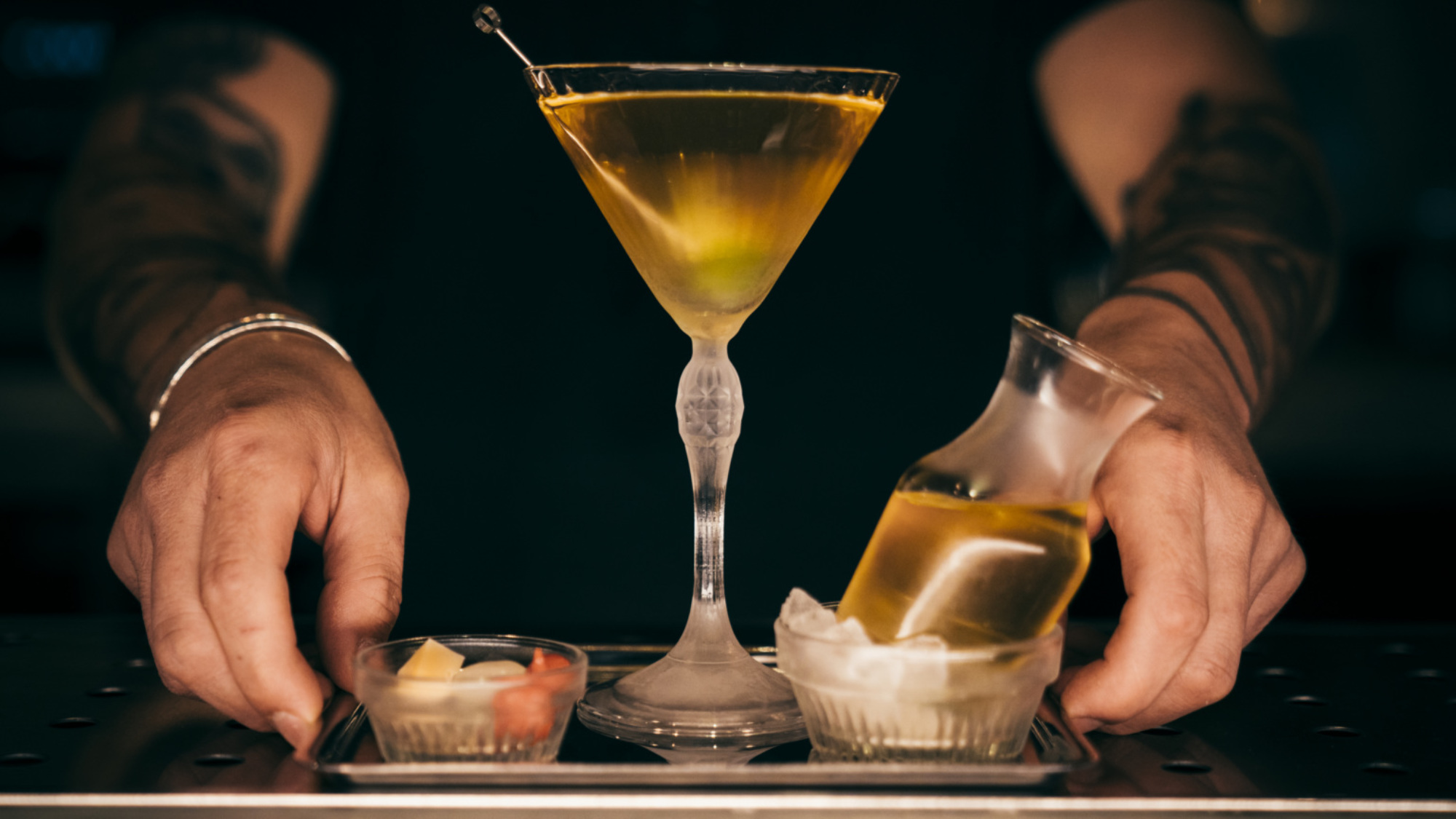
But what happened since then would have been on approximately no one’s bingo card. Yes, cocktail culture got an extra boost from all our home bartending during COVID. But who knew the classic martini would be a thing again?? (OK, the folks at Martiny’s.) Mezcal and other agave spirits, fringe a decade ago, now inspire entire bars, like Clavel Mezcaleria in Baltimore. Gin has become a fetish object. Japanese whisky, too. Every summer is now spritz summer. Sake is surging, at Tsubaki and Boston’s Koji Club, and many other spots. And again, cocktails no longer need to make you tipsy.
As for wine? Even three years ago it seemed that it was falling out of the conversation — losing not just to cocktails but to hard seltzers and a general disinterest in its pedantic airs. Yet the natural-wine world was busy carving an alternate path. Restaurants that embraced this approach, such as Night + Market in West Hollywood or Boeufhaus in Chicago, were subtly reshaping the very definition of wine service in restaurants. Wine bars like the Brooklyn outpost of Ten Bells or NIU Wine in Miami began to enjoy a renaissance. Had the “sommelier” profession— again, big finger quotes — fallen from favor, driven by a bit of its own reckoning? Maybe. But wine professionals in restaurants adopted and thrived in myriad new, and more relaxed, forms. For that matter, so did wine! You didn’t need to memorize appellations and vintages. You could get a glassful of something orange and quirky, or just let the in-house wine person turn you on to something delicious — glassware optional.
No. 10
The New Signature Dishes Are … Pizza and Tacos?

Not long ago, “elevated” — such a problematic word — was still a cornerstone of food-speak. You didn’t just make a burger, you “elevated” it, as though a great burger wasn’t great in its original form.
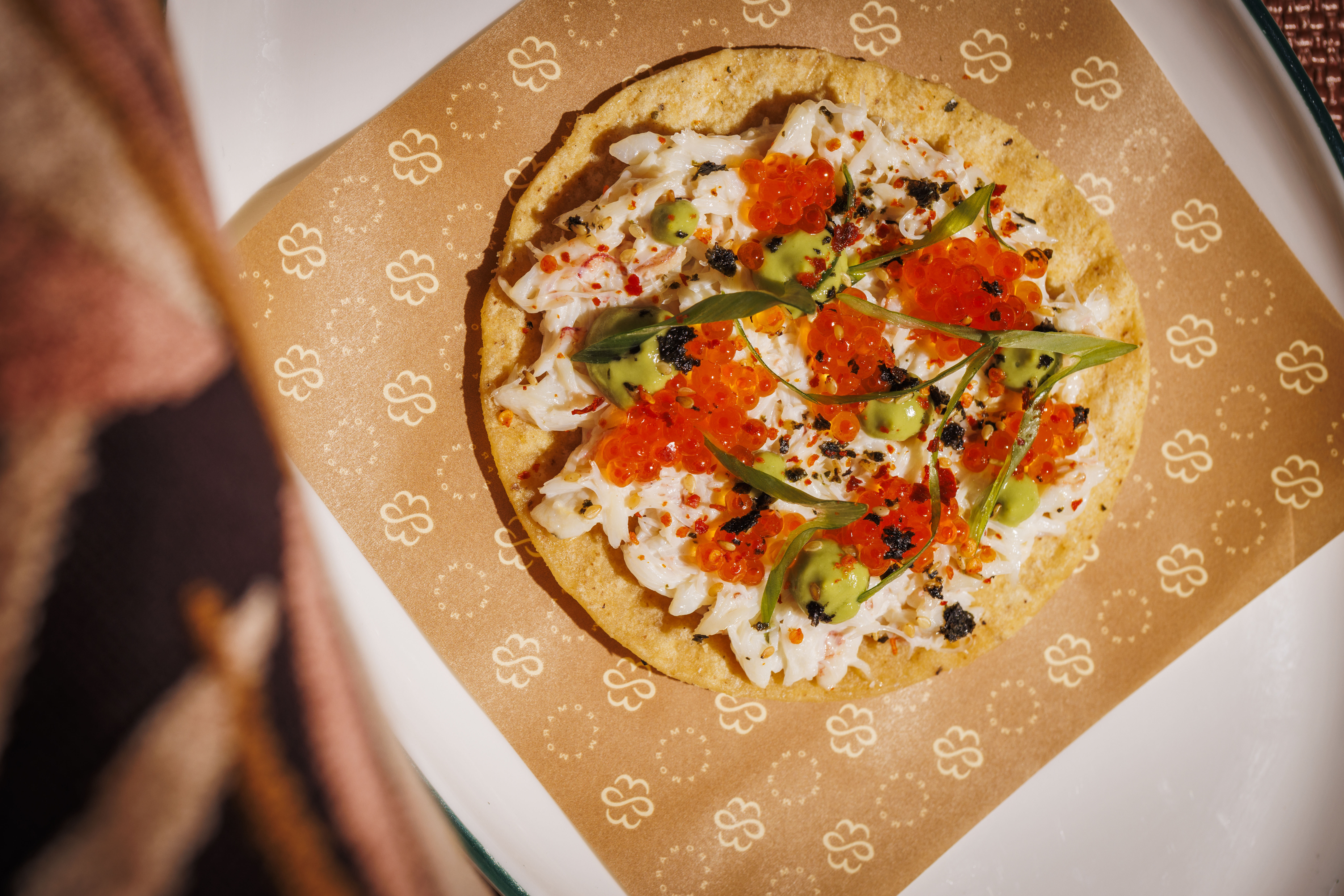
This weird insecurity, too, fell prey to the populist realities of recent years, It’s not that, say, noteworthy pizzerias or taquerias weren’t part of the canon a decade ago; Roberta’s, which defined Brooklyn cool, opened in 2008, and Anthony Mangieri’s Una Pizza Napoleana had already had a full East Coast life before moving to the West Coast by 2010. For that matter, restaurants like Guelaguetza in L.A. (or Chicago’s Frontera Grill) had long made the case to view Mexican cooking with reverence. But somehow these iconic foods began to ditch the notion that anything about them needed to be “elevated.” Instead, they could be perfect vehicles for a chef’s expression just as they were. That was the goal when Carlos Salgado opened Taco María in 2013, in Orange County, going on to win a Michelin star, around the time Wes Avila founded Guerrilla Tacos as a food truck (its brick-and-mortar opened in 2018). These were in dialogue with a booming food scene in Mexico City with similar aims, which explained why chefs like Gabriela Camara (with Cala in S.F.) and Enrique Olvera (with Damian in L.A.) came north to serve exquisite tacos to Americans. Today, whether at Suerte in Austin, or De Noche in Portland, or Los Félix in Miami or Mi Tocaya Antojeria in Chicago, the taco has been anointed as the perfect food it rightly is, often with corn nixtamalized in-house, as some chefs insist on, no different than fresh-baked bread.
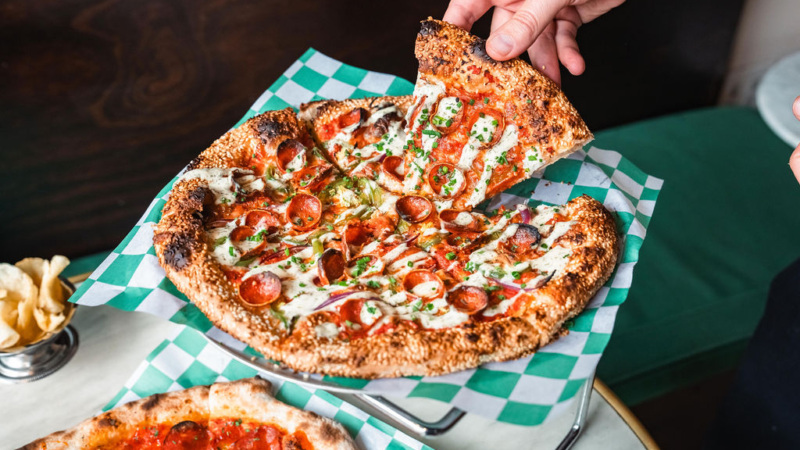
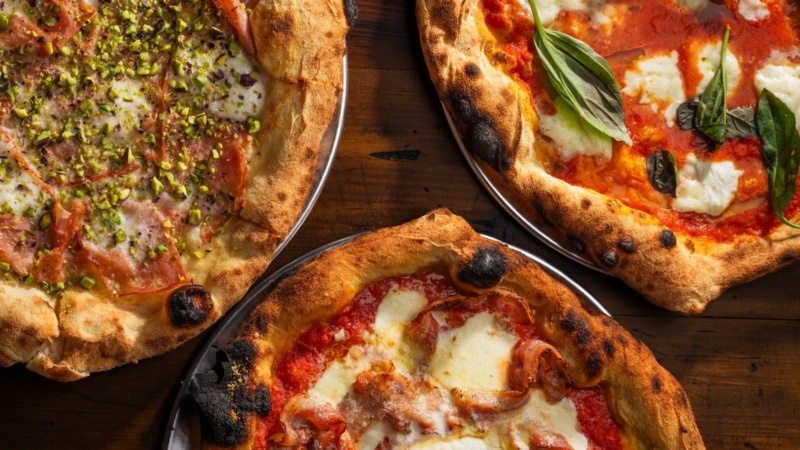
Pizza is another perfect food, so it probably was just a matter of time before America would become a world leader. That there’s exceptional pizza in New York is no surprise, but the commitment by chefs like Melissa Rodriguez and Wylie Dufresne to the form was affirmation of its true complexities and vastness. Less predictable was that Miami would become a font of greatness, too; or that Los Angeles would become pizza Eden, driven by Nancy Silverton’s Pizzeria Mozza and manifested in newer arrivals like Pizzeria Sei and Quarter Sheets. And we haven’t even gotten to Pizzeria Beddia in Philly, or Nashville’s Folk, or Dan Richer’s exquisite Razza in Jersey City.
Point being: These foods no longer need to be elevated, if ever they did. The postmodern restaurant world has acknowledged, rightly, that on their own merits, they’re a vehicle to chase perfection.
Jon Bonné is Resy’s managing editor, a two-time James Beard Award winner, and author of “The New French Wine” and other books. Follow him on Instagram. Follow Resy, too.