The cheerful percussion of martini shakers and the aroma of sizzling garlic herald my arrival. It’s just 30 minutes after opening, but all 15 barstools are occupied, and every red vinyl booth is reserved. Indeed, those lucky enough to have claimed a spot at the retro-cool bar, with Motown issuing from the jukebox, are loath to leave it even when their table is ready. The wood-edged, shiny black Formica bar runs the length of the room beneath a red neon-lit barrel ceiling. Opposite the bar, three porthole windows shed minimal daylight on the booths lining the mint-green wall. Here the primary light source is mood, the preferred drink stiff.
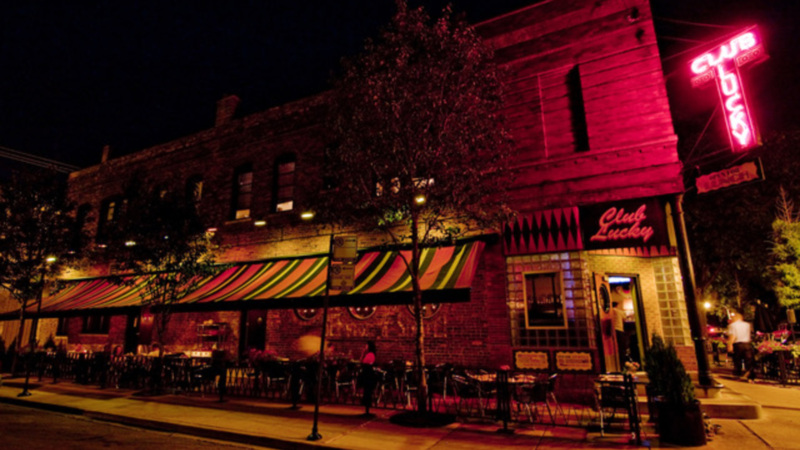
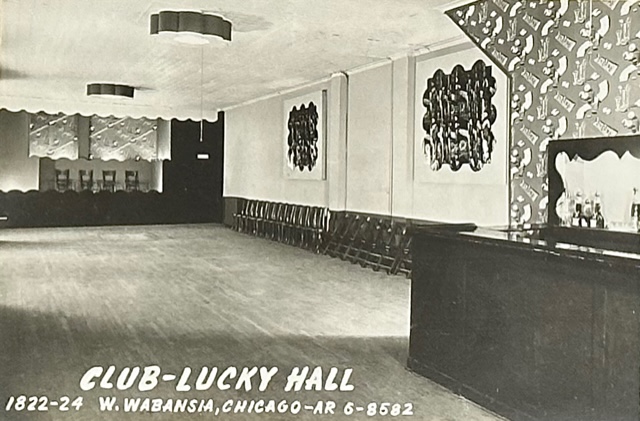
Club Lucky rambles across two (originally separate) sturdy brick buildings on the corner of a residential, tree-lined street. Like many longstanding urban structures, the place has had many past lives to reflect the neighborhood’s changing needs — a candy shop then hardware store with rumored speakeasy and “bookkeeper” downstairs. It officially became the Club Lucky bar in 1937 with an adjacent community center in the now dining room, both of which operated until the mid-1980s.
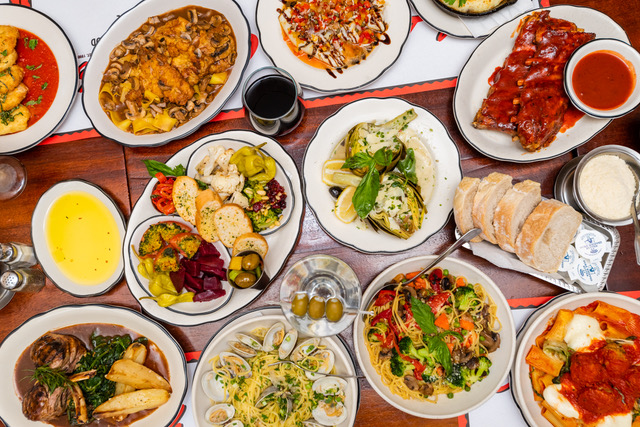
When Higgins and Paladino took over in 1990, they spruced up the place, but kept the name, and even left a bullet hole in the bar intact, a relic of the 1960s, when the neighborhood was a very different place. They developed a menu of hearty, midcentury comfort dishes that paid homage to their Sicilian and Italian heritages. Think just-cooked string beans with tomato, cucumber, red onion, and tangy Gorgonzola in red wine vinaigrette; golden fried calamari; grilled pork chops drizzled with garlic-wine sauce; chicken parm topped with blistered mozzarella; rigatoni with tender veal meatballs and braised escarole in a mozz-dotted tomato sauce. It’s food meant to be piled onto huge platters and served family-style to friends and relatives on a Sunday afternoon. Indeed, you’ll almost always see a few tables pushed together to accommodate a large group in the low-lit dining room.
“Something we’re really proud of that a lot of people don’t realize is we’re still a 99-percent scratch kitchen,” Kleiner says. “We make all our sauces, soups, and dressings every day. We still make ravioli, tortellini, and cavatelli by hand. We get good-quality whole tenderloins and pork ribs and whole fish. It’s important to us to keep the love in the recipes and not just become a manufacturer.”
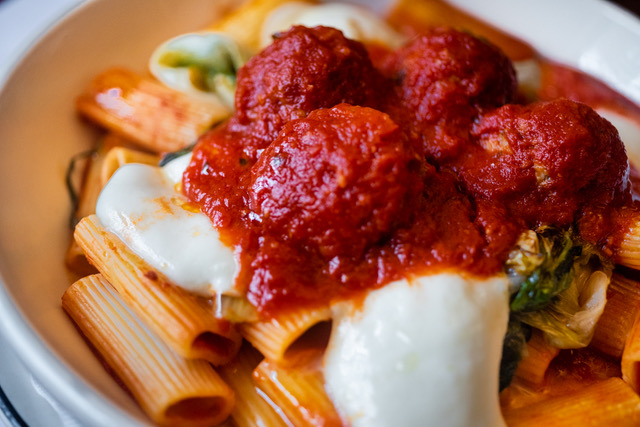
Half a Negroni after our arrival, my sister and I snag bar seats from a couple of dinner-goers. We keep our order classic, starting with Calabrese-style fried calamari dotted with fiery pickled peppers and our beloved string bean salad, whose garlicky, oregano-flecked dressing we mop up with warm housemade bread. We share al dente pasta squares with meatballs that taste like a more polished version of our childhood, made decidedly adult with an accompanying bottle of Montepulciano.
Behind the bar, the bartender and bussers fearlessly navigate their narrow corridor, dispensing precariously full martinis and gargantuan plates with deft assuredness, swapping out empties with one hand while they top off waters with the other. It’s the sort of attentive and genial hospitality I relish most (that Higgins and Kleiner like to call “hospitality 101”): the pillars that hold up the evening without stealing the limelight.
During the Covid lockdowns of 2020, the restaurant fought to keep staff employed by pivoting almost instantly to carryout. Employees were cross-trained on packing and delivery, which kept Club Lucky afloat until all 50-odd staff returned in late June as outdoor dining opened in earnest. The sprawling, 160-seat patio that the restaurant added with the city’s help is now a permanent seasonal addition, doubling Club Lucky’s capacity from roughly May to October. That the restaurant churned out some 175 orders per day during those fraught 18 months of roving closures speaks to the larger role such comforting restaurants play in our lives. After all, many of us could muster a perfectly serviceable spaghetti at home.
“We stood on that corner offering comfort during a time of strife for the city,” Kleiner says. “Now going into our 33rd year, reflecting on the success we’ve had, I believe that not only are we a gem of Bucktown but also an anchor.”
That doesn’t just owe to the significant portion of Chicagoans with Italian and Sicilian heritage who flock here for a taste of home. Club Lucky’s longevity places it in the category of family-owned stalwarts like Gene and Georgetti’s in River North, Orso’s in Old Town, Italian Village in the Loop, and Franco’s in Bridgeport that are now woven into the fabric of their neighborhoods, providing the delicious backdrop to life milestones and last-minute Saturday night plans alike.
“We’ve created relationships,” Kleiner says. “That’s why we’ve had baptisms, communions, weddings, rehearsals, bar and bat mitzvahs; why we’ve stood under the huppah a few times. The comfort that people feel at Club Lucky allows us to be good stewards and ambassadors to different cultures, but also to our neighborhoods, making lifelong memories for everyone who comes through our door.”
Maggie Hennessy is a Chicago-based restaurant critic and food writer, whose work has appeared in such publications as Eater, Plate, Food52, Wine Enthusiast, and others. Follow her on Instagram and Twitter. Follow Resy, too.