Prubechu Holds a Special Place in San Francisco — and America
Published:
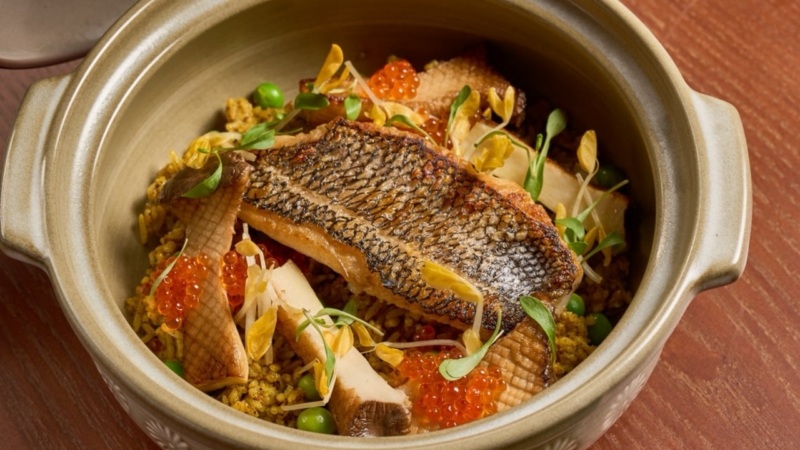
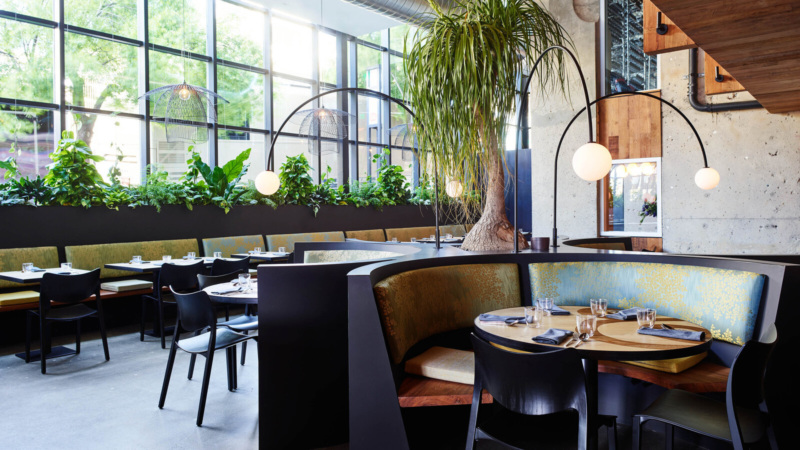
As one of the few Guamanian restaurants in America, Prubechu represents a special place in San Francisco’s Mission District. When you walk in, you know this spot is different. The fun and festive vibes. The live music in the parking lot patio. The ingredient-driven, farmer-first approach to the unique and singular Chamorro fare.
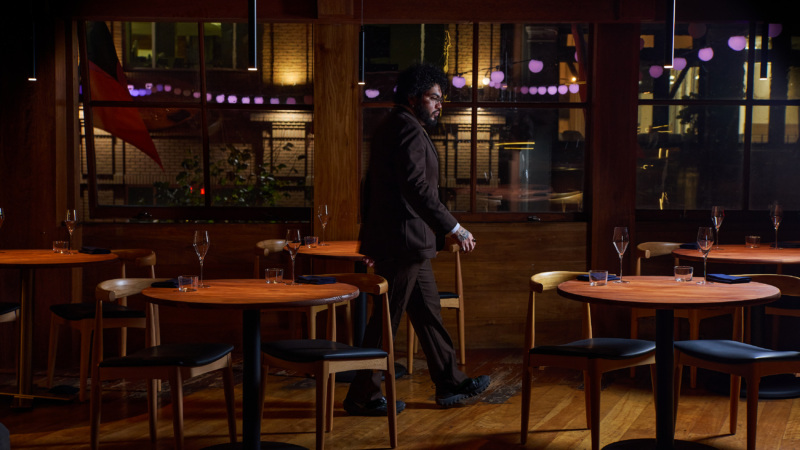
And then there’s the people, of course: chef Shawn Naputi and his business partner Shawn Camacho. Their restaurant turns 12 this year — an eternity in restaurant life, really. It had been a while since we last properly caught up with Shawns, so we chatted all things Prubechu: What have they been up to? How have they endured? And what’s next?
You guys are celebrating a birthday. The restaurant is now 12. How does it feel?
Shawn Naputi: There’s a lot of feelings. Looking back at it, the feeling of doubt, having so much doubt with our cuisine, and just to see our cuisine and brand grow in 12 years. I’m proud. I didn’t know we’d make it this far, but I think having the courage and good food and being nice to people goes a long way. That says a lot about how we go about our business.
Shawn Camacho: It’s a pretty special thing. Like chef said, coming from when we started, we’re like, “f—, we hope it works.” And then now you have people walking down the streets of San Francisco saying “Man, I was craving chicken kelaguen.” That was not even part of the lexicon 12 years ago. The 12 years weren’t just built on our shoulders — there’s a huge team that made it happen, and the atmosphere, the camaraderie, the familial sort of feeling towards each other all really translates to the guest. That’s super important.
Courage and good food and being nice to people goes a long way.— Shawn Naputi, Prubechu
It’s been cool to see. How do you think you have you managed to stay relevant?
Naputi: The number one thing is hospitality. As soon as someone walks into the restaurant, within less than 10 seconds, they’re being addressed and can feel the warmth. And then of course, the food needs to taste great.
Tell me more about that. How do you define hospitality, and what makes great hospitality?
Naputi: I always think of the John F. Kennedy quote: “Don’t ask what your country can do for you, ask what you can do for your country.” Hospitality is the same in a sense — the customers are here for us: What can we do to make their experience better? I think that goes a long way. That’s how we get loyalty.
Camacho: Hospitality for us is in our culture. If you ever go Guam and you go to someone’s house, the first thing they ask you is “Did you eat yet?”
How often do you guys make it back to Guam?
Naputi: We go every year. Our whole families are still back in Guam. During December, the last two weeks leading up to Christmas, we shut down for two weeks. We pay everyone. This is our thank you for an amazing year. In the meantime, we’re in Guam, sort of planting seeds. Eventually we’d like to do something there.
Camacho: We do our best to get home as much as possible. There’s lots of barriers. Mainly dollars. It’s expensive. So we have to plan during the no man’s land world of restaurants between Christmas and New Year’s. Like chef said, the ultimate goal would be to do something in Guam.
Are you getting good inspiration from your trips? What are you seeing with the cuisine back home?
Naputi: 100%. People are getting more creative. Now you see lots of mashups between Korean and Japanese ingredients in our main dishes. For example, a dish for me was coconut sashimi. It’s genius. They take these young coconuts and cut them open. First they give you the juice, then you bring them the coconut and they cut it up for you. Then they’ll put a little bit of wasabi and soy sauce. And that’s it. I had it at a night market.
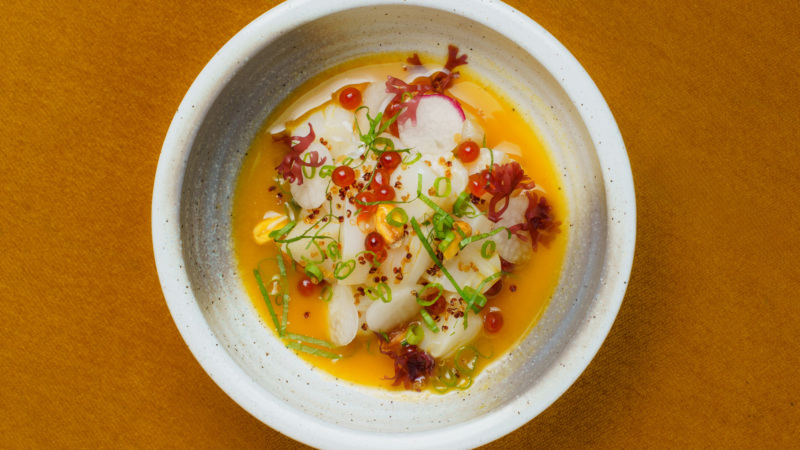
Camacho: That actually made its way into a dish on our tasting menu. It’s a cool play on the form and texture of young coconut.
What other dishes are you excited about right now?
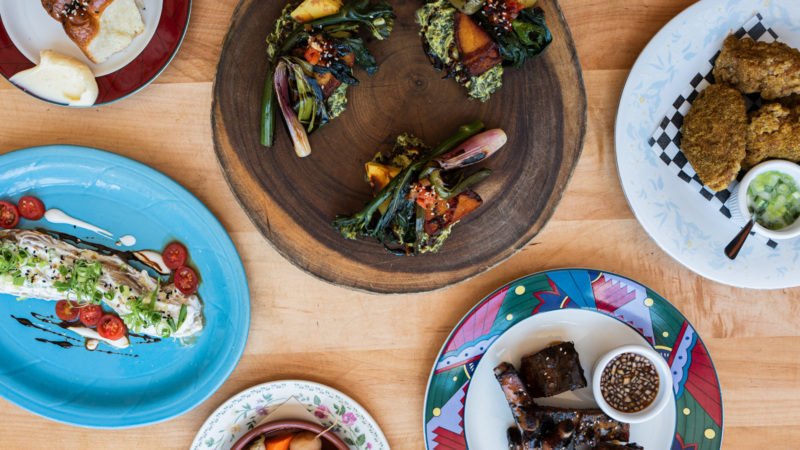
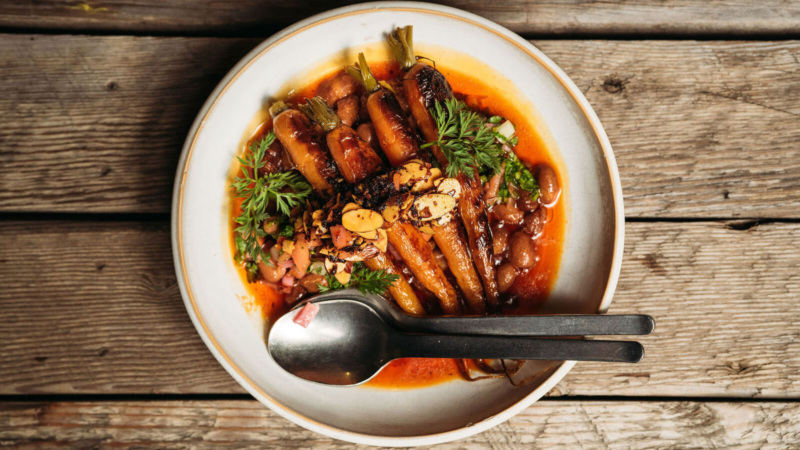
Naputi: The barbecued coconut milk marinated eggplant. It’s the most simple dish but it reminded me how good we’re doing here. I don’t mean to fluff my own feathers, but we’re on it. It’s the char. It’s the right amount of acid. The right amount of savory from the green onion. It’s just three ingredients. It was a reminder: this dish can go a long way—it’s competition-ready.
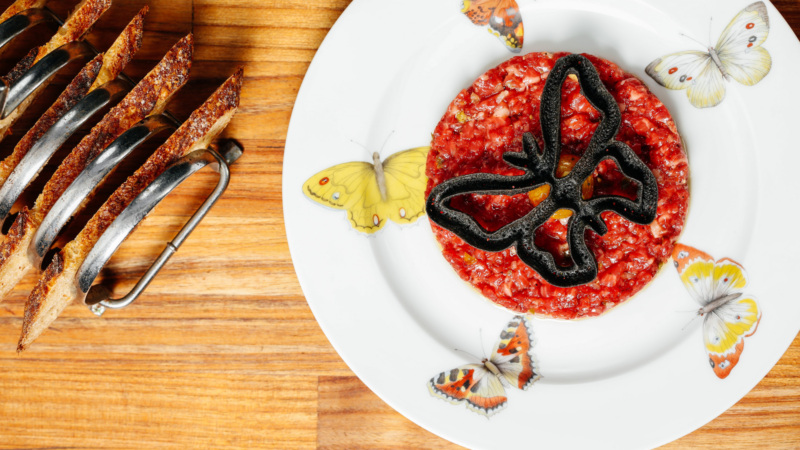
Camacho: Whenever people ask me for a recommendation I always recommend the traditional stuff like chicken kelaguen. If there was a national dish of Guam that would be it. It’s so important and unique and I’m super proud of it.
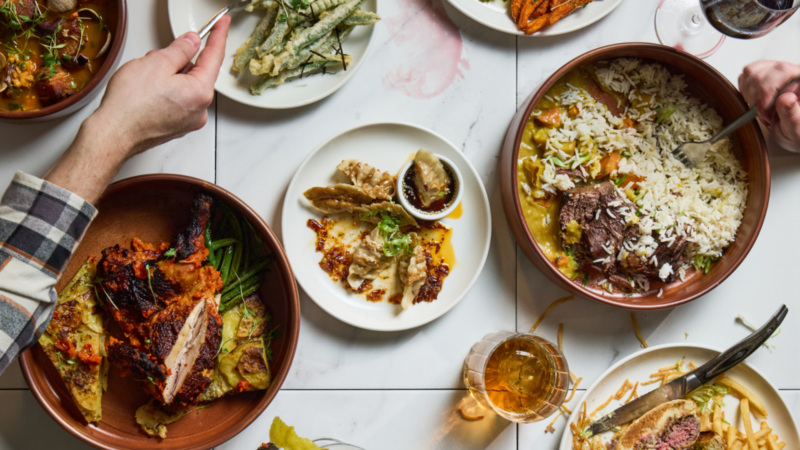
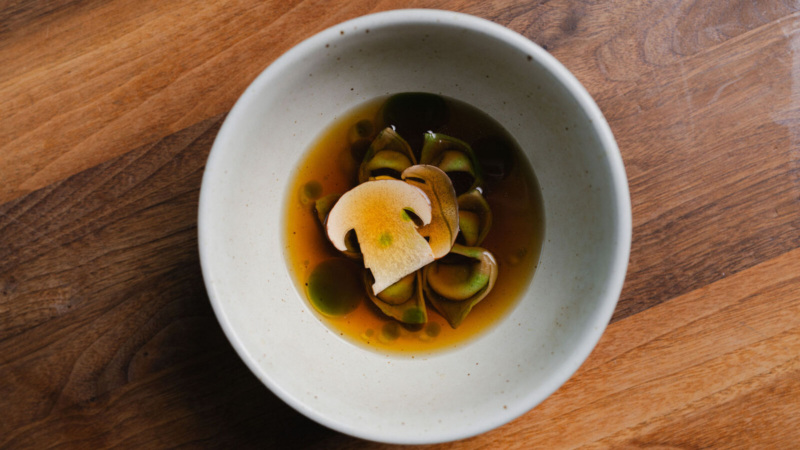
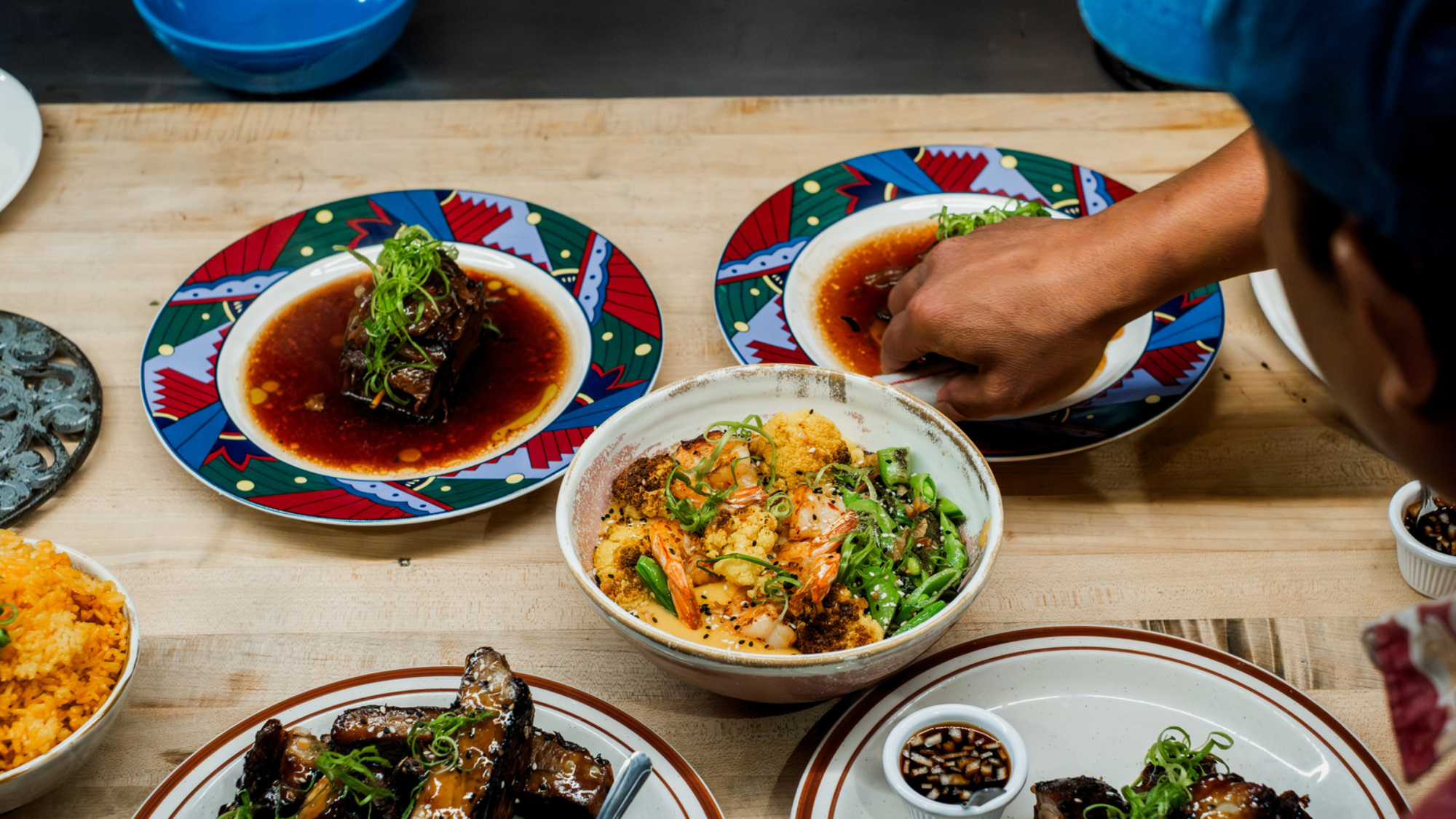
The tinaktak is another super traditional dish but chef puts a little creativity on it by serving it in these amazing chewy noodles as opposed to rice like it’s typically served in Guam. That one hits hard. It’s freshly ground beef chuck braised in coconut with a ton of lemon and there’s also a little bit of long beans, mushrooms, and scallions.
Sounds like a delicious deep cut. What do you think is the perfect order for a first timer?
Camacho: Definitely start with the sweet rolls with the tuba butter. I always recommend the eggplant—it’s a perfect complement and again it’s unexpected. For sure the chicken kelaguen—it’s easy to share and iconic. For the main I flop between tinaktak the thrice cooked brisket—for me it’s such a homey dish. We treat it like a grandma potroast—that coupled with the red rice is undefeated.
Naputi: The red rice is essential. You could have the red rice and the coconut braised collard greens and call it a meal.
Are you vegan now?
Naputi: [laughs] No not at all. I just think meat is overrated for Chamorro cuisine because that’s all people think about it. But a lot of our main dishes are vegetarian or vegan.
Camacho: I always tell guests we’re a sleeper vegan spot. They have two-thirds of the menu to order from, and can adapt the entire tasting menu. Being on an island the cuisine skews that way anyway.
Last time we spoke in 2021, one of the things you said is “the dream is to be able to bring our cuisine to more markets eventually.” Is that still the dream? Is growth what’s motivating you?
Camacho: In the last year, we were able to do a popup in Tokyo, and it showed us people really enjoy our food and maybe it can happen in other markets. Our goal right now is to really get the moves down so we can pop up in New York or other parts of the country. Our motivation for wanting to expand is to watch this cuisine grow and have a significant impact on spreading our culture. It’s one thing to have been doing it for 12 years in San Francisco. It’s a new ball game when you have several properties around the country and the world. To have that culinary footprint around the world, we’d be honored to make that happen.
Naputi: What’s also driving us to grow is the same feeling we had 12 years ago of doubt, but with so much confidence. Will it do well in New York or L.A. or another part of the Bay? We’re back at square one of the feeling and energy.
Naputi: Uncertainty is exciting.
And what’s on the horizon for 2026?
Camacho: Last year was a breakout year. It feels like San Francisco has woken up and are out and about again. We have a lot of big events coming up. There’s a crew of Chamorro influencers and content creators—they’re doing a west coast tour. Their influence is huge. Anytime we can collaborate with someone from Guam—we’re here to support.
Camacho: Our liberation event is big for us—we’ll do it the nearest Sunday to July 21. We throw a concert in the patio.