Makina Cafe Brings Eritrean and Ethiopian Cuisine to Sunnyside
Published:
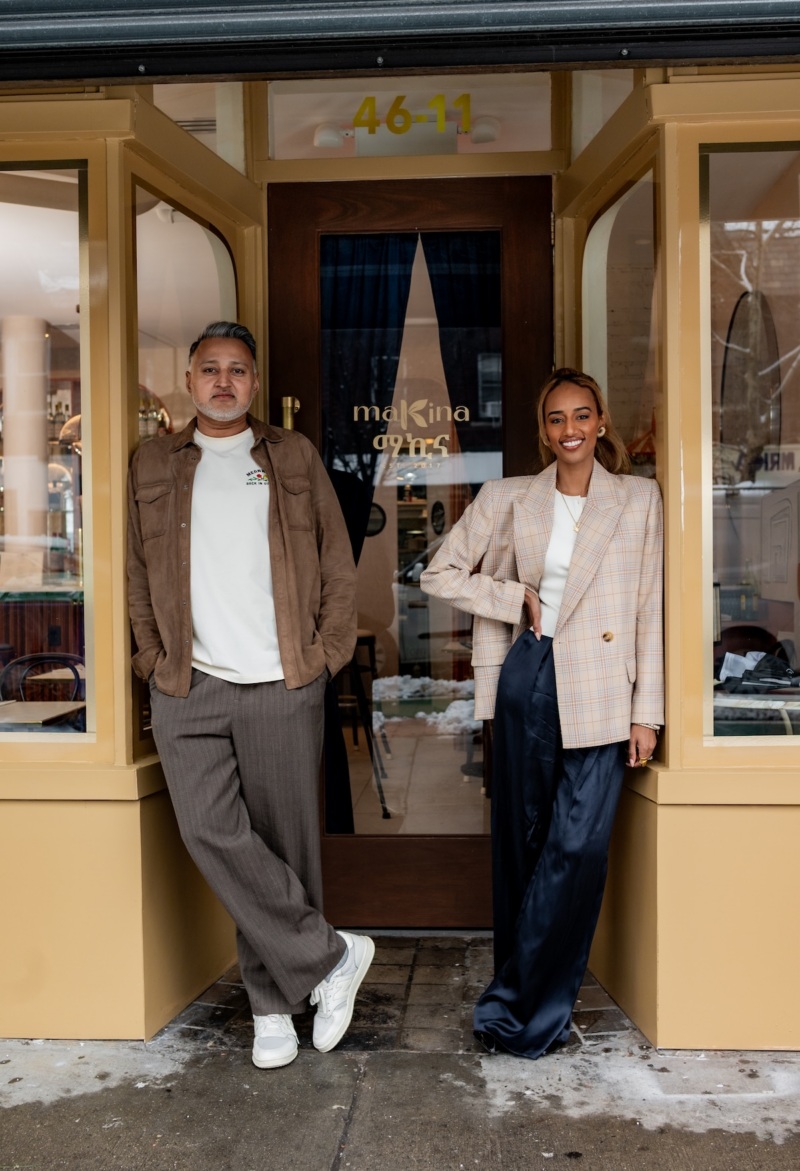
In 2017, shortly after finishing her MBA, Eden Gebre Egziabher found herself at what she calls a crossroads in life. After fleeing Ethiopia as a child, when war erupted and the government expelled people of Eritrean descent, she and her family were able to start a new life in the United States. Yet roughly two decades later, it struck her that even in a city with a dining scene as vast and diverse as New York’s, the food of her homeland was a relative rarity.
“I was really passionate about making our Ethiopian and Eritrean food known to the world,” she says. “I wanted it to be how Thai food is for America, how Greek food is for America. And I wanted to be one of the vessels in a way to bring that to the mainstream.” To spread the word, she knew she’d need to hit the road. That’s how the sunshine-yellow Makina Cafe — so named for the Amharic and Tigrinya word for “truck” — was born.
“A food truck is a moving billboard,” she says. Recognizing that some of these dishes would be unfamiliar to her audience, she started off with simple, fast-casual offerings. Yet even though her mobile operation grew a devoted fanbase, Gebre Egziabher’s vision was too big for the confines of a food truck’s kitchen.
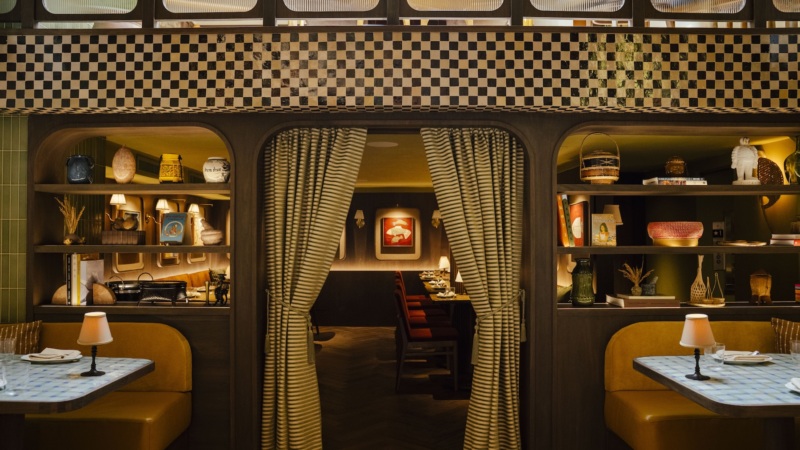
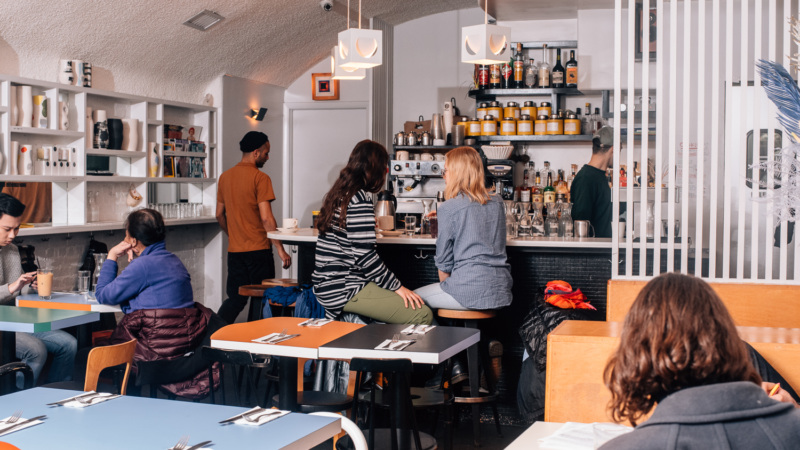
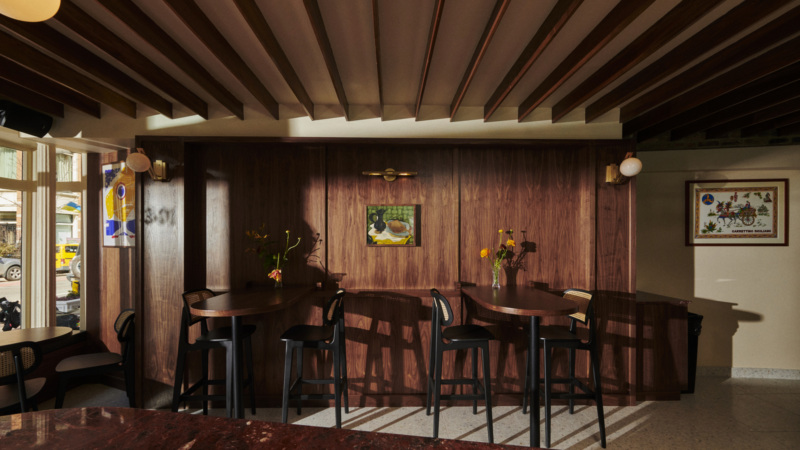
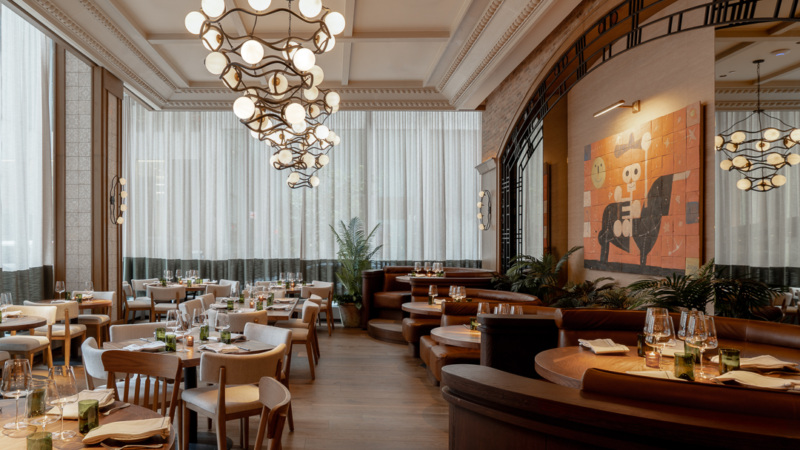
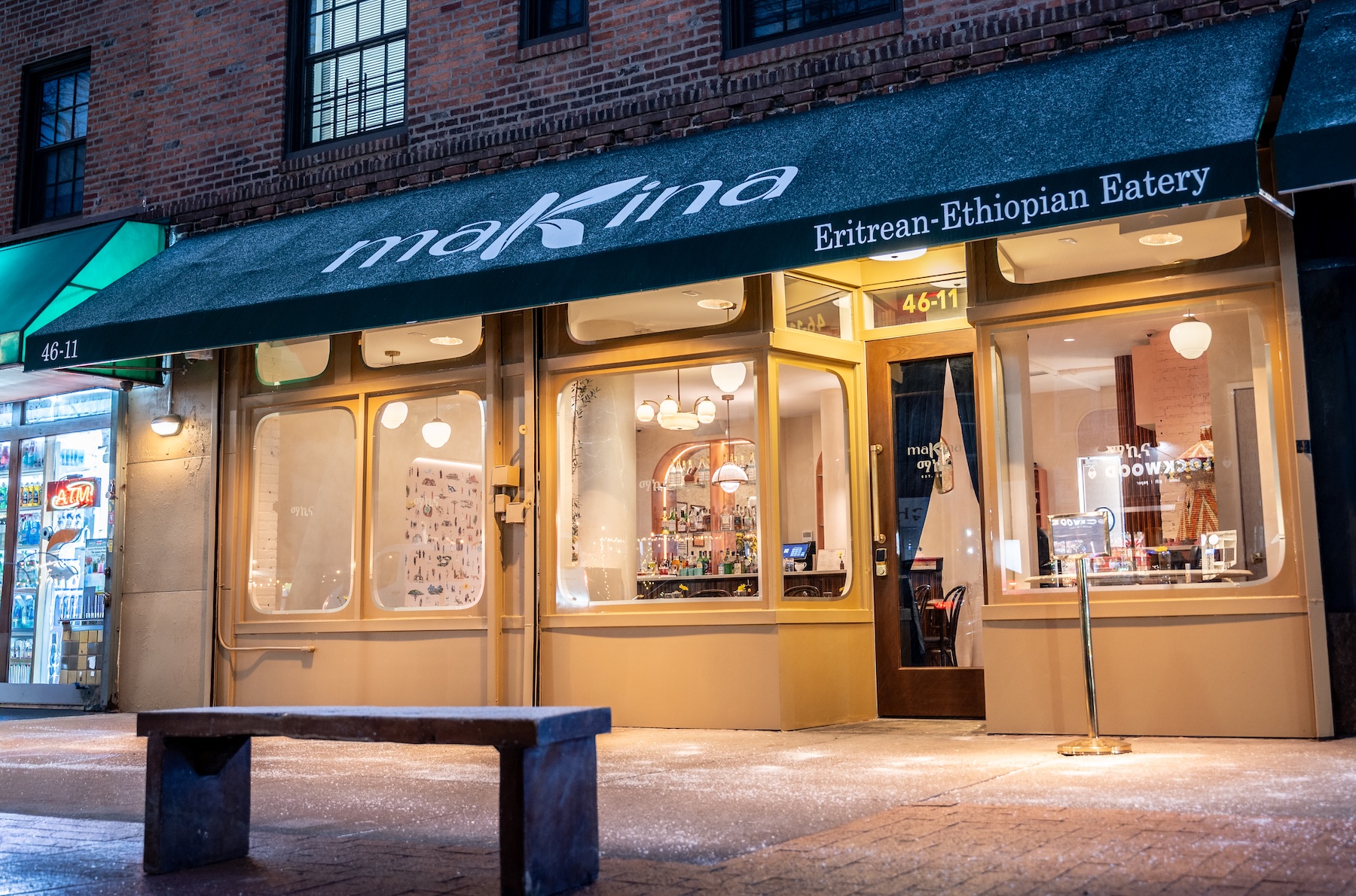
She says she envisioned the kind of place where guests would return again and again, where they would celebrate birthdays and anniversaries and proposals. In early 2026, she opened a brick-and-mortar in a warm and utterly lovely space in Sunnyside. “It took us a very long time to open, but we were extremely intentional in how we came up with the menu, the space, and the flow of it all,” she says. “We’re very happy to be here.”
Makina Cafe’s mobile version will continue to move between boroughs, but the sit-down restaurant offers so much more. Here’s what to know before you go.
The Resy Rundown
Makina Cafe
-
Why We Like It
With its soul-satisfying cooking and welcoming vibe, Makina Cafe is a true neighborhood gem. It’s easy to see why some Sunnyside locals eat here once a week. -
Essential Dishes
Asmara platter; sambusas; berbere-spiced prawns; kitfo; doro wot; koseret tibs; and tiramisu. -
Must-Order Drinks
The Amiche, made using bourbon that’s been fat-washed with Ethiopian clarified butter, is a standout cocktail.
-
Who and What It’s For
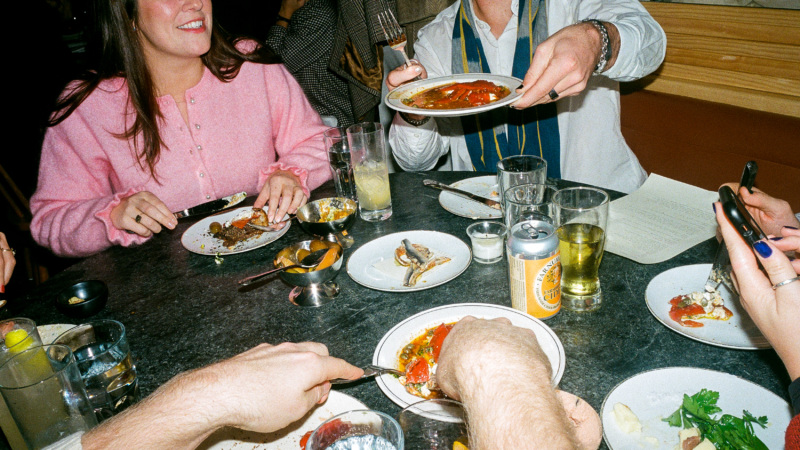
Bring your closest friends for a cozy catch-up that lasts well into the evening. Makina Cafe works equally well on a casual Tuesday night as it does for a laid-back special occasion. -
How to Get In
Reservations drop 30 days in advance at 8 p.m. -
Pro Tip
Utensils are provided, but for the full experience, many of the dishes here are best enjoyed with your hands.
1. Fans can expect a much more extensive menu than at the truck.
By nature, many of Ethiopia’s richly seasoned braises are engineered to be shared with family and savored slowly — not exactly ideal for the office crowd on the go. “Our food truck menu was somewhat of a starter pack,” Gebre Egziabher says. “At the restaurant we took it to another level. We’re telling a story of what it was like growing up in that part of the world. It’s a culinary journey, and that’s what our restaurant menu is really based off of.”
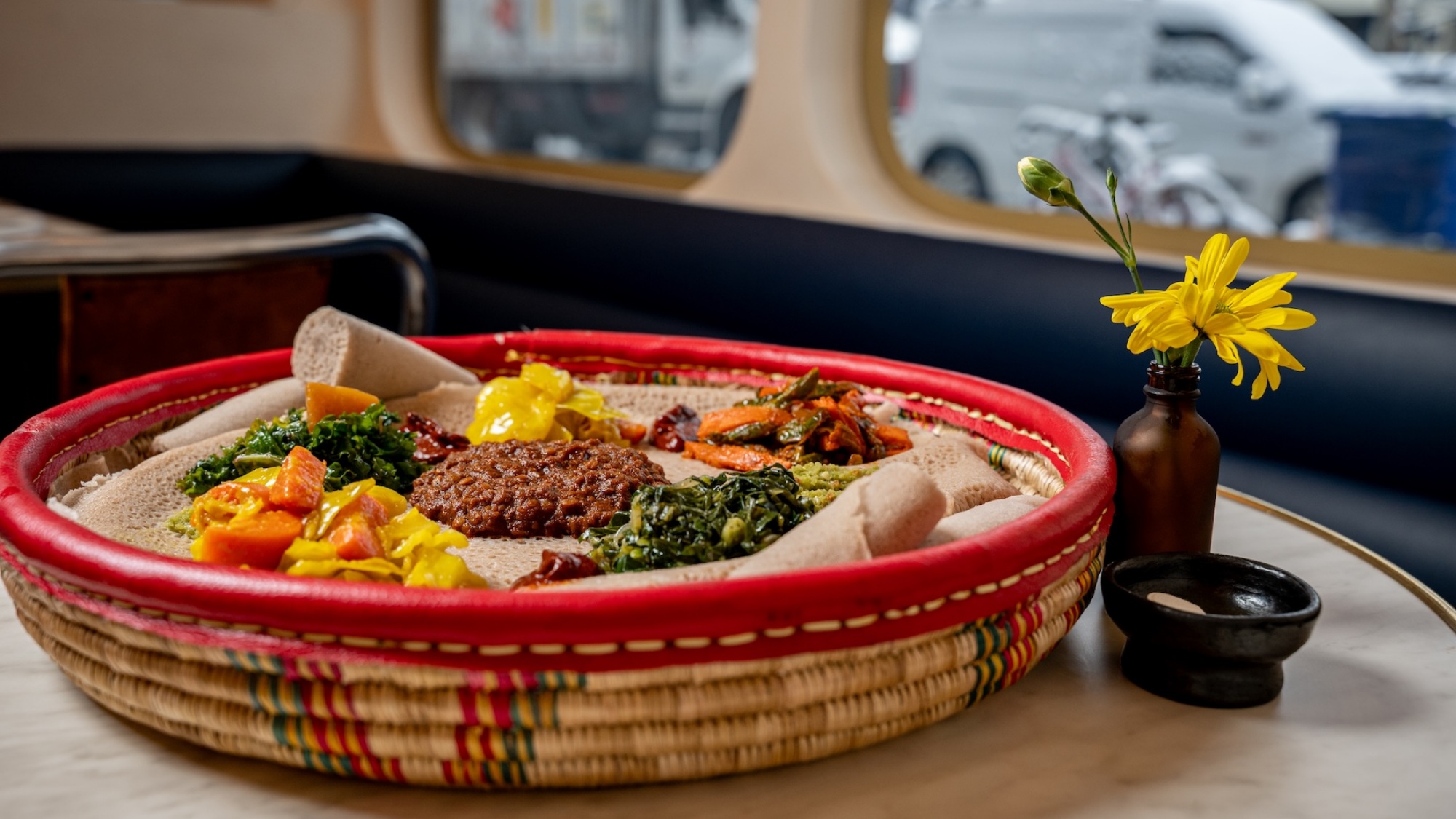
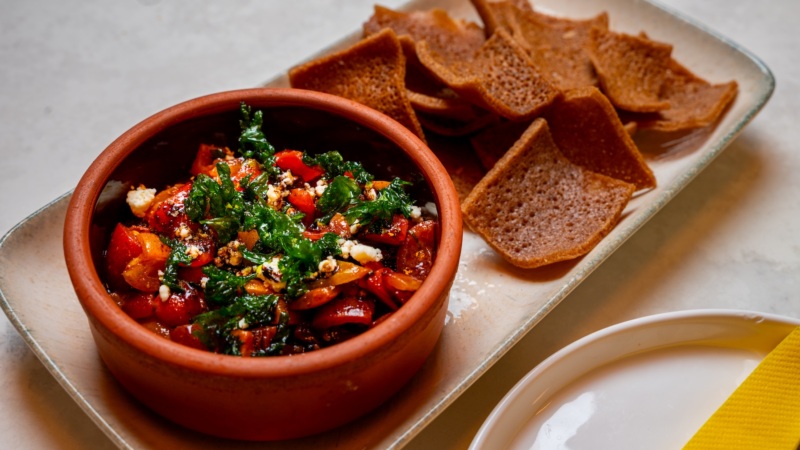
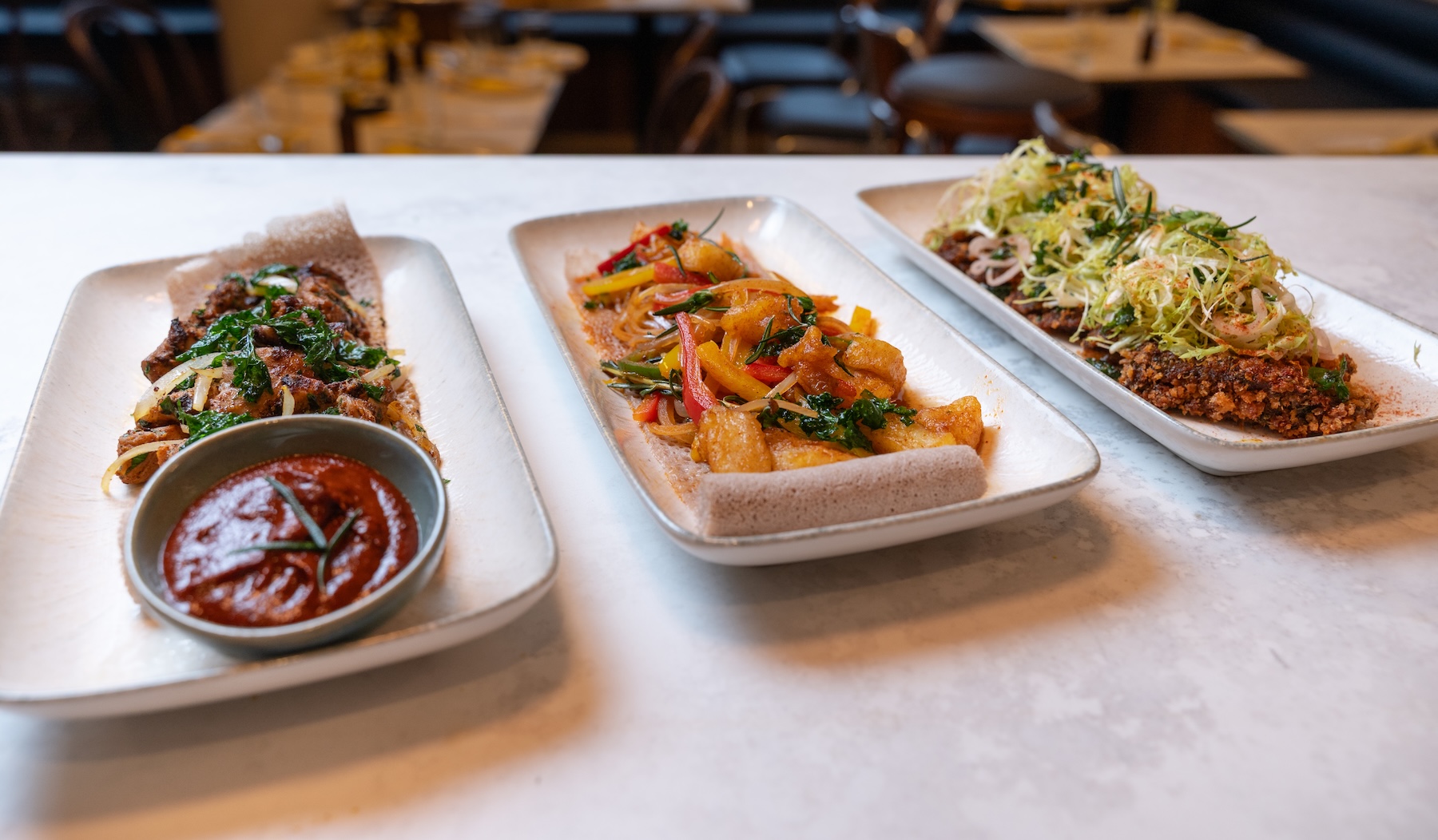
Fans will recognize some of the truck’s most popular staples, including flaky sambusas stuffed with either beef or lentils. Now, in addition to quick stir-fries like the doro tibs (spiced chicken with onions and herbs), diners can opt for kitfo, beef tartare enriched with clarified butter and seasoned with cardamom, and the sumptuous Asmara platter, with four vegetarian dips and salads laid out on injera. In a nod to Eritrea’s coastal bounty, there are also head-on prawns marinated with berbere spices and braises like the fish tsebhi.
“The prawns were very much inspired by the Eritrean region,” she says. “Then when you go into the southern part of Eritrea, which is the Ethiopia region, you’re hitting all the stews.” Gebre Egziabher wanted to adhere closely to traditional flavors as much as possible. “We partnered with heirloom farmers based in Ethiopia to source a lot of our spices. We also worked with local butchers, who walked us through the types of cuts we needed.”
2. Injera is the heart and soul of the restaurant.
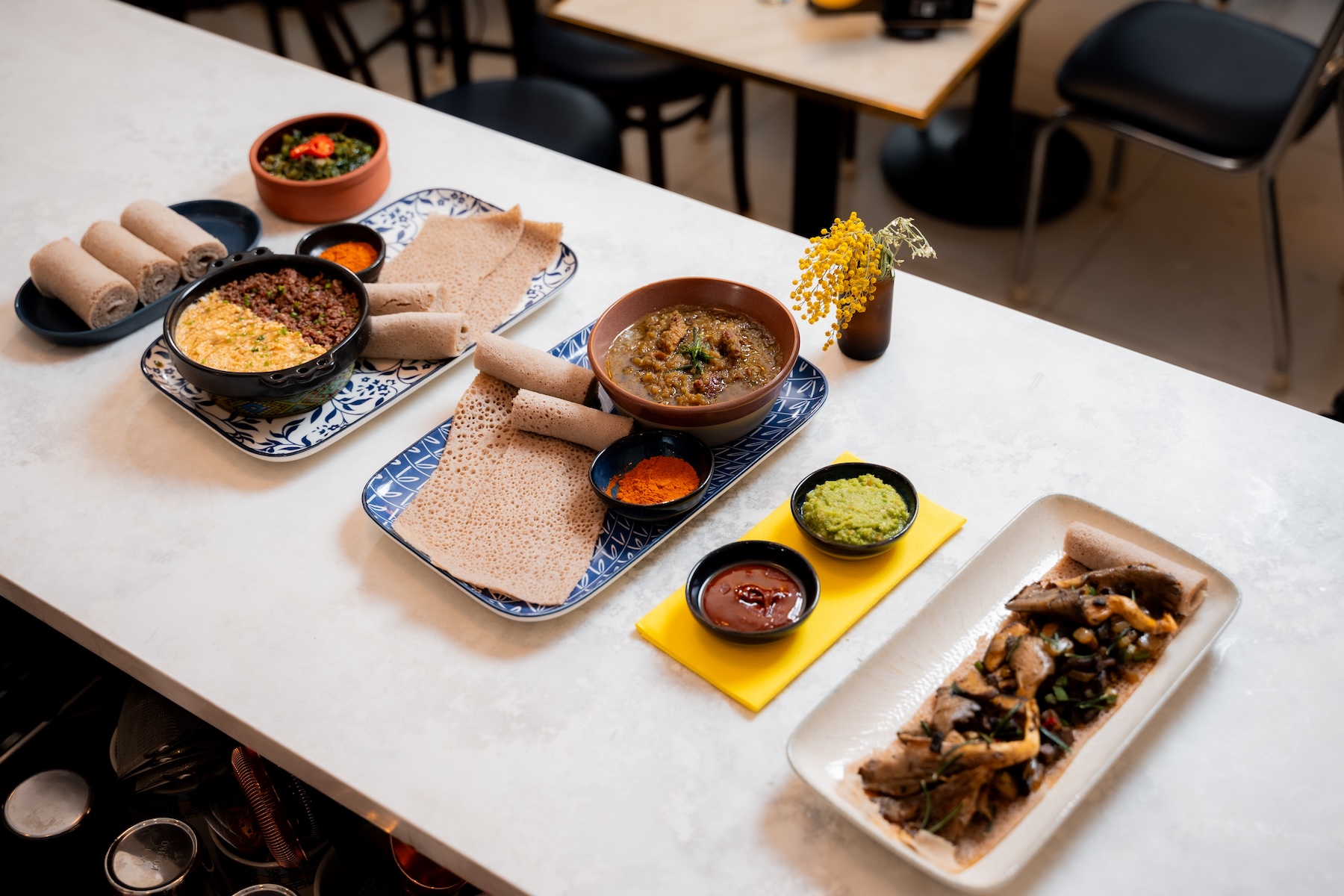
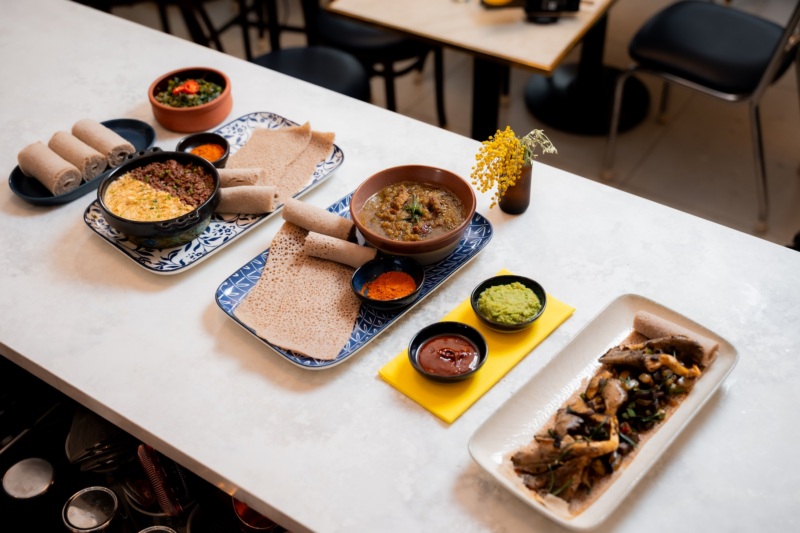
In Ethiopian cuisine, injera is more than a bread; it’s the load-bearing pillar of virtually every feast. Made with teff, a hardy species of lovegrass that has been cultivated in Ethiopia for at least 3,000 years, injera is the vessel that cradles stews, the utensil used to grab a particularly choice morsel, and the starch for soaking up sauces.
“We don’t eat much of our food without injera,” Gebre Egziabher says. “It lies at the bed of pretty much all the meat. We eat with our hands culturally, so you tear a piece of that and you dig in and pretty much enjoy your entire dish within injera. It is the most important item on our menu.”
It’s also notoriously difficult to master. “Injera is just like sourdough,” Gebre Egziabher says. “It’s very finicky.” As with other naturally leavened doughs, it demands time to ferment properly. Subtle shifts in humidity or heat can upend the whole process — a challenge with New York’s volatile seasons. Depending on the weather, she says the process can take anywhere from three to five days. The resulting injera — wonderfully springy, with a pleasant tang and a complexity that stands up to slow-simmered, intricately spiced stews — is worth the effort.
3. Ethiopia’s national dish is an undisputed star here.
One dish was conspicuously absent on Makina Cafe’s truck menu: doro wot, considered by many to be the national dish of Ethiopia. This rich, savory chicken stew is the antithesis of fast-casual — it only makes sense when there’s ample time to both prepare and enjoy it. “Doro wot is eaten during holidays, so it’s a labor of love,” Gebre Egziabher says. “You can pretty much take a quick bite and be able to tell if somebody has really put in the time.”
Drag a piece of injera through her rendition and it immediately becomes clear that she’s put in the work. Gebre Egziabher’s doro wot recipe takes two full days to make and all that time and effort shows. “Doro wot is something that I have spent the last eight years perfecting,” she says. “We worked with our nearest farmers market on sourcing really incredible quality meat. We wanted to give it that respect that’s needed.”
As she points out, the ingredients in doro wot are simple. What sets a great version apart is the meticulous layering of flavors — the onions must be caramelized with the berbere spices for hours, until both have sweetened and mellowed; the bone-in chicken must simmer until the meat is tender and the gravy luscious. “When we decided to offer it for the restaurant, I was like, it has to deliver,” she says. “It’s the national dish of my country, so I have to do a good job of representing it.”
4. Keep an eye on desserts.
Gebre Egziabher has ambitious plans for her dessert menu, which is likely to include housemade ice cream and fresh fruits in the summer. For the time being, however, she’s sticking to a succinct list of sweets that are beloved in Ethiopia, if not originally from there. Baklava may have been born in the Ottoman Empire, but it’s popular in bakeries in Addis Ababa. Makina Cafe currently offers two renditions, both dense with nuts and drenched in syrup.
Although Italy’s colonization of Ethiopia only lasted five years, it left an indelible mark on the nation’s cuisine. Gebre Egziabher nods to the influence with her own take on tiramisu. “Even if we’re making tiramisu, we’re also being intentional in places that we can insert and add our own ingredients,” she says. Here, she swaps the traditional espresso for a potent cold-brew made with Ethiopian beans.
5. Even the drinks list is packed with clever nods.
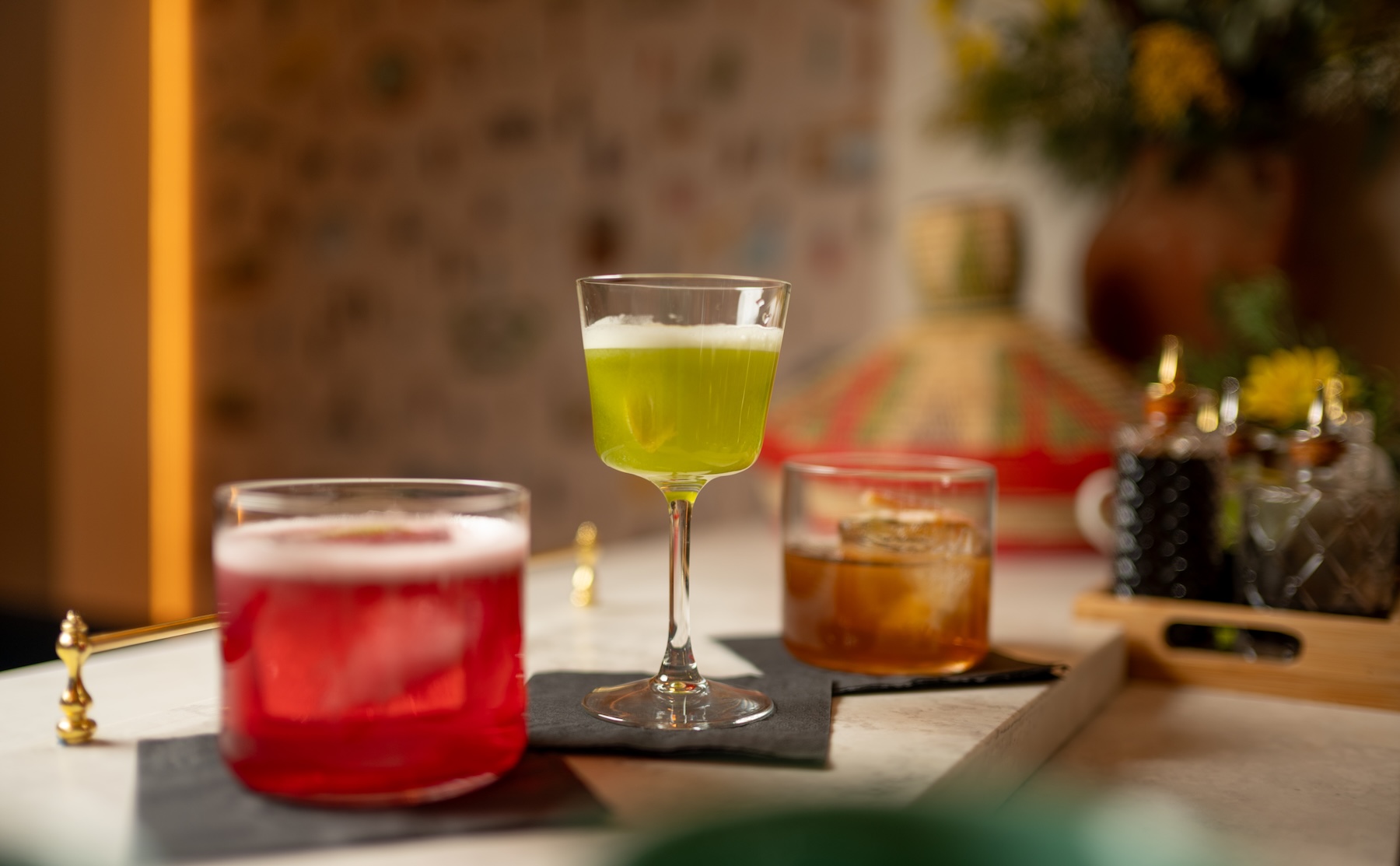
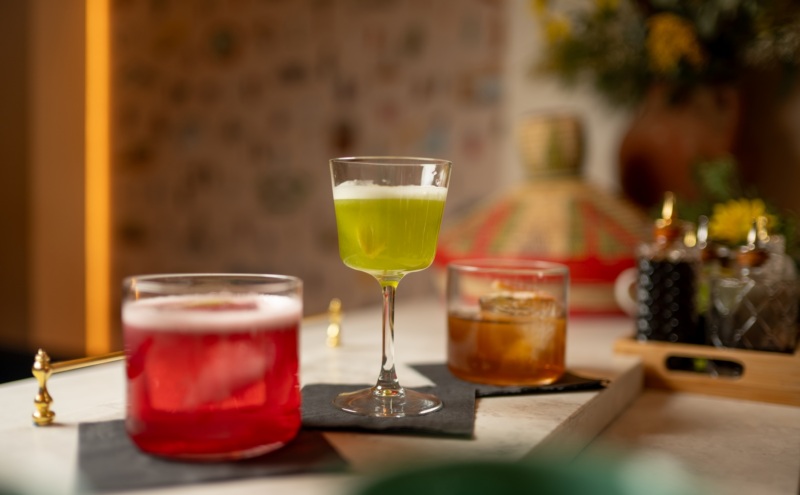
Gebre Egziabher’s homeland is represented by the gently spicy Old Abyssinia, made with shai-infused bourbon. “Shai is a traditional Ethiopian Eritrean tea, which has cinnamon, clove, and green cardamom,” she says. “So we use it to make a riff on an Old Fashioned.”
There’s also the Amiche, a clever play on a T’ej Sidecar, which is typically made with rum, caramelized honey, and gesho. “It’s a take on a 1930 cocktail in Asmara,” she says. “We made an Ethiopian clarified butter-washed bourbon to make this cocktail.” The result is wonderfully smooth, with a rich, mellow flavor that coats the palate.
Gebre Egziabher also wanted to ensure that other drinks from her homeland, including those that are sometimes tricky to find in New York, were on the menu. “We source a couple of really crucial beers and liquors from Ethiopia and Eritrea, which I feel like are so hard to get,” she says. “We were very intentional in cultivating these relationships, so that we were able to snag some of these products that haven’t been seen here in years.”
There’s T’ej, or Ethiopian honey wine, an ancient brew that was once reserved for royalty. Lightly sweet and amber-hued, this centuries-old elixir bears a passing resemblance to mead, but with its own distinctive terroir.
And whatever you order, you can never go wrong by finishing it all off with a crisp Asmara lager.
Makina Cafe is open for dinner from Wednesday to Friday from 5 to 10 p.m., and on Saturday and Sunday from noon to 10 p.m.
Diana Hubbell is a James Beard Award-winning food and travel journalist whose work has appeared in The Washington Post, The Guardian, Atlas Obscura, VICE, Eater, Condé Nast Traveler, Esquire, WIRED, and Travel + Leisure, among other places. Previously based in Berlin and Bangkok, she currently lives in Greenpoint, Brooklyn. Follow her on Instagram. Follow Resy, too.