Resy Features National Minneapolis
Diane’s Place Tells the Story of America, Through a Hmong Prism
Published:
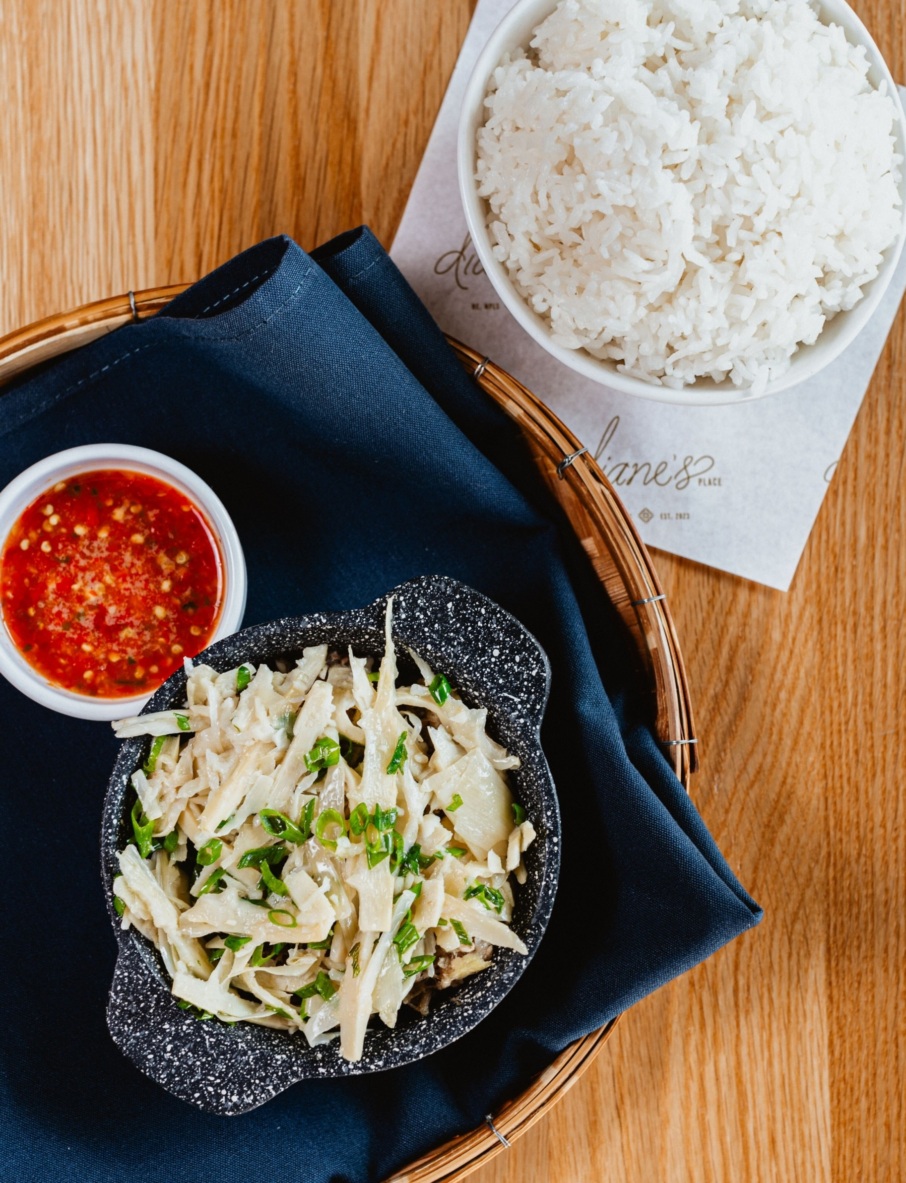
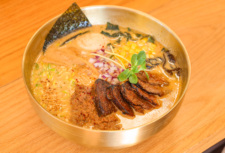
Nqaj npua tsawg, or slow-cooked pulled pork, was something Diane Moua ate throughout her childhood, but only for special occasions. Requiring low and slow cooking and most of a whole pig, the labor intensive dish still brings Moua memories of her mother and grandmother spending long hours at the stove. They would stir pork meat, broth, bones, trotters, and cheeks with aromatics like lemongrass and ginger until the meat broke into tender shreds, thick with fat and rich with concentrated flavor. They enjoyed the stew simply spooned over rice, topped with a spicy Thai chile sauce.
The dish is a signature of Hmong cuisine, a community with roots in China and Southeast Asia. They often resided in remote villages in mountainous regions where meat like pork — and time in the kitchen to linger on a single dish — was a luxury. “Back in the day, you had to have money to have this dish,” says Moua.
She would eventually recreate the dish at her Minneapolis restaurant, Diane’s Place. “The one we do is old school — authentic. I have some Hmong line cooks and am like, ‘Can you believe we have this on the menu?’” she’ll ask, given the dish’s relative rarity. “No one else has this.”
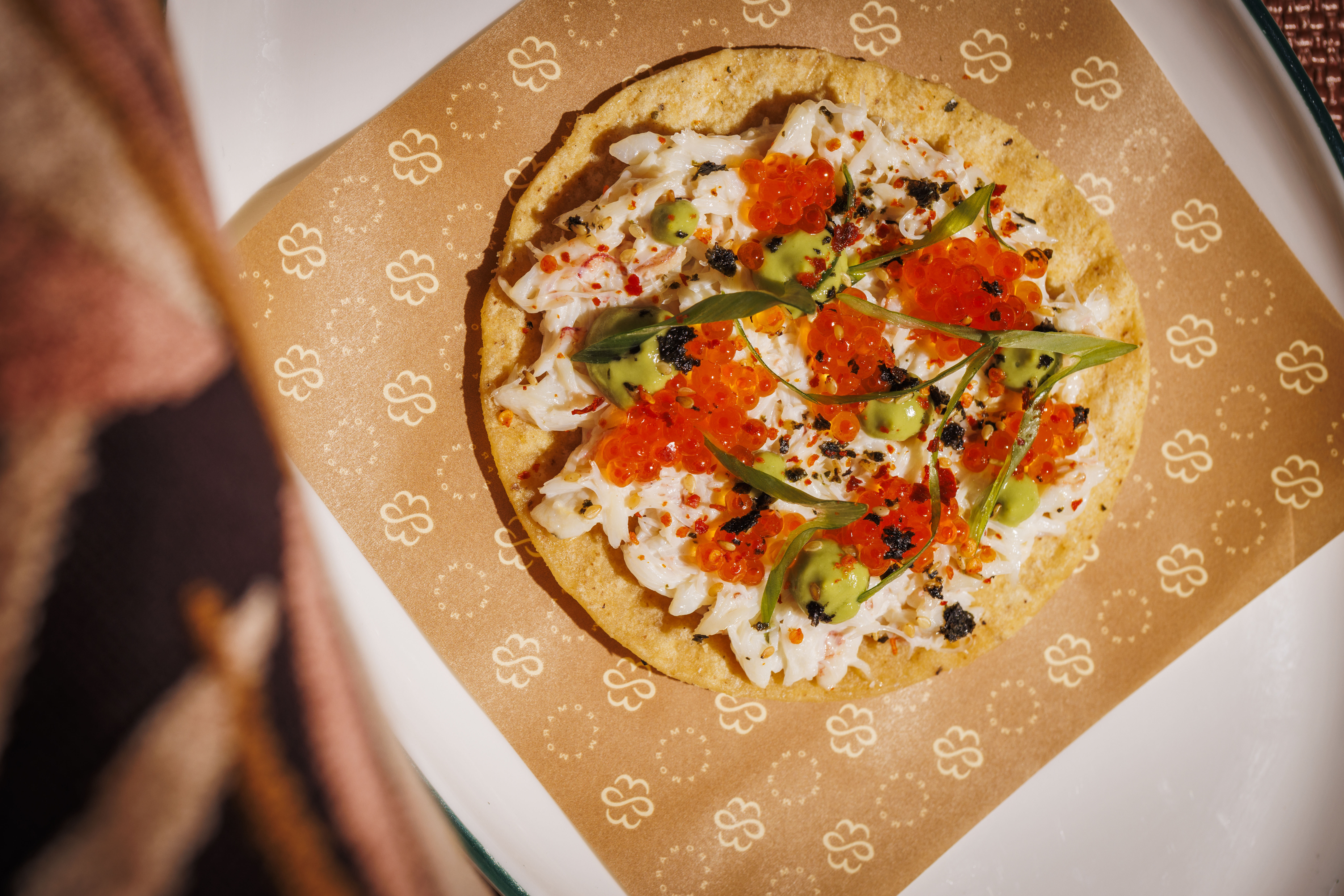
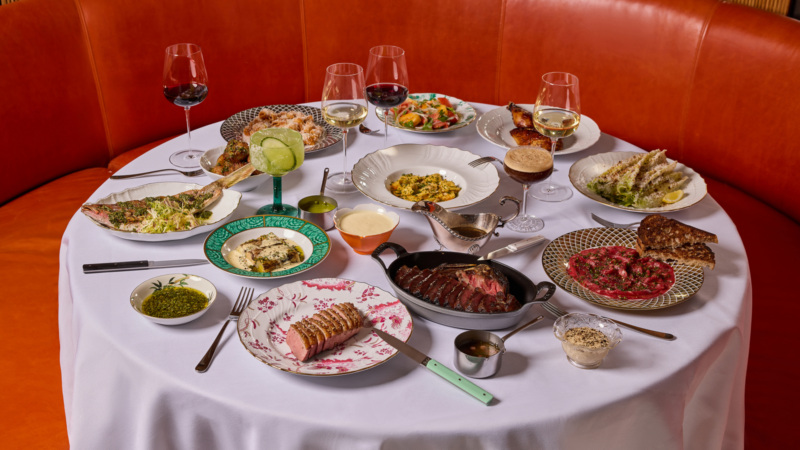
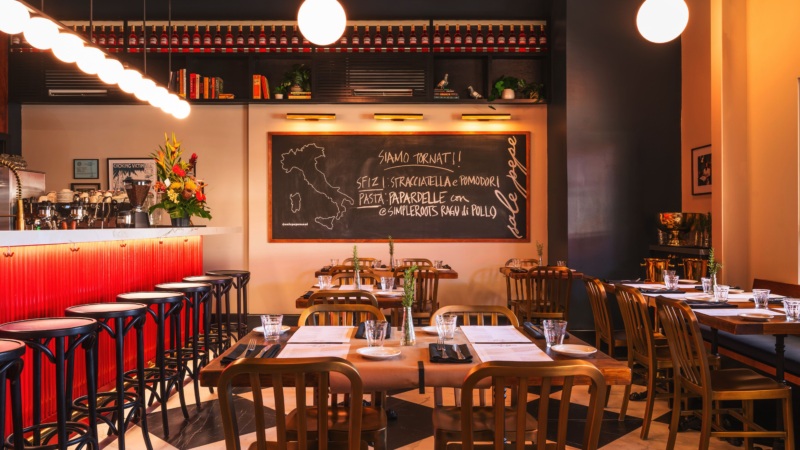
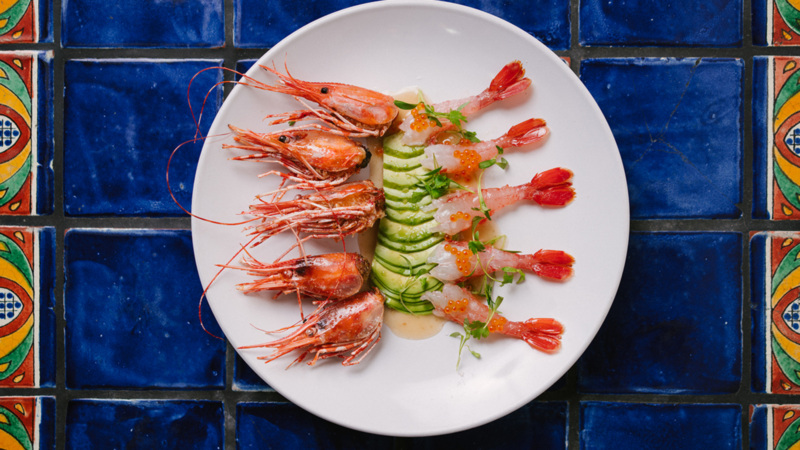
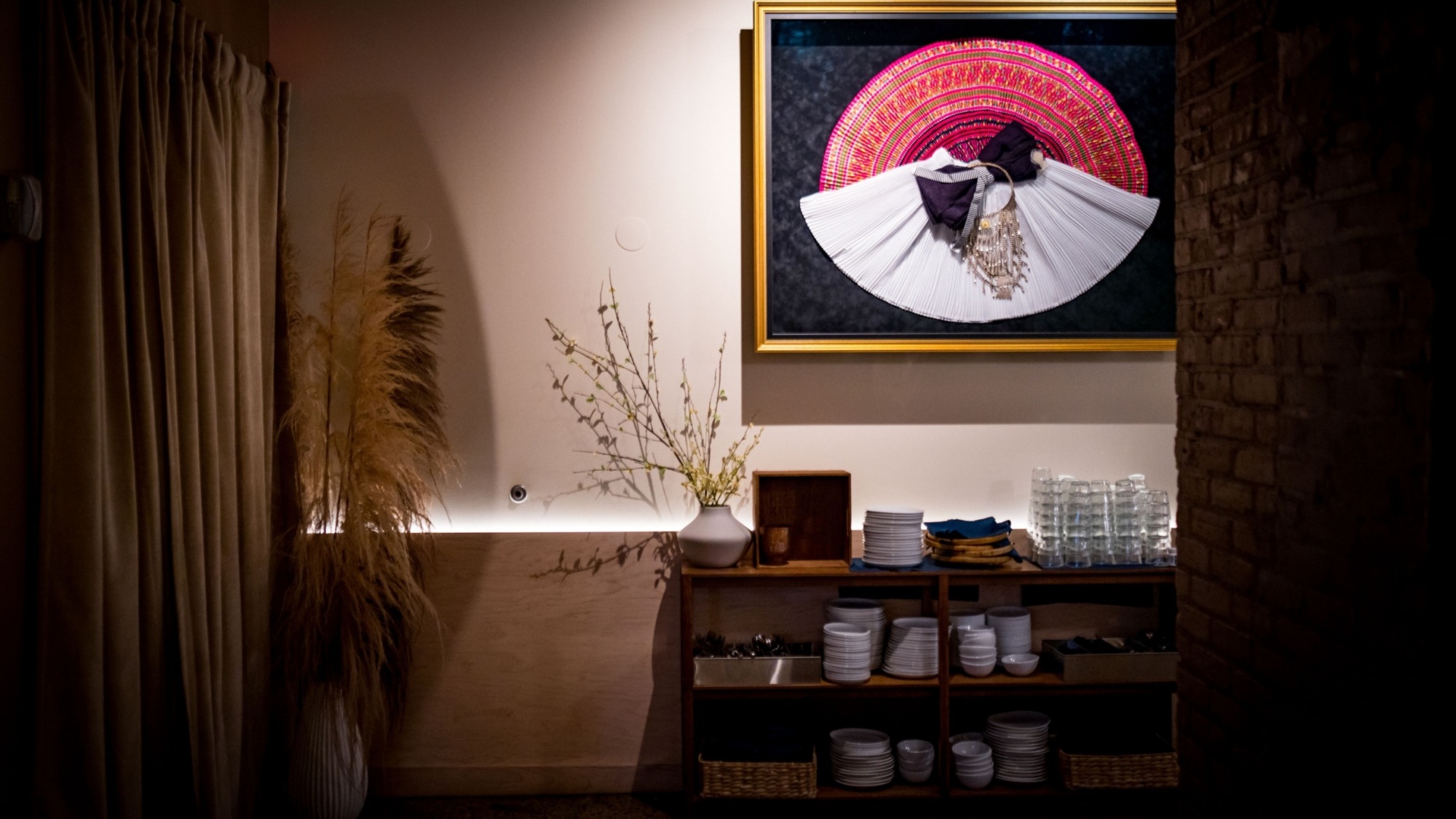
It goes without saying that Hmong restaurants, part of a diaspora that now counts some 370,000 residents in the U.S., are still few and far between across the country. But even among those few, Diane’s Place tells a distinct and personal story. And even in the Twin Cities — the country’s unofficial Hmong capital, with the highest population per capita — Diane’s Place serves dishes unlike any others. In addition to the nqaj npua tsawg, there’s other more traditionally-inspired dishes like fresh bamboo stewed in coconut curry, but also modern innovations like beef carpaccio flavored like laab with shallot and herbs, and eggroll-stuffed chicken — a whole Minnesota-bred chicken stuffed with bean thread noodles, mushroom, and bok choy and roasted until the crisp skin mimics that of a hot fried eggroll. And on its face, the restaurant space might look familiar in the current landscape, but upon closer inspection, its details are quietly personal, from the hand-sewn pillows to woven baskets and Moua’s traditional Hmong wedding garments that hang on the wall as a reminder of where she came from.
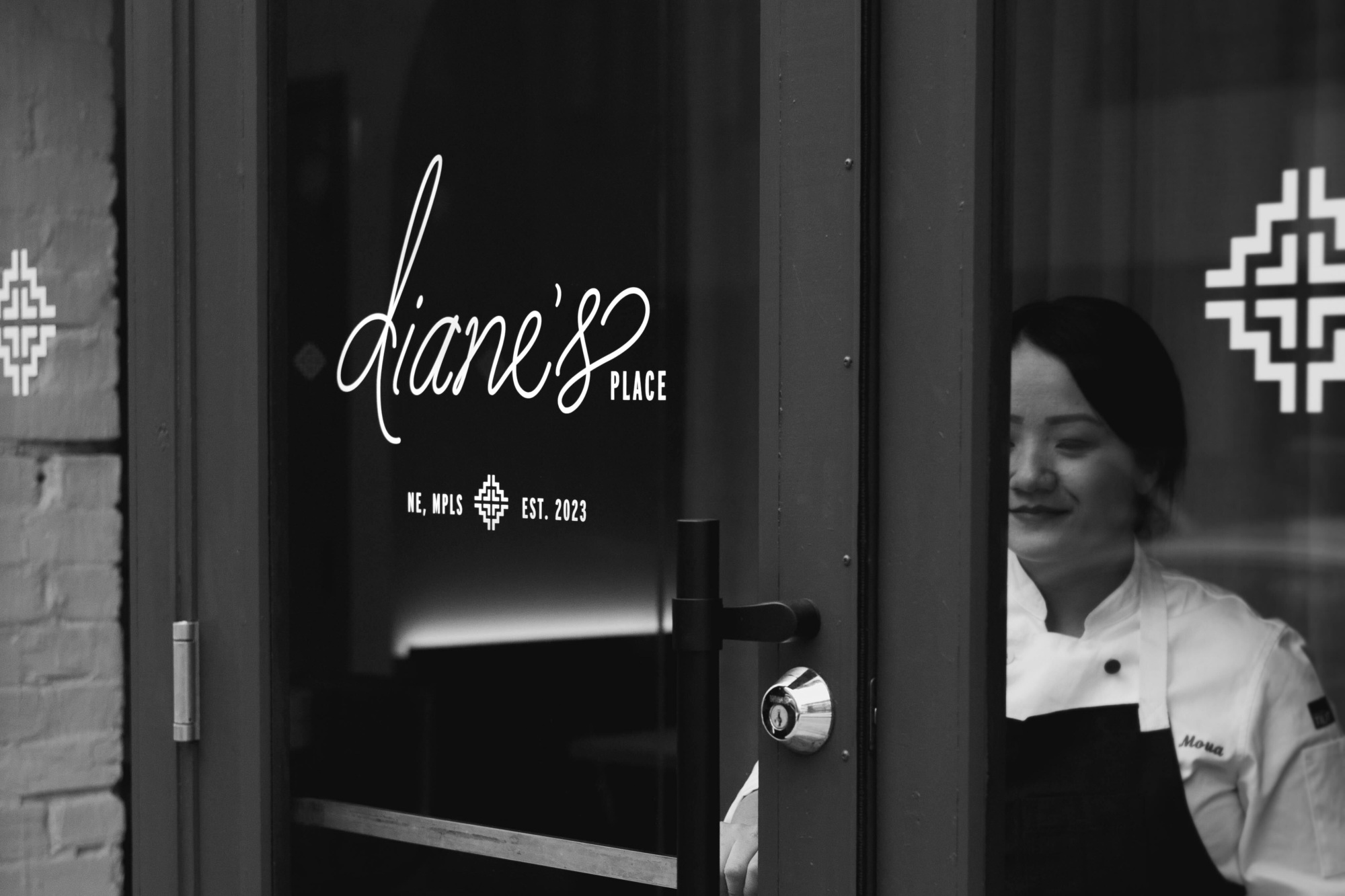
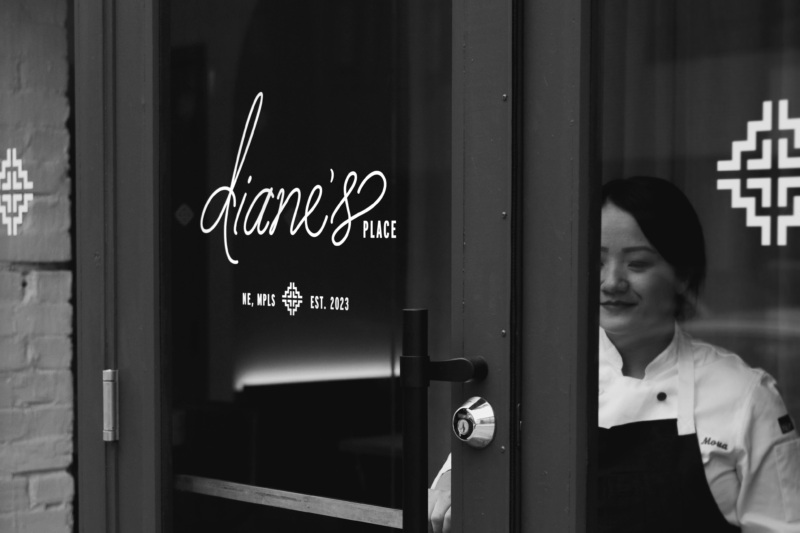
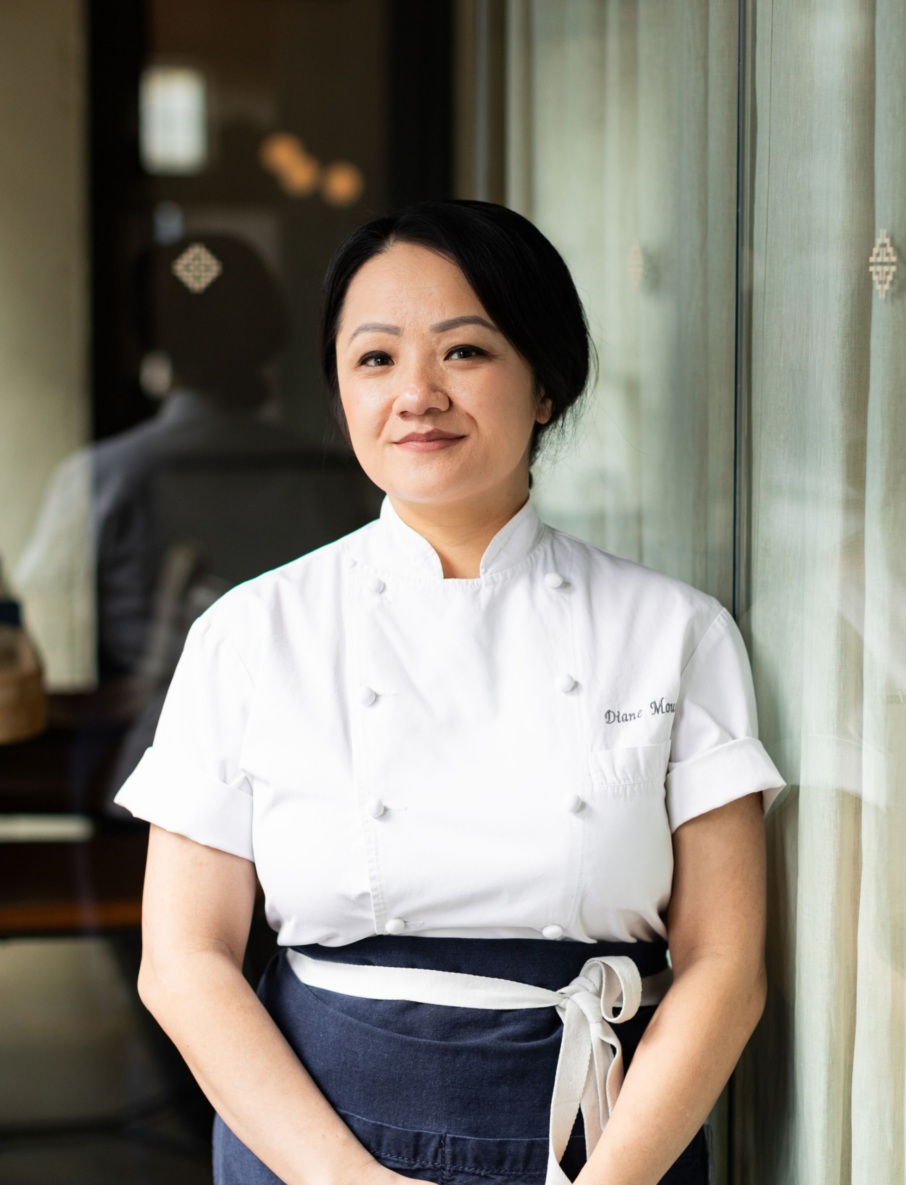
Since opening in spring 2024, the restaurant has already accrued notable acclaim, including a James Beard nomination for Best Chef: Midwest. As one of the first generation of Hmong Americans born in this country, Moua is working to shape the culture as she lives it. Through culinary creativity, she’s able to maintain the thread of Hmong tradition tied to her parents, while incorporating flavors from her American youth. “We never thought we would see our food presented this way,” she says.
▪️
When Moua was born in Providence, R.I., in the late 1980s, there were less than 50,000 Hmong people in the United States. Most had arrived recently, amid the displacement of refugees after the Vietnam and Laotian civil wars in 1975 — having only been granted asylum due to their forced involvement in the war, where they fought for the United States against Vietnam. The Hmong, an ethnic sub-group of China, had already been displaced once: Many fled China after the Han invasion in the 18th century and settled in Southeast Asia — primarily Vietnam, Laos, Thailand, and Myanmar (Burma). Now, the diaspora was being shaken once again. Moua’s parents were among the first wave of immigrants after the Refugee Act of 1980 loosened immigration restrictions, and the family would settle in Rhode Island before moving to Wisconsin a few years later. By then, there were roughly 100,000 Hmong Americans.
The move was pivotal. Moua’s parents were able to purchase land in Junction City, Wis., and started their own farm, where Moua grew up working among the vegetables and herbs. She’d learn to cook alongside her parents, making simple Hmong and American dishes tailored to local produce and affordable ingredients.
They had found freedom, but much of their life was still determined by often haphazard government decisions: Hmong refugees had initially been dispersed between Minnesota, Wisconsin, and California, and were encouraged into the agricultural industry through 1980s farming programs focused on immigrants. The family’s move brought them closer to the Hmong American community, and they sought to maintain a traditional home life: Moua got married when she turned 16 and had her first child shortly after. But the marriage allowed her and her new family to move to Minneapolis, where she could begin to hone her multicultural identity and balance her familial traditions with local customs.
▪️
“I grew up on a farm, so knowing anything about the restaurant industry was totally out of my scope,” says Moua. She decided to attend culinary school at Le Cordon Bleu Minneapolis/Saint Paul, which may have simply been a way to build on her existing skills. But as she developed a knack for French culinary techniques, Moua realized she had, perhaps inadvertently, found a vocation that did more than just continue her family’s culture. By the time she finished school in 2005, the Hmong American community was developing rapidly: The prior year, St. Paul had solidified its stance as a cultural anchor with the opening of Hmongtown Marketplace, covering 6 acres in Frogtown with stalls for over 200 vendors. Simultaneously, another wave of Hmong immigrants was hitting the U.S. — this time stemming from the repatriation of Hmong refugees in Thailand.
Moua realized the work ethic she’d honed during her time on the farm meshed well with her training. Specifically, she discovered she had a skill for pastry, with its highly precise approach and artistic presentations. Others discovered that too: Moua quickly proved herself at restaurants including Marcus Samuelsson’s former Minneapolis outpost of his restaurant Aquavit, and Tim McKee’s Solera and La Belle Vie. By 2014, she was leading multiple teams as executive pastry chef for Minneapolis’ prestigious Soigné Hospitality Group (which includes Spoon and Stable, Demi, and Bellecour Bakery) under the direction of Gavin Kaysen, one of the city’s most esteemed chefs.
We never thought we’d see our food presented this way.— Diane Moua
As Moua’s career was soaring, the Hmong American population kept expanding. “When my parents came to the U.S., pan-fried noodles was one of the only dishes people knew,” says Moua. “But now, everyone has YouTube and is so advanced.”
And yet Moua’s professional dishes were the antithesis of what her parents had taught her to cook growing up — they were often luxurious in their ingredients and elaborate in their construction, with flavors rooted in European and American traditions.
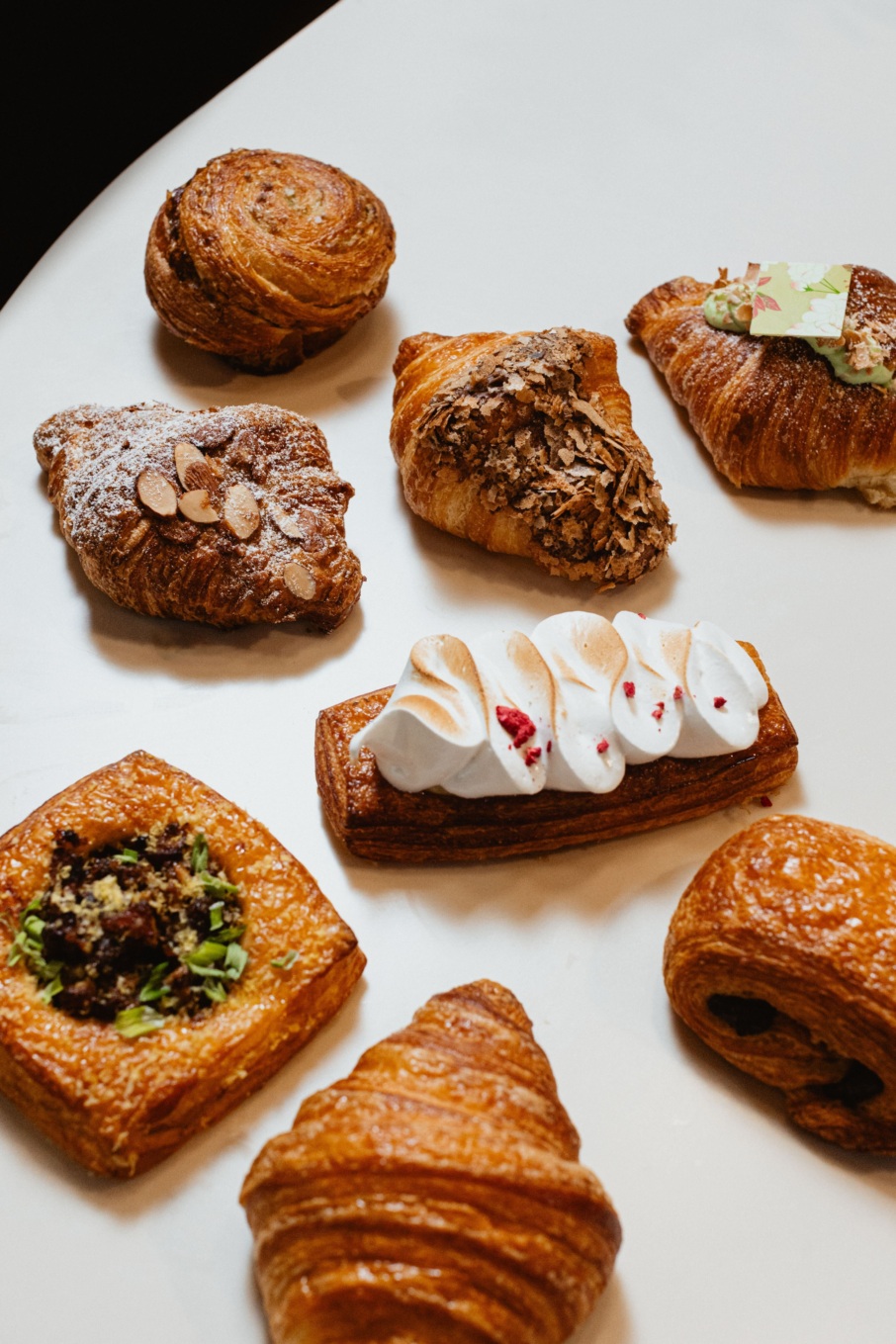
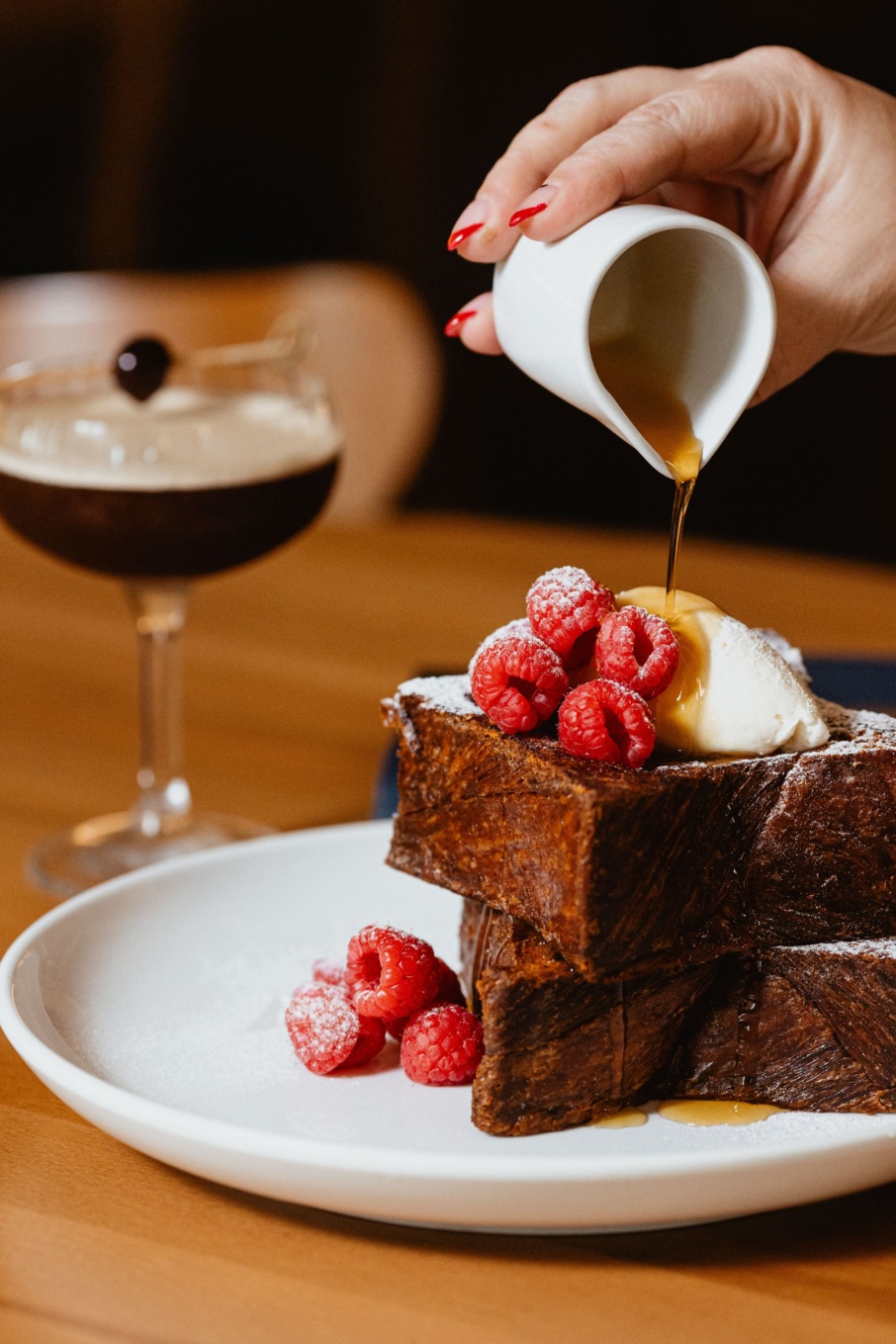
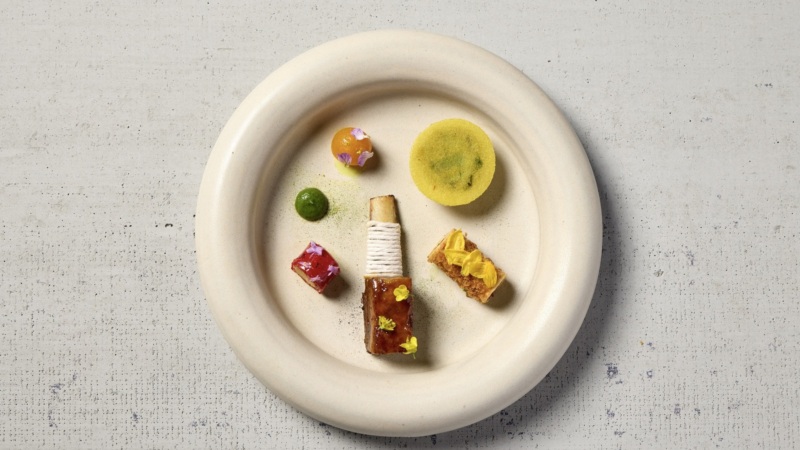
During her eight years with Soigné, Moua would accrue five James Beard nominations at Spoon & Stable, including Outstanding Pastry Chef five years in a row. She gained a national reputation for her expertly laminated pastries, elaborately decorated tiered cakes, and seasonal quenelle-topped tarts and pavlovas. Meanwhile, she kept making dishes like laab, cabbage rolls, and chicken soup at home with her family of four.
Her parents’ farm, meanwhile, supplied ingredients to a burgeoning cohort of Hmong cooks across the region. “I was juggling three restaurants and never had time to think about what was next, until Covid hit,” says Moua. “I always cooked for my family, and I realized it was a comfort I looked forward to, so maybe I could mesh that style with what I was doing [professionally].” And yet, while Moua had been considering opening a restaurant of her own for some time, she’d never considered serving Hmong food. “My mom was like, ‘How do you put our food on the plate? It’s home cooking.’ But, after being in the industry for a minute, I could visualize how it could come to life.”
Soon it became clear that would be precisely her next step. In 2023, Moua left Soigné, working catering gigs around town while looking for a brick-and-mortar location. She eventually located 4,000 square feet of space in Minneapolis’ Sheridan neighborhood on the eastern bank of the Mississippi River, which more or less dictated how the operations would function. With such a large footprint, Moua opted for a catering business and an events space, plus a full-service restaurant and bakery serving pastries, brunch, and eventually, dinner.
More From The Women of Food
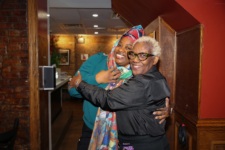
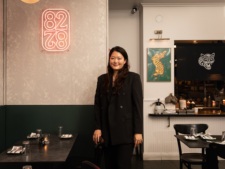
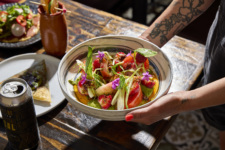
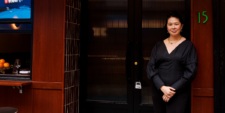


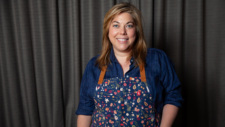
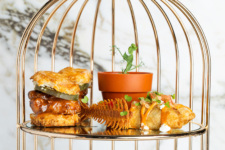

Where she was once living in two very different worlds — cooking French and American food by day in fine dining spaces, and Hmong food at home at night — they were now starting to mesh.
At Diane’s Place, there would be classic Hmong sausage — made with fresh Thai peppers and coriander and fermented until slightly tangy — but made in collaboration with the local Lowry Hill Provisions. It holds space on the menu next to items like Thai tea French toast. The pulled pork is served with pickled bamboo and housemade hot sauce that Moua soon hopes to bottle and sell on its own. Her pastries have maintained their cult-like following from her fine dining days, but are now layered with flavors like coconut, pandan, and scallion.
It’s all part of how things have come full circle for Moua, in multiple ways: Her parents’ farm now supplies the restaurant with weekly produce deliveries, and they have started growing specialty ingredients specifically for the restaurant, like chiles and herbs. Moua’s relatives in South Carolina and Georgia supply the bamboo, and she finds herself teaching young cooks how to process and cook the fresh ingredient for the first time, just like her parents taught her. The Spam she despised eating as a child is now proudly featured in an egg sandwich with chile aioli and a sesame-nori croissant, and she makes a version of her family’s pan-fried noodles with her parents’ Wisconsin-grown mustard greens.
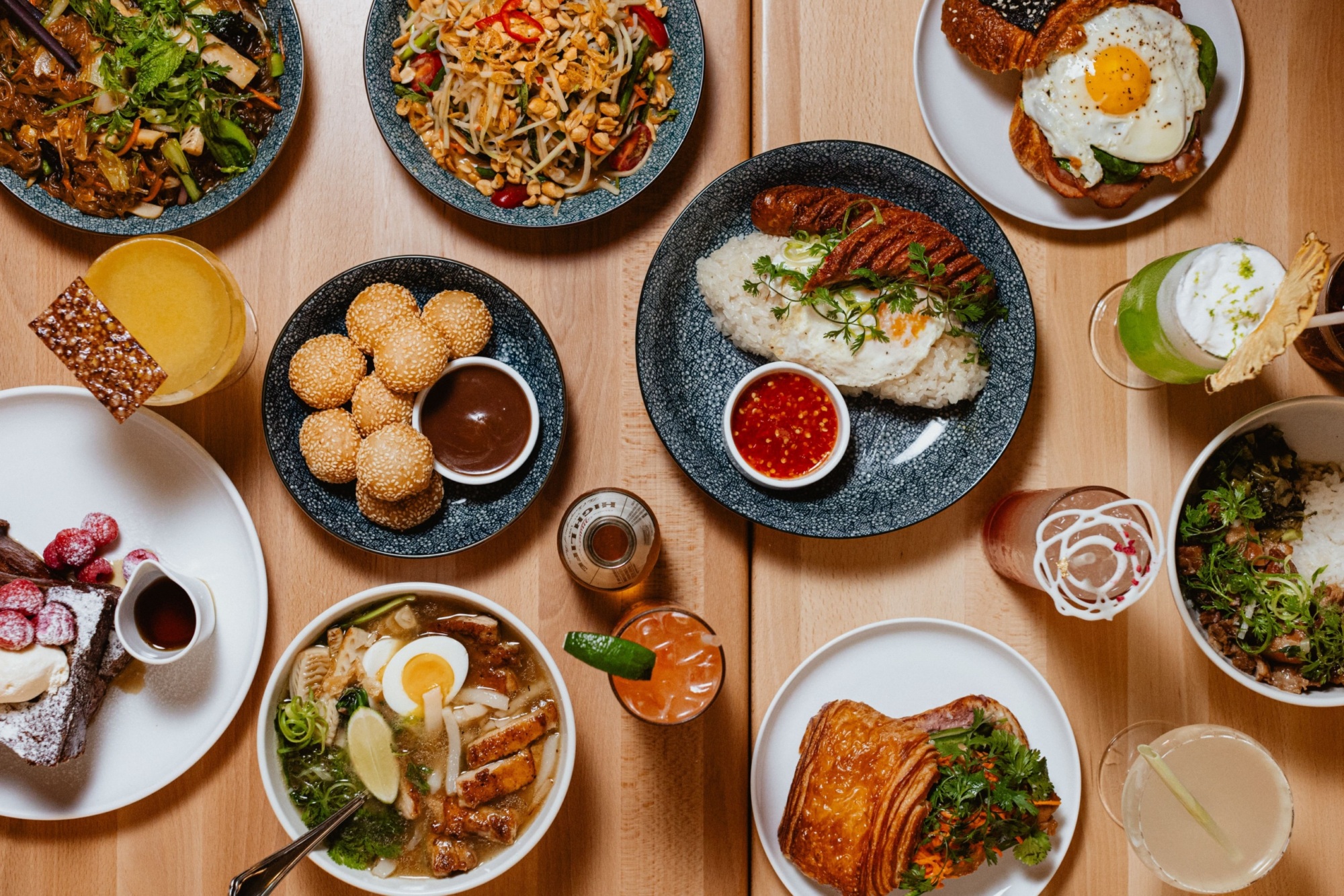
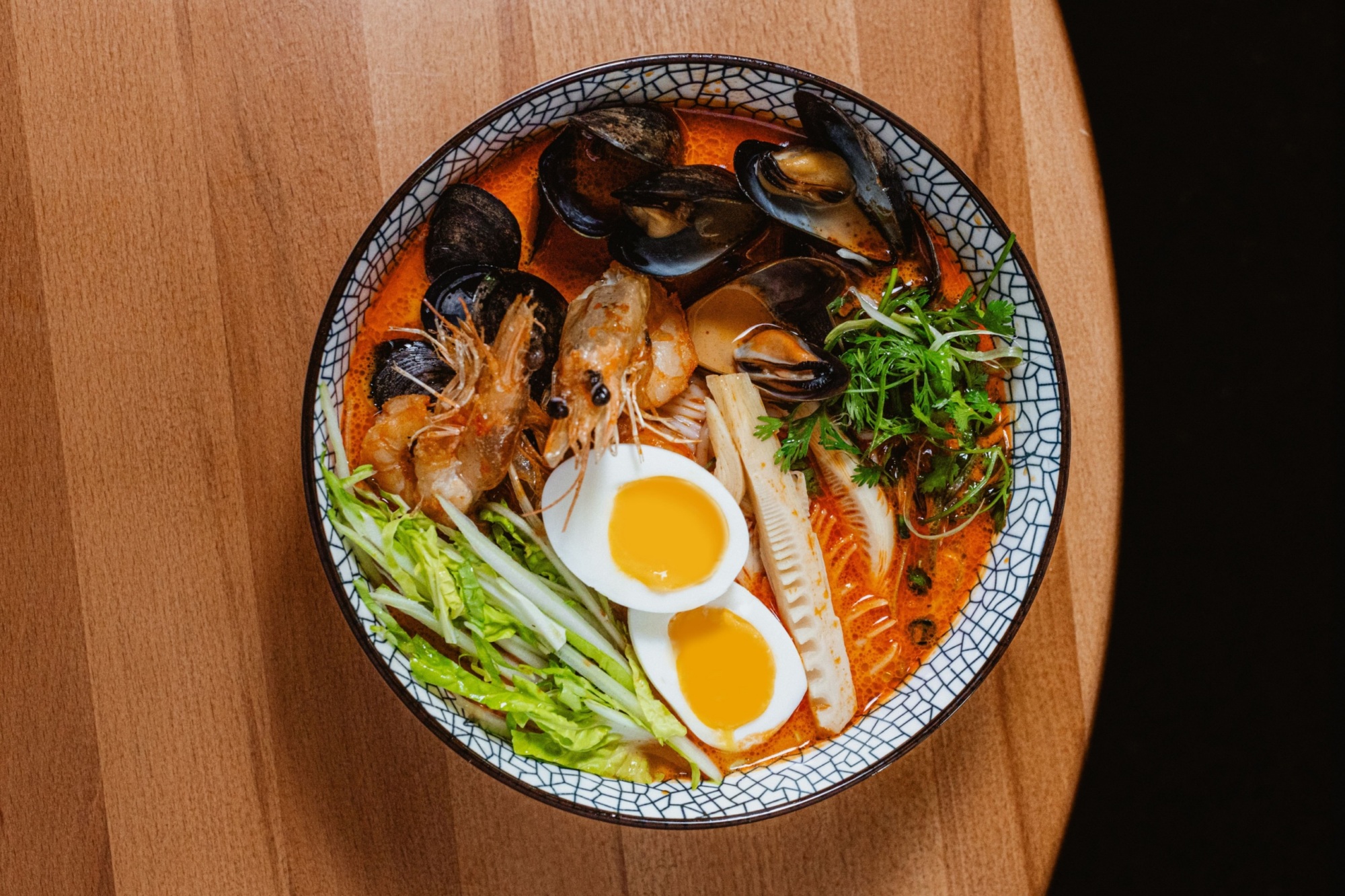
“Now, I have some aunties who help me clean lemongrass, and they say the food is so good,” says Moua. “Getting the elders to see your food that way is success. I knew the [local] community would support me — and the Hmong community would be my strongest critic.”
Moua’s staff now includes multiple Hmong and Hmong American members, and her two kids work in the restaurant alongside her. These days, the guests rave about the pulled pork as much as they do Moua’s pastries and desserts.
As the restaurant approaches its second anniversary, Moua is focusing her energy on new dishes, specifically ones that push forward the still very protean notion of modern Hmong cuisine. And the restaurant has become a community center of sorts: A constant flow of both regulars and new diners stops in, some daily or weekly for Moua’s pastries, and many bringing friends and family for brunch or celebratory dinners. The multiple facets of the space make for a complex operation — one that mirrors the Hmong American story as a whole. The Hmong have often struggled to figure out where they fit into the culture — whether in Southeast Asia or here. And Diane’s Place addresses that head on, with Moua refusing to choose just one way to define her or her culture’s food. She is proving one of the great truths of how American cuisine evolves: that tradition and evolution can find a balance, and yield something that’s brilliantly new but with deep roots.
“We are adapting, but want to have our own flavor and stay true to us,” she says. “Second generation things are going to taste different, We are evolving — but you should still eat it and know where it came from.”
Lizzie Takimoto is a writer and editor for Resy, and previously was food and drinks editor for Starchefs. Follow her on Instagram, and follow Resy, too.