It’s the Details That Make the Northern Italian Cooking at Ama Stand Out
Published:
A menu can say a lot about what is for dinner beyond the food. But at Ama, a Northern Italian-style restaurant in Washington, D.C.’s Navy Yard neighborhood, there is something a bit more to the menu. Put simply, it’s a mission statement that reads: “To nourish our guests in body and soul, leaving them feeling invigorated and eager to return for more wholesome experiences.”
Printed beneath that statement are a list of 10 sustainability principles guiding the restaurant in its work — everything from a commitment to microplastic-free dining to an all-electric kitchen and dishes made by slow-food cooking, sustainable sourcing, and planet-friendly practices — to name a few.
Underscoring the restaurant’s focus is a commitment to Northern Italian cuisine, which Ama’s chef and co-owner, Johanna Hellrigl, was raised on. Her cooking is so local and specific it might also make you question what focaccia, or a meatball should taste like.
Whether it’s that focaccia from her mother’s home located near Recco, Italy, or the pasture-raised beef and pork meatballs with mortadella and served Milanese-style, her menu of Italian-style cuisine is based on people, places, and sustaining the environment around her.
“I truly believe that nourishing people means they feel good while they’re eating here,” Hellrigl explains. “I wanted to go back to the roots of how I was raised when it comes to Italian food; slow cooking, slow living, and just really creating a from-scratch kitchen. But at the same time, questioning how we do things in the restaurant industry, because it’s always been done this way, or what is the best way to do something that takes care of planetary health, our personal health, and our employees’ health.”
In five dishes, she shares how Ama’s approach adopts her culinary guiding principles, and why each one deserves to be on your table.
More From D.C.

Focaccia di formaggio
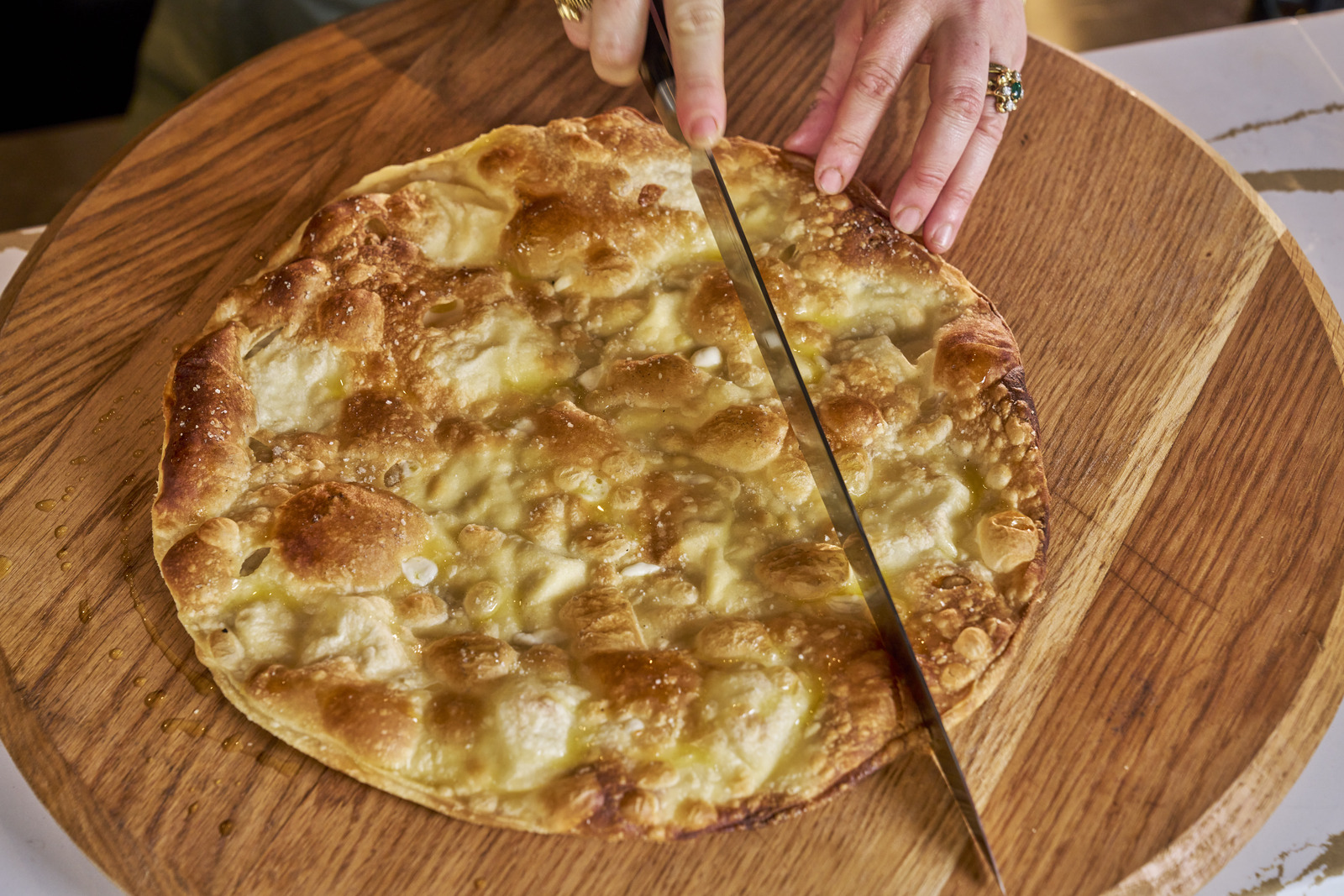
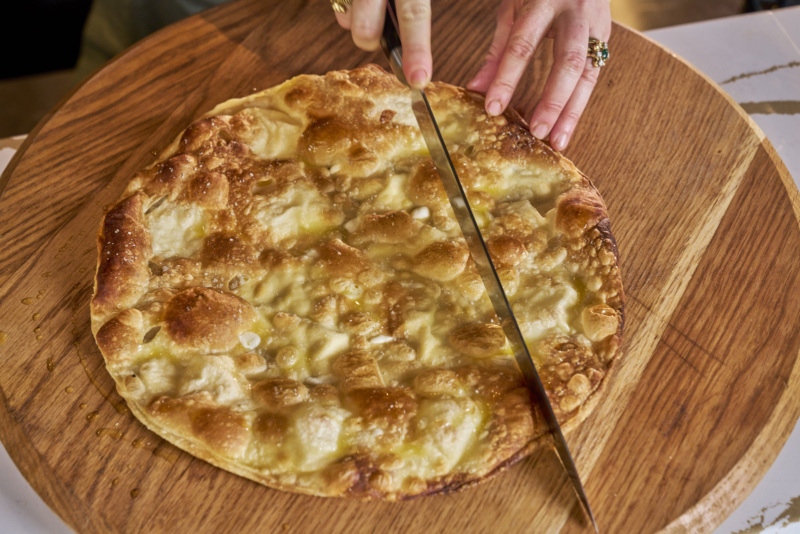
The first dish to arrive should be the focaccia di formaggio. It’s not like the thicker and airier versions you might be accustomed to. That’s because in Northern Italy, and specifically in Hellrigl‘s mother’s hometown of Recco, focaccia is always razor thin — emphasizing a delicately flakey, thin crust oozing with a layer of cow’s milk cheese.
“You can’t substitute other cheeses,” Hellrigl says. “But there’s something about the way this cheese melts and the tanginess of it.” Pair it with a nice Italian red, vermouth, or even a beer and it can be the perfect snack.
The dish is also known as focaccia di Recco if you were to serve it along the Ligurian sea. In fact, the dish has an I.G.P (Indication of Geographic Protection) status in Italy.
“So, I don’t actually call it focaccia di Recco on my menu, but it is the exact recipe and ingredients we use: Ligurian olive oil, organic flour imported from Italy, and imported crescenza cheese from Italy. The only difference in ours is that it’s made in D.C.”
Polpette Mondeghili
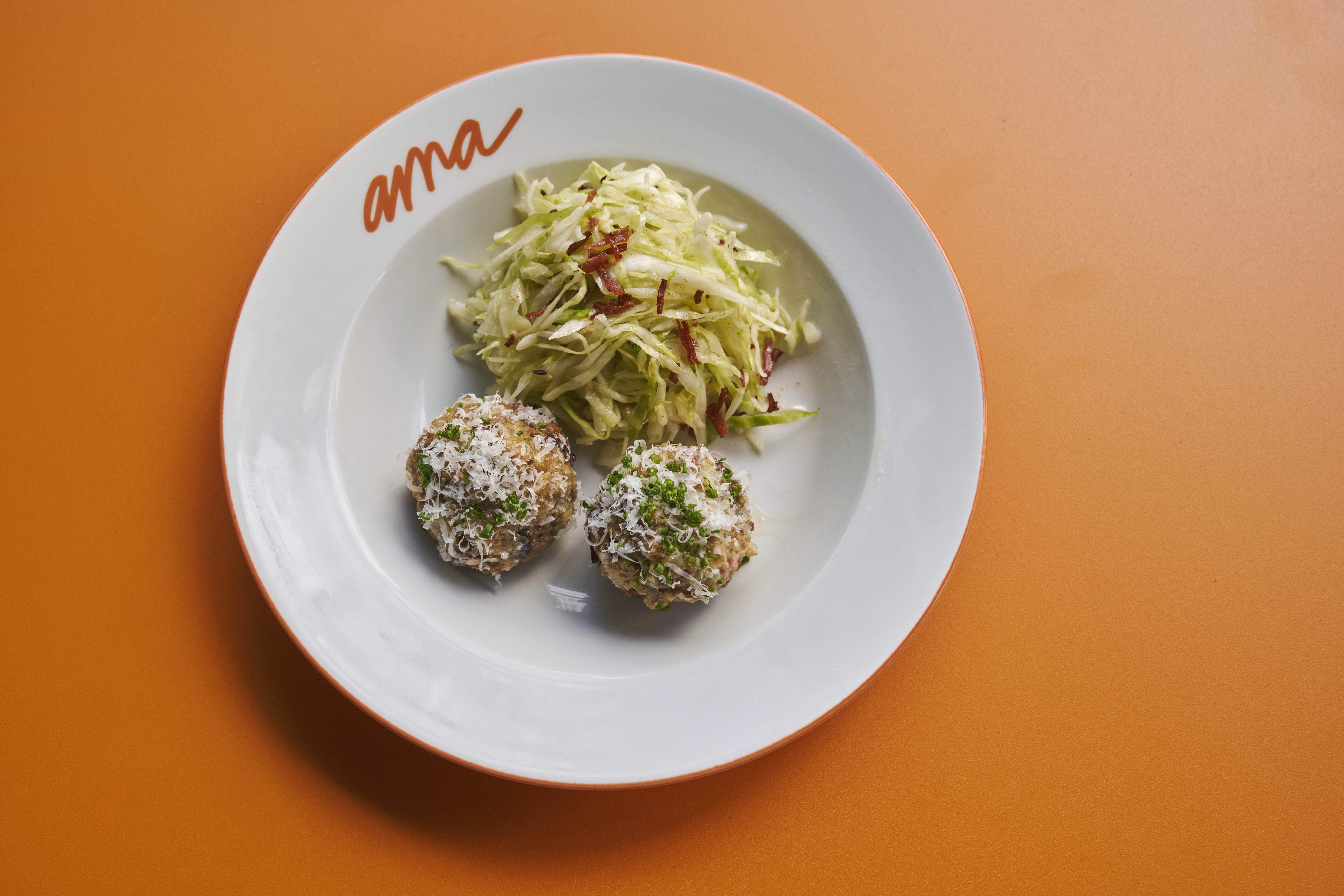
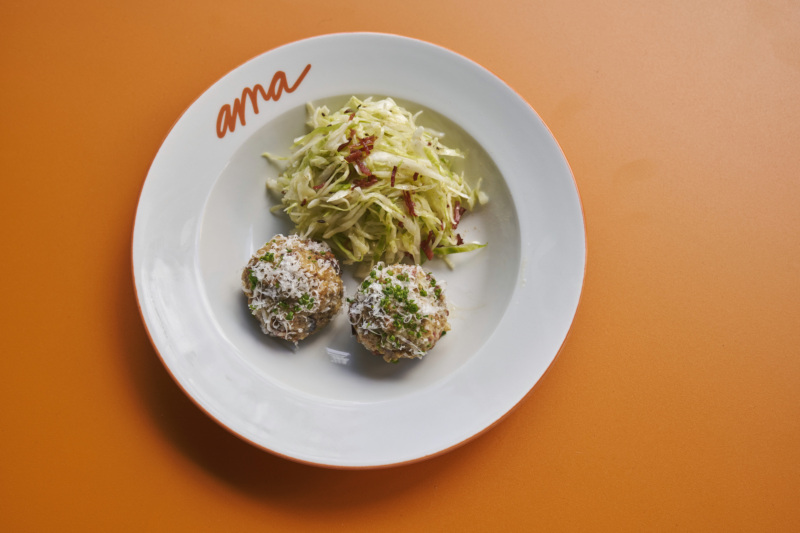
Don’t expect red sauced meatballs when you order Ama’s version of polpette. When a first time-diner comes to Ama, they usually hear a disclaimer.
“I like to say they are ugly but incredibly delicious,” Hellrigl says. “They’re basically these little fried things to start your meal and whet your appetite. And what’s really cool about the way that we’ve done it here is, yes, we’re using the imported mortadella, but then we’re also using pasture-raised beef and pork coming from a regenerative farm.”
Both the sustainable sourcing and mindfulness to Italian-specific ingredients is the attention to detail that separates Ama from a typical neighborhood red sauce joint. And the meatballs may be among the finest in D.C., served flattened, not round, and oozing with juiciness inside and meant to be a subtle nod to Milan’s cuisine and breaded dishes like vitello a la Milanese.
“So, when people feel so inclined to be like, this isn’t Italian, you know, I challenge them to understand that if you literally flew to this exact part of Italy, this is what you would have,” Hellrigl says.
Finocchio
Even dishes that are simply prepared, like a shaved fennel salad play an intentional role toward the overall balance of the meal. “Fennel actually helps aid in digestion,” Hellrigl explains, so think of this as the dish before your main order arrives.
“We always have this dish on the menu,” she says. “It’s simple and nourishing. It’s just shaved organic fennel, fresh lemon, and really, really good pecorino sardo drizzled with an extra virgin olive oil also from Italy.”
Spaghetti al pomodoro
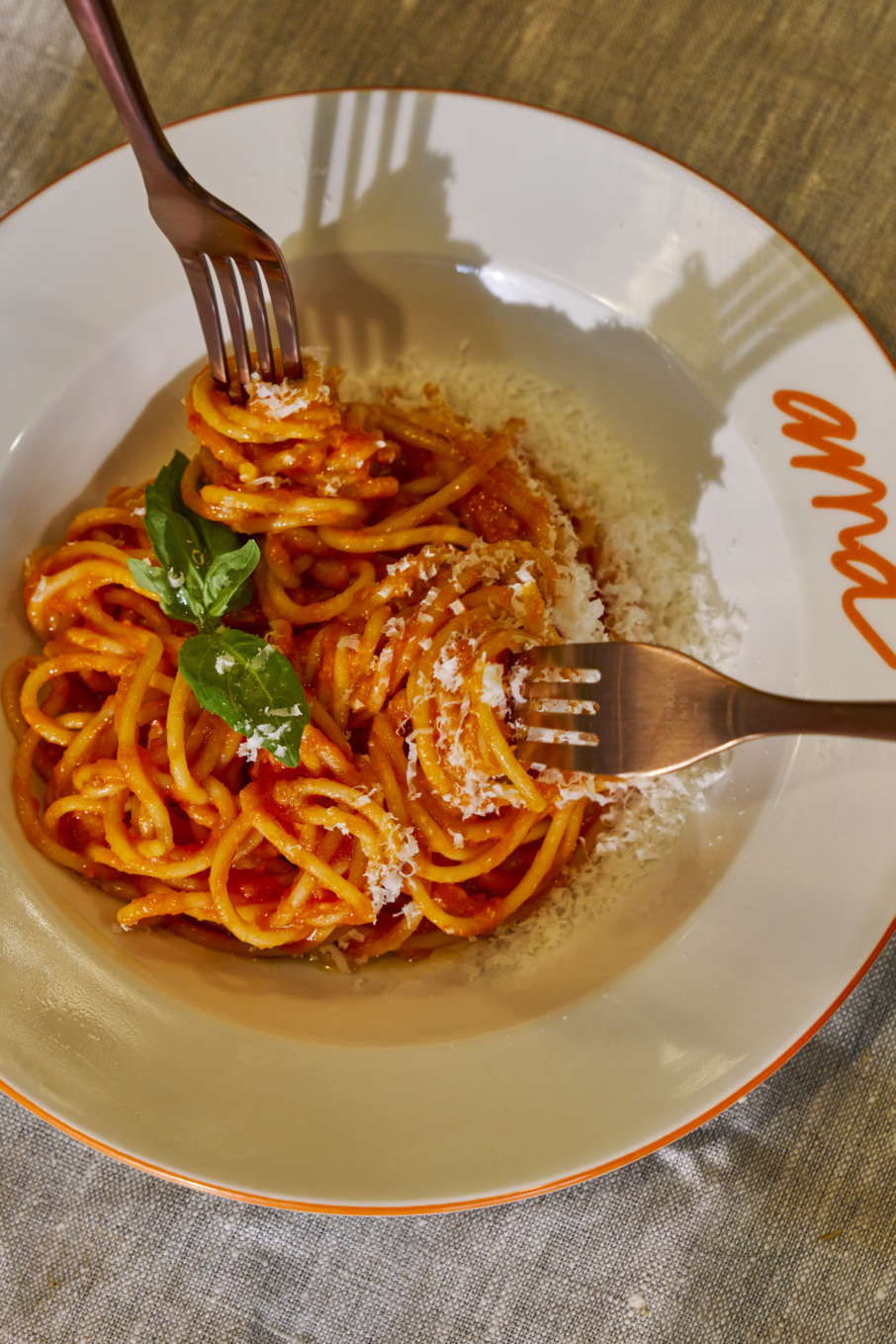
There’s nothing better than a simple pasta that lets the ingredients speak for themselves, which is exactly what you get in Ama’s spaghetti al pomodoro. Unlike many other menu items that are made from scratch, this dish specifically calls for ingredients from Northern Italy. The pasta (Monograno Felicetti) is a single origin, ancient grain pasta, which comes from the Dolomites.
“We have a lot of people who come to our restaurant that are gluten sensitive, and so this is a pasta that people are able to easily digest because it’s an ancient grain that hasn’t been hybridized,” Hellrigl says. “And for the tomatoes, because obviously tomatoes are not always in season here, I work with an Italian importer to get directly the San Marzano tomatoes from Gustarosso, which is essentially a cooperative of elder Italian farmers trying to keep alive the tradition, agriculturally, of cultivating the real San Marzano tomatoes.”
The pasta follows a recipe defined by its simplicity, what Hellrigl calls the Italian way.
“People are always surprised and think there must be sugar added in. But really, when you cook things really low and slow and give it time, you get this natural sweetness to the sauce,” Hellrigl says. “All we use is 24-month Parmigiano Reggiano and a sprig of basil and that’s it.”
Branzino
For an Italian restaurant, you might expect to see a branzino filet on the menu. But for this fish to make it on Ama’s menu, Hellrigl searched for a farmed fish that uses regenerative aquaculture processes. Her partner Seatopia sources a sustainable branzino on a diet free of antibiotics, hormones, or pesticides. Seatopia also takes an extra step testing fish for mercury, heavy metals, and microplastic levels.
“That commitment is incredible, and I am so aligned with them on their mission. I want to do everything I can to support regenerative aquaculture the same way I promote foods I source on land,” Hellrigl says.
Her seabass arrives accompanied by a tangy leek-salsa verde that adds a nice layer of acidity to a flaky fish grilled in olive oil and packed with omega-3 nutrients.
“This dish goes again to nourishing the body,” she says. “We thought through the process of sourcing and cooking a branzino that is designed to be as nutrient dense as possible, and better for our oceans too.”