What to Expect at the Revamped Reveler’s Hour
Published:
There’s a certain demographic that can recall the days when the Adams Morgan neighborhood was the late-night hangout for college students – a time when the ‘best’ food available there were jumbo slices, and the party went on until the wee hours of the morning at Madam’s Organ, infamous for its “where beautiful people go to get ugly” slogan. Today, there’s still a line outside of Jumbo Slice at 3 a.m. and Madam’s Organ continues to thrive – but the neighborhood has evolved into so much more, and now counts several D.C. culinary institutions as its inhabitants.
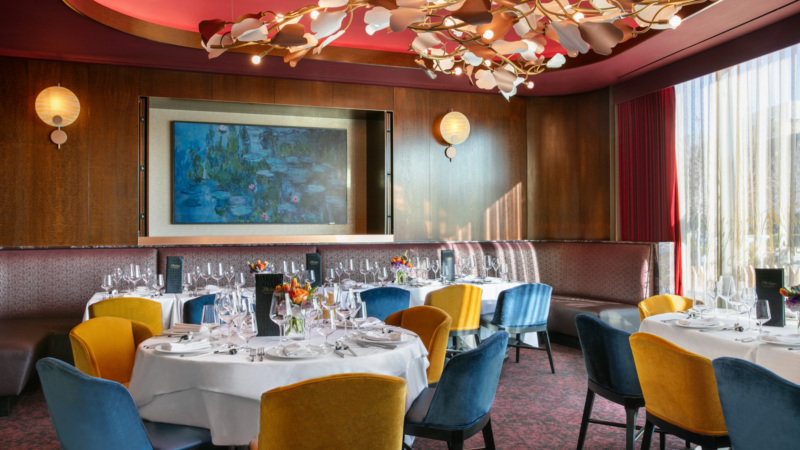
Much like the neighborhood, Reveler’s Hour is a restaurant that has continually been evolving with the times, and it has been doing so since it first opened its doors in 2019. Founded by the trio of chef Jon Sybert, service director Jill Tyler, and sommelier Bill Jensen, the space was originally conceived as a casual counterpart to Tail Up Goat and quickly became known for its house-made pastas and carefully written wine list.
With the pandemic arriving just weeks after the restaurant opened, the team faced the challenge of being brand new while trying to build a following, but their efforts worked: the restaurant not only survived, but it also thrived.
In the months and years since its opening, Reveler’s has served as a source of deep comfort for the neighborhood; a place that signifies resilience and a space filled with warmth and approachable fare that has brought relief to locals in the aftermath of a pandemic and the social tumult of recent years. Their house-made pastas have become beloved to all who dine there, and the team’s continuous efforts to strive towards a hyper-seasonal menu have been met with both accolades and appreciation.
Now, with Tail Up Goat closing, the younger sibling is moving into the spotlight. The kitchen and bar have new faces, the menu has expanded, the spotlight is on the wood-fired grill, and the by-the-glass wine list is a bit smaller, but more adventurous than it has ever been. Reveler’s popularity in the neighborhood has only grown, because throughout any changes it remains, at its core, a neighborhood restaurant that represents community and camaraderie.
We sat down with owner and Wine Director Bill Jensen and Executive Chef Mari Kolchraiber who joined the restaurant in January from Pineapple and Pearls to talk about how their love for their craft and their customers has led them to keep aspiring to evolve to greater heights, and to keep growing and learning amid continuous challenges and change.
Related Stories


Resy: We heard there are lots of changes happening at Reveler’s Hour. Is this a revamp or a relaunch?
Bill Jensen: Indeed, we are amid many exciting changes, which we would categorize as a revamp, or a continuation of our evolution. I will be moving forward as the sole owner of Reveler’s Hour, while my business partners pursue other endeavors. There are no hard feelings — just a time for change.
Our other joint venture, Tail Up Goat, will be closing at the end of the year. We also have a new chef leading our kitchen, Mari Kolchraiber, who comes to us from Pineapple and Pearls, and a new bar director, Julian Cordero of Petite Cerise. I will still be heading up the wine program, with input from our beverage director Em Carter, formerly of Oyster Oyster. All of these changes in staffing have led to new and exciting developments in our menus, including the introduction of new dishes, new cooking techniques, and new libations.
Mari, what brought you to Reveler’s Hour?
Mari Kolchraiber: As we entered a new year, I was looking for a creative challenge, and wanted to work at a restaurant that’s really focused on seasonality and produce like Reveler’s. I love to be in close contact with local farms and farmers, and I relish the challenge of having to cook hyper seasonally, with the ingredients driving the dishes and the creativity and the menu, as opposed to the other way around.
I also wanted to be working in an Italian-leaning kitchen; I worked in an Italian restaurant for years in Qatar, and Brazil — where I am from — has a lot of Italian influences in its cuisine. Brazil is home to the largest population of Italian descendants outside of Italy. In fact, my grandmother was Italian, and my mom ran a pizza restaurant in São Paulo called De la Mari — yes, named after me.
It’s not about being trendy but rather doing our best to make our guests feel seen and taken care of.— Owner Bill Jensen
You have worked all over the world. How has that shaped your culinary vision for Reveler’s?
Kolchraiber: I am slowly introducing some of my culinary experiences to the restaurant. I am not looking to change the southern Italian theme at Reveler’s, but rather to use the cooking techniques and flavor profiles I developed over my years of working in countries like Spain, France, and Qatar, and from my Brazilian background to complement the menu.
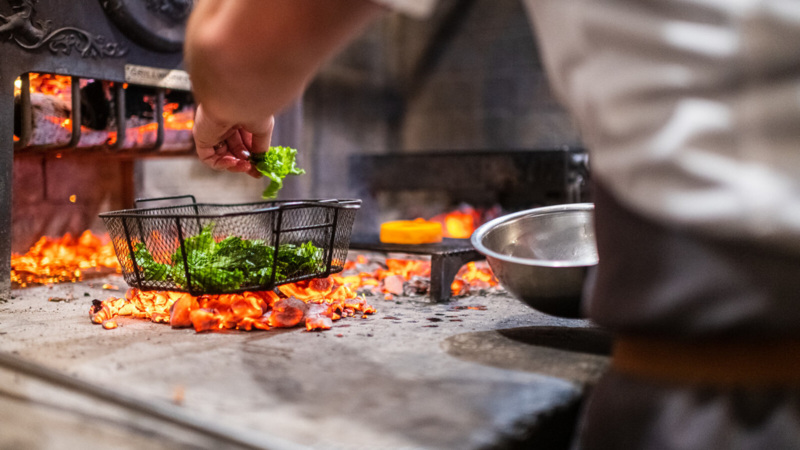
For example, we are working a great deal with our wood-fire grill, which pays homage to my Brazilian roots. I am also really focused on produce and ingredients I can get fresh that day from local farms, which is something we also do in Brazil because of the vast array of fruits and vegetables that grow seasonally.
Jensen: Reveler’s doesn’t have just one culinary identity. It’s not about being trendy but rather using ingredients that are seasonal, and doing our best to make our guests feel seen and taken care of. We have a really collaborative kitchen — based on what ingredients we have coming in from the local farms, Mari works with the team to brainstorm, test new recipes, and examine the flavor profile of each and every dish.
We’re excited to try the new dishes. Are you also leading the pastry program?
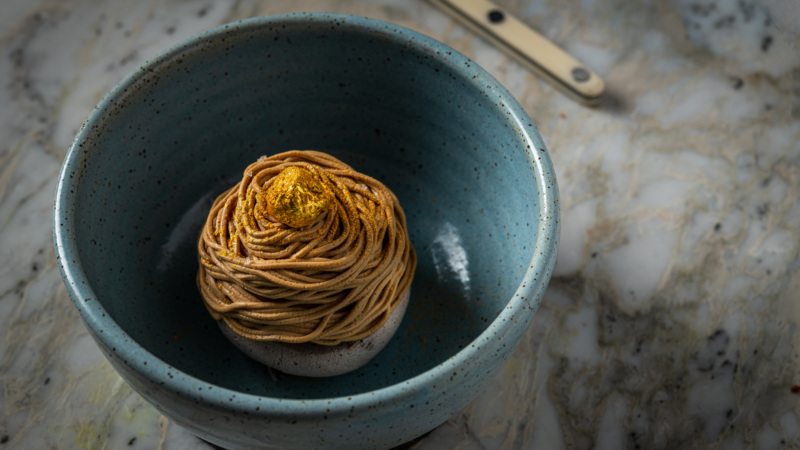
Kolchraiber: Yes — and my approach to pastry is the same as to the rest of the menu. How do we deconstruct familiar dishes, and bring forth creativity, but without losing the soul of the dish and still making it approachable?

What specific dishes can you point to on the menu that represent your voice? Do you have any favorites?
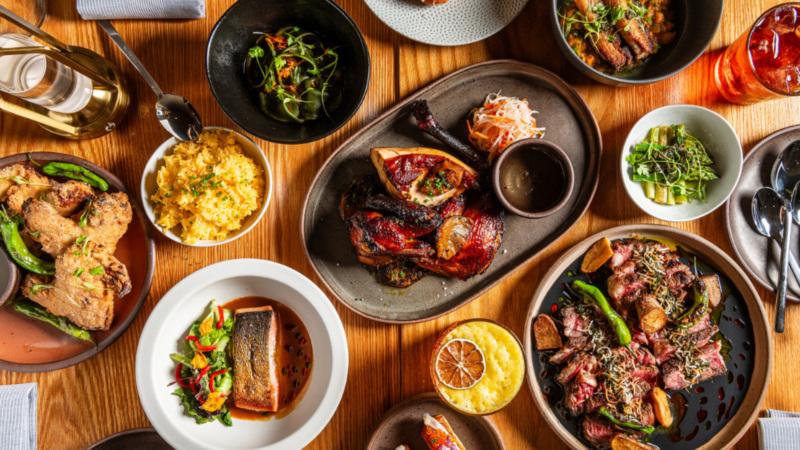
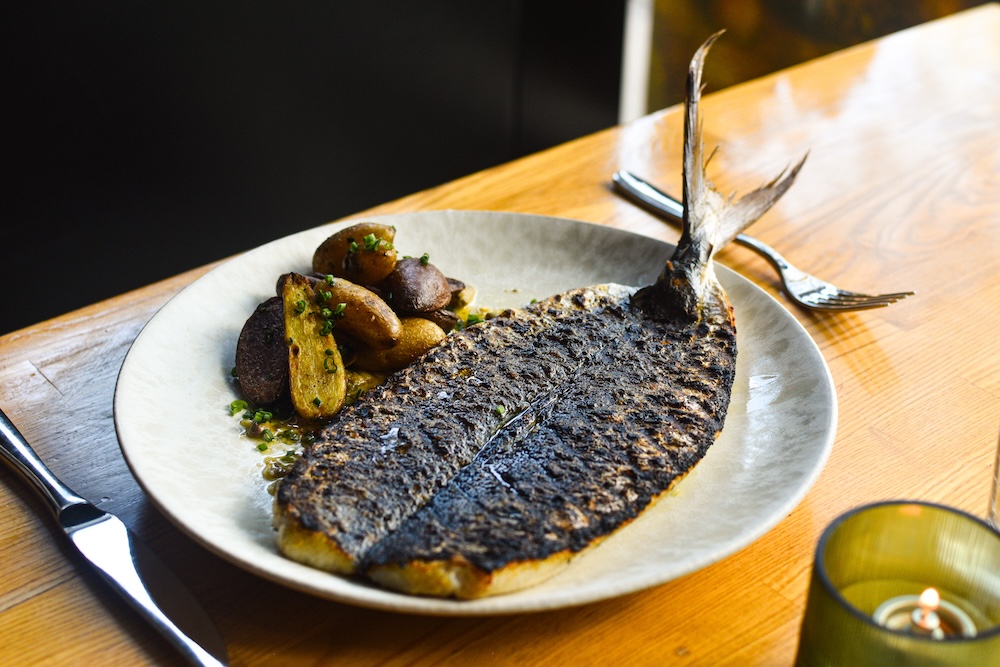
Kolchraiber: The menu is much larger now; I am using the wood-fire grill to create dishes such as a grilled whole fish and grilled vegetables. For the fish, we use mackerel that has been marinated in a brine with garlic and bay leaves. It’s served with caper bagna cauda, an Italian sauce we make with butter, anchovies, garlic, and red chilies.
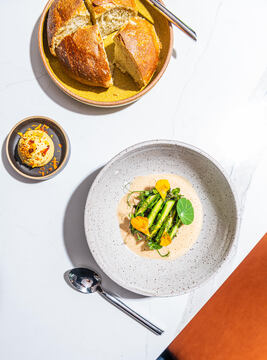
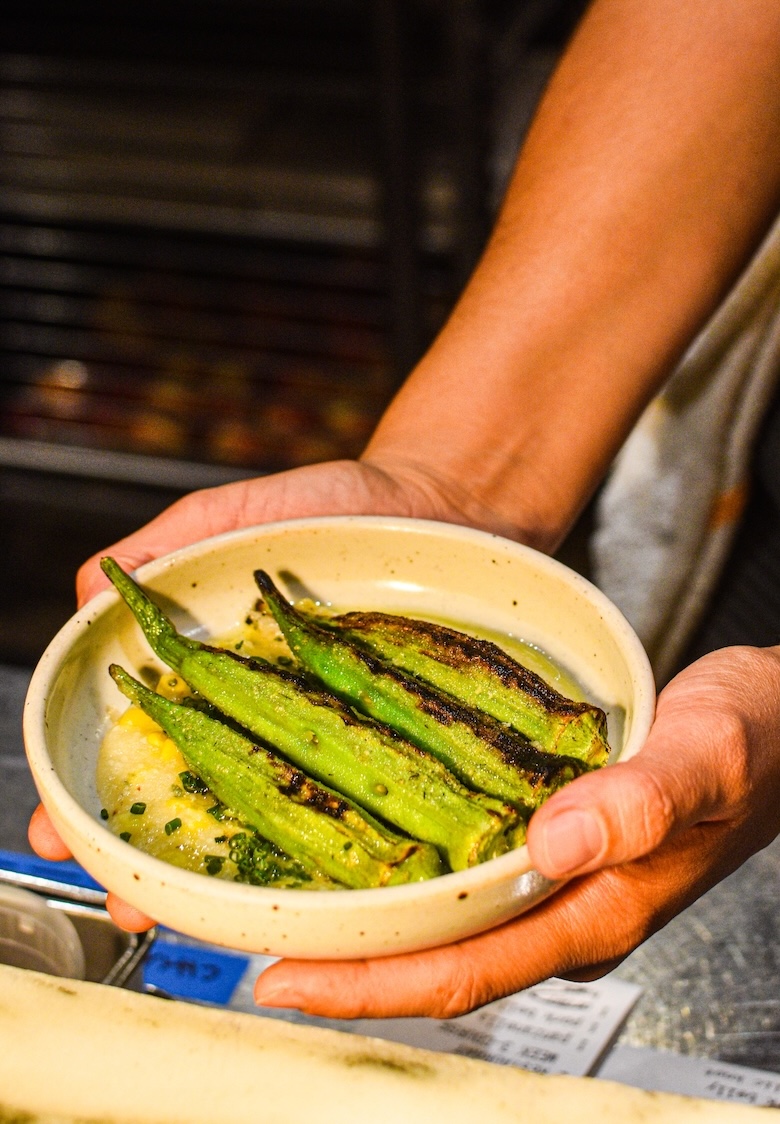
For a grilled vegetables dish that I developed, we have an okra — I love okra, it’s really prevalent in Brazilian cuisine — and polenta dish where we slowly grill the okra on the hearth fire until it’s nicely charred and then serve it with a white corn polenta seasoned with Aleppo peppers and thyme. This is an example of where we are still serving an Italian dish, but infusing it with my Brazilian background by using okra as the main ingredient.
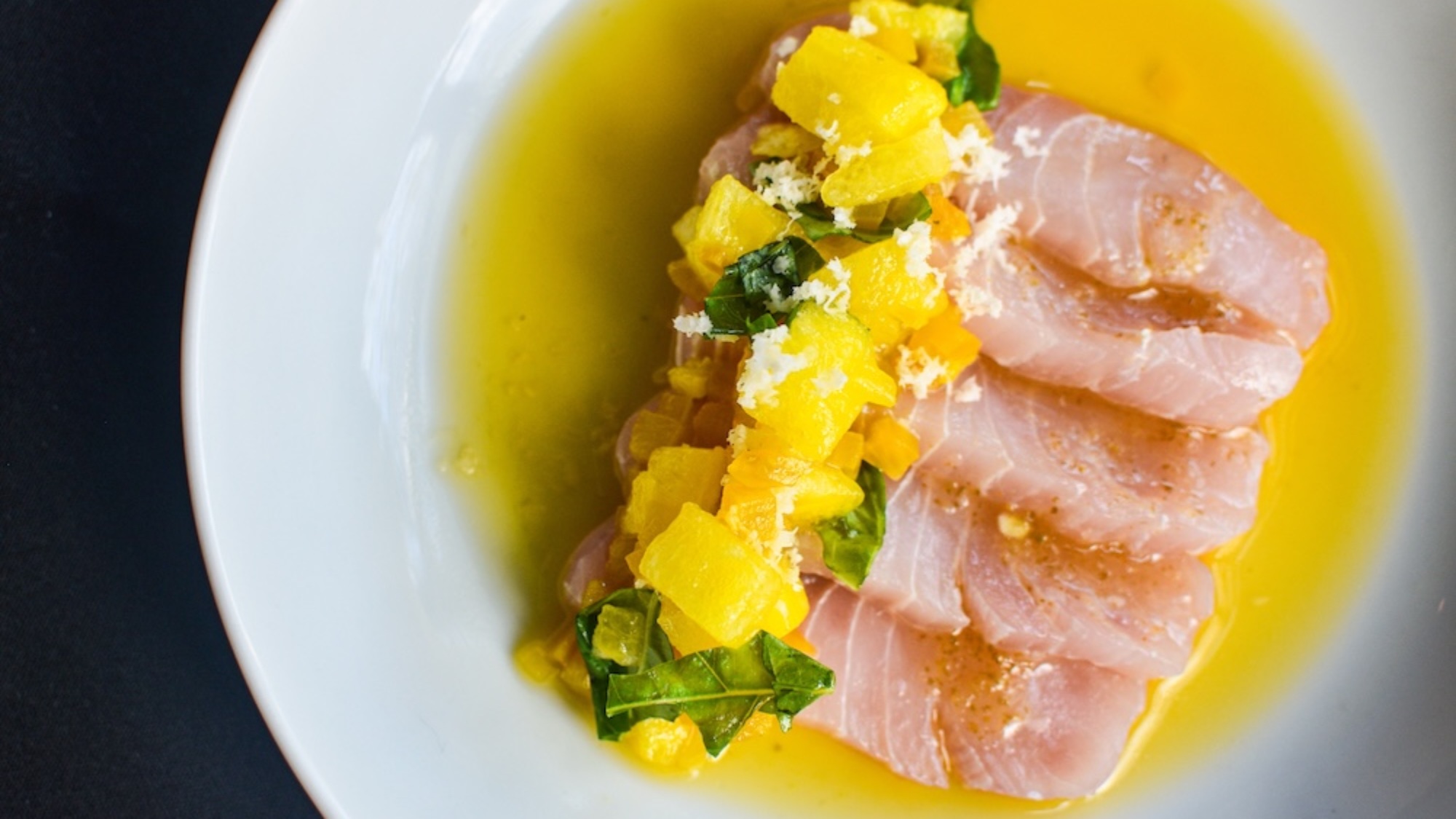
Another dish I introduced is a crudo, made using mahi-mahi and served with a salad of yellow watermelon, golden beets roasted in olive oil, and fresh basil. To finish, we add green kosho, which is a Japanese technique to ferment chillies, and orange ponzu. This dish really showcases my commitment and love for ingredients like the watermelon and beets from local farms.
I also developed a Sicilian-orange fried chicken that has been received well. I have ideas for so many different dishes! I love working with tropical fruits, trout, ricotta — so many ingredients I want to incorporate in the new dishes I am working on.
How often do you change up the menu at Reveler’s?
Kolchraiber: There is no regular cadence. We may change a dish or eliminate it altogether and replace it with something else depending on the availability and quality of ingredients; we have to remain nimble when working with seasonal ingredients. We change pasta dishes and desserts about monthly. We do have three staples, though, which will always be on the menu: garlic knots, pasta alla vodka, and the arancini, although the flavor of the arancini may change with the season. This past summer we had one with summer truffles and truffle cheese.


What is your approach to introducing changes to the menu?
Kolchraiber: By staying true to the core of the restaurant’s vision. The elevated comfort fare at Reveler’s is something I really want to preserve — dishes that are sophisticated but thoughtful and approachable. The change we bring is within this sphere, and it is a positive thing because it allows us to be creative and live in the moment.
How do you manage the dietary restrictions of your guests?
Kolchraiber: Having worked all over the world, I am accustomed to different preferences and restrictions, and we always have vegetarian and vegan options, and we offer gluten-free pasta. I am very intentional about thinking through which dishes can be easily modified to be vegan or vegetarian if they’re not already. It’s very important that everyone feels welcome to dine at our restaurant.
Jensen: Plus, Southern Italian food like we have on our menu has plenty of traditionally vegan and gluten-free dishes that use ingredients like chickpeas, for instance.
Kolchraiber: Same with Brazilian food — we cook a lot with vegan and gluten-free items like yuca and tapioca.
Can we expect the same level of change for your bar program?
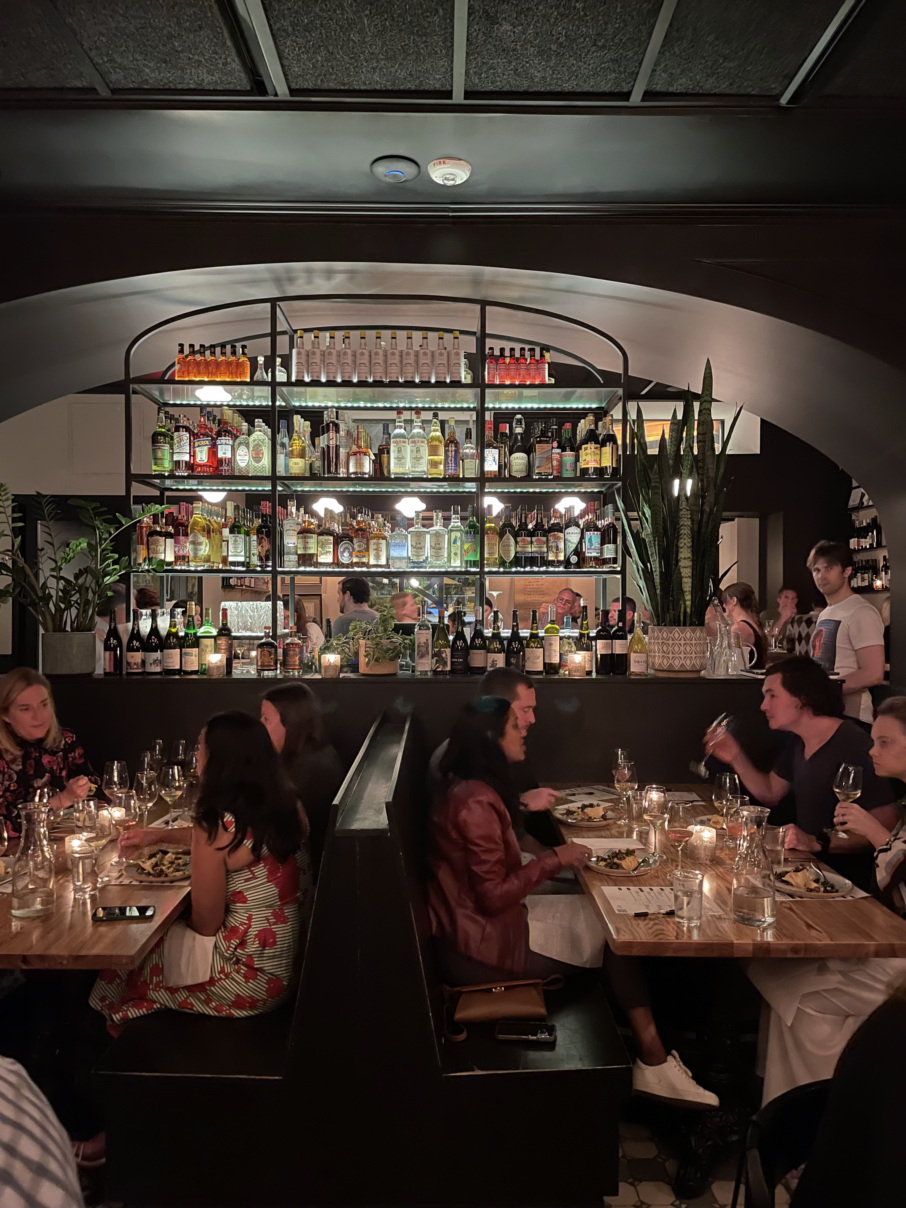
Jensen: Just like our food, [our drinks menu] is developed in the creative universe we operate in, and we are always leaning into new things. Our cocktail program isn’t designed around the menu necessarily, but the kitchen and the bar are collaborating more than ever since Mari and Julian joined. For example, we had some strawberry vodka that we made for a sorbet we had on the dessert menu, and then we used the leftovers for a summer spritz that was super popular. We also had some extra sweetcorn juice we were using in the kitchen, and we invented a cocktail around that, with cachaça, condensed milk, and lemon.

How does your bar program accommodate adventurous drinkers who don’t want alcohol?
Jensen: We are diving deep into the world of mocktails of late. We try hard not to mark them up. If they weren’t drinking a mocktail then it would be water, so we don’t want to charge exorbitant prices for a non-alcoholic drink. People are increasingly interested in zero-proof cocktails; it makes their experience richer [than just drinking water]. There are so many more options now, and the options are more interesting. I don’t really like most non-alcoholic liquors, but use other alternatives to make ‘sans spirit’ cocktails.
For instance, there’s the ‘secret snack’ on our drinks menu right now, which has celery soda and olive brine, and a spritz made with Chinotto, which is Italy’s ‘national’ soda, made from bitter orange. Just like all our food menus, we try to keep things fresh, and we change up the mocktail menu often.
Reveler’s is well known for its innovative wine program, too. Any intel you can give us on that?
Jensen: Our wine program continues to change seasonally. We’re very conscientious about changing the by-the-glass list at least every equinox and solstice, so in a way we mark the change of the season by the wine glass. The focus shifts from season to season, too: for example, we have had themes like wines from native Italian grapes, wines that are only imported into the D.M.V., natural wines, and wines from a particular wine maker we love. We recently featured South African wines from the first post-apartheid Black-owned winery.
Our wines are selected with our food in mind overall, but we don’t think about pre-determined pairings for specific dishes. We also try and focus on wines that come from sustainable practices. And we are doing new wine events, which are great. We want to give our customers access to people who are making the wine, and hear from them directly and also give wine makers the chance to tell their stories.
You also have a wine club that began during the pandemic. How is that going now?
Jensen: Our monthly wine club is going great. We offer packages that include three or six bottles, and there’s a different theme every month. There is also an option for members to do virtual meet-ups to discuss the wines. And we offer pick-up and shipping to any state that allows wine shipments.
What has the guests’ reaction to the revamp been like?
Jensen: Our regulars have been reporting that everything has been amazing; some of our regulars could tell that we had a new voice in the kitchen and some didn’t, but it’s been positive either way. We’re lucky because it’s a great dining community with lots of regulars who continue to support us, and we in turn try and create an atmosphere that is welcoming and community-oriented; where people who have been coming in for a long time know we show up every day trying to create the best version of Reveler’s Hour every day.
We do get newcomers as well — people visiting Adams Morgan because we have so many good restaurants in the area, and visitors staying at the Line Hotel. The menu is more dynamic than it ever has been, and we have gotten good feedback from people who had never been to the restaurant previously, too.
Finally, how is the team keeping up with all of these changes?
Jensen: As a restaurant that opened in the early days of the coronavirus outbreak, we are used to scrambling. We have essentially been in survival mode since then! But that has allowed us to become really adept at change, and to really embrace the idea of continually evolving. We want to build on what we do well, and we want to just always be open to the idea of learning and always trying to grow and doing our best.