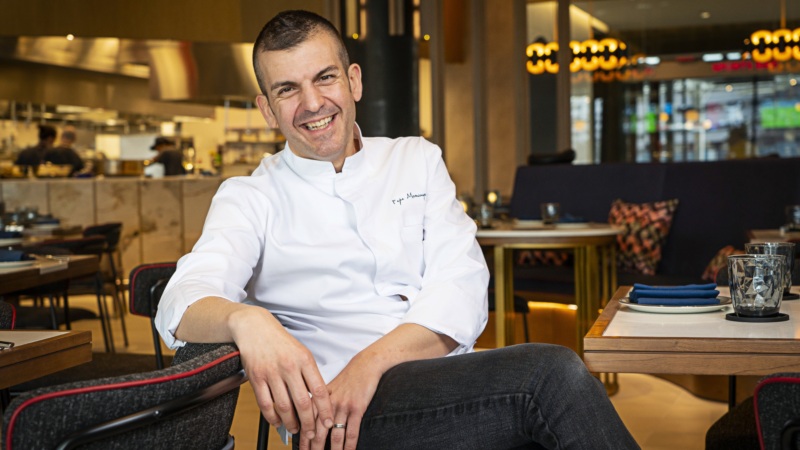
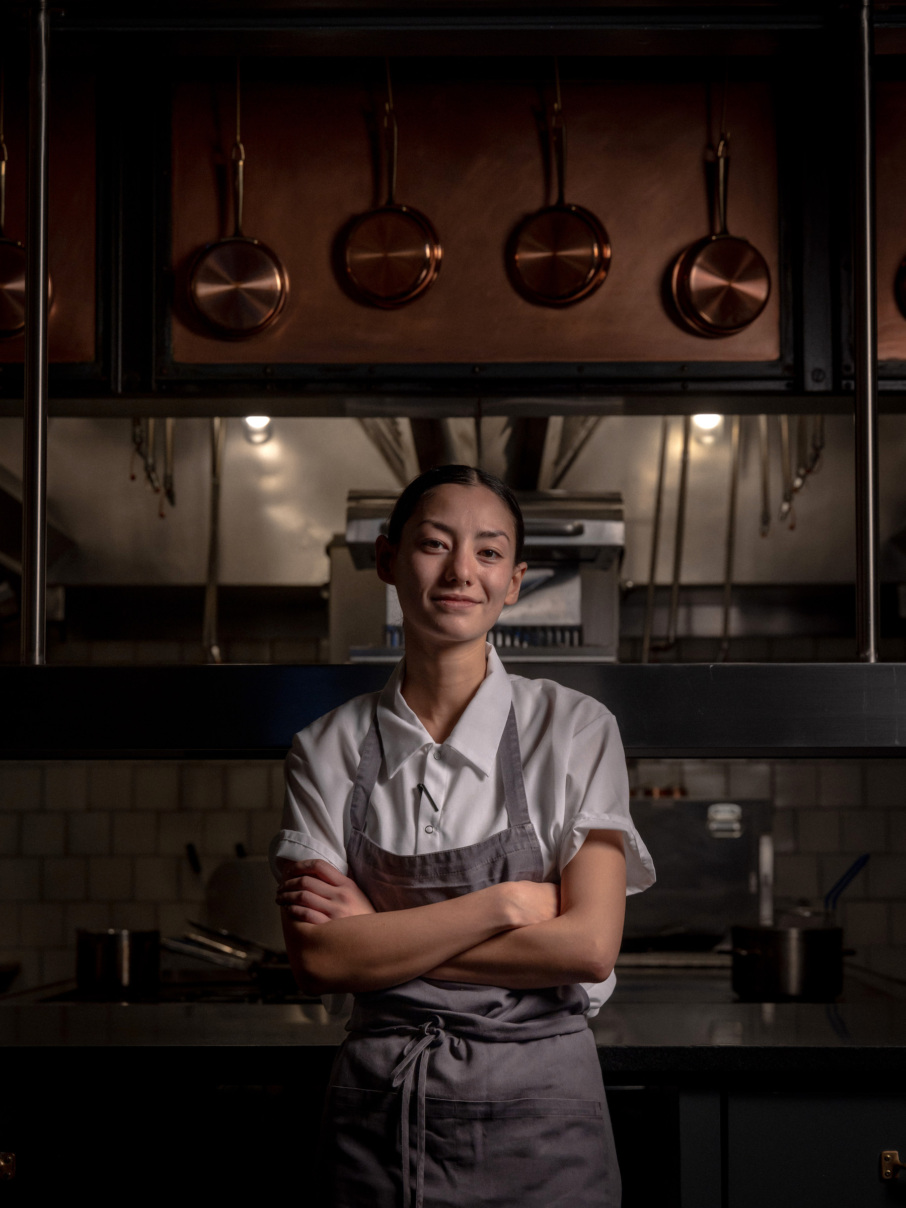
And like any Viennese café worth its salz, the desserts alone are also worth a visit. That’s thanks to pastry chef Emiko Chisholm, an Augustine and Balthazar alum who matches masterful pastry techniques with a contemporary palate.
While guests and critics alike have fawned over staples like the veal schnitzel and cheese soufflé since Koloman opened in September, there’s so much more to be discovered. We spoke to Glocker and Chisholm, who took us through some of the restaurant’s can’t-miss dishes from the dinner and dessert menus.
1. Agnolotti
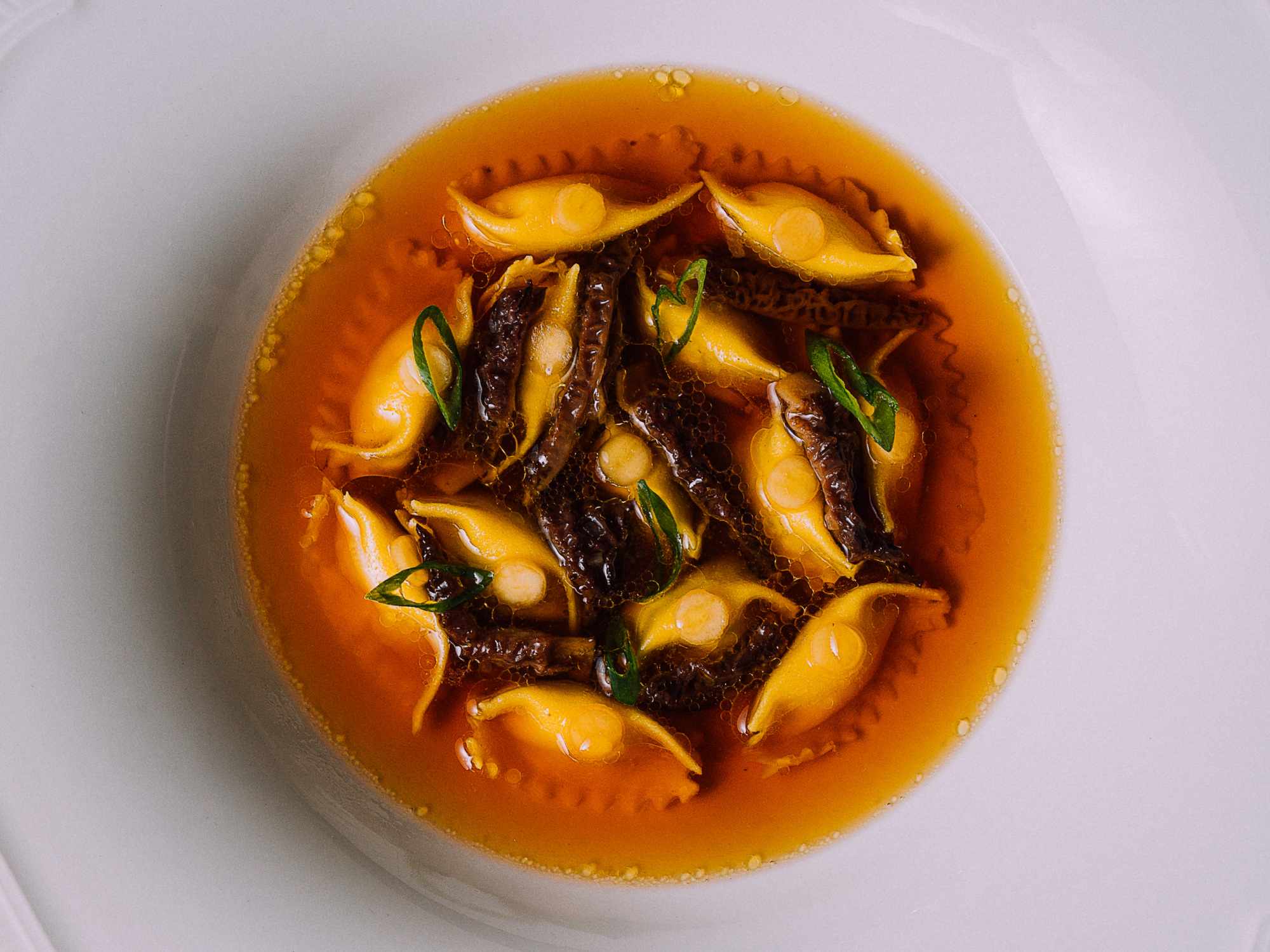
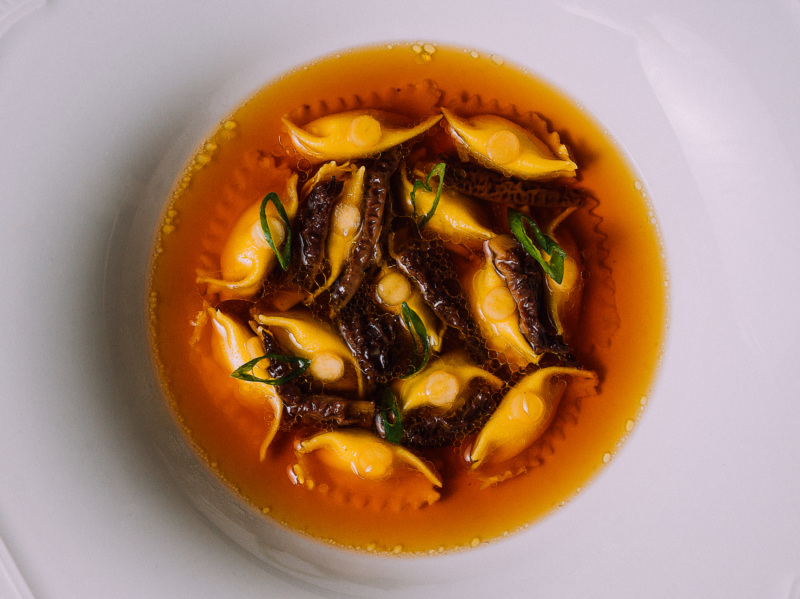
Stuffed pasta with rutabaga, morels, and bone broth
“This is one of our new spring dishes,” Glocker says. “It’s a fairly light dish, but we still use beef bone broth for the prototype of a pasta dish. We use a bouillon, which is made the traditional way of Viennese-style bone broth. You cook all the meat and bones in the broth, and then you finish it with a lot of lovage, a lot of root vegetables at the end.
“The pasta is filled with rutabaga, cooked down. There’s a little bit of butter in there as well. Then we finish it with morels that are braised with a little bit of dry sherry, and then we have some pickled rutabaga on there as well. And some scallions on top.
“It’s not a vegetarian dish, but almost. It’s a really spring forward dish. It’s light. It has all the elements of spring in there, and it’s really a great thing, for me, to really taste every element. Like the morels, which are really beautiful with the sherry braise on it, and then you have the acid from the rutabaga and the richness in the filling of the pasta.
“Rutabaga is normally a little bit more on the winter side of things, but it’s the turn for us now when we come out of winter to spring, so it’s nice to use those elements together to have sort of a little bridge to full-on spring dishes.”
2. Salmon en Croute
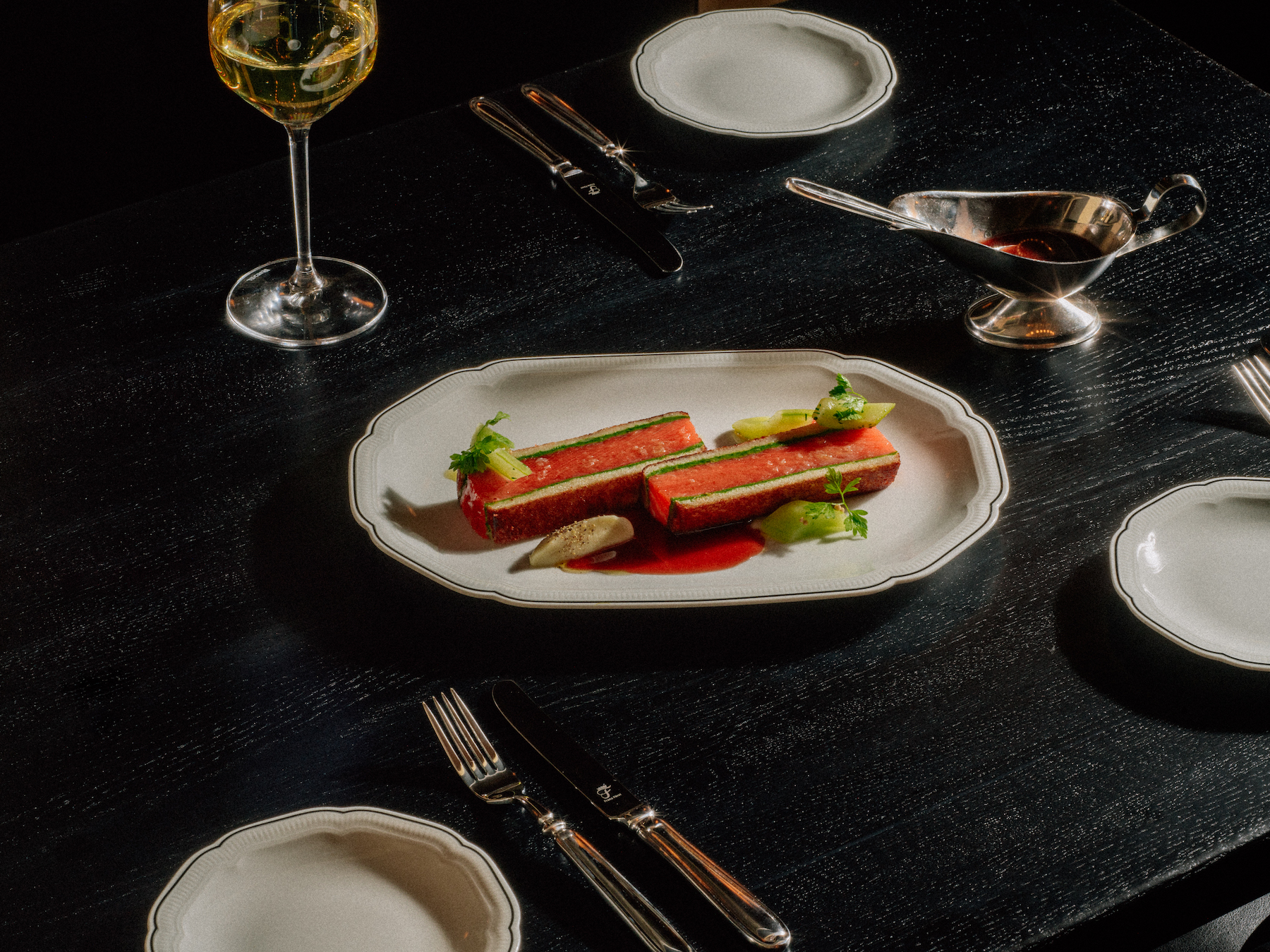
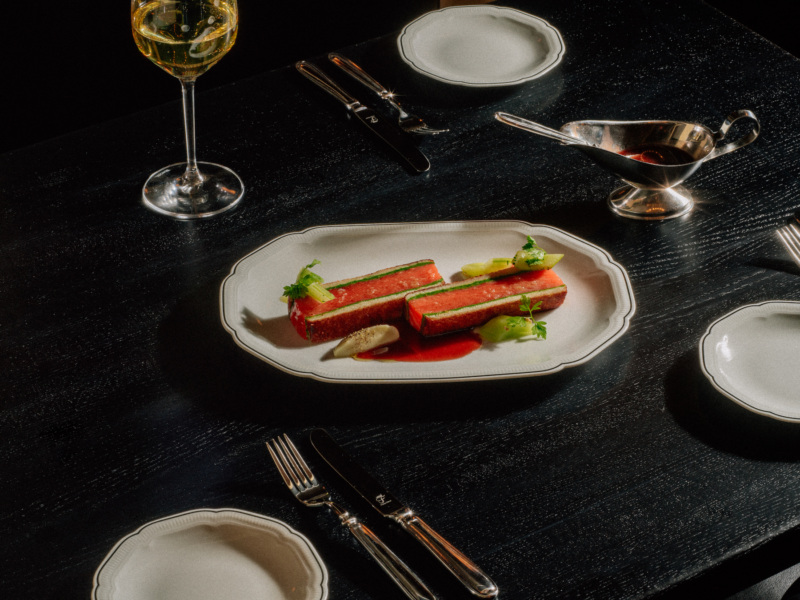
Pickled cucumber, sunchoke, beetroot-beurre rouge
“It’s a French classic, en croute, and we use the same elements of texture,” Glocker explains. “But we really packaged this dish in a completely contemporary way. Instead of the pastry you normally use, we use Tramezzino bread from Northern Italy and we salt-cure the fish first; not all the moisture, but quite a substantial amount of the moisture gets taken out of the fish. So, you’re slowing down the cooking process, and therefore it allows you to have a beautiful crunchy crust outside, but the fish is not overcooked inside. Then we have a little scallop mousse, which brings the bread and the fish together almost like a sandwich. And then we slowly crisp it up in clarified butter, which is infused with thyme and garlic. When it’s cooked, we let it rest, almost like a piece of meat, and slice it so it’s served medium-rare.
“Normally [with salmon en croute], it’s a classical beurre rouge, but we made a beetroot beurre rouge. All the juices we get out of the cooking process of the beets, we use that liquid and reduce that down and finish it up with a little bit of raspberry vinegar and a tiny bit of Port wine and a little bit of butter. So that’s more like a lighter version of a beurre rouge.
“On that dish as well, we have sunchoke purée, which is obviously seasonal right now; we will probably change that soon. But for now, we have sunchoke purée on there and we have a little bit of trout roe on there as well, just to bring all the elements together. When you eat this dish, it shows you the chefs’ technique, but it’s just a really satisfying dish. It has this beautiful fish, which is soft and then has a little salt in there, and it’s creamy. And then you have, on the outside, the beautiful buttery, crispy texture of the bread with the sauce and the trout roe. All you need is a glass of Champagne or white Burgundy, and you’re done.”
3. Celery Root Tartare
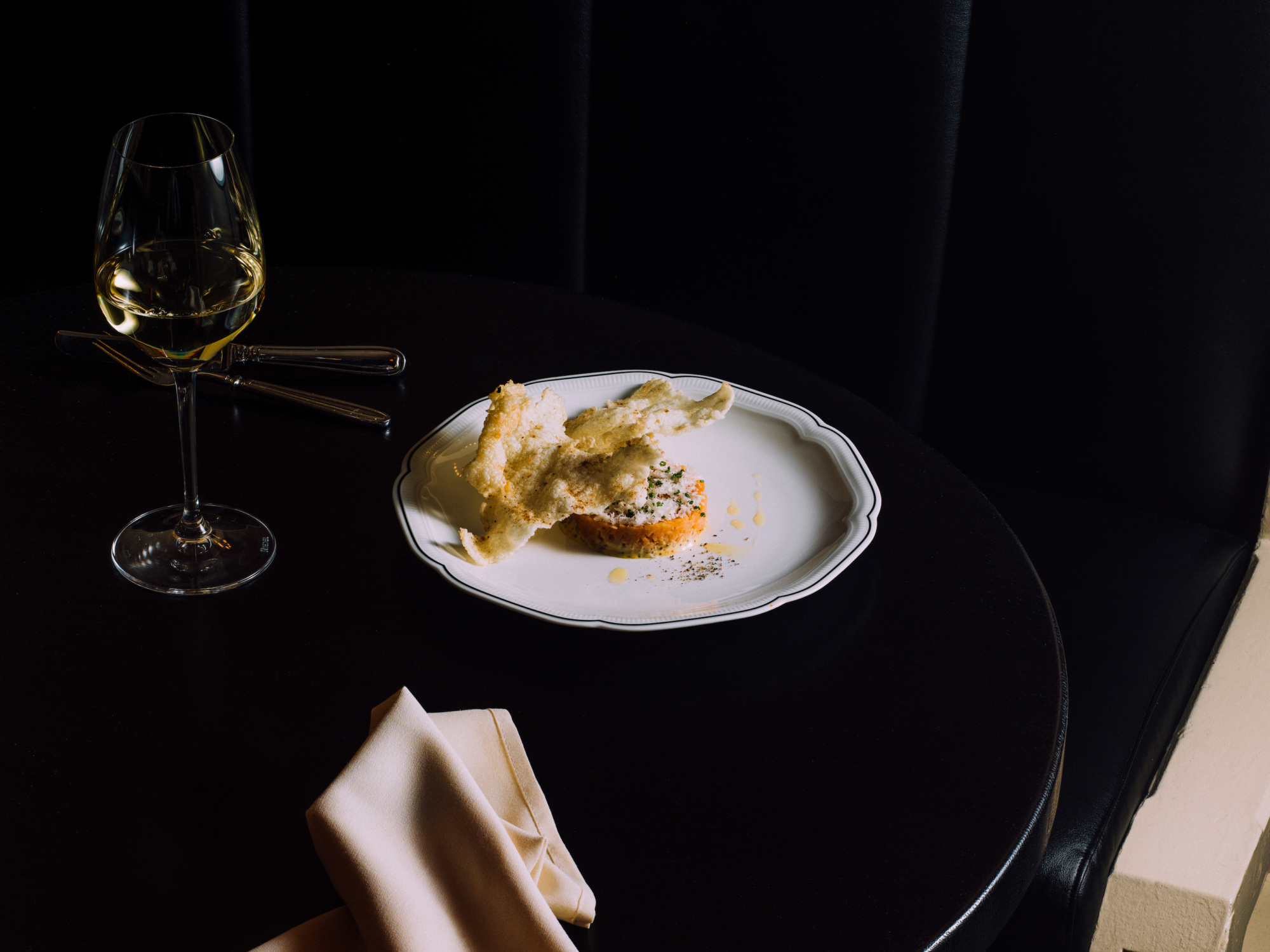
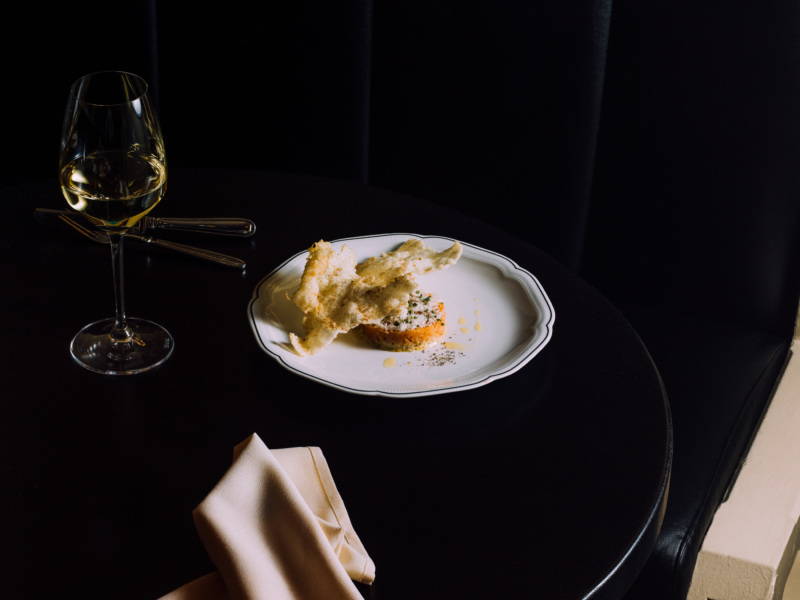
Tarragon, Pommery mustard, parmesan
“There’s a lot of ways you can make French food much lighter and vegetable-forward, which is modern right now. That’s how we chose, for example, the celery root,” Glocker says, speaking of his meatless tartare creation. “It’s French techniques with how we cook it, but it tastes like tartare; it really does.
“It doesn’t get any more French than beef tartare. It’s a big staple in any Viennese restaurant as well. But in Austria, root vegetables are used in a lot of cooking, like the celery root for all the bouillons and braises and stuff like that. I really wanted to have a dish which is vegetable-driven, but really all about the classic flavors of beef tartare. When you eat it, you don’t miss the meat. We salt-bake the celery root — it’s completely covered in salt, and then we bake it. But we don’t bake it all the way through. We want to keep the texture, so we cook it about 80% and then cool it down.
“We grind the celery root through a grinder so we have the same texture as minced meat,” he continues, noting it’s one that’s designated exclusively for vegetable use (vegetarians need not worry about cross-contamination). “Then we marinate it in the classic tomato reduction. We have brandy in there, shallots, gherkins, all that stuff gets marinated with it. We serve a little parmesan on top, which is not that classic, but we wanted to add a little fat and texture. Then we add a beautiful crisp on top, also made of celery root, cooked in rice, and then we just dry it out and crisp it.
“It’s just perfect for vegetarian guests, even vegans; we can transform it into a vegan dish as well. And it’s sort of a way out from just the green salad on the menu. If somebody turns into a vegetarian but still has a memory of beef tartare, this is a dish to go for. You’ll have the sensation of the meat. And I really hate to use these terms, because I don’t think that vegetarian dishes should mimic meat. I love beef tartare, but it doesn’t always have to be meat.”
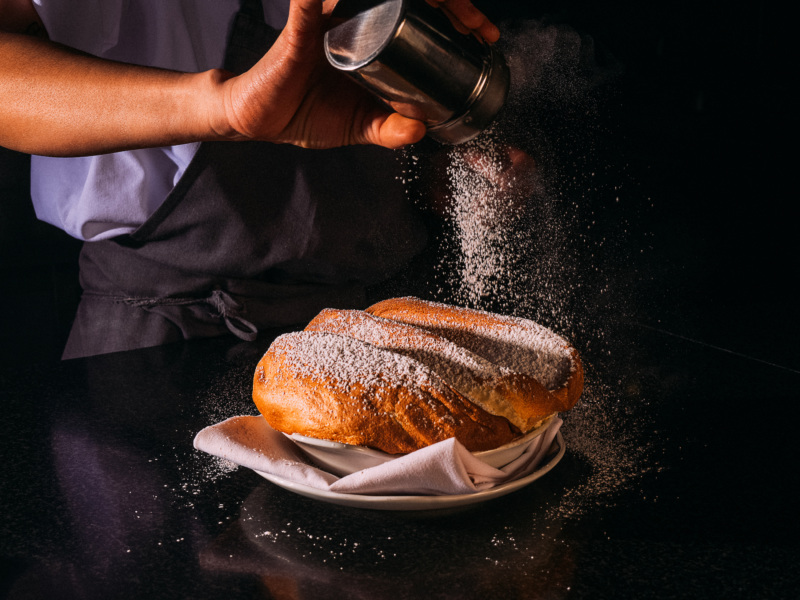
4. Soufflé for Two
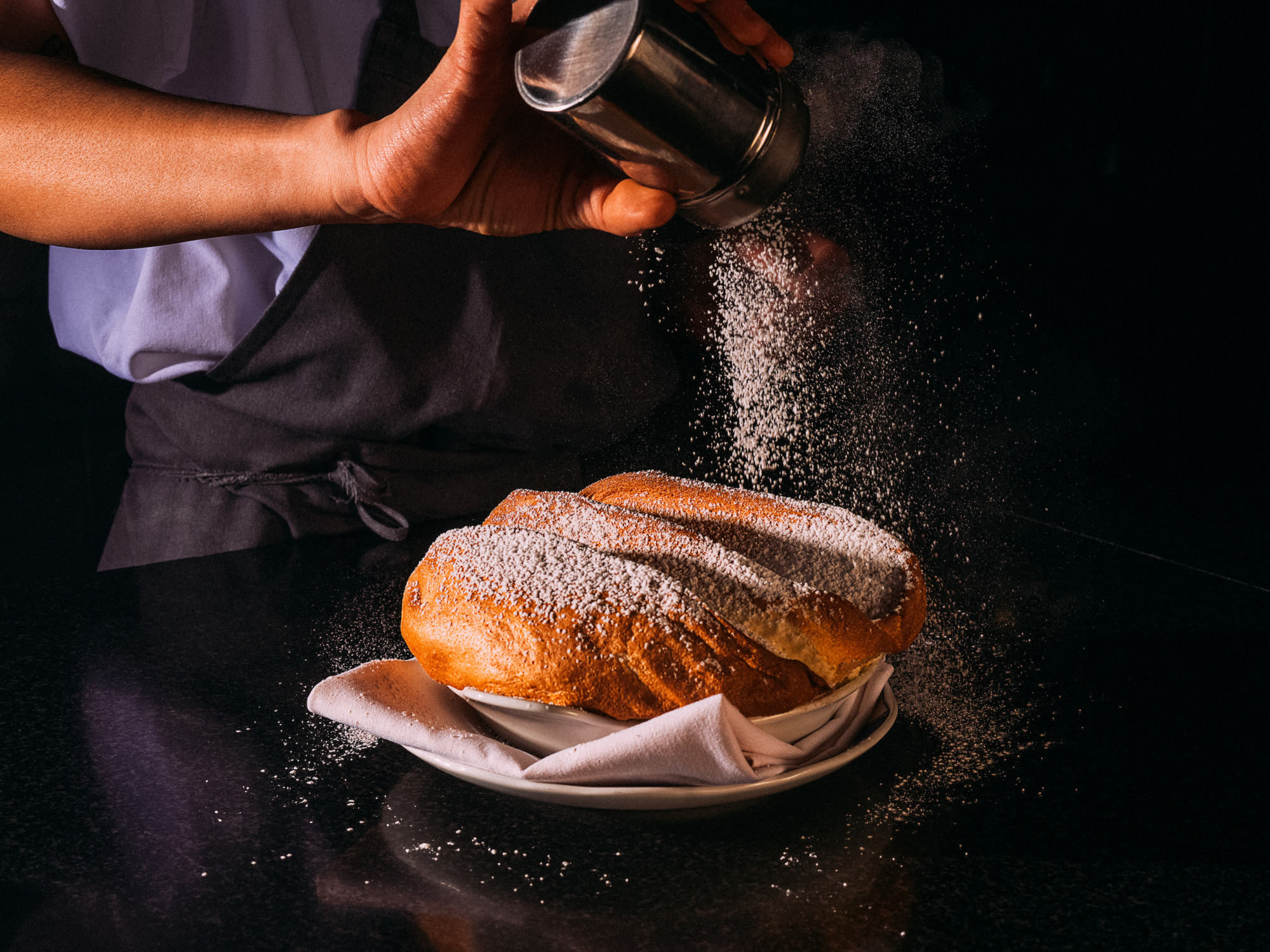
Lingonberry jam, vanilla ice cream, rum
“The soufflé for two is what we call it on the menu, but it’s a Salzburger nockerl; that’s the more traditional name,” pastry chef Emiko Chisholm explains. “In the base is lingonberry jam, and then we make kind of a meringue with egg whites, but it’s flavored with lemon, vanilla, a little bit of rum, some lemon juice, and so it makes three quenelles that we scoop into the dish, then we bake it, and it gets covered in powdered sugar and served with vanilla ice cream on the side.
“Salzburger nockerl is supposed to look like snow-covered mountains; that’s sort of what the three peaks are supposed to represent. So that’s kind of like a fun little thing about it. It’s sort of an old-school kind of dish.”
While the dessert may be traditional, it’s no shrinking violet; its size alone is an attention-grabber. “One will go out and then we’ll get a bunch more [orders],” Chisholm says. “My favorite way to eat it is just dropping the ice cream into the soufflé. And then it just gets a nice texture that I like, and you also get that temperature contrast.”
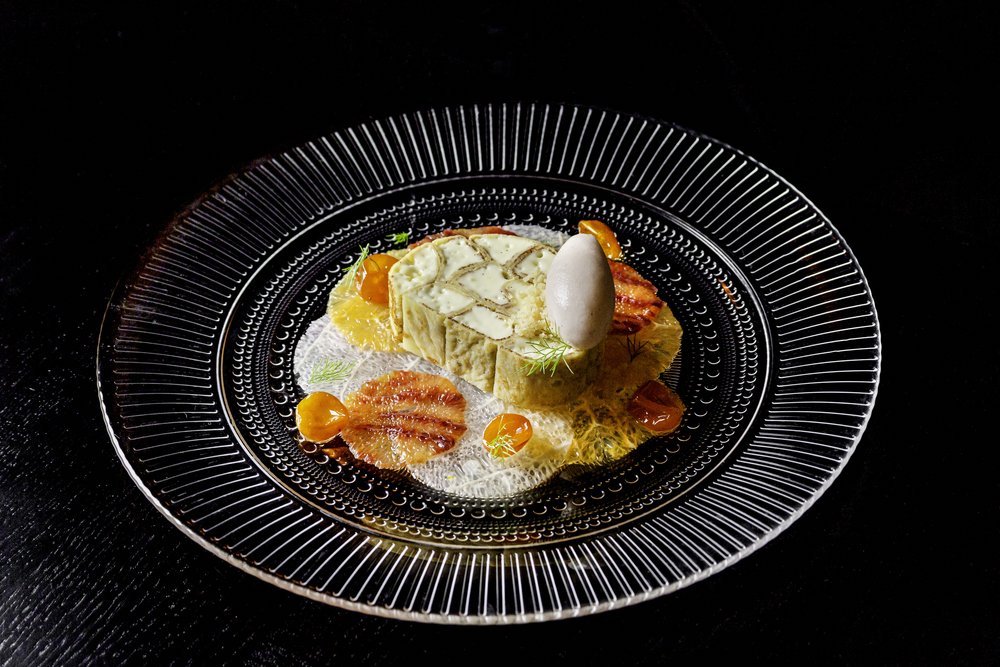
5. Palatschinken
Fromage blanc, citrus salad, grapefruit bay leaf sherbet
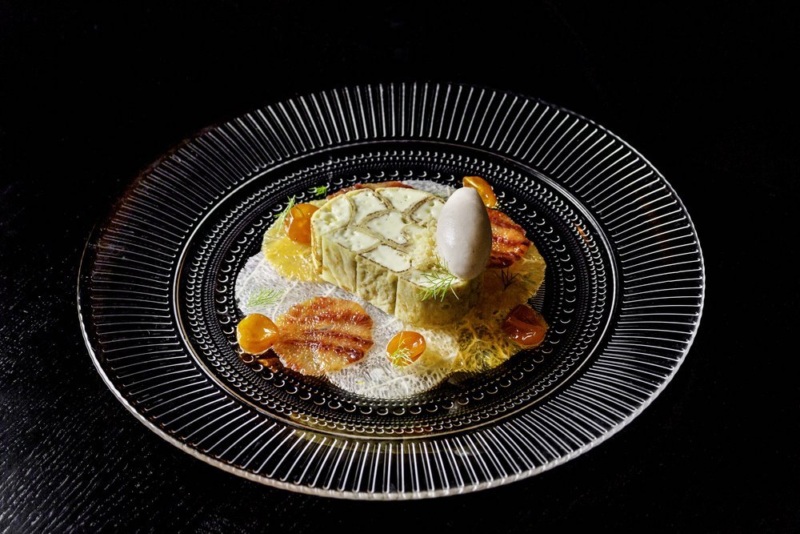
Normally, the Austrian dessert palatschinken looks much the way you’d expect crêpes or blintzes to look: super-thin pancakes rolled into little tubes, or stacked atop each other. But faced with a photo of something that looked more like a cross-section of a baguette, Chisholm had to explain to me what exactly I was looking at.
“I’ve heard people say it looks like a head of garlic,” she adds, laughing. “But the patterning is neat, it’s so visual. It showcases that technique and kind of ties in with the rest of the menu, like the dessert or even the savory aspect, the dining room and everything — our patterning sort of reflects that a little bit also.”
“Palatschinken just means crêpe,” Chisholm says, “but we kind of took that and fleshed out the idea into a full, composed dessert. We have an interesting technique in how we make the crêpes and roll them. It’s filled with the fromage blanc mousse. We roll them into sort of like a log where we can slice it like a tureen. So instead of just getting a couple of crêpes, we stack all the crêpes together and then you get a slice where you can see the cross-section of the crêpe and the mousse. It’s filled with fromage blanc, a little vanilla, and lemon; very light and fresh. We’re kind of changing the garnish seasonally, but right now we have a little citrus salad with blood oranges and cara cara oranges. And it gets a grapefruit and bay leaf sherbet.
“I think it’s visually unique. But then when you try it, the flavors are just refreshing and light. It’s nothing too crazy or complicated. It’s a nice, clean sort of way to end your meal.”
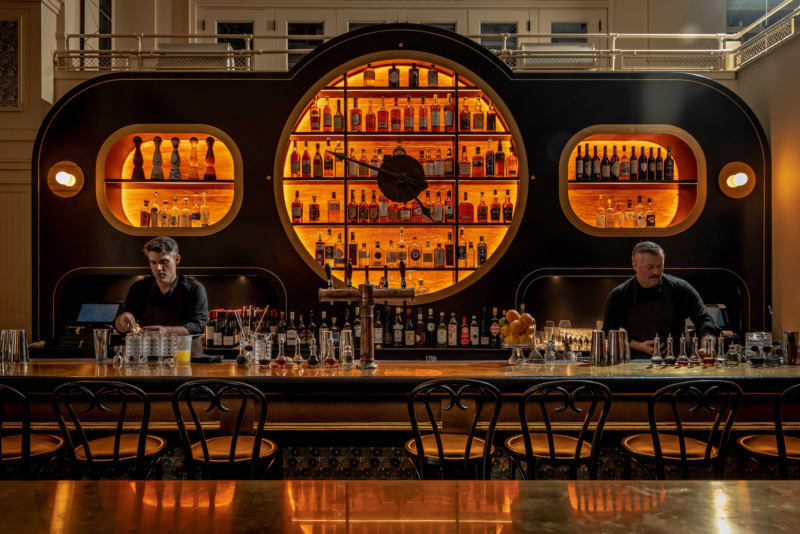
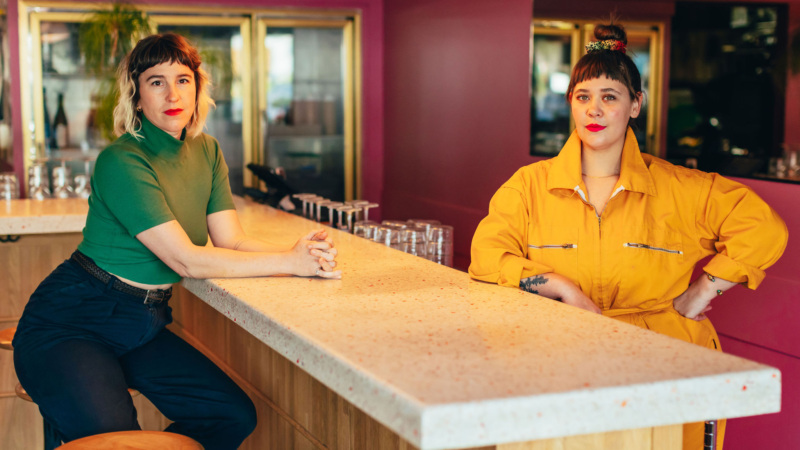
The bar is one of the first things you see when you enter the restaurant from 29th Street.
Photo courtesy of Koloman
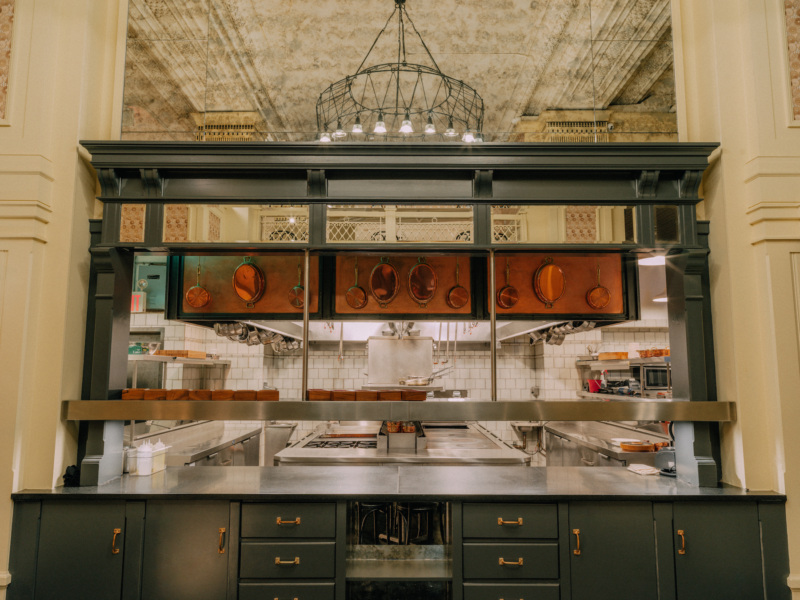
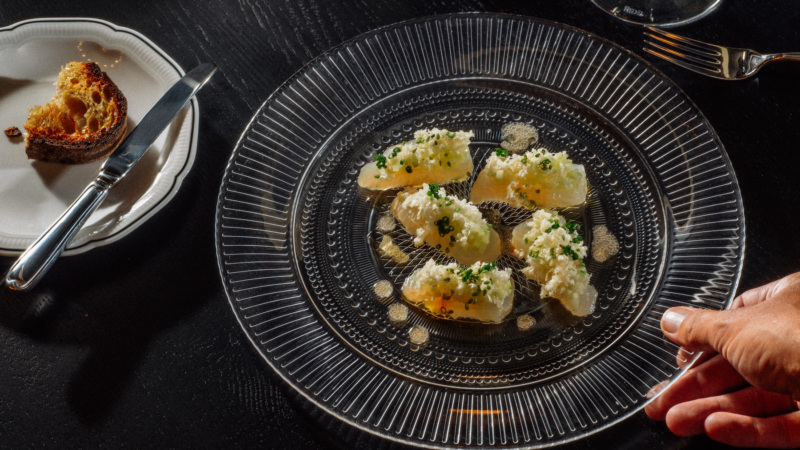
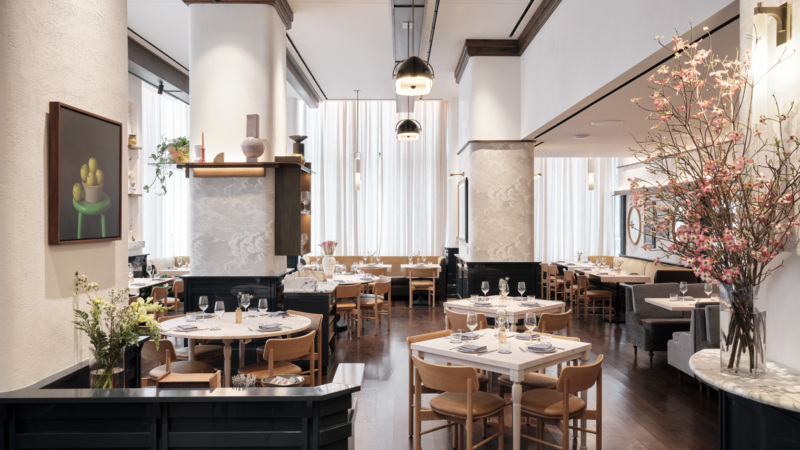
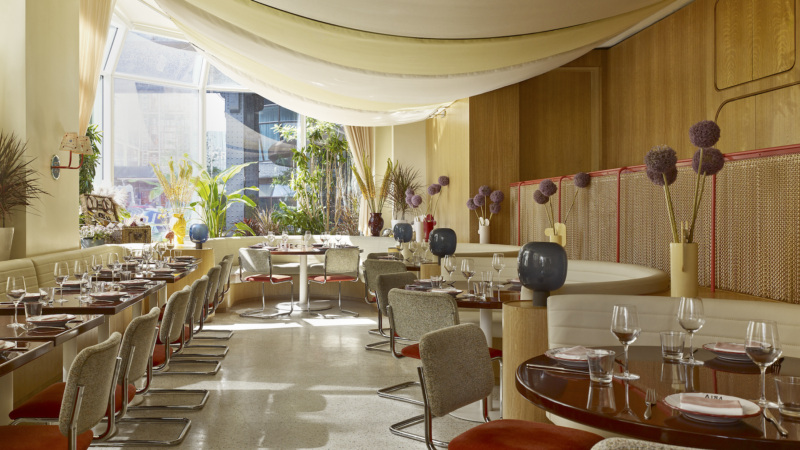
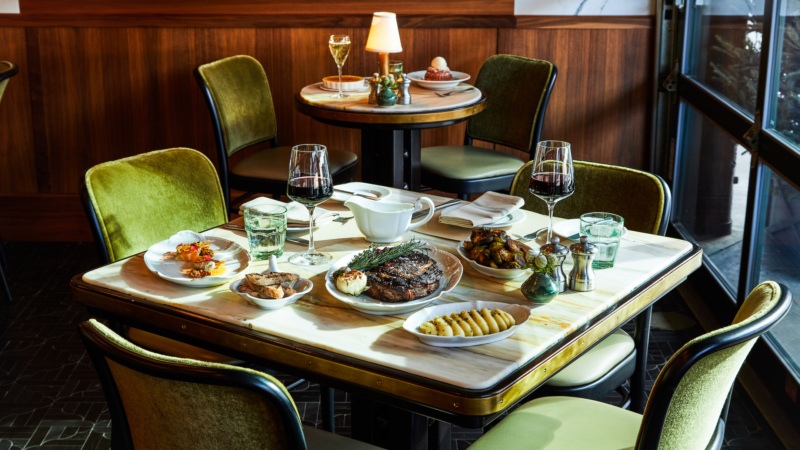
Koloman occupies what was once The Breslin and while the space might feel somewhat familiar to some, it’s much lighter and brighter than the restaurant’s former tenant. The open kitchen is still very much there, however.
Photo by Nick Johnson, courtesy of Koloman
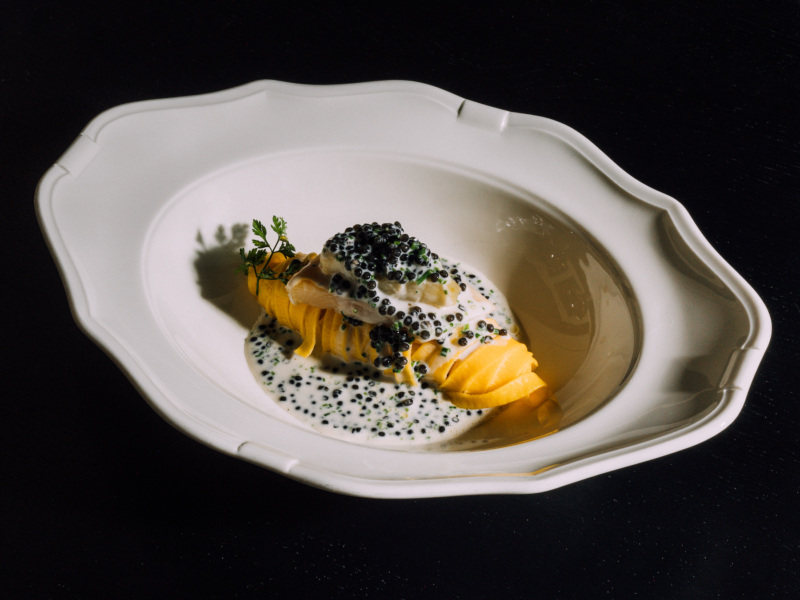
Fennel tagliatelle gets topped with caviar.
Photo by Nick Johnson, courtesy of Koloman
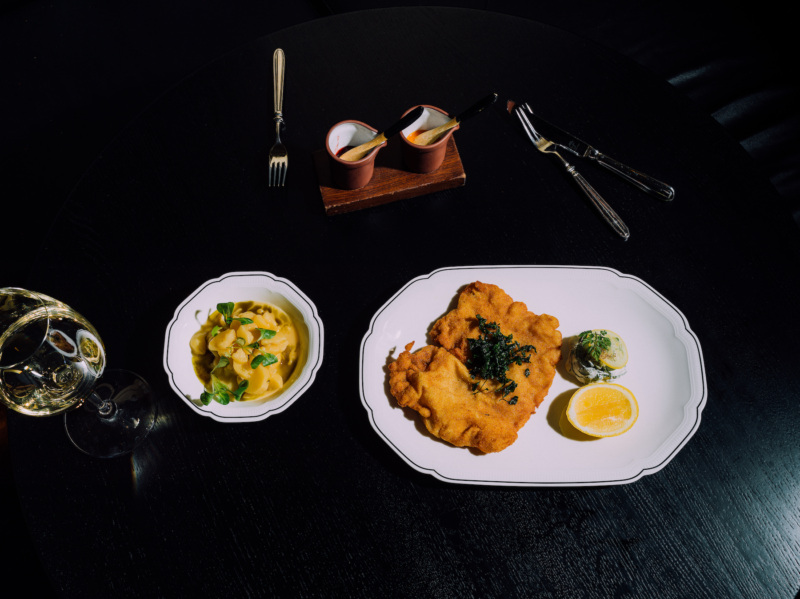
The schnitzel was an early hit on the menu …
Photo by Nick Johnson, courtesy of Koloman
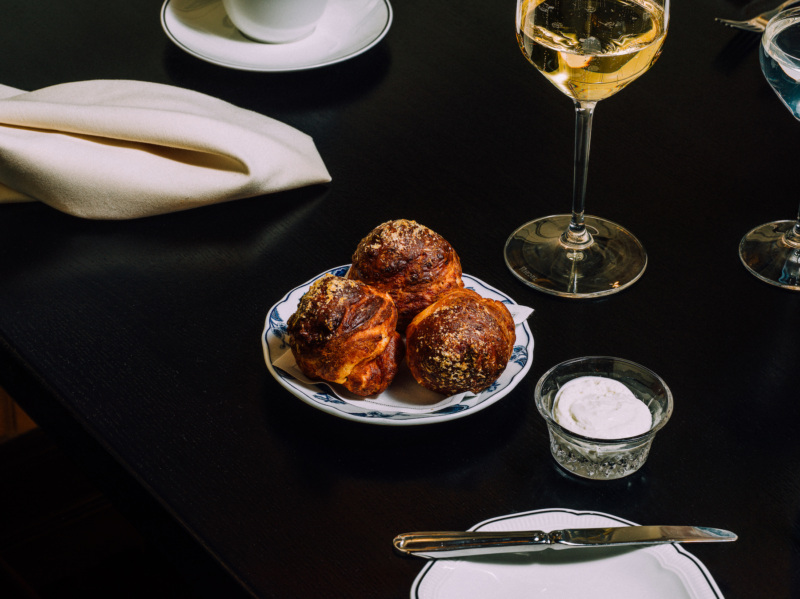
… as were the gougères …
Photo by Nick Johnson, courtesy of Koloman
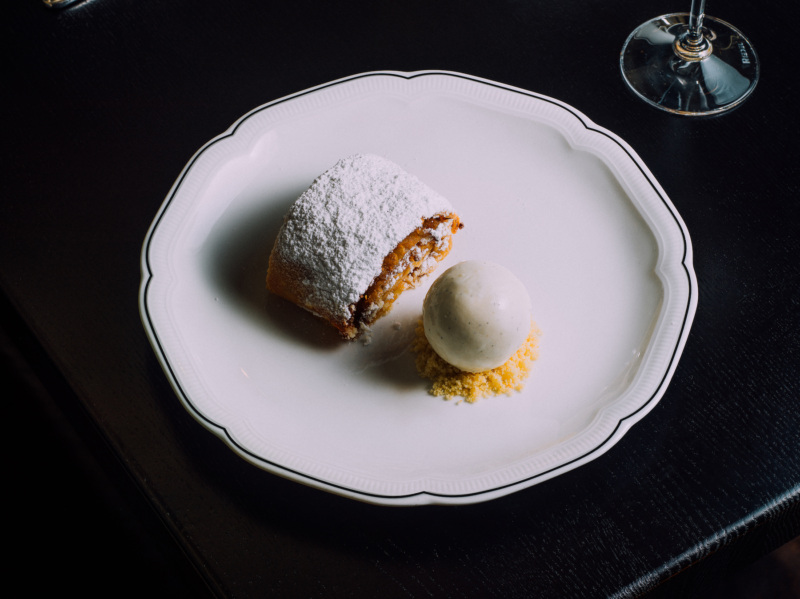
… and the apple strudel.
Photo by Nick Johnson, courtesy of Koloman
Koloman is open for dinner Tuesday through Sunday, from 5 to 10 p.m., with a limited menu of bar snacks available until 11 p.m. Breakfast is served Tuesday through Friday from 7:30 to 10:30 a.m., and lunch is served Wednesday through Friday from noon to 2:30 p.m. Weekend brunch goes from 10 a.m. to 2:30 p.m.
Ariana DiValentino is a writer, filmmaker, and actor based in Brooklyn. Follow her on Instagram, Twitter, and TikTok. Follow Resy, too.