Resy: Tell me about your backgrounds. Where did you grow up? What did you eat? How did you get interested in cooking?
Marcus Yaw Johnson: I always loved food. I grew up a little chubby kid, loving to eat. I grew up in the Crenshaw district of Los Angeles, so South Central. AB grew up in Leimert Park. Growing up, [cooking] is all I wanted to do. My mom is Ghanaian, so I learned a lot of techniques from her. My pops is from Los Angeles, but my grandmother on his side is from Shreveport, Louisiana, so I got a bit of both worlds. And I ate a lot of Los Angeles cuisine. Persian food, Salvadoran, Mexican. The list goes on. L.A. just has such a beautiful ecosystem of food.
Abdoulaye Balde: All the men in my family were the cooks, so I grew up cooking. My uncle was a chef and he had a catering company I’d help with. My mom’s a foodie, so she’d always bring home different cuisines and turn us on to different dishes. I always had an open palate. As I started getting older, I would cook and sell stuff home. People would come over and they’d like it so much, they’d go, “How much you charge to make a pot of this for me?” So right after high school, I ended up going to culinary school.
Before we get there, how did you two meet and join forces?
Balde: We were in high school but we kind of grew up together. We had a mutual friend, so we were around each other all the time. Out of the group, we were the ones who were always concerned about what we were eating. Everybody’s worried about partying. We’re like, man, what are we eating? We would always be the masterminds, going to the store, putting something together so everybody could eat. That’s how we started cooking together.
Johnson: In high school, I knew I was going to go to culinary school — until I saw how much it cost. So I decided to go to the Navy because I heard they paid for college. I did six years. For the majority of it, I was stationed in Hawaii. I picked up a lot of Hawaiian cuisine, Japanese cuisine. Polynesian culture was really interesting to me. I learned to cook with some of their ingredients. And then from there I went to Thailand, Guam, Korea, Japan, San Diego, Costa Rica, and Guatemala. I used the GI Bill to go to the Culinary Institute of America in San Antonio. I did my externship at Trois Mec. Then, Covid hit.
Yes, you launched your pop-up during the pandemic.
Johnson: Covid cracked off, and it was like, well, I still got all this energy from the kitchen, and I want to use what I’ve been learning, so let me just do a pop-up. I did one pop-up, another pop-up. AB was right there with me and we started doing pop-ups together.
Balde: We started off small, we maybe put out a prepaid flyer. The flyers just kept selling out. We started doing it more often. It got to a point where we outgrew the house. We went from his house to my house. Then, we took it out to the streets, to weekend markets in Leimert Park. I was still working a nine-to-five during the day, and we would do this on the weekend. Next thing you know, we had a ghost kitchen. We tried that out for a little bit but didn’t really like it. It was too enclosed, and we weren’t able to interact with people. We had the opportunity to come over to this space in Inglewood, so we took advantage and it was the best decision we ever made. It’s been going uphill since then.
What was the initial vision when you opened the restaurant?
Johnson: Just serve good food that we love. We didn’t want to be pretentious. We just wanted something that we knew people would want to eat, night in and night out. So combining our travels, our knowledge, our families, Los Angeles, California, our homes of West Africa — his being Senegal, mine being Ghana — just bringing it all together and telling our story. They like to call it soul food but it’s not traditional soul food. It’s food that is from our soul, but it’s a little different.
How did you decide that jollof rice would be the backbone of the restaurant? Obviously it’s a classic and very popular West African dish. Does it have a special meaning to you?
Johnson: Some version of this rice dish exists in every single country in Africa. We wanted this one uniting dish. So if a person from Cameroon, Nigeria, Sierra Leone, or Los Angeles walked in, they’d go, oh, I know jollof.
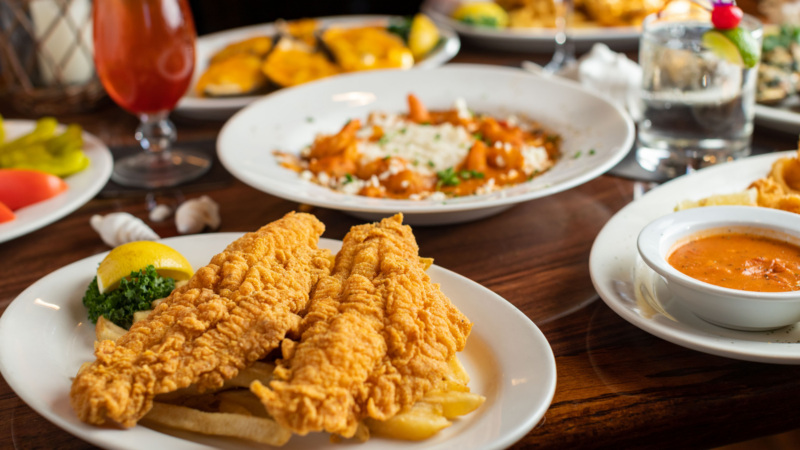
This is a version of Ghanaian jollof, a little spicy, a little fragrant. It’s based on my mom’s recipe, with a few tweaks. I grew up eating it damn near every day. My mom always had frozen sauce in the freezer. She could make jollof at any time and it was something I always yearned for, especially being in the Navy, away from home.
Let’s talk about some of your other signature dishes, starting with the honey berbere chicken bites.
Johnson: That started out as the Mando Sando at our pop-ups, a honey berbere chicken sandwich on a brioche roll with citrus aioli and house pickles. When we came to the restaurant, we converted it into something more shareable. We use rice flour in the dredge because rice is the backbone of our cooking, so we try to implement it however we can. The berbere nod is also intentional. My pops loved teaching history. We’d talk about how Ethiopia was the only African country never to be colonized. We have Little Ethiopia nearby. I went to school with Ethiopians. It’s a nod to that community, done in a way that’s kind of like your neighborhood wing spot.
Balde: We source the berbere from a local Ethiopian market, not far from the restaurant. There’s a heavy Ethiopian community around here, right on Fairfax. It only makes sense to shop with our local people.
What about the za’atar zucchini?
Johnson: It’s summer year-round in California, so we always have summer squash. We blister the zucchini, spike some mayo with Gloria’s Shito. It’s this spicy, creamy sauce at the bottom with these nicely charred but still firm pieces of zucchini on top. Then we toss dill, mint, cilantro, Thai basil, a little arugula, all dressed in white balsamic with the oil from the bottom of the bowl, some za’atar and toasted panko on top.
Balde: It is vegan, and to me, it’s one of the best vegetable dishes out there.
Tell me more about Gloria’s Shito.
Johnson: We use Gloria’s Shito in three dishes. Here’s a Ghanaian product, made by a Ghanaian woman, that you can use at a high level. She came by early on, brought us a bottle, and I was like, oh my god, this tastes like my mom’s. We connected. Any way we can partner with or spotlight a local vendor, we’re going to do that. Same thing with our pastry chef, Alex Bolar. He makes his own chile oil, Lula Mae’s Sweet Heat. We buy it from him, put it on the shelf and use it in dishes. It’s about showing love to the homies.
You also landed a full liquor license in a lottery. How did you develop the new cocktail program?
Balde: I’m a fan of Tequila, and you can’t get around a margarita. It’s the number one selling cocktail. Everything we’re juicing or making into purées, we do in-house for freshness. And a couple of the cocktails come straight from our background.
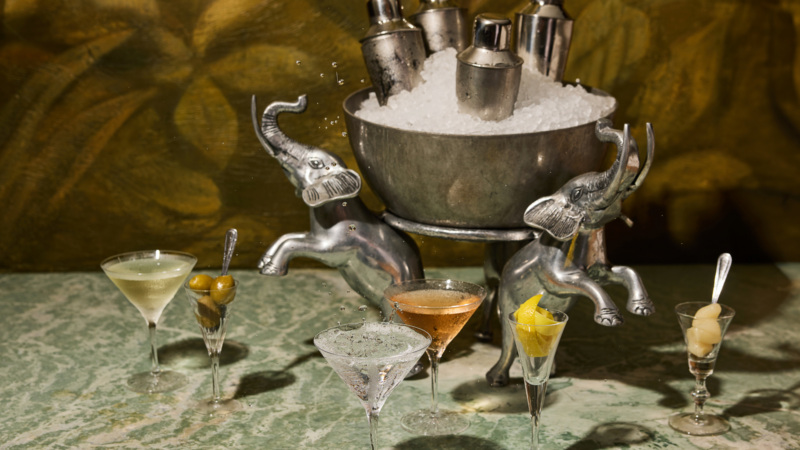
Johnson: The Sobolo Spritz is a play on a Ghanaian beverage. Sobolo is hibiscus, similar to zobo in Nigeria or Jamaica in Mexico. Ours is spiked with ginger, pineapple, orange, star anise, and cinnamon clove. It’s like a little float situation. Really good. The Centinela Sour is kind of our signature. We’re on Centinela and La Brea, so it’s a play on that. Whiskey, soursop, ginger, lime — it’s basically a soursop ginger whiskey sour.
You also revamped the dining room in 2024. What prompted that?
Balde: We took [the space] over from another restaurant, so it was set up with family-style picnic tables. Our customers would sometimes say, man, if we weren’t sitting on these picnic benches, this would be a 10-star experience. So we wanted to bring that feel here and give it our own identity.
Johnson: When we took over the space, we hung some pictures up, slapped our name in certain places and got rolling. The first year was literally about survival. The second year was about showing we could do more. The remodel was about finally turning this place into our own and welcoming people into our world.
How would you describe the room now versus before?
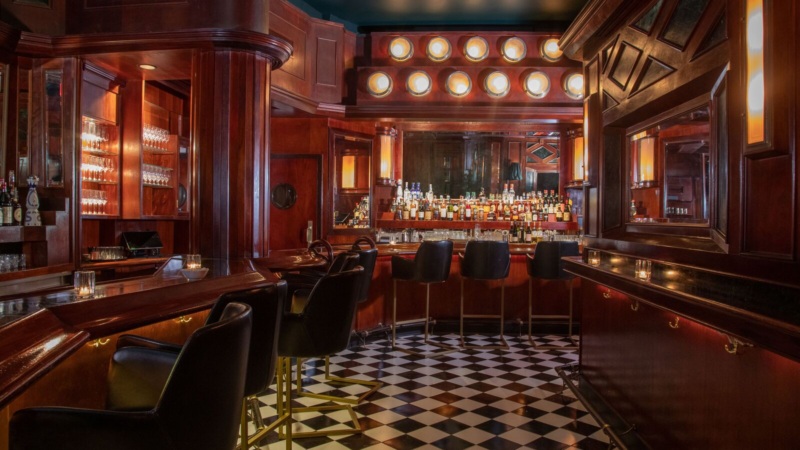
Balde: Now, it’s a nighttime, grown, sexy vibe.
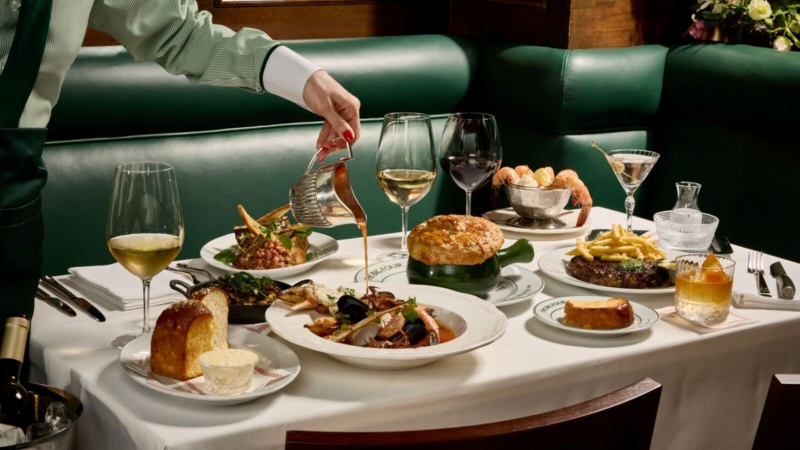
Johnson: We love to go out to eat, so we’d go to certain restaurants and think, man, we love that. The server takes a moment to explain certain menu items. There’s just more intentionality now in the way the food is served, the cocktail menu, the way the servers talk to you. The lights are dim, table lamps. It feels like a real restaurant and not just a place you eat.