Five Essential Dishes at Morihiro, L.A.’s Temple to Edomae-Style Sushi
Published:
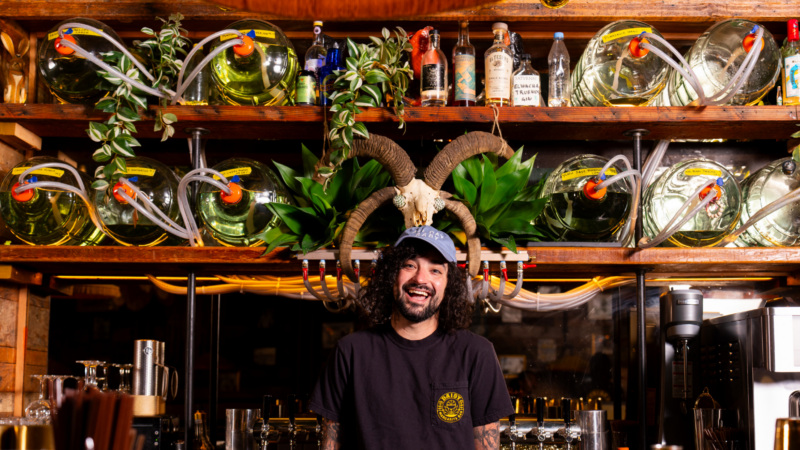
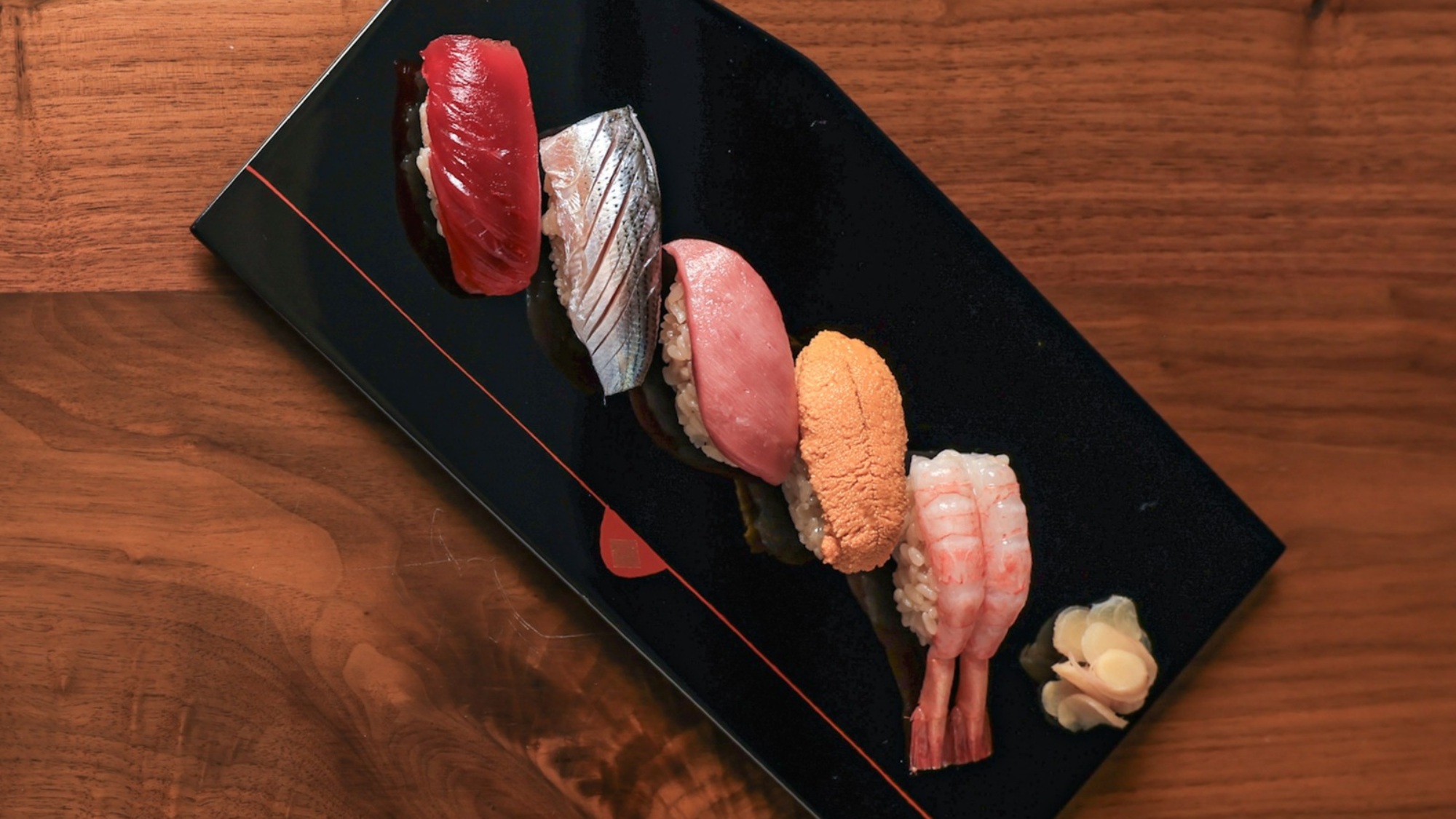
“My sushi is nothing perfect,” says Morihiro Onodera. Four and a half decades since crafting his first piece of nigiri, the Japanese principle of kaizen — loosely translated as “continuous improvement” — is still top of mind for the L.A. sushi-making legend who spent his earliest years behind the counter at Matsuhisa in Beverly Hills and Katsu, a long-gone Los Feliz restaurant beloved by Ruth Reichl in its heyday.
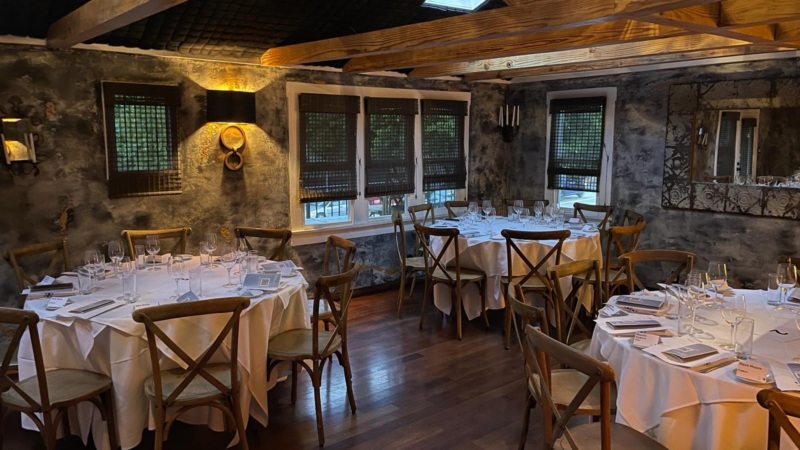
Now, the 62-year-old onetime protégé of the world-famous Jiro Ono has returned to his more casual culinary roots with the second iteration of Morihiro, which relocated last fall from its modestly sized original home in Atwater Village to a much larger, grander space in Victor Heights, a micro-neighborhood between Echo Park and Chinatown immediately north of the 110 Freeway.
Given Morihiro’s successful run in Atwater Village, one might wonder what precipitated the big move. The reason, it turns out, is fairly prosaic: the original space, now home to Osusume Fumio, lacked the proper ventilation to prepare the type of hot items wanted to be able to offer. “The last location is great, this location is also great, but I try to get better everyday,” Onodera says. “Doesn’t matter location. I don’t wanna complain; I do my best.”
Recently, the restaurant also became the subject of local Substack fascination after buying a billboard on Sunset Boulevard earlier this year. The modest out-of-home advertisement — an idea originally suggested by Onodera’s wife, the real estate agent Ilana Gafni — featured a single piece of nigiri of kohada, or silver-skinned gizzard shad, which is the chef’s personal favorite type of sushi.
MORE FROM RESY


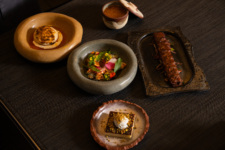
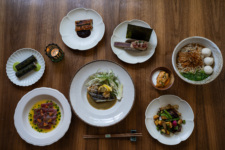
These days, Onodera still offers six nightly bar seats serving the $400-per-head, reservation-only omakase that has arguably become his culinary magnum opus, but the chef’s namesake restaurant has expanded its menu to include something more accessible, yet equally enticing: an à la carte menu of cooked items and nigiri lightly inspired by American-style sushi restaurant classics like California rolls and teriyaki chicken. Accompanying this is a crisp, refined cocktail program designed by Han Suk Cho, the former lead bartender of Kato and alumna of n/naka and Providence, as well as a newly added, short-form $200 omakase available for walk-ins.
Eight months since relocating, the longtime team has found its groove, and even lured out old fans of Onodera’s now-closed previous restaurant in West L.A., Mori Sushi, who previously considered the Atwater Village outpost too far of a trek. We sat down with Onodera and his general manager and occasional translator, Tim Lin, to explore the five most essential dishes on Morihiro’s new(ish) à la carte menu.
Classic California Roll
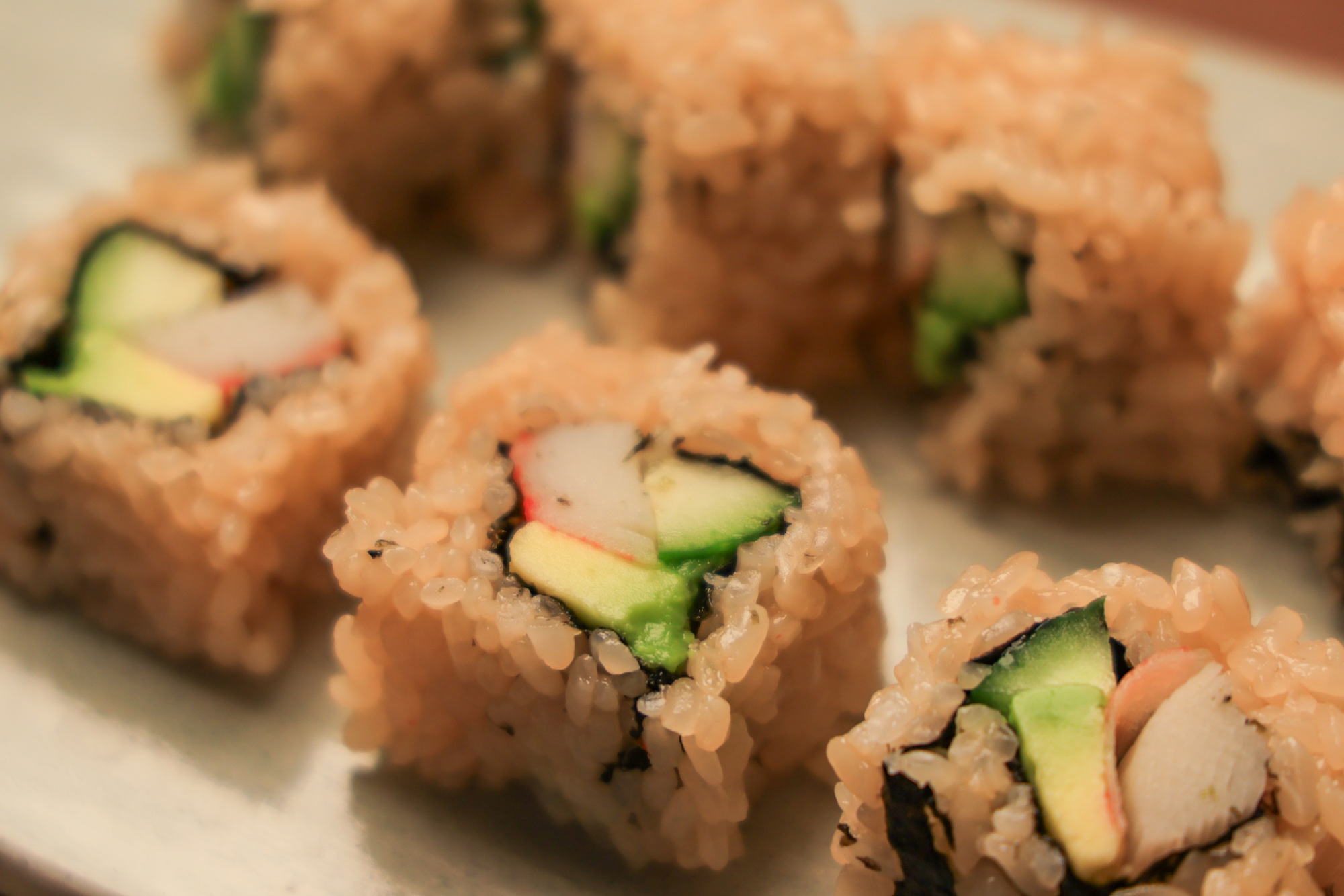
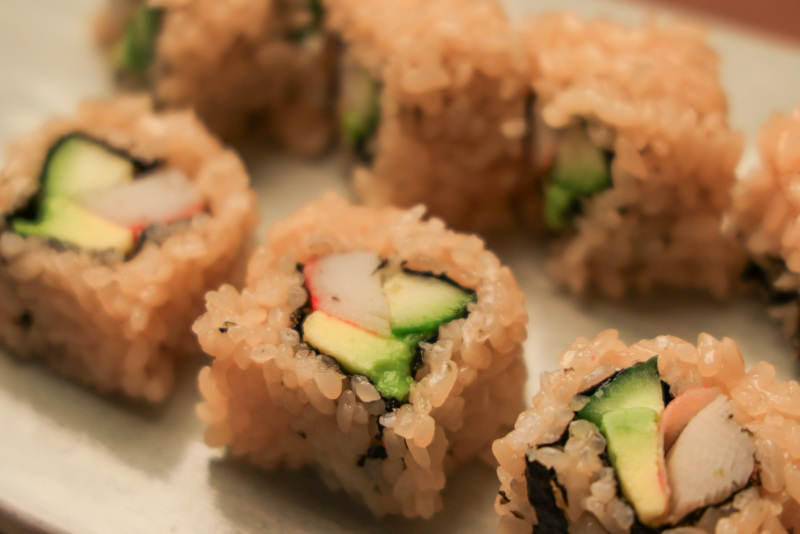
When Onodera decided to serve sushi in a more casual format, there was no way the Michelin-recognized chef wasn’t going to tackle the classic California roll. The origin of the fusion-style uramaki stuffed with imitation crab and avocado is somewhat contested, but the chef cites Tokyo Kaikan, a now-closed sushi restaurant in Little Tokyo, that began serving a fish cake, cucumber, and avocado roll sometime in the early 1970s, as inspiration. “I [tried] king crab, snow crab, hairy crab, and many really good [types of] crab…but something was missing,” he says of the recipe development process. The original imitation crab, in the end, was the only possible choice.
Of course, given the inside-out nature of the California roll, the true star of the dish is the sushi rice, the sourcing and preparation of which costs more at Morihiro relative to most sushi restaurants. Onodera sources raw, unpolished grains from a single rice farm in his hometown of Fujisawa, in the northeastern prefecture of Iwate. An on-site machine, visible in the dining room, processes the grains, turning them from brown to white. The cooked white rice is then combined with a blend of different aged red vinegars, the exact recipe of which is customized depending on the type of nigiri or service format. Naturally, the California roll, along with the other a la carte maki, gets its own unique formula.
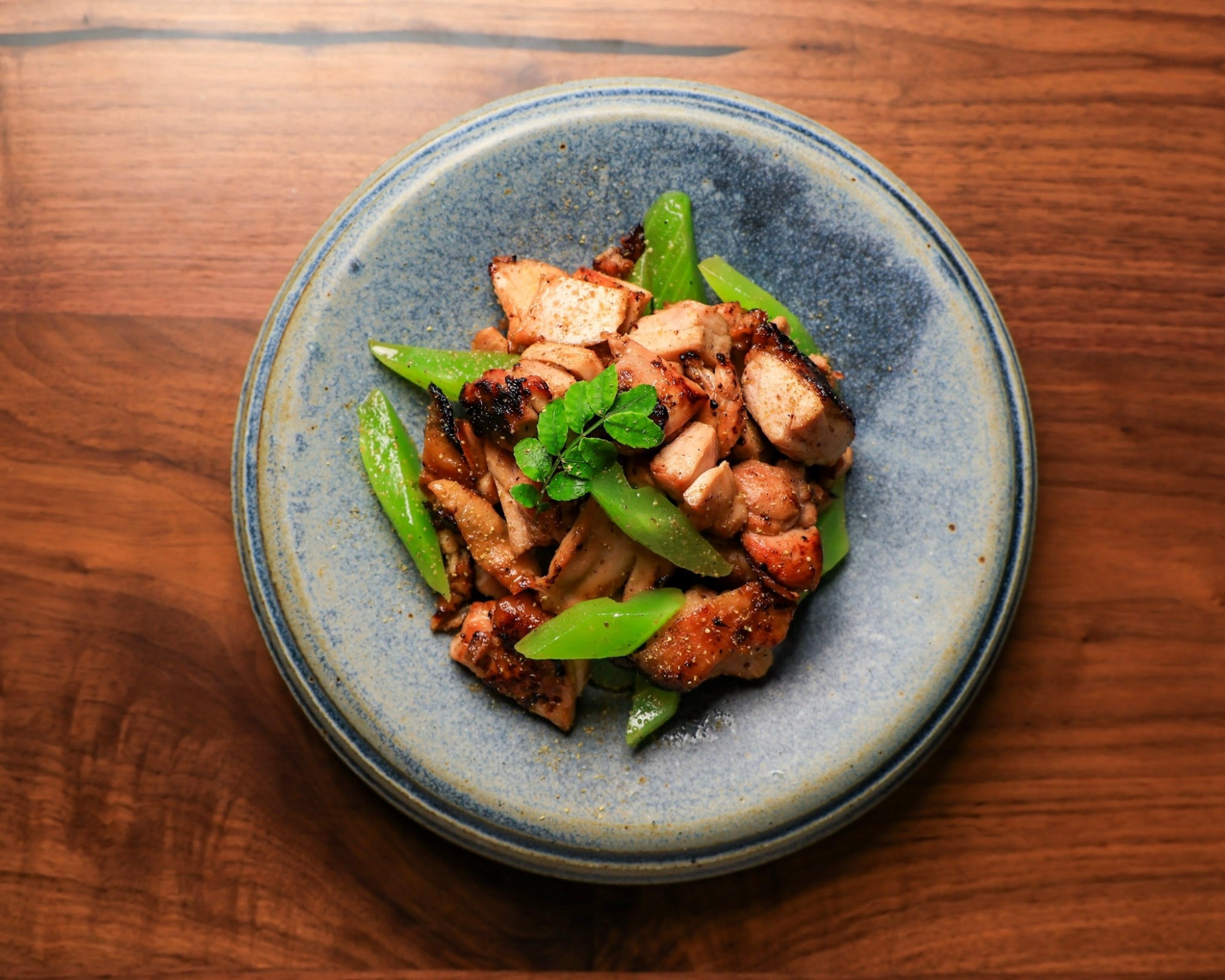
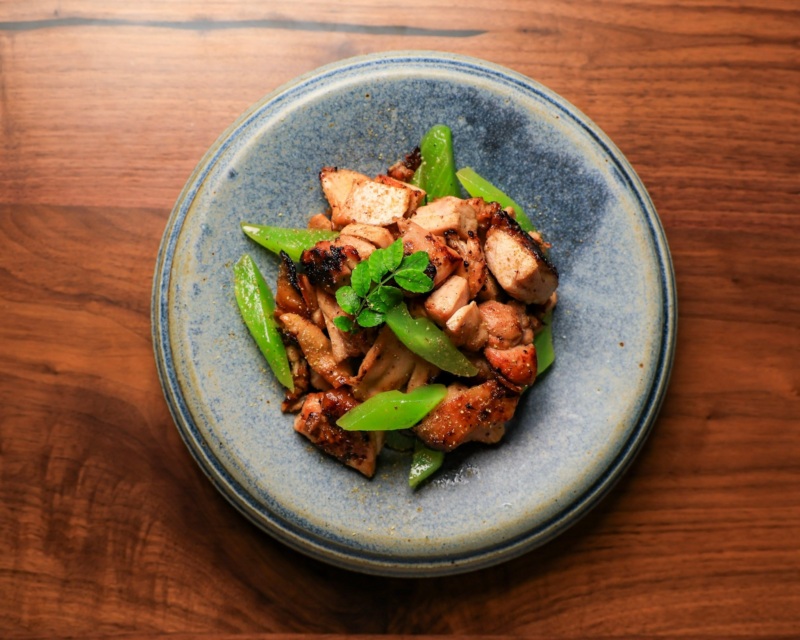
Sakura Smoked Jidori Chicken
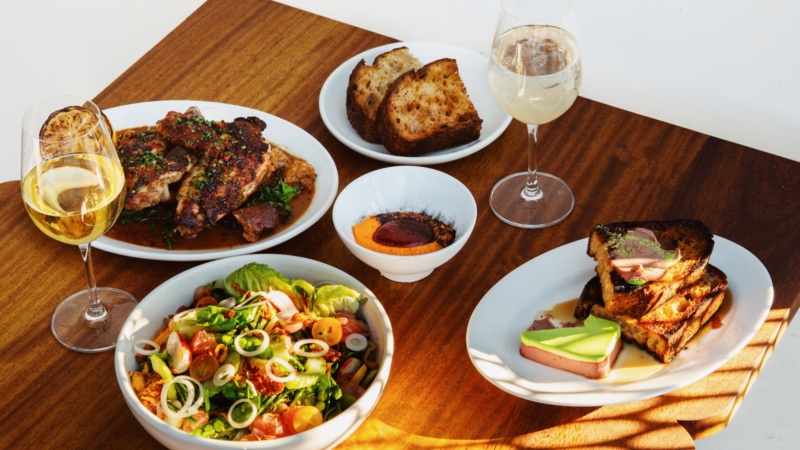
Before relocating his restaurant, Onodera hadn’t really ever cooked chicken in any way, shape, or form. “The inspiration came from teriyaki chicken, but we wanted to do it at a higher level,” says Lin, who has worked at Morihiro since 2022. The kitchen uses a mix of chicken oyster and thigh — both dark meat cuts — for its upmarket take on teriyaki chicken. After smoking the meat in cherry blossom wood, it’s then marinated in a blend of shoyu (soy sauce), sansho peppercorn, and sansho leaves and paired with blanched celtuce. Ultimately, Onodera wants to serve the type of dishes he’d want to eat on a weekly basis.
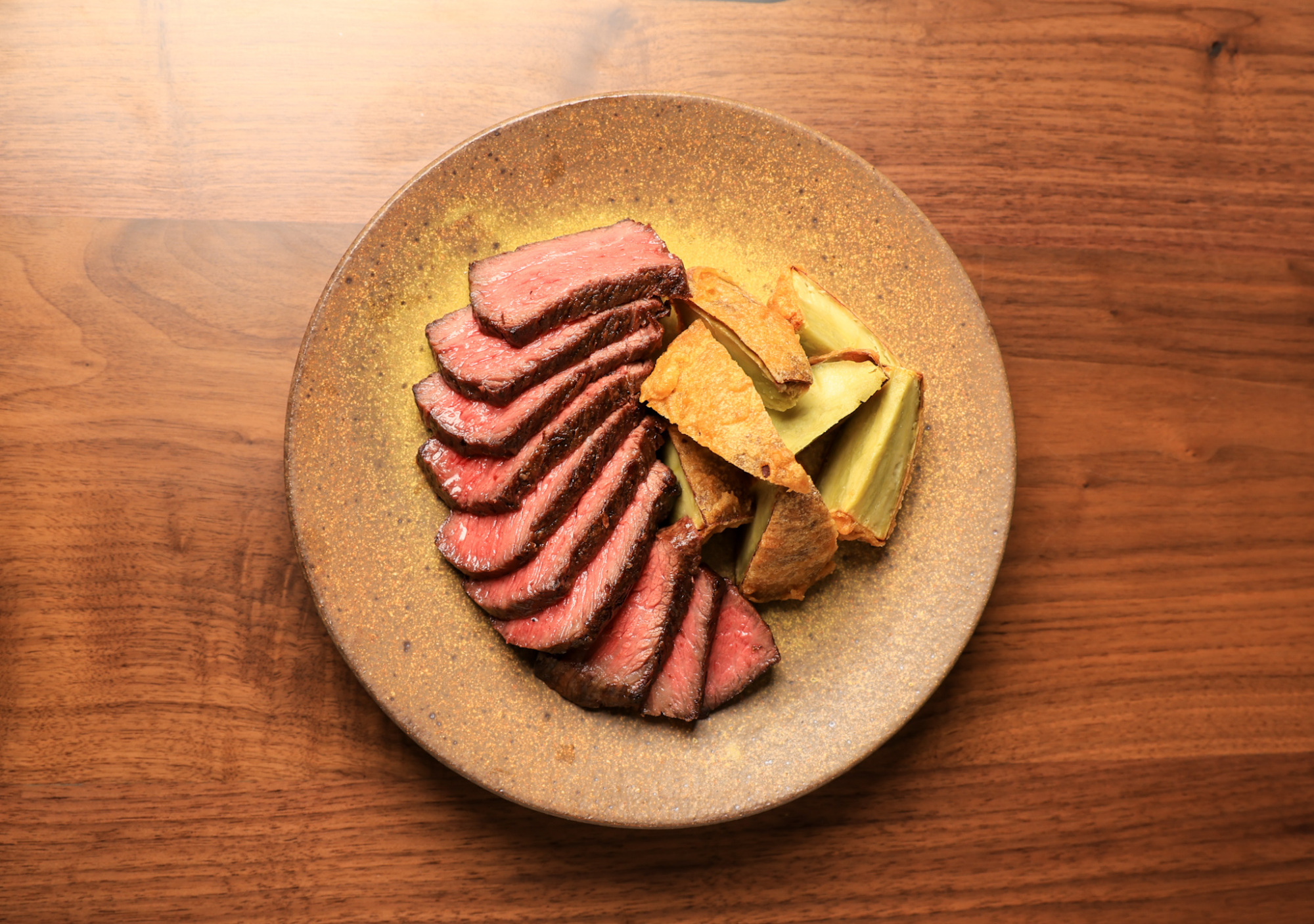
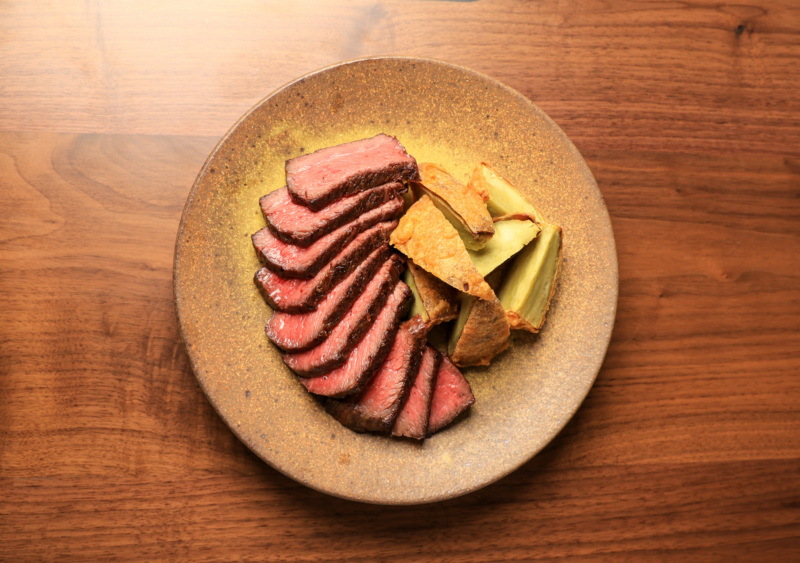
Steak and Potato
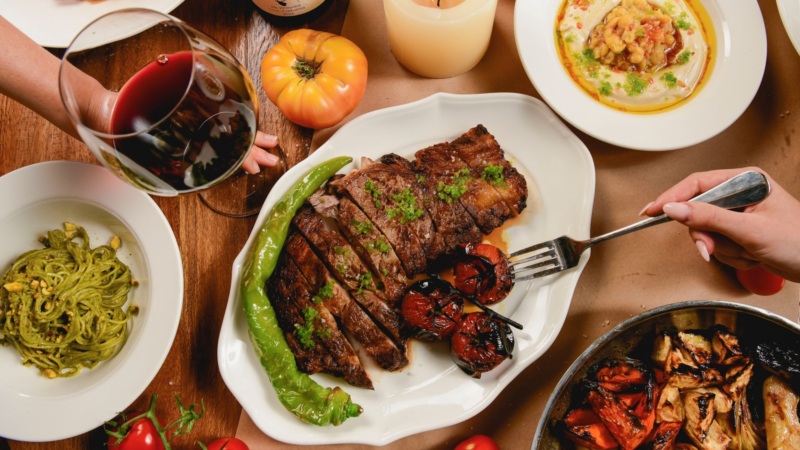
“For us, putting a steak on the menu is a little selfish,” says Lin. “If you ever work in a Japanese restaurant, all you eat is fish. Chef [Onodera] really wanted a little bit of [animal] protein, so we could eat it as well.” The restaurant uses a zabuton cut of American Wagyu from the renowned Snake River Farms, which means each juicy, medium-rare slice isn’t as overwhelmingly rich as, for example, an ultra-marbled A5 Miyazaki cut.
The truly special part of the dish, according to both Lin and Onodera, is really the deep-fried Japanese sweet potato, which draws inspiration from Tokyo’s two Michelin-starred Tempura Kondo. Thick, almost steak-cut wedges are deep-fried at a low temperature for approximately 40 minutes, resulting in an extremely soft and deep, almost caramel-like flavor. “Nobody else does it like this in the United States,” Lin adds.
Gomodare (Sesame) Tofu
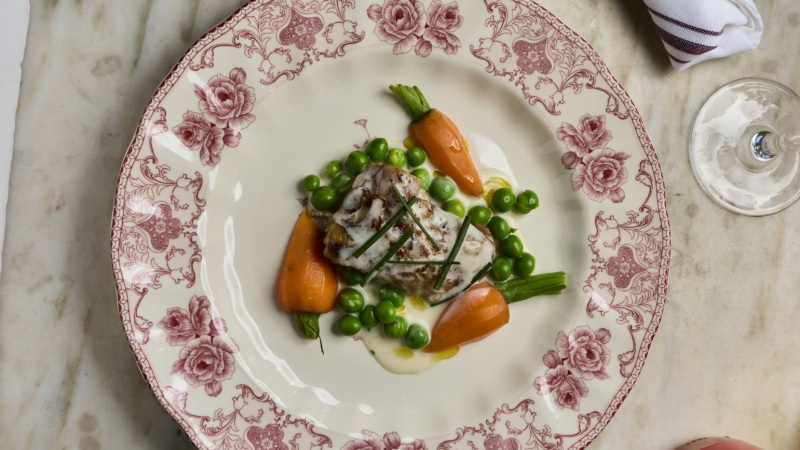
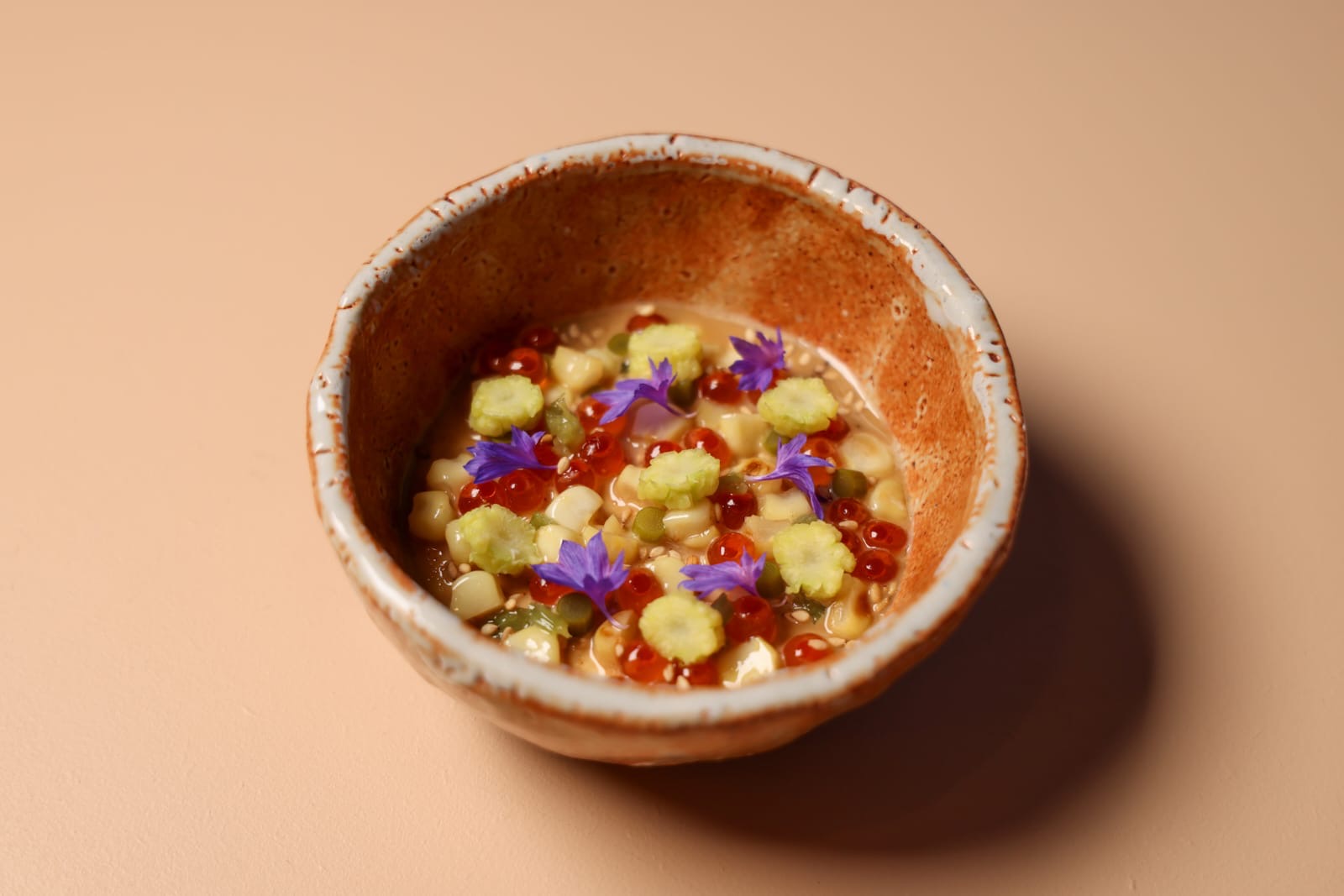
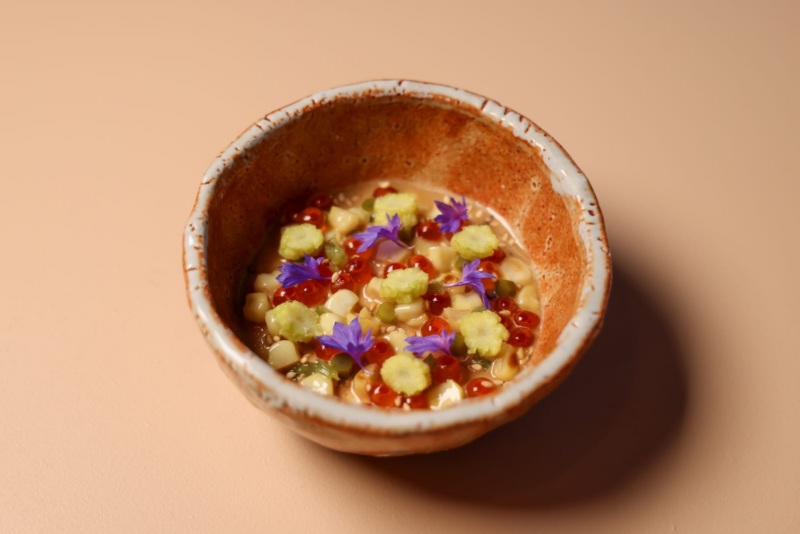
Since Morihiro first served its first omakase in 2021 — the restaurant opened in late 2020 and thus was initially restricted to just takeout — Onodera has served a delectable housemade tofu made from Kyoto soy milk. Now, a tofu dish is available on the à la carte menu, topped with a sesame paste flecked with sesame seeds and seasonal accoutrements. Recently, it was spring peas, but with the start of summer, the restaurant has begun using summer corn and salmon eggs sourced from the shores of Hokkaido. “Tofu is such a staple of chef’s omakase and we wanted it to be something seasonal so [guests] come back every couple months,” Lin says.
Chocolate Mochi
Typically, Onodera ends the seasonal omakase with some kind of fruit-based daifuku mochi — sometimes slices of clementine, a single whole strawberry from Harry’s Berries. However, the chef wanted something more consistent for the à la carte menu. Instead of fruit, the kitchen starts with a base of Nama chocolate, a type of velvety ganache invented in Japan. Each piece is lightly dusted in a mix of cocoa powder and rice flour, for the ultimate end-of-meal sweet treat.