Five Dishes That Showcase Onggi’s Vision For Modern Korean Dining
Published:
Dupont Circle has somewhat of a rowdy reputation. Between restaurants that cater to bottomless brunch and bars that pride themselves on heavy pours, it’s a part of town that can feel a bit raucous depending on the time of day or week.
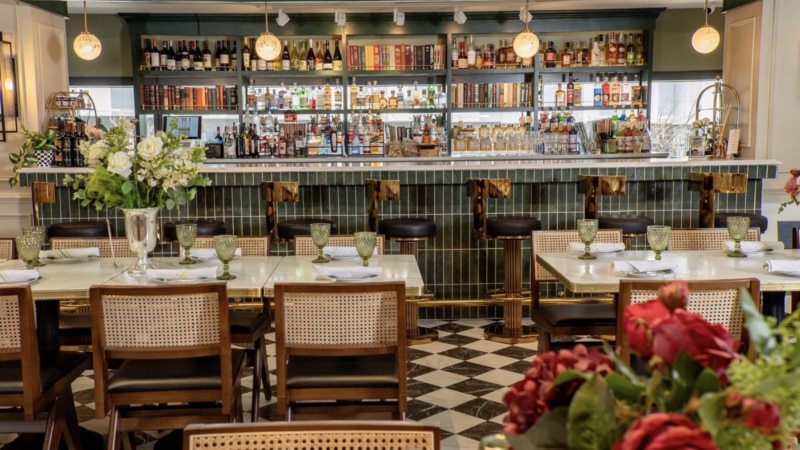
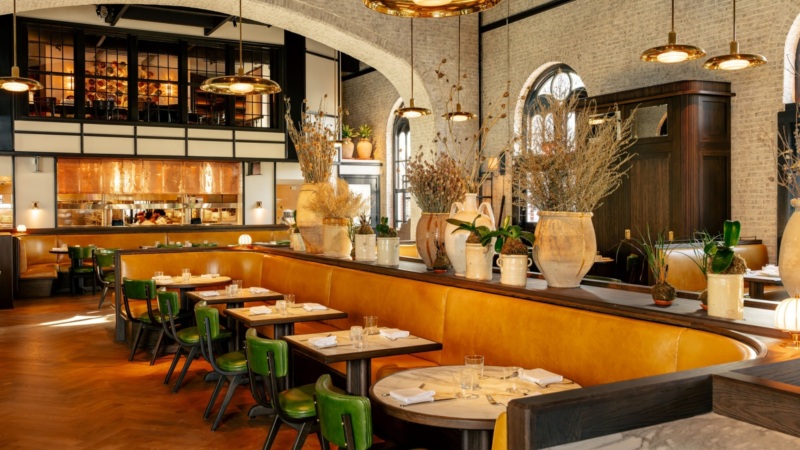
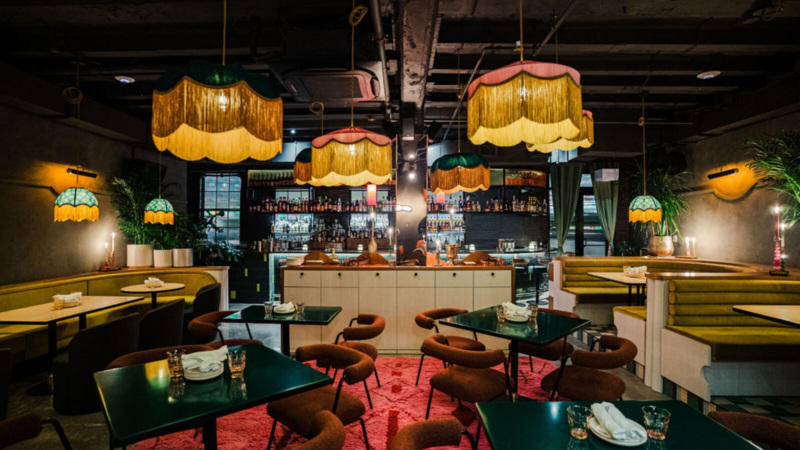
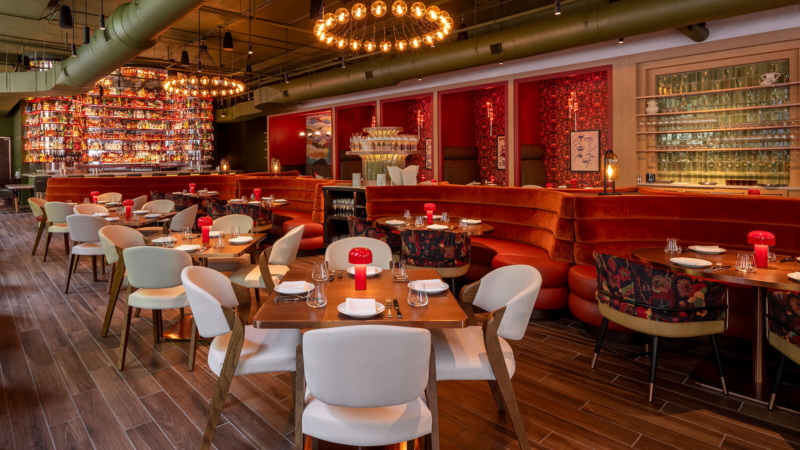
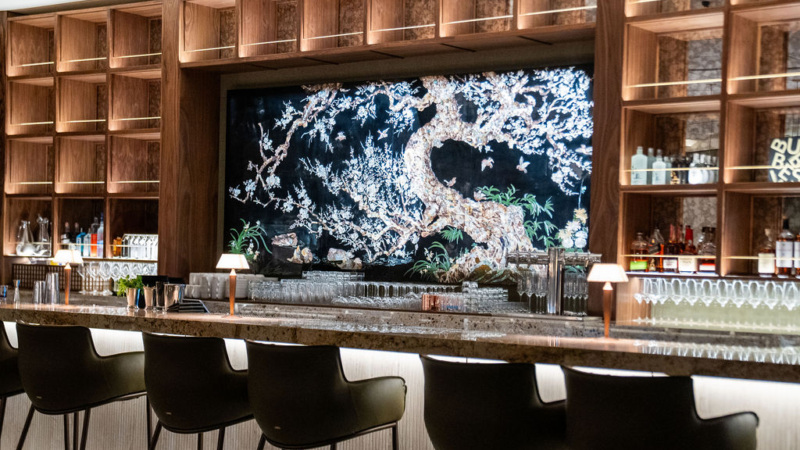
Which is why the neighborhood’s latest restaurant opening, Onggi, feels like a breath of fresh air. It’s a modern, minimal space designed to serve Korean comfort fare that nourishes in more ways than one. In fact, think of Onggi as an oasis of well-being in the heart of Washington, D.C.
Both the menu and restaurant space are designed to make you feel good. Features include banquette seating made from heated Himalayan salt rock — to keep your muscles relaxed and bum warm. The menu that features fermented kimchi beneficial to the microbiome, as well as tea service to deliver a healthy dose of antioxidants.
This vision comes courtesy of owner and culinary director Tanya Kim, who pivoted from a government job to a stint in Seoul, Korea where she pursued culinary training, only to return to D.C. to open a restaurant centered around Korean cuisine. And while diners are increasingly familiar with the concept of banchan, Onggi’s menu also emphasizes the virtues of traditional Korean jeongsik (multi-course meal) that unfolds like a tightly choreographed dance.
The result is a one-of-a-kind culinary experience that Kim breaks down for us, dish-by-dish. Here’s what to look out for.
Related Stories
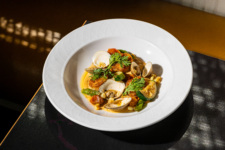
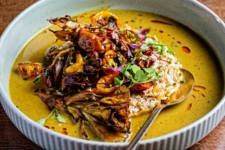


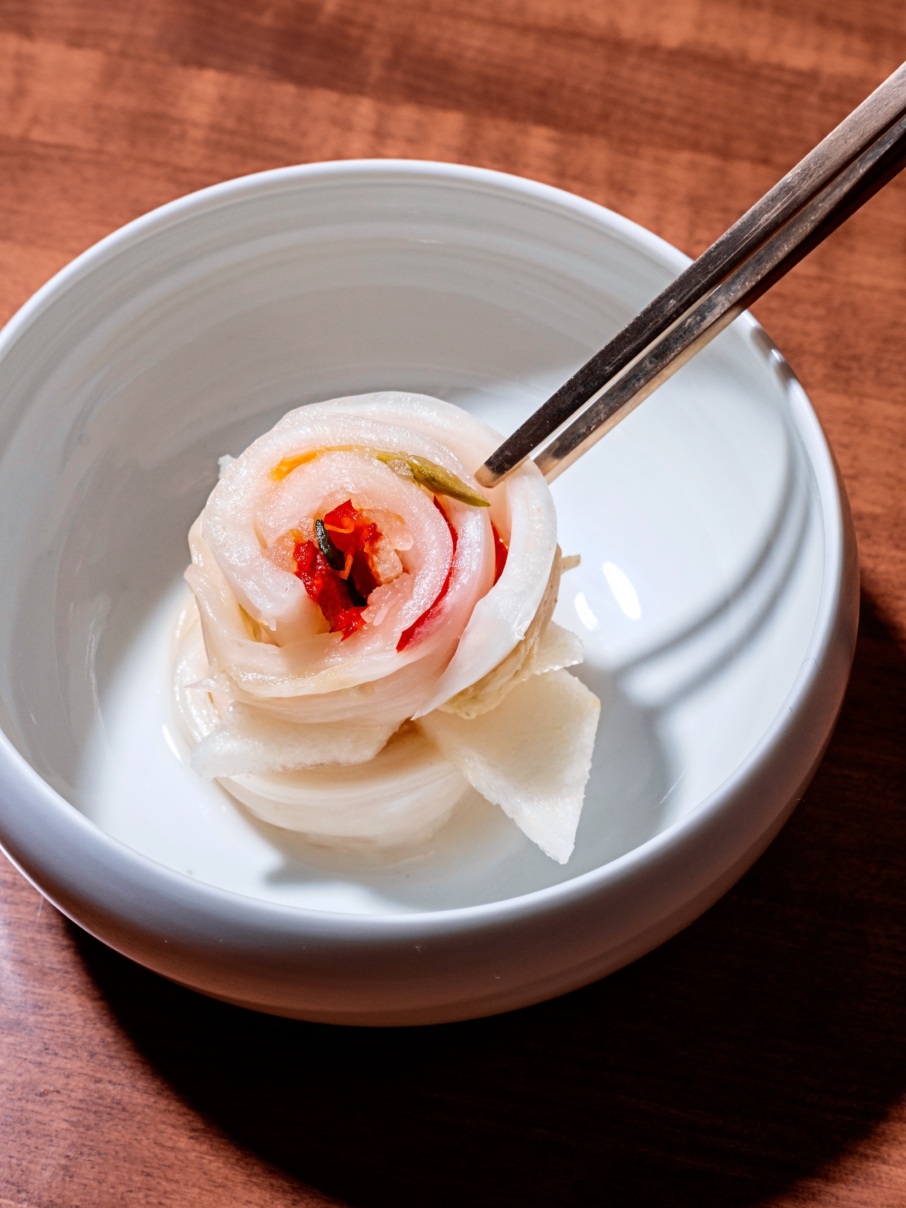
White Pear Kimchi & Squash Tarak-Juk
Your meal begins with a ceremonial tea cleanse, some squash porridge dusted with flower powder, and a delicate portion of white pear kimchi that appears in the shape of a rose bud. This prepares diners for the vibrant exploration ahead, and they are also dishes rooted in history.
“We start off with something special — squash tarak-juk, or porridge, served with pear dongchimi, which is clear water kimchi. This was a favorite of King Gojong from the Joseon Dynasty,” Kim explains. “It’s something he would enjoy before bed. At the time, milk was so rare that this dish was reserved only for royalty. We love sharing that small piece of history with our guests.”
That sense of history grounds a menu that draws from deep traditions to capture the essence of Korea’s regional warmth and richness.
“Our menu is always anchored in fermentation, time, and the caring hands of moms and aunties, known as ‘imo’ in Korean,” Kim says. “These dishes are prepared in the simplest and most thoughtful way to bring out the natural flavors while honoring Korea’s cherished culinary heritage.”

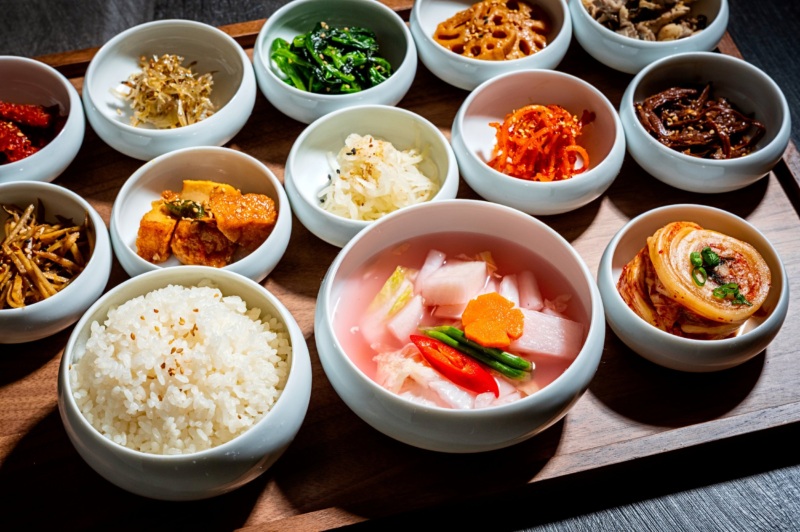
Banchan
The most quintessential course Kim offers, banchan, can be easily misunderstood as simple side dishes, but to Kim, it is the soul of the meal.
“At Onggi, our banchan course changes regularly to reflect the seasons and the rhythms of fermentation. You might find house-aged baechu kimchi — napa cabbage, gosari — bracken fern, braised lotus root, soy-marinated tofu, or fermented perilla leaves,” she says.
Banchan can be understood as a chorus of small dishes that balance, contrast, and complement the main meal. They are not meant to be eaten alone, but together in harmony. Each has its own distinct flavor, and everyone ends up with their own favorites.
This deep appreciation for banchan has inspired Kim to recently launch a banchan subscription program, which you can ask about the next time you visit to sign up. Since banchan naturally stays for several days, it offers a perfect opportunity for guests to save both time and money at home too.
“We will deliver freshly prepared banchans straight to their door, lasting five to seven days in the fridge, ready to be enjoyed with a simple bowl of rice, just as it’s meant to be,” Kim says.

Chef’s Selection of Jeon
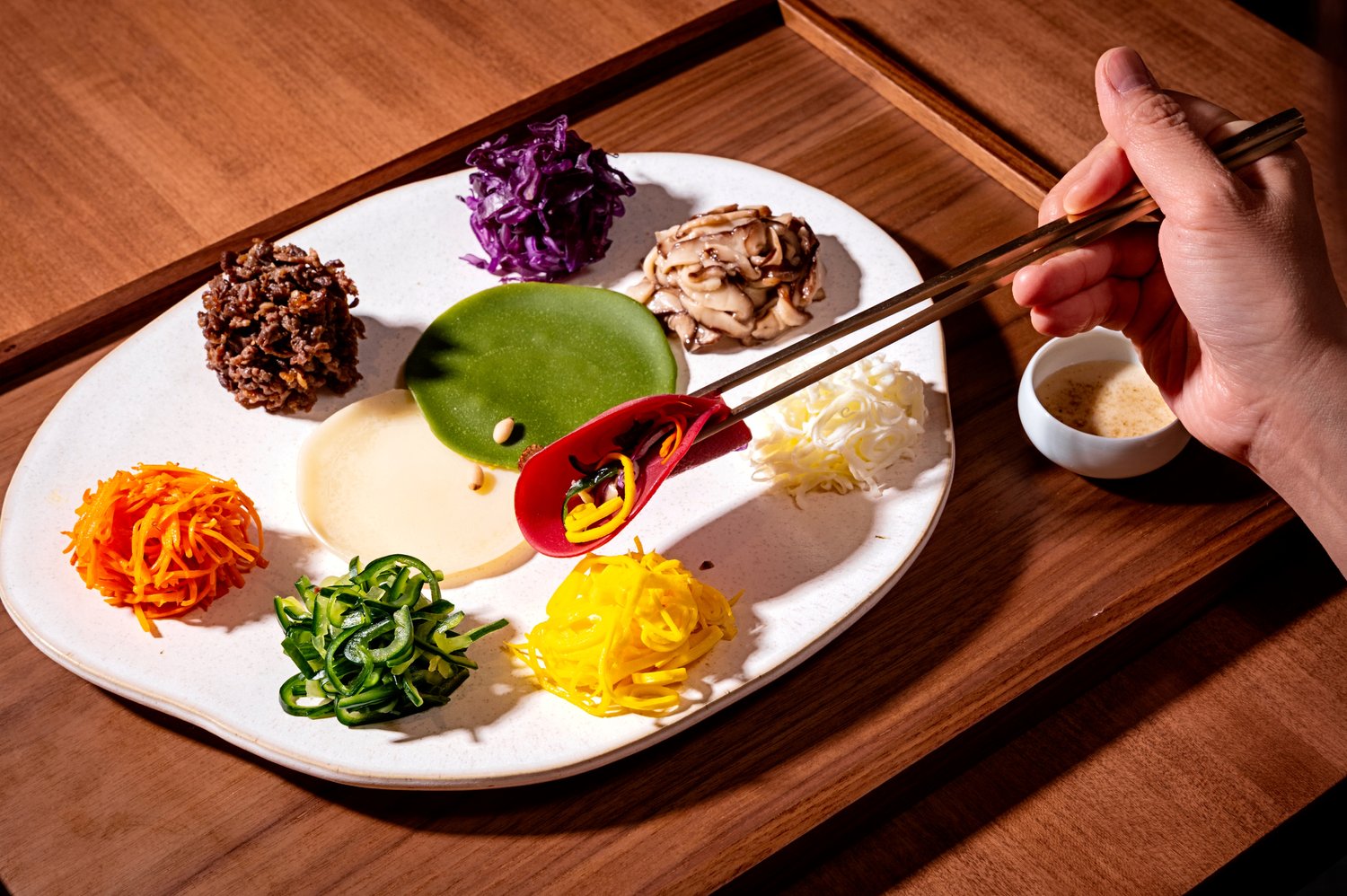
A sudden burst of color hits the table next in the form of a build-your-own-adventure of flavor. Three-colored pancakes made with potato, pork, and tofu are surrounded by seasonal vegetables, including carrots, shredded cabbage and zucchini.
“These colorful, comforting, and savory bites represent three main provinces of Korea: Gangwon, Gyeongsang, and Jeolla,” Kim says. It can also be ordered as a vegan-friendly dish sourcing whatever vegetables are in season or of the moment.
“We want to take you on a journey through Korea’s regions, seasons, and traditions,” she explains. To that end, the restaurant’s six-course Korean dining experience makes for a superb introduction for first-time visitors, beginning with light, refreshing flavors and gradually moving into deeper, heartier dishes.”


Dishes From the Land & Sea
The next course brings together both land and sea. Two dishes hit the table simultaneously — the first is foraged mushrooms: shiitake, oyster, and royal trumpet, lightly pan-fried and dressed in a tangy soy vinaigrette that adds the perfect balance of depth and brightness.
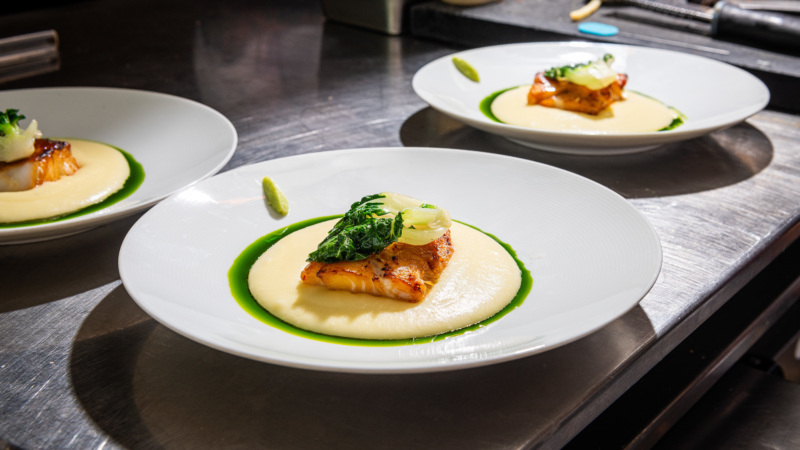
Then comes sustainably sourced seafood — a seared abalone and scallop. “These are both delicacies sourced from Jeju — South Korea’s largest island — offering a luxurious yet deeply traditional flavor,” Kim says.
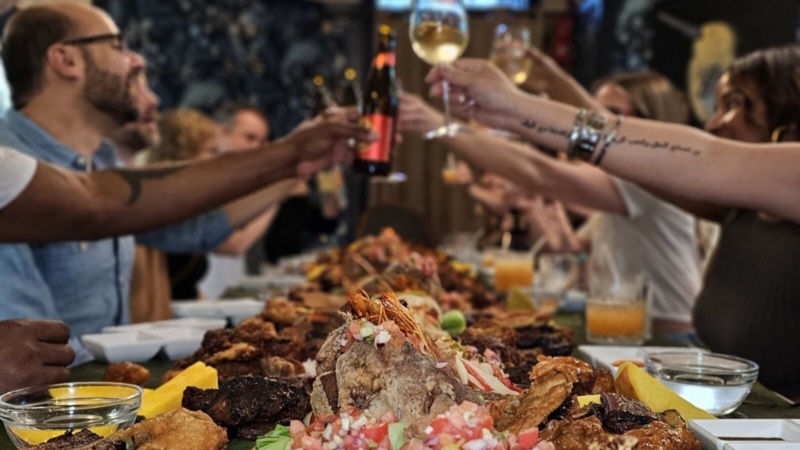
These two dishes are also an example of Hanjeongsik, a Korean-style full-course meal where every inch of the table is taken up by brightly colored food. “It beautifully embodies the traditions of Korean cooking alongside its craftsmanship, and the more I learn about it, the more exciting it becomes.”
Bibimbap
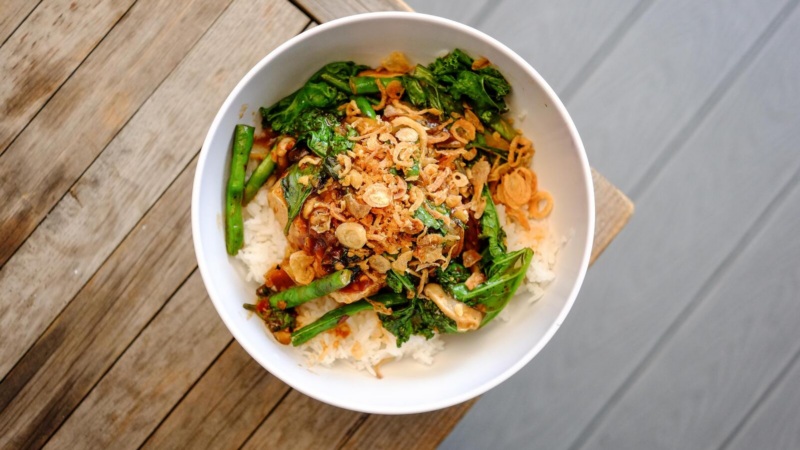
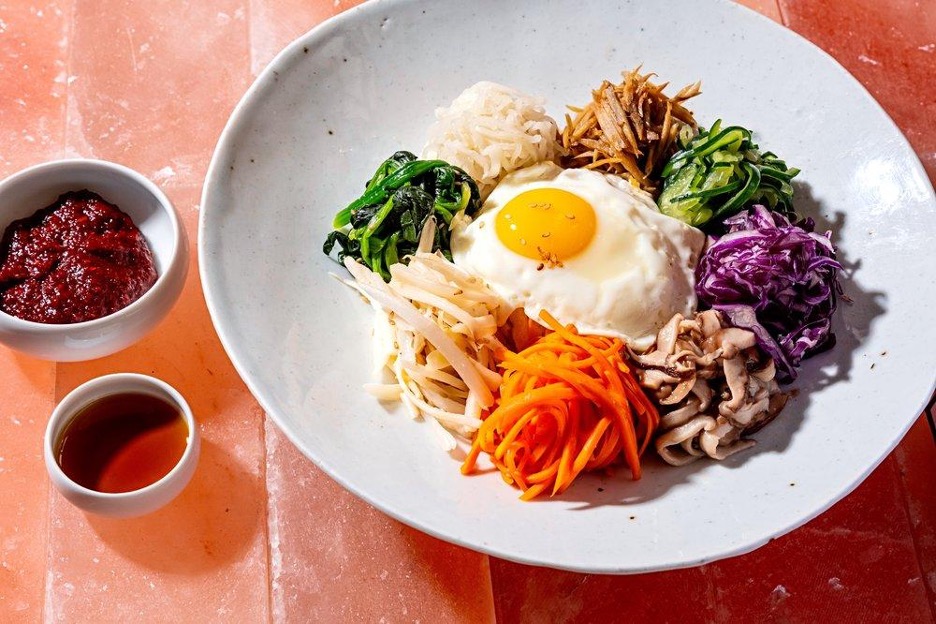
Probably the best-known Korean dish is also one that Onggi specializes in. Bibimbap is prepared with organic short-grain rice, seasoned vegetables, and topped with a soft-poached or sunny-side up egg. According to Kim, the restaurant also makes house-fermented gochujang sauce so good that many customers ask for more.
“In Korean culture, Bibimbap symbolizes harmony — balancing colors, flavors, and ingredients,” she explains. “There are many stories about its origins, including that it was created to use up leftovers after serving the king, or as a way to clear ingredients before the Lunar New Year.” However you choose to interpret the dish’s origins, its simplicity is key to its appeal, and Onggi’s version offers a finessed version of the classic dish that fittingly captures the restaurant’s approach to flavor and balance.