Stephen Satterfield's Corner Table Washington D.C.
At Anju, Korean Cooking Nods to History and Pushes Into the Future
Published:

The American Express® Gold Card and Resy have teamed up with Stephen Satterfield, award-winning host of “High on the Hog,” to bring you Corner Table: a series of exclusive interviews with top chefs and restaurateurs from across the U.S. Discover the personal stories and inspirations of these culinary masters and see how their food is reinventing American dining culture.
Stephen Satterfield is an award-winning journalist, author, founder of Whetstone Media and Hone Talent Agency, and host of “High on the Hog” on Netflix. His book “Black Terroir” is due out in fall 2024.
The genesis of Washington, D.C.’s Anju begins with fire — an actual fire, not a metaphorical one. In 2006, Danny Lee, Anju’s chef and co-owner, opened Mandu, one of the earliest and foundational restaurants to introduce Korean cooking in D.C.
Mandu was a tremendous success, and business skyrocketed, with a second location opening in 2011 and a new Chinese-Korean food concept, Chiko, debuting in 2017 — followed by additional Chiko locations (a total of five, soon to be six) in D.C., Virginia, Maryland, and California. Lee was born in Washington, and though his career began in the field of genetic research, he soon decided to pursue a path in the restaurant industry and eventually opened Mandu with his mother, Yesoon.
In 2017, Lee got a call: the original Mandu location had been destroyed by fire. He decided to stay and rebuild, but it was time for a new concept. He’d also founded The Fried Rice Collective, a restaurant and hospitality group, with his fellow James Beard Award nominee, chef Scott Drewno, who had been running the popular D.C. restaurant The Source. Drewno, originally from the Finger Lakes, spent the majority of his career with Wolfgang Puck. Lee and Drewno opened Anju in 2019.
Their vision for Anju was transformative: a substantive, heritage-minded homage to classical Korean cuisine, but with the confidence and curiosity to continually test and redefine what “classical” means. There was, yes, fried chicken, but also Cornish hens stuffed with sweet rice and dates. It drew devotees, but also critics, expecting more “traditional” fidelity to expected dishes.


Either way, their body of work attracted plenty of attention: not just Beard nominations (Anju has received five) but RAMMYs, the D.C.-area restaurant award, as well as interest from HBO, Netflix, and plenty of national media. Anju had of course arrived just as the interest in Korean cooking — at every level — fully catalyzed across the country. The regard was appreciated, Lee says, but what mattered more was to honor the rich traditions of ancient Korean cuisine while simultaneously testing its limits. Take a foundational dish like kimchi jjigae; this stew graces nearly every Korean table, and its ubiquity provided not just a template, but the opportunity to explore endless variations and transformations.
And so, enter Angel Barreto, a chef with classical French cuisine training, an awareness of the Buddhist roots of Korean cooking, deep love of Korean food, and the creative gusto to prepare 120 peach cobblers for the President of Korea.
Barreto first attended L’Academie De Cuisine in Maryland and concentrated in French fare, then headed to Vermilion, an iconic and modern American restaurant in Old Town Alexandria in Virginia, where he gained experience cooking with local, farm-raised products. He moved on to become the executive sous chef at The Source, where he connected with Drewno, before helping to open Anju.
We caught up with Lee and Barreto to discuss the unique perspective they offer at Anju, the state of Korean cooking in America today, and why the colors of their food are very much intentional.
Anju refers to food eaten while drinking. Tell us about the magic of that. Why is some food perfect to accompany drinks, or vice versa?
Angel Barreto: When you think about Korean food, there’s certain pairings that just go together so well, and it’s embedded in the culture. For example, chicken and beer; or yachaejeon, which is a [vegetable] pancake, and makgeolli.
We’ve evolved throughout time, but the embodiment of what we still do is kind of pushing forward Korean liquors and pairing them with food. And we were very surprised when we got how popular American wines were pairing with Korean food, and also how amazing our team was in creating cocktails inspired by Korean dishes and foods.
Angel, you first came across Korean food because your parents, who were in the military, were stationed there. What were some of your formative encounters with Korean food, and how does that shape you as a chef today?
Barreto: My father lived in Korea, so we grew up eating Korean food and living on a military base. We had aspects of Korean culture around us. I enjoyed the flavors growing up, eating Korean food and hearing the stories about my mom when she was in Korea, because Korea was the first place my mom went to outside of the States.
It was hugely impactful for her, growing up from rural Mississippi to upstate New York, to go to Korea. It was very awakening: the colors, the flavors, the people, the culture — it played a huge impact. It played into how I love Korean food.
I remember the first time I had kimchi. We lived near Seattle at the time on the military base, and we had a neighbor [whose] wife was from Korea. She had brought kimchi for our family, and I’d never had it before. I was super young. And as soon as I tried it, I fell in love with that, fell in love with the funkiness, the spice, and all these flavors. And then our neighbor realized how much I liked Korean food, and she would bring over dishes to the house for us to try.
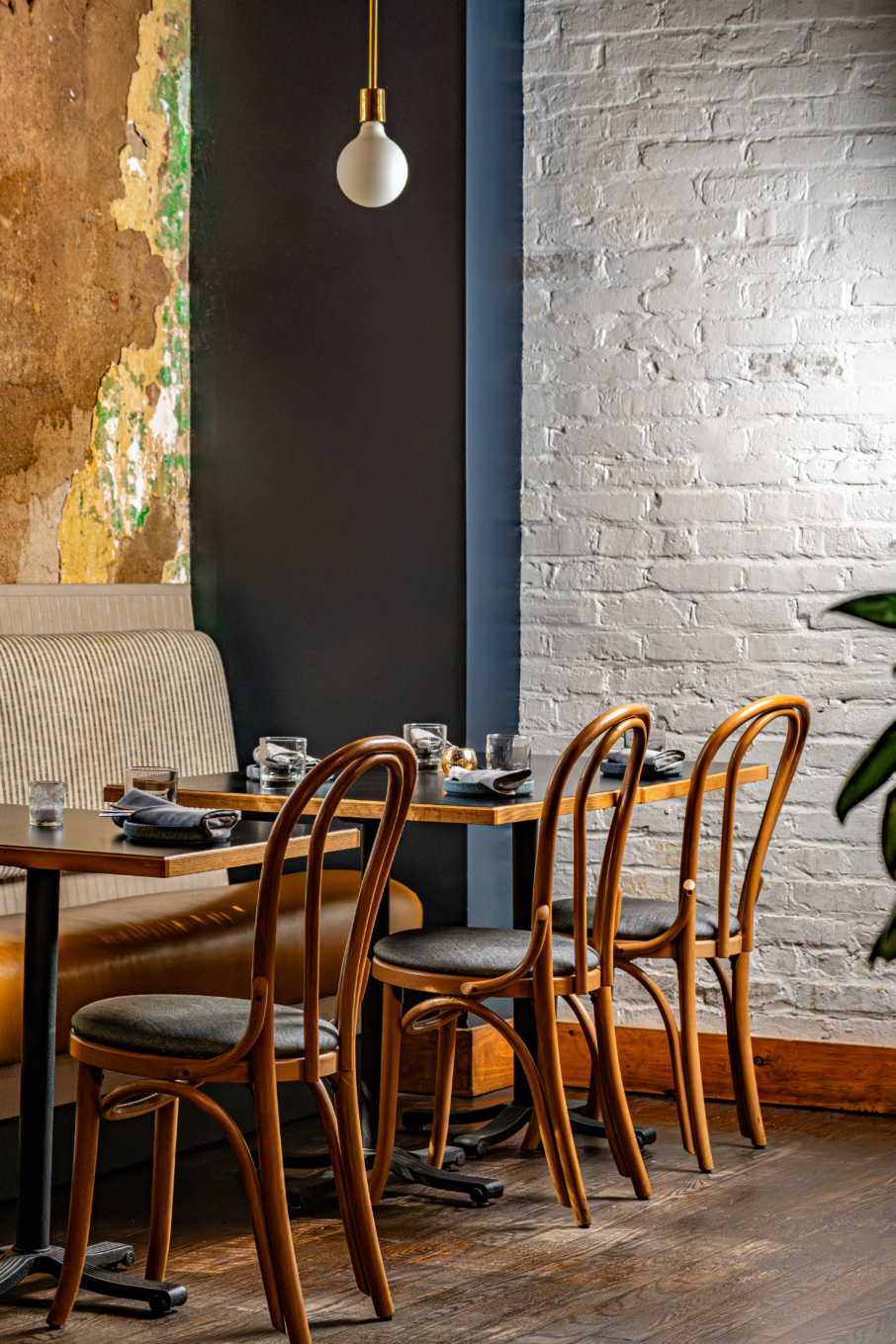
Danny, how do you honor those traditions of Korean cuisine, while also aiming for the new?
Danny Lee: Anju is everything. Both restaurants are Korean, but one leans more toward dishes that your grandmother would’ve made you. Another has dishes including that, plus street food, plus our takes on using cream-based ingredients and other techniques, but elevating it to a dish that maybe hasn’t been seen before. But when you eat it, it still reminds you of an element of Korea.
I think there’s a need for both, but we wanted to boundary-push. We wanted to do something different, while simultaneously honoring my heritage and the food, and also the culture. Because even though we’re a restaurant, I do feel an obligation that we are educating non-Koreans, or even Koreans themselves, in what we do.
And part of the education is through food. There’s not just one way of making kimchi, there’s not one way to do a jorim [stew or braise]. There’s not one way to present a bibimbap. There’s multiple ways to do banchan, multiple ways to do different dishes. One shouldn’t have the authority to come in and say, oh, because you use this, you’re not Korean or that’s not Korean enough.
And that’s something that we’ve battled. Especially with the amount of attention Anju has gotten, Angel and I especially have had to hold our tongue quite a bit, and brush things off, because we do get attacked from people who think they know Korean food better than we do. And maybe some do, right? A lot of people do. But we find it displeasing when someone tries to say that there’s a scale of Korean-ness and that they can match that to a specific number on that scale that doesn’t exist.
Our mission is to break through that mentality, and say even though that dish that Angel just mentioned with the kind of light-fried fish over classically Korean braised radish, that dish as a complete dish is not a traditional Korean dish, but the fish is something called twigim. The radish is something called jorim. They’re two very, very traditional aspects of Korean cooking that exist, and we just happen to put them together. So in my mind, it’s like an exponentially higher Korean dish because of that.
And if you just take a second to really look at what we do, we’re trying to highlight Korean food in multiple ways, even through one dish. And that’s our goal, to open people’s eyes that Korean food isn’t just bibimbap. Korean food isn’t just kimchi. Korean food isn’t just bulgogi. You can view it from a different lens.
One of the best reviews we got early on was that Anju is looking at Korean food through a kaleidoscope lens. And that summed it up perfectly for us because we’re researching centuries-old recipes for banchan or kimchi all the way to modern-day street food.
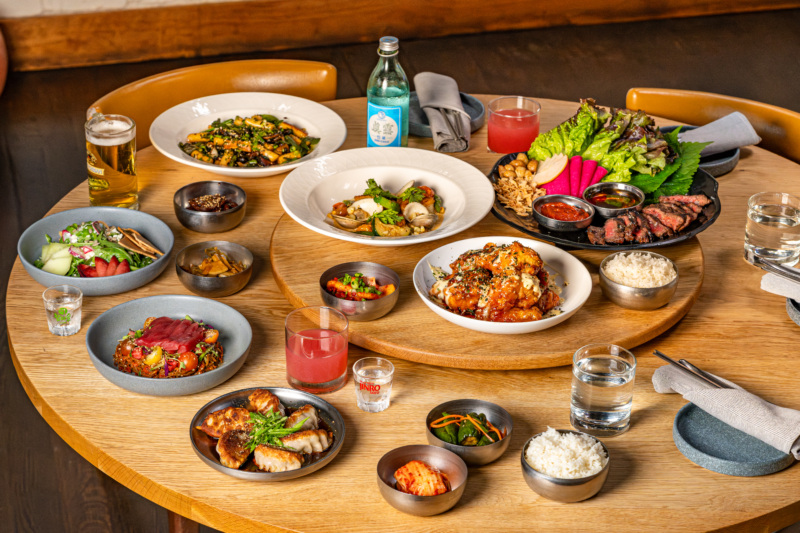
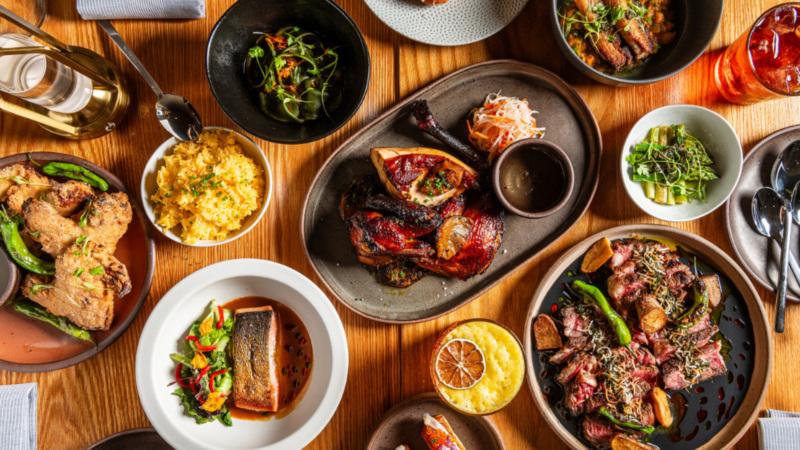
A full spread at Anju, where, per the name, the dishes are made to accompany the drinks — soju, beer, and otherwise.
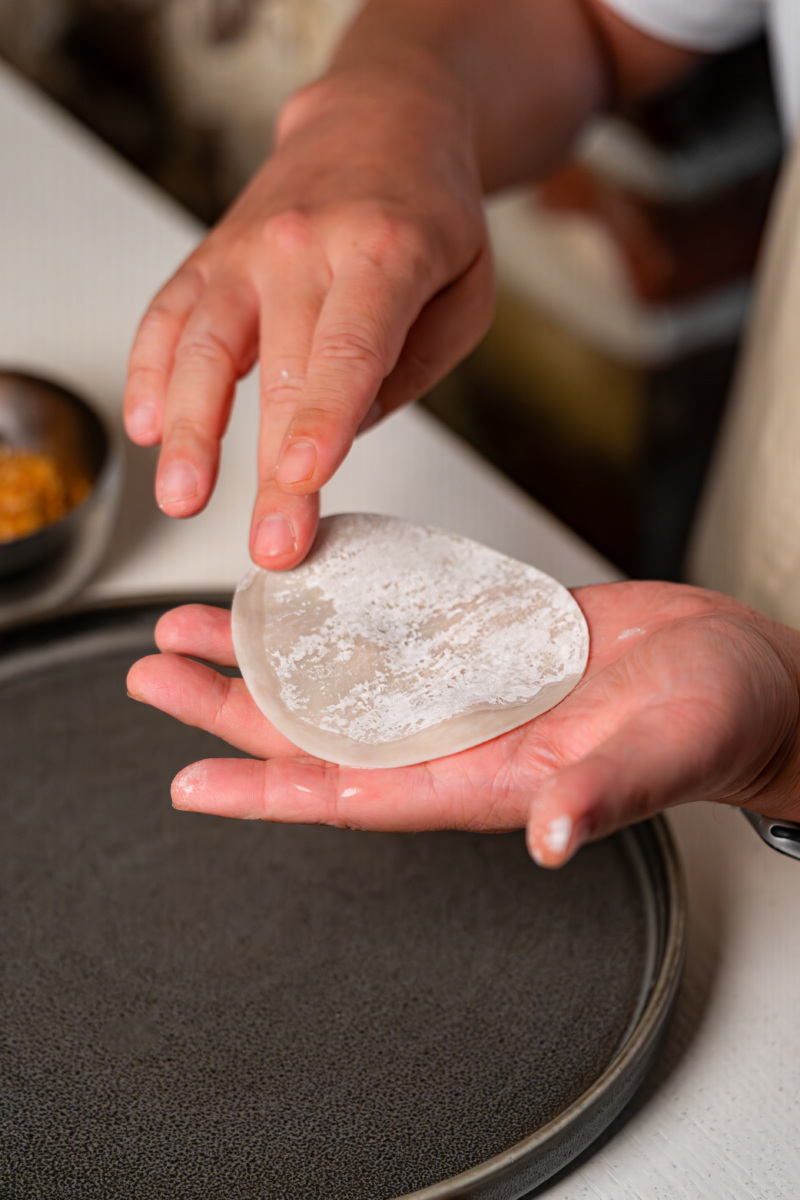
Danny Lee prepares Anju’s mandu.
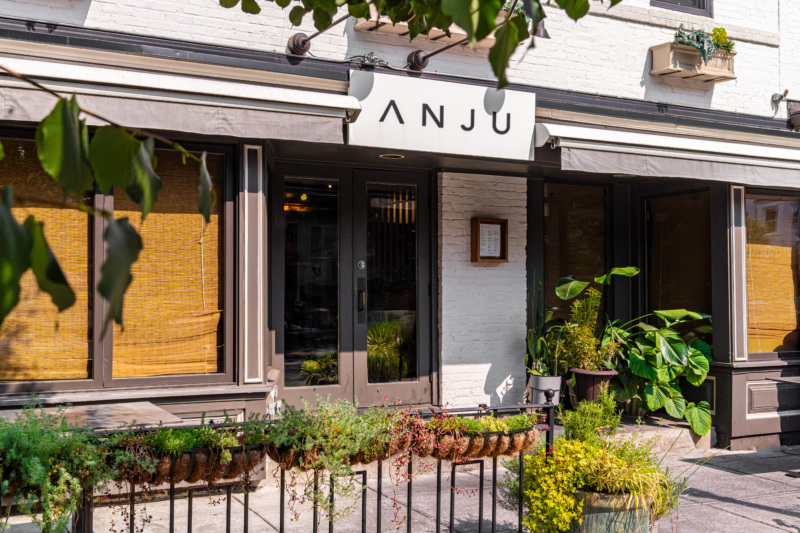
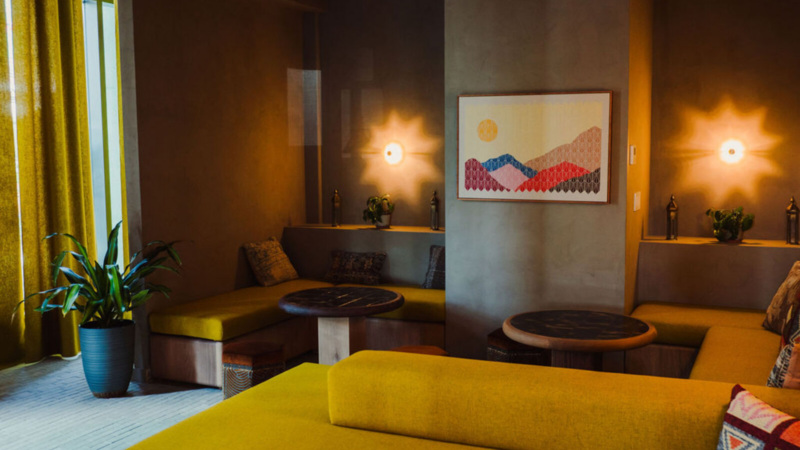
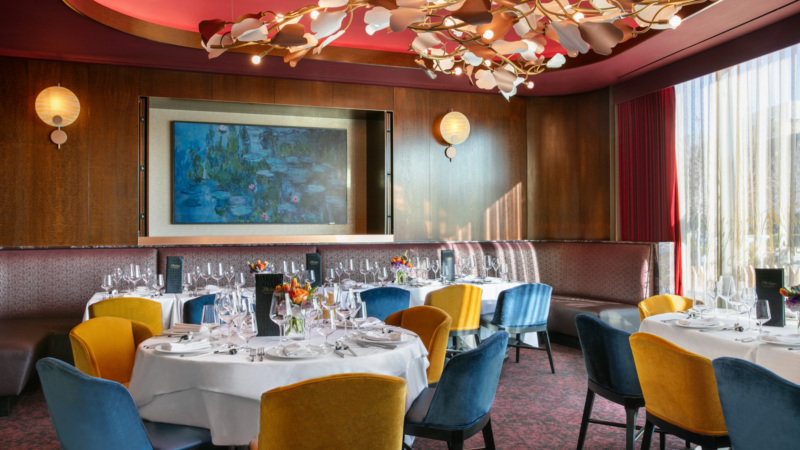
Anju, located just east of D.C.’s Kalorama neighborhood, sits in the location where Lee’s former restaurant Mandu once was.
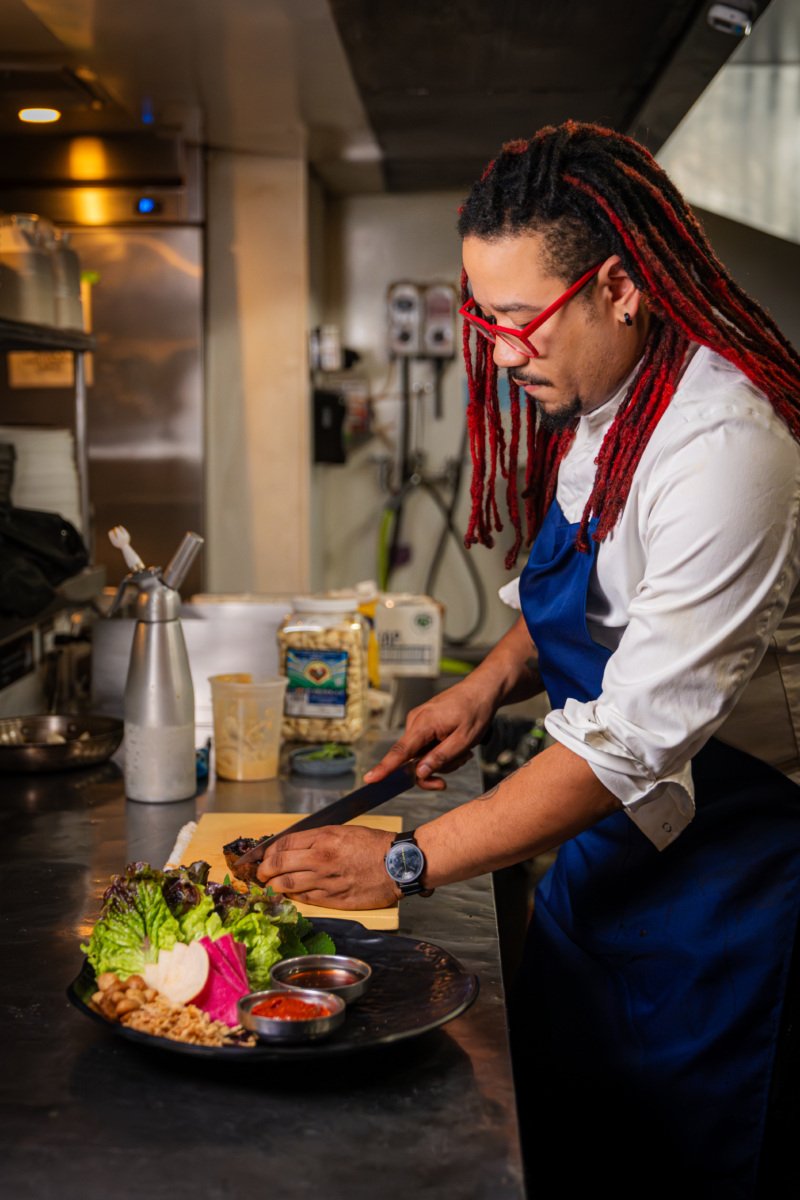
Angel Barreto prepares the restaurant’s ssam board.
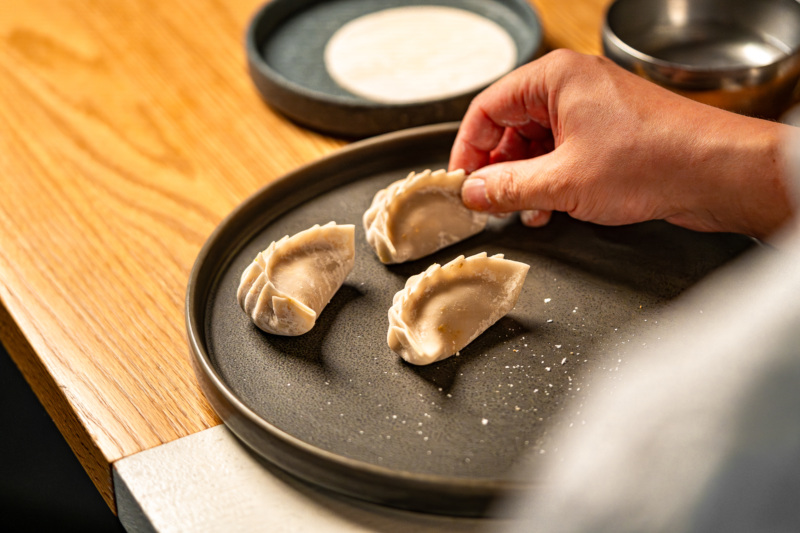
Folding the pork and kimchi mandu.
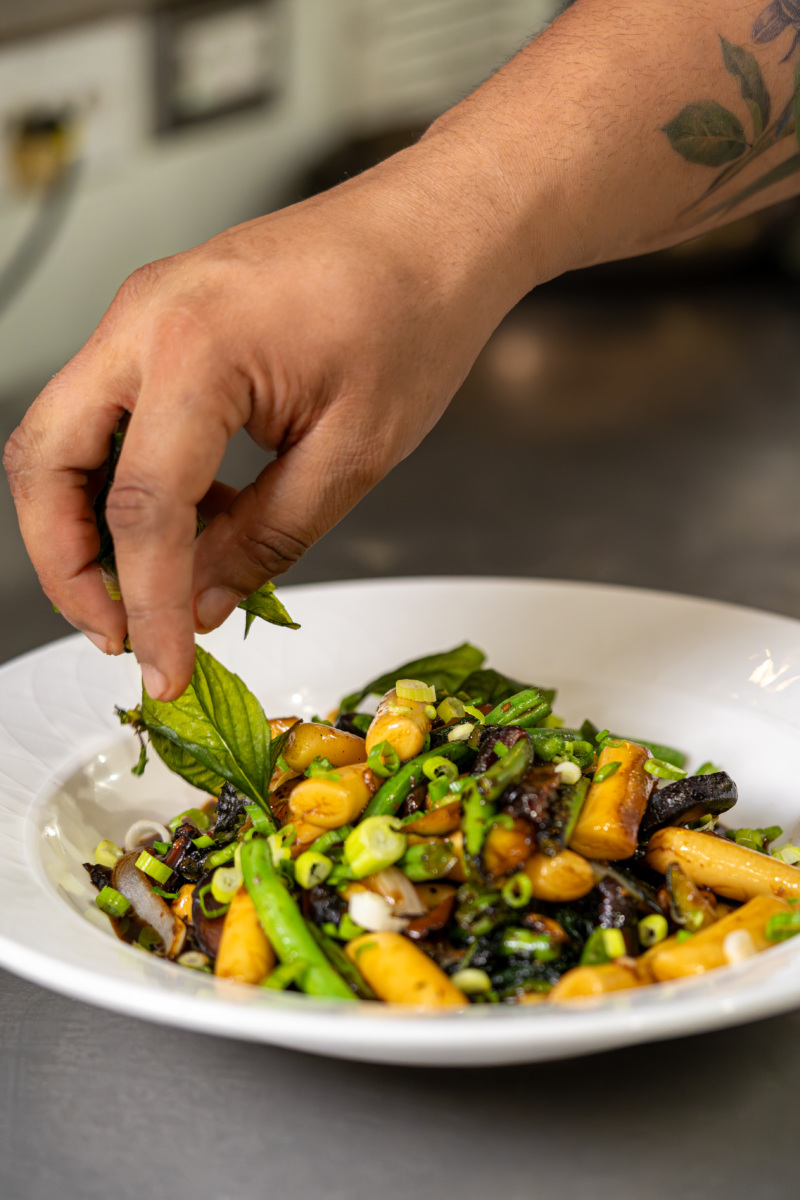
The Palace ddukbokgi reframes the familiar chewy rice cakes in a new way, wok-fried with seasonal vegetables in a sweet soy glaze.
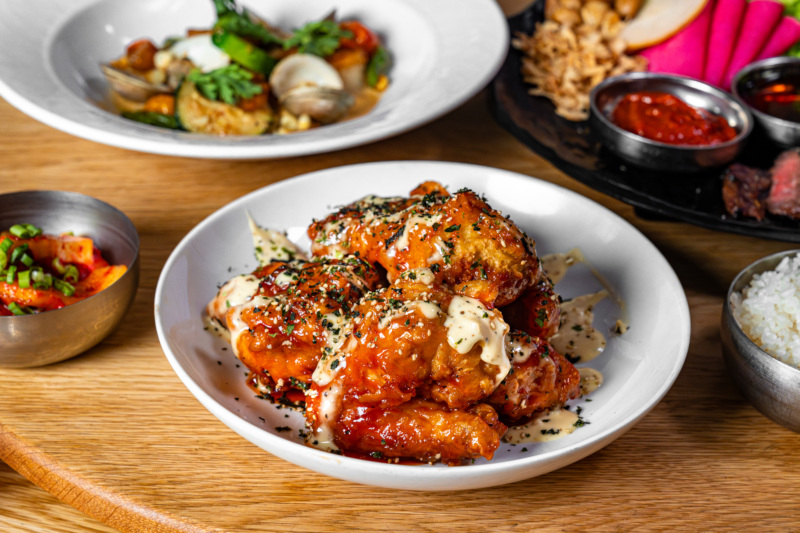
Anju’s double-fried chicken, coated in a spicy gochujang glaze and topped with white barbecue sauce.
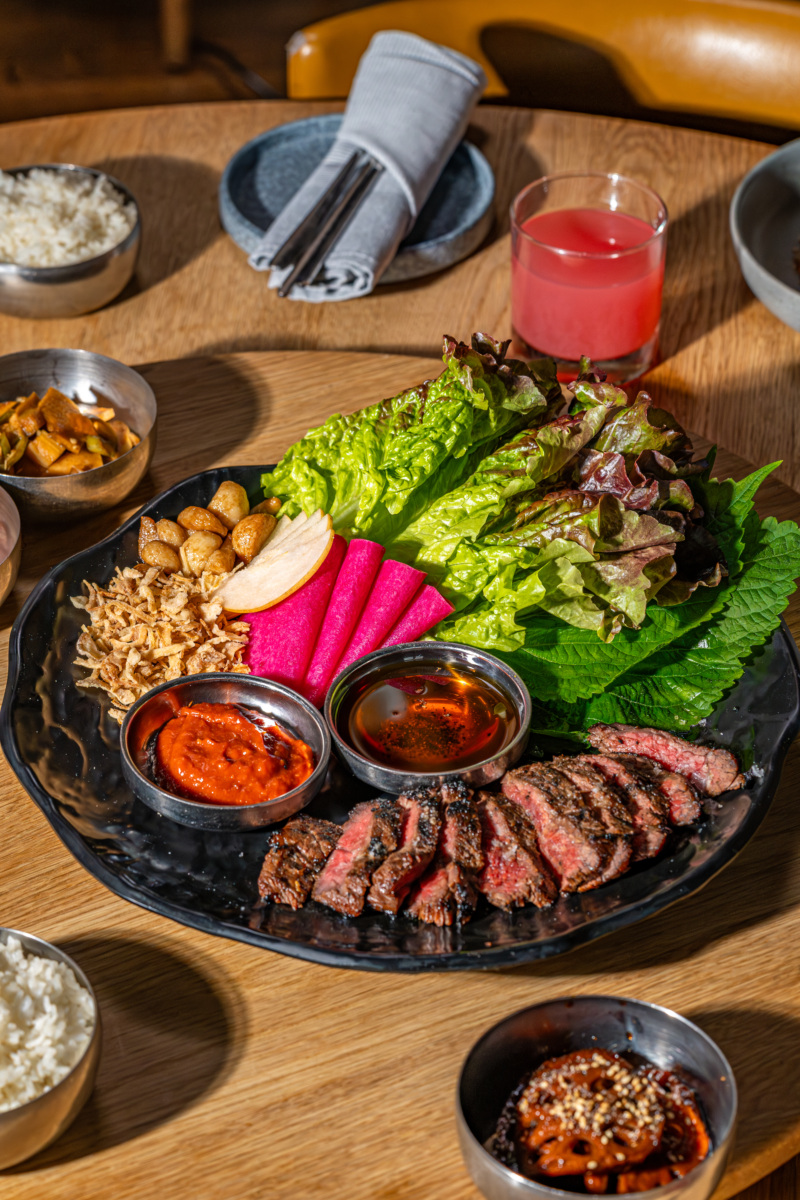
The ssam board: sliced beef galbi with lettuce and perilla-leaf wraps, plus ssamjang, sesame oil, and assorted accompaniments.
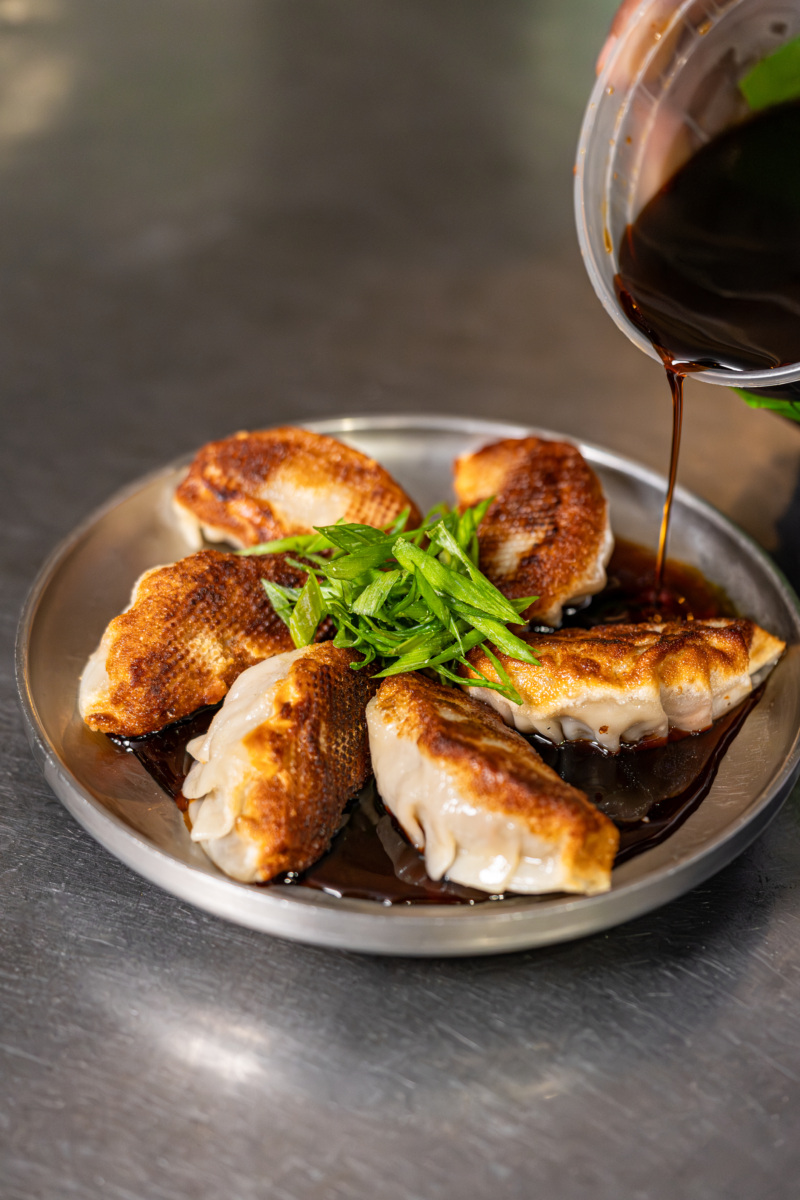
The mandu, finished.
Anju has been the recipient of so many awards and honors, and featured in the HBO Max series “Take Out With Lisa Ling.” Has this created more creative freedom for you?
Lee: Number one, it really helped with business. We’ve been lucky enough at Anju where even during the pandemic, there’s always been some kind of big review or accolade or TV show that comes up. It’s been spread out almost so perfectly that we’ve consistently remained at capacity — or over capacity, to be honest.
The recognition we get pushes us to keep changing things and trying to stay at the top of what we perceive as our game. But we’re more concerned about how we genuinely feel about ourselves and the restaurant, the concept and the menu.
That, to us, is the trick. And that, to us, is the challenge. How do you keep the team motivated and activated and instill that passion for bibimbap, which they’ve sold tens of thousands of at this point? From our standpoint, it can be better. How can we be better and how do we educate our staff, who can then educate the guests? Why?
We’re getting all of these fresh faces in [to dine]. We were just on “Somebody Feed Phil,” for instance, around the Netflix series that brought in a whole wave of people that had never been to Anju before.
It’s that opportunity for us to really dig our heels in, and really try to impress people. The danger with busy restaurants is that you’re assuming that everyone knows who you are and everyone thinks you’re great. That’s why they’re there.
The reality is, most people have never been there before and don’t really give a shit who you are. They just heard about you. So, you need to be as good as you were on day one as you are in year five, even better actually.
Digestif: A Few of the Anju Team’s Favorite Things
Angel Barreto and Danny Lee share some of their inspirations
MUSIC TO COOK TO
Barreto: I listen to a lot of R&B, Lucky Daye, Afro beats, Burna Boy.
Lee: “Kid A” by Radiohead.
WHERE TO EAT ON A NIGHT OFF
Lee: Meokja Meokja (Korean BBQ in Fairfax, Va.).
BEST ON-SCREEN COOKING SCENE
Barreto: I love the scene from “Chef” where Carl Casper says, ‘I may not do everything great in my life, but I’m good at this. I manage to touch people’s lives with what I do and I want to share this with you.’
Lee: In “Ratatouille,” when the rats start cooking all the food, and they go into the dishwasher to sterilize themselves.
FAVORITE COOKBOOK
Lee: “Smoke and Pickles,” by Edward Lee.
Barreto: “The French Laundry Cookbook,” “Jewels of the Palace,” “Beard on Bread.”
Angel, you once noted that very traditional Korean food asks, “How does this affect your body and your mind?” and the symbolic connection between the colors of the food and the human body. Can you tell us more about that?
Barreto: Korean culture, part of it’s rooted in Buddhism, and a lot of the ideas of Buddhism and Korean food is creating equilibrium in your body. A lot of the colors — red, green, yellow, brown — they represent your heart, your lungs, your liver, your kidneys.
For example, the Joseon dynasty, when they were preparing foods for the king, they wanted to make sure different food groups and vegetables were included in a meal because that represented a more well-rounded diet.
And that’s very indicative of how Korean food is a very well thought out, methodical food, from making meju blocks to making soy sauce, to making chunjang.
All these processes can take years and that’s part of the beauty of what Korean food is. So much time and care and thought that they put into these ingredients and these dishes to get one item, maybe years down the line, or a couple months.
They’re very healthy for you. They have super probiotic aspects, and it tends to be a more well-rounded meal compared to most European meals because you’re having so many accompanying dishes to offset whatever you’re eating.
A lot of places do quick kimchi, but Danny and his mom were very adamant, we’re going to do traditional-style kimchi, not fast paced. You’re going to place each leaf by leaf by leaf. The marinade and the processes we do, they can take up to one to two days. It’s just trying to pay homage to the traditional core value of the food.
There’s not one way to present a bibimbap. There’s multiple ways to do banchan, multiple ways to do different dishes. One shouldn’t have the authority to come in and say, oh, because you use this, you’re not Korean or that’s not Korean enough.— Danny Lee
Angel, tell us about your journey sponsored by the Korean embassy, and how it impacted the creation of the menu at Anju.
Barreto: That was a cooking competition sponsored by the Department of Agriculture and Fisheries, and they allowed me to go to Korea for a week. It was in the wintertime [during] the Chuseok festival.
When you initially land into Seoul, there’s this energy you feel. When I was at the Old Palace, you’re standing there and you’re seeing all these hundreds and hundreds of years of history. [Another trip involved an] ambassadorship for the State Department. This was such a huge ordeal to cook for the president of Korea.
We wanted to make sure we were indicatively being who we were, the restaurant, but also representing the United States. We had to cook for over a hundred people, and they were trying to kick me out because they were doing a security sweep. I had 120 peach cobblers in the oven. I’m very lucky to have both my partners come because they helped me calm down, because it was a lot.
Travel is just such a pivotal tool for chefs. The last big trip I took was to Japan, and I was just so inspired by the respect and the endeavors they put into the food. It really reminded me of Korean food, the amount of pride you put into a dish.
Walk us through some of your favorite items on the menu. What are some unusual ingredients? Is there a dish that holds special significance for you?
Lee: One of my favorite menu items is jjajangmyeon. But it’s three chefs, Danny, myself, my sous-chef James. We all have different opinions. So, we’re making this recipe — maybe a little more sugar, maybe a little bit more of this, maybe a little more of that.
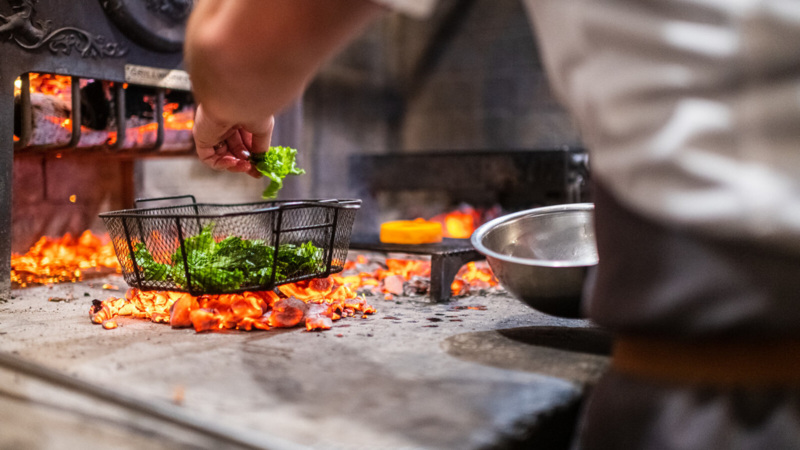
I think that really encapsulates how we cook at Anju. We come together and we make this dish, and it came out to be a version of jjajangmyeon that you won’t find in Korea. But again, it’s very much Korean. We’re using confit duck fat to cook the aromatics of garlic, ginger, and scallions as the base, and then still cooking it in the wok with the noodles and getting the wok hei from it.
But we’re serving it with a Hudson Valley pan-seared duck breast on top that’s rendered, so it feels slightly French, but still very much Korean. It’s melding the best of ideas we have into one dish, and that’s really representative of how we cook in the restaurant.
We weren’t really sure how people would receive it. But that turned out to be one of our more popular dishes. Also, crab fat japchae, using crab fat and turning that into classic-style Korean japchae with Maryland jumbo lump crab meat. These dishes are representative of how we cook at the restaurant, combining a really classical idea and adding components that we really like — that are also local.
Lee: I would say juk, a dish that’s a Korean rice porridge. It’s really kind of a thicker rice porridge than Chinese congee, for instance. It’s such a humble, homestyle dish that every Korean mother cooks for their kids if their stomach [hurts] or if they have a cold. Just a humble and simple dish.
We’ve done so many versions at Anju using just a humble rice porridge as a base, or as a canvas, to really build upon to make something special. Since opening, whether it’s brunch or dinner, we’ve always had a version of juk on the menu. I think we’ve done almost 10 by now. It’s a dish that is very special, it means something. I make it at home almost weekly.
It’s a dish that you typically don’t see restaurants do that do the volume that we do. Often if it’s on a menu, it’s at a fancy tasting menu restaurant, because it’s a pain in the ass to make. But we found a way to put it on the menu, and I just love educating people who haven’t had that dish before on the beauty of a Korean rice porridge.
Sometimes it’s the perfect detail that matters most — the perfectly steamed vegetable, the perfect crispy finish, the just-right spice, the perfect crunch. What are some particular details at Anju that come to mind? Something that doesn’t necessarily have a spectacular fanciness to it, but it’s just, in your view, the way of getting it absolutely right that feels right to you as a chef.
Barreto: If we weren’t prep heavy, we couldn’t do what we do. So, putting attention into marinades, for us, is huge, so they can really penetrate the meats and get the flavors we want from them.
At a lot of places, that can be very difficult, but for us, we have to do such high volume. It’s key to making sure we’re marinating these meats and doing these preps two to three days in advance. We’re having this constant cycle of getting the best ingredients paired with H Mart and making really great recipes, using a base for garlic and ginger to bump up flavor.
We have a ratio [for those ingredients] that came from Danny’s other restaurant that was hugely impactful. We call them aromatics, and we use that in almost every single dish at the restaurant because it’s such a great ratio of garlic, ginger, or the pear purée we use for certain dishes.
Lee: I would say rice. If a batch of rice comes out wrong, it throws everything off. And you’ll see us running around with our heads cut off. Everything needs a side of rice, and we freak out if something’s wrong. Particularly Korean rice, or the method of cooking Korean rice, is you want it to be sticky and you want it to have a lot of moisture content. But you don’t want it too wet where it gets a little bit too gummy. Also, you don’t want it too dry, and that’s why you don’t use a longer grain, like a jasmine rice.
When I was in elementary school and doing construction paper projects for art class or whatever, we would always run out of glue at home. So, my mom would just give me rice, and I would use that as the adhesive, which worked. It was just thicker than the other kids’ things.
For me, the first thing I typically check will be rice. They’ll have a fresh pot of rice, and even though we need it, we’re willing to sacrifice dishes going to a table late so that they can have correctly cooked rice.
Produced By

Project Credits
- Writing Stephen Satterfield
- Editing Emily Vizzo
- Photography Rachel Paraoan
- Creative Director Celine Glasier
- Brand Liaison Marisa Dobson
- Writing Stephen Satterfield
- Editing Emily Vizzo
- Photography Rachel Paraoan
- Creative Director Celine Glasier
- Brand Liaison Marisa Dobson