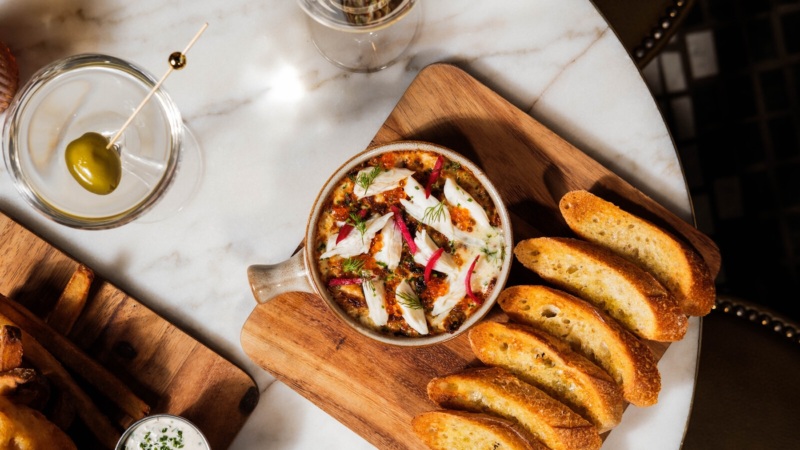
D.C.’s French Soul

You might imagine New York to be the American city with a Paris mindmeld, but as it turns out, even in deepest Brooklyn, leeks vinaigrette is still pretty much just leeks vinaigrette. In fact, Washington was the city that happened to be a perfect crucible for a great American néobistro. D.C. has its own long and dear connection to France — it was designed, after all, by Pierre-Charles L’Enfant, who fought alongside Revolutionary troops and laid out plans for the young nation’s capital. Even the drapes in my hotel on this visit are adorned with a pattern that alternates depictions of the Capitol dome and the Eiffel Tower. “This city has a French soul,” Coss says.
That said, Georgetown might not have been an obvious choice for experimentation — even if L’Enfant drew up his plans not far away. The neighborhood has historically been buttoned-up, a society enclave, leaning more toward New York’s conservative Francophilia. “There was a challenge,” Conroy recalls. Locals would come in and be surprised at the approach, with nary a steak frites on the menu, “and would be, like, well, that’s not French.”
When Matt [Conroy] and I started to talk, and he used the word néobistro, I was like, this guy gets what I’m trying to do.— Omar Popal
By contrast, Café Bonaparte had fit right in — an essential piece of the city’s hoary Gallic ecosystem, opened in 2003 by Omar Popal and his family, Afghan emigrés who fled after that country’s 1980s Soviet invasion. Omar had been working at Merrill Lynch, and helped to manage the estate of the chef Jean-Louis Palladin, who had effectively introduced the capital to nouvelle cuisine; that led him to meet Michel Richard, the legendary chef of Citronelle, another star in the District’s French firmament. The Popals soon concluded that French food was a smart bet. They followed up Bonaparte with the more formal Cafe Napoleon in 2007, in the Adams Morgan neighborhood. But Omar sensed that old boundaries needed to be pushed; he added late-night hours in Georgetown and opened a Champagne bar in Napoleon’s basement. In time, they would move beyond French food: Cafe Napoleon would become Lapis, their respected Afghan bistro, itself celebrating a 10th anniversary this year. (The next move? Maison, set to open later this year in Adams Morgan, that will combine a bar scene, a wine program, and the late-hour hangs that defined Au Pied de Cochon, the city’s longtime French greasy spoon in, yes, Georgetown.)
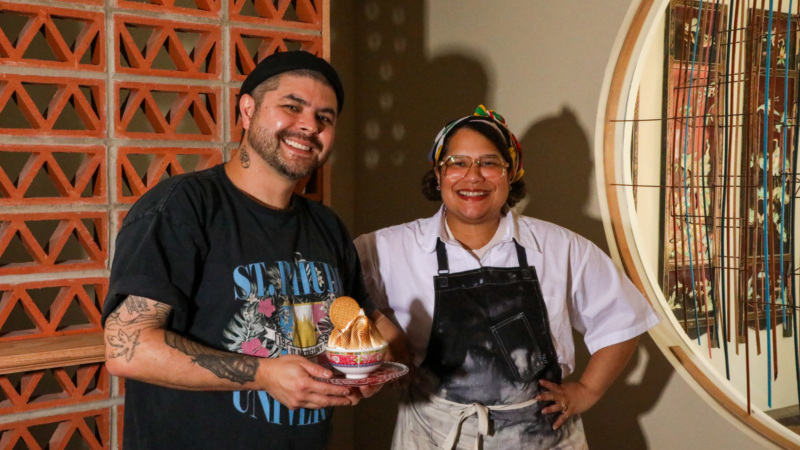
While the family knew its stalwart crêperie needed to evolve, most D.C. chefs weren’t interested in such a small project. “They all want, like 150 seats,” Popal says, so he looked further afield, even posting an ad to Craigslist in 2019. It was Conroy who responded. The two bonded over “Curb Your Enthusiasm” and Depeche Mode, and spent hours discussing Conroy’s thesis, based on his and Coss’ repeated research trips to Paris, that Americans were ready for a dose of true néobistro flair.
“I was tired of French onion soup and escargots,” Omar says. “When Matt and I started to talk, and he used the word néobistro, I was like, this guy gets what I’m trying to do.”

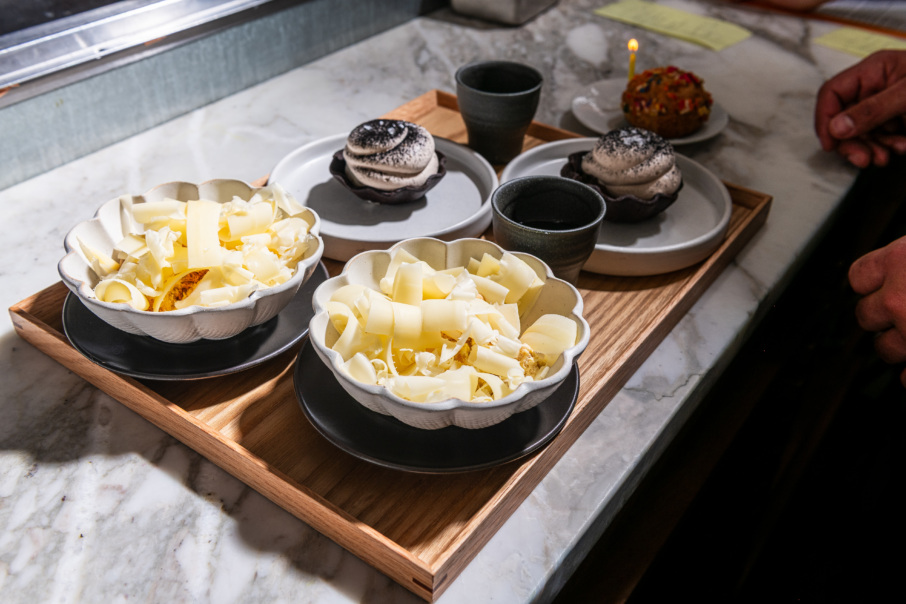
Conroy and Coss were, arguably, the perfect chefs for the task — because, while the cooking at Lutèce is unabashedly French, the couple’s history is imbued with a very different set of influences. They met working at Empellón Cocina in New York — he as sous chef, she as pastry chef — bonded over a shared love of Mexican cooking, and married in 2015, with a bigger follow-on wedding in Acapulco two years later.
Coss grew up in Mexico City, and at 17 put aside her aspirations to be a ballerina to work as a baker at Pujol, where chef Enrique Olvera was redefining Mexican cooking with dishes like baby corn with a coffee mayonnaise and chicatana ant powder. That drew her to the Culinary Institute of America, until she realized tuition costs would be prohibitive. Instead, she went to New York and landed at Empellón Cocina, where she was responsible not only for pastry but also for the masa, a formative part of Alex Stupak’s experimental tasting menus. From there she moved to Agern, one of the city’s New Nordic stalwarts, and then went back to work for Olvera, doing pastry at his New York restaurant Cosme, all of which placed her at the top echelon of New York cooking.
Conroy, meantime, grew up in Boston, working his way through high school as a dishwasher and short-order cook. He too wanted to go to culinary school but blanched at the cost, instead moving to Vermont to cook in ski towns, then returning home to work for Tony Maws, whose Craigie on Main pioneered Boston’s approach to formal but chill-vibes dining. “I wouldn’t call it a néobistro,” Conroy says of the restaurant, namely because with 10 cooks in the kitchen, it lacked the leanness of Parisian setups. “But servers were in blue jeans, and the wine list was fun.”
Conroy wanted to expand his repertoire, and similarly looked to New York, landing at Empellón, before turning back to French cooking at a West Village bistro, Little Prince. But Mexico remained his passion, and in 2018 he opened as the chef de cuisine at Oxomoco, the forward-thinking Mexican spot in Greenpoint, Brooklyn. Coss, meantime, was spending more time in Las Vegas and California, helping Olvera expand his restaurant empire.

Along the way, they made annual pilgrimages to Paris to explore the evolving néobistro roster: Clamato and Saturne and Verjus and, of course, Bistrot Paul Bert, the classic 11th arrondissement haunt that has become the connective tissue between vieux and nouveau. A perfect scenario was hatching: a Mexican chef who’d honed herself on tasting menus and French flavors (“I think French food is what gives kids good palates,” she tells me), and an American chef trained in French technique who was obsessed with Mexican tradition, brought the right mix of energy, in the same way many defining néobistro chefs in Paris hailed from elsewhere: James Henry at Bones was Australian, Sota Atsumi at Clown Bar was Japanese, Robert Compagnon and Jessica Yang at Le Rigmarole were French American and Taiwanese American, respectively.
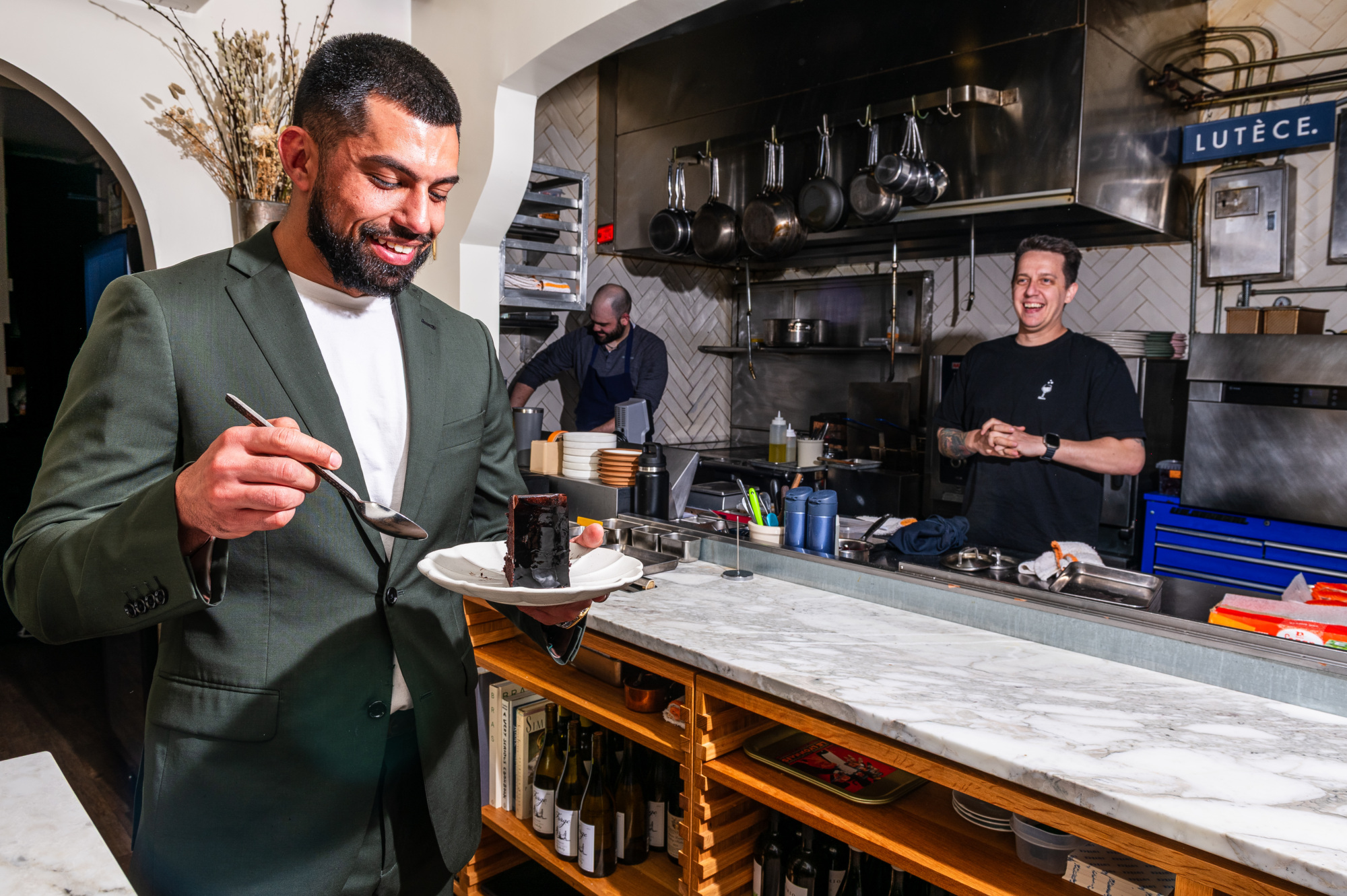
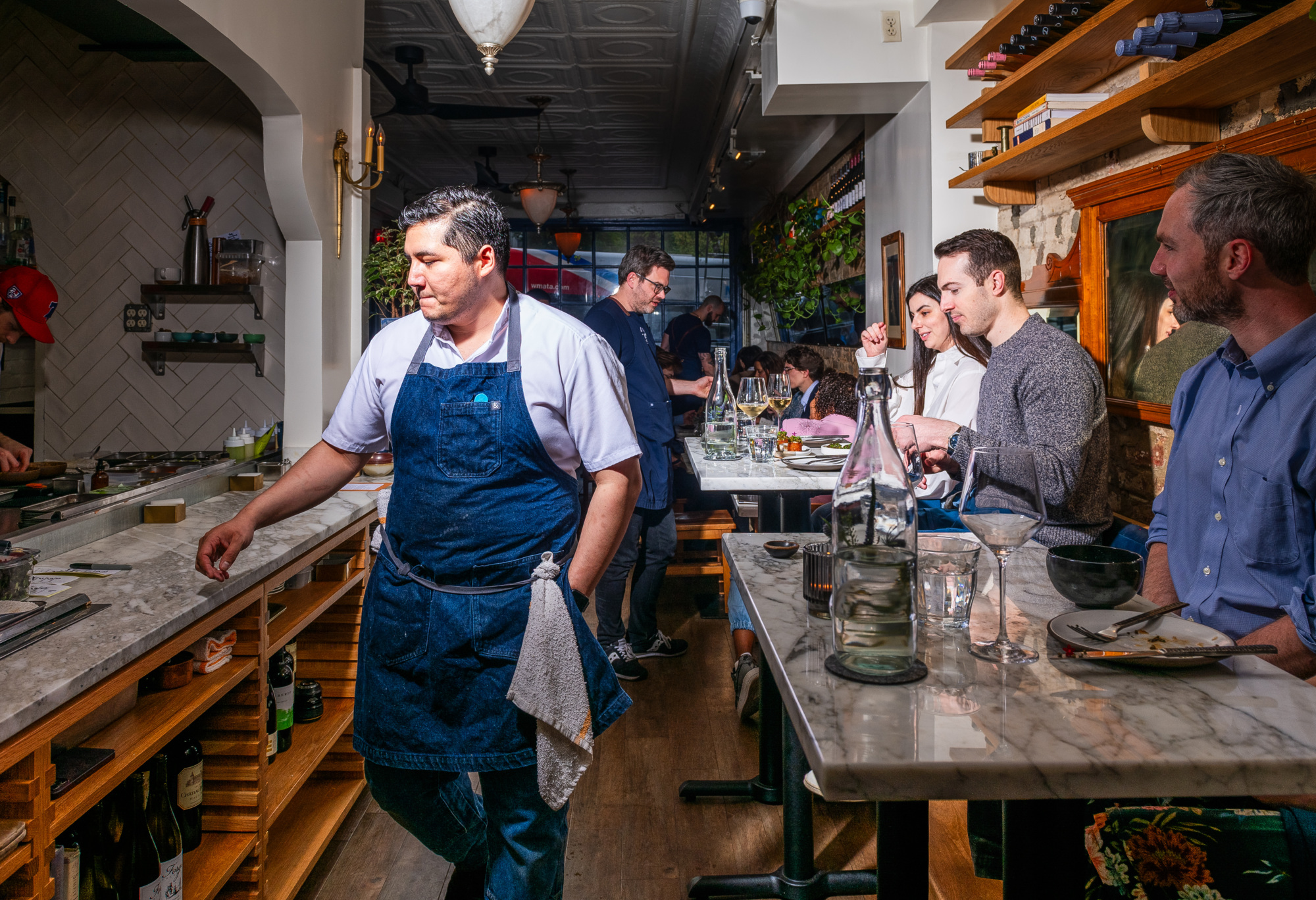
The chefs had another element in their favor: A few weeks after Conroy started in February 2020, the city’s entire restaurant ecosystem shut down for the pandemic. Lutèce wouldn’t reopen until August, and when it did, the pause had provided some latitude with what was still a conservative crowd. Yes, Conroy recalls, “they would ask me for Béarnaise sauce all the time, and ice cubes in their wine.” But diners were also hungry for any kind of cooking, which gave the couple an opening to launch a “chef’s table” the first year, which has evolved into a tasting menu that today is served on four banquette seats directly opposite the kitchen pass.
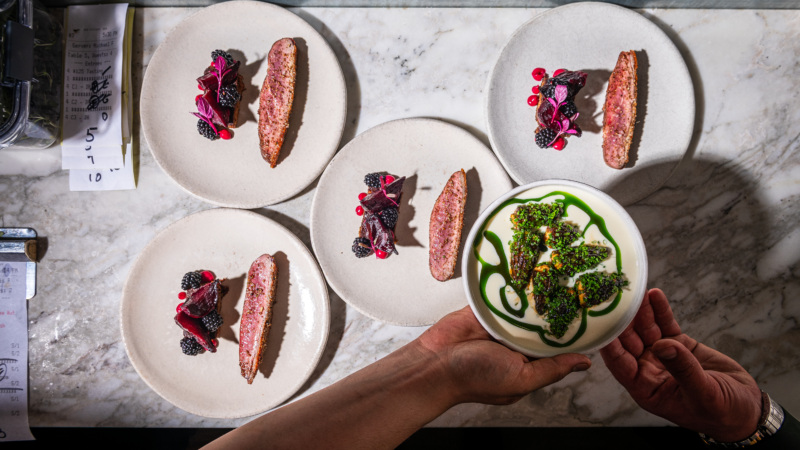
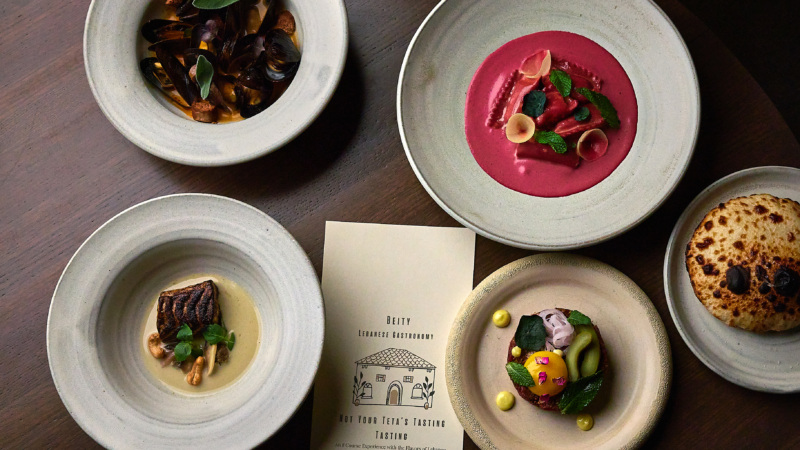
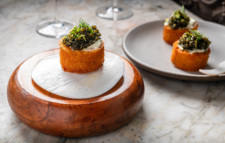
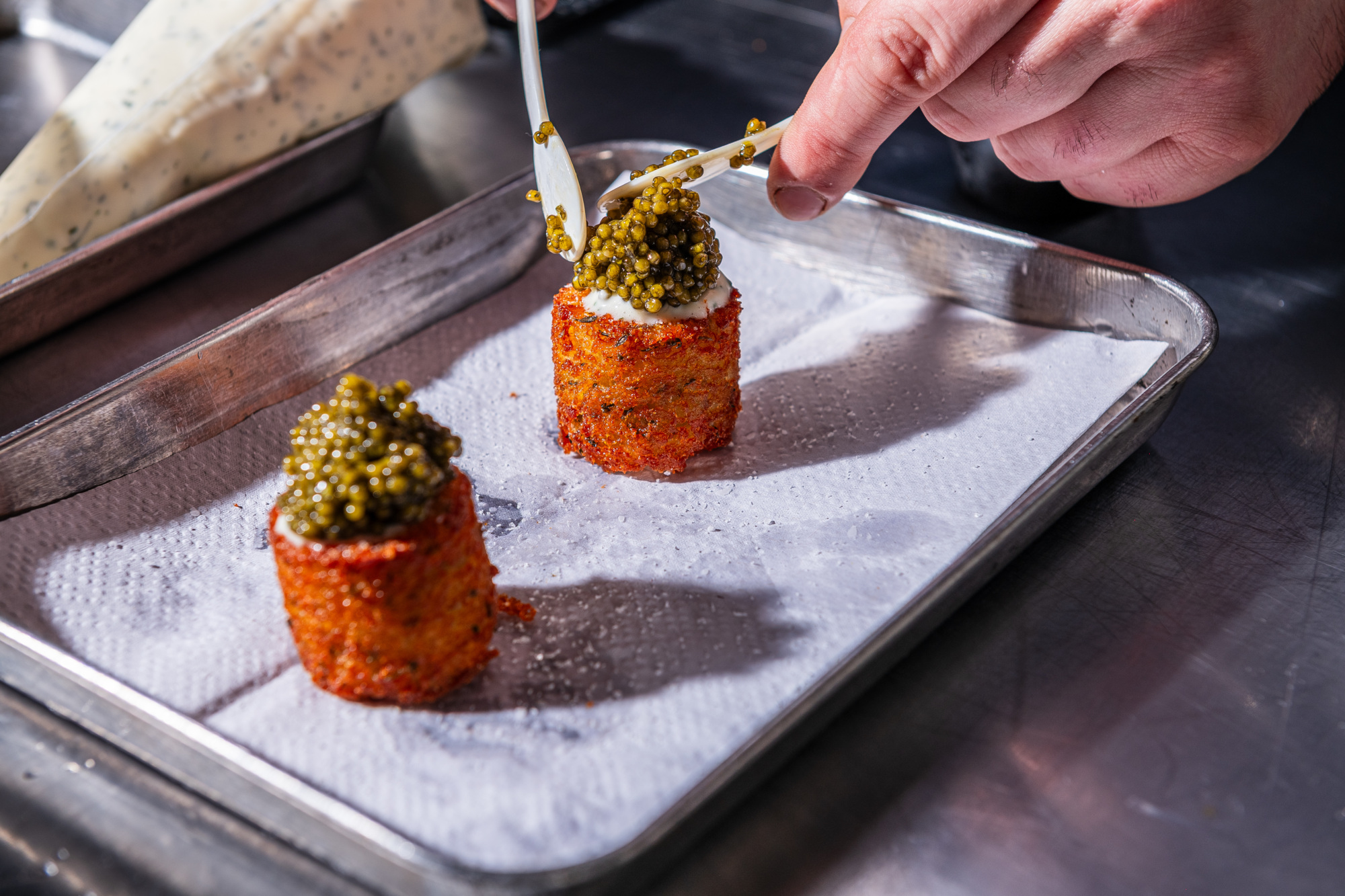
A meal at Lutèce reveals how that latitude has paid off. Conroy and Coss share a sensibility around French cuisine that can best be described as tuned-up — Conroy’s savory dishes hinge on a popping focus on acidity. (“I think your palate is Mexican trained,” Coss ribs Conroy at one point. “You like all the lime.”) An opening bite of pickled mussels layers the tang of escabeche and the smoky, sweet punch of vadouvan. Then, there’s Conroy’s latest winking tribute to duck à l’orange: duck-heart skewers astride a chicken jus reduced over several days, and enlivened by mandarinquat and fresh herbs — pierced on metal skewers that Conroy brought back from a recent Paris trip. It is a mandala of umami, the jus exuding the pleasures of old-fashioned French technique while the other elements hint at a happy, omnivorous culture clash.
Conroy and Coss share a sensibility around French cuisine that can best be described as tuned-up.
Conroy also was aware that Paris’ néobistros were fueled on natural wine, and so he insisted on adding that to the formula at Lutèce, where today it plays a major role. The 180-selection, mostly French list is currently overseen by Chris Ray, who began as a server and evolved into a more traditional foil to Conroy’s naturalish tendencies. If Conroy wanted to acclimate Georgetown to orange wine, Ray made the case that you could still serve a red Burgundy like Mugnert-Gibourg’s Vosne-Romanée La Colombière with whatever reconstruction of duck à l’orange Conroy had devised. “This is a tony neighborhood,” Ray says, “and it is totally fair to want to be able to pay rent.”
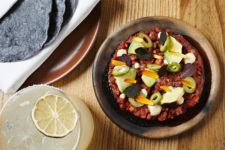
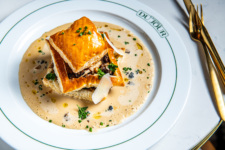
And again, similar to Paris, where the néobistro philosophy has diversified beyond French — as with the tacos-and-natural-wine restaurant Furia — the couple flexed again in 2024 when Coss opened Pascual on Capitol Hill, which offered her interpretation of Olvera-style modern Mexican. In both restaurants, it can be slightly elusive to nail down where old European traditions stop and reconsidered Mesoamerican flavors begin. Coss points this out, actually — how foundational skills of French cooking are instructive for chefs of any background. And that manifests in both spots, via dishes like Pascual’s steak tartare, with peanut salsa and a burnt-tortilla aioli, complex enough to imply a whole new Columbian exchange, or the habanada chile that shows up in the salmon at Lutèce.
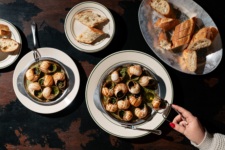
This places the two restaurants in a fascinating dialogue — simultaneously embracing and tweaking their origin cuisines. And while, yes, there is still grumbling in Georgetown that onion soup isn’t on Lutèce’s menu, “the same thing happens over there,” Conroy says of Pascual. “People are like, ‘Where’s the tacos?’”
There is one other ruffle in the Lutèce story — namely because there once was another French restaurant in New York by the same name. That Lutèce closed in 2004, although its ending really had come a decade earlier, in 1994, when longtime chef and proprietor André Soltner, and his wife Simone, retired under new ownership.
Soltner had been the chef since the restaurant’s sumptuous opening in 1961, before acquiring it from founder André Surmain in 1973. And with Soltner at the helm, Lutèce grew to be legendary — a bastion of the most ambitious and dialed-in French cooking on either continent. Other haute-French icons like Le Pavillon deigned themselves to be power brokers of prestige, and certainly Lutèce attracted its share of masters of the universe. But it set itself apart with the Soltners’ humane approach; both would regularly work the floor and chat up regulars. For many years it was considered, essentially, the best restaurant in America — certainly in an era when the yardstick was French.
Soltner had, in fact, unlocked the key to the deep American love affair with French cooking — a simple-seeming perfection on the plate, never overtly complicated the way that so-called “Continental cuisine” could be, evocative of the beautifully pared-down cooking that once was flush throughout the French countryside. Often he leaned on his Alsatian background, with items like a memorable onion tart, but an unfussy grandeur could also be found in his luxe crab cassolette, or lamb filets au poivre, or even a roast chicken with herbs.
The Popals were aware of approximately none of this, when they began sketching out their plans. “I had no f—ing idea there was a Lutèce in New York,” Omar recalls. But the original Lutèce was not news to Conroy and Coss, naturally. And soon enough, their efforts caught the attention of one very attentive ex-chef: Soltner showed up for dinner at the new Lutèce in the spring of 2021, when indoor dining was still limited in the city.
Once Conroy had in fact checked his phone to confirm that, yes, André Soltner was sitting in his dining room, he mustered the courage to bring out the esteemed chef one of his versions of duck à l’orange. The two chatted for a while, Soltner gave Conroy his business card, and asked the younger chef if they could take a selfie together. Soltner’s granddaughter later posted it on Instagram, and occasionally DM’d Conroy with relay feedback from her granddad about one dish or another.
The mutual admiration culminated in a 2024 tribute to Soltner at the new Lutèce, prior to his death earlier this year. The néobistro upgraded itself for the night: marble tables were covered with white tablecloths; the kitchen donned chef jackets and toques; the napkins were folded into peacock shapes. Soltner attended the first seating, filled with fans who’d brought Lutèce cookbooks for him to sign. He received a standing ovation when he left — bringing full circle the creation of a very new sort of French restaurant in America.
The evening made clear what the team there had always believed: that this Lutèce could be a bridge between the past and future, which is exactly what a néobistro should be.
Jon Bonné is Resy’s managing editor, a two-time James Beard Award winner, and author of “The New French Wine” and other books. Follow him on Instagram. Follow Resy, too.