Published:
In 2013, a group of California winemakers gathered for an unusual tasting called the Seven Percent Solution. The “seven percent” referred to the proportion of grapes planted in California outside of the handful of mainstream varieties (chardonnay, cabernet, pinot noir) for which the state was known. The purpose was to highlight all these esoteric bits, whether Italianate grapes like vermentino and nero d’avola, or French curiosities like trousseau and gamay noir.
Their effort met a bit of enthusiasm … and a lot of derision by the mainstream industry at the time, because why would anyone want to tout such oddballs when California wine’s prosperity was built on more obvious things? Never mind the fact that these often were grapes that had been in the state as long if not longer than that mainstream fare — trousseau, for instance, had been around for a century or more, since it’s also used to make Port, which once was something California tried to make lots of. Never mind, also, that many now-familiar grapes were once esoteric; the Golden State had just 150 acres of chardonnay in 1960, before “California Chardonnay” became synonymous with white wine in the 1980s, and that figure grew to some 100,000 acres.
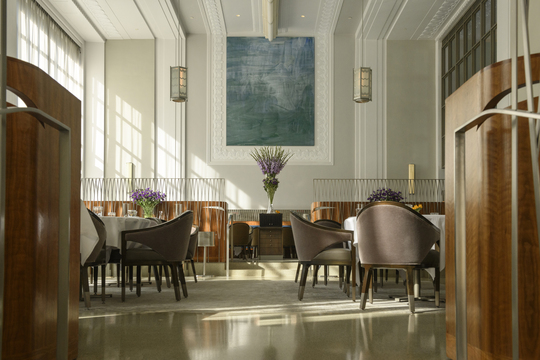
A dozen years later, it’s telling to see the types of California wine that actually show up on wine lists in contemporaneous and award-winning restaurants: at L.A.’s Beethoven Market, there’s sparkling chenin blanc from Mendocino, skin-contact verdelho made in Napa, and grenache rosé from Paso Robles, and even at Eleven Madison Park, the rosé being poured is a trousseau gris made by Sonoma County’s Pax. Those who are somehow still on with this complaint are, to a large extent, the same people who also are now convinced that the wine industry is about to collapse — and who may not have absorbed advice I offered a decade ago: “No one ever promised California that its wines would always win.”
The Seven Percenters came to mind recently because they also represent something that’s gone missing in too many corners of wine in recent years. Sure, they had an agenda, but mostly, they were out to have fun — to show that the weird and quirky is actually where a lot of us like to live, in wine as in other things. The fact that their wines were — and are — embraced by restaurants and their customers underscores not just that they were on to something, but that they understood a thing or two about another thing that’s gone missing in wine a lot lately: hospitality. Wine may about quality, but it’s also about taste and aesthetics, and making people feel heeded and happy.
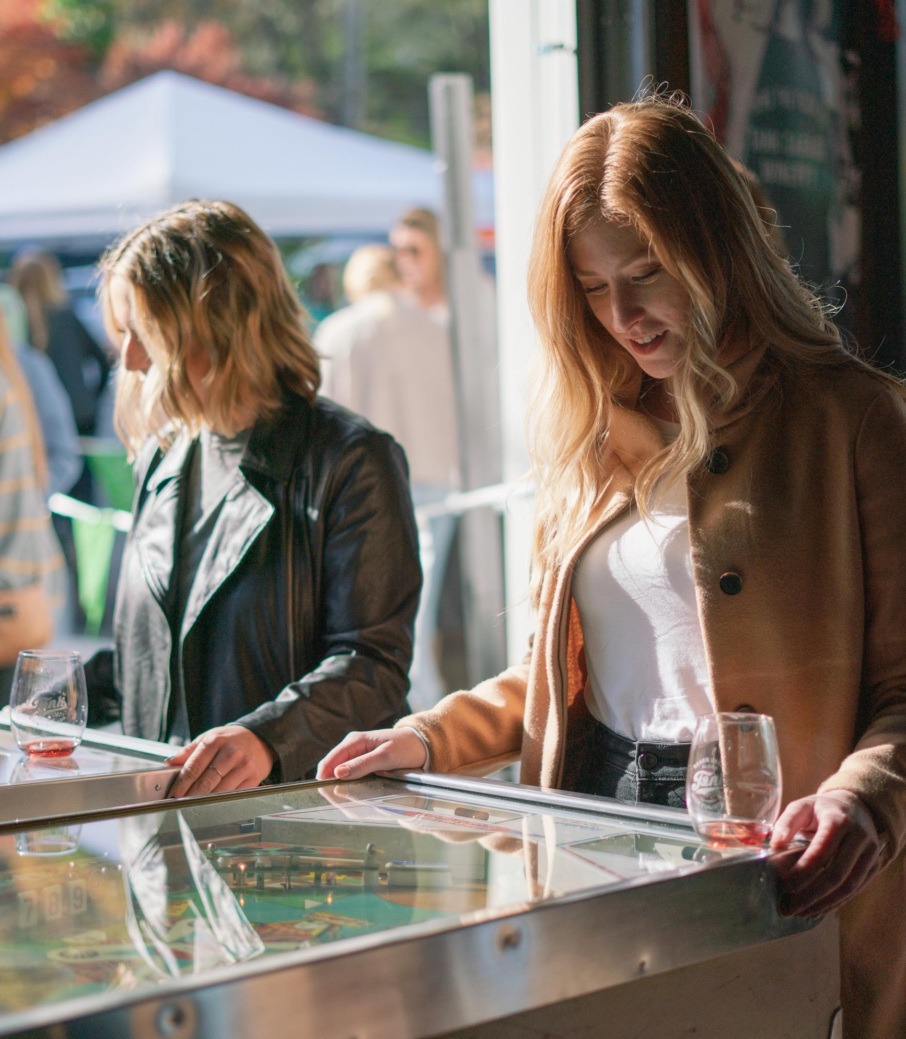
Combine that with a lesson from the pandemic, which is that most people just are not that into filling their evenings with very serious meals served in very serious places. They want to have fun, to enjoy the warm glow of hospitality done right. It’s true in restaurants. And it’s true in wine — or should be.
So when the question comes up as to why there’s so much uncertainty in the wine industry these days, these two things are my reply. If wine wants to thrive again, quite simply, it needs to be fun again. And if wine regions want people to come back and visit, they need to remember that their lifeblood — what they’re actually selling — isn’t really wine. It’s hospitality. The experience is all. And the experience should be fun.
Both these things are worth dwelling on because, let’s be candid: The wine industry, in this country and global, faces profound challenges. There’s a worldwide glut of wine, especially red wine. Whether you’re driving the roads of Napa Valley or the Médoc, you can watch vineyards being ripped out in places that once assumed, by default, that prestige and branding made them safe from that side of economics.
Yet parts of the industry are also thriving. The tricky bit is that it’s usually parts that were, not long ago, considered to be the fringe — the seven percent that was so easily dismissed, or even the farmer-produced Champagnes long deemed a sideshow. And for all the talk of the emerging generation drinking less, or not at all, there are a thousand wine bars across the land —especially natural wine bars — that provide evidence to the contrary.
OK, there is some truth on the Gen Z bit — they are drinking less. Indeed, nearly everyone is drinking less; global wine consumption is at a sixty-year low, and alcohol consumption in the U.S. has clearly been on a downward trend in recent years. And yes, there’s also a global rise of a neo-temperance movement, which reasonably worries wine producers — including in wine-reverent France, where the government is on an anti-drinking tear.
But drinking less isn’t the same as not drinking at all. Wellness, which is the broad term for behind a lot of this sea change, comes in waves. It’s cyclical, which as it happens is also true of the wine economy. Those who’ve been around for a bit know it’s not the first time vines have been ripped out in California, or other places — nor the last. And wine industry data have long been plagued by a bias that more production is better, which isn’t necessarily true for a number of reasons. (Also if you’re sure that Gen Z will never start drinking, let’s wait for them to have mortgages and revisit the question.) Inquire at any number of wine-friendly restaurants and you’ll hear the same thing: Yes, people are drinking. Just less, and better, and sometimes alternating between booze and something else. But a nation of teetotalers we are not.
At the same time, sure, wine in America faces headwinds. This year’s tariffs added new complexities. And frankly, a lot of American wine is still too expensive. I know there are perfectly good reasons for that, including higher land and labor and production costs. But prices for many American wines have been spiraling upwards faster than inflation for a long time. The industry has a word for this: superpremiumization. But you can only make things fancier and more expensive for so long before something has to give. And what gave in this case is the drinking habits of many wineries’ major customer cohort. Boomers are getting older, drinking less, and becoming more frugal.
There also are structural changes in wine culture of wine that certain parts of the industry seem not to have absorbed. The preferred style of wine has shifted; the wines of impact (think big and oaky) that defined the 1990s have now rotated out of taste. Restaurant folks are always a good barometer of where the zeitgeist sits, and it’s not out of coincidence or stubbornness that they’re deep on chilled reds and orange wines and all those fringe seven-percent choices. Someone is drinking those. Nor is it coincidence that most restaurants of consequence in most major cities at least want to float the word “natural” around their wine programs, however they define it. Not only has the old tastemaker — the score-sprinkling critic who rose to power during that more-is-more ’90s era — gone by the wayside, but so has their successor: the celebrity sommelier whose performative expertise dominated 2010s wine culture.
And look, I could keep going: America’s multi-tier alcohol distribution system is being squeezed by consolidation, and many wholesalers now refuse to hold as much inventory, which means producers have to store unsold wine. Also, poignantly, it has become prohibitively expensive to visit Wine Country, almost anywhere you find a wine country: Hotel prices have surged (in Napa, for instance, because of what’s effectively a ban on Airbnb) and tourism infrastructure has largely remained stagnant. No one wants to visit somewhere that’s expensive and hard to get around, with lots of effort to book lodging and research to find the perfect dinner. Yet the conversation in these parts often seems to be just about moving bottles, and not about hospitality. And there’s not much fun in that equation.
The biggest corrective wine needs to make today is to undo the past two decades of being very self-serious, and delivering perhaps a bit too much ‘well, actually.’ We’ve played that game for a while. It didn’t work.
Before we go further, let’s clear up a few things about fun. When I say “fun,” I don’t mean to dismiss the incredibly hard and serious work of viticulture and winemaking, the thousand things that go into a bottle for you to enjoy.
Moreover, sure, fun implies wine just isn’t that serious, which is a hard pill if you’ve spent your career insisting that wine is culturally significant and different, that all those thousand details matter.
You know what? That’s ok. The biggest corrective wine needs to make today is to undo the past two decades of being very self-serious, and delivering perhaps a bit too much “well, actually.” We’ve played that game for a while. It didn’t work. The people who are drinking wine and having fun today would tell you that.
There are other things to work on:
In short, the world doesn’t need a lot more fine wine, but it is almost certainly ready for more good wine.
None of this means that wine is on its way out. It just means things need to change. If you’re a winery hoping to bring people through your doors, now is, perhaps, time to think about why someone who’s never particularly thought about visiting Wine Country before might be enticed to come. It’s for sure not about getting someone to join your wine club (at least, not at first). It is however about engaging in some real talk with your neighbors to ask: Are we giving people a reason to come? Are we knocking down those tourism roadblocks, and creating experiences that anyone under the age of 50 will care about? Are we leaning into a sense of shared aesthetics, so our guests will feel at home when they visit? Are we, in short, fun?
As much as anything, wine today no longer represents one culture but many. There is no wine mainstream today, so much as multiple cultures and tribes and affinities — and that’s actually for the better. It means a bigger tent. Funnily enough, that was my conclusion a decade ago, when the seeds of today’s reality were being sowed. Today it has become the default.
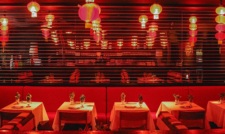
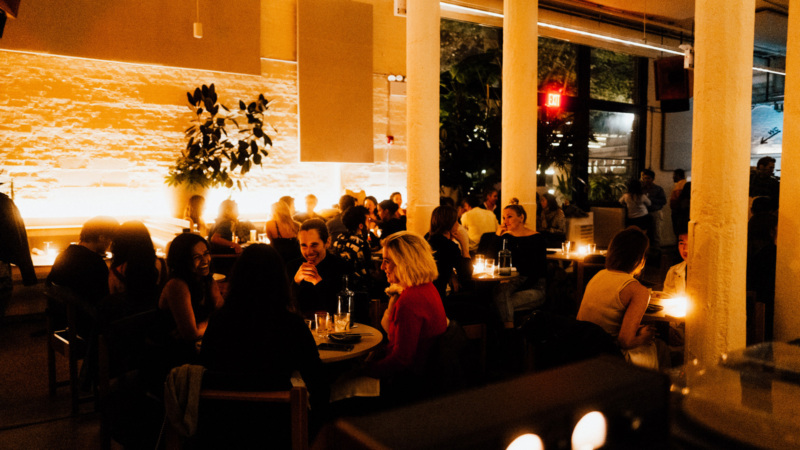
To the matter of hospitality, it’s worth noting that restaurants were ahead on all these things — they almost intrinsically have understood that they needed to meet the market. When we talk about restaurants today building a vibe, that’s a reflection of (1) ever more restaurant owners being contemporaries of their customers, which means no gap in aesthetics; and (2) restaurants understanding that they have only ever succeeded by meeting their customers on how they want to dine.
In wine, too, both these things ultimately need to be true, which is why I keep asserting that wineries are really in the hospitality business. The savviest winemakers have already been on the case for a while. I’m thinking for instance of Stolpman Vineyards in Santa Barbara County, which realized that expensive syrah could not account for their whole future, and launched a cohort of more chill wines, like their Love You Bunches series. Or the Tendu table wines from Jill and Steve Matthiasson, who not only decided to hedge their bets on selling Napa Cabernet, but also believed, intrinsically, that one job of a talented winemaker is to make everyday wine that people can just enjoy. Funnily enough, both examples rely on grapes (sangiovese, vermentino) touted by the Seven Percent Solution and its fans. Esoterica won the day.
All of which adds up to why I refuse to believe wine is in a downward spiral. More than that: I actually see lots of good evidence around that Americans do still want to drink wine, and if anything are growing more interested and discerning than ever. Now, it’s a different generation putting out their dollars, and they no more want to drink the same wines their parents did than their parents wanted to copy their parents. And for sure, they don’t want to be shamed for not ordering something appropriately fancy, or for not ordering four glasses in an evening. But these are eminently solvable problems — if anything, the solutions are kind of obvious to those who pay attention, which again is the sign of a good hospitality professional.
So, sure, American wine culture has some big steps to take. Candidly, that transformation is probably about five years overdue. But I will stand firm: leaning into fun is the key to unlocking this change. Because, in the end, there’s nothing to be lost by leaving behind scores and egos and hype and conjured prestige — all the things that conspired to make wine more, and less, than it truly is.