Transport Yourself to the South Pacific at Tiki Residency Savage Seas
Published:
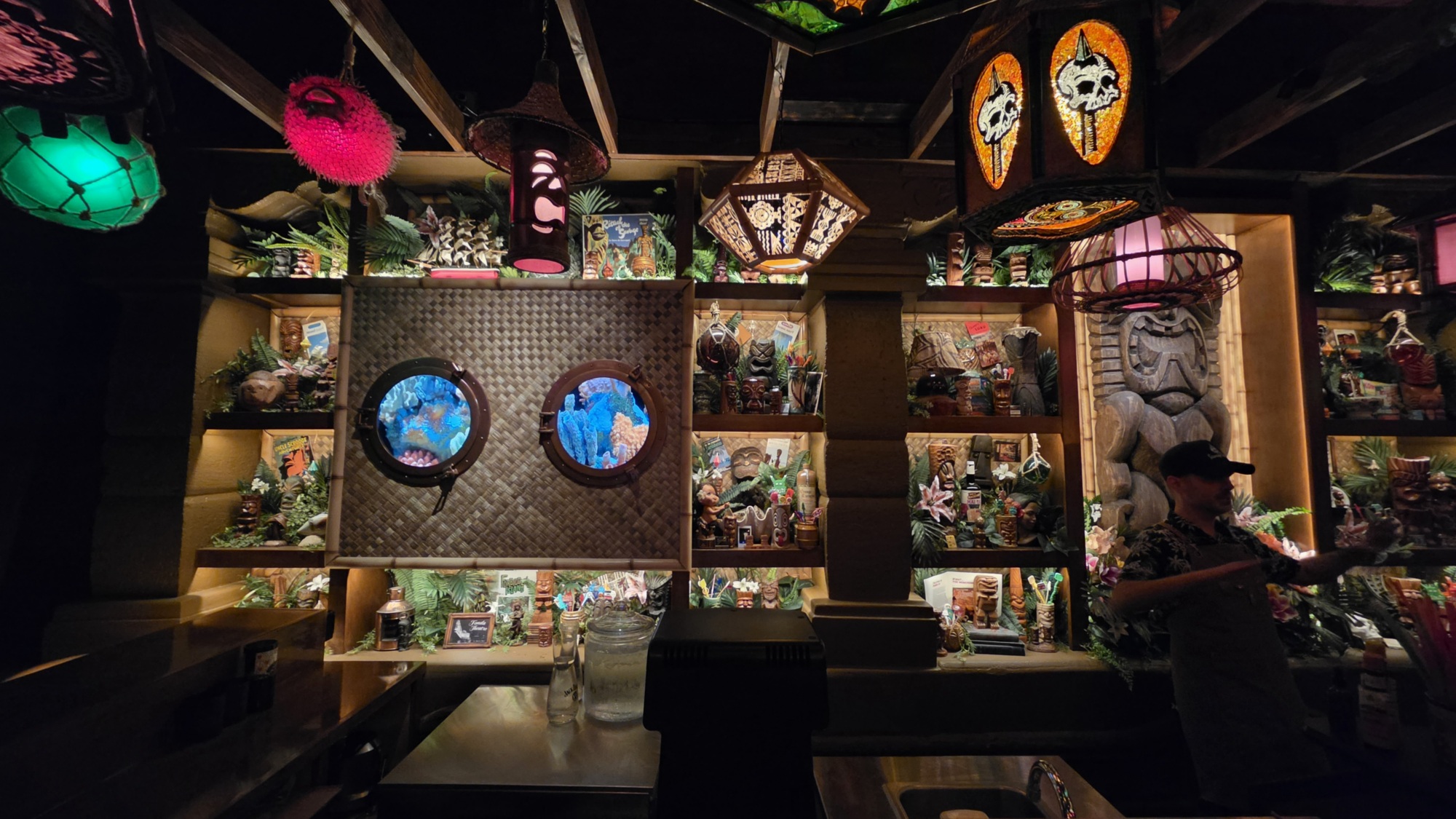
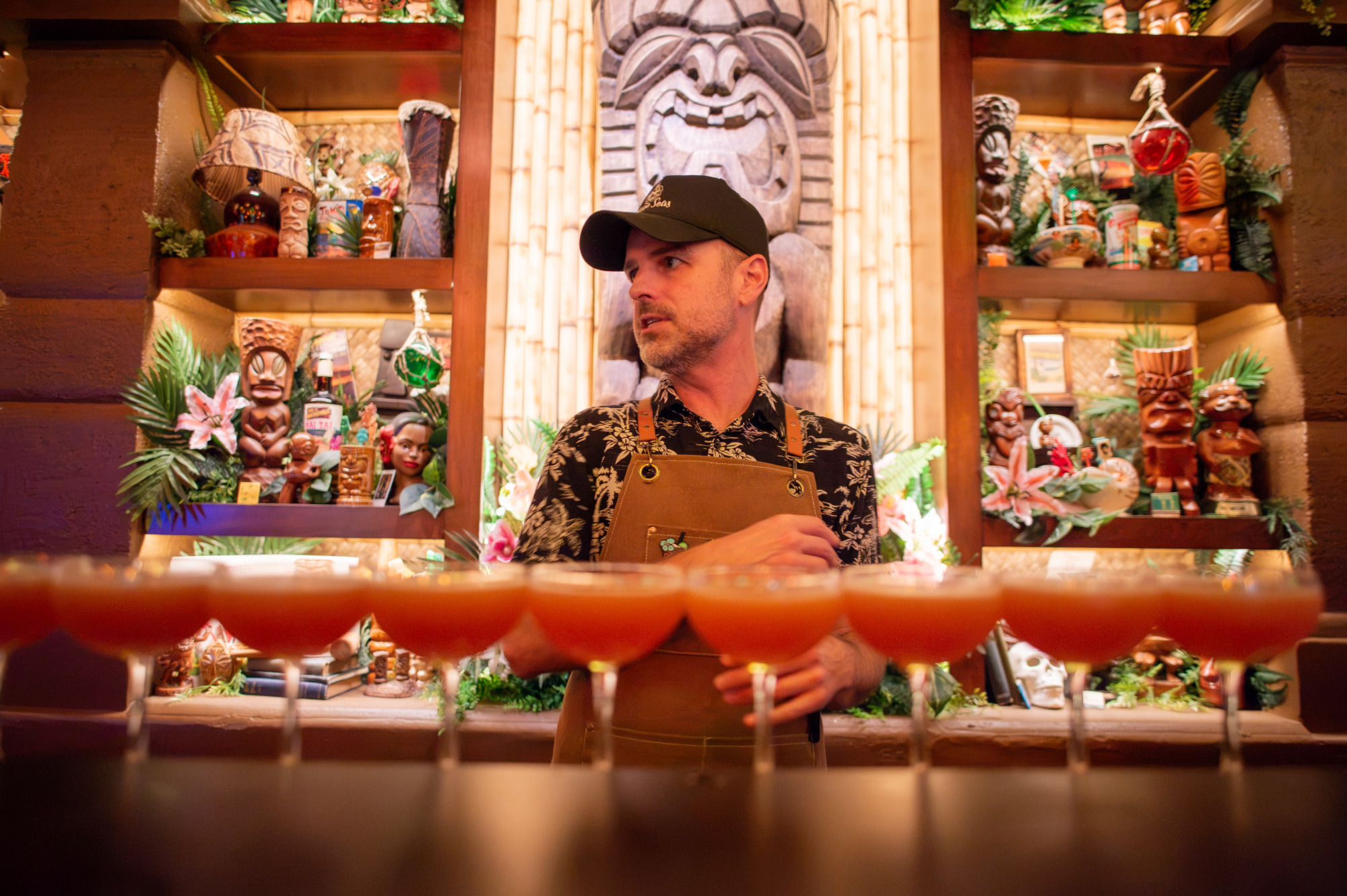
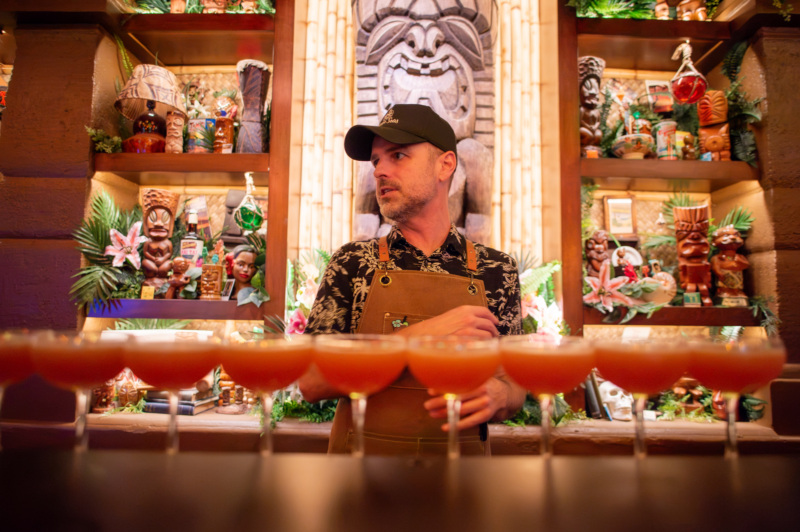
When you step inside Savage Seas, the 12-seat bar on the top floor of the Fonda Theatre in Hollywood, prepare to be whisked away to a tropical paradise brimming with relics of the tiki subculture. You’ll be immersed in the 1930s-born aesthetic (with deep roots in L.A.) at this escapist bar created by Nick Oehlers, a longtime enthusiast of the genre.
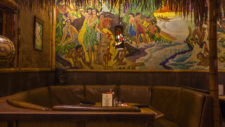
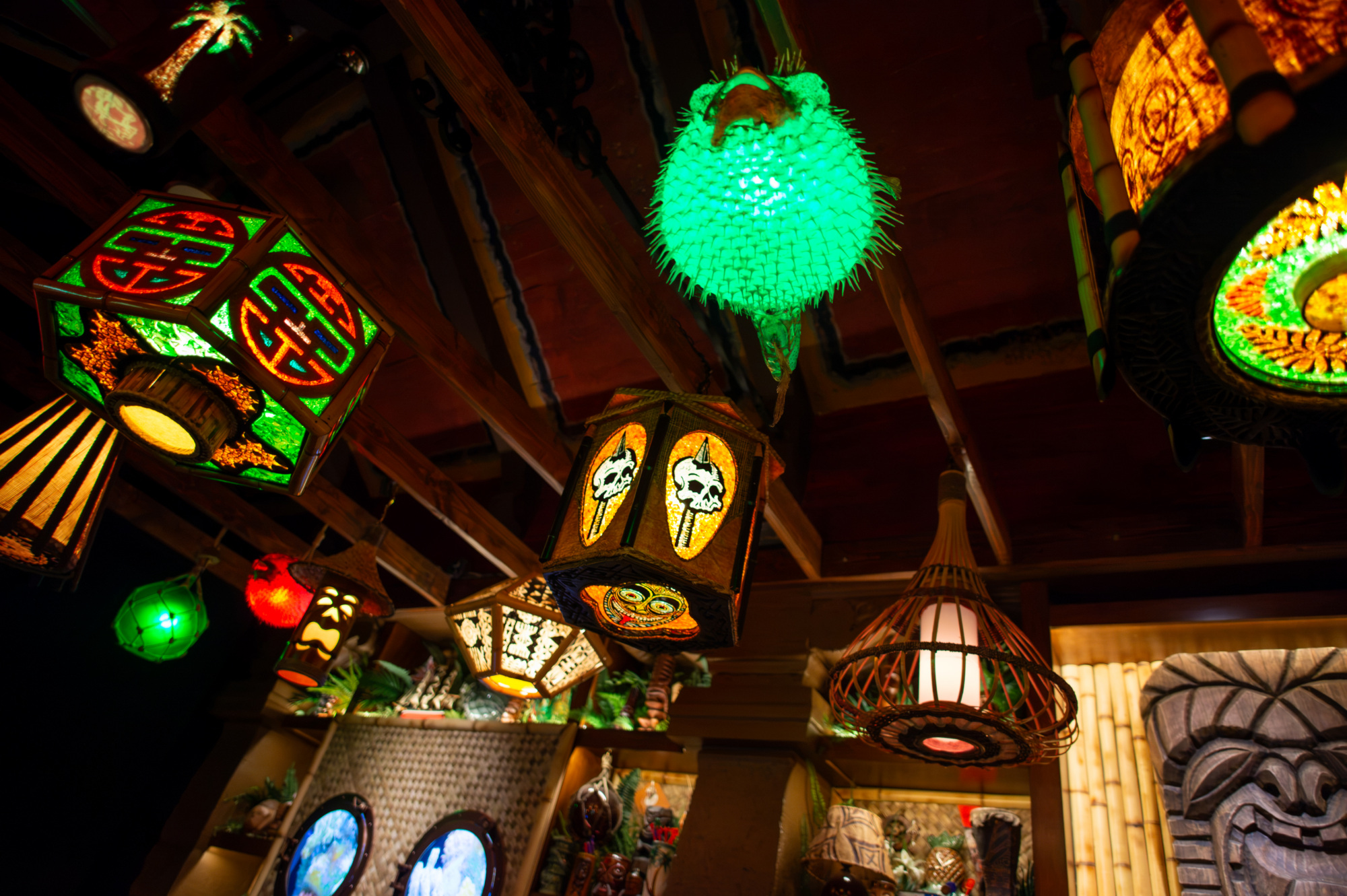
There’s no shortage of vintage paraphernalia in the dimly lit space: pufferfish lanterns and portholes, carved masks and motif mugs from other tiki bars, ferns and other flora peeking out from every bamboo-woven recess of the room. Oehlers furnished the entire fantasy scene himself from his outsize personal collection (with the exception of Woody, a 400-pound tiki figure carved out of wood by Vic Hernandez, who presides over every shift from the back bar).
Oehlers is also the head bartender, delivering drinks with a highly personal touch. It’s appropriate, perhaps, given that Savage Seas was born in his home bar. The drinks are complex but balanced, defying the assumption that all tropical drinks are sweet and tart. Each guest, should they be interested, is also treated to the history behind them and the backstory of how Oehlers has made the drink (in his opinion) even better than the original.
The pop-up is a tough reservation to land, but the good news is that its run has been extended into 2027. In the meantime, here’s everything you need to know about the tropical-themed speakeasy:
MORE FROM RESY

The creator wasn’t always a tiki fanatic
Ohio native Oehlers originally moved to Los Angeles to work as a music manager. He hated tiki for most of his life. “I thought a tiki bar was one of those s—- beach bars with really horrible decor and mega sugary drinks; it just didn’t appeal to me in the least,” he says. Then he got dragged to Trader Vic’s in Downtown L.A. before a Kings game and had a particularly balanced mai tai, which changed everything. He started visiting tiki bars with his then-girlfriend, now-wife, Liz Montiel, a common interest they began to obsessively pursue. Oehlers took a deep dive into tiki history and lore on fan forums and Facebook groups, and became part of the community of tiki enthusiasts from all around L.A. The rest is history.
Savage Seas started in at home
Before the pandemic, Oehlers and Montiel moved from his tiny apartment in Hollywood into a house in Windsor Hills, where they finally had room to store their collection of vintage tiki-themed glassware, old menus, lamps, and so on, sourced from estate sales, eBay, flea markets, and thrift shops. It was also the beginning of their home bar, the first space to be furnished by such treasures. They’d invite friends, family, and friends-of-friends to come over for drinks. “I’ve always liked entertaining; we would do these theme parties in our backyard,” says Oehlers.
The two earned some notoriety within tiki circles, and it was around this time that Roxanne Majich, the general manager of the Fonda Theatre, visited with a friend. Impressed by her experience, Majich approached Oehlers about creating his very own tiki space at the theater, giving him complete creative control. Thus, Savage Seas at the Fonda, the first pop-up the legendary theater has ever hosted, was born.
The bar is a full-circle moment for Hollywood
An important element of partaking in the pastiche that is tiki culture is understanding not only its controversial colonial roots but also the regions and people it draws from, and Oehlers is a scholar of the motif. Though influenced by Hawaiian, Tahitian, Caribbean and Māori cues, tiki culture was born right here in Los Angeles. Savage Seas, a titular tribute to Seven Seas, one of Hollywood’s seminal tiki bars, was built by Oehlers to match the exact dimensions, length and width, of the original Don’s the Beachcomber — America’s very first tiki bar, opened in 1934, just after prohibition was lifted, which lay one mile west of The Fonda down Hollywood Boulevard on McCadden.
Oehlers talks about the importance of the four Filipino bartenders hired by Ernest Raymond Beaumont Gantt (who renamed himself Donn Beach), the person credited with birthing tiki, noting that they are just as much the architects of the movement. (One of them, Ray Buhen, opened Tiki-Ti in Silver Lake, which is still run by his son and grandson today.) And though tiki has done much to conflate many Oceanic cultures into one concept, Oehlers is careful to delineate exactly what is what. “The drinks have no base in Polynesian culture whatsoever,” he says. “They’re all based on Caribbean daiquiris,” he explains, clarifying a common misconception.
The drinks are better than you remember
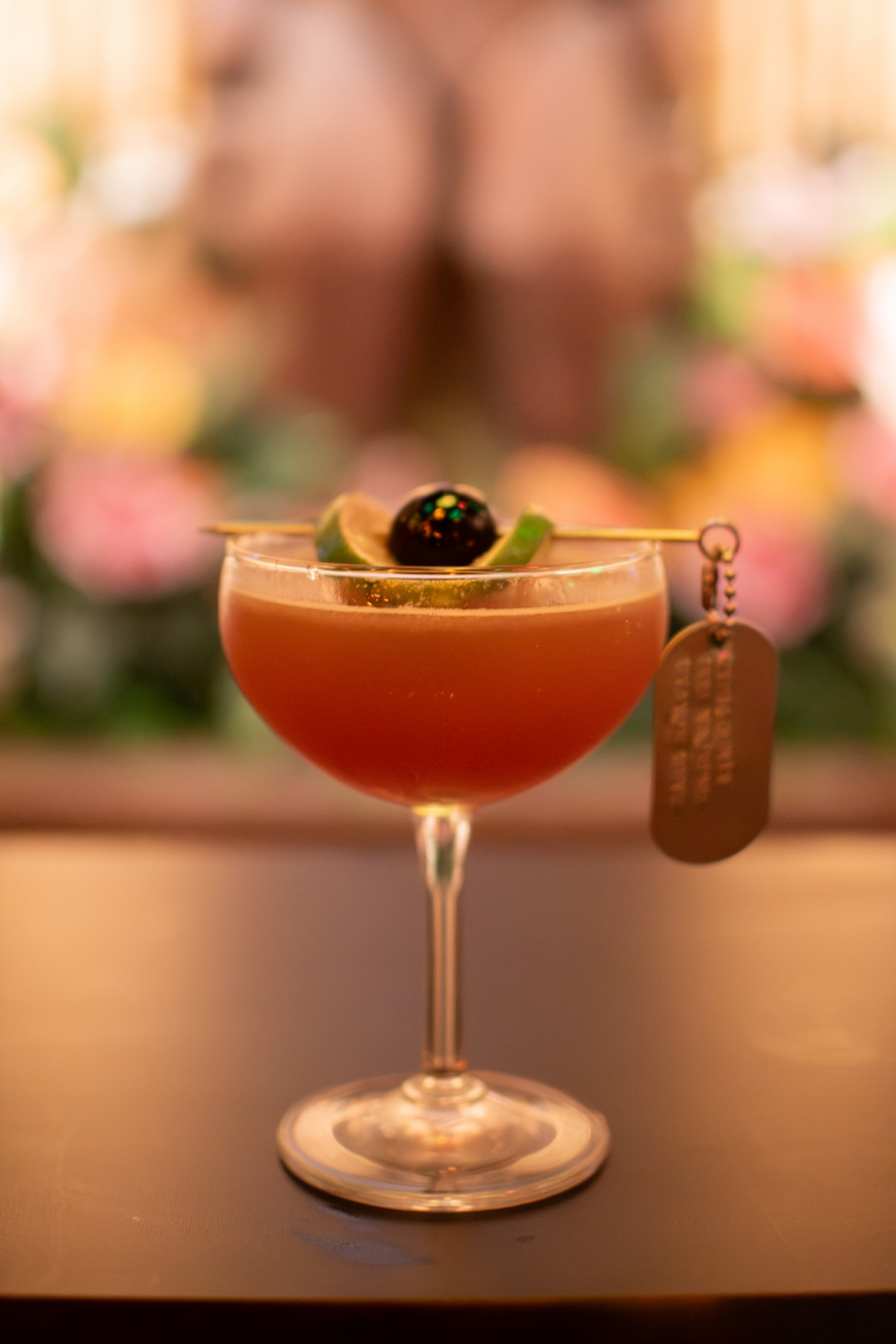
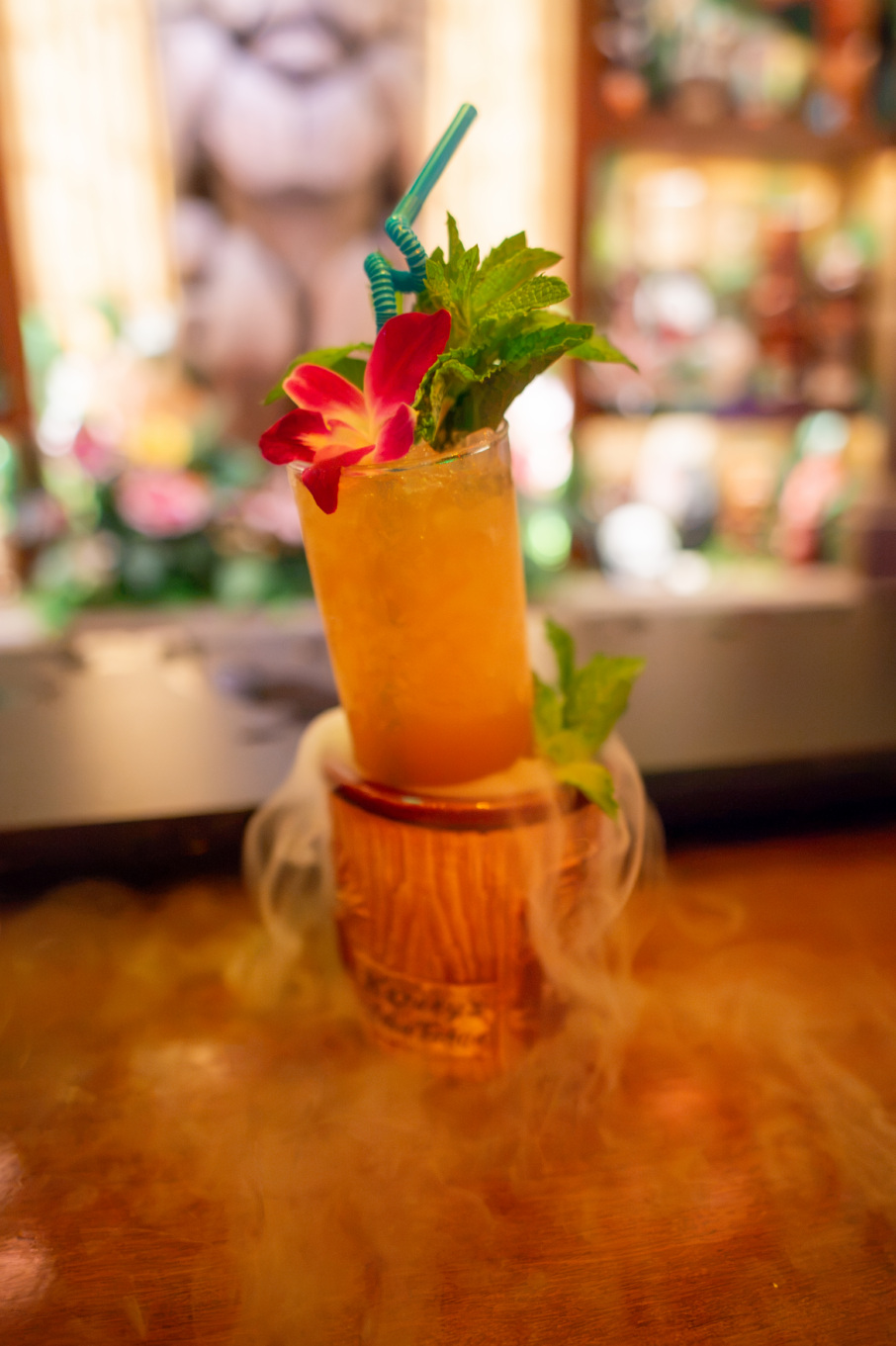
The cocktails are based on old Donn Beach classics, with Oehlers’s own touch. “When all is said and done in the tiki world, I hope I’m the guy that led the campaign to make tiki drinks less sweet,” says Oehlers. When you visit Savage Seas, you can taste the difference. Though they are less shelf-stable, the syrups he uses contain less sugar than the original recipes, letting the real fruit juices and spirits shine through, while maintaining balance throughout the cocktail.
While you have likely heard of favorites like mai tais and zombies, expect more under-the-radar concoctions such as cobra’s fang, which has traditionally been made with dark Jamaican and Demerara rums, falernum, lime juice, orange juice, fassionola syrup, absinthe, and bitters, though Oehlers modifies it by using real passion fruit and pineapple juices, notes that would normally be in the fassionola syrup. Or the pearl diver, usually made with aged column-still and Demerara rums, Don’s Gardenia Mix (a concoction with honey, butter, cinnamon, allspice, and vanilla), lime and orange — though Oehlers puts a Thai-inspired twist on it with full fat coconut cream and pandan extract.
Hear stories about the family of cocktails known as test pilot (made with dark Jamaican and light rums, Cointreau, lime, falernum, Angostura and absinthe), jet pilot (which omits the Cointreau and adds cinnamon syrup), the space pilot (which uses mezcal as the base and grenadine instead of cinnamon syrup). Learn about the intersection of post-WWII history and tiki, like how the cocktail “three dots and a dash” was created by Donn Beach during WWII and references the Morse code for “V” for victory by the Allies and their triumph over the Axis.
Expect a rum-centric evening. As Oehlers tells it, Donn Beach was a bootlegger operating a speakeasy during Prohibition, at which point rum was easier to come by, since it was trafficked in from the Southern border (versus whiskey, which came in from Canada). Beach also traveled throughout the Caribbean and learned the basic formula for daiquiris (rum, sugar, and lime), which became the concept behind all the original tiki drinks.
How to get in
Savage Seas has two seatings a night on Thursdays through Saturdays, at 6 and 8:30 p.m. Every guest is treated to four cocktails for $65 before tax and tip. But reservations, which are released a month and half in advance, book out quickly. Play the waiting game by logging into Resy four weeks in advance, when they release reservations in one-month blocks.