How Talesai Spawned a Multi-Generational Thai Food Legacy in L.A.
Published:
In 1992, Talesai opened on Ventura Boulevard in Studio City. It was the second location of the iconic Thai restaurant that had opened nearly a decade earlier on the Sunset Strip, to the delight of celebrities and critics alike. The second location was, at the time, a novel addition to Ventura Boulevard.
“There weren’t too many restaurants, and the street was quiet,” recalls Chai Yenbamroong, Talesai’s current owner and brother of Prakas, who opened the first Talesai in 1982. That wouldn’t be the case for long, though. And while the Talesai of today may feel a bit lower-key than the original, its history and evolution paints a fascinating portrait of how Thai food has evolved in L.A.
Let’s back up a little: in the late 1970s and early 1980s, Prakas Yenbamroong was a banker and the first of his family to leave Thailand for Los Angeles. But he had an issue: he couldn’t find a Thai restaurant that he could take his clients to with food as good as his mother’s. So he turned to the best Thai chef he knew: his mother, Vilai. “She got her recipes from her mother,” notes Chai. “In our hometown, if someone was having a ceremony, or a big party that needed catering, my mother is the one they asked to cook.” Prakas brought Vilai out to L.A., and opened Talesai with her as the chef.
The restaurant was a hit almost immediately. Here was a critic-approved place with white tablecloths, refined Thai cuisine that didn’t rely on overpowering spices, and the comfortable feel of a family-run business. Or at least that’s how it started. Talesai also happened to open at a time when the Sunset Strip was one of the hottest places in the country. As a result, celebrities were soon a dime a dozen at the Yenbamroongs’ tables (Mick Jagger was a regular), and the relaxed air gave way to a more party-like atmosphere.
MORE FROM RESY
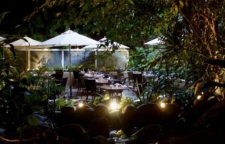
Chai was still living in Thailand when Talesai first opened, but as its success grew, he joined his mother and brother in 1985. “I came out, the first time, only for a couple years,” he explained. He started part-time in the kitchen, but eventually moved to serving in the dining room. “It was a really happening place with all these famous people who I had only seen in the movies, but here, they were real people,” he recalls. It was a fun gig for a few years, and as his star-struckness wore off, Chai returned home to Lopburi, in central Thailand.
By 1990, Talesai had become so popular that the family was plotting a second location. They talked about various cities around the country, and even discussed expanding to Europe. Luckily for Chai, the family stuck to L.A., and settled on Studio City near several film studios and backlots. “It made the most sense,” he continues. “We already knew the language, we knew the procedures and regulations, we knew the city, and had all this experience from Sunset.”
When construction started on the Studio City location in 1991, Chai came back to L.A., this time permanently. He took over operations in West Hollywood, so his brother could focus on Studio City. In May of ’92, Talesai’s second location officially opened.
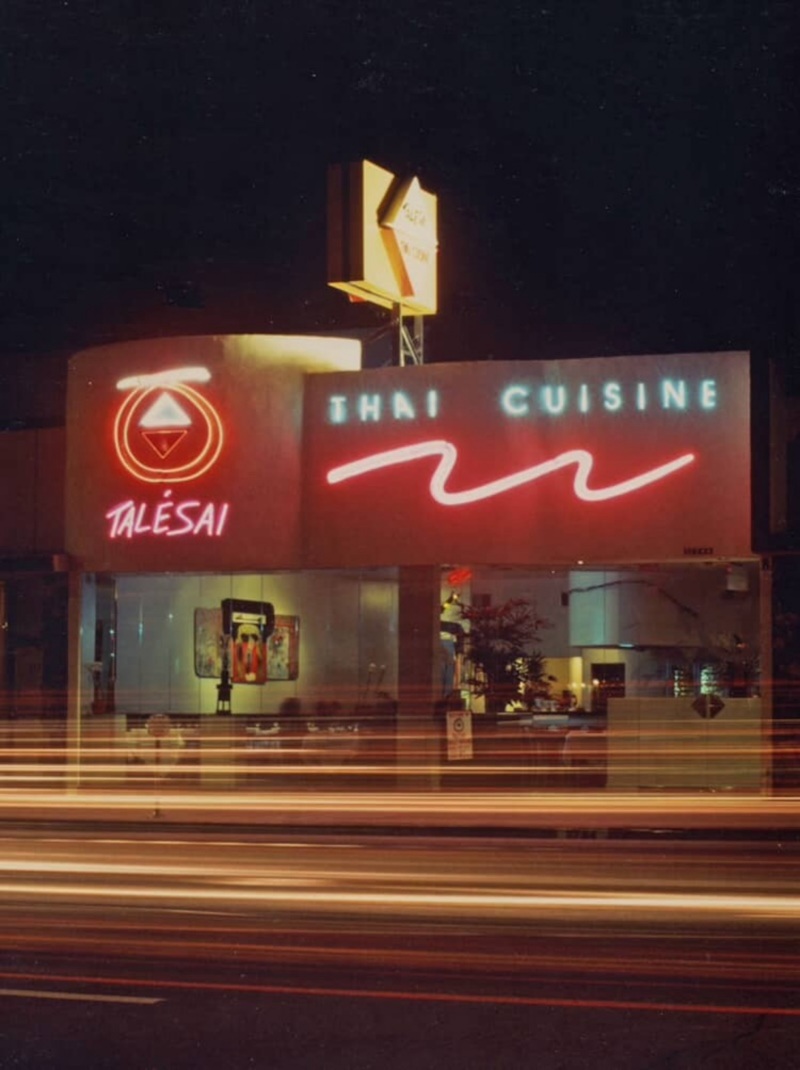
“When we first came, the street was so quiet, so dark,” said Chai of Ventura Boulevard. It was a far cry from the Sunset Strip. When we first opened, I had to go around and introduce myself to the neighboring restaurants to tell them we were here.”
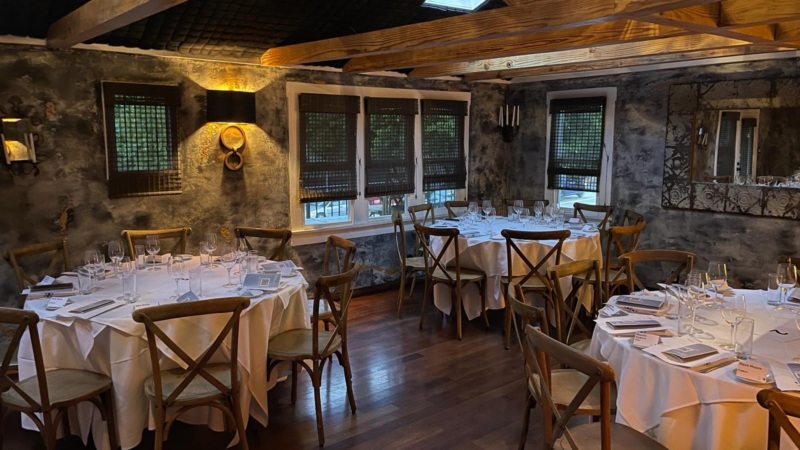
Some things stayed the same at the new Talesai location: the family kept the minimalist white interiors with the white tablecloths and black seating. Any pops of color were supplied by the artwork of Ka Mon, who provided the art at the original Talesai, too. His work still hangs at the Studio City location.
However, some things changed. The clientele in Studio City shifted from celebrities and nightlife seekers to families and locals. And because of its proximity to Universal, Warner Brothers, and several of the Valley’s studio lots, writers, producers, and network execs became regulars. “Most of our lunch crowd is from the studios, all the writers rooms,” said Chai, adding that he’s seen several assistants who would come in to pick up orders over the years turn into writers and studio executives themselves.
Another change: Chai’s wife, Noi, ran the Studio City kitchen in place of Vilai, but the recipes and menu stayed the same. Chai says the key to Talesai’s success is the balanced flavors and simple techniques of his mother’s cooking. “Noi still makes sure that we stay simple and don’t over-sauce anything. Some sauces can be too much. Too rich.”
In our hometown, if someone was having a ceremony, or a big party that needed catering, my mother is the one they asked to cook.— Chai Yenbamroong
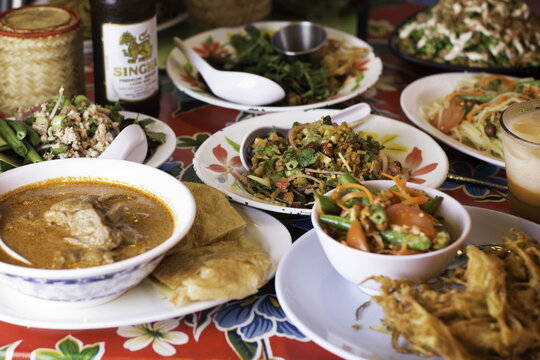
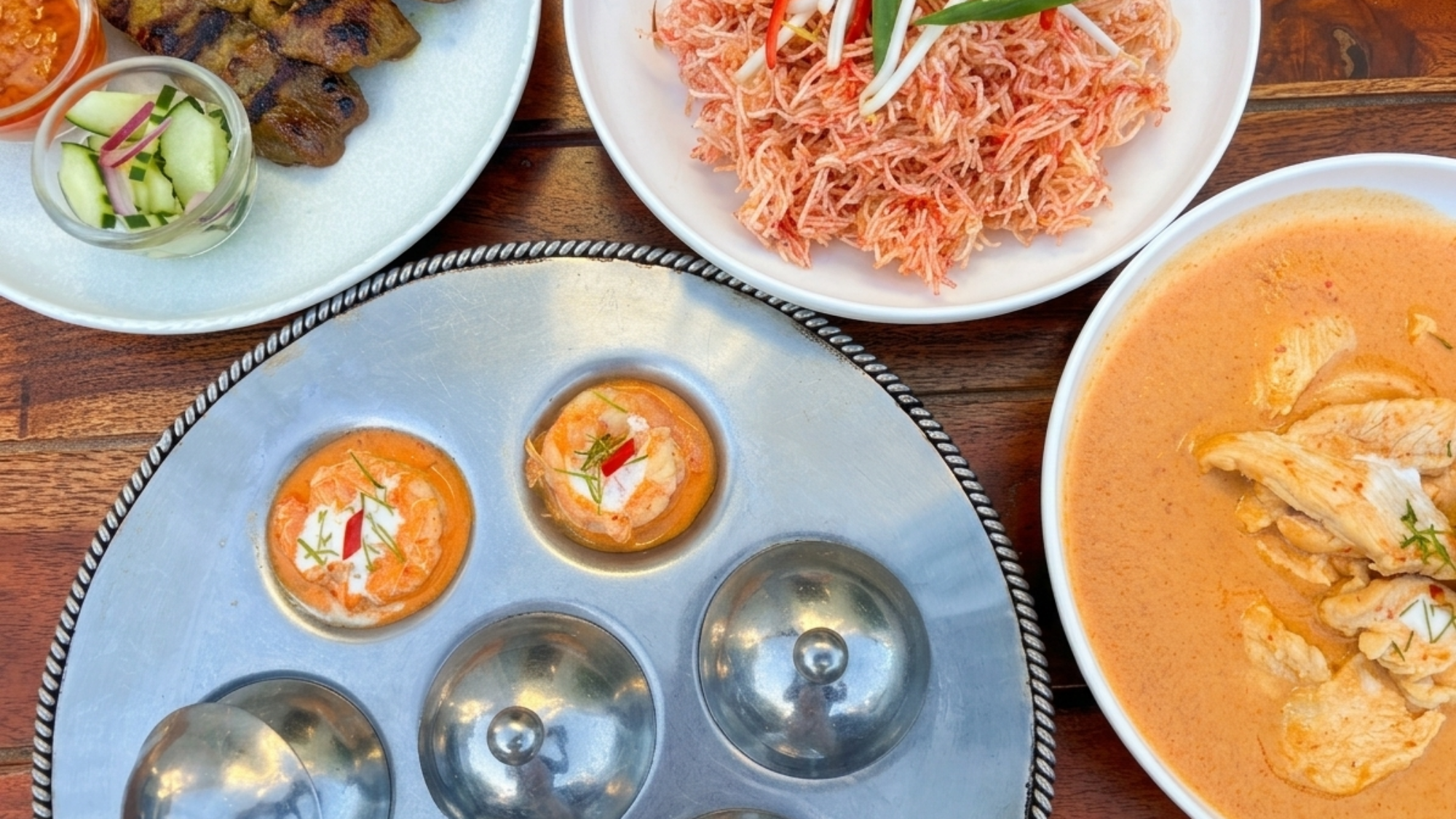
Perhaps the best example of Vilai’s style of cooking is in the Hidden Treasures dishes. “That was her invention in ’84 or ’85, and it’s been on the menu ever since,” says Chai. The dish mixes shrimp and blue crab with an aromatic but not-too-spicy chile coconut sauce. “The trick is the chile paste,” says Chai. Vilai’s recipe adds blue crab stock to the sauce to balance the natural sweetness of the coconut and thicken it. The dollops of shrimp and crab meat are then served under eight small domed lids, traditionally used for coconut khanom krok. It’s as much a visual feast as it is a flavor bomb.
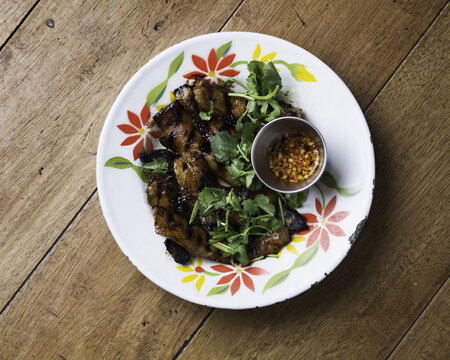
While the Hidden Treasures is a fan favorite, Chai recommends the sweet, crispy mee krob noodles, along with the filet mignon satay. “My wife marinates [the skewers] by hand, one by one, in coconut milk,” Chai says. “It’s very tender.” Try them all with a Thai martini (which swaps olives for lychee) or a Phuket Dream, with Mekhong Thai whiskey with pineapple and cranberry juices.
The Talesai legacy continues today: In 2010, Chai’s nephew (Prakas’s son) Kris Yenbamroong took over the West Hollywood location after graduating from film school in New York. “His idea was met with some resistance in the beginning,” Chai admits. Where Talesai serves the food of Central Thailand, and relishes more balanced and subtle flavors, Kris wanted to focus on “Northern-style, really spicy, really adventurous Thai food,” continues Chai. “So, he carried two menus, at first: one for the white tablecloth Talesai,” and the other, under the banner of Night + Market. “His recipes got more and more popular, until they overshadowed Talesai,” says Chai, and today, the original Talesai is now the perpetually popular Night+Market WeHo, part of a mini Night + Market empire that stretches from Venice to Silver Lake.
The changeover left Studio City as the sole remaining Talesai, but Chai says he’s not going anywhere. “We’re a family business and we really love what we do,” he adds. It’s what’s kept the restaurant open for over 33 years. If anything, Chai wonders if his mother’s recipes could be lost once he and his wife retire. “That is, unless my daughter wants to take up the restaurant and pass them along,” he says. Would Talesai ever compile a cookbook? “Maybe,” says Chai, but he and Noi are more interested in cooking for their guests and coming up with new specials. “They like to try new things, and I do, too. Sometimes it’s nice to go beyond traditional Thai recipes.”