What to Order at Silver Lake’s Azizam, a Love Letter to Homestyle Persian Cooking
Published:
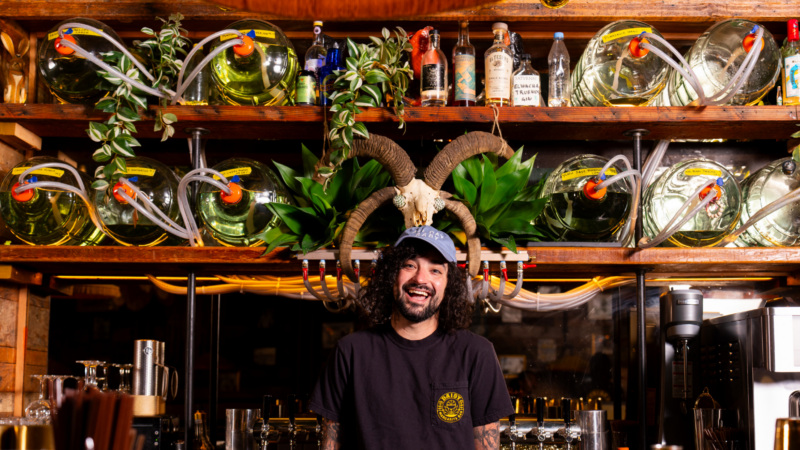
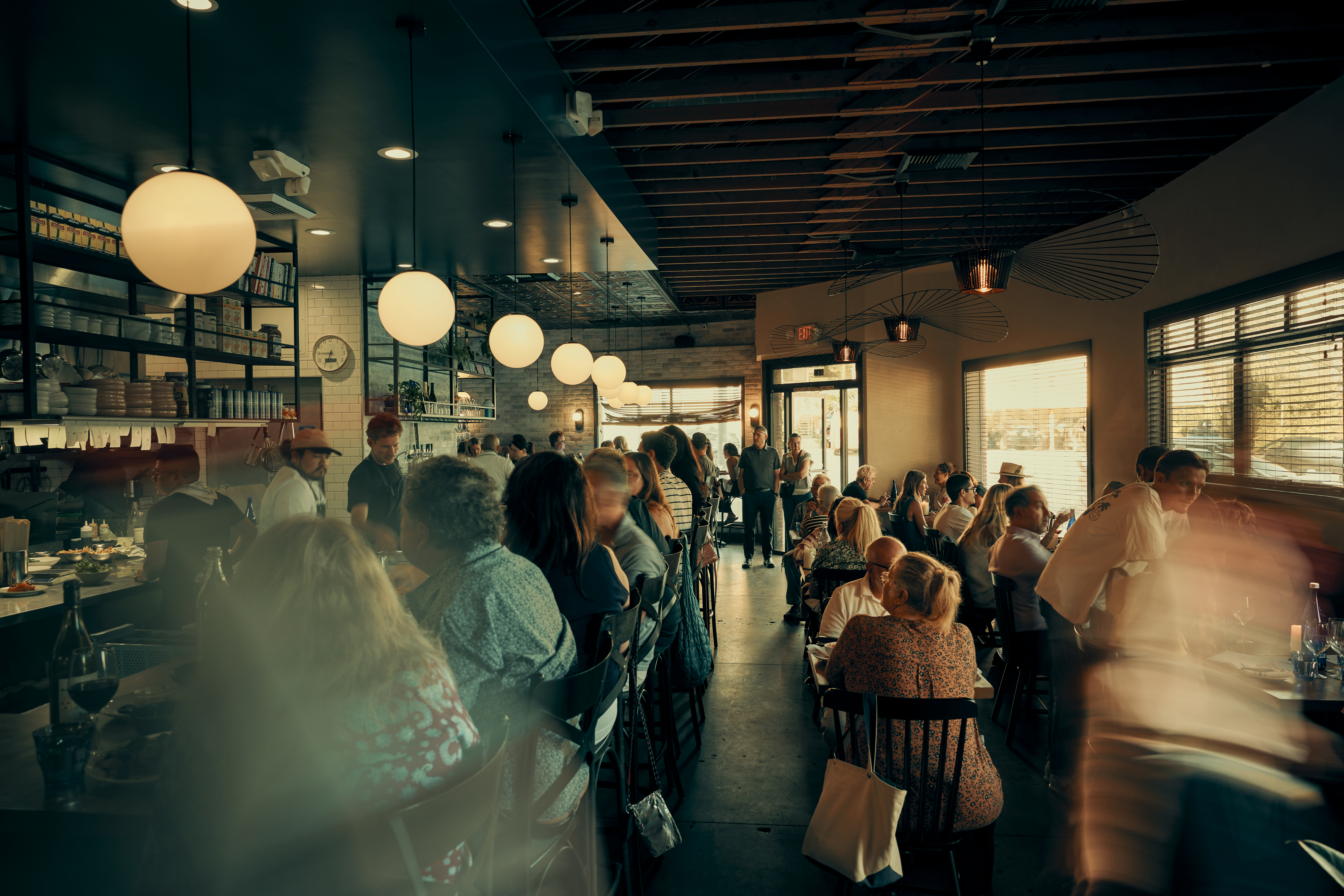
What began as a pop-up in 2021 — part cultural exploration, part homesick experiment — has evolved into one of the east side’s most popular restaurants. At Silver Lake’s Azizam, Misha Sesar and Cody Ma celebrate Persian culture with deeply nostalgic dishes rarely served outside of home.
The couple met while Ma was working at nearby Pine & Crane, introduced by a mutual friend who noted they shared a half-Iranian, half-Chinese heritage. Originally from Nebraska, Ma grew up inside his mom’s restaurant, while Sesar grew up in Orange County and later moved to L.A. to work in the art world.
After a successful pop-up run (at spots like Melody and Pearl River Deli), the couple landed their indoor-outdoor Silver Lake space on Sunset Blvd. in spring 2024. Since opening, it’s been quickly embraced as a local favorite, launching originally with lunch and more recently expanding into dinner service. We sat down with Ma to explore the five most essential dishes on Azizam’s menu.
MORE FROM RESY



Kofteh Tabrizi
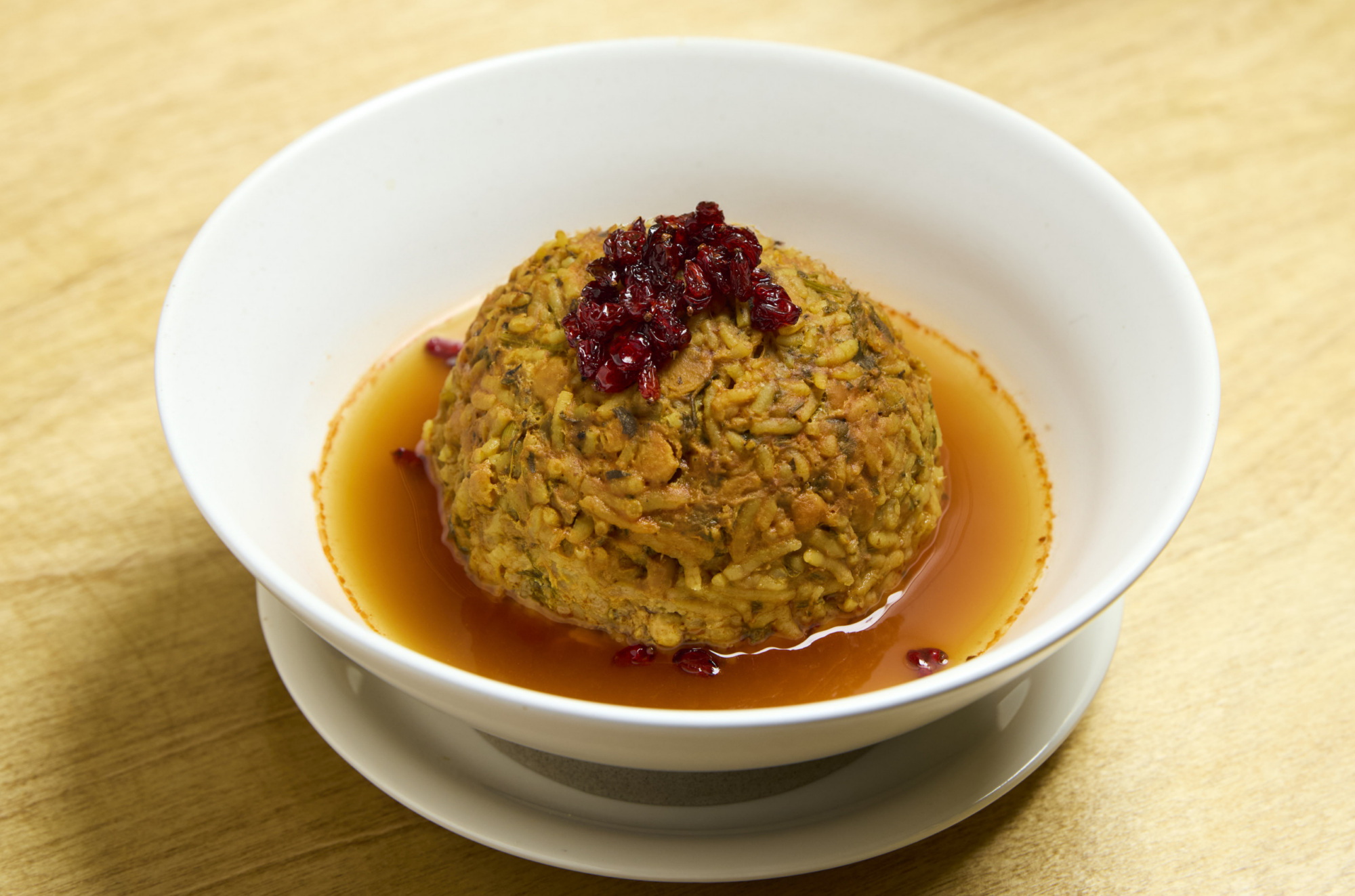
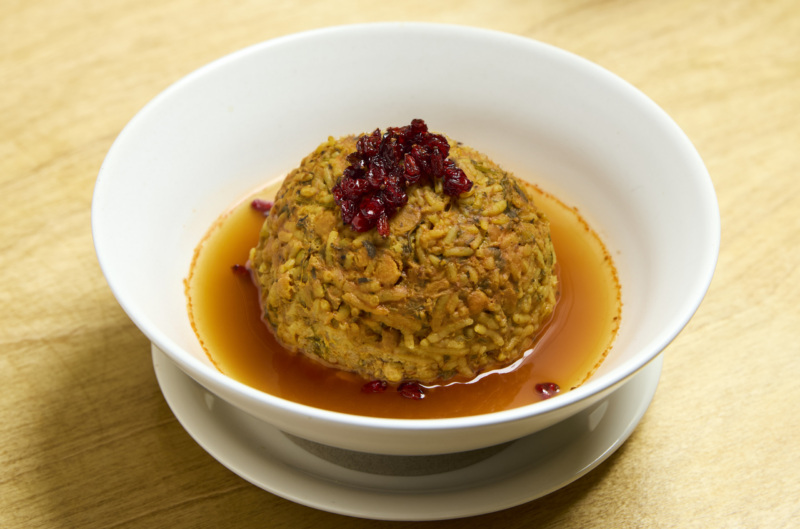
“The kofteh is one of those dishes that you would describe as a showstopper, especially at home. It’s something you pull out during family events or parties because it’s so labor intensive, and it needs a lot of prep and time. It’s basically a melange of different herbs, plus rice, ground beef, and split peas. So the texture is going to be a lot softer than, say, an Italian meatball or something like that.
What makes it a Tabrizi-style dish and what’s really great about it is the center is usually stuffed with different mixes of dried fruit. Ours is prunes, apricots, and then these little tiny berries called zereshk. They’re essentially foraged barberries that are found throughout Iran and different parts of that region. And then, deep in the center, there’s a whole walnut. What we really like about it is as you cut into it, there’s just that wonderful surprise in the center—sweet fruit that cuts through the savory notes of all the herbs and different spices in there.
The mixture has to be gently folded together so it’s not all mixed—you want the layered effect. It’s not one cohesive paste. In order to achieve that, and to make it stay soft, everything is gently folded together until it’s just barely formed. And then in order to shape it, you have to form it into a patty into your hand before slowly braising it.
It’s just one of those really fun dishes that we want to showcase. In my family, it doesn’t come out very often unless we have a bunch of people over. And for Misha’s side, because her family is from Tabriz, it’s really close to her heart.“
Ash-e Jo
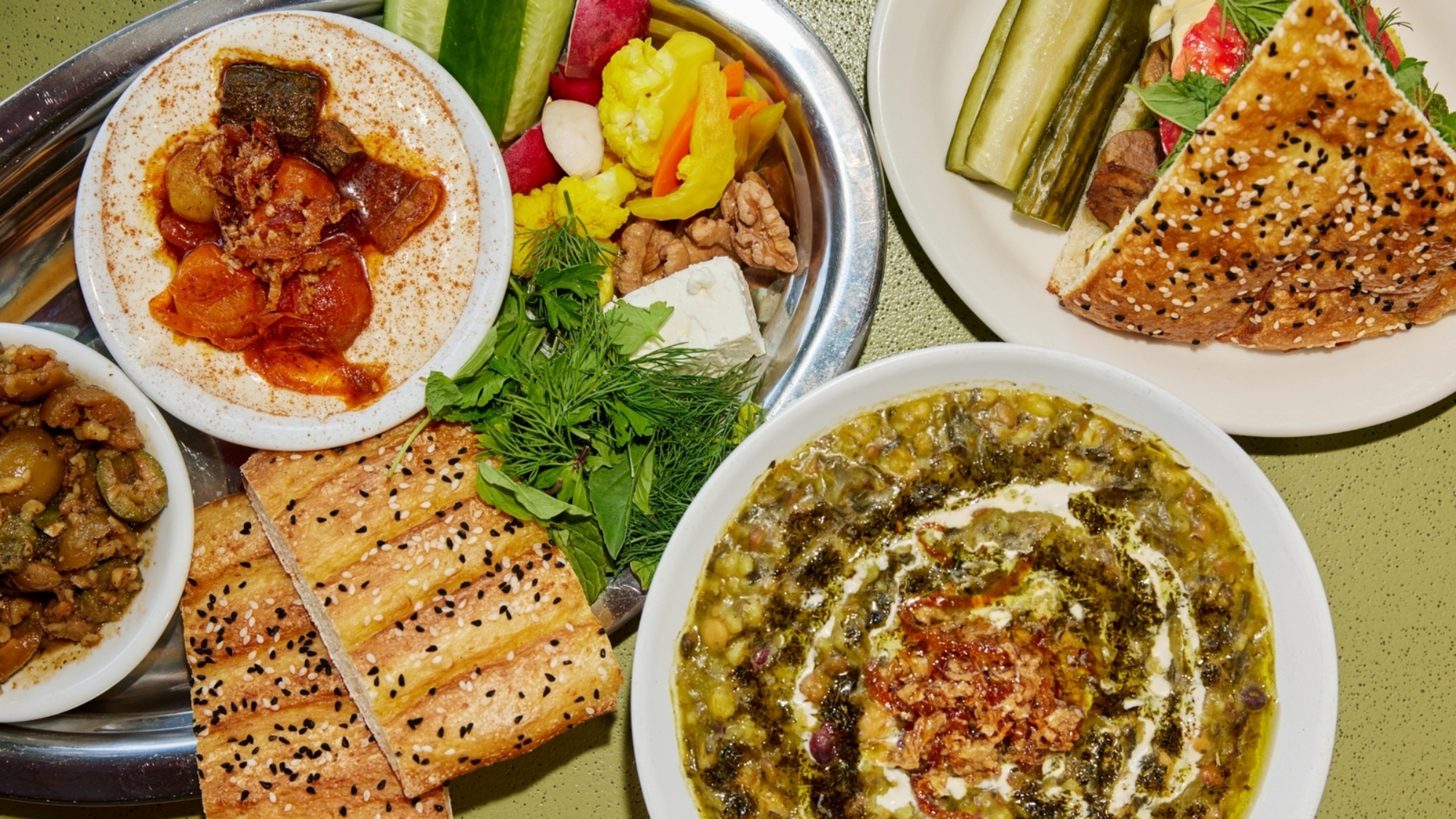
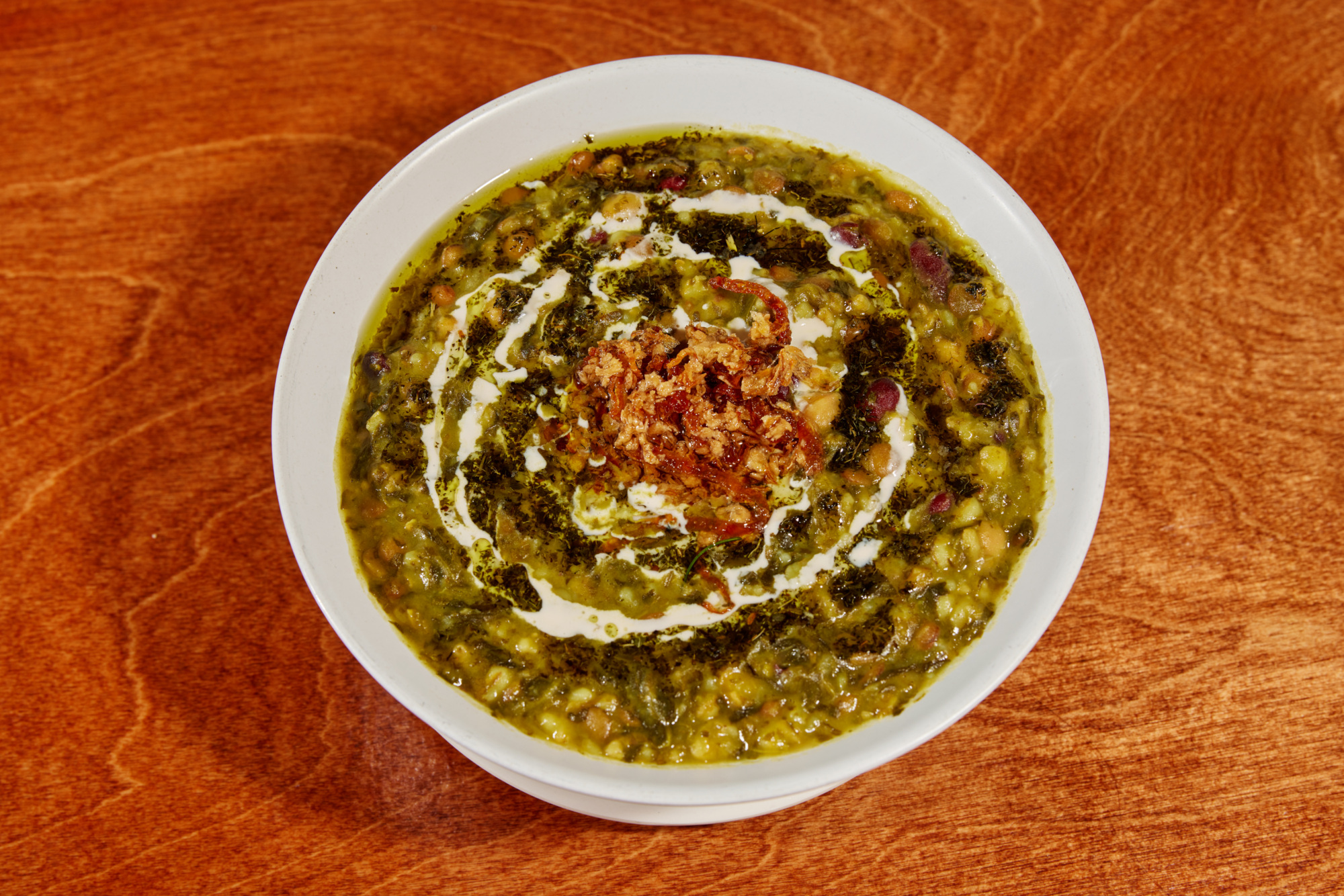
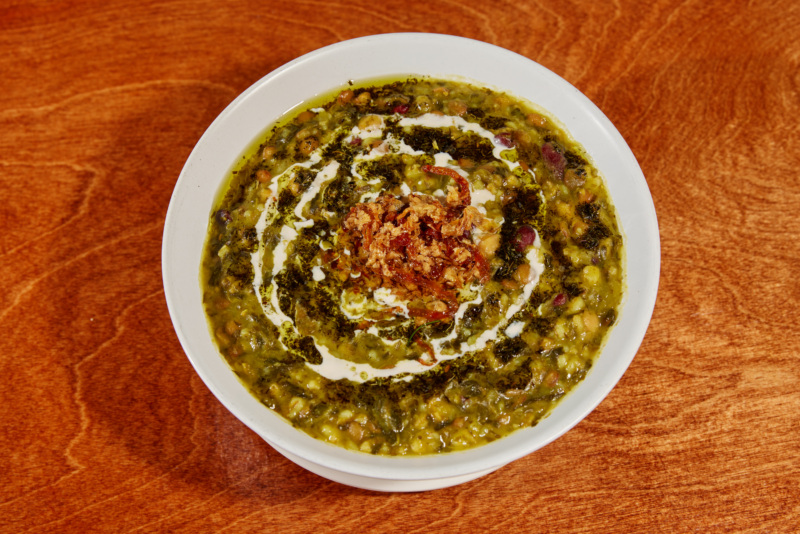
“This was a dish my mother would serve at her restaurant. It’s a potage of different beans, legumes, grains with a bunch of herbs. I grew up eating it. It has a lot of different greens, so preparing it is definitely labor intensive: spinach, cilantro, and parsley, plus then it’s lentils, kidney beans, chickpeas, and rice. For the texture not to be one solid mass you have to cook it gently. We top ours with some mint oil, fried shallots, and a fermented whey known as kashk, which gives it a nice umami flavor and a little tartness.
The more well-known version is ash-e-reshteh. The main difference is there are noodles in that one, but ash-e jo has no noodles, just barley. The reason my mom chose barley is because when she was opening her restaurant in Nebraska, sourcing the noodles was very difficult. So the next best thing for her was barley.”
Turmeric-Braised Chicken
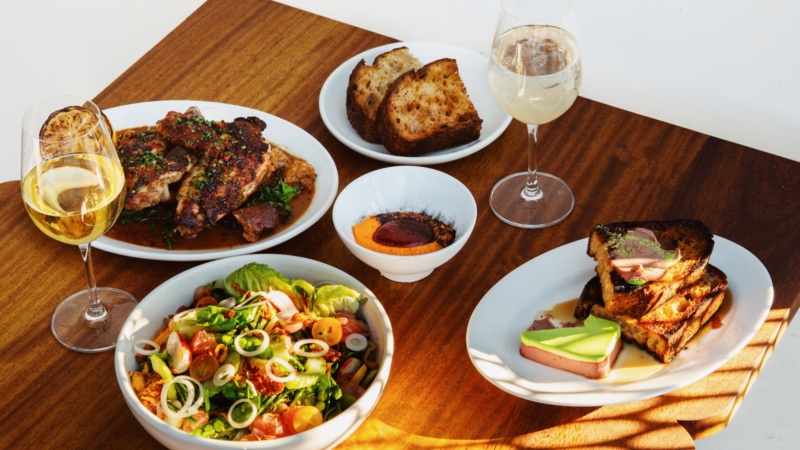
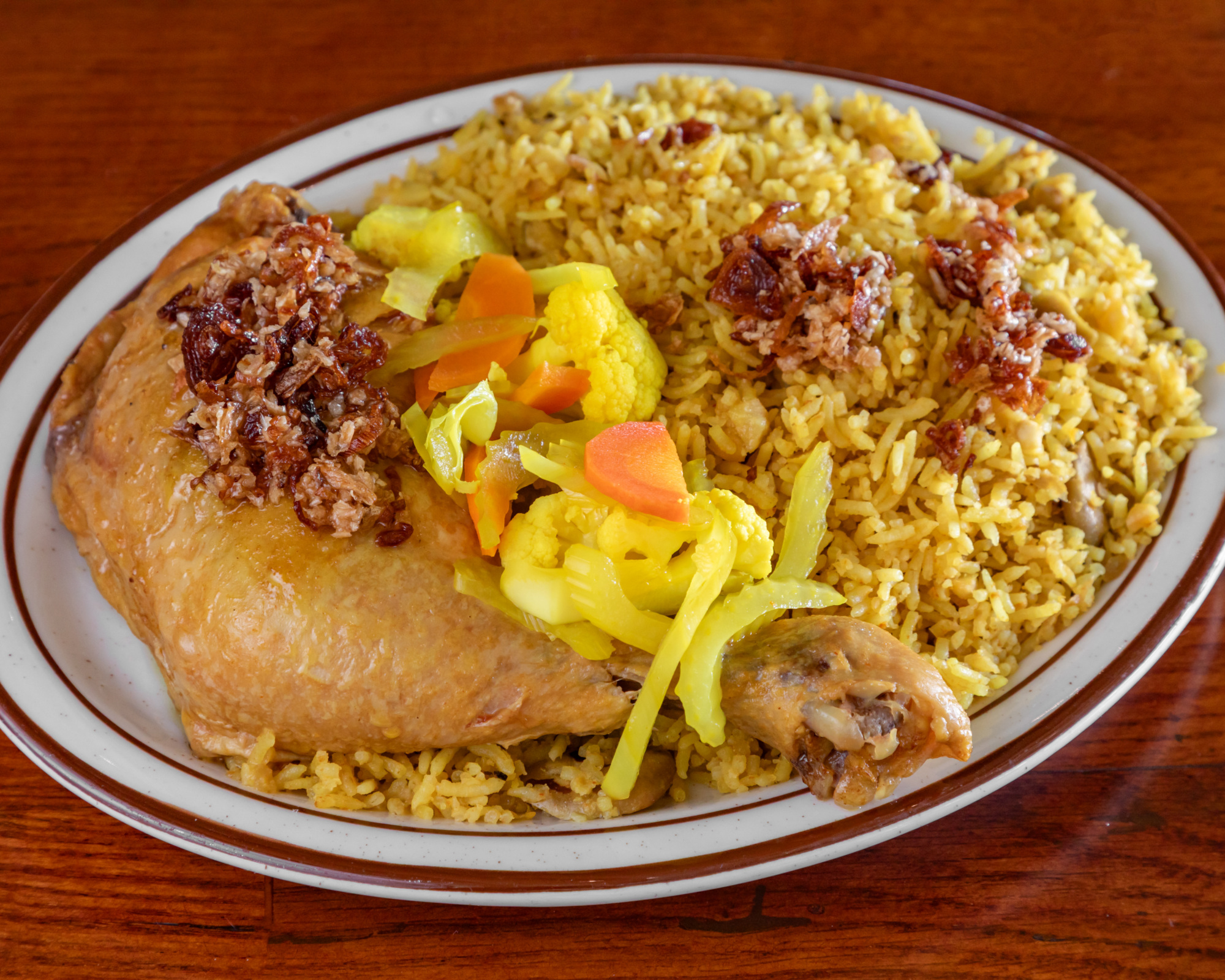
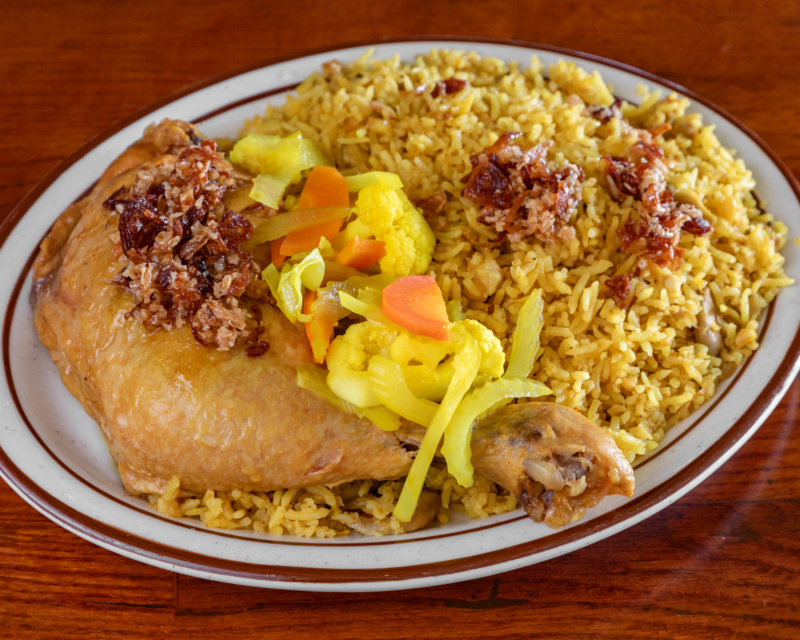
“This is a hybrid of two different dishes. The chicken itself is a very simple rustic braise that a lot of Iranian families are very familiar with. We use Jidori chicken legs and thighs. It’s braised for a long time with some sweated-out caramelized onions and turmeric, and it falls off the bone. We pair it with the turmeric-fava bean rice, which is this rustic homestyle rice dish. It’s very simple and straightforward. It’s paired with some of our housemade mixed pickles. You’re going to get a nice texture from that. For the pickle brine we use vinegar, turmeric, black pepper, mint, and tarragon, which gives this nice herbaceousness.”
We wanted to highlight not very well-known dishes, things that you wouldn’t find outside of the home. When I was talking to my mom about putting it on she was like, ‘why would you do that?’ That actually gave me more confidence to do it. Every culture has chicken and rice dishes, and this is ours.”
Kuku Sandevich
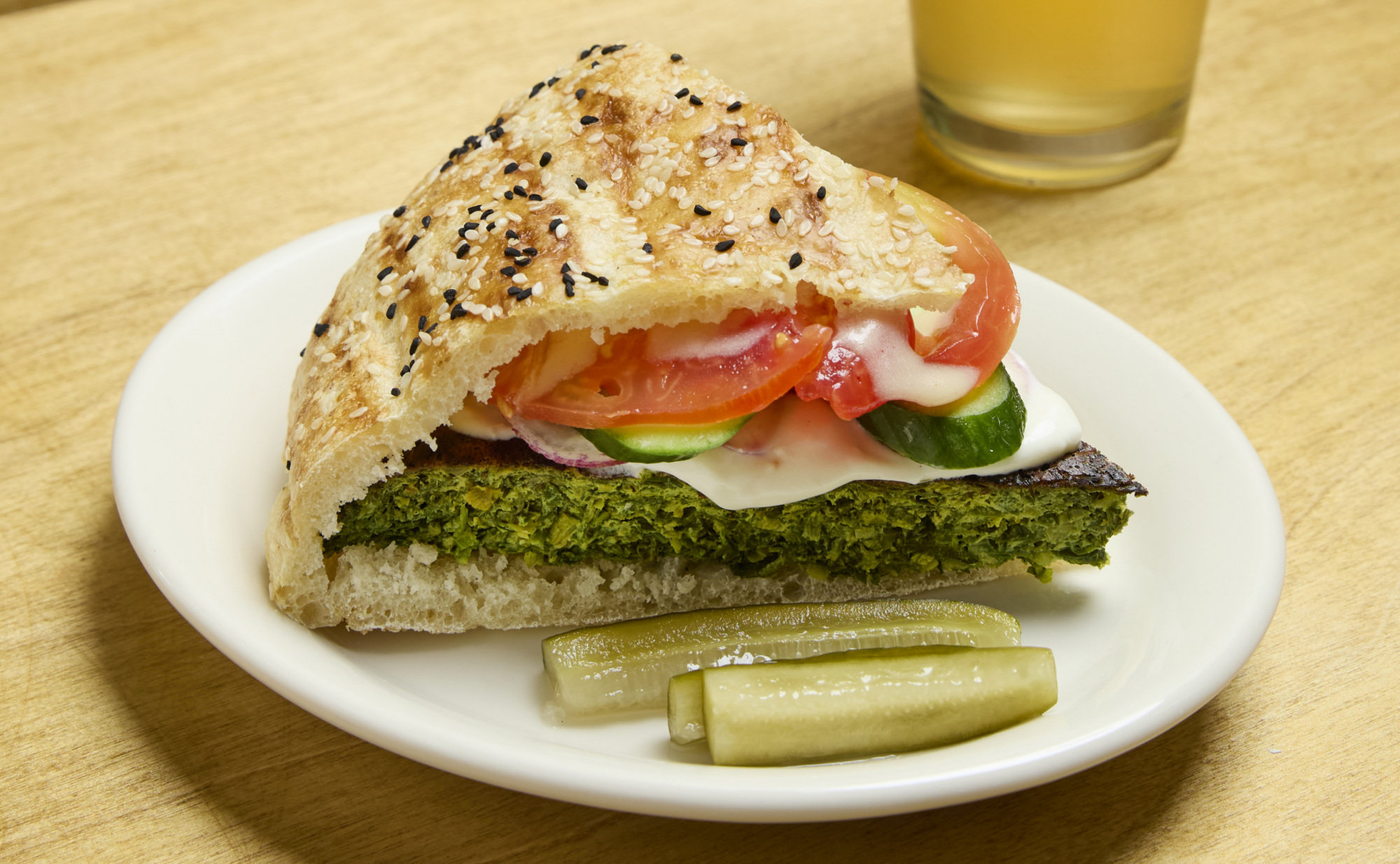
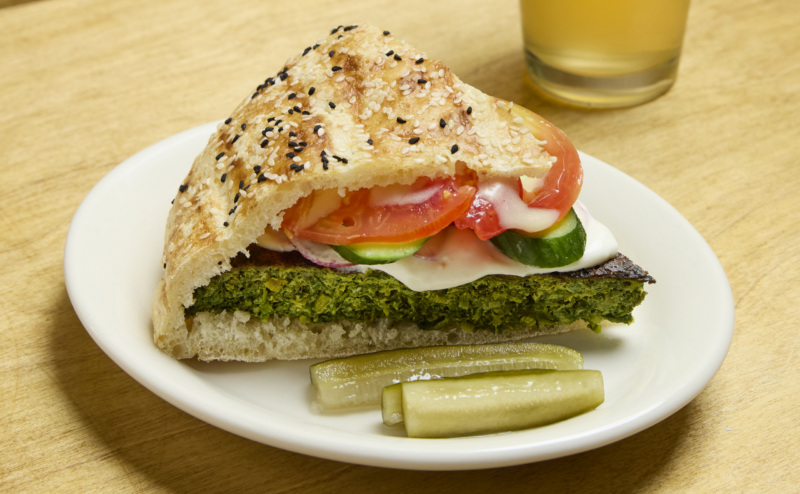
“Kuku is sort of a frittata but Iranian, and we like to add a lot more vegetables to egg. It’s something you would traditionally find on the table during Iranian New Year (Nowruz) in the spring in honor of all the different herbs popping up. We wanted to make it as a sandwich because growing up, after the New Year, Iranians would go picnic and eat the leftover kuku in sandwich form.
We start the frittata on the stovetop to get a little bit of a crust on top of it, and the frying of the herbs adds a nice nuttiness. There’s so many different flavor profiles in there — the most prominent is the dried fenugreek, which adds a nice savoriness. It’s finished in the oven, and the crispier crust on top feels like a contrast.”
We put it on our house bread, barbari, a thick flatbread from Iran. It’s a yeasted bread, somewhere between a focaccia and a pizza dough in terms of consistency, and we make it daily. We make indentations along the dough, and then stretch it and top it with nigella and sesame seeds. We make the little holes in it in parallel lines because it makes it easier to pull the bread apart. Iranians will split it open and stuff it with herbs and cheese as tiny one-biters.
Ferni
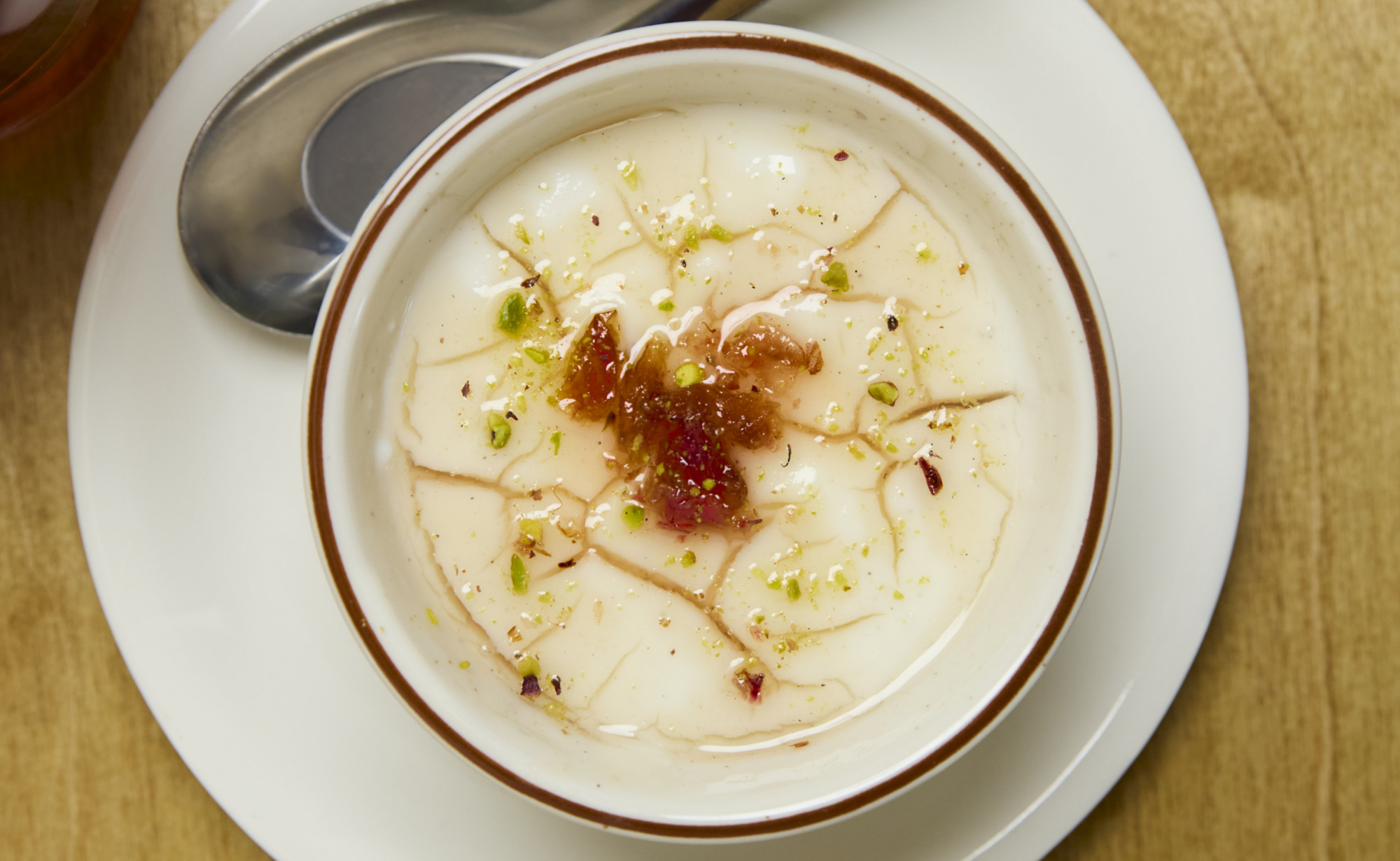
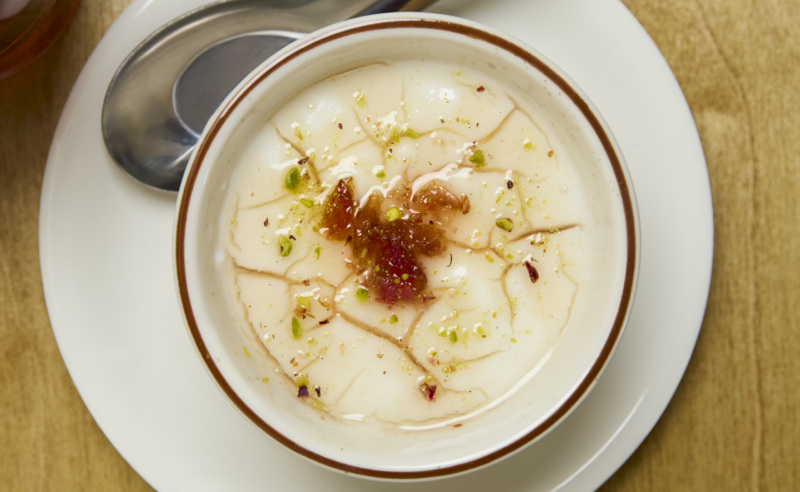
“This is a kind of rice pudding. It’s actually from Misha’s side of the family—her grandmother would make it all the time. We make ours with Clover organic milk and rice flour, seasoned with a little bit of rosewater and cardamom. It’s similar to a custard pudding, but the rice flour makes it a little lighter. I didn’t eat very often growing up, but Misha’s family loves it and they eat it all the time. Some people come in and say, ‘Wow, I haven’t had this since I was a kid.’ It’s cooked slowly until it thickens and then we pour it into the bowls to let it set slightly before serving.”