Fuegos L.A. Brings the Spirit and Style of Argentina to Exposition Park
Published:
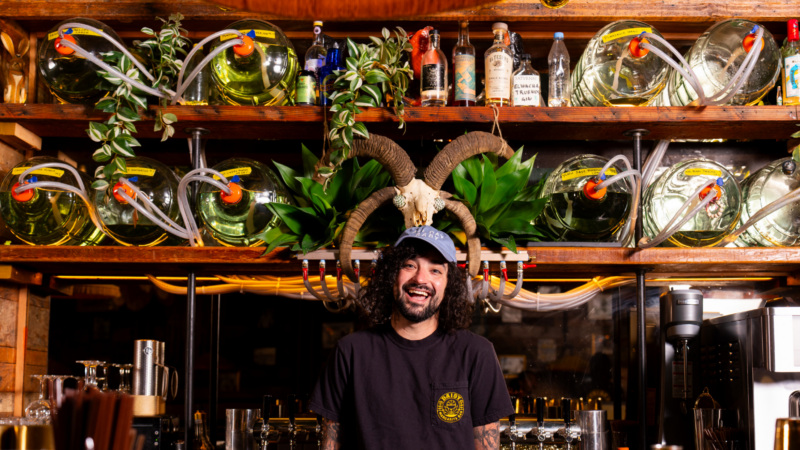
When partners in business and life Federico Laboureau and Maximilian Pizzi moved from Argentina to Los Angeles 12 years ago, they set their sights on Hollywood, not the restaurant industry. They spent a decade working in production design, working on sets for films and TV like Project Runway Latin America and Cupcake Wars.
The entertainment industry had barely bounced back from the pandemic when the writers’ strike started in 2023. With production work unceremoniously halted, the pair needed another way to pay the bills: they decided to make frozen empanadas at home. Word quickly spread. “The first week we started promoting empanadas, we got an order for 68,000,” says Laboureau. After a month, they realized they needed a different space to support that kind of demand.
Laboureau and Pizzi originally planned on moving the operations to a ghost kitchen, but a neighbor told them about a space that was available in a strip mall in South L.A.’s Expo Park neighborhood. They immediately canceled the ghost kitchen and moved in, taking over the adjacent storefront as well, which they soon converted to a dining room called Fuegos L.A. that serves as a cafe by day and an Argentinian restaurant by night.
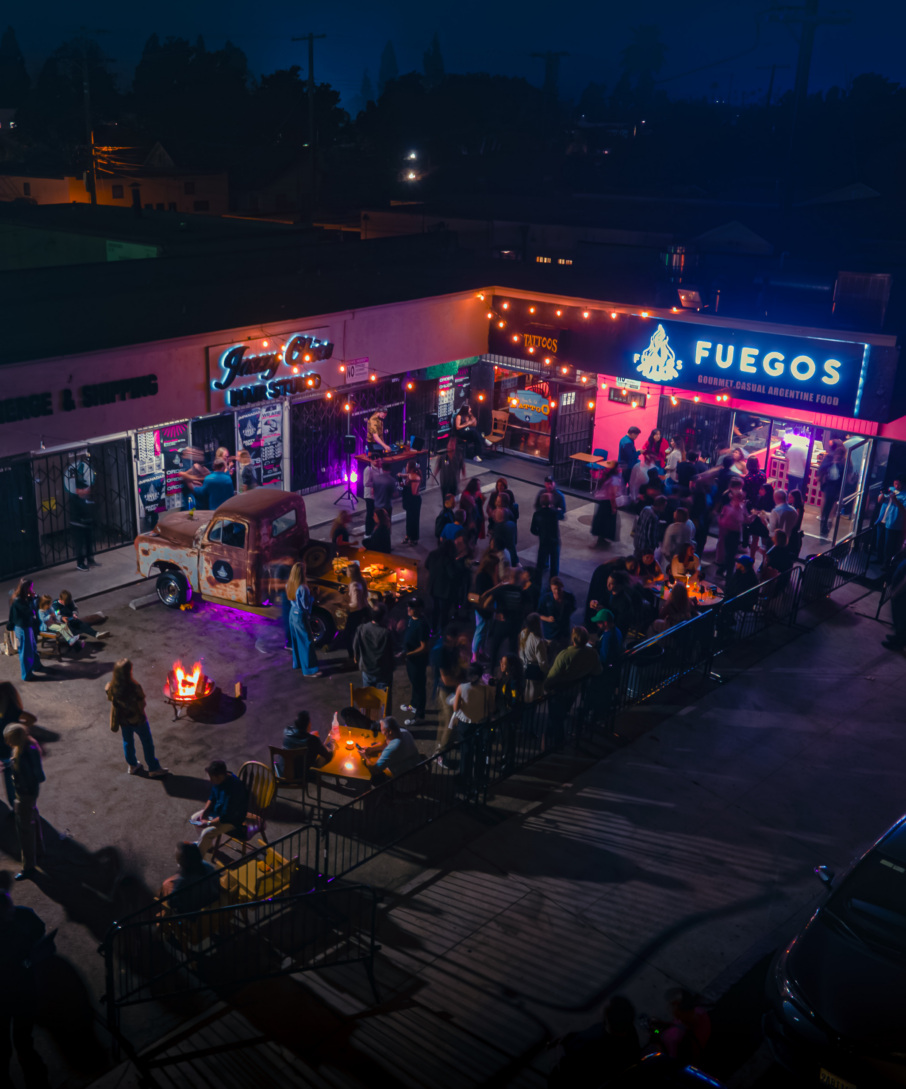
That space opened in October of 2024, but the couple soon outgrew that too, and expanded into yet another neighboring storefront in the same plaza. Using the strip mall parking to host events ranging from dance classes, movie nights, and jazz performances, Fuegos has become a community hub for homesick Argentinians and Angelenos looking for a dose of South American flavor. And with Laboureau recently making headlines as the designer of the casita featured in Bad Bunny’s Superbowl halftime show, Fuegos’s footprint is growing even more. Here’s everything you need to know before planning a visit.
MORE FROM RESY


They took a hospitality class — and did the opposite
Laboureau and Pizzi knew they needed to learn the ropes when they decided to open a sit-down restaurant. “We love to travel and go to restaurants. But of course, running a restaurant is so different, so we started taking hospitality courses,” says Laboureau. But they soon bristled at the lesson plan.
“All the courses [were] saying we need to be pushing people to leave the table after 30 minutes, or … rushing the process just to get more profit,” Laboureau explains. In spite of what the classes preached, there was something more important that the two of them learned growing up in Argentina: sobremesa.
Sobremesa means, quite literally, “over the table,” but it really refers to the tradition of lingering over the table after a meal. Laboureau describes it as such: “When you finish eating, and then you stay longer talking and talking and talking, and you keep drinking, and you connect with your family or other people.” He and Pizzi wanted Fuegos to embody the spirit of sobremesa, and to feel like their living room, a place where you can linger longer.

Fuegos brings Hollywood know-how to transport you.
Working as production designers in Hollywood certainly helped Laboureau and Pizzi design their own dining room, though the true motivation was the simple fact that “we didn’t have any money,” says Laboureau.
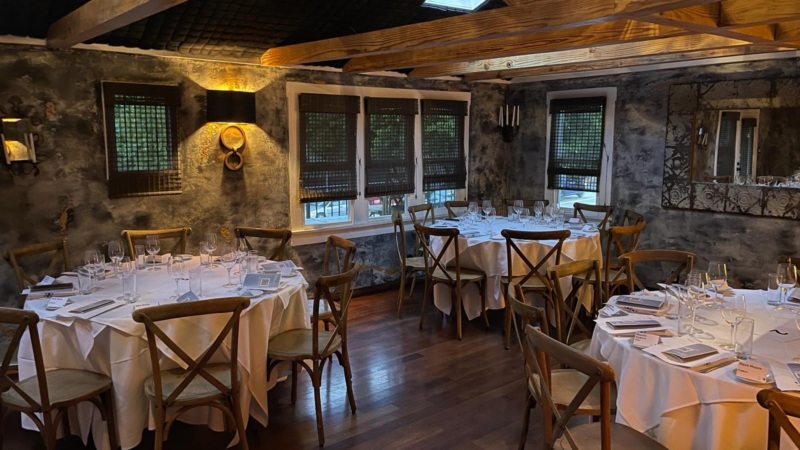
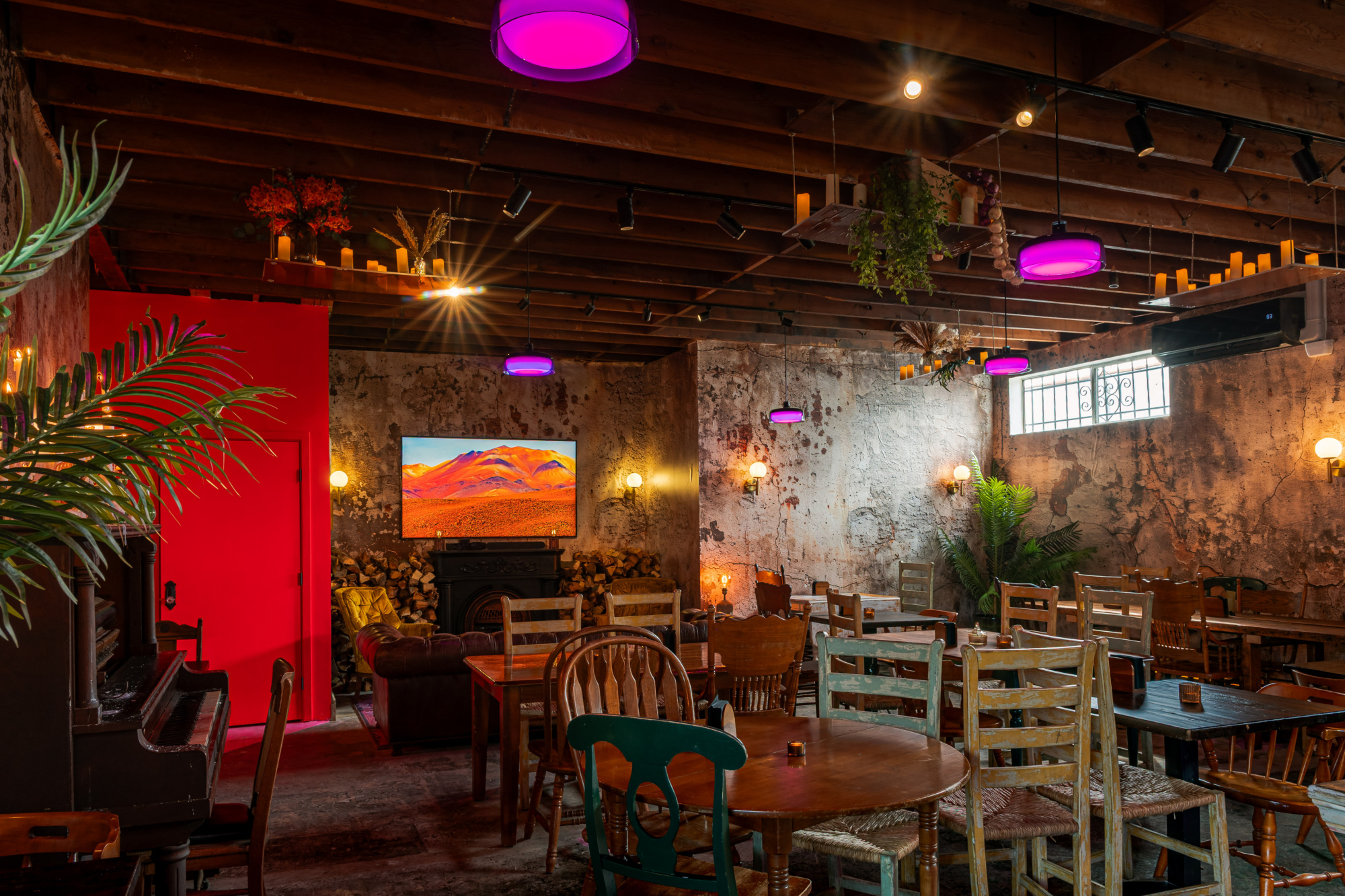
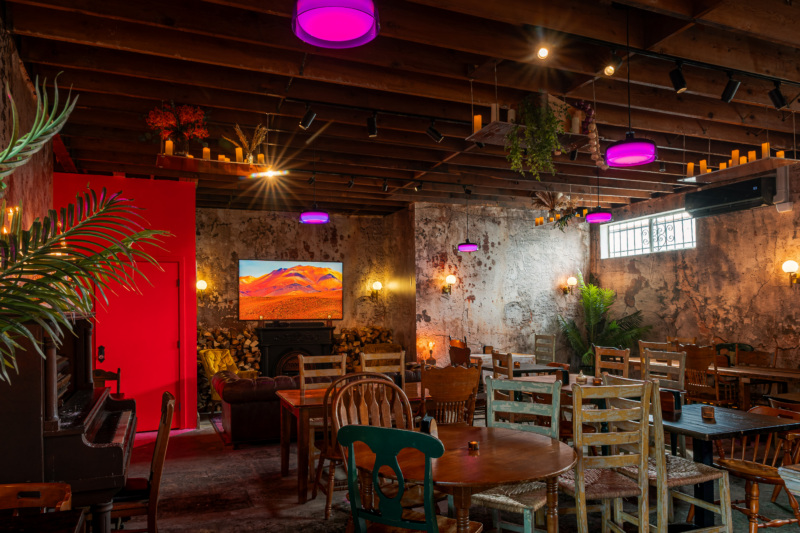
“The main idea was to try to recreate a typical bodega from Argentina,” says Laboureau, though since both he and Pizzi are of Italian descent, they also drew inspiration from Sicily’s small taverns. The aesthetics started to take shape when the couple peeled away the linoleum on the original floors. Like residue from sticky glue, the floor had a mottled appearance that they decided to keep by lining it with epoxy. “From that texture, we designed the wallpapers. Then we started getting chairs and tables from Facebook Marketplace,” says Laboureau.
The final result feels like stepping into one of those Argentinian bodegas 100 years ago. The walls look cracked, as if the paint were artfully peeling off. Exposed beams line the ceiling, and mismatched chairs dot the space. An old piano sits on one side of the room, with candles and an assortment of colorful glass bottles lined up along the top. No detail is too small for a personal touch, including the fish-shaped water carafes.
The overall effect is like stepping into a “time machine…that got isolated from reality,” says Laboureau with a laugh. The only spot that brings you to the present is the vivid pink walls near the bathroom. After all, says Laboureau: “Pink is our essence.”
The soul food of Argentina
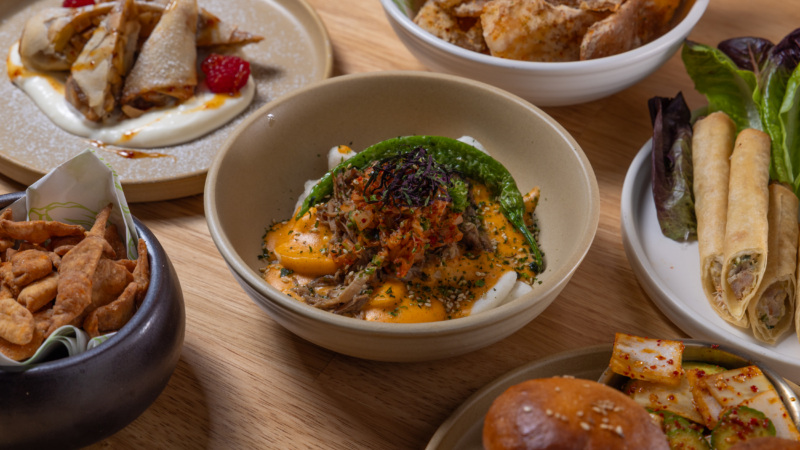
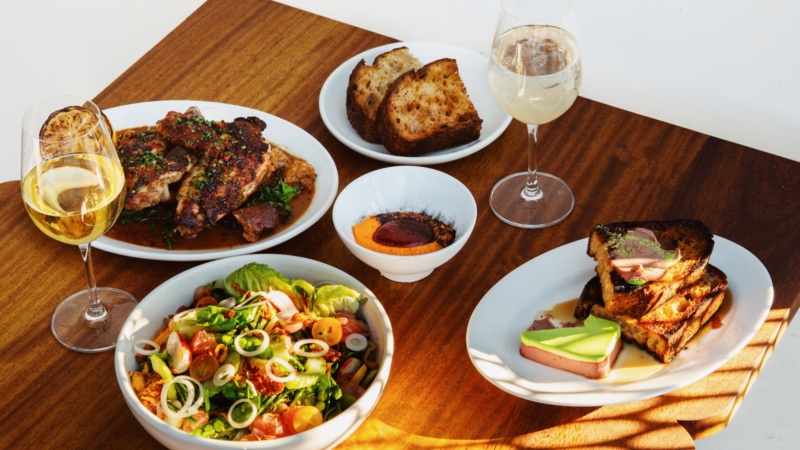
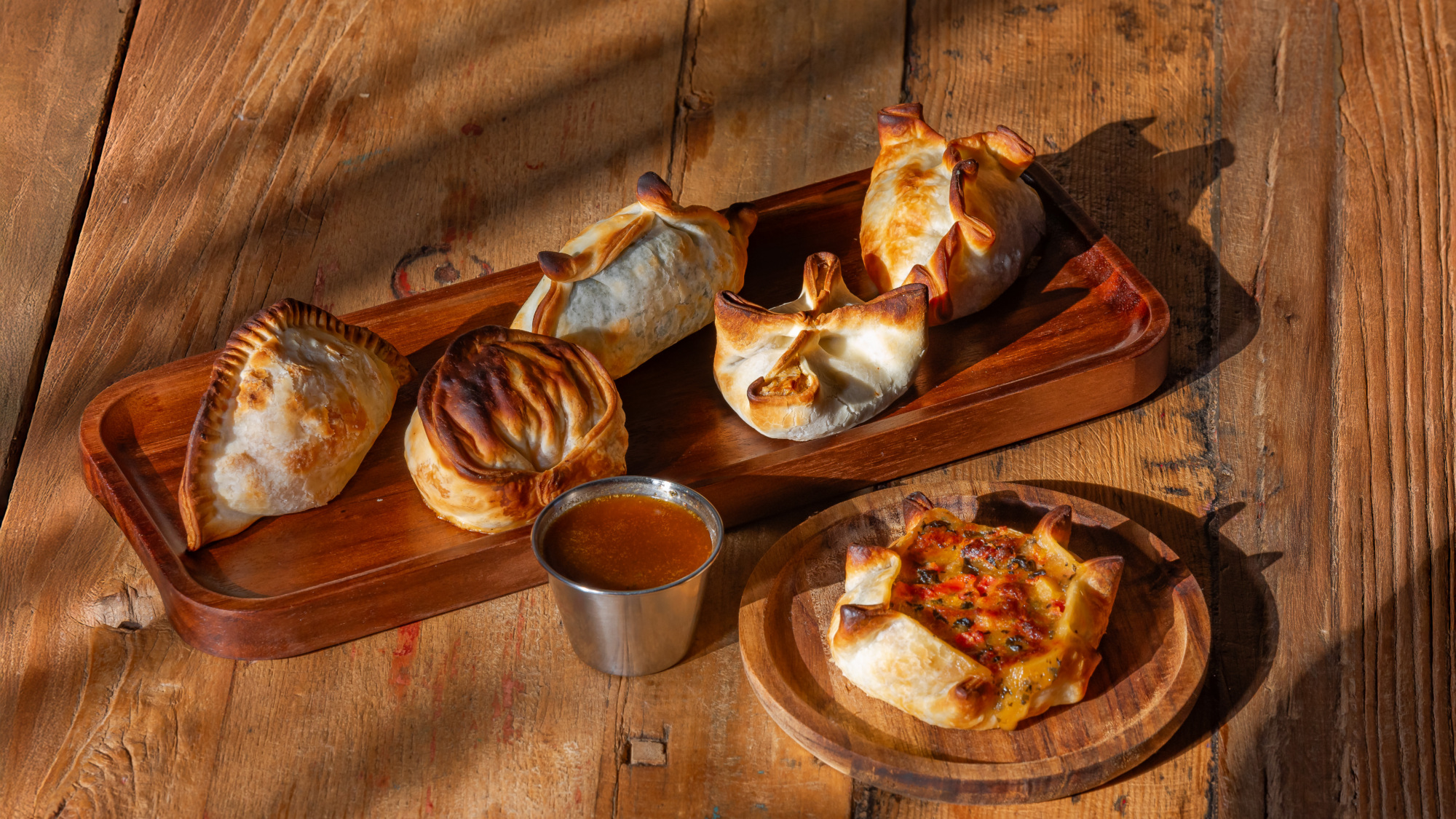
The empanadas, made from dough imported from Argentina and stuffed with fillings like beef braised in Malbec or spinach and mushroom, are what initially kicked Fuegos into high gear, but the dinner menu showcases the rest of Argentina’s culinary traditions, paired with a list of Latin American wines.
On a given night, Laboureau is in the kitchen while Pizzi takes care of the guests with his vivacious charms. The menu at Fuegos reads like a greatest hits list plucked from different parts of Argentina, from Buenos Aires-style pizza to Córdoba’s famous choripan. Occasionally, one or two seasonal dishes are introduced. Many of the ingredients Laboureau uses are imported straight from Argentina, including the meat for all the grilled steaks. While the menu is meat-heavy, there are enough seafood and vegan options (including vegan empanadas) to cater to the L.A. diners.
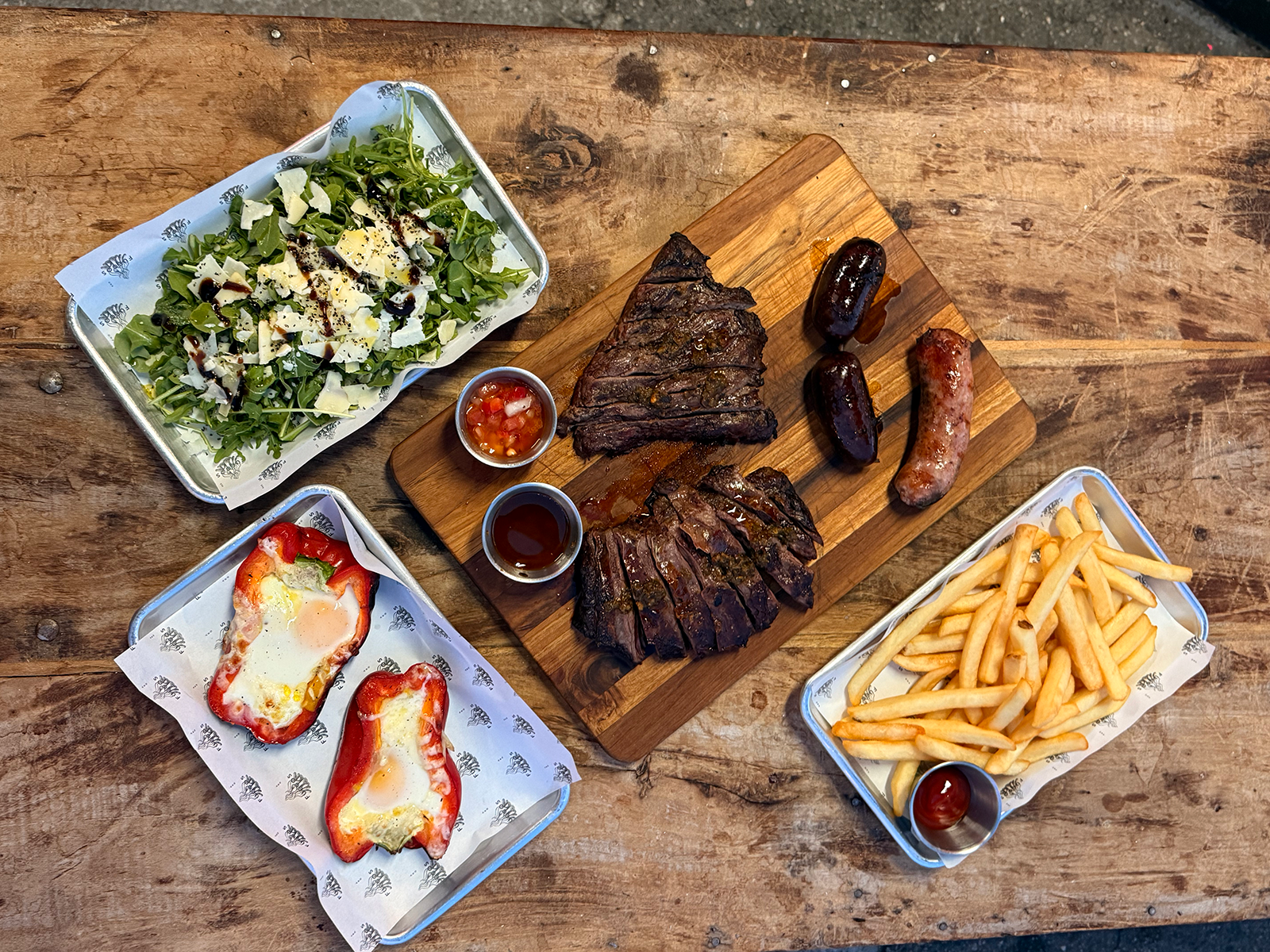
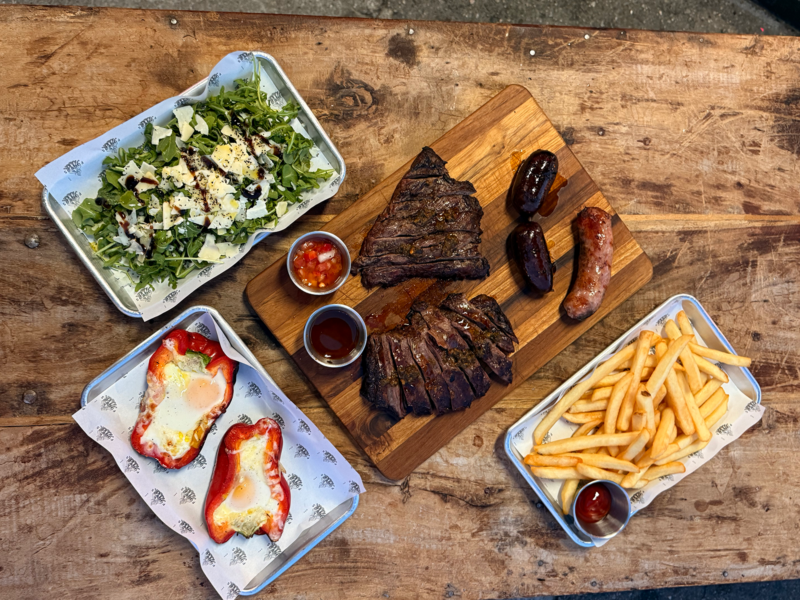
Of course, there’s asado. More than just grilled meat, asado is essential to Argentinian cultural identity. One particular cut at Fuegos, though, is likely different from what you’d find at most Argentinian restaurants in the U.S.: the skirt steak, or entraña.
In Argentina, the entraña is traditionally sold with the membrane still intact on one side and a layer of fat on the other. In the U.S., however, the membrane is typically removed. At Fuegos, they keep the cut the same way it’s served back home. When it’s grilled, the membrane forms a thin layer of crispy crust around the meat, which helps seal the juices inside the steak.
The tortilla de papas here is served a little runny, and not flipped the way Spanish tortillas are. This is the way Laboureau’s family cooks it, per his father’s request. “The thing is, we cook the way we like the food. At the beginning we tried to feed into the market. And then we realized, we [needed] to be loyal to our palate and what we like.”