How the Legendary Pequod’s Pizza Gets Made
Published:
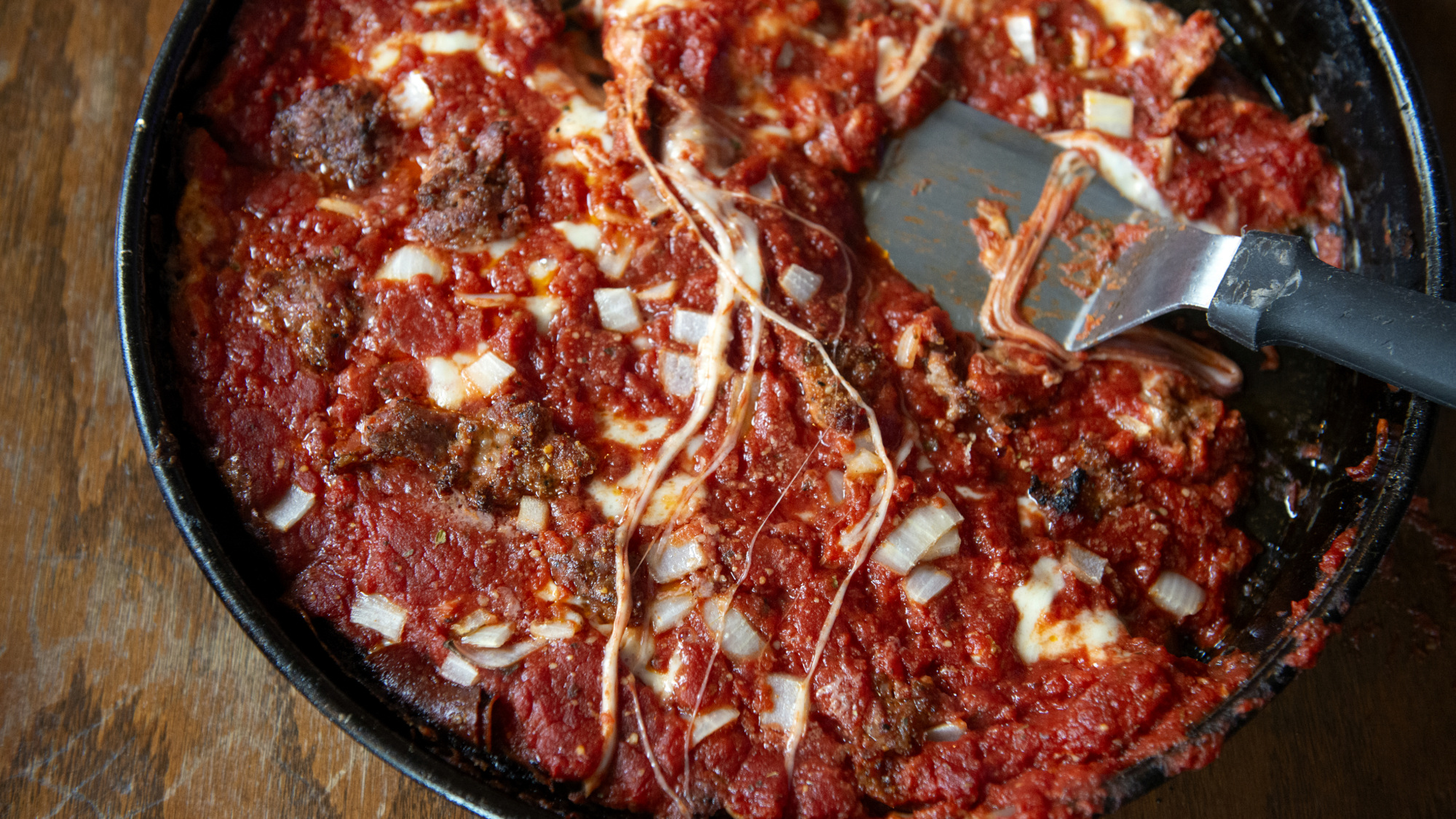
Of all the fabled pies in this town, Pequod’s is the most architecturally impressive — a dense, bready dough that forms a concave crater, layered with slices of full-fat mozzarella and topped with enough tomato sauce to resemble a pond more than a puddle. The place is a mecca for many, mottled with decades of sports memorabilia on the walls and the sizzling aroma of melted cheese. What Pequod’s describes as their signature “pan-style deep-dish” pizza is as much an absolute necessity for Chicagoans (and tourists) as watching the Blackhawks, Bulls, and Bears play.
It’s a pie that has survived the test of time: Pequod’s first opened in suburban Morton Grove in 1970, followed by a Lincoln Park outpost in 1992. While the Southern biscuit-like base recipe may be ridiculed by thin-crust enthusiasts, Chicago’s deep-dish devotees have long showed their support by investing in stacks of heavy-duty, round cast iron pans, crowned with a crackly cheese frico on the exterior crust, many shades darker than Detroit’s. From the classic combo of pepperoni and sausage to any number of premium meat additions (ground beef, Italian beef, sliced meatballs, Canadian bacon), or heaps of hot giardiniera, Pequod’s subscribes to a more-the-merrier mentality, embracing all its particularities along the way.
It might seem odd that a Chicago pizza place would have a whale as its logo, but owner and Marine veteran Burt Katz named the original for Captain Ismael’s ship in Moby Dick. (For reference, his previous restaurant was named Gulliver’s.) In 1986, Keith Jackson, who owned a nearby mom-and-pop pharmacy but had never cooked a day in his life, bought Pequod’s from Katz on the advice of his accountant (who was also Katz’s bookkeeper). The word was that small pharma was dying, and fast casual pizza would be an excellent investment.
Millions of pan pies and hundreds of tons of flour later, their cottagecore meets sports bar vibe endures. With its fluffy dough packed into hubcap sized-pans, followed by an unexpected inversion cheese-then-sauce, seeing a Pequod’s pie built is believing in the monument of this marvel. Luckily, we were able to witness this storied process at their Lincoln Park location, in between ballgames. Here, a behind-the-scenes look at how the magic is made.
MORE FROM RESY
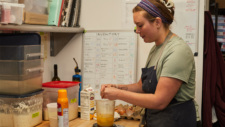
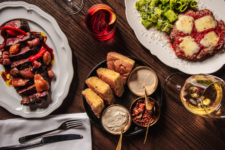
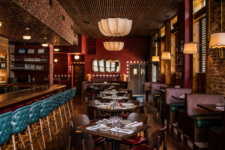
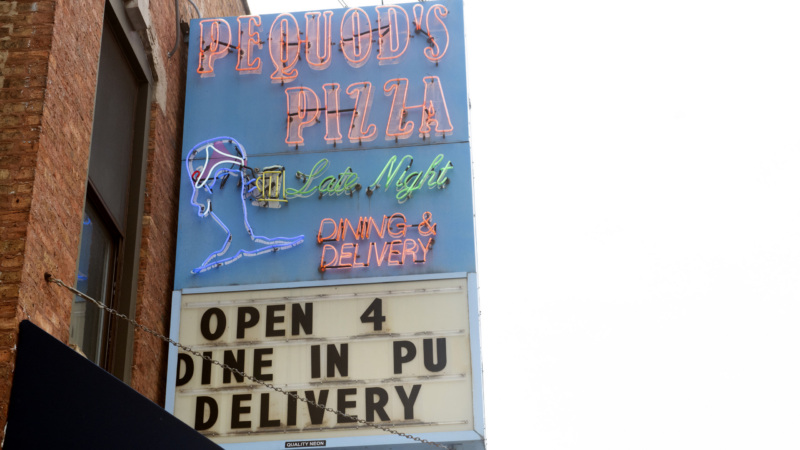
A full story high, above the restaurant’s blue and white awning, Pequod’s neon sign is illuminated every day at 11 a.m.
On the edge of a quiet neighborhood, full of family homes and well-manicured gardens, Pequod’s is a true neighborhood stalwart. “Morton Grove was for older generations,” says Jackson. “When I bought [the Lincoln Park] Pequod’s, being close to DePaul University, we were initially a pizza joint for college kids. You didn’t bring grandma there in ’92,” he laughs. Some 30 years (and 200 seats) later, things have changed: “Now, we’re everything to everybody,” Jackson says.
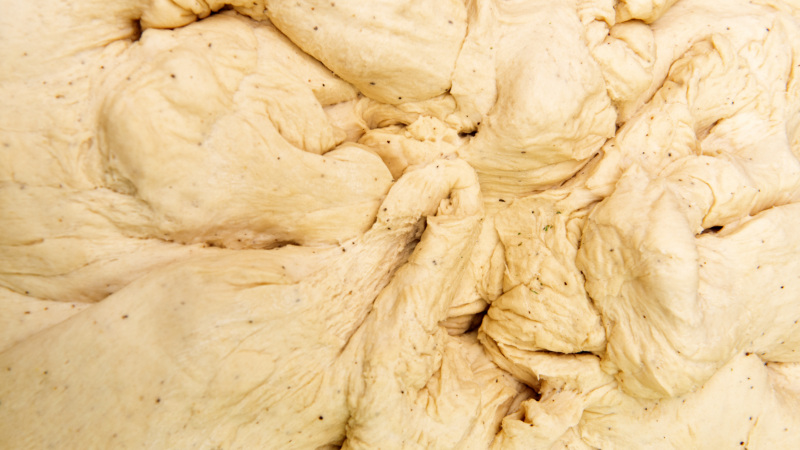
Made from General Mills flour, a white-whole wheat speckled dough bubbles up out of bus tubs. “We’ve stuck with what works,” says Jackson, while acknowledging that he is constantly reviewing ingredients and upgrading as he sees fit (i.e. switching to high-quality California-grown tomatoes). While Pequod’s pillowy, soft dough is made to soak up the sauce as if it were a bread bowl, it also needs to be structurally sound enough to withstand the many ounces (if not pounds) of toppings guests often request.
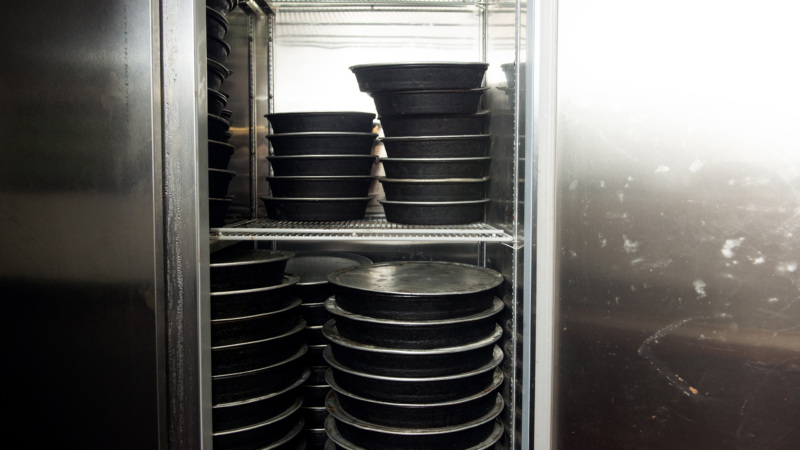
Before each service, many hundreds of cast iron pans are fitted with pre-shaped dough and kept in the walk-in fridge to keep from overproofing. Here, pies come in seven-inch personal, 10-inch small, 12-inch medium or 14-inch large sizes. “Each shift continues to lay out dough for pizzas throughout service, so the dough rises properly,” says Jackson.
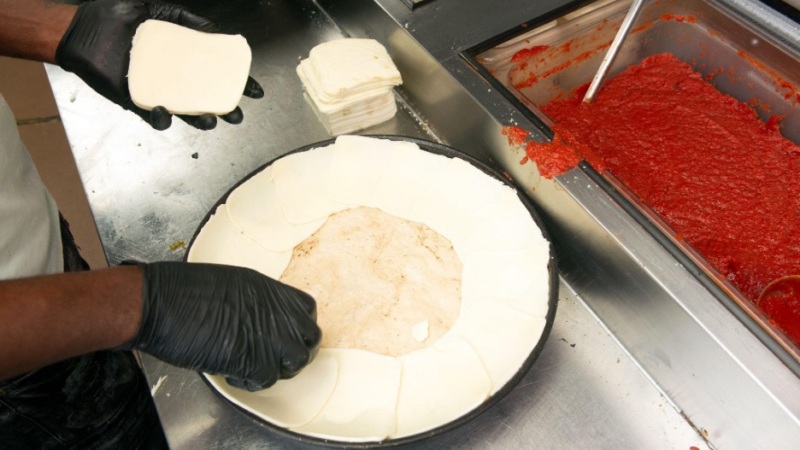
In this pizza, the cheese goes on before sauce. Rather than balled or grated cheese, Pequod’s uses a dozen or so slices of full-fat mozzarella per pie. Originally, the cheese came from Falbo, a local producer in Melrose Park, but after the company went out of business in 1990, Jackson switched to Sorrento 3% butterfat from Buffalo, New York. “If you’re on a diet, you don’t want to come to my place,” Jackson jokes.
Pequod’s is famed for its signature caramelized cheese crust, first achieved accidentally by a “sloppy” mistake that resulted in cheese hanging over the edge of the dough onto the pan. “We used to haphazardly throw cheese up to the sides of the pan, like dealing cards,” says Jackson, whose now-legendary gaffe resulted in a coveted crunch.
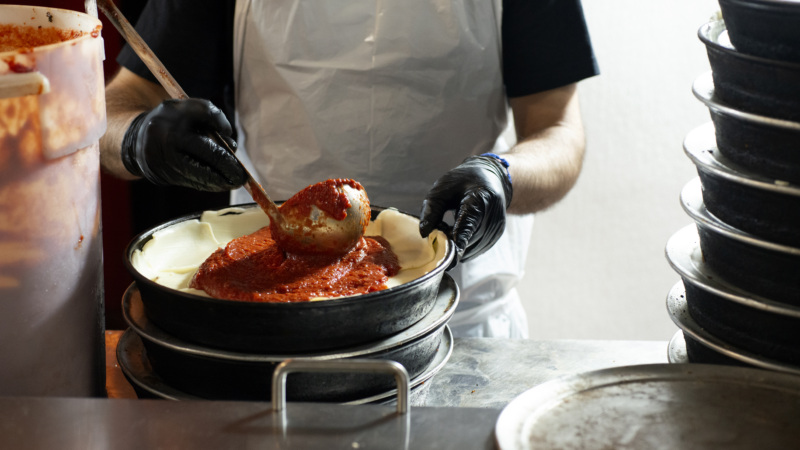
Jackson won’t divulge much about the sauce, except to say that it involves three types of Stanislaus tomatoes, with some 7/11s in the mix, with a secret seasoning blend. It’s sweet, slightly tangy, and noticeably thick. Large ladlefuls of sauce are spread nearly to the edges of the pan, with little negative space for the cheese to breathe underneath. As all the toppings melt down into a pool of sauce, the gooey cheese layer ensures the dough doesn’t get too soggy beneath.
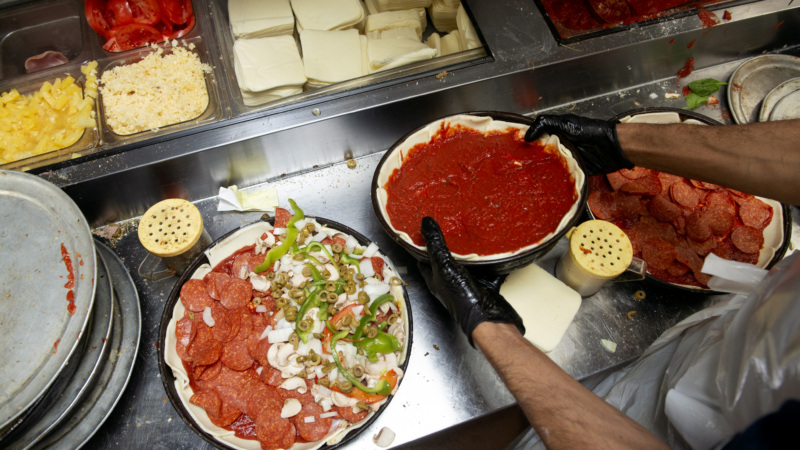
Fistfuls of cup-and-char pepperoni reign supreme — it’s by far the most-requested topping, followed by sausage, peppers, and onion. Pro tip: avoid selecting too many high moisture add-ons — e.g. tomatoes and mushrooms— to circumvent a soggy pie, though extra cheese is always welcomed. But if you can’t decide, you can design your pie in halves. It’s inevitable the Venn diagram of ingredients will mishmash in the middle, but the melding of flavors creates a coveted bite no matter how you slice it.
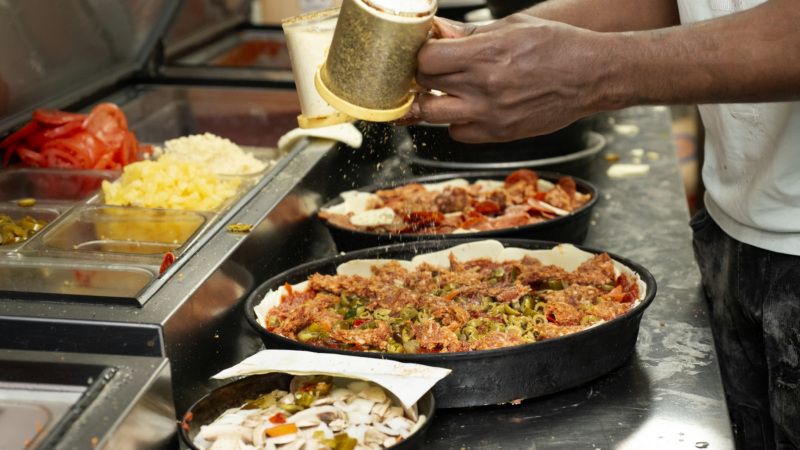
No pizza is complete without a little sprinkle of oregano and parm from classic Cambro yellow top shakers. The shakers get held upside down, and after a couple knocks together announces a pie is ready to be baked off.
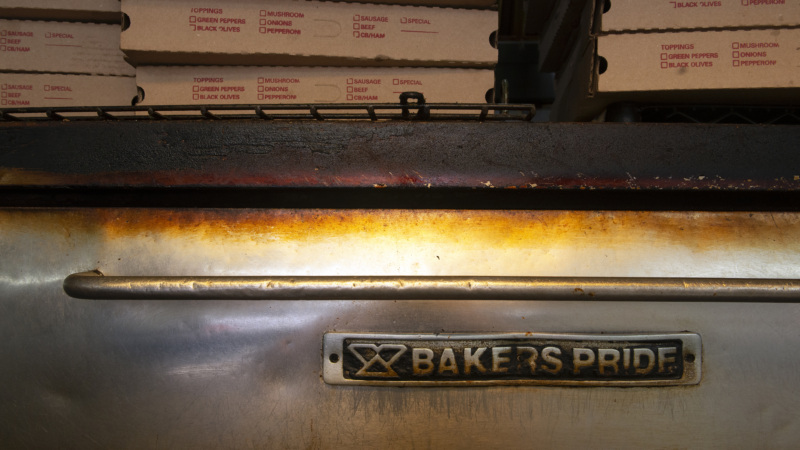
There are two kinds of ovens in use at Pequod’s: at the restaurant location, it’s the eternal flame of a beat-up, gas-fired, stone-lined Bakers Pride deck oven; the commissary next door (where you pick up takeout) relies on a Middleby Marshall conveyor belt oven. “We had a rotating oven originally,” says Jackson, who switched to a deck oven because they don’t require a lot of maintenance, but then things got busier. “With the amount of pizza we produce, a conveyor makes it possible to guarantee a perfect crust. There’s no variable,” he says. Each pizza takes 13-15 minutes on the conveyor, depending on how thick it is and how many ingredients are piled on top.
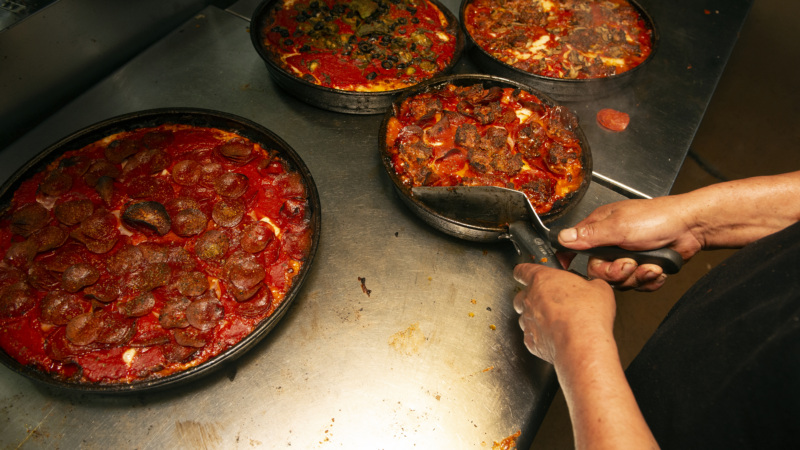
De-panning is an artform. The caramelized crust creates a dark ring of brittle cheese around the edges of the pizzas. And don’t you dare call it burnt — the deep caramelization is done purposely. In order to keep this (delicious) crust intact, the pies must be popped out of the pans while they’re still slightly malleable, just moments after they come out of the oven — otherwise, the cheesy crust fuses to the pan as it cools. All pies are loosened initially before being brought to the table.
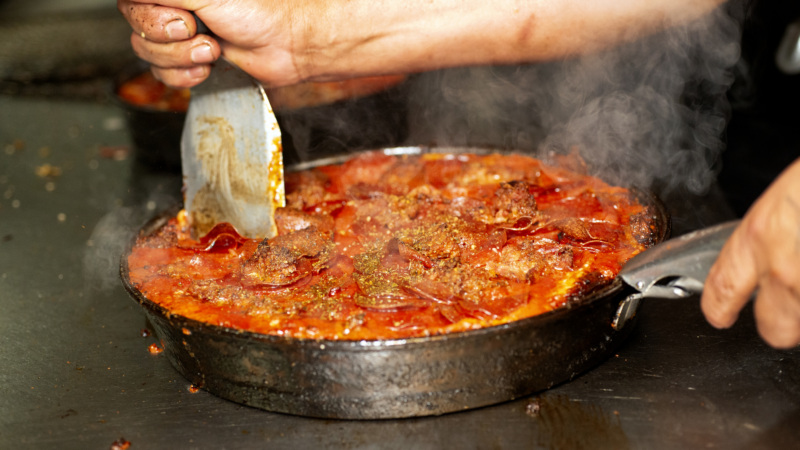
You can ask for your pie to be uncut, which is a worthy option for delivery and takeout to keep the integrity of the pie intact, but while dining in, let the cooks chop it into wedges while it’s piping hot with a sharp-edged spatula. For to-go orders, they lay a piece of aluminum across the top, between the pie and the box to shield it from any sauce or toppings.
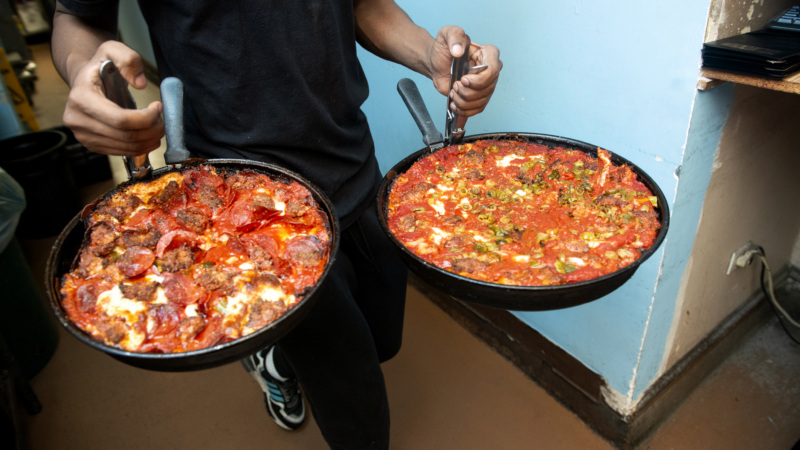
If you’re dining in, the pans are still so hot that servers must carry them out to tables with clamps and rest them on oven mitts so as not to scorch the tabletops. To save your palate, wait a minute or two before you dig in.
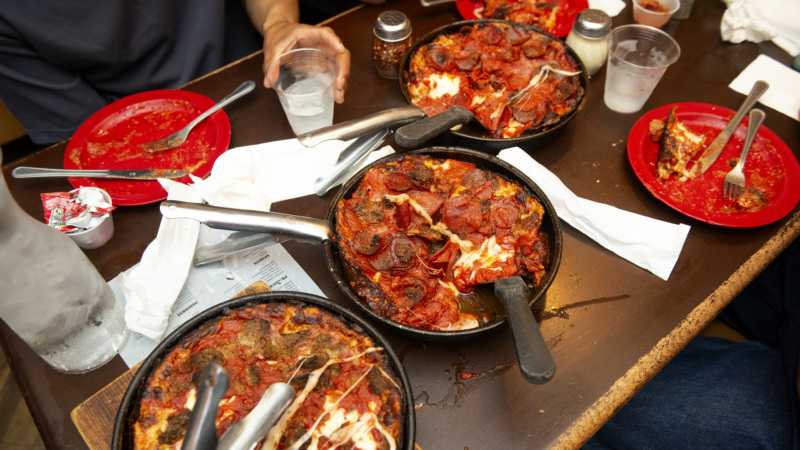
Pequod’s is certainly a shared experience — photo-styled cheese pulls stretch the length of the table, and people often linger, waiting for leftovers to cool enough to take home. Unlike New York-style slices, it’s okay to eat deep-dish with a fork and knife — it’s arguably necessary.
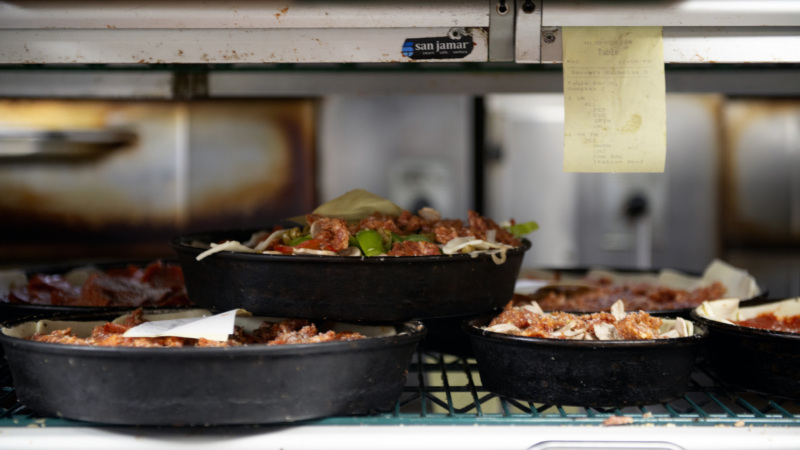
From 11 a.m. on, the orders keep coming in: On busy weekends, Pequod’s pumps out nearly 1,000 pizzas a day. By 6 p.m., there’s a line out the door. And after 10 p.m., when many kitchens have closed for the night, a second wave starts piling in (Pequod’s serves until 2 a.m.).
And remember — even if you live well outside of the Pequod’s dine-in or delivery range, they ship nationwide, guaranteeing homesick Chicagoans the nation over a taste of home.
Pequod’s is located at 2207 North Clybourn Avenue, and is open daily from 11 a.m. to 2 a.m. and on Sundays until midnight.

Michael Harlan Turkell is a food photographer, writer, and cookbook author. He most recently hosted the Modernist Pizza Podcast, and continues to explore the art, history, and science of many foodways. Follow him on Instagram and X. Follow Resy, too.