Feld’s Jake Potashnick Is Always Learning and Evolving
Published:
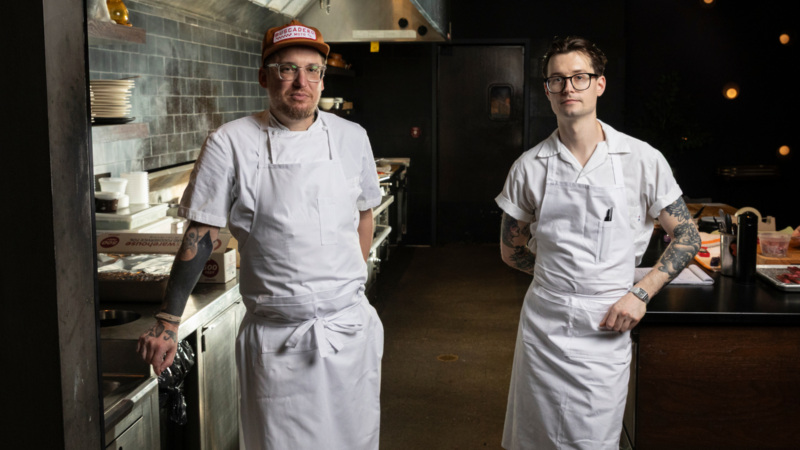
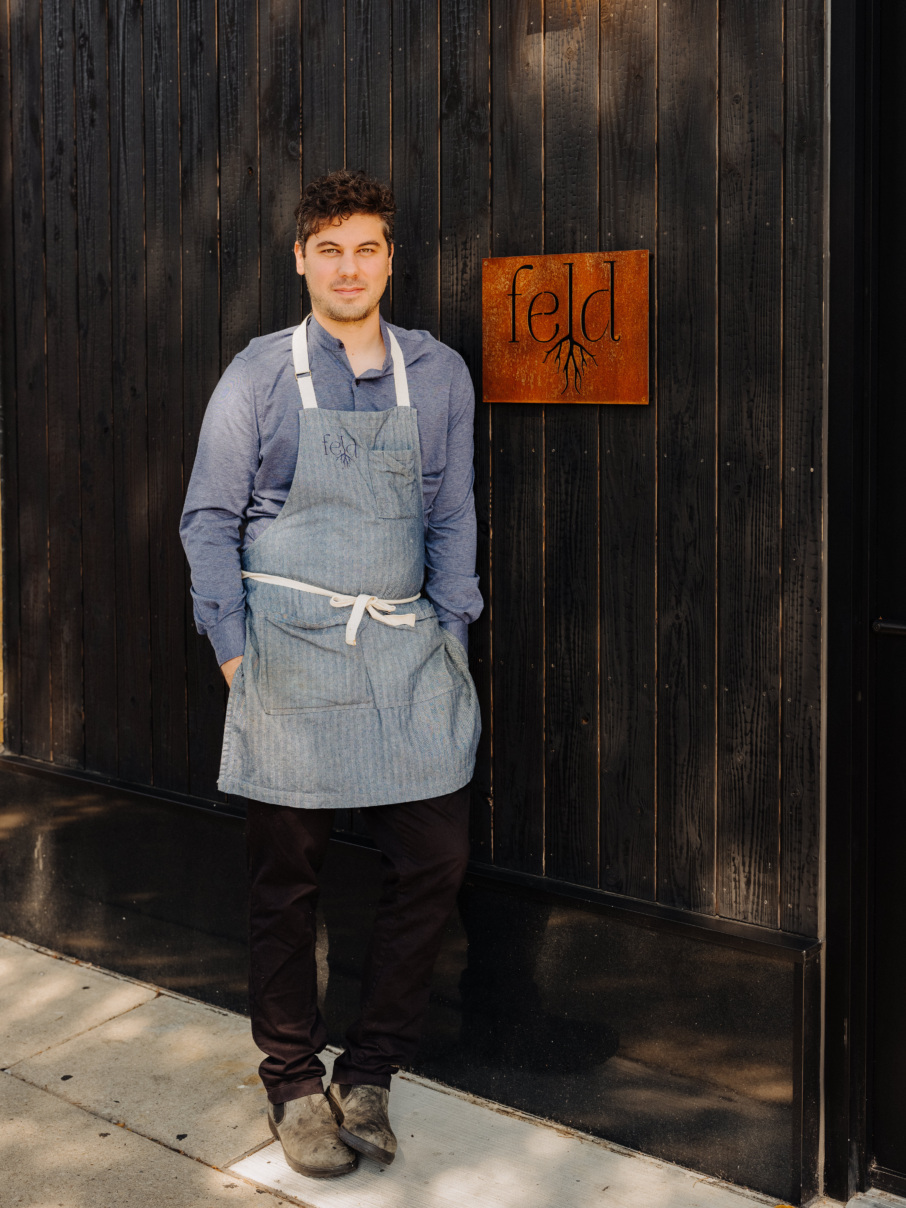
This year’s James Beard Awards brought home one win for Chicago, and it went to Jake Potashnick, who picked up a medal for Best Chef: Great Lakes. The chef-owner of the “relationship-to-table” restaurant Feld says he didn’t expect to win. Describing his reaction as “shock” followed by “excitement,” Potashnick is quick to point out how thrilled he was for his team, many of whom have been with him since he opened the Ukrainian Village restaurant in 2024.
Potashnick, a Chicago native, has been interested in restaurants since he was a kid. He received a degree in hospitality business administration from Cornell and attended the CIA briefly before cooking in Michelin-starred restaurants in Europe early in his career. In 2022, he moved back to Chicago and began opening Feld, documenting his journey on TikTok.
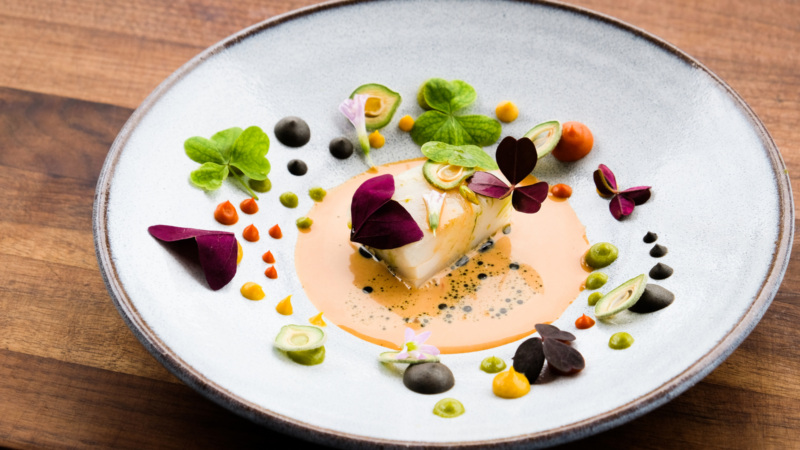
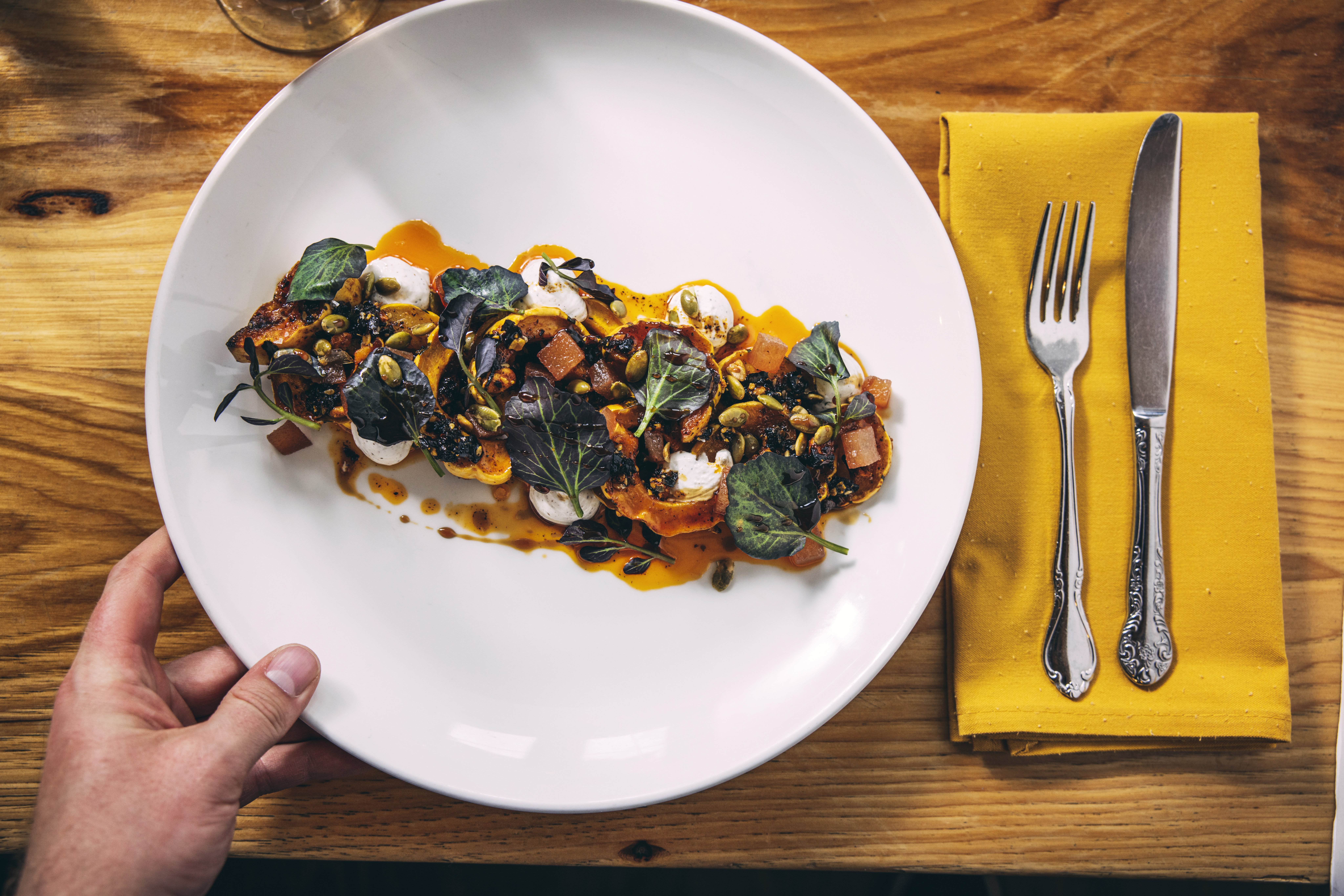
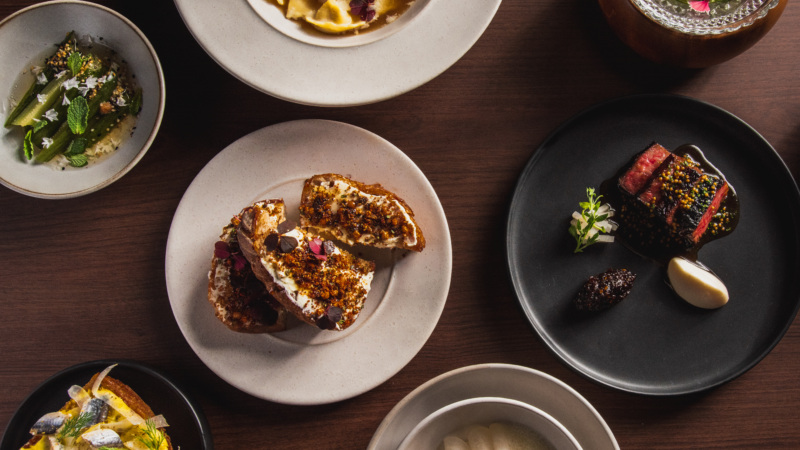
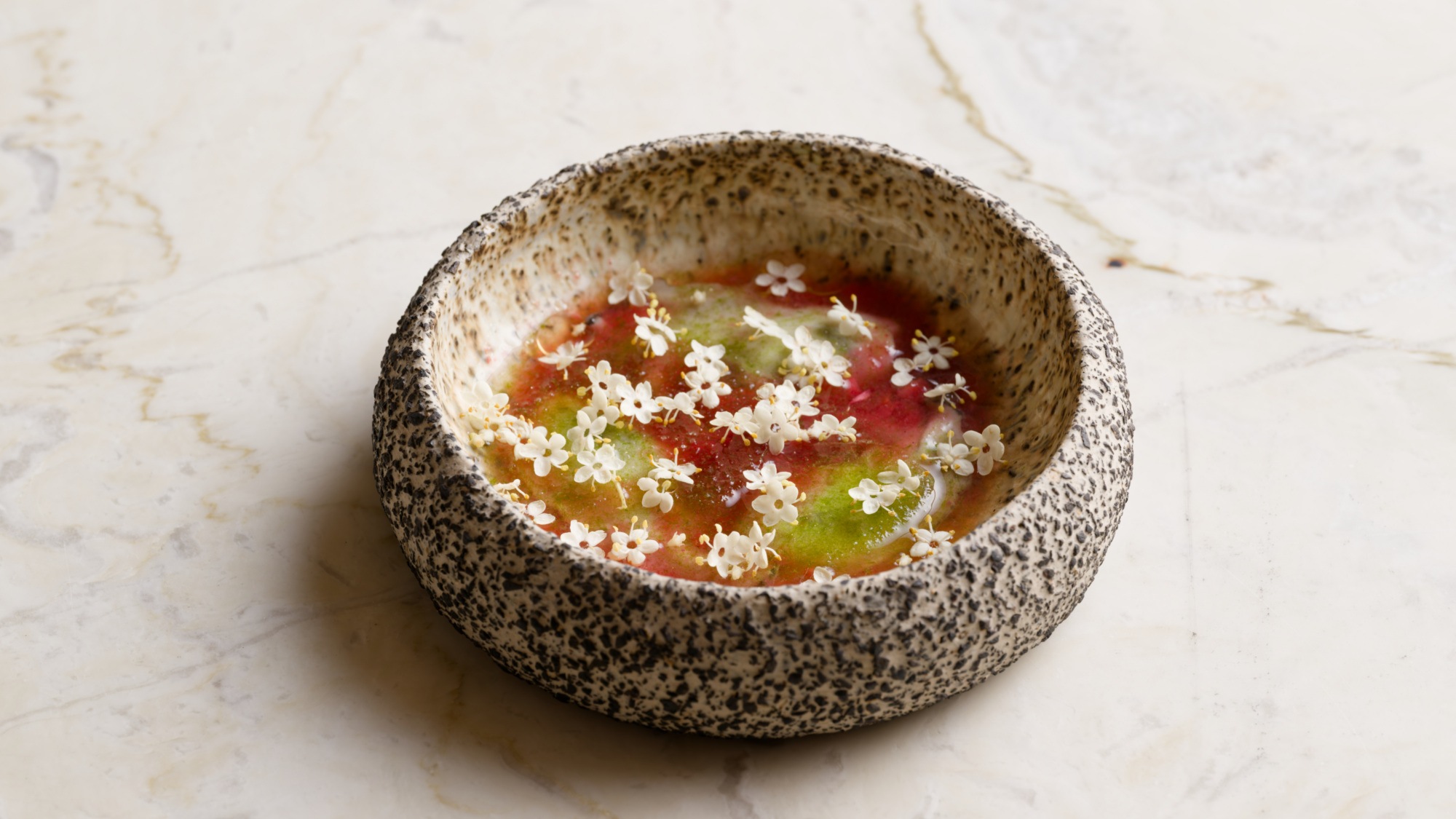
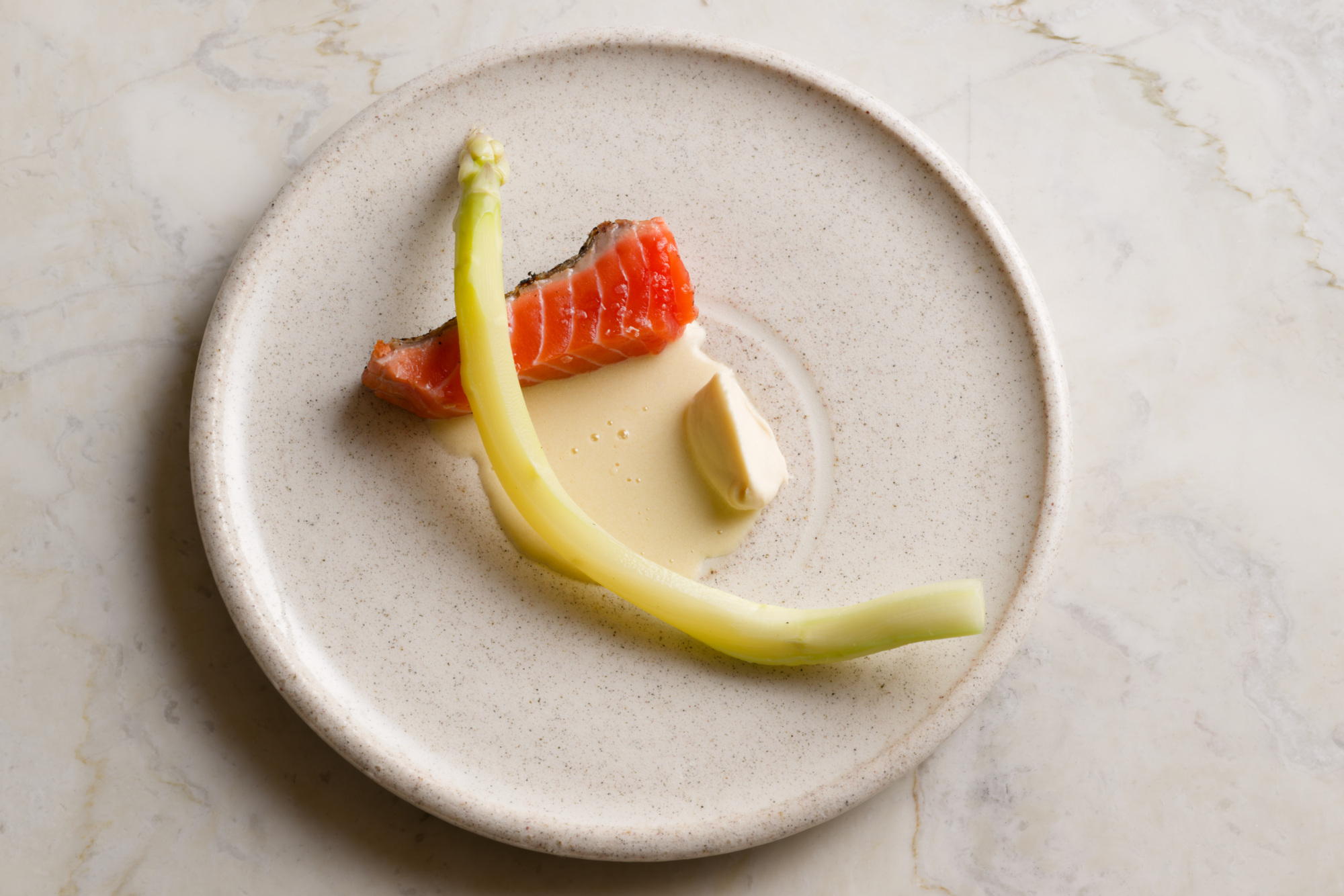
Today, reservations fill up quickly for the $225 per person, 25-30 course tasting menu, where a basil tartlet with Thai basil emulsion, labneh, and sungold tomatoes might make up part of the small opening bite spread, followed by ever-changing main courses like poached black cod with fried banana pepper and burnt honey gastrique or a yeasted pancake topped with dry-aged beef tartare and fried corn hair.
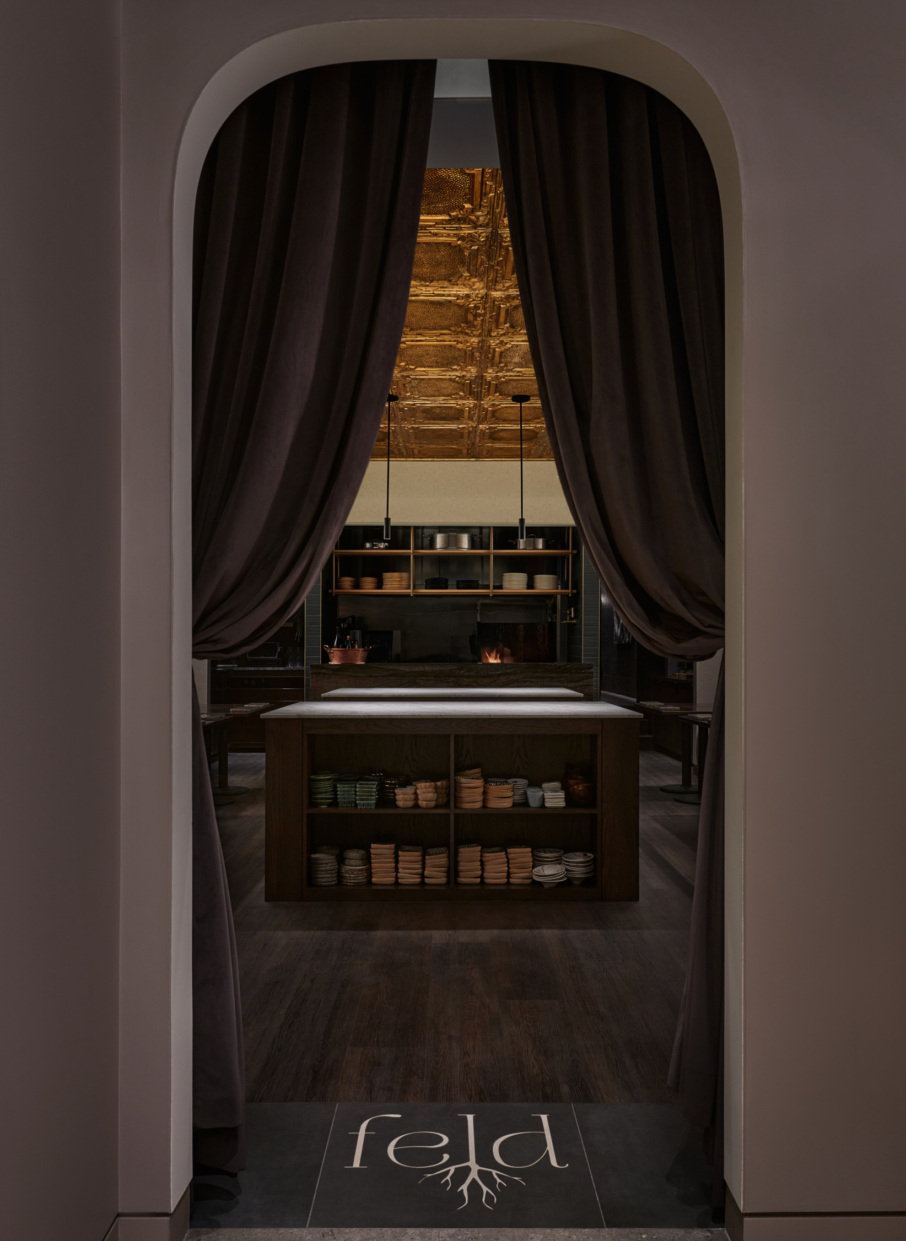
20 guests at a time (there’s one seating per night Wednesday through Friday, and two on Saturday) enjoy a dinner-in-the-round experience where everyone has prime views of the kitchen and hearth. Central to each service is Potashnick, along with his dedicated team of servers, who are also the cooks and experts in the hyper-seasonal ethos of the Michelin-starred restaurant. We talked with Potashnick about what relationship-to-table means, how he made the best of quiet reservation books in the beginning, and why his food starts with product over technique.
MORE FROM RESY
What are your early memories of wanting to own a restaurant?
I was always interested in hospitality. When I was seven, I would wake up before my parents, go downstairs, write “Chez Jake” on a piece of paper, and tape it to the wall next to our kitchen. I would wake my parents and invite them down. I’d make my sister be the maitre d’ and I would ask them what cereal they wanted because that’s all I could reach in the cupboards.
Why did you return to Chicago to open Feld?
I was born and raised here and always loved the city and saw myself coming back. I lived in Berlin for four years, and got to this point where I wanted to be in a place I knew best and I saw what I thought was an opening in the market. I didn’t really think there was somebody in Chicago doing fine dining-specific farm-driven cuisine. I think there were a lot of restaurants doing it at an amazing level, just below fine dining, but I thought my experience with what I wanted to do would make sense here.
What is a “relationship-to-table” restaurant?
At its core, Feld is a farm-to-table restaurant, but I felt that the term had been co-opted by too many larger companies to still be a valuable way to describe what I wanted to do, which was work directly with farmers who we knew very well and tell their stories to guests. It’s the idea of taking farm-to-table to the extreme with getting to know these farmers and taking seasonality to the extreme with the way we change our menu, because we change it every day based on what we get in.
My team are the writers and it’s my job to make sure their pitches make sense in the Feld magazine stylistically.— Jake Potashnick
Do you still personally meet every farm and purveyor?
I’m not as 100% strict as I was when we opened but I am still as strict about everything having to come straight from a farm. We don’t work with middlemen. We get wasabi from a farm in Oregon that I haven’t visited, but it gets picked out of the ground and shipped to us overnight from that farmer. I’d still say 90-95% of the produce on any given day is from a farm we have visited or where I know the farmer very well.
What does it mean to focus on product over technique?
We have to think of creativity as an active process because with the way the seasons and our farms work, we have to be ready to change around them. We start with what we’re getting in and create the dish around the product, not vice versa. If we get beautiful baby artichokes we think, do we want to fry them, grill them, steam them, smoke them, or salt them? And then work from there. I think that’s the only reason we’re able to change as constantly as we do, and with a sense of consistency.
How do guests respond to this hyper seasonality on the menu?
At this point guests know if they’re coming to Feld in a season they’re going to see those seasonal ingredients. If you hate tomatoes, you probably shouldn’t come in August. Early on, we would get negative reviews from people being like, “there were three tomato dishes on the menu!” Which always made us laugh because a week after that there’d be nine tomato dishes on the menu. If there’s something in season I want to show it to you in all shapes and forms and all the ways we can think of treating it and highlighting it.
How does a dish come together?
It’s a mix. My team is welcome to pitch ideas constantly. We’re very democratic in that way. I view myself as an editor of a magazine. My team are the writers and it’s my job to make sure their pitches make sense in the Feld magazine stylistically. I take their ideas and my ideas and text with farmers to make sure I know what they’re going to drop off and we work around the color palette of what we have. We can also expand into our cellar if we need ferments and pickles or dry items, but it starts with the product and asking how we want to treat it.
Are there any signature dishes?
There are dishes that will make an appearance every year when certain products are in season, but we still update and adjust them. One that comes to mind is a foie gras dish. It’s always a surprising ingredient for people because we’re not a traditional luxury goods restaurant, but we use this foie because it comes from Troy King at Au Bon Canard in Minnesota. He’s the smallest foie producer in the U.S., and I’ve been out to visit him multiple times. It’s a very special product. We have a grapevine in the Feld backyard that produces these delicious grapes, and we grill them and serve them with the foie and fig leaf oil, also made from our plants. It’s a dish that whenever our grapes are ready, which is one week of the year, will always be on the menu.
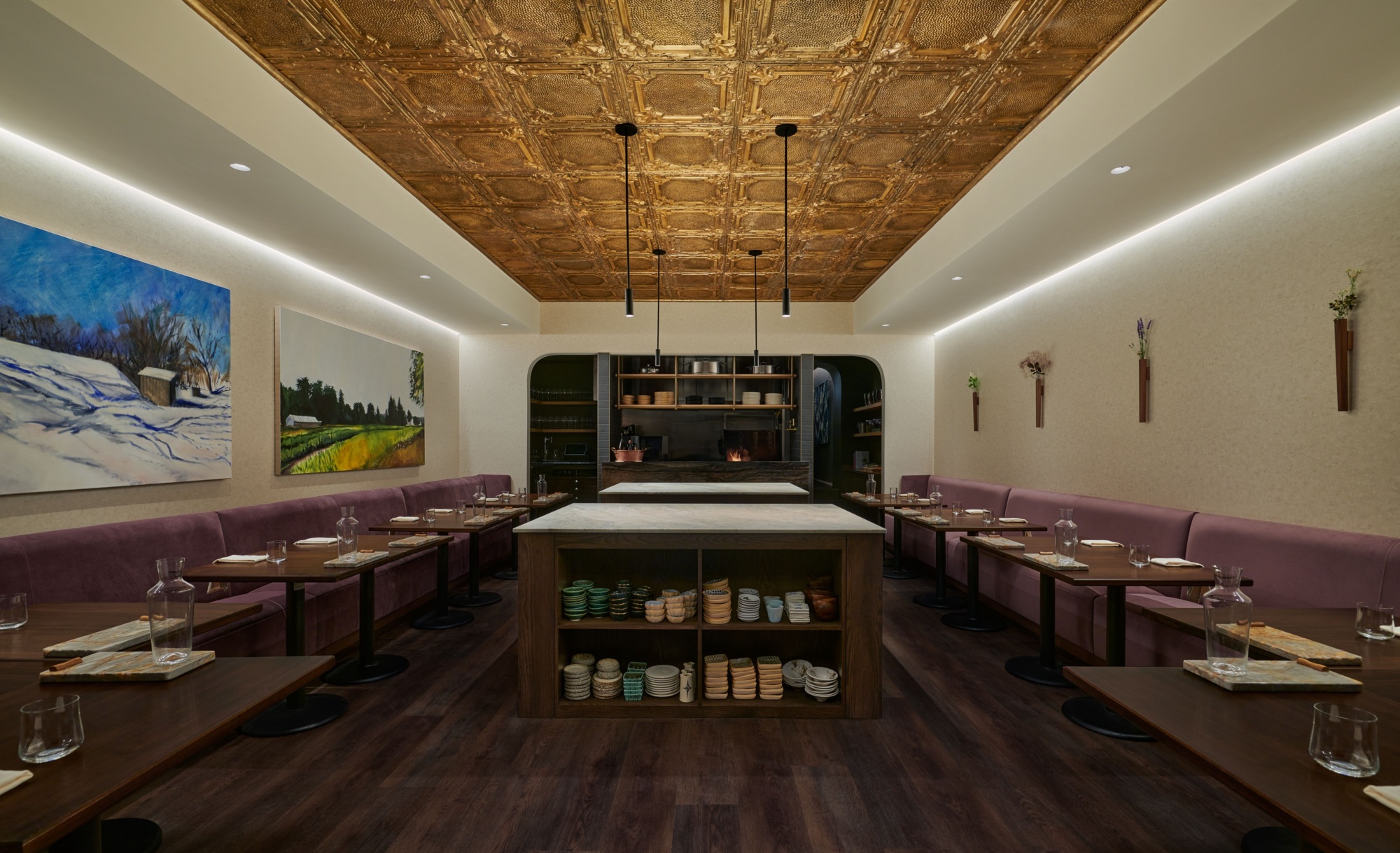
The layout of the restaurant is so intimate and fun. Was it your idea?
I wish I could say it was! The original concept was an omakase bar, but I hate stools more than any person you’ve ever met. So in order to do an omakase bar that wrapped around the room without stools we were going to have to either lift or lower a floor. It was prohibitively expensive and my design team, Variant Co., had this idea of two banquettes wrapping around the room with the action in the middle. From there I was able to tinker with it and sort of make it what it is with the kitchen visible. Everybody has a view of the hearth where the grilling is happening and it’s a very intimate experience. It allows the service to be warm and open and welcoming and casual in the right way.
You mentioned very early negative feedback. How did you handle it and what did you learn from it?
I made mistakes as a first-time owner/operator/chef. And we learned from those as a team, but I don’t think it was the external noise that we learned from. I think we are able to watch guests in the restaurant every day, see what they enjoyed and learn directly from that, and filter through the noise. After the first couple months when we got slower after the hype died down, it gave us time to hyper-focus on becoming the best we could be. We opened at the end of June and by September it was very quiet. By October, it was starting to pick up again. There was kind of a word of mouth campaign of people who had a great time and were telling their friends, and by December we were busy again. I give credit to the time and effort of my team to focus on the guest experience. That led to us becoming much better.
What went through your head when you won the James Beard Award?
True shock. It’s really cool to be a finalist but I thought, there’s no shot I’m going to win. The other people in the category were very talented, so I went in with this joyous relief of having no chance and getting to enjoy a great party. When it happened, I was truly overwhelmingly shocked and thrilled. But I don’t need awards like this for me personally. So much of my team has been with me since day one, so it really is a team recognition. It’s cool I can call my mom and say I won a James Beard Award, but it’s cooler that my team can call their parents and say, hey, we won a James Beard Award! I think that’s the most exciting part.
Feld: 2018 W. Chicago Ave., Chicago. Open Wednesday through Saturday 7 p.m. – 10 p.m. / 11 p.m.

Liz Grossman has been a Chicago-based writer, editor, and storyteller for 25 years. She’s the former editor-in-chief of Plate Magazine and co-founder of the nonprofit storytelling series, Between Bites. She regularly contributes to Chicago Magazine, Flavor & the Menu, FoodService Director, and more. Follow her on Instagram. Follow Resy, too.