Boonie’s Pushes Forward Chicago’s Next-Gen Filipino Food Scene
Published:
Suggest a place in the boonies and you will, understandably, get a reaction. It’s not nothing to venture off into the supposed middle of nowhere. “The boonies” offers cues on distance and terrain — from its safety to its culture. And while the term has become ubiquitous, many may not know that its origins are rooted in the Filipino language.
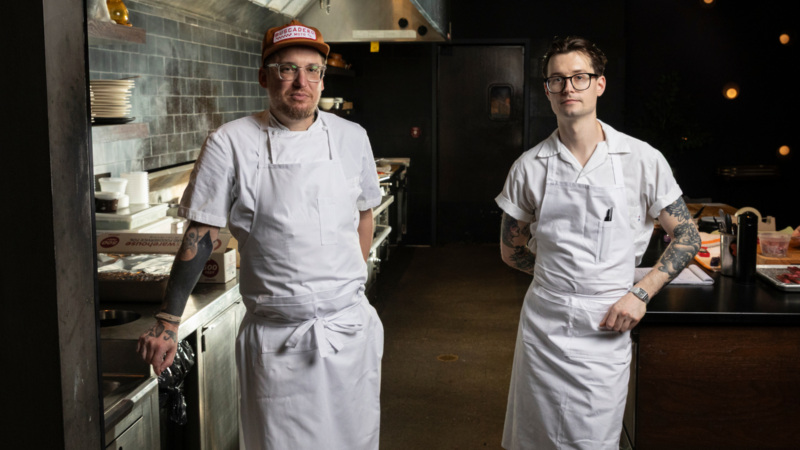
What started in the Philippines as the Tagalog word “bundok,” which means “mountain” or “a remote location,” was co-opted by American soldiers and brought stateside in the early twentieth century as “boondocks,” which eventually morphed into “the boonies.” For chef Joseph Fontelera, that chapter in history is just one example of the wide-reaching influence of Filipino culture as amplified at his acclaimed restaurant, Boonie’s.
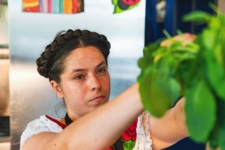
“I wanted to illustrate that Filipinos have been a part of American history forever; we need to acknowledge that,” said Fontelera. On top of that, “I wanted to name something after my lola,” he says. Fontelera’s 106-year-old grandmother, whose maiden name is Bondoc, which mimics “bundok,” visits the restaurant weekly. With Boonie’s, Fontelera is nudging both the initiated and those unfamiliar to explore the varied Southeast Asian cuisine.
MORE FROM RESY
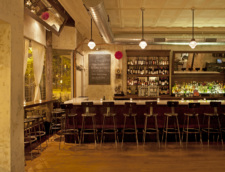
Thankfully, it’s not much of a trek to score a quality bite of Filipino food in Chicago. The cuisine has been a figure in Chicago’s restaurant scene since as early as the 1930s, according to food writer and Filipino food historian Sarahlynn Pablo; and grew in earnest at the end of the 20th century. Tradition begets ingenuity and over the last decade, a rush of new voices, led by first-generation Filipino Americans, has shown how understanding both Filipino and regional American cuisines can make cultural heirlooms pliable across distance and time.
The result is a next-gen canon of Filipino restaurants, bakeries, and coffeehouses that looks more diverse than ever before. They’re casual neighborhood spots and fine-dining destinations; they’re filled with classic takes and fusions of local flavors from across Midwestern America and beyond; they’re nationally recognized with top honors and accolades; and they’ve got lines out the door to boot. Chicago’s modern Filipino food scene is on the map, and Fontelera is doing his part to help keep it there.
Coming Home
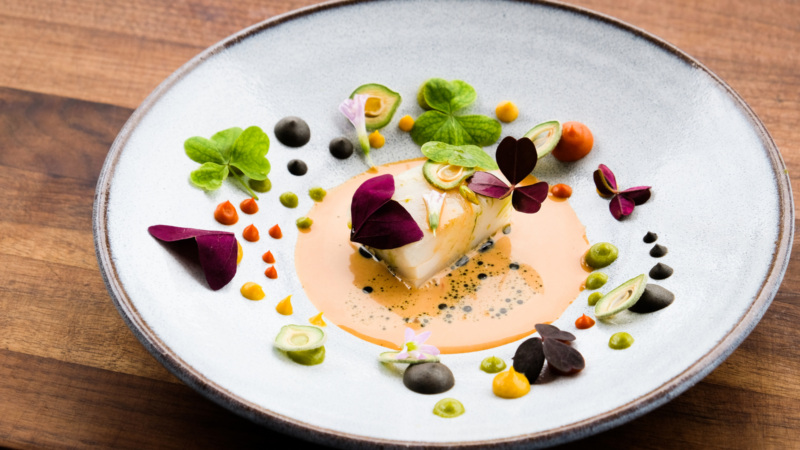
Before opening Boonie’s — first as a pop-up, then as a food stall at Revival Food Hall — Fontelera studied up on the Filipino food and history that he knew inherently. And as the chef, who cut his teeth at notable Japanese restaurants around the city, dug deeper into the cuisine, he felt compelled to share its virtues with a broad audience, but in his own way. “I had this idea to put Filipino food front and center, for people to see it in an unaltered way as much as possible while still allowing the cuisine and the culture to breathe,” he said. A tricky balancing act. Stray too far and the food becomes something completely different. Not enough and you risk it being boring.
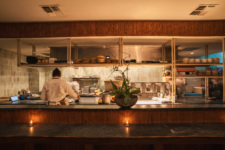
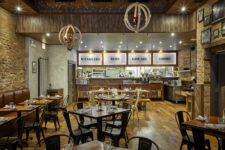
Boonie’s current space in Lincoln Square sits at the ground-level of a handsome two-flat on Chicago’s longest street. The neighborhood is Fontelera’s stomping ground and his former elementary school is within eyeshot. “It felt totally aligned coming back to this neighborhood after decades of not living here,” he said. “It looks exactly the same, but it feels kind of different. Things are getting a lot more diverse and that part’s really cool.”
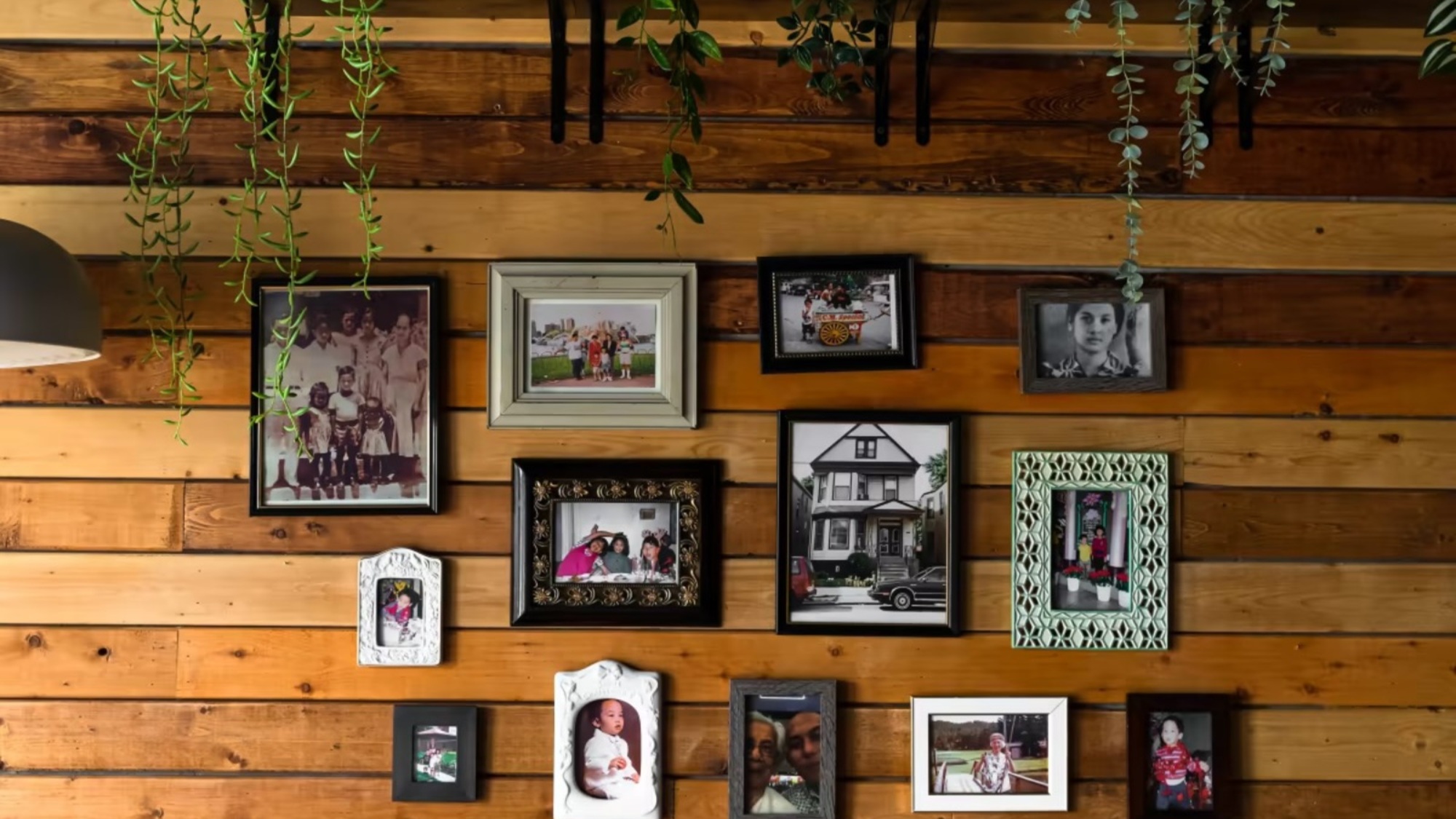
Inside the dining room, the family-den aesthetic is bolstered by warm-toned wood paneling and a gallery wall of vintage frames filled with family photos. Kinfolk are a focal point. In fact, if Fontelera has placed any constraints on himself at Boonie’s, it is that his food must be recognizable by a “time-traveling ancestor” — which still leaves plenty of room for play.
I had this idea to put Filipino food front and center, for people to see it in an unaltered way as much as possible while still allowing the cuisine and the culture to breathe.— Joseph Fontelera
Filipino Food Is Not Fast Food
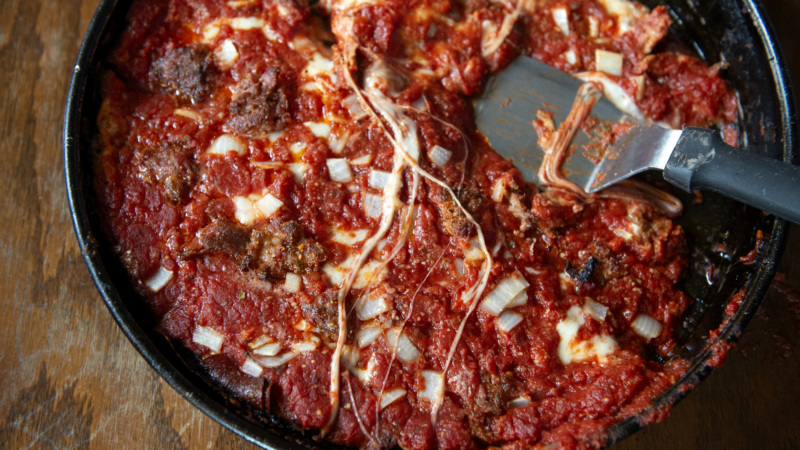
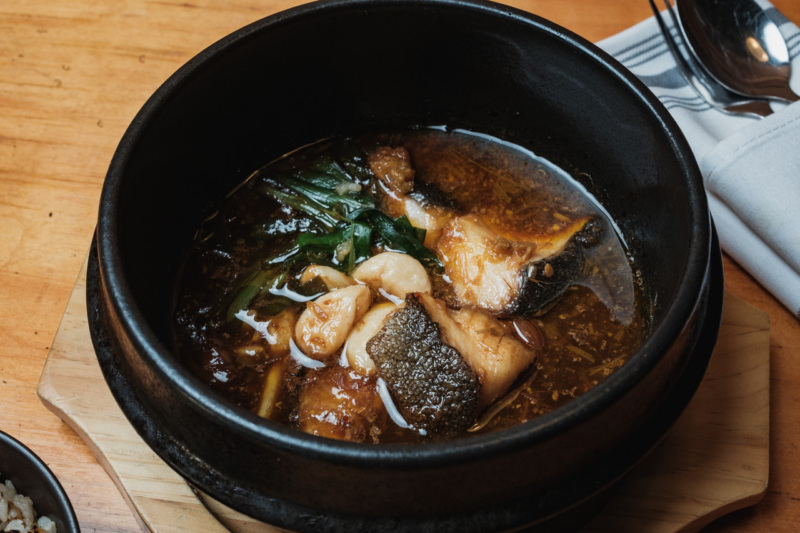
One of Fontelera’s favorites, lechon baka, is new to the dinner menu. Instead of the pork standard, Fontelera douses Wagyu beef cheeks in a Cebu-style lechon rub that’s a heady blend of lemongrass, star anise, and cinnamon; plus a mix of barbecue notes that nod to Chicago’s South and West Side Bar-B-Q culture. The meat is slow-cooked for 12 hours before a quick toss on the grill. It’s topped with a vinaigrette of chicken fat, vinegar from the Ilocos region, and a housemade bagoong jam of fermented shrimp paste, caramelized shallots, and dried chiles.
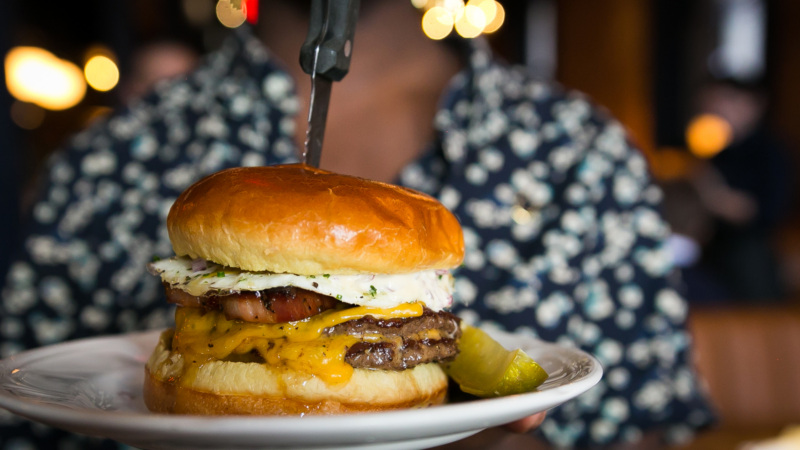
In Filipino food, meals are met with an assortment of condiments — perhaps a dipping bowl of soy sauce mixed with calamansi juice, sliced chiles, fish sauce, sweet banana ketchup, umami-filled bagoong, and a spicy vinegar. The condiments, which really aren’t meant as optional, instead offer nuance to a dish — balancing it swiftly or building its flavor bite by bite. Boonie’s take on the crispy pata — a braised, roasted, and fried Duroc pork shank — is punctuated with a trio of condiments: toyomansi; a good pour of Fontelera’s housemade sarsa, his version of the beloved Mang Tomas All Purpose Sauce, which he affectionately calls “Mang Joe’s;” and an autumnal Fuji apple atchara.
“I feel like a really fundamental thing about Filipino food is that everything takes a long time [to prepare],” says Fontelera. “You know, if we’re not even talking about a dish, we’re talking about condiments. Vinegar takes how long to ferment? So, pretty much everything at Boonie’s is a long process.”

Continuing the Momentum
Celebration foods like the fried-crisp shrimp lumpia with its saucy sweet chile sidekick and meat-forward dishes like the ever-popular pork belly sisig play a comforting role on Boonie’s menu. But Fontelera also makes strides to showcase the lesser known virtues of vegetarian and vegan dishes that underpin Filipino foodways and are more in line with his grandmother’s way of cooking.
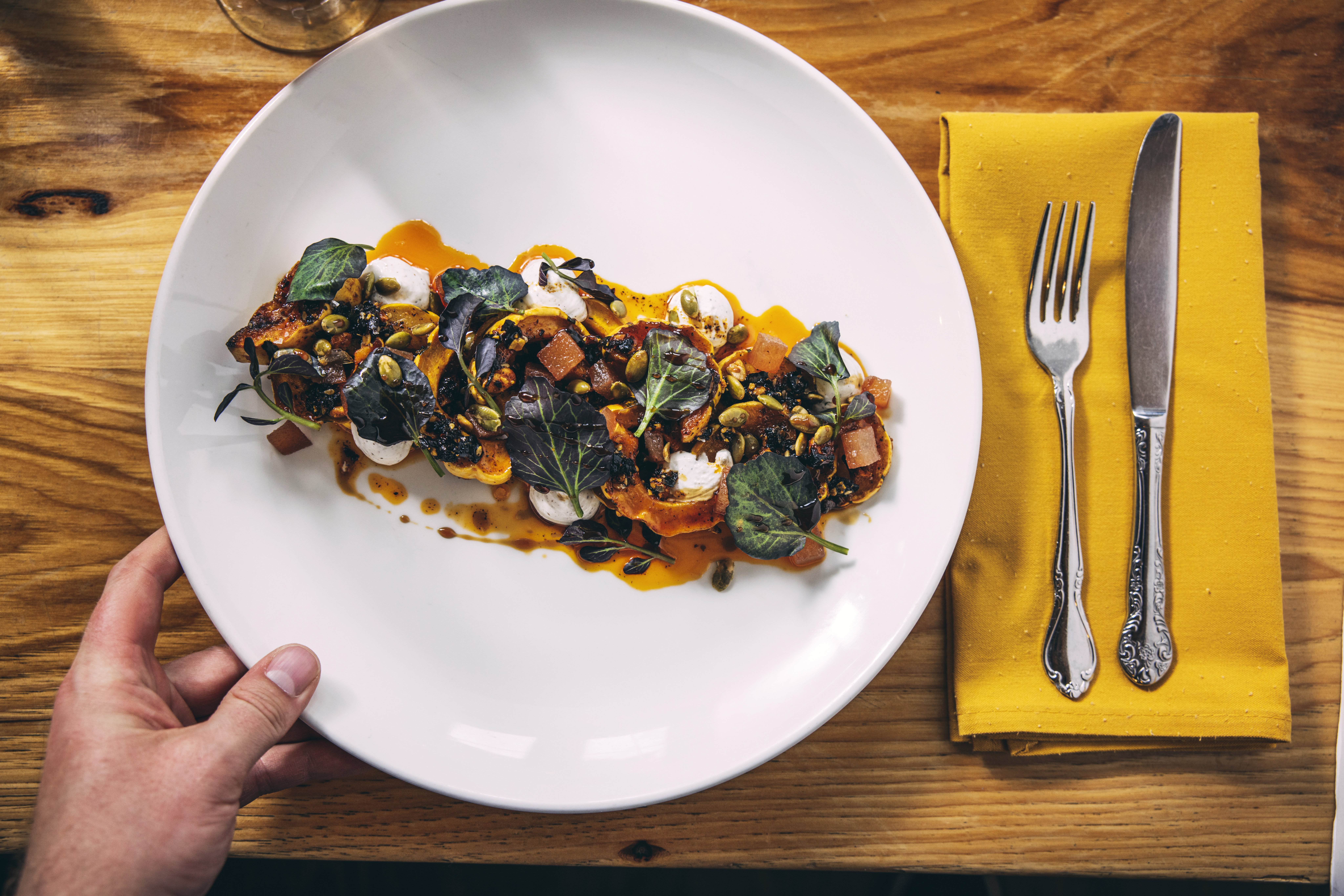
That shows up in dishes like inihaw na talong, roasted Chinese eggplants smeared with sunflower seed butter and a pickled tomato salad. Also in the Mindanao-inspired maitake piaparan, where Fontelera swaps the traditional chicken or goat meat for maitake mushrooms, stewed in a creamy coconut milk sauce seasoned with shio koji and palapa.
As Boonie’s evolves, Fontelera is pondering what a tasting menu could look like. “This kind of work is important not only for myself, but for the community at large,” he says. Fontelera’s inspiration and motivation are often one in the same.
“I love seeing people coming through and bringing their kids, so the kids are learning that this is what Filipino food is,” he says. “People my age are like: This is what Filipino food could be. And when they bring their parents, their parents are like: This is what Filipino food has become.”