Portraits of New York New York
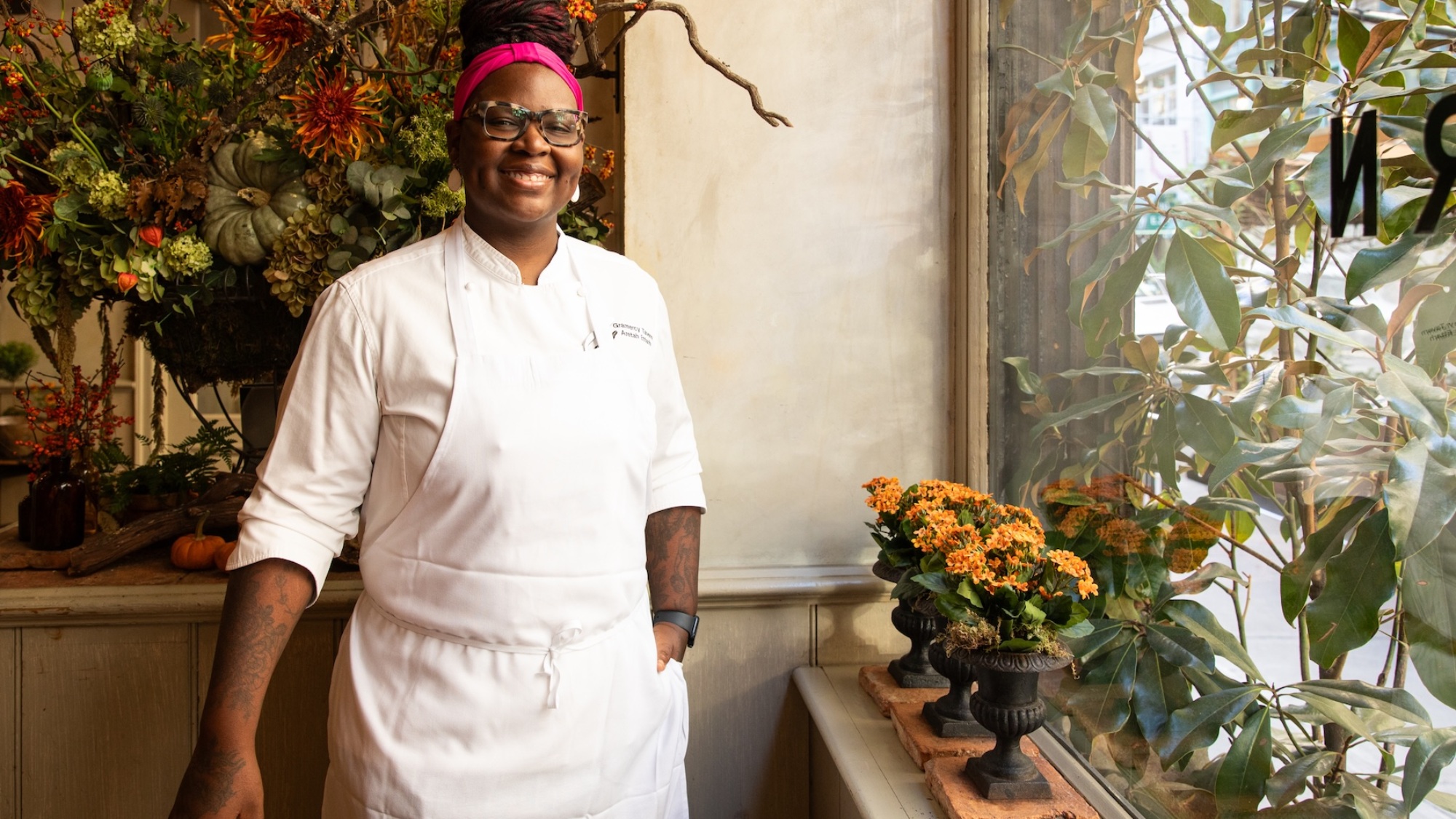
For Gramercy Tavern’s Aretah Ettarh, Balance — and Investing in Your Team — Are the Keys to Longevity in Restaurants
Published:
I’ve known Aretah Ettarh for some time, and have long been impressed by her thoughtfulness and care in and out of the kitchen. In 2020, she shared her personal perspective on grief and the conflicting emotions involved with reopening restaurants while it was all still quite raw in an essay that has stayed with me to this day.
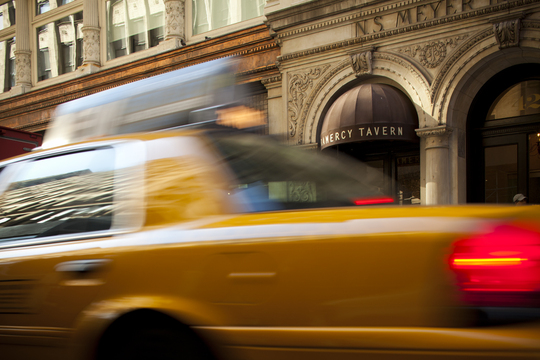
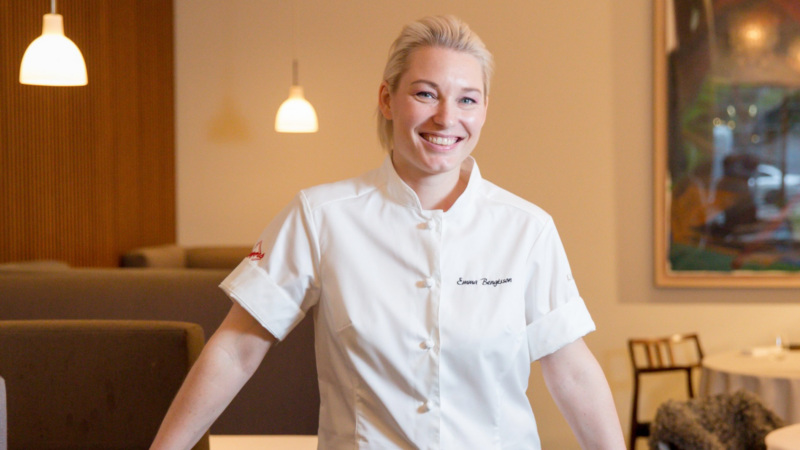
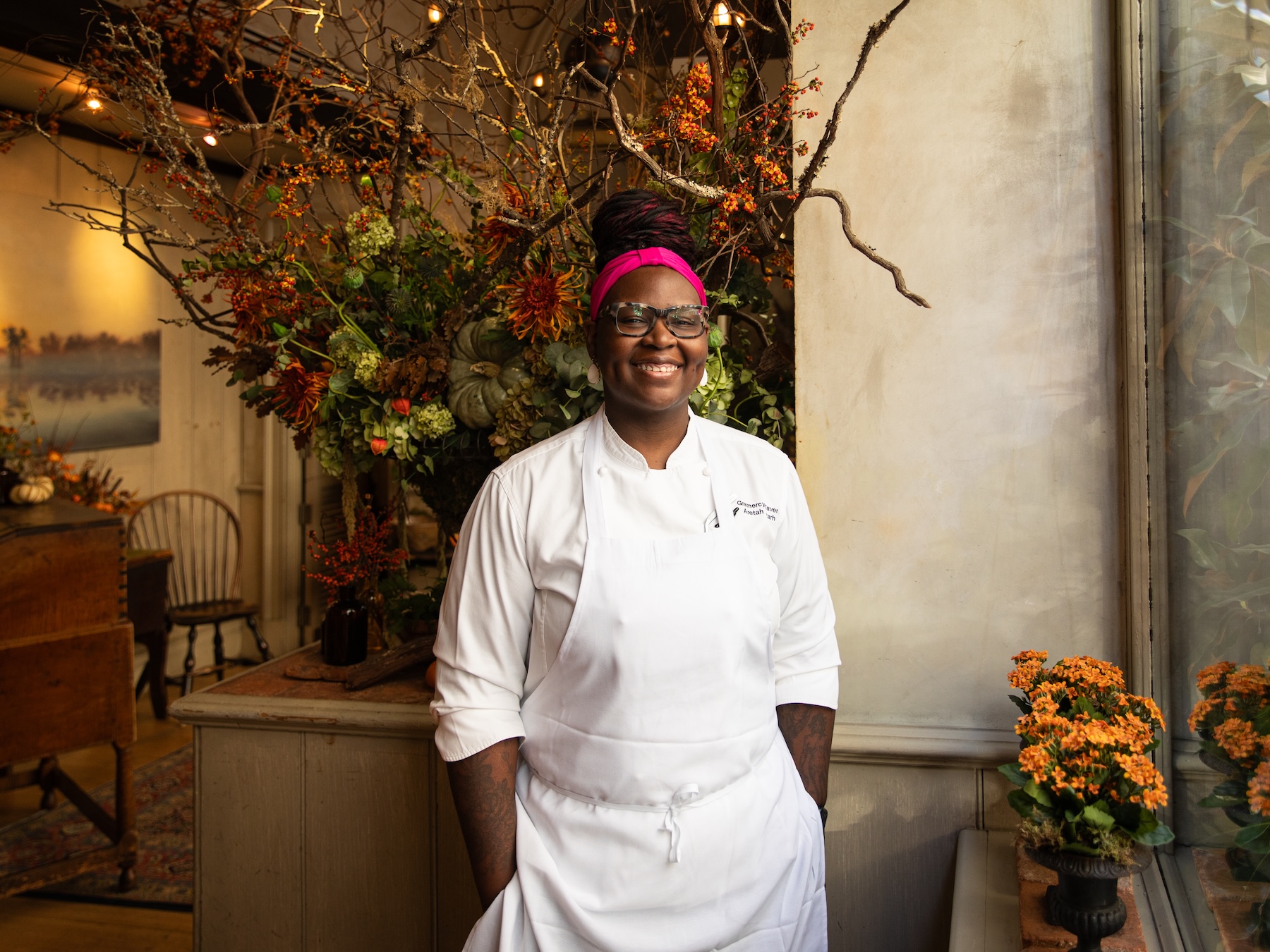
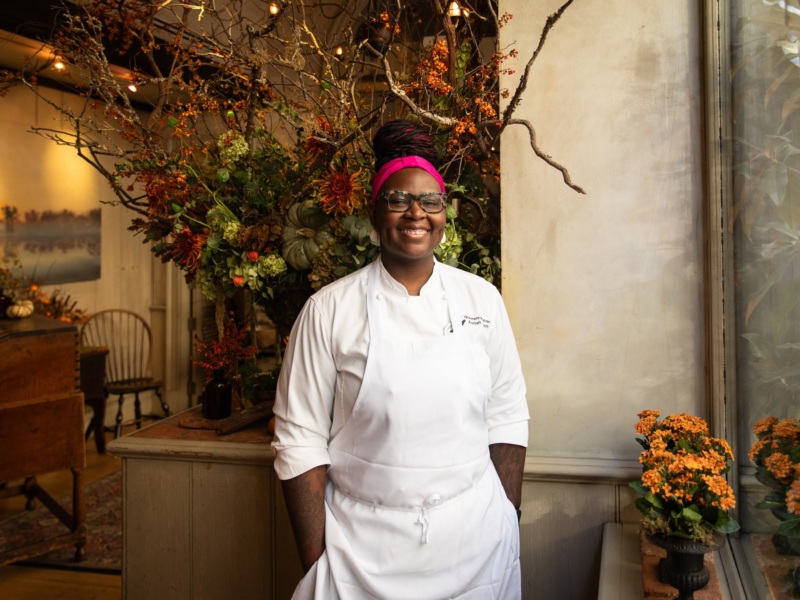
As Gramercy Tavern’s chef de cuisine for the past three years, she bears the responsibility of helming an institution that she’s worked at for nearly a decade in total. While Ettarh is a relative veteran of the restaurant industry, she’s also working at one of the most storied restaurants in the city. Gramercy Tavern has personally been a place of celebration for most of my adult life — the place where I proposed to my wife, and where we’ve celebrated countless birthdays. Change doesn’t come easily in such places, so I was excited to see how Ettarh approaches the balance of growing with the times, introducing her own vision, and maintaining the 31-year legacy of such an iconic restaurant.
Note: This interview has been edited for length and clarity.
More Portraits of New York



Resy: Let’s start with where you are now. What’s your current position, and how long have you been there?
Aretah Ettarh: I’m the chef de cuisine at Gramercy Tavern. September will mark nine years at the restaurant.
How long have you been working in restaurants? Where did you first start out?
I started working in restaurants during my freshman year of undergrad at the University of Delaware. There’s a student-run restaurant called Vita Nova that is part of the hotel, restaurant, and institutional management program which I majored in, and it gave me my first glimpse into basic cooking techniques in a restaurant setting, as well as general knowledge of front- and back-of-house operations.
What people or restaurants inspired you when you were starting out? Are there institutions that you look to when you think of what you want to build?
I didn’t know the world of fine dining existed until I got to college. Because my undergrad program really geared students toward management in training, I thought my options after college were country clubs, Aramark, or Hillstone. I didn’t make the commitment to become a chef until my junior year, and once I did, if my memory serves me correctly, I googled something along the lines of “best restaurants in the U.S.” and that’s when all these fine-dining restaurants came up and the Michelin guide was mentioned and I just went down this rabbit hole of a whole other world that I had no idea had even existed.
The answer is cliché, but The French Laundry really was such a staple restaurant early on in my career. It was the first fine-dining cookbook that I purchased and was a real turning point in my journey to wanting to work at a high level. Gramercy Tavern is also a restaurant that will always hold a special place in my heart, because it’s the first fine-dining restaurant that I ate at. To have this kind of full-circle moment is surreal but very special.
Did you have mentors who showed you what success could look like? What lessons have you taken that you feel are important to your own success?
The first mentor is chef Joe DiGregorio, who was my culinary instructor while at the University of Delaware. I credit him for not only teaching me how to cook, but showing me what it could look like to teach with immense kindness and patience. Teaching young cooks who want to be chefs the ins and outs of this world is challenging enough, so, looking back, knowing that he put so much care and attention into teaching whole droves of students who had no interest in being in the kitchen is deeply impressive. Walking into [University of] Delaware, I was one of those students who had no interest in cooking, and yet working with him changed my viewpoint and really helped get me to where I am today.
My second mentor should really come as no surprise: Mike Anthony is the executive chef and partner at Gramercy Tavern and has been an integral part of my growth over my time at the restaurant. He is a leader that we aspire to be, one who demands excellence all while doing it with kindness, grace, humor, and empathy. He has given me tremendous latitude as I’ve navigated multiple points in my journey as a manager and now, as chef de cuisine. Our trust and communication has only grown as we both continue to look for ways to keep Gramercy Tavern continually evolving into better and better versions of itself.
What is important for you in crafting a menu and experience that people want to return for?
First and foremost, the goal is always to make the food delicious. I get that we’re in an era where the “phone eats first” (which I’m also guilty of when I go out to eat) but if it looks beautiful but doesn’t actually taste good, then the guests are wasting their time. Howard Kalachnikoff, the former chef de cuisine of Gramercy Tavern and now a chef and owner of Rolo’s, had this mantra while I was a cook for him of serving “hot food (or cold, if it’s from garde manger or pastry), well-seasoned, and on time.” That has stuck with me because it really breaks down the guests’ expectations at the most granular level.
What keeps you inspired in the work and the food? How do you stay interested and keep your creativity?
My team keeps me inspired. I have the privilege of working with cooks who are eager and excited to learn about food and want to be challenged. I have the great fortune of working with a front-of-house team who find the dishes that the sous chef team and I make delicious and beautiful, and it empowers them to talk about all the reasons why the dishes are special, tableside. My interest stays piqued by having conversations about food, eating at restaurants, and spending time with my friends in the industry.
I try to balance my work creativity by not constantly bombarding my mind with only food-related things. I was a bit of an obsessive when I first started cooking and so I spent all my free time reading chef memoirs and cookbooks and watching all the cooking shows. That definitely serves a time and place, but now, I find a lot of my creativity comes from something as simple as walking through the Union Square Greenmarket on my way to work to see what’s coming into season and what’s in season that we want to highlight on the menu. And then outside of that, doing things like reading books, watching TV and movies, and working out, are all good ways for me to decompress so I keep my mind sharp when I do need to think about work.
How do you balance the idea of being a special occasion destination versus being a place that people feel they can come to for comfort?
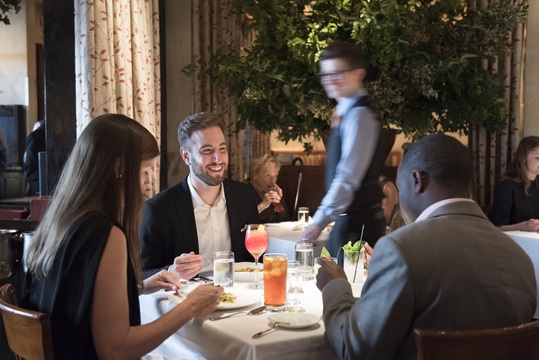
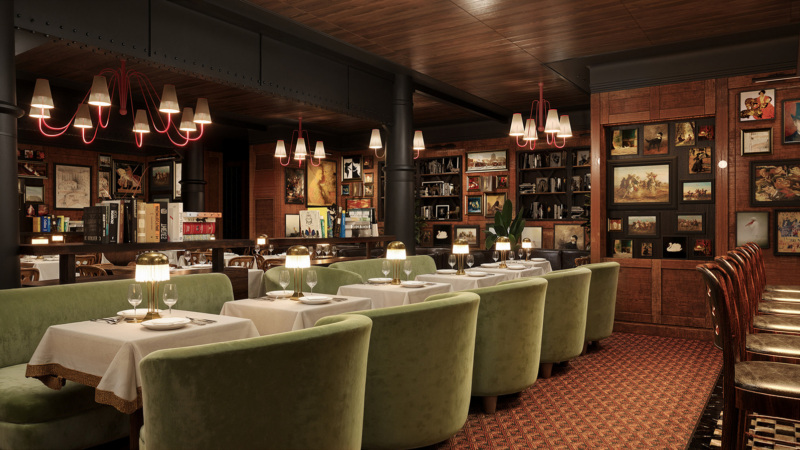
Naturally I’m biased, but I genuinely believe Gramercy Tavern does such a good job of striking that balance. It’s partially in its design. The wood-fired cooking in the The Tavern at Gramercy Tavern versus the seasonal, set menu in the The Dining Room at Gramercy Tavern gives a lot of room and flexibility to be a restaurant for all occasions. But what we aim to do is utilize the qualities of both rooms to craft experiences that are unique and special. The breadth of the menu makes it possible for us to pull from both rooms to curate experiences that are ultimately unique, special, and fun.
Where do you go for a comforting meal? What’s your special occasion destination? Where have you been excited to go out to when you have time to dine out?
Two places that come to mind are Rolo’s and Place des Fêtes. The food is always delicious, and I always feel really well taken care of when I go. The choice of a special occasion restaurant is a little trickier, mostly because I tend to not celebrate a lot of my special occasions at a restaurant.
A couple of restaurants I hope to check out in the near future are: Kabawa, Sixty Three Clinton, Smithereens, Sailor, and The Four Horsemen (I’ve only been once, and I’m dying to go back).
How does community, whether in the neighborhood, the industry, or otherwise, play into the success of a restaurant? How has community been a part of your experience?
Restaurants wouldn’t exist without the communities that they serve. And restaurants continue to be a beacon to their communities when times are hard. We see it time and time again, whether it was the early days of COVID, or after natural disasters strike, through the work or organizations like The LEE Initiative and Southern Smoke Foundation. The restaurant industry is driven by helping and serving the community at large. I’m constantly inspired by how restaurants are some of the first businesses to respond with feeding the community when people are often at their most hurt and vulnerable. It’s a reminder that we aren’t here strictly for the bottom line, but to do as much as we can to help others.
At Gramercy Tavern, we work closely with organizations like God’s Love We Deliver and City Harvest, because we recognize that serving the greater community is essential to giving our work meaning beyond just food and drink. When we have an impact on not just the guests who dine with us, but the city and community at large, it makes the work that we do far more meaningful.
With so many challenges in the industry right now, many chefs are finding other career paths, what keeps you working in restaurants? What keeps you excited about it?
I’m very fortunate to have found a place that has continued to push me, inspire, and help me grow. Restaurants, and kitchens in particular, are such a unique ecosystem where you can be a craftsman, a creative, a teammate, a coach, a leader, and more. I never fault anyone for leaving this industry because, as great as it can be, the downsides are equally as long as the positives. Yet the work that I do continues to give me purpose and until or unless that changes, I plan on continuing to pursue this path.
What are you working on right now that has you excited? What are you focused on?
A new season means new dishes. I’m always excited to highlight more of those fresh, vibrant ingredients on the menu.
I’m also trying to focus on slowing down when I can, focusing a little more on me. I’m a workaholic through and through, and it’s hard for me to prioritize myself when I’m running such a big, bustling, dynamic restaurant. The older I get, the more I recognize that I can only best serve my team and the restaurant if I don’t run myself into the ground. I haven’t quite figured it out yet but I’m working on it day by day.
Clay Williams is a Brooklyn-based photographer whose work takes him across the country and beyond, documenting stories of food, culture, and community. Follow him at @ultraclay.
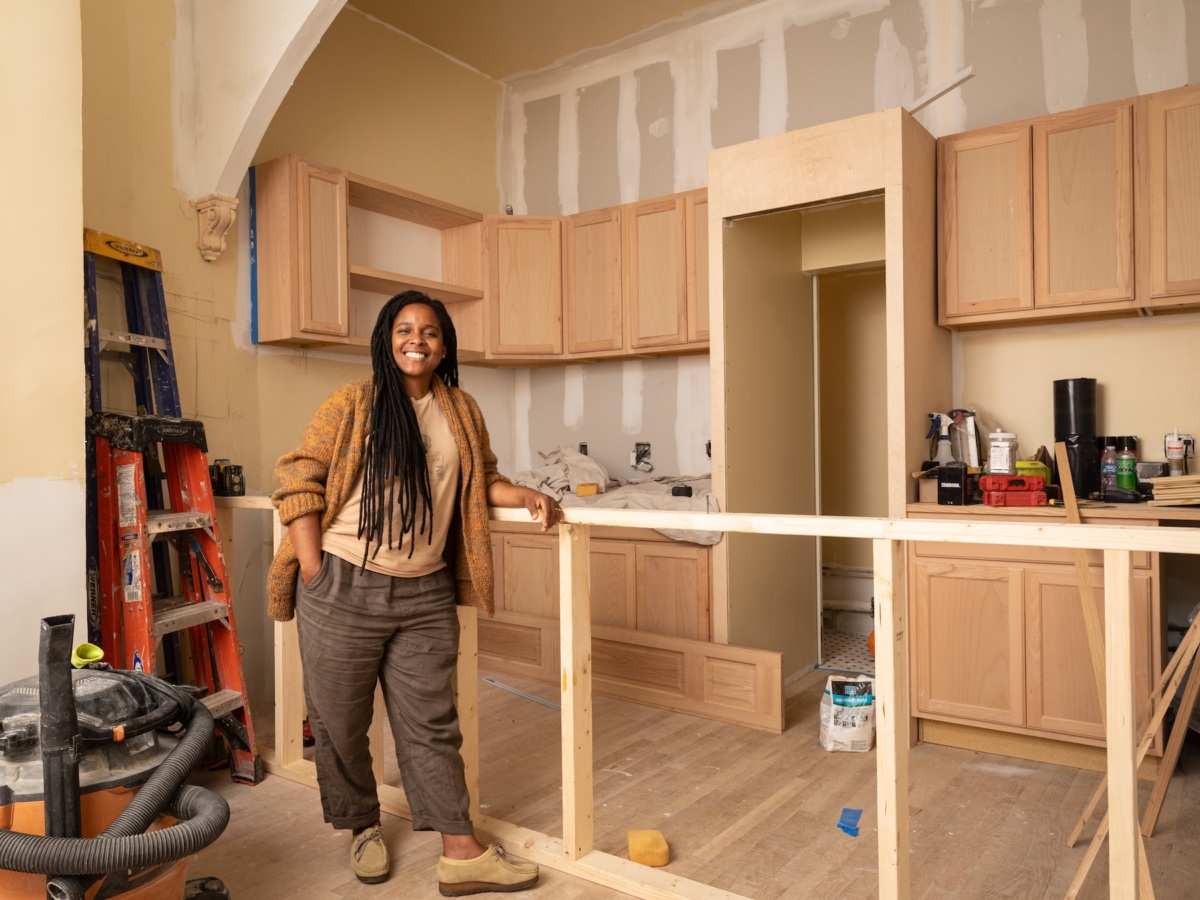
Resy Presents: Portraits of New York
In this series of portraits and interviews, photographer Clay Williams gets to the heart of the ever-changing New York City restaurant scene by capturing the stories of the people behind it.