Resy: How did you become a self-described “noodle nerd”?

Katie Dong: When I grew up in China, I pretty much visited every beef noodle stall in Nanjing, my home city. Beef noodle soup was my favorite food when I was little. My dad was the one who introduced me to all those stalls because he loves beef noodle soup too. And then I moved to the States with my parents during my teenage years. I was like 14 years old, and I picked up a part-time job in a Chinese restaurant. I just found working in a kitchen to be very interesting. Later on, I started working in the ramen business with others and I discovered that it was the thing that I wanted to do. Eating noodles is my everyday thing. Every day I’m equally obsessed with noodles.

Did your family make noodles at home?

In Chinese culture, we make noodles together with other family members when relatives visit. We just talk and catch up on the latest topics while making them. It’s very common that every family has their own noodle recipes. They make simple noodles like hand-torn noodles or even dumpling wrappers — they’re all handmade. 

What is the difference between the beef noodle soup that you grew up on and  beef ramen? 

The difference between Chinese beef noodle soup and Japanese ramen is that Japanese ramen is mainly made with pork, chicken, fish, or a combination. But beef noodle soup is purely beef or maybe beef stock with some vegetables. Monster Ramen is a combination of my love of beef noodle soup combined with Japanese ramen. 

The difference is also in the noodles. As we know, Japanese ramen originated from China. The noodles that were served in the beef noodle soup of my hometown are very, very similar to Japanese ramen noodles because they’re both alkaline-based. Alkaline noodles have a unique texture and flavor. On the other hand, typical Chinese noodles are mainly egg, flour, and salt. But Nanjing is one of the few cities that makes their noodles with alkaline. So Japanese ramen has some kind of connection with my soup background. 

Chef Katie Dong.
Chef Katie Dong.

Beef bone broth is a pretty unique ramen option within the Chicago ramen scene. How did you land on gyukotsu?

I chose beef because Chicago is such a beef-driven city. Everyone loves beef. Also, when I was in the ramen business before, there were so many people coming in and asking for non-pork options. 

It’s a huge game changer because we have this piece of equipment that was custom made for us. It’s like an 800-pound, high-pressure kettle. We put 120 pounds of beef bones in it and the same amount of water to get a creamy, velvety beef stock after two hours. In the older days we would be cooking all of those beef bones in a stock pot for three days. But with a high-pressure cooking pot, it cuts down the time significantly. 

We also blend our beef bones with more parts of the animal to get that creamy texture. If you try our beef stock you will taste the cow, its cooked-down pure collagen, its fat, and flavor. The stock is the base after we cook it and the broth comes together after we put in the sauces which give it a different flavor. Broth-wise we have shoyu, shio, and miso. 

I think people underestimate just how much goes into creating the perfect noodle for each bowl of ramen.

Yes.

What were you hoping for when you created your noodle? 

The noodles that we’re currently making complements our broth the best. That’s why we make this thin, straight, square noodle — it grabs the flavor from the broth perfectly, and it has the room to expand when the noodle is cooked. 

The water ratio in our noodles is very low, around 30 percent. We add alkaline, water, and more salt, and we combine it with our unique blend of flours to make our noodles. The chemical reaction from alkaline gives our noodles the perfect springiness. And we age our noodles for up to nine days, so they get more dense in texture and the color deepens, while still remaining pretty pale compared to the more familiar beige variations. 

Eating noodles is my everyday thing. Every day I’m equally obsessed with noodles.

Were you traveling as you did R&D for Monster Ramen?

I was traveling between Hong Kong, Japan, Taiwan, and cities within the United States. I went to places where they serve ramen. I’ve been to many famous ramen restaurants, to try their flavors and noodles. And I also went back to Nanjing several times to find those original beef noodle shops that I ate at when I was little — just to refresh my memories. I also visited Japan multiple times to try different ramen and better understand how they present their broth and how they make their noodles.

Sometimes when I have questions people don’t have answers for me. I just have to figure that out myself by eating more noodles. And sometimes I have to find my answers from other cuisines. I can be at a Mexican restaurant or a French restaurant and when I eat something or taste something similar to the flavor that I have known in my past, it rings a bell in my brain like, ‘Oh wait! I could do this kind of technique in my dish.’

The 38-seat interior; and exterior.

Can you tell me about the interior of Monster Ramen?

Every time I make a new dish I pay attention to how it looks in our space, in terms of the color of the bowl and that it represents the dish as well as the color of the counter. I just look at every aspect to make sure this dish will fit, in addition to its flavor and texture. We’re looking at it as a whole. 

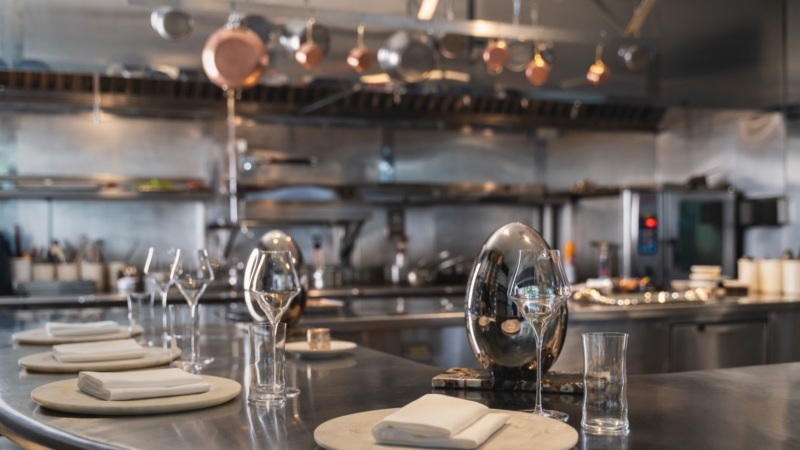
For the walls, I didn’t want a strong color like black or red. I wanted something natural that would feel comfortable to diners. The vibe here is relaxing and you can see inside of the open kitchen. The environment will get you ready for a slurp, and let you focus on the food. 

You mentioned bowls which are obviously a big part of the ramen experience. Can you tell us more about your bowls?

Our bowls are part of the restaurant space. They show the color of our food and are a part of the design. While people are waiting they can look at the bowls that are stacked high on our walls. Each bowl of ramen comes in a different bowl with a different shape and depth that keeps temperature differently. The monster ramen bowl, for example, comes in a very large golden, double wall, stainless steel bowl. It’s a wider bowl so we can showcase every piece of topping when we plate it. By contrast, we use a black bowl for our seasonal summer spicy shio to show the fiery red from our housemade chile oil, the creamy white from our beef stock, and the green from the fresh lime. The whole dish pops because of the black bowl. 

We use a pure white bowl to showcase the chestnut tone of our shoyu ramen. We blend five types of soy sauce for our shoyu, which is made with our tori chintan (chicken broth). To me, soy sauce ramen holds a really special spot in my heart because that’s the flavor that I will pick when I go try other ramen restaurants. If I want to understand their chef’s work, I’ll get the shoyu ramen. If another Japanese ramen chef comes to my restaurant, they will also pick the shoyu to see my skill level. It’s like a French chef who visits another French chef’s restaurant — they will always test their eggs. For us, it’s shoyu ramen. 

How do you recommend people begin eating their bowl of ramen?

Smell your bowl first. Put your face in. That’s what I do! I like to get a scent of it first. Then I will try a little bit of broth. Then mix the bowl, have a small slurp of noodle, then go for a topping. 


Angela Burke is a James Beard-nominated food writer based in Chicago. Her work has been published in Eater, Food & Wine, and other publications. Follow her on Instagram. Follow Resy, too.

Recent Posts


InterviewsChicago

Ramen Monster’s Katie Dong is the Queen of the Noodle Nerds

An interview with the chef-owner of Logan Square’s favorite ramen shop.

By

New on ResyNational

13 of the Hottest New Openings Across the Country

There’s no way not to mourn the end of summer — tomato season, we hardly knew ye — but this…

By

GuidesNew York

The Resy Guide to Exceptional Sandwiches in New York

Your comprehensive guide to some of the city’s best sandwiches, from sweet to savory and late-night to brunch.

By

New on ResySan Francisco

Now on Resy: Dragon Well, Octavia, and More Local Favorites

From a Michelin-starred pillar of California cuisine to a local institution for Chinese classics, these are just a few of the beloved…

By Updated:

Letter of RecommendationNew York

Chez Ma Tante Is the Ultimate Neighborhood Restaurant

Greenpointers are proud to call this chic, unassuming bar and restaurant — named after a storied Montreal Hot Dog shack — their own.

By

GuidesMiami

The Resy Guide To Miami’s Restaurant Bars

There are few words you’d like to hear less when you arrive for a dinner reservation than, “You can have…

By

GuidesNew York

18 of New York’s Best BYOB and No-Corkage-Fee Restaurants

A comprehensive guide to NYC restaurants that will open your wine with welcome arms, on at least one night of the week.

By Updated:

The RundownPhiladelphia

French Fare Blossoms at Fleur’s

The latest project from chef George Sabatino opens in the former home of Fluehr’s Fine Furniture in Kensington on Sept. 12.

By

GuidesWashington D.C.

The Resy Guide to Mexican Restaurants in D.C. For Every Occasion

In many ways, Mexican food is a universal love language. There are spicy dishes and creamy dishes and earthy dishes;…

By

The One Who Keeps the BookChicago

How to Get a Table at Italian American Hotspot Canal Street Eatery

The pizza and pasta palace at the base of the BMO Tower is the place to be for all-you-can-eat Italian.

By

More Stories