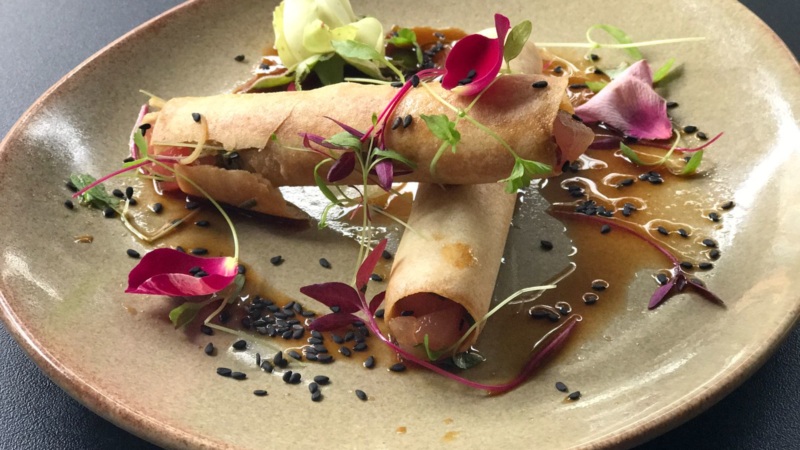
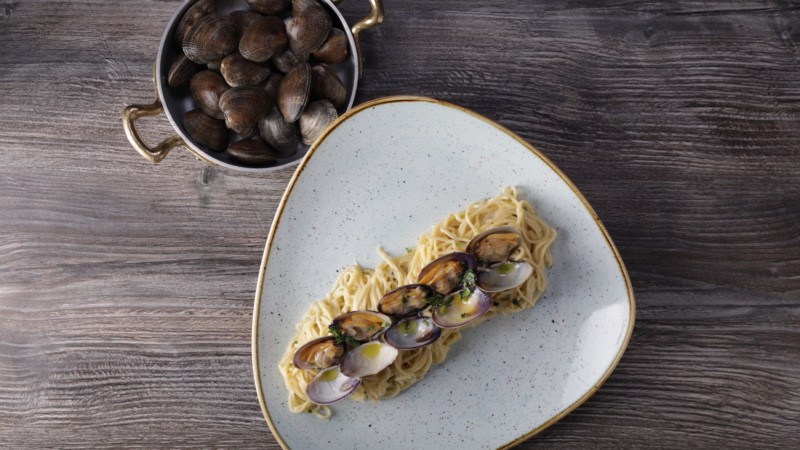
You did takeout at The Continental, and then closed fully before doing a full reopening. What was it like to serve all these intricate dishes in to-go boxes? And did you get a sense of dèja-vu?
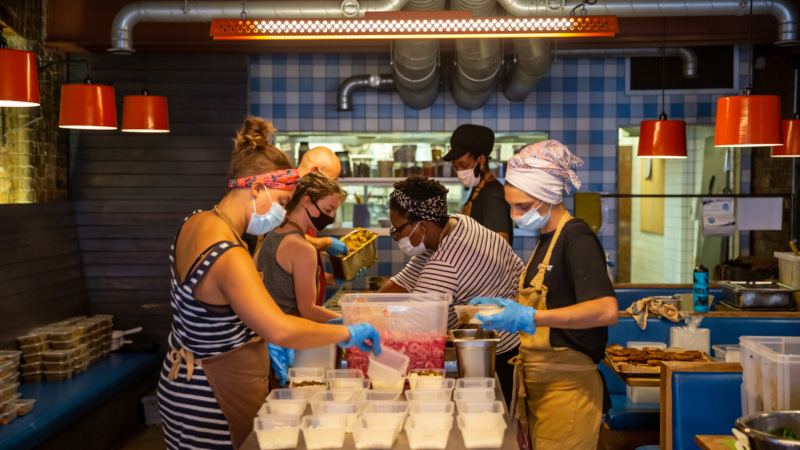
To-go was particularly difficult because I have this bizarre obsession with first impressions. But it’s actually really cool, because opening a restaurant, those first 30 days to two months, is extremely difficult in any situation. You give a first impression and it’s hard to shake that, so getting to have a re-do is cool. We had already grown so much by cooking in the space, so by doing takeout only we were able to get comfortable with what the kitchen is capable of and what we’re capable of. You can have the greatest ideas but if you can’t execute them properly, it won’t work.
So opening now, we know what our capabilities and our limitations are. It allows us more space, and even to be more courageous. So it’s been really nice and a blessing. Crazy to think that it ended up being a positive.
Were you able to keep your staff in place during that time?
We still have a bunch of our core team in place, and we all worked on cool projects in the meantime and were able to come back with a new perspective, especially after having worked together through such difficult times. You get closer quickly. I feel so thankful for the team I’m lucky enough to have.
What’s with the name?
Naming a place might be the hardest part of opening a restaurant, because you want it to paint a picture. When I started developing this concept, it was the continuation of all the work I’m doing, especially the work I was doing at the end of McCrady’s Tavern at Charleston. It ties in with my life’s work, because I’ve spent the last — holy cow — two decades studying the history of Southern food. In doing so you inherently study American food, so I had this head full of ideas and knowledge and research and inspiration, so when I started thinking about it, I thought, “I can’t do another Southern restaurant.” It’s not as challenging for me, and I really wanted to push myself.
I also knew that I wanted to utilize the research I had done, just through all my notes and research on banquets and menus and chefs and hotels, I was thinking “What is American cuisine, what is continental cuisine now?”
And that got me really excited because I looked around and I realized that though there are a lot of regional restaurants, I had trouble coming up with what an American restaurant even was. That realization gave me the opportunity to focus on what that American restaurant was, and what contemporary restaurant hospitality was.
I strongly believe history informs the future. So I was able to utilize the time spent doing that research, and through my journey of researching Southern food I [realized I] have this whole journey that is a blank page ahead. I knew that I would only do two fine-dining restaurants for the rest of my life: The Continental, and Audrey. That’s a major decision I made when I left my last restaurant (Husk).
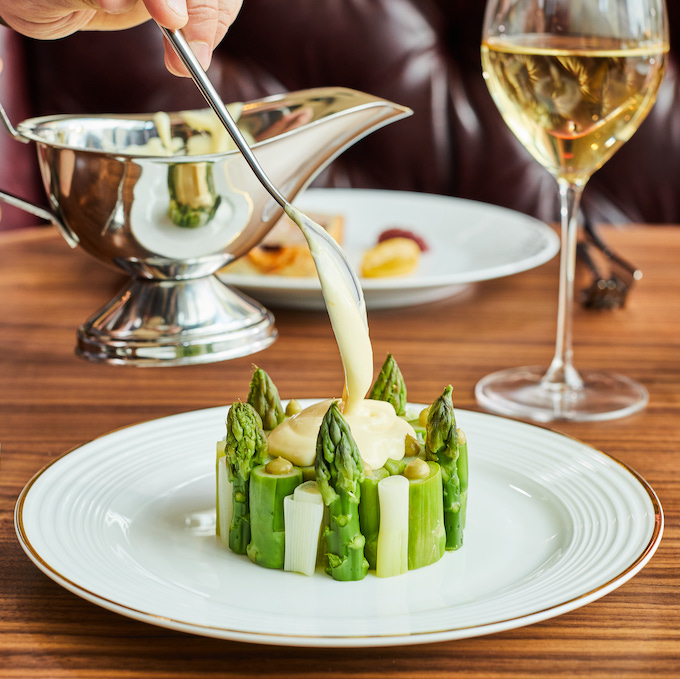
If you look back through the 19th century — the Gilded Age — there are so many cool inventions in America that belong to us. Lobster Newburg, Oysters Rockefeller, Baked Alaska — all these things that are American.— Sean Brock
What does the menu of a modern continental-slash-American restaurant look like?
Overall it’s going to be heavily-focused on having fun. If you look back through the 19th century — the Gilded Age — there are so many cool inventions in America that belong to us. Lobster Newburg, Oysters Rockefeller, Baked Alaska — all these things that are American. So many were tableside. And that evokes this new sense of entertainment in a different way.
To me, what was the most attractive about that is the connection between the culinary team and the dining room. So you’ll have a lot of food served by the culinary team and everyone will be trained to use the carts. Diners can ask questions and hear the passion from the culinary team that’s always so hidden in the back. It will help our creativity greatly by seeing people’s reactions and actually eating the stuff we’ve created.
Let’s talk about the dining experience. You and the team have designed the menu in a very particular way.
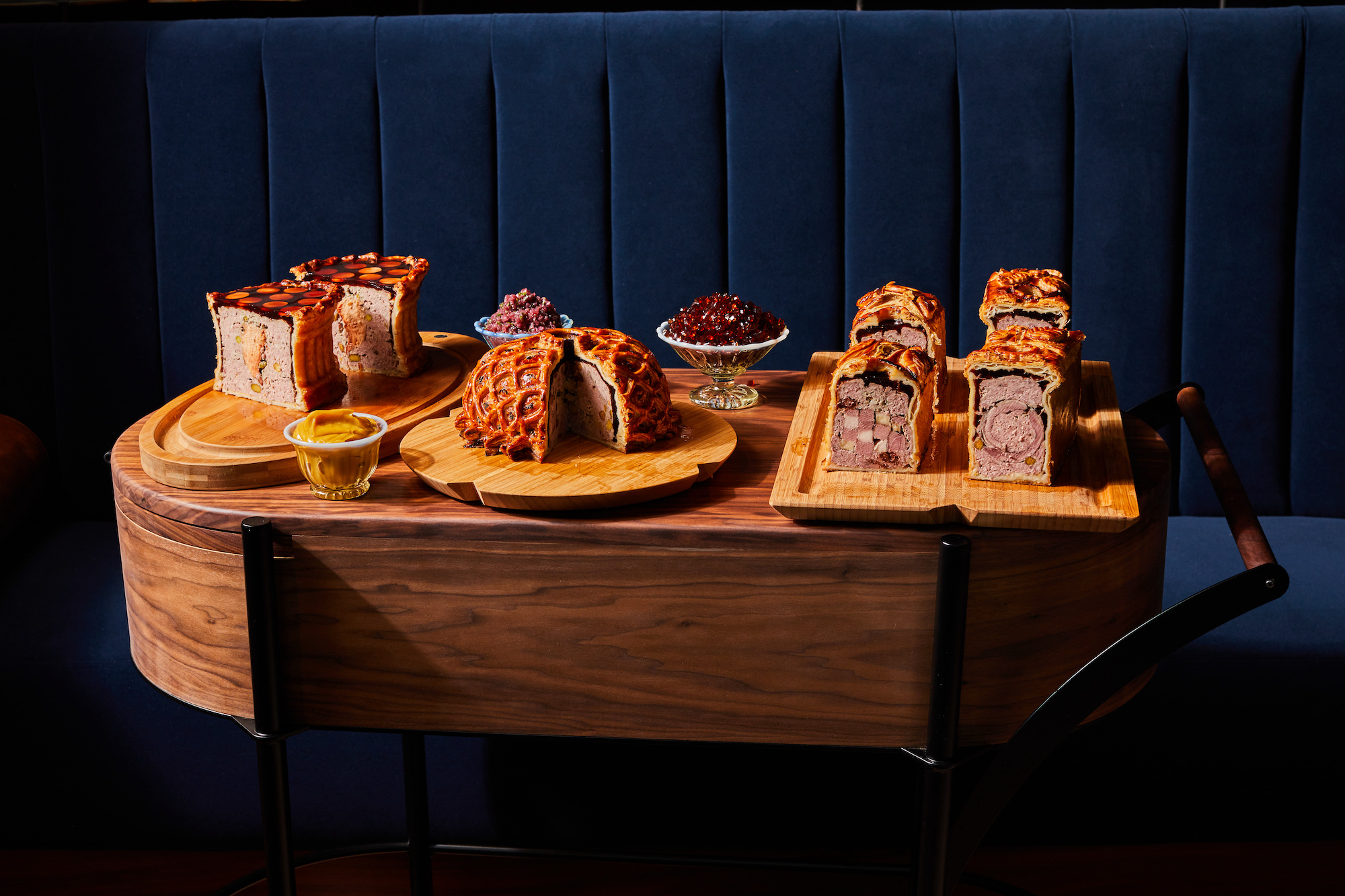
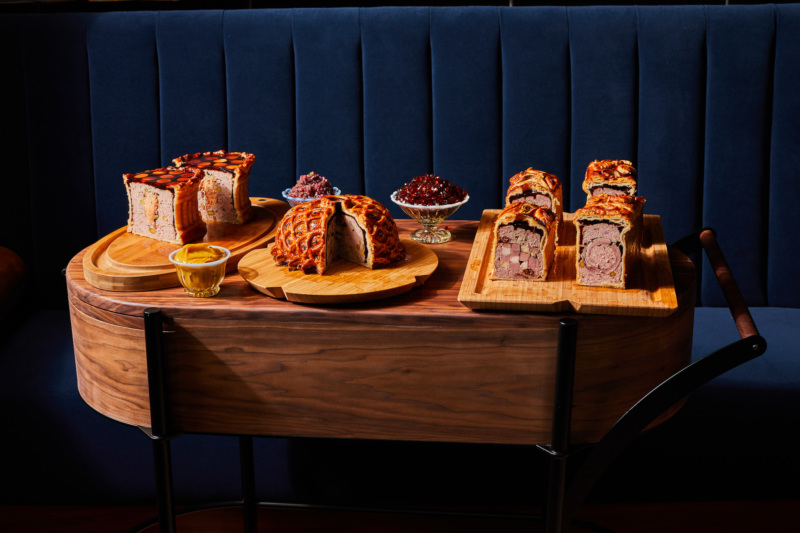
A large part of the experience is based on carts that will be moving around the dining room. The meal will start with an amuse bouche from a cart — as soon as you get seated, a cart arrives to deliver a little something. We’ll always have a pâté en croûte cart, too. To me, it embodies the artistic side of what it means to be a chef, and the type of craftsmanship that we are so excited about jumping back into. We’ll always push ourselves in the pâté en croûte world. It’s stunning and delicious, and it says a lot about our restaurant.
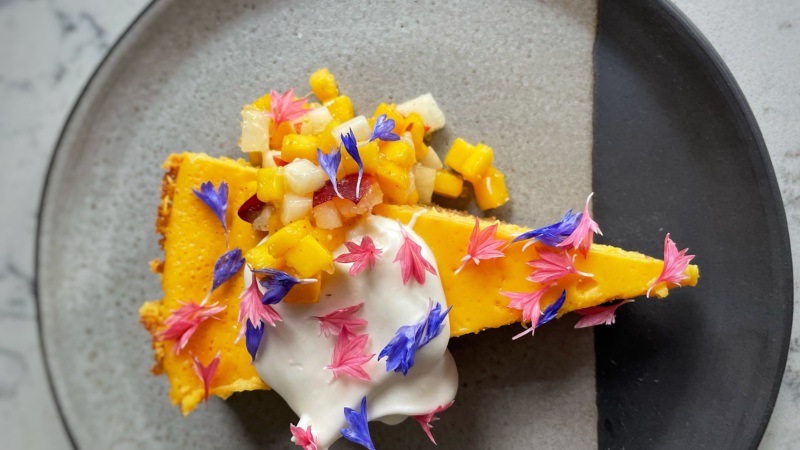
And we’ll always have a dessert cart. The dessert cart is so cool, inspired by the origins of ice cream in America and shaved ice, these composed things you get to choose from. It’s so much fun: our pastry team is the most talented I’ve ever worked with anywhere and I’m so excited for them to be able to show off and get to actually be in the dining room presenting their dishes.
Prime rib is one of the signature dishes at The Continental. What separates yours from others?
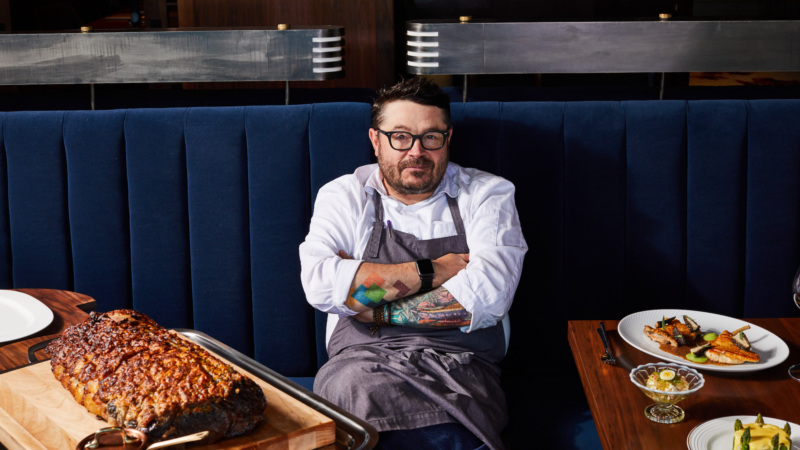
I have this huge soft spot in my heart for prime rib, one of the first things I learned to cook. It was so expensive and I was terrified of messing it up. We were able to develop this crust that turns into a crackling on the outside of the prime rib, inspired by the stuff that gets stuck to the pan after it gets roasted. We thought, “let’s figure out what that is and cover the entire prime rib in that.” It’s gorgeous to look at, but the fun part is that it’s served on a cart, tableside, with horseradish cream and jus. You buy it by the ounce and you hold up your fingers to show the chef the thickness you want.
We’ve all been cooped up, and hopefully we realize how much we’ve missed great food and service and just being taken care of. But it’s also being entertained and realizing what a wonderful privilege it is to sit in a dining room, where people are obsessed with making it wonderful for you.
Let’s talk about that dining room. What was the original vision, and how does the current space fit into that?
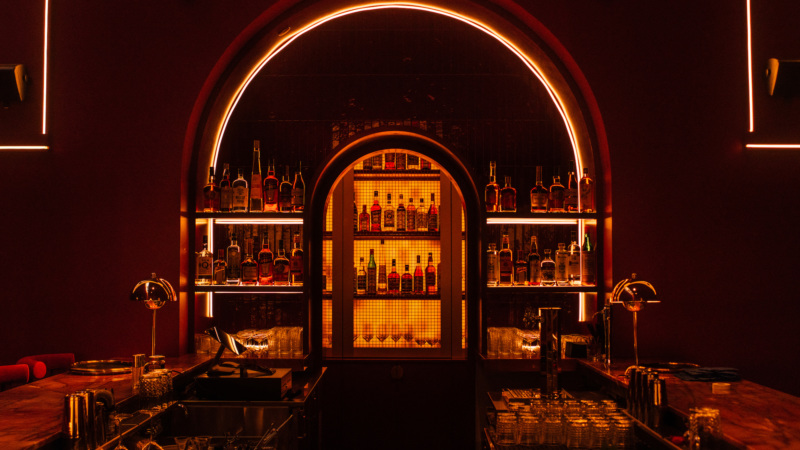
The opportunity to work with Dryden Studio has been amazing. When I sat down for the first meeting to paint a picture for them, I explained my theory with food and I said I would like the dining room to match. It needs to feel elegant and historic, but also pop-culture modern at the same time.
You have to look at the foundation of French cooking and the elegance of that, and then throw in American pop culture. You’ll see some pretty vivid colors all over the place throughout the dining room. One of the main pieces of art in there is by Butch Anthony. It’s this beautiful painting of Adam and Eve. Then he goes over the top and paints white skeletons over Adam and Eve and all the animals. And it hit me that that’s what we want to do with the food, go over these things that are beautiful and historic, and add something on top of it to make it really special and unique.

In the private dining room right off the kitchen, the walls are covered in my photography. My hobby and obsession is shooting film with manual cameras. There’s space for 16 to 20 photographs at any given time, and they’ll rotate. You don’t know what you’ve shot until you get it developed and once you see it printed on paper, you’re like, “this is how photos should be experienced, not on a phone.”
The idea of the rest of the dining room is to be a rotation of artists, and have that art be for sale. Imagine sitting in a restaurant and you can buy it. And being across the street from the Frist Art Museum is a huge inspiration. I try to go as often as possible. And I’m so proud that it’s here in Nashville. It has inspired the food a great deal and I thought it would be fun to create a gallery. I’ll try to stick to Nashville artists. I have so many friends who are artists and I’d like to see their work here.
And just how will a Sean Brock restaurant with no Southern food fit into the Nashville dining scene?
I just remember the different reaction that Charleston had when I introduced molecular gastronomy techniques to the menu. But everyone here is extremely open-minded, highly creative people with the courage to try new things. It’s very inspirational and encouraging. I can do really crazy stuff here. Look at The Catbird Seat, they’ve proven that people here are ready.
So how can we wake up, and make these classics more vibrant and unique in that way? To do that, we hope to create new classics that stick around forever. That’s the ultimate goal. How in the world are these dishes that are timeless, like Oysters Rockefeller, how do they stick around for so long, and how are they still so much fun? There’s this formula there we’re trying to figure out. We’re trying to create one thing that sticks around for 100 years. In 100 years, people will be eating Oysters Continental.
This interview has been lightly edited for length and clarity.
Ellen Fort is a Nashville-based writer and editor covering the restaurant world, food, drinks, and culture. She has previously worked as the food editor at Sunset Magazine, and editor of Eater San Francisco. Follow her on Instagram and Twitter. Follow Resy, too.