Brandon Jew on 10 Years of Mister Jiu’s in San Francisco’s Chinatown
Published:
Mister Jiu’s has several upcoming 10-year anniversary events with guest chefs from across the globe who are cooking Chinese food. The April 11 dinner features Calvin Eng (Bonnie’s, New York), David Schwartz and Braden Chong (Mimi’s Chinese, Toronto, and Victor Liong (Lee Ho Fook, Melbourne). The May 9 dinner features Mei Lin (88 Club, Los Angeles), ArChan Chan (Ho Lee Fook, Hong Kong), and Lucas Sin (New York).
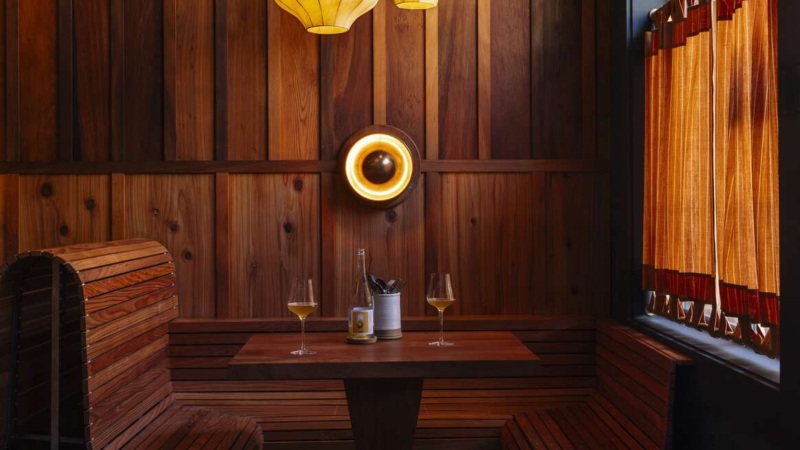
In April 2016, Mister Jiu’s opened up its doors, the upstairs balcony overlooking a small alleyway nestled within the oldest Chinatown in North America. The restaurant took over the shuttered Four Seas, one of the last Chinese banquet halls in the area. Brandon Jew was 37 years then, with a vision to push forward contemporary Chinese cooking. With experience at top restaurants under his belt and his wife Anna Lee (who designed the interior space) by his side, Jew was ready to bring a something new to San Francisco.
But it wasn’t simple. Some balked at the prices for Chinese food, but Jew and his team have fought for their worth. And then the world screeched to a halt in 2020. In Chinatown, residents faced two fears: Covid-19, and anti-Asian racism, all felt within the community.
Today, Mister Jiu’s is seen as breaking the glass ceiling of fine dining and bringing not only Chinese food, but a Chinese American sensibility, with a California seasonal influence. During the 10 years, he’s switched from a la carte menus, to a tasting menu, and now back to a la carte.
Through the journey, Mister Jiu’s has been rewarded with critical acclaim and success. In 2016, Mister Jiu’s received a Michelin star, the only Chinese restaurant in the U.S. given the honor at the time. In 2022, Jew won James Beard Awards for Best Chef: California and for his cookbook, which he co-authored with Tienlon Ho. Without a doubt, the restaurant has helped shape a new generation of Chinese American chefs, pushing the boundaries of what it means to be a hyphenated Chinese and American chef.
And now in this interview, Jew reflects on the past 10 years, what it’s meant to become a dad, the duck that still evades him, and the memory of shopping for groceries with his grandmother in Chinatown.
Momo Chang: What are you thinking right now, as you reflect back on 10 years of Mister Jiu’s?
Brandon Jew: It’s probably the most life-changing decade I’ve had. I’m really someone who believes in incremental change. Reflecting on the past 10 years, it feels like all these small things have amounted to something substantial.
I really feel like what I learned is my purpose of this restaurant. I came into the restaurant a little more focused on the food, and, as the chef, trying to express myself creatively. What I’ve gotten in return – being in Chinatown, being able to cook Chinese food, and help continue what Chinese American food means today – has been an honor and privilege. Chinatown as a symbol of immigrant strength is something that I really took from the time during the pandemic.
How has becoming a dad changed your perspective on cooking, on restaurants, and Mister Jiu’s?
My son, who is the older one, comes with me to the farmers market on Saturday, and to Chinatown sometimes when there’s lion dances and fireworks. Food is also an easy way to talk about my grandparents. He’s never been able to meet them, but as a way to talk about them through the recipes and through things I miss, like eating with them.
Becoming a dad has absolutely changed my outlook on my pursuit, culinary-speaking. It’s matured me in a way of understanding a longer view of how to still have ambition and goals, but resetting them in a way of a little longer of a span. I think that having kids has given me perspective of what is also important, and my time with them.
It’s probably the most life-changing decade I’ve had.— Brandon Jew
In what ways has Mister Jiu’s evolved over the years? What has been a constant?
We have this little section, “Mister Jiu’s classics,” on the menu. I always have this inclination as something gets popular to stop doing it. We had potsickers. Bon Appétit put it on the cover. We were selling so many potstickers. I was like, I didn’t intend this to be a potsticker restaurant. Same with the buns with Dutch crunch. We would sell those like crazy.
I’m really surprised at how many people like the tendon. That’s one of the dishes that’s still on. And the mapo over silken tofu. We were serving that in the first year.
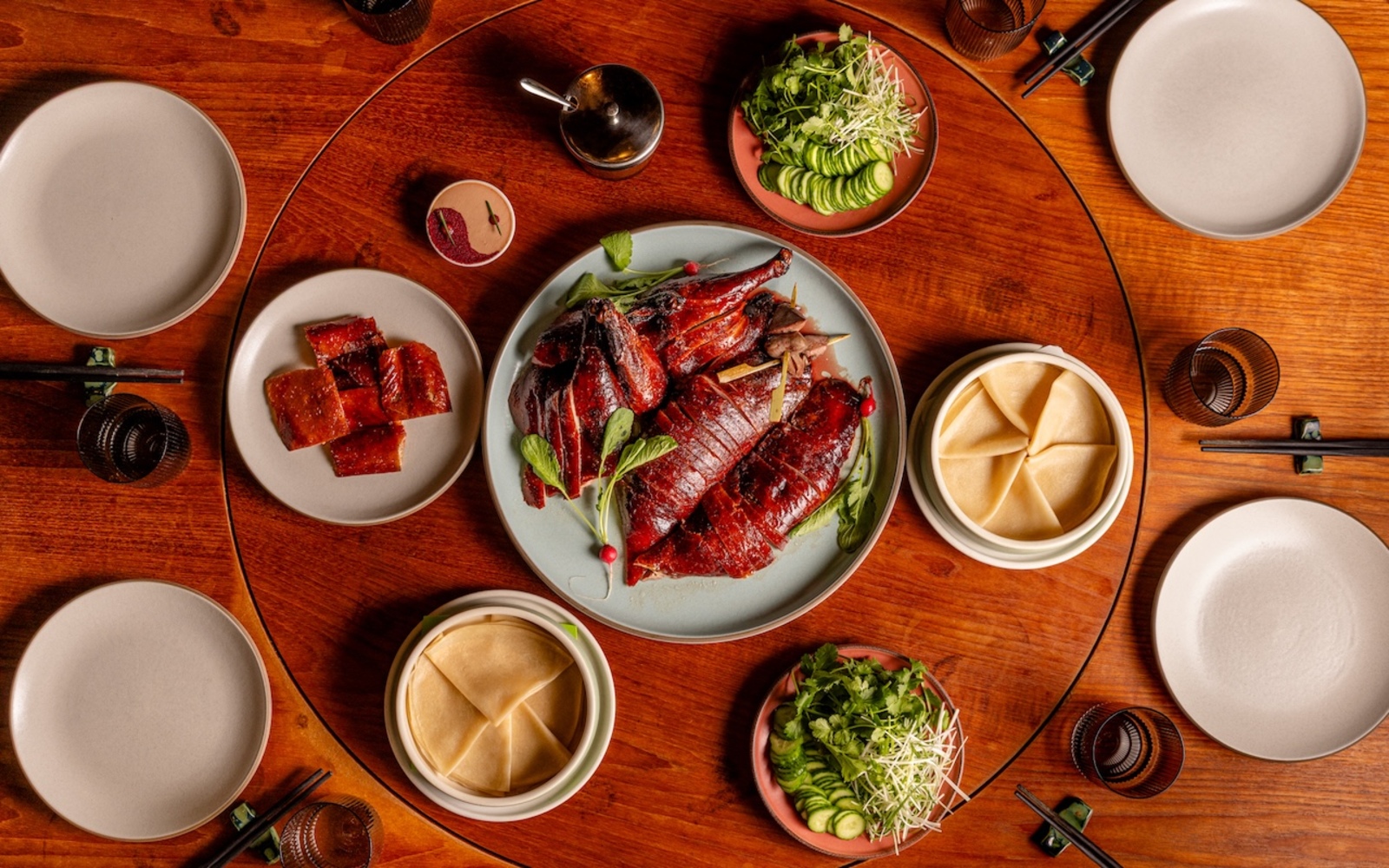
If I didn’t want to be a potsticker restaurant, one thing I was trying to be was to have our duck be recognized as a great version of Peking duck. For a lot of versions of Peking duck I’ve had, the meat was almost sacrificed for the skin, almost an afterthought, because all the skin was amazing.
I wanted the duck to be this representation of cooking the meat and the skin to what I felt was a more optimal state. But it’s been very difficult. There are places in Beijing and Hong Kong that I still aspire to reach, but I’m still very proud being able to serve our version. I also want to be really good at expressing the products of our region, and not get too caught up with what other people have in other parts of the world. Those ducks we use are from Sonoma, and they are different ducks.
What I really want people to take from coming here is that this is a Chinese restaurant, and a very Chinese American perspective. And maybe one layer in, is that this is a unique, San Francisco Chinatown experience that they can only really get in San Francisco Chinatown at Mister Jiu’s.

Through all the evolutions of the restaurant, where is the restaurant at today?
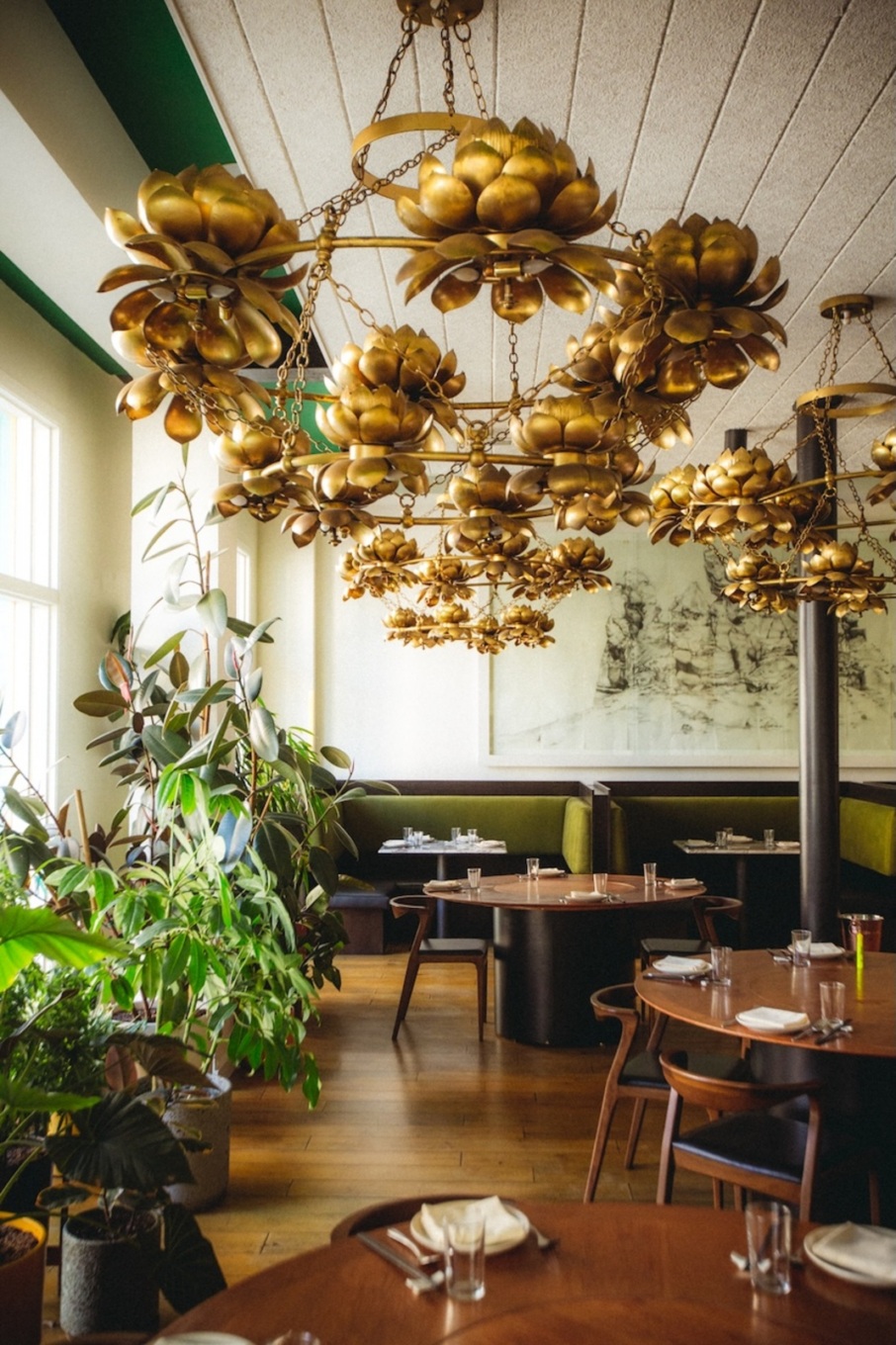
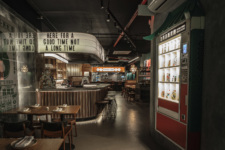
This restaurant has felt its best with the energy level and the bustle, the banter in the dining room, and just the noises of service, shaking a cocktail or the wok really fired up. I just think there’s something to that version of Chinese food — and also this restaurant space — that just feels like what this dining room wants to be. I want to serve more people — and see more people coming in — than it to be this more quiet place. There’s things I like about both of those things, even as a diner, but I think it’s felt right again to try to move out of the tasting menu.
It’s felt really good to be back in a la carte and it feels good to be back in seeing more people come back to Chinatown, and seeing foot traffic in San Francisco increasing.
I’ve almost tried everything at this point, and almost went full circle. I needed to go through all that change to know that this is where it should be. I want to be engaged in the restaurant, creatively. I’ve told my managers that I’m done with operational explorations. We can sink in now, and we’re hopeful that we can get another 10 years. Maybe things get that much better.
I’m very much still inspired in Chinatown here. Even going to a traditional Chinese medicine shop here, and getting to smell things and taste things that are unique to Chinatown has been very much, to this day, inspiring. The ideas and the creativity feel very abundant in Chinatown.

Growing up, what were your connections or best memories in Chinatown?
My connection to Chinatown was mostly as a kid coming here to help my grandma shop for groceries on the weekends. Through the grocery shopping, carrying stuff for her, going on the bus with her over here – it’s so different than when you go to Safeway. We would go to Chinatown. That shopping experience is different. You go one place for lap cheong, then maybe you go get a whole fish from there, and leafy greens there, get some root vegetables over there, you’re seeing some of her friends, interacting with people on the street. The way you shop here is still old world.
Just seeing how much she curated, using her senses, and using her standard of what she wanted – just cooking dinner for us. I’ve gone to the farmers’ market twice a week every week, since I worked at Quince. Seeing friends, seeing other chefs at the market, catching up with them. That’s probably my most social time and, in a way, it feels more akin to my memories of coming to Chinatown.
What I really want people to take from coming here is that this is a Chinese restaurant, and a very Chinese American perspective.— Brandon Jew
What’s something to look forward to, in the next months?
We have a series called “A Piece of Cake.” It’s kind of a joke because obviously, running a restaurant is not a piece of cake. It’s is a celebratory thing. Olympians that are doing their sport are so dialed in that it almost looks like they are relaxed. Once you get really good at doing something, it should feel like we feel confident and also relaxed about performing. That’s something that we want to aspire to.
It’s definitely ambitious to get this many chefs in one event, but it definitely feels really celebratory to have all of these chefs I look up to and consider in high regard. We want our diners to have something really special.
Is there anything else you’d like to add?
We definitely had our ups and downs, but a lot of ups. I was ambitious, but I didn’t think we would achieve the things that we have. I’m really proud of the team.
This interview has been edited for length and clarity.
Momo Chang is a freelance journalist who writes about food, culture, and social issues.