In D.C., Koryouri Urara Is an Education in Japanese Comfort Food
Published:
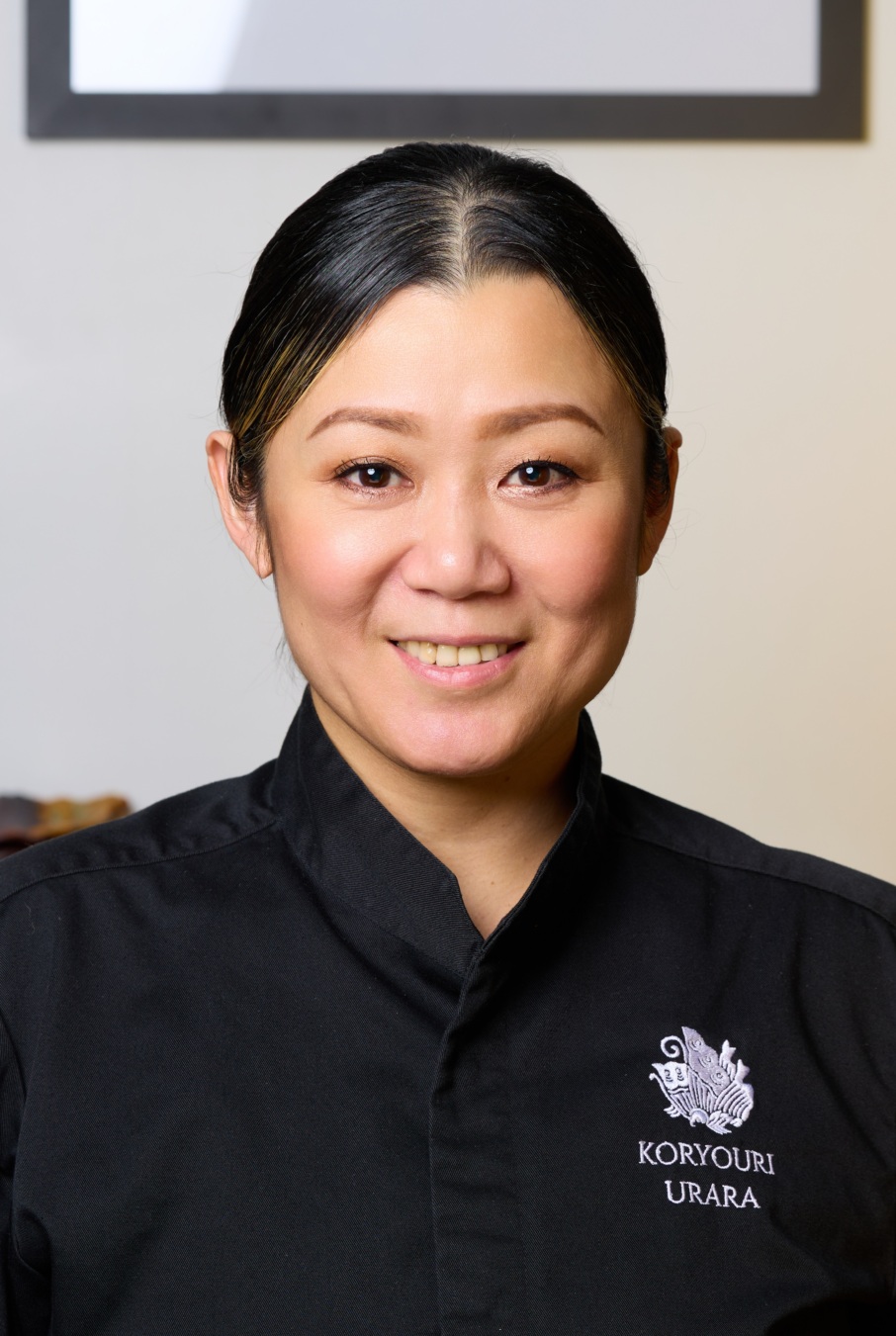
Chef Urara Iwasaki doesn’t think her path has been exciting. “My story isn’t really dramatic,” she says, almost apologetically. But not only is she wrong, her food is even more inspiring than her journey from suburban Tokyo to D.C., which has culminated with the tasting menu at Koryouri Urara, her restaurant in Georgetown.
She arrived in the U.S. in 2011, and remembers being surprised that, while locals were knowledgeable about sushi and ramen, they didn’t know much about Japanese home cooking. “We don’t eat sushi at home,” she says.
After nearly 15 years in local kitchens preparing both sushi and cooked delicacies, it was time to strike out on her own, sharing her affection of homestyle Japanese fare along the way. She took the leap this year after receiving the advice of her mentor and boss for a decade, Sushi Ogawa’s omakase OG, Minoru Ogawa.
“When I told him, ‘This is what I have been wanting to do,’ he’s the one that said, ‘Why don’t you do it?’” she recalls. “He told me, ‘Just stay with me a couple more years,’ then after that, I don’t know why, but he said, ‘I think you’re ready.’”
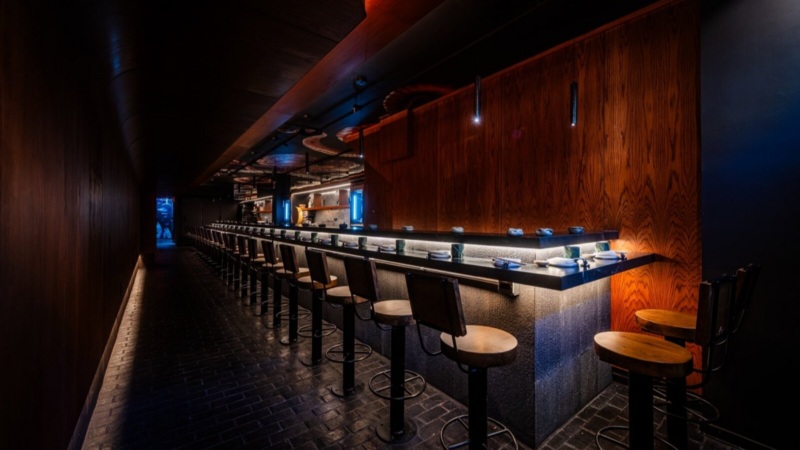
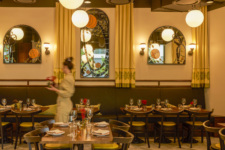
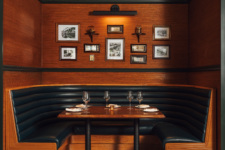
The result is Koryouri Urara in Georgetown, which opened in May. With 14 chef counter seats and eight more at small tables, Iwasaki offers two seatings a night, meaning her meals are an intimate experience. She loves chatting with guests as she watches her phone for the exact right timing before pulling out the chawanmushi that begins the 10-course tasting menu.
There are à la carte offerings available on the cute, hidden patio, but most diners are there to be swept away by Iwasaki’s whole story. She tells it in petite dishes, served with pairings from small, mostly woman-owned wineries.
Whether it’s her affection for beef or her mom’s cheese-bolstered take on fatty fish, Iwasaki uses her well-honed chef’s chops to boost Japanese comfort food. Here’s how she does it.
More Dish by Dish

Chawanmushi
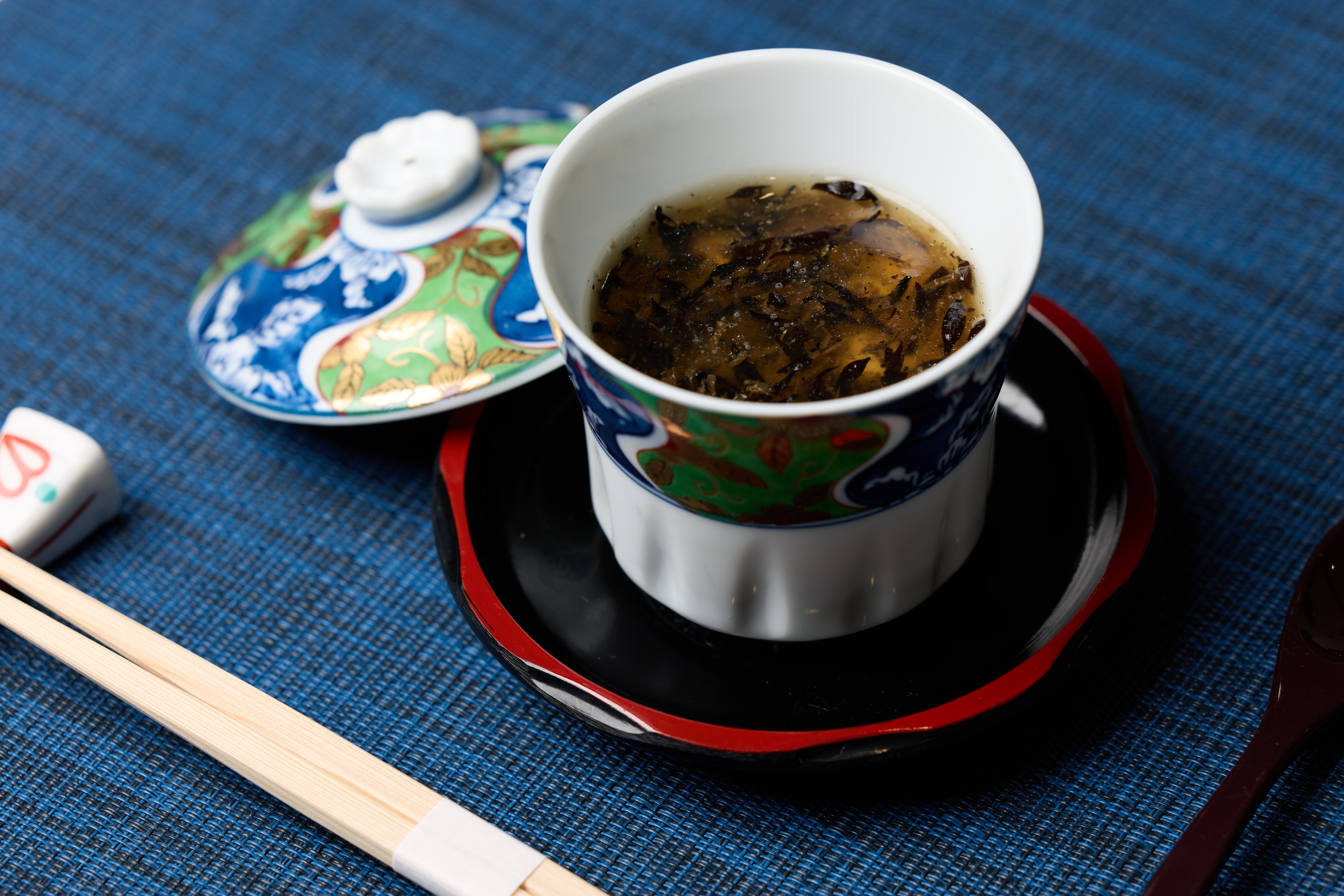
“It looks easy, but it’s the most not-easy dish,” says Iwasaki, pulling her savory egg custard from the steamer. More cloudlike in texture than your average slippery chawanmushi, a spoonful of hers might reveal moist shrimp, pink-edged fish cakes, bamboo, Japanese parsley or slices of shiitake mushroom. It’s covered in a broth that’s dark with hijiki and truffle, uplifting the smooth mixture exponentially.
Wagyu Tataki
“I’ve always loved beef,” Iwasaki recalls when asked what catalyzed her obsession with food. “My parents still laugh at me because when I was a little, they’d always ask ‘Hey, what are you gonna eat?’ And I’d always say ‘Beef! Steak!’” she says. “Yeah, steak every day.”
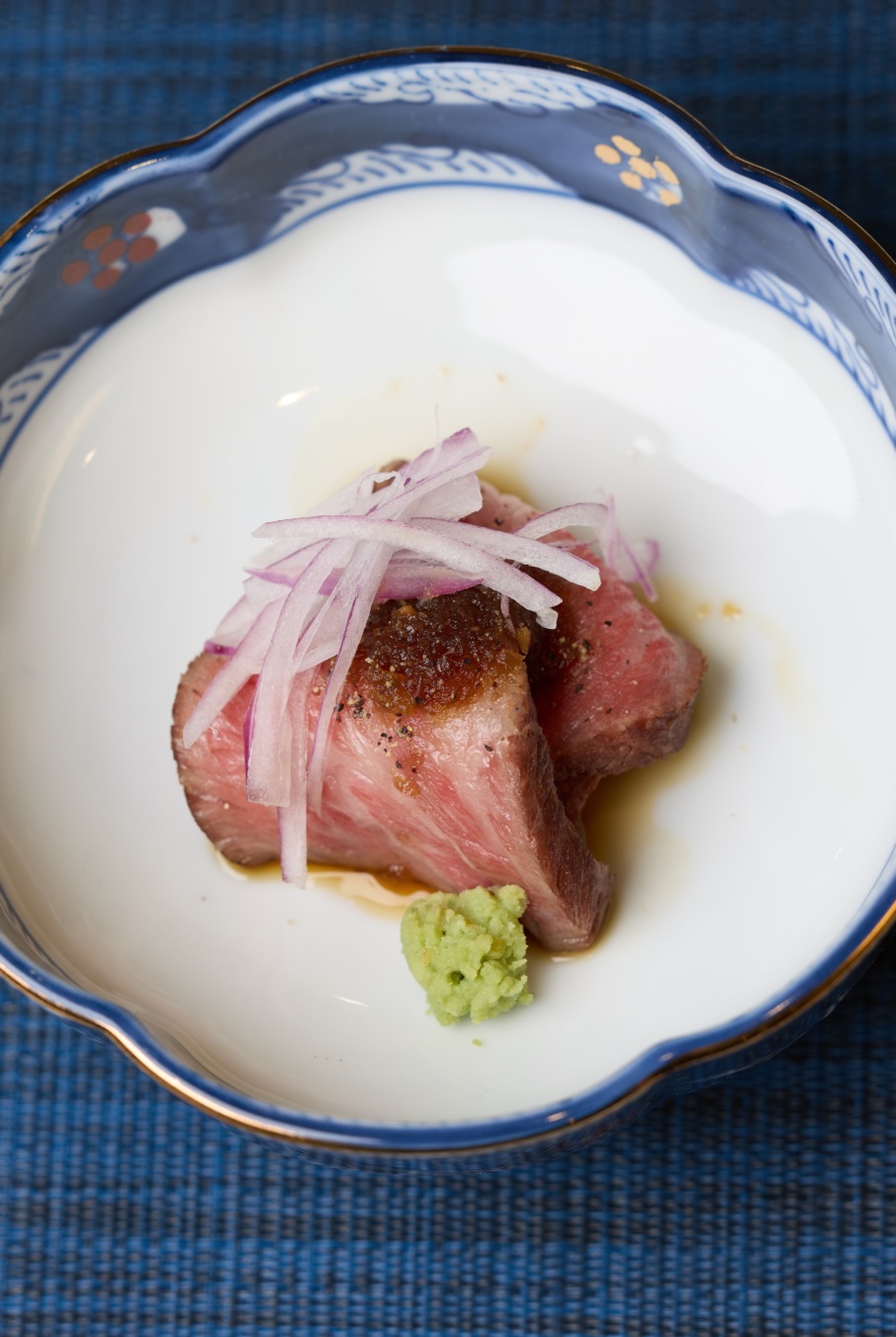
It’s no surprise that her menu’s beef dish is a scintillating experience. Iwasaki uses A5 wagyu from Kagoshima for her seared beef. She starts by slow cooking the meat for an hour before blistering the outside. An onion-and-garlic sauce adds umami, while a nubbin of wasabi brings some heat.
Crudo
“I love sashimi, but it’s always soy sauce and wasabi and there are different ways of eating raw fish. And I am more inspired by a crudo style — more like when I go to [an] Italian restaurant or eat raw fish in Italy — it’s literally just salt and a lemon, right? So I wanted to do something like that, with a little bit of a twist,” Iwasaki says.
Her crudo features torched yellowtail in a tangy yuzu kosho vinaigrette with jiggly dashi jelly. Make sure to include the lightly pickled cucumbers, sprouts and crunchy radish with each smoky bite of fish.


Gindara Cheese Yaki
Thanks to Nobu’s miso black cod, practically every Japanese restaurant in the States now boasts a version on its menu. Iwasaki turns the austere presentation of the fish known as gindara on its head with the combination of seafood and dairy.
“The fish and the cheese is a little bit unique, but when I was growing up, my mother always made this with salmon. This is literally one of the dishes from my household,” she explains. The buttery white flesh of the gindara melds with unexpected ease when blanketed in a layer of stretchy cheese.

Sashimi
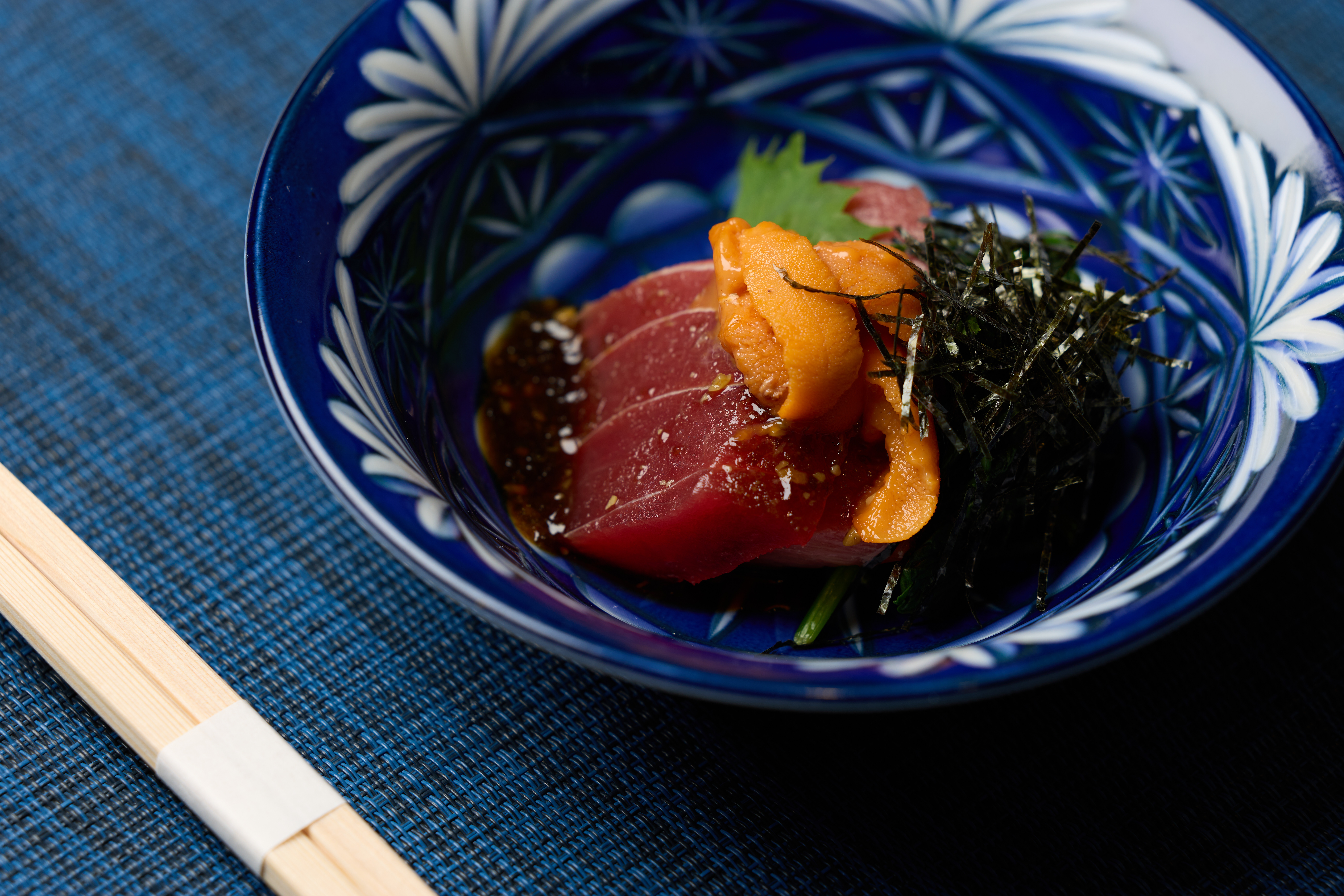
Though Iwasaki says she considers herself more of a “kitchen” chef than a sushi master, she may be selling herself short. This fatty tuna dish, served over spinach, proves it.
“I wanted to do something a little bit different than just the wasabi and soy sauce. It’s similar, but this one, I made seasoned sweet soy then, of course, add a little bit of wasabi to cut the richness from the fatty tuna,” she says. One piece of tuna is wrapped in noontime-bright shiso, and everything is crowned with a generous portion of creamy Japanese uni.

Karaage Kurozu Sauce
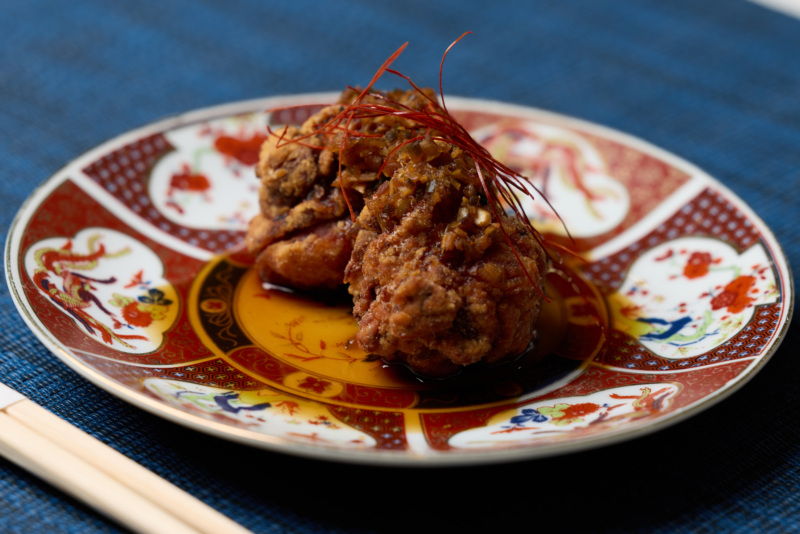
“Every time when my mother made fried chicken, I’d get super excited,” Iwasaki remembers of her childhood. Her own version of crunchy popcorn chicken is marinated in housemade garlic koji for a round flavor that makes a fantastic foil for the sharpness of its sauce made from kurozu, or Japanese black vinegar.
Trout and Ikura Donabe Gohan
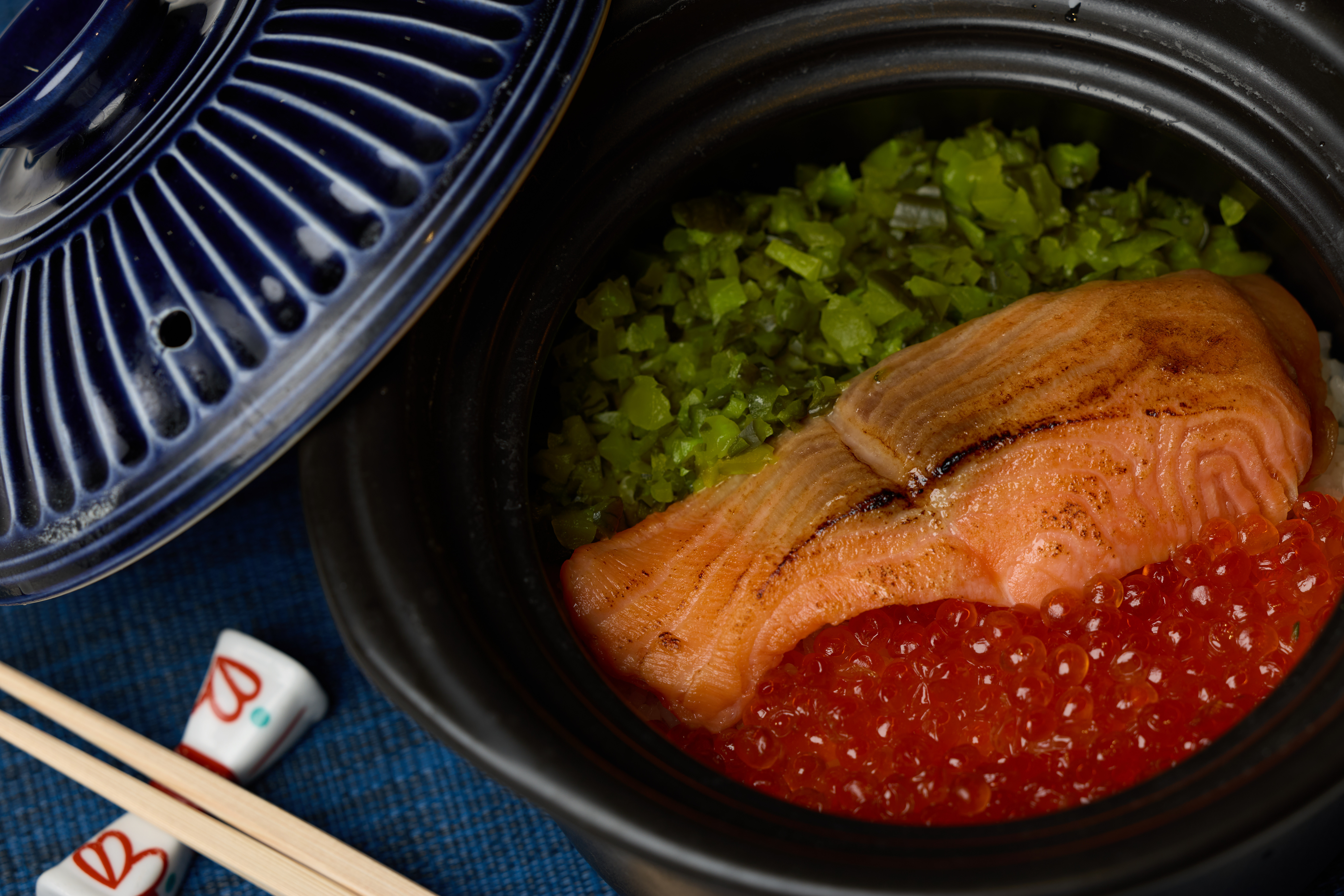
This claypot rice dish started at the restaurant this summer as a showcase for eel. For autumn, which Iwasaki says is salmon and trout season, she chose to use the fatty orange-hued fish instead. She combines the toothsome grains of rice with the salmon or trout (whichever is freshest), as well as deeply fermented house cucumber pickles and jewel-like roe for a dish that’s pure comfort.