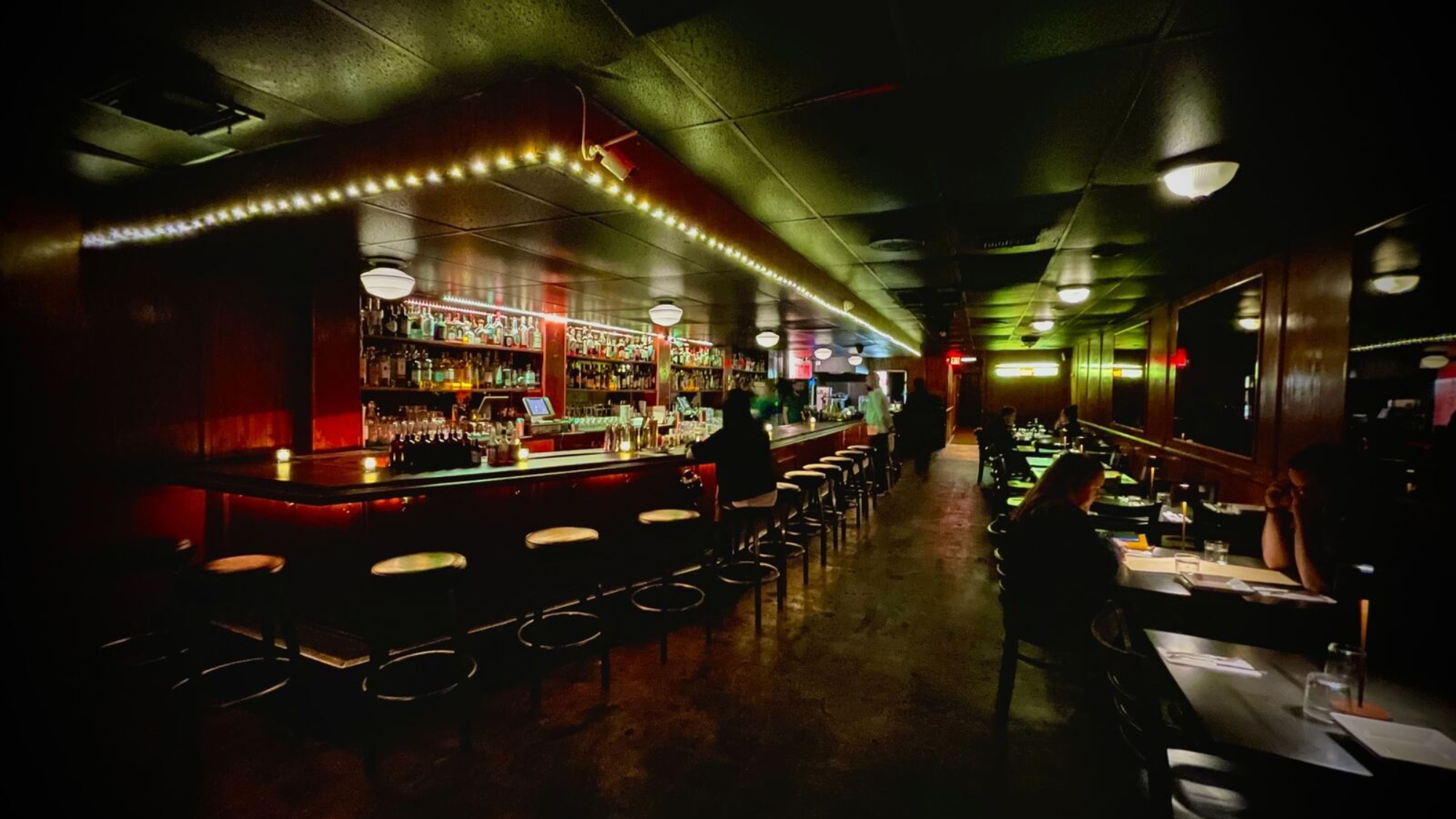
How Oy Bar in Studio City Reinvents Classic Bar Foods
Published:
After a recent meal at Oy Bar, I posted some poorly lit, amateurly shot iPhone photos to my Instagram story. My DMs immediately lit up: “Love it there so much.” “The best!” “My favorite spot,” and so on. As a food writer who regularly documents her meals on social media, this felt like an abnormally excited response.
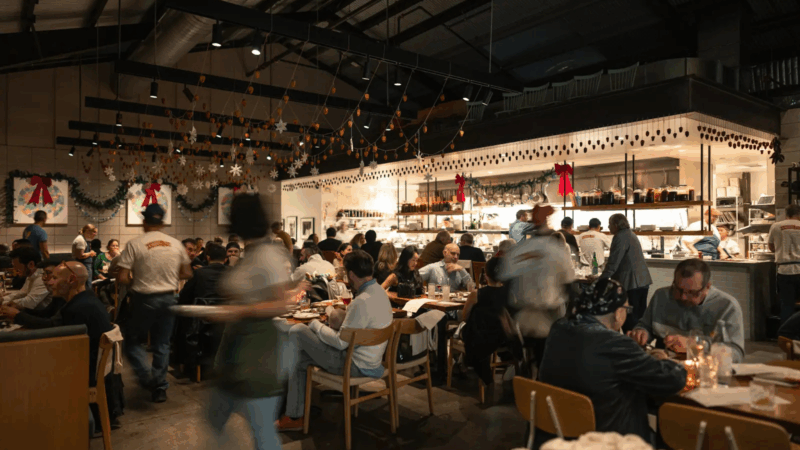
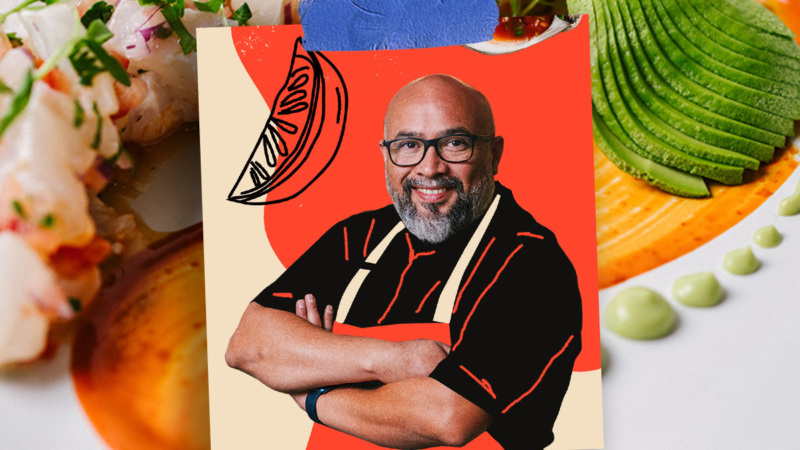
The cult-like following for this dive bar-slash-restaurant in Studio City is real, and it’s no wonder: Former Friends producer Jeff Strauss is the chef/owner behind both Oy Bar and Jeff’s Table, a viral sandwich shop that developed a similarly passionate following after opening inside a Highland Park liquor store in 2019. Maybe it was all those years making Must See TV, but if there’s one thing Strauss is great at, it’s knowing his audience — and delivering to them playful, fusion-inspired dishes that are simultaneously adventurous and crowd-pleasing.
Strauss, a self-taught chef and food lover, cooked for friends frequently over the years, throwing annual Super Bowl parties and catering occasional events. In 2019, frustrated with the entertainment business, he started thinking about turning his culinary hobby into a brick-and-mortar. After stumbling into The Bar at Oyster House (previously Valley fixture The Oyster House) to see a friend’s comedy show, he felt a burst of inspiration.
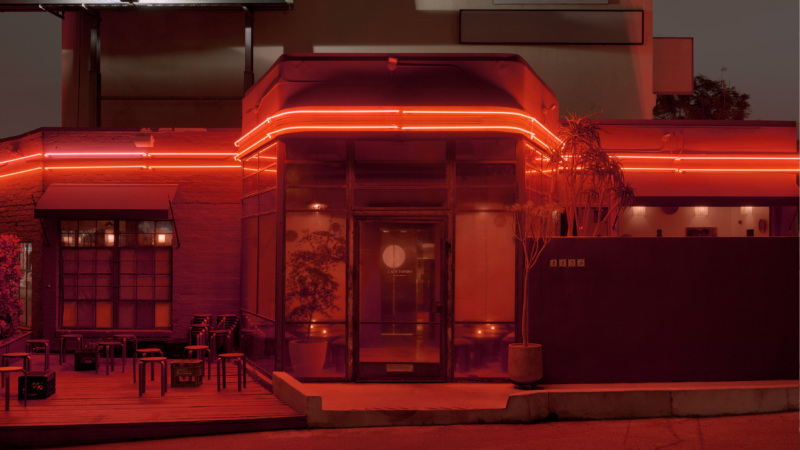
“The minute I walked into the old Oyster House saloon, I knew I was somewhere special,” Strauss says. “It was this vintage 1970s neighborhood watering hole where you could still feel the community and the history,” he adds. Strauss befriended the owner, Peter Jarjour, and learned that they lacked a real food program. So he started staging Monday night pop-ups there, making reubens, wings, pickle plates, and other creative dishes to go along with the drinks. The pop-up was such a hit that Jarjour approached Strauss about making food for another space he owned, Flask in Highland Park – aka the beginnings of Jeff’s Table. Strauss used the Oyster House space to do some of his prep in the meantime.
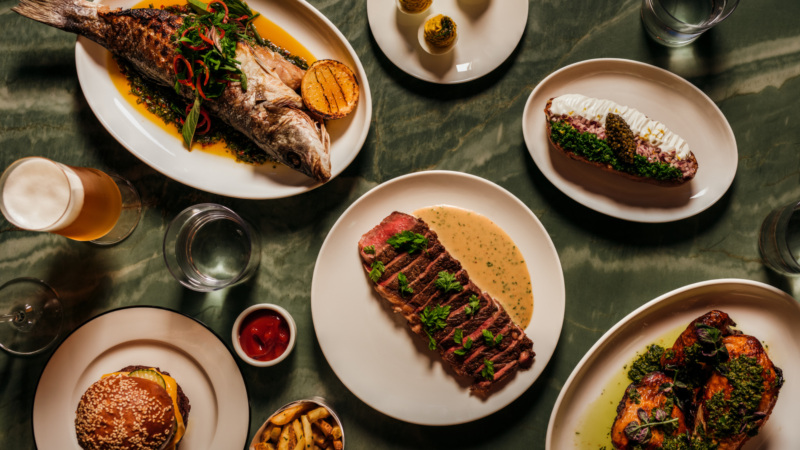
After the roaring success of Jeff’s Table, which become known for mash-up style sandwiches like the Jubano (a fusion of a Jewish pastrami sandwich and a Cubano), Strauss and Jarjour transformed The Bar at Oyster House into Oy Bar in 2022, which serves Strauss’s cheeky takes on bar food classics with a Jewish twist. When we say “bar food,” think anything that goes well with a beer: it might be a bowl of ramen, crispy fried artichokes, or even a classic cheeseburger. We sat down with Strauss to get the details on five dishes to look out for on during your next visit:
MORE FROM RESY
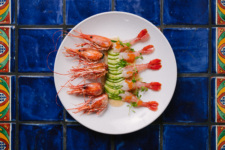
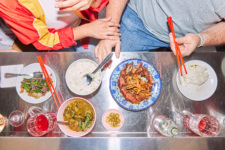

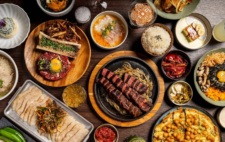
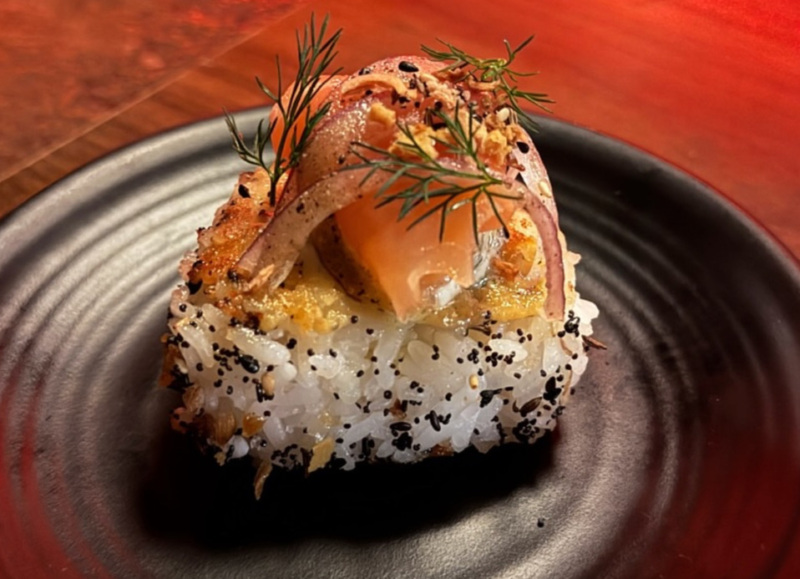
Smoked Salmon Yaki Onigiri
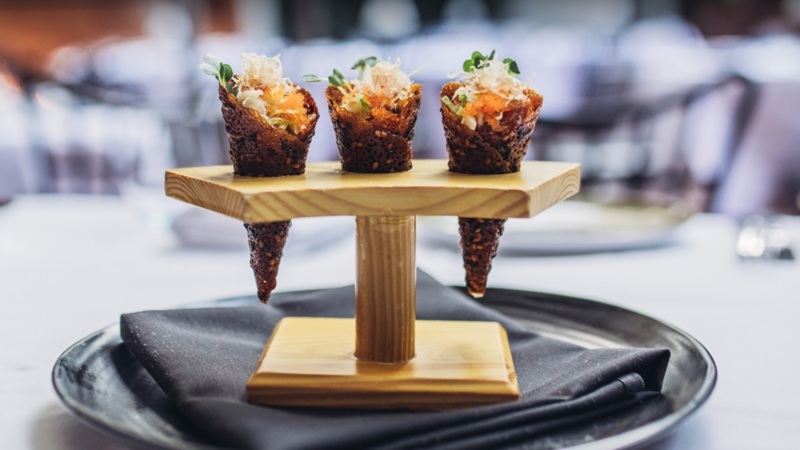
“This one is a Jewish brunch item served as a Japanese bar snack. Onigiri is a snack that you find in convenience stores in Japan. It’s a grilled Japanese rice ball that has this wonderful, homey, emotionally satisfying starchy bite, and when it’s grilled the flavor reminds me of toasted bagels. When my friend was doing a launch party for his book about L.A., he asked me to make food people could eat in their cars while they listened to him over him through a loudspeaker in the old Tower Records parking lot. I suggested we do bento boxes of Jewish onigiri. That party was the inspiration for putting this on the Oy Bar menu.
At the restaurant, we cure our own salmon with mezcal and citrus, which is neither Jewish nor Japanese — it’s more like a Yucatan smoked salmon. We make our own ‘everything’ spice mix as well, which includes kolangi or nigella seed, which has a toasty oniony flavor that deepens the toasted onion that sometimes shows up in “everything” spice mixes. We also use a dehydrated onion as well as caraway, which is not a classic in all mixes, but we love it. That’s what the onigiri is rolled in around the outside. The whole thing gets grilled with miso butter and served with herbed creme fraiche.”
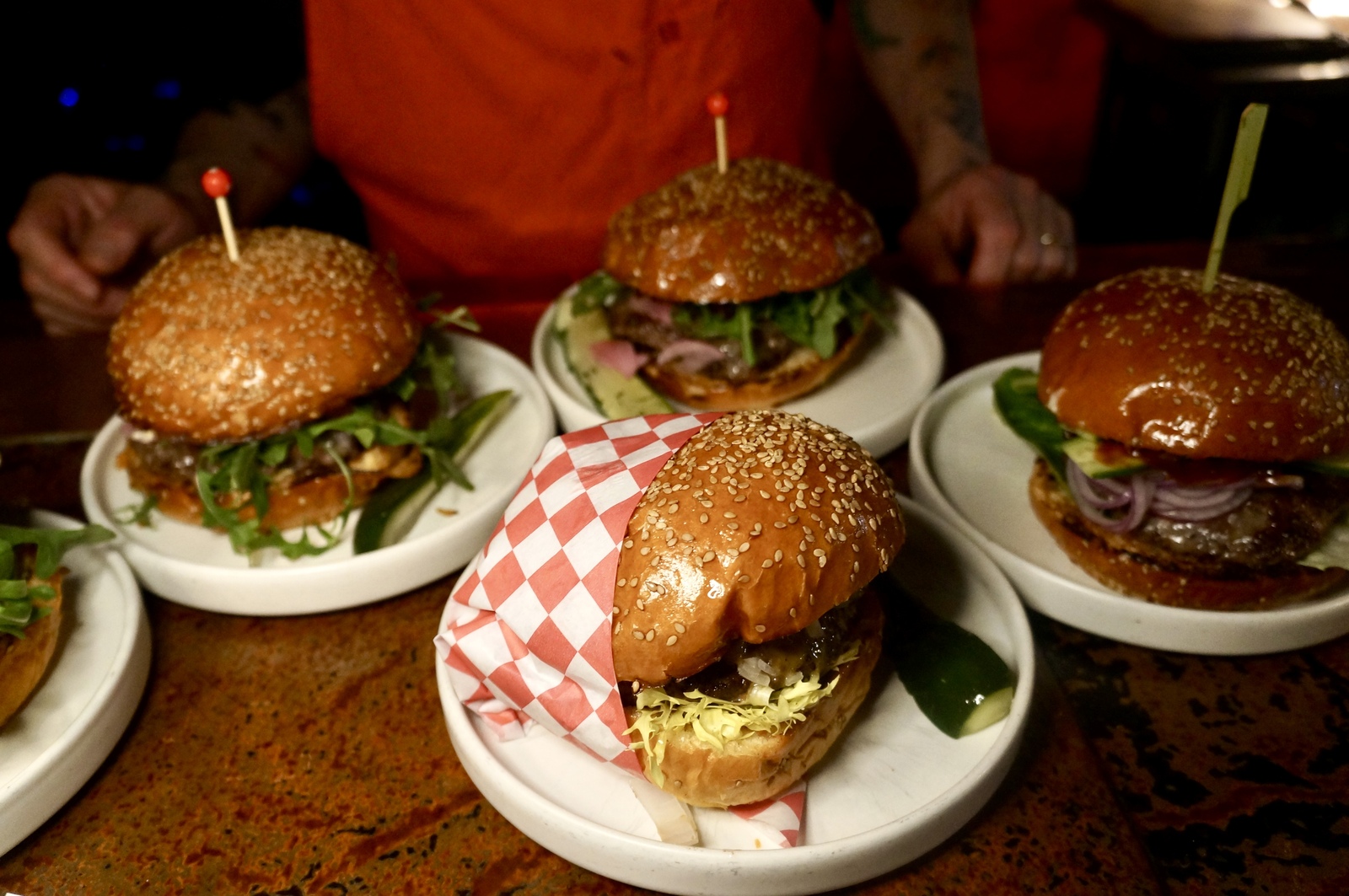
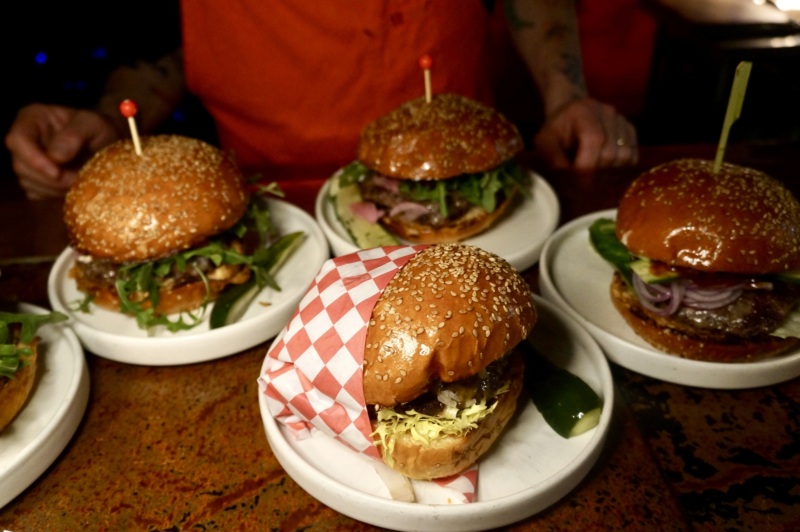
The Oy Burger
“I knew when we opened that we needed to have a burger, and I wanted it to be distinctly ours – an experience you can’t get anywhere else. There’s this dish that Jonathan Gold used to talk about from a strip mall restaurant in the San Gabriel Valley which I drove 25 miles to try one day: a Tawainese beef roll, wrapped in a scallion pancake with cucumber, hoisin, and cilantro. This burger is a tribute to that dish.
We make our own hoisin sauce from full scratch. We don’t make our own soy and we don’t ferment our own black beans but we do make fermented black bean paste first and then we make it into hoisin, with plums and prunes to balance things out. Then we add shaved Persian cucumber, cilantro, and Toma cheese from Point Reyes, and we make a hoisin ketchup. I don’t make my own ketchup in this case. We don’t serve ketchup. We have an Indian tomato chutney that’s based on a friend’s recipe. I use a little bit of ketchup in the hoisin to round out the flavor.
We use brioche buns from Bread Lounge if we can’t make them ourselves. Our beef is from a great program out of Australia called Wanderer — they do a grain and grass feeding program where they move their grain bins around grazing fields. The flavor and texture of the meat is wonderful.”
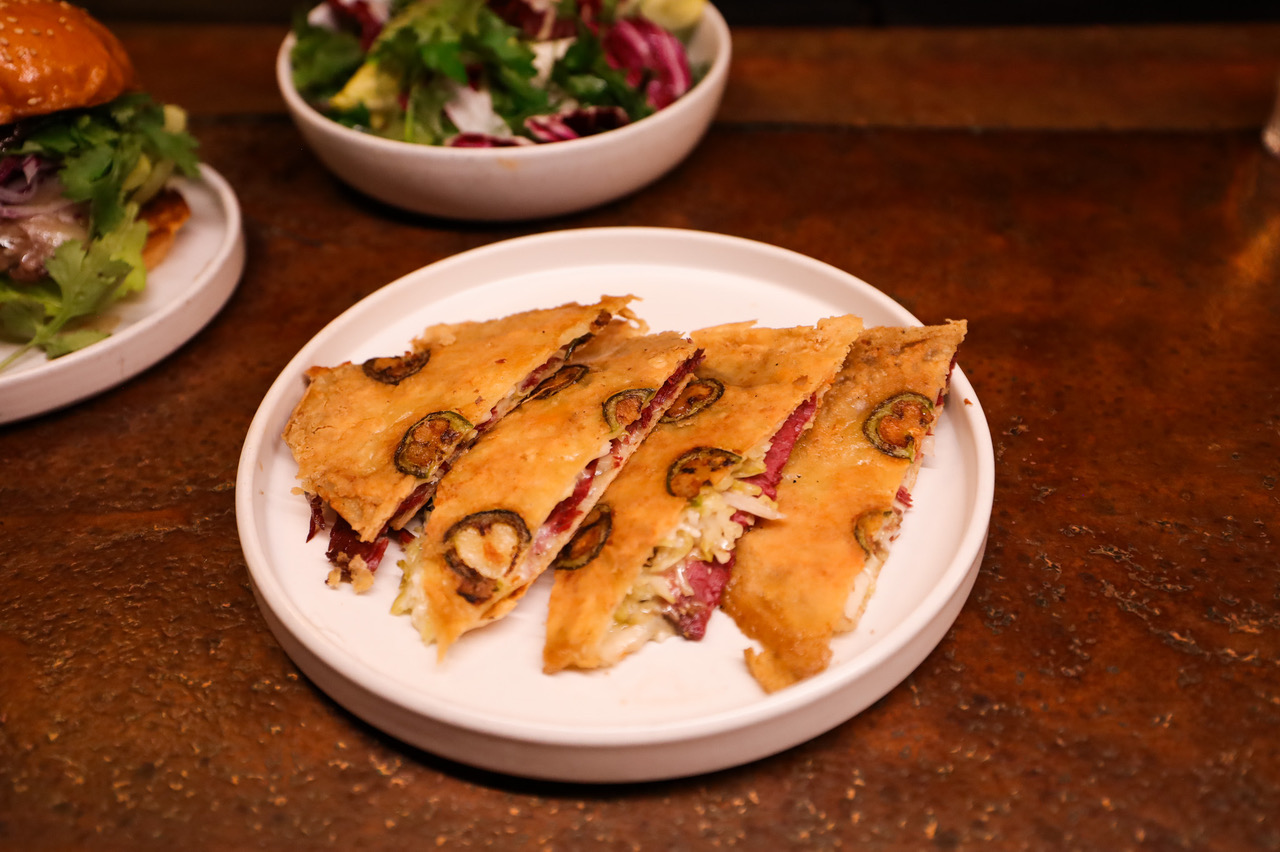

Wagyu Pastrami Quesadilla
“We made this dish for the first time for an engagement party. Someone there had had a reuben quesadilla in Chicago and they wanted us to recreate it. When we do a reuben at Jeff’s Table, it has a Gruyere crisp inside. But you can’t put crispy cheese inside a quesadilla because it gets too soft, so we put it on the outside. We added jalapeño to nod to the street food burritos here in L.A. — Lowkey Burritos used to serve a cheesy jalapeño-studded wrap that I loved. So we have Gruyere and jalapeño on the outside of our quesadilla.
The Russian dressing features my handmade chile crisp. I’ve been making my own chile crisp for ten years in small batches, and now I make gallons of it every week. My chile crisp has a smoky component from either smoked paprika or a chipotle. We use it in our Russian dressing both at Jeff’s Table and at Oy Bar, so there’s also a Jewish-Chinese element there. We also use aioli instead of mayo so there’s French technique mixed in with all of these other cuisines.
We make our own pastrami from scratch. It has Szechuan peppercorn, chiles and toasted Thai black peppercorns, so it’s got a slightly different black pepper flavor than the Jewish version does. But coriander is the core pastrami spice and it’s one of those bridge flavors that makes me think of Southeast Asian food, too. When we brine our pastrami we use cinnamon which is common, and star anise which is not. There’s also a bit of toasted orange peel in my pastrami spice coating. It might remind you of a Chinese orange beef dish. That’s intentional, even if you don’t always taste it.
For our tortillas we use La Chapalita. They’re a very reliable producer of flour tortillas; not too heavy or too thin. For the cheese inside we do a mixture of three-month aged Comte and jack. It’s a good balance of flavor without too much sharpness. It’s cooked on a plancha and then a bit in the oven to melt the cheese all the way.”
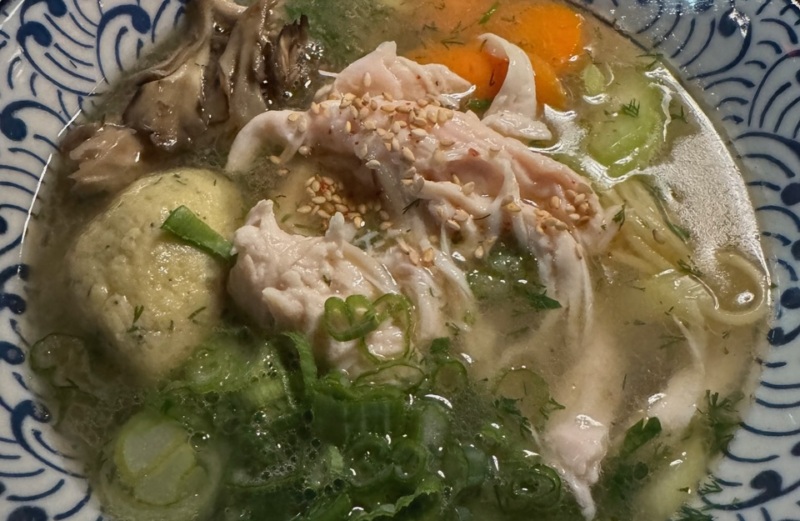
Matzo Ball Ramen
“We opened the pop-up with this dish. My whole life, every time I’d go to a deli, I’d always get matzo ball soup. I’m also obsessed with ramen. I used to gussy up Cup of Noodles when I was a kid. But I started having real ramen later on in life, going around eating ramen across L.A. And I always make meals out of leftovers after Thanksgiving. So one year I decided I would do matzo ball ramen. When I opened Jeff’s Table, I started doing it there. It was one of the most emblematic dishes in terms of how I think about food.
We almost always use a deeply concentrated chicken stock (using Mary’s or Jidori chicken when it’s available), cooked simply with no aromatics. We make a tare, which is a Japanese approach to concentrating flavor and umami, usually using meat or stock. We often use katsuobushi, dried bonito, and chicken feet to add extra gelatin, richness, and texture to the stock. All of that creates this rich, velvety texture and flavor that matzo ball soup doesn’t have, but ramen does.
The matzo ball never varies. It’s a classic, dense Jewish Passover matzo ball. It’s not trying to be lighter and fluffier in any way. It’s made with chicken fat, matzo meal, eggs, and lots of dill. We garnish it with shiitake and maitake mushrooms and other ingredients that find themselves in other Asian soups. We add lots of scallion, which is one of those bridge flavors between Japanese and Jewish food that belongs in both places. For our ramen noodles, we use Sapporo from Sun Noodle — we like a thicker noodle so they don’t get mushy in the broth.”
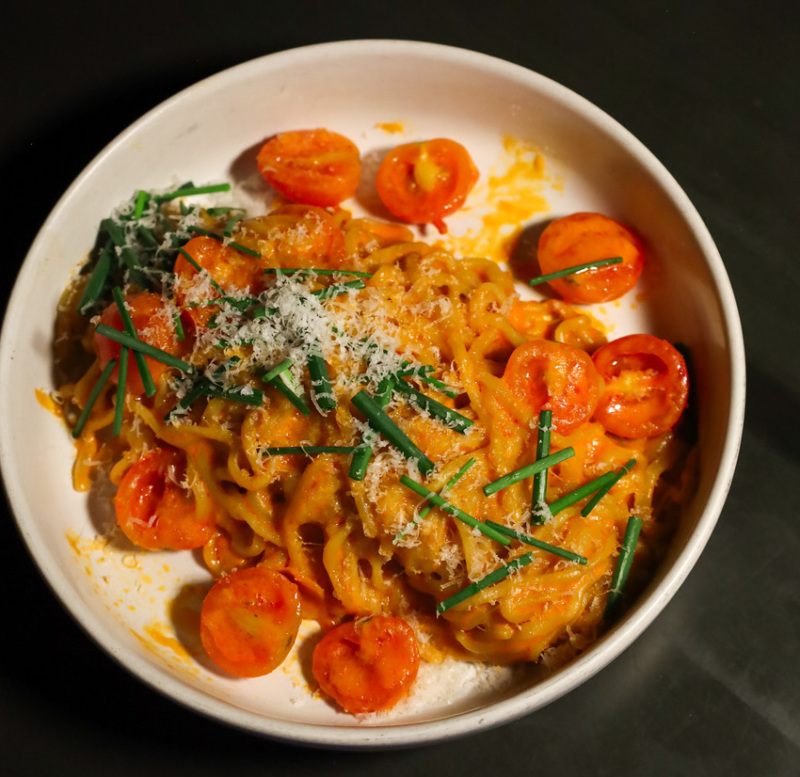
Spicy Noodz
“This came about because we have the ramen noodles in house and I had a chef that had been at a Michelin-starred pasta bar who was my right hand at the time. He suggested we do a tomato noodle, using our ramen noodles and a combination of sun-dried and fresh tomatoes, and a little bit of garlic sauteed in a pan. I tried them and said: ‘They’re delicious but we need another element. Let’s try the oil from our chile crisp and treat this like the Calabrian chile oil and see what happens.’
It’s a spectacular and memorable spicy noodle dish that reminds me of childhood in this lovely way. The buttery tomato noodle surprises you with its warm enveloping flavors. You’re surprised and delighted to find the Asian flavor in there. It quickly became one of our most popular dishes, there was an outcry when we took it off the menu. It’s delightfully easy to make, and you can add shrimp to it for more protein. Sometimes it doesn’t need to be complicated to be magic.”