The Welcome Return of the Thick Burger
Published:
Los Angeles is a burger town.
To be sure, the burger wasn’t invented in Southern California, but the cheeseburger is said to have been created here in the 1920s. Two decades later, Southern California took the common burger stand and turned it into the modern fast food chain (see: McDonald’s, In-N-Out, Fatburger, et al.), perfecting our ideal hamburger for the post-war years.
Over the last decade or so, however, a different style of burger took over the city: the smash burger. For a time, it seemed every new shop in L.A. was slinging a thin, crispy patty that leaned all the way into the Maillard reaction. And, for a time, we loved it. But now, the pendulum is swinging back. To stand out in a sea of smash, you have to build up. Go thick. In other words, the bar burger (also known as a bistro burger) is making a comeback.
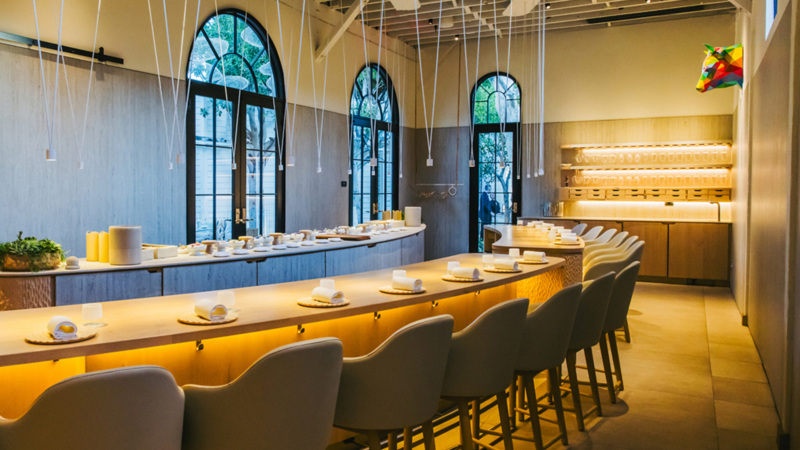
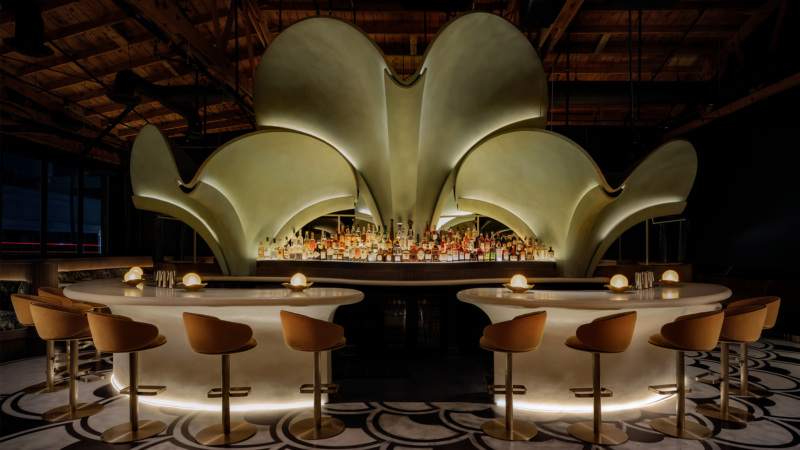
That’s why every Tuesday night, around 9:30 p.m., the few seats at Bar 109 in Melrose Hill suddenly fill up with a buzz of hungry guests. The cocktail lounge—which fronts chef Brian Baik’s tasting menu restaurant Corridor 109—serves an off-menu bar burger once a week that has quickly become a hit. It’s eight ounces of charcoal-grilled Australian Wagyu beef, basted with clarified butter, topped with American cheese and housemade “Mac” sauce (a sweet, tangy Big Mac-style sauce), on a pillowy potato bun from local baker Bub and Grandma’s.
Eating Baik’s bar burger feels downright luxurious. Each bite is juicy, meaty, and hits with just the right amount of tang. It doesn’t feel like food slung from the window of a drive-thru; it’s instead something to savor and share with friends. The inspiration for the burger, according to Baik, comes from his days cooking in Manhattan. After shifts at Sushi Noz on the Upper East Side, Baik would walk over to burger institution J.G. Melon for a late-night fix. As he says, “a big ol’ burger when you’re hungry still brings a smile to your face.”
MORE FROM RESY

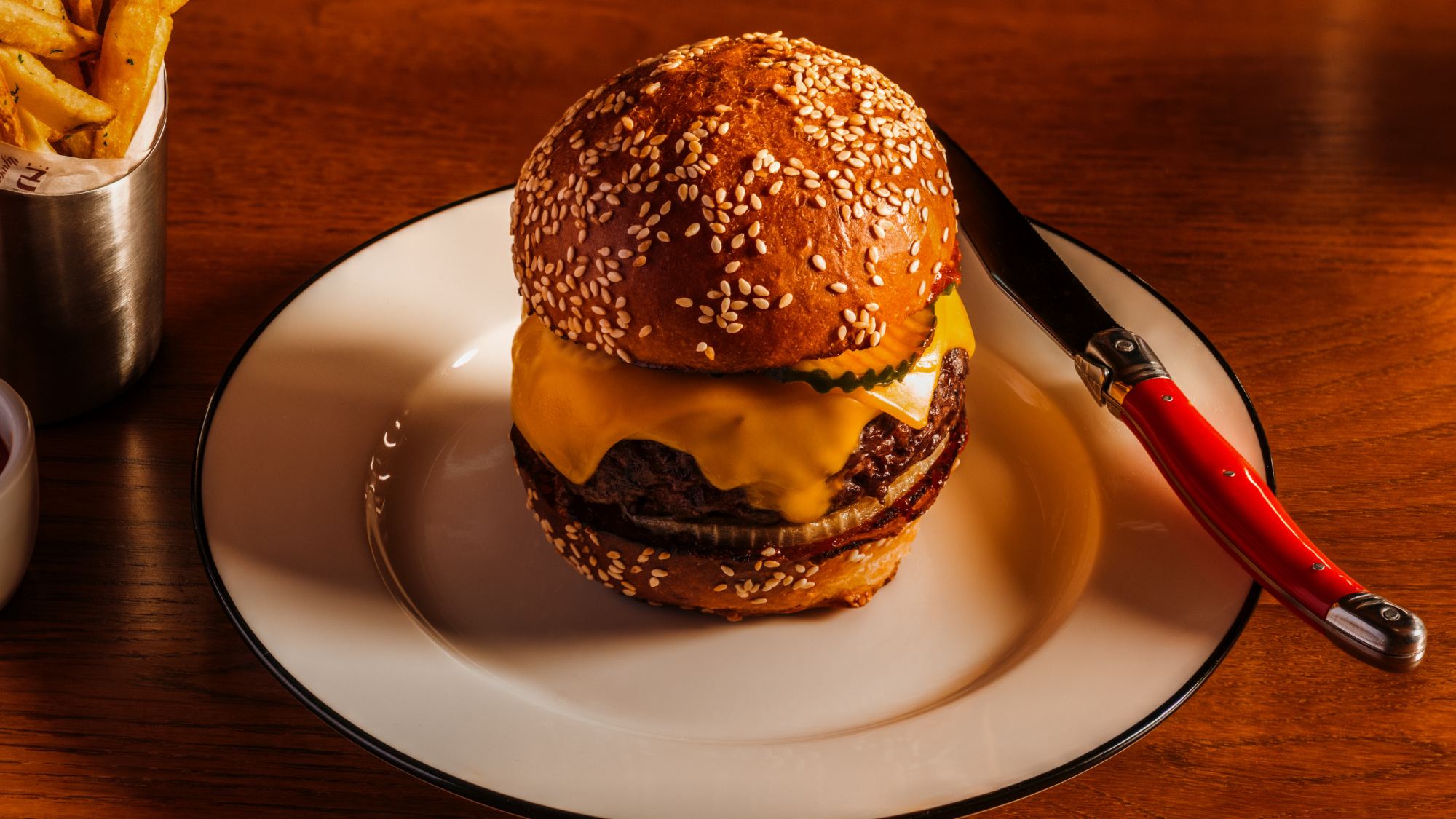
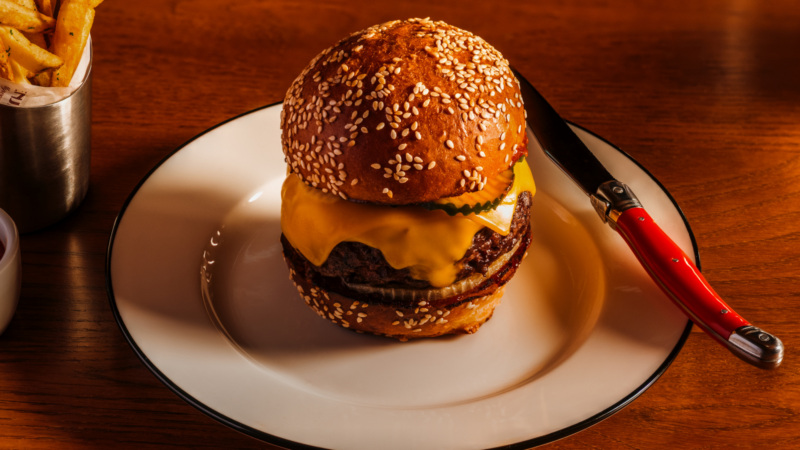
A smashburger is a very specific thing with a very specific flavor profile—it’s more about the sensation of biting into a thin, caramelized patty fused to cheese and bun. A bar burger, on the other hand, is a blank canvas. Use top quality beef and cook it to let the flavors shine through, then top it with whatever creative, playful ideas you have.
“A smash burger, you’re pretty much just overcooking the meat, and it’s more about texture than it is about how good that meat is,” says chef David Kolender of Hermon’s, the newest opening from Last Word Hospitality. “When you go into bigger bistro burgers, it’s really about how well you can cook it, how you can season it, and how good your product is.”
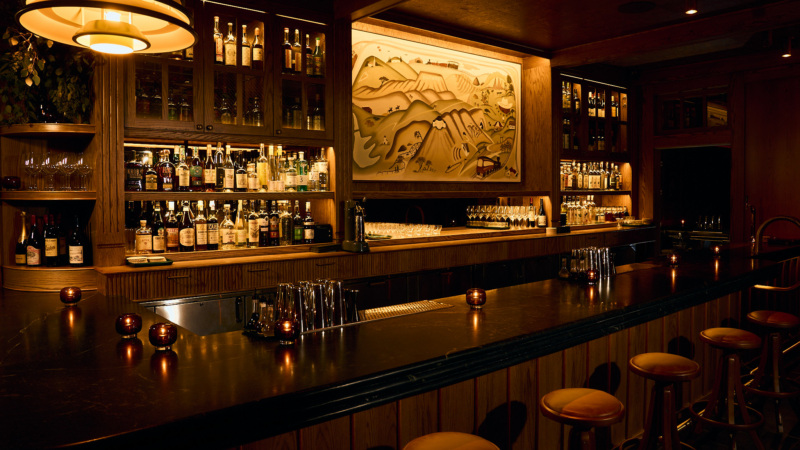
Kolender’s Chez Burger at Hermon’s is a six-ounce beef patty, topped with a soubise fondue sauce that folds onions and cream with black peppercorns and pickled green peppercorns, adding a note of an au poivre sauce. It offers a familiar kick of nostalgia. That was intentional: “I wanted to make you think you’ve had this before, but it’s fresh and new,” says Kolender. The central question guiding his development was, “How can we make a present-day taste feel like a memory?”
For chef Jeff Strauss of Oy Bar in Studio City, burgers are the perfect encapsulation of his culinary ethos, which blends Japanese and Ashkenazi Jewish foods. As he says, the burgers needed to be “something you could only get here as tribute to Los Angeles. And something that reflected the kind of ‘cultural/culinary conversation’ that I think food is.” To achieve this, Strauss slathers hoisin ketchup on the Oy Burger, while the G/OG Burger gets shisho-pickled onions with horseradish creme fraiche.
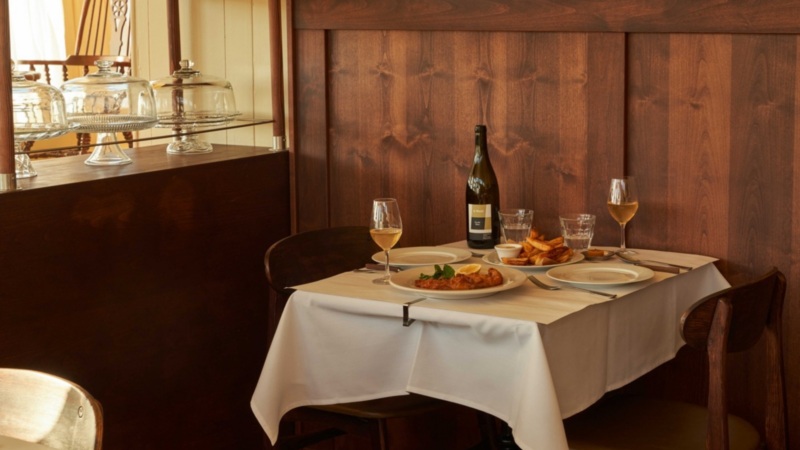
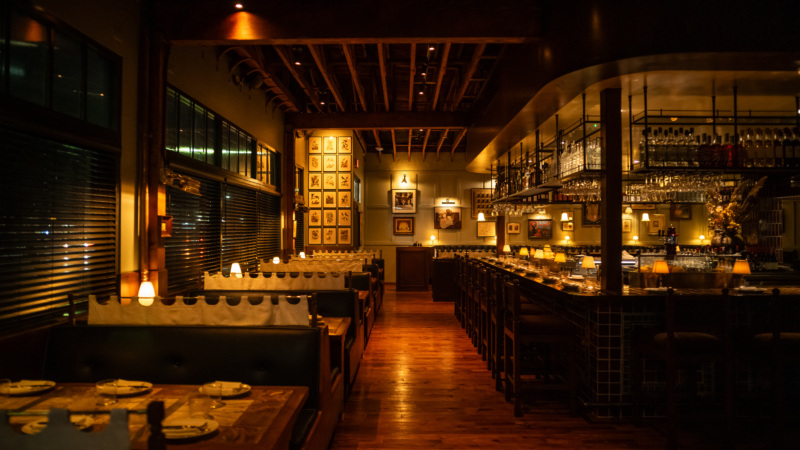
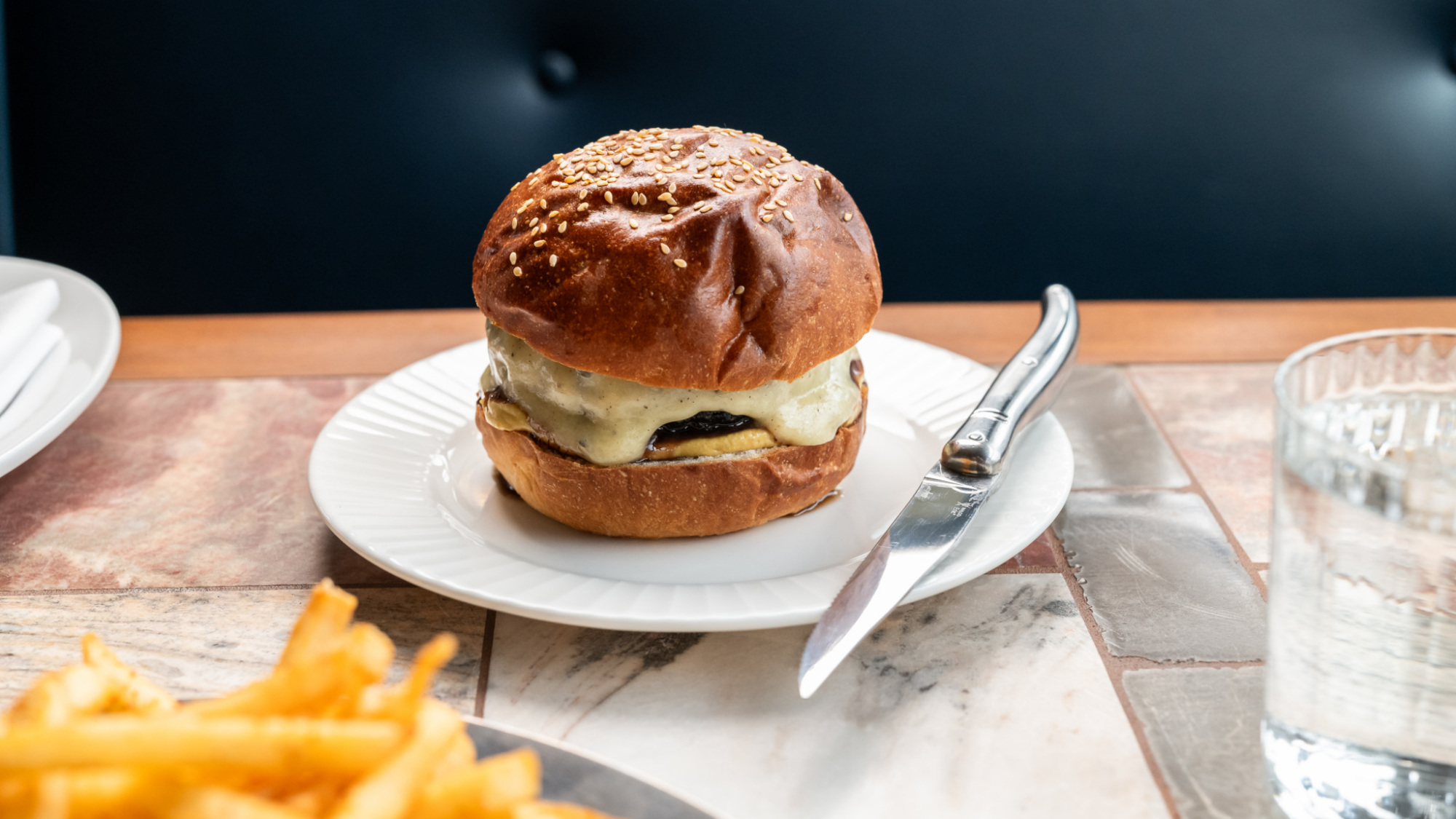
At The Benjamin in Hollywood, the eponymous burger is more a vehicle to transport diners. Cozying up in an Art Deco-styled booth here is a throwback to Old Hollywood charm and three-martini lunches, and the Benjamin Burger fits right into that vision of the elevated bar of yore. The burger is a thick patty left pink in the middle, topped with New School American cheese and appropriately thick slices of onion and pickles. A smattering of hickory sauce adds a rich smokiness, and the whole enterprise is held together with a seeded sesame bun, made in-house, that’s nearly as large as the fixings between it.
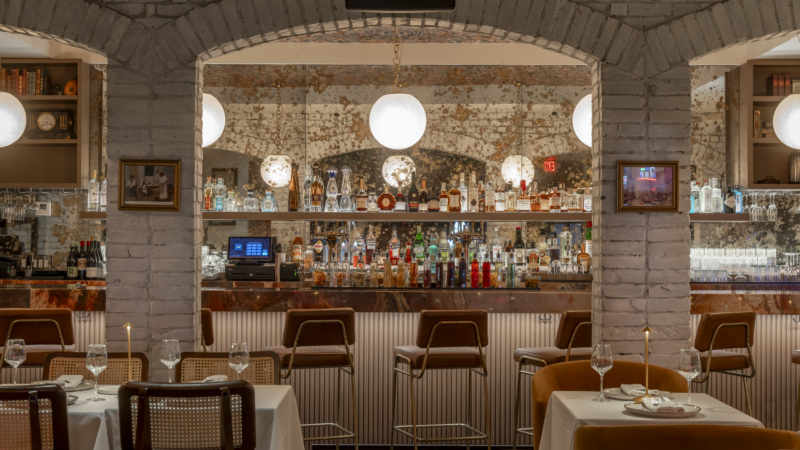
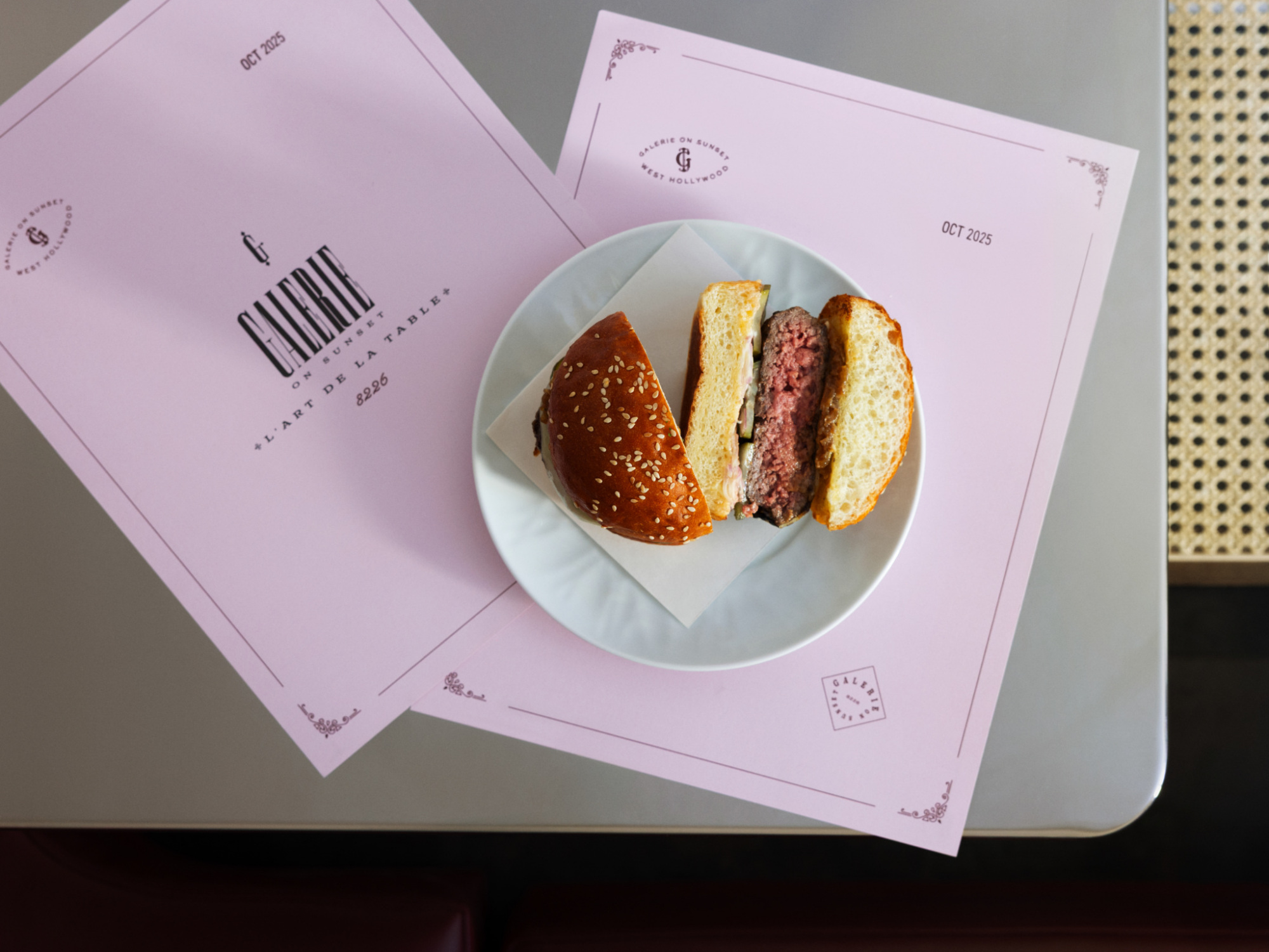
Over at Galerie on Sunset, chef Gabriel Lindsey’s burger evokes a Parisian bistro. The patty is made of ground beef shoulder, topped with a burger sauce meant to taste like French onion soup (it uses caramelized onion, beef stock, Worcestershire, roasted garlic, and fermented black garlic). “With a smash burger, the appeal is that intense crust-to-meat ratio and a quick, high-heat cook,” says Lindsey. “A bistro-style burger is a slower, more intentional moment at the table.”
Ultimately, the move to the thick bar burger mirrors our desire for dining out to feel like a capital-E event. If we’re spending more on a restaurant meal, we want every part of it to feel like an experience. Decor that is immersive and tells a story. Service that anticipates our every need. And food that goes well beyond anything we would make at home. A bar burger may cost more, but eating one can transport you to a dimly lit bistro in Paris; or the Hollywood power lunches of bygone eras. Plus, a thick burger gives a chef room to express themselves, rather than (ahem) flattening everything into a predictable flavor and texture.
L.A.’s embrace of the bar burger heralds a celebration of the dining experience and the joys of a night out. Southern California may have invented fast food, but the return of the bar burger is helping usher in an era of the slow meal.