Stars Is Here to Prove Wine Bars Are Having Their Best Moment Yet
Published:
This arguably was the year when the barrier between wine bars and restaurants finally came down, for good. The wine bar could function as a restaurant, while still giving people a place to grab a drink. A restaurant could just offer up a good glass or two, without having diners commit to a full meal. This all seemed so settled.
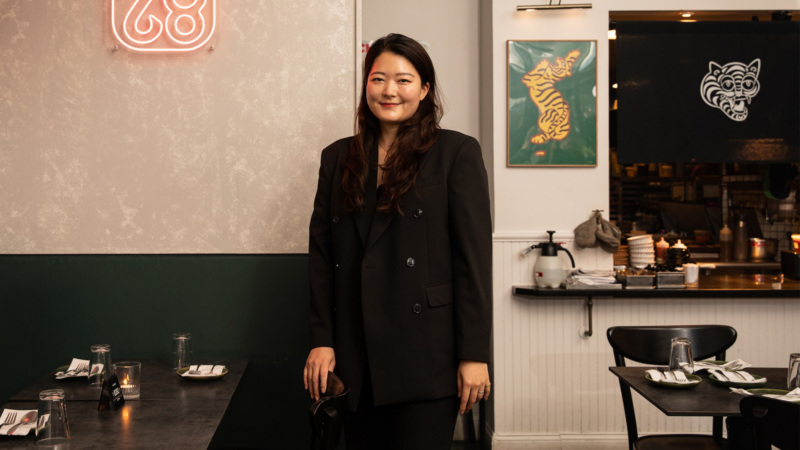
Which makes it all the more curious why Chase Sinzer and Joshua Pinsky, the team behind Claud and Penny, two of New York’s bigger hits in recent years, decided to go completely in the other direction with Stars, their latest effort, which opens Friday, Dec. 12 on 12th Street near Third Avenue in the East Village.
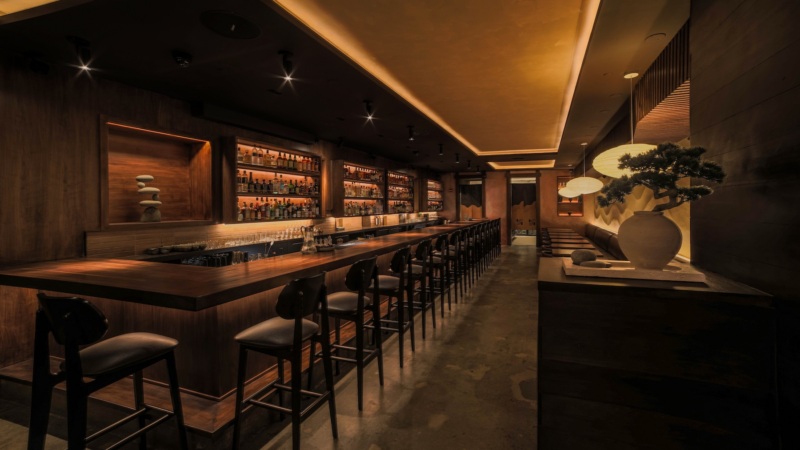
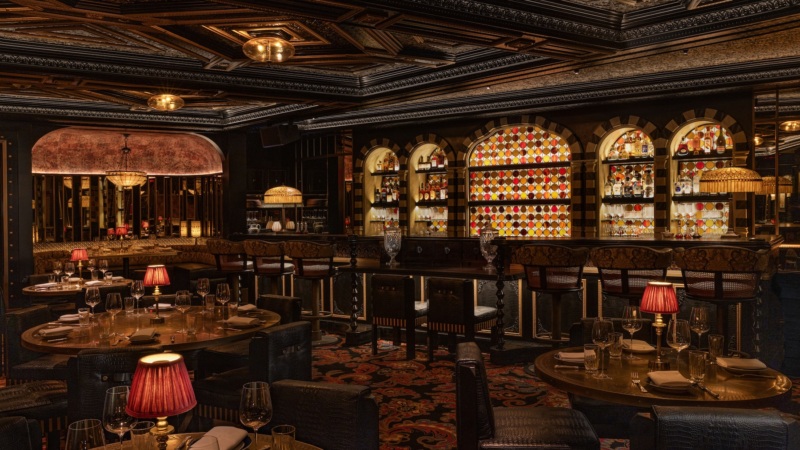
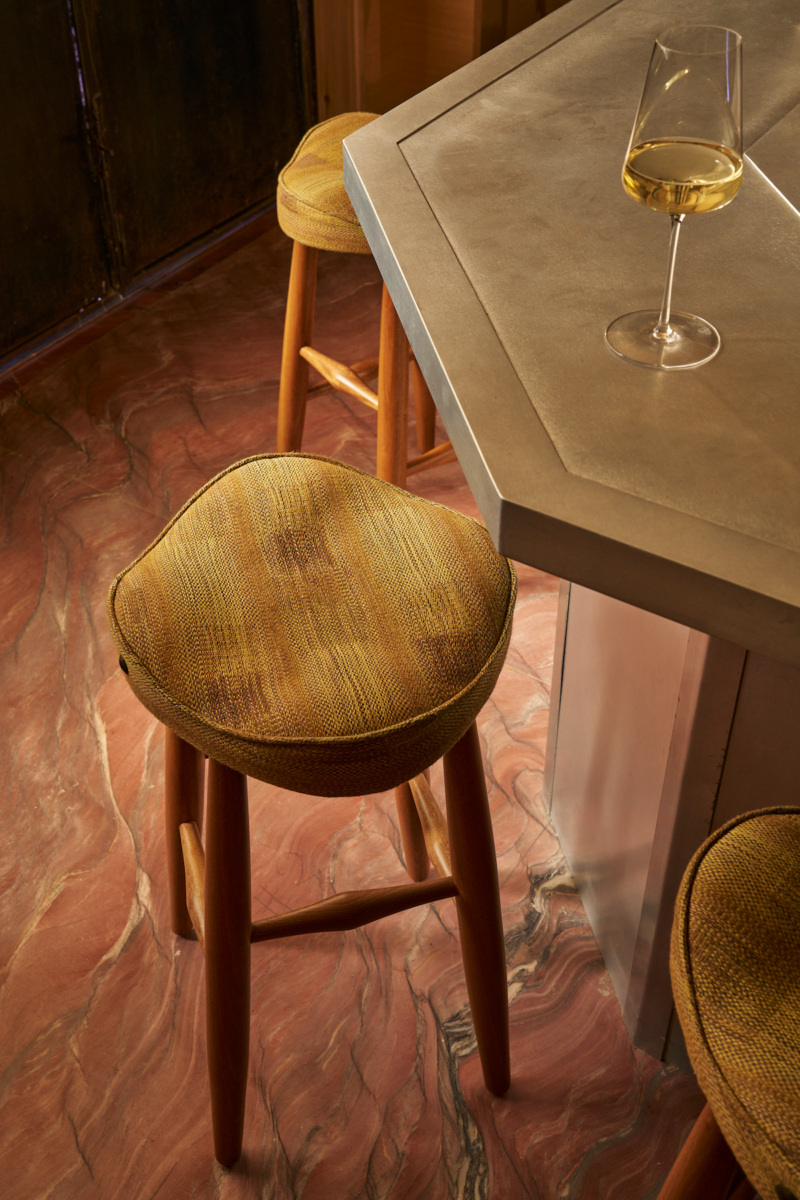
Stars is very much wine bar as wine bar: just a dozen seats around its U-shaped zinc bar, plus a bit more room to stand. The design, by Studio Valle de Valle, feels modish enough but very much in that minimal format that, again, indicates this is somewhere to come, drink for a spell, and move on. The menu has just nine snack-sized plates and a single dessert (butterscotch pudding), and while it could make for a good grazeable meal, it’s a far cry from the more substantial approach they’ve taken at their other restaurants. It also is walk-ins only, which provides a good balance for the team’s other two restaurants, both a three-minute walk away.
If the approach seems to throw back to an earlier era for wine bars, that might just be Sinzer’s vision of the wine bar serving a distinct purpose. It might be that they have two nearby restaurants for heartier appetites. But also, it nods to a longer tradition in their East Village neighborhood — as with the original location of Terroir, which owner Paul Grieco opened in 2008, in a postage stamp of a space just two blocks east.
Much like Terroir, the list Sinzer and his team, particularly wine director Julia Schwartz, have compiled for Stars is a prodigious 50-page wine list, no matter its minuscule physical footprint. As with the other spots, it encompasses a lot of iconic producers (Dard & Ribo and Thierry Allemand in the Rhône, the Mascarellos and Rinaldis in Piedmont), leaning to the Old World but with no shortage of California and elsewhere.

Most notably, Sinzer and Schwartz headline the list with several pages of notably well-priced wines — 88 bottles at $88 or less. Stars isn’t the first spot to pursue this approach; the San Francisco restaurant Cotogna debuted in 2011 with a list of 40 bottles at $40 — but for New York in 2025, when wine prices tend to be eye-popping, it’s a bold statement indeed. More than 20 of the bar’s by-the-glass options range in price from $11 to $19 each, too.
But that seems very much to be the gestalt of Stars — to take back a bit of wine populism, at least for those who want it — which is to say that Sinzer will also happily sell you a $2,550 bottle of Dujac Clos de la Roche (2005) if that’s more your speed. The point, he insists, is that a wine bar today needs to meet people where they’re at. That might be a simple drink and a snack. It might be a long lingering over a special bottle. And, crucially, it might be over a glass of something nonalcoholic, given how much NA beverages have permeated restaurant culture.
We recently sat down with Sinzer to discuss the state of the wine bar today, the state of wine culture in New York, and how a bit of ego death among sommeliers has made things a lot more fun for everyone else.
This interview has been lightly edited for length and clarity.
RESY: If Paul Grieco stepped in here, his first response would be, there’s so much f—- space.
Chase Sinzer: Dude. This is 450 square feet.
Which is about what Terroir East Village was.
Exactly.
The tiny space points to one of the key topics I’ve been on lately. I feel like there are no great economic answers today for New York restaurants. There’s little tiny gem places, where the numbers work, and there’s really big places where the numbers might work.
And yet, this concept of a small, compact wine bar is killing it across the country. We were putting together our top restaurants collection, and there’s this huge drumbeat of “Oh, nobody’s drinking.” But it’s not that people aren’t drinking, especially Gen Z. It’s that they want to drink in places that reflect their aesthetic, and they want to drink things that reflect their aesthetic.
I love that you’re starting there because for me the answer is, it’s almost not about alcohol, it’s about the experience. I was with somebody at Penny the other night who was super in the wine game for a long time, and they’re sitting there drinking a very traditional bottle, an old bottle of Chablis. And he was like, “Sorry.” And I was like, “What are you saying you’re sorry for? Look around. This seat is two glasses of sherry. That seat is a bottle of skin contact [wine]. That seat is a bottle of Red Burgundy.” All these people are drinking, but they all feel comfortable. They’re just chilling.
It’s interesting because to me, for so long it was, how do we teach people how and what to drink? How do we bring them into the wine fold? I don’t think that hurdle exists anymore.
Maybe we learned the answer is, we listen to what they want. I was taught that quickly. I was right on the edge, I think, right at the end of, we need to teach people about red Burgundy or red Bordeaux …
The era of, “I’m the somm and I’m a Very Important Person” …
I am the somm and I’m the center of this place. It’s cool because, if somebody leaves here saying, I went to that place and I wanted X, I went to that place, I wanted Y, they all felt that they drank well. And they all felt that it wasn’t, “Nah, you should try this” — unless you asked for that. That’s the only thing people want. And as an industry we learned that too late. But now we’re like, it works.

I actually think restaurants are ahead of the wine industry overall on this. Maybe it’s because you see the money impact much more quickly. But I think the wine industry generally is still processing what you’re talking about — they’re freaking out, and can’t understand why wines aren’t moving. So maybe the answer is, yes, there are structural changes, but the structural changes aren’t that no one’s drinking anymore.
At the risk of sounding corny, the people that are most worried are those Excel spreadsheet, big business, Sancerre places. And zero disrespect, do your thing. The corniness factor is, when you open a 12- to 48-seat restaurant, which is our bandwidth, you’re doing it out of a love of a game. Our only obsession is, what does this person want to drink? How do they come back, and how do we develop regulars? The amount of people that have been with us since the beginning of Claud is the whole show. And it’s not me. It’s the people that work with us that decide to keep working for Josh and I. They’ve built these Rolodexes. They’re mini old-school maître d’s. That’s what they are. It’s amazing.
OK, let’s start back at the top: 2025 New York. You have two wine-focused places. What makes you say, “What we should do is really open a third. Let’s franchise this!”
The need for me was, how do I lean into the experience that I see people wanting at Claud and Penny. They’re about having a meal. And when I was going out and looking at spaces, I didn’t see anybody not drinking. I saw them seeking out wine, especially, and seeking out a place that was about wine. And then when this space popped up, it looked like that to me.
But I would also say, people are looking for a place that is about them, in a sense. I’m thinking of Lei and Annie Shi, who’s killed it this year. But it could also be Ha’s Snack Bar. There’s this proliferation of wine bars that are very personal and very focused, very much about meeting people where they’re at. About aesthetics that don’t feel like capital-W, capital-B wine bar.
For sure. And I think that’s the art of it. These are concepts that are almost the opposite of the dogmatic. These are concepts rooted in the process of the stop-by. And I think you need the right team to do those because you’re not just shepherding someone through an experience, you’re listening to what they want. And I really do think that’s the central thesis of being a sommelier.
This place is almost a physical representation of what being hospitable is about. Somebody could sit down and say, I only want two NA glasses and one snack, or they could sit over there and have a very, very fancy bottle of wine, and they could sit over there and talk to us for a long time about different vintages of Radikon. And we can do all of that here, and we’re happy to do all of it because it’s all based on vino. That was the idea.
So how does that translate for the neighborhood? My sister used to live a block from here, and in her day it was about going to Bar Veloce. In this part of the East Village, there have long been places that do what you’re describing. Is that sense of meeting you where you’re at just baked into this neighborhood?
We ended up in this neighborhood because I truly love the East Village. It also is very central. In terms of how I think about a neighborhood, I think about affordability, because it means that whoever wants that experience is able to have it. And the numbers we use have a lot of thought and weight behind them. If you [offer] an $11 glass of wine, then almost anybody that goes out in New York can come to your place. It doesn’t preclude us from offering other things at different price points, but it enables people to not feel left out. And if the first couple pages of your wine list are wines [where] we’re like, OK, this is our creative limit: 88 under $88. And every day we’re going to reprint it with a date and be like, “This is what we think is cool.” Then the rest of the list can be stuff we’ve invested in over time.
But this is front and center for the neighborhood. I hope people are like, “Oh dude, can you meet me at Stars at 4:15? I have a meeting at five and I want to have a beer.” Game on.
Tell me more about 88 for $88.
[When setting prices] I only end wines in three numbers: zero, five, and eight. It’s an old conversation between [The Modern’s former wine director Michael] Engelmann and myself. I never price anything between $100 and $120. We go $98, whatever. Just all these weird math things. Then I was like, $88 is possible, I can do it. It doesn’t have to be $100. Everybody always says, oh, under $100. Well for some people, $98 is a good chunk of money. When you get to $80, people are like, OK, I can do that. And we were like, we can get this many wines. We were looking at Spain, Italy, Germany, and we were like, we can totally do this. And it can be stuff that tastes good, and we make the right amount of money. We have five wines, I think, under $50. Let’s rock it.
It’s also double luck. Eighty-eight. If Annie steals it for Lei, I think that’s totally fair. But also, the concept seems to poke a hole in this New York 2025 concept that wine markups have to be high in order to cover your bills. That sometimes feels like the old argument that Napa Cab makers used to make, about why their wine couldn’t be a cent less than $125. “It’s just the cost of business.” Clearly in your head, there are other ways at this.
That’s the phrase, there’s other ways at this. We have three people in each restaurant dedicated to wine, three people in the bar dedicated to wine. That’s a huge investment in today’s world. We have less than 100 seats in all three concepts. Two restaurants, one bar, nine people on the wine team. And myself. We know we have to make money. We are a business. That doesn’t mean there’s not an extreme art to this. We’re buying from auctions, we’re buying from private collections, we’re buying from wholesale. We’re looking at where any human being can buy wine. We’re sourcing it amongst nine people and saying, OK, what are the economics behind the restaurant? How does wine fit in? And it’s essential for us.
Does it mean we take way less margins than other people? Yeah, for sure. On the high end especially. I hope that’s how we get through the reality of the economics — extreme attention to detail and spreading out the responsibility.

All that said, especially with younger customers, I don’t think there is the same price sensitivity there used to be. They don’t want to feel like they’re being taken advantage of, but they’re not freaked out by a wine that’s not cheap. Maybe people are drinking less, and not in a bad way. They’ll get friends together and they’ll get a bottle, and it’s about the experience.
A hundred percent. And I think it depends on the person. There’s guests we have who will open the list and it’s all about the price they’re looking for. They don’t need to talk to the somm. They see a name they like and they order. There’s guests who are going to be like, whoa, I want to look through this thing for an hour. But that’s the best part about this little space. We can have ’em all here drinking wine. That’s what we want.
What are some wines you’re excited to work with?
The wines that come to mind are the 88 under $88. For one thing, California is so interesting at the moment. Scar of the Sea. Or Bedrock. I see the attention to detail that Morgan [Twain-Peterson of Bedrock] and Chris [Cottrell] put into things. And I see the price and I’m like, I could pour this at $18 a glass. I don’t really understand how more people can’t make that happen. Raúl Moreno [from Andalucia] I’m super into in the moment. Saalwachter sylvaner. I think that wine’s banging,
You and Nikita [Malhotra of Smithereens] are going to have to fight over that one.
Does she like it a lot?
She adores it.
See, that’s so interesting because that’s a wine for me that feels quite reference-y. It’s a reductive-style neutral grape [like chardonnay]. And I drink mostly reductive-style neutral grapes. I like this wine a lot. And I’ve been at Lei, where they poured me German Chardonnay. It was like $58 on the list, and it was delicious, and we were like, this is chardonnay, not from Burgundy, that tastes like Burgundy.
The barrier for a wine like that, or any of the ones you’re describing, it’s just not there today. I legitimately do think COVID broke it. I still haven’t even figured out how.
Non-wine obsessed guests? Dude, they’re down for anything. And I think back to my early days. People were very like, do you have Bordeaux? And I was like, no, we’re at Maialino, there’s only Italian wine here. And now, you’re at Claud, and they’re having a full dinner, and they’re like, it could be cool to have some macerated pinot gris from Germany. And you’re like, what? Why are you so cool? How did this happen? I don’t know, maybe it doesn’t happen outside of New York.
I mean maybe not everywhere, but I do think it’s kind of everywhere. My dime-store theory is that every generation wants to claim something that is not what their parents drank. And now that’s real easy, because what Gen Z’s parents drank was Boomer wine.
Yeah, exactly.
Serving not-Boomer wine is really easy.
Exactly. And that’s a really cool thought. Because people that drink Boomer wine — which, we know the names you’re talking about — they know what they’re going to get when they come to the restaurant, they’ll look through vintages or vineyards and they’re like, that’s what I want. We’re game on. Other people are like, could you just give me anything else? And you’re like, for sure, dude, we’ve got thousands of wines. They’re just here to ask, “What do you guys think is delicious right now?”
It’s a bit like where there’s interest in Burgundy today, which is entirely around the edges. That’s exciting to me. It’s where I live in my drinking.
Right, like the Hautes Côtes. And look, I don’t need to know the crus of Gevrey-Chambertin. If my dad collected wine when it didn’t cost as much, I want to drink something that’s different. If I’m going to be in Burgundy, I’m going to be in Marsannay. And that’s what makes the first couple pages of our list fun.


Tell me a little about the food at Stars.
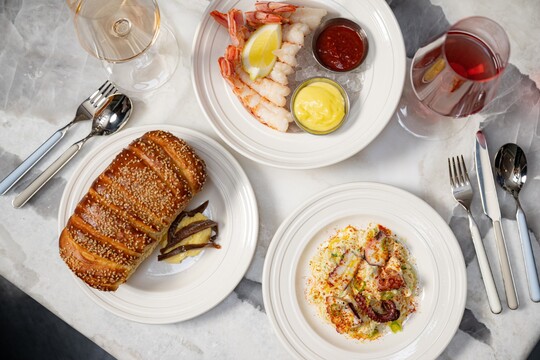
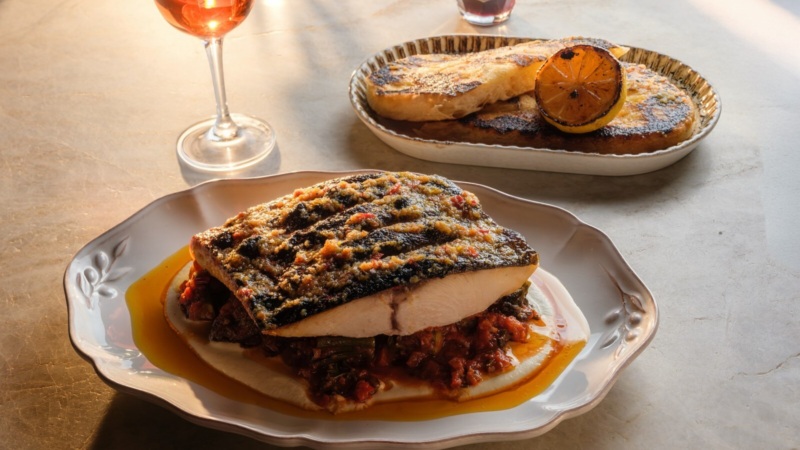
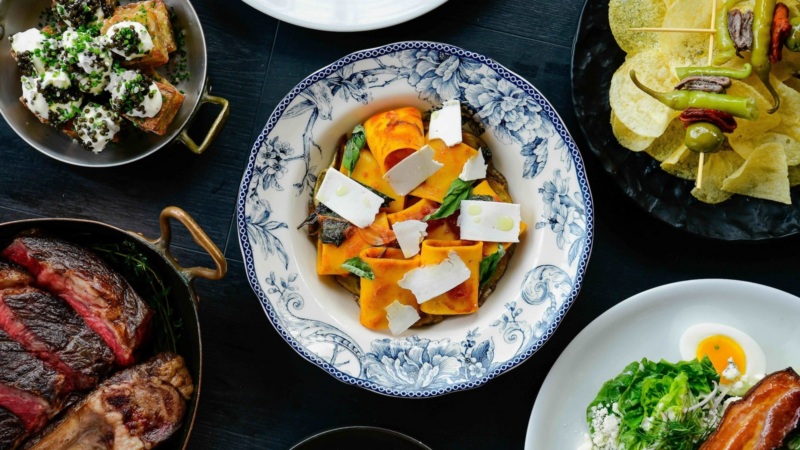
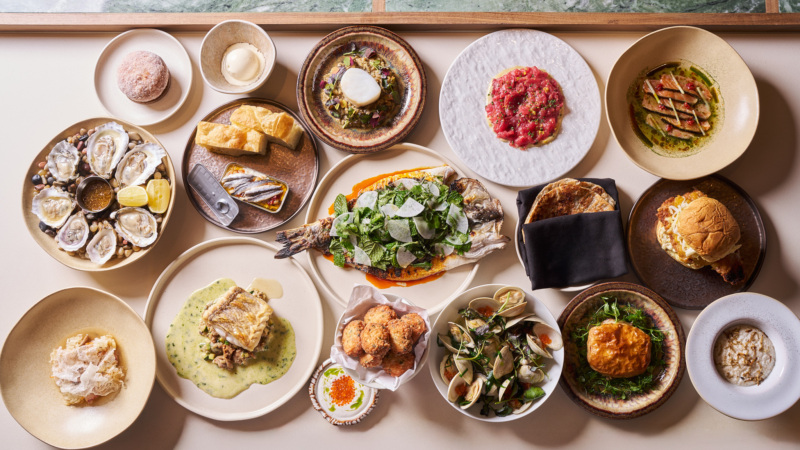
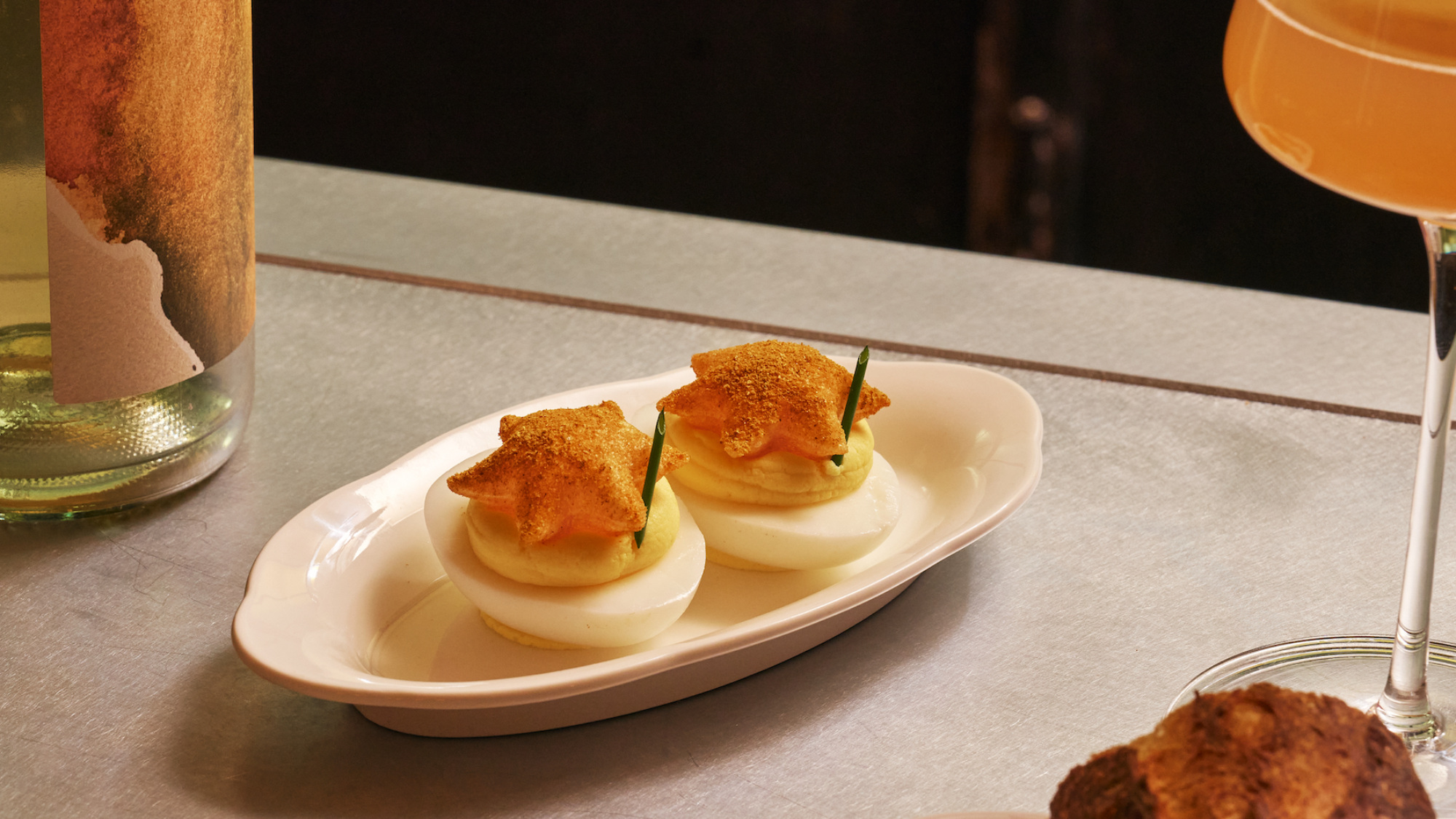
It’s snacks. Here’s a good example. This is the largest plate in the restaurant [holds up a plate]. I think it’s 5 and 7/8 inches. So, nine snacks, savory. One dessert. There’s pickled apples, there’s frico, from Friuli. There’s a little griddled shrimp toast sandwich. There’s marinated vegetables. There’s two cheeses every day. It’s about accompanying wine. We put a lot of time into it, but it’s really simple and, I think, delicious.
Interesting, because most food on the wine bar front right now is a little more substantial. Not that it has to be, but you can build a full meal. For Stars, is it just that if people want that, they have two other restaurants of yours they can go to?
I think that that is true, but I also think the fun intellectual exercise for me is taking a genre, loving what anybody else does within it, and then thinking about what the words mean to me. If I think of just the two words, wine bar, I think about a place where people don’t get a full meal, where they go to have a wine experience and accompany that with a few snacks. They may be standing up. Maybe I’m wedged in a corner of the room talking to someone, and the wait’s 30 minutes. I just see this moving thing. I don’t see fork, knife, cutting, ordering anything medium rare.
If you’re walking this neighborhood, and you think I want to have dinner, I would be honored if anybody thought of doing that at Penny or Claud. But if you’re traveling, and you get in late and you’re like, dude, I just want to smash a bottle of wine, I want you to come here and you realize you haven’t eaten, and you get some little stuffed peppers with a toothpick, great. But I want you to think about this place for a bottle of wine.
What is the fuller beverage situation? I’m looking over there and I see …
Yep. Miller High Life. There’s a few others. Suarez beer, which I love. Sake. Sochu. The High Life will become a Spaghett, which Julia is really excited about. We don’t have a full liquor license, so we’ll have a a riff on a Tuxedo No. 2. And then most importantly nowadays, part of having something for everyone, is six NA options. We have ferments using oolong. I mean, the amount of deliciousness that people pack into real beverages that have no booze in them now is unbelievably cool to me. Instead of an Arnold Palmer.
An Arnold Palmer is pretty full of flavor.
Delicious, dude. When I was golfing, in high school, bro, I would be like, could I put vodka in?
How has NA impacted your role?
In total honesty, we have not seen that sense of replacement. We’ve seen the addition. So many people will come in and have an NA beverage to start. [My wife] Phoebe [Ng] is such a great example of this. For every two glasses of wine I have, she probably has one and then an NA drink. I do think for wine directors, it’s been like, OK, let’s put another creative limitation on ourselves. We can’t just serve awesome wines by the glass. We’ve also got to serve beers we think are fun and delicious, plus NA beverages that fit for everybody. Why not? It’s awesome.
Thinking a little more big picture, going into 2026, where do you think dining is going to go?
I think the main thrust is still going to be away from dogma, and toward personal choice, and experiences.
So, personal, but not imposed.
I have zero things to add to that phrase. The personal is not authoritarian. The personal is not dogmatic, it’s not dictatorial. The personal is heartfelt and it’s almost that they want to see the emotional side [of a restaurant]. Danny Meyer was a pretty smart guy. He saw, before so many people, that people wanted to come to a place and be able to say, this person is super nice to me and they care about what I want. He made personal places that didn’t impose. I think it felt revolutionary in 1985 and yet in 2025 we’re still talking about it as a trend.
The reason I wanted to do this job in New York? It was to learn with people that were amazing. And I think the measure of how good you are at hospitality is when people expect the most from you and you over-deliver. It’s the best I ever feel in my life. Like creating this place, and then having somebody come here and be in a bad mood, and watching that transformation happen. Coolest s— in the world. Can’t think of anything better. It’s my jam. Here, it’s about wine. Maybe somebody comes in and they’re the most jaded wine person ever and they just have a good experience for some reason. Not necessarily because of the list, but maybe because of the song that’s playing. Not the song, maybe the list. Whatever.
Stars is open from 4 p.m. to midnight Tuesday through Saturday, and accepts walk-ins only.
Jon Bonné is Resy’s managing editor, a two-time James Beard Award winner, and author of “The New French Wine” and other books. Follow him on Instagram. Follow Resy, too.