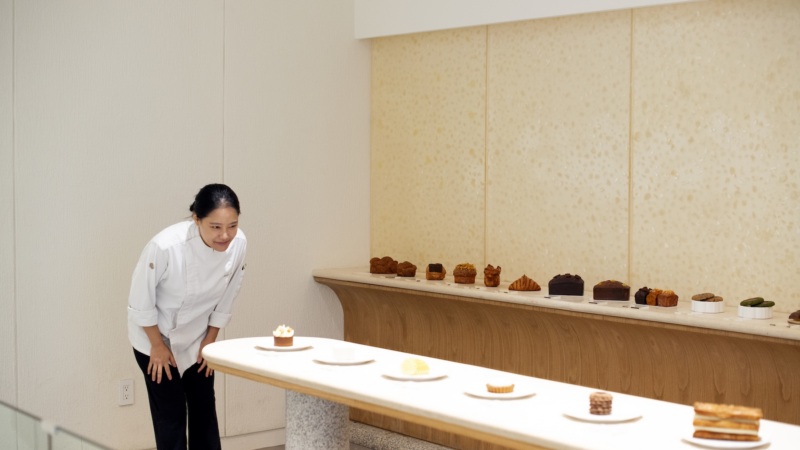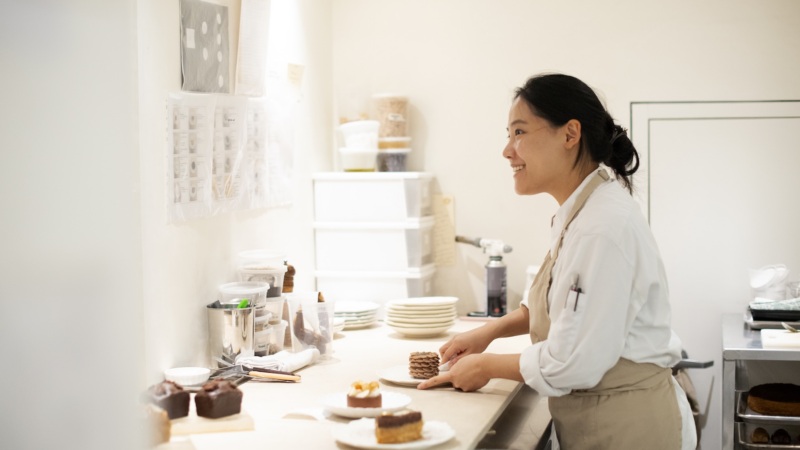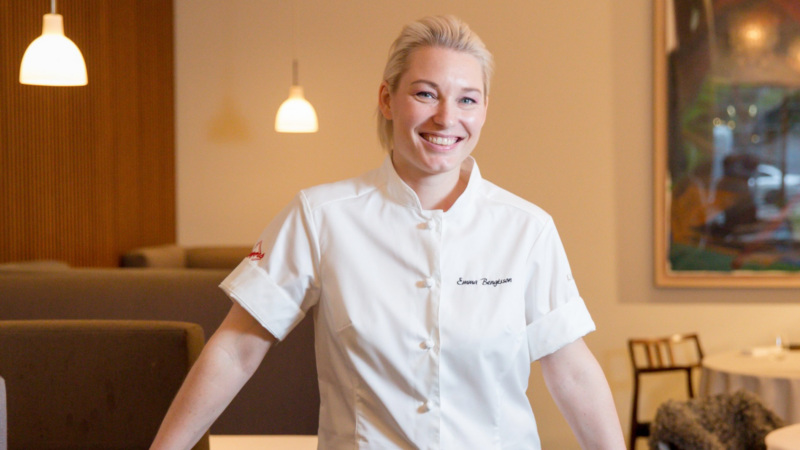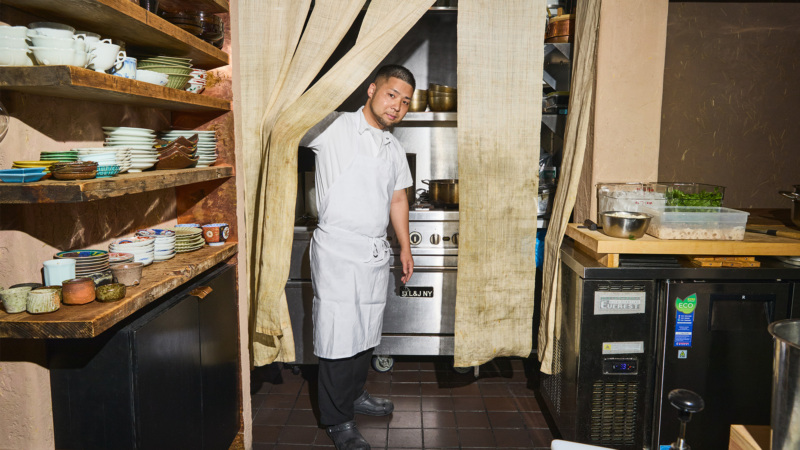
Eunji Lee at Lysée. Photo by Michael Harlan Turkell for Resy

Behind the LineNew York

Nine Hours at Lysée, New York’s Singular Fine Art Dessert Gallery

Published:

If you’ve ever wondered what it’s like behind the scenes of a restaurant, this is for you. In Behind the Line, photojournalists take you inside the kitchen for a unique perspective on everything that goes into a single day of service, and the people who make it all happen.

In this edition, we get a glimpse into a day at New York’s Lysée, from photographer and journalist Michael Harlan Turkell.


Becoming an artist in New York City is unyielding. To see an artist at work is an exceptional honor. As someone who’s interested in process just as much as the final product, I couldn’t think of anyone working in the sweeter side that was emblematic of this acknowledgement than Eunji Lee.

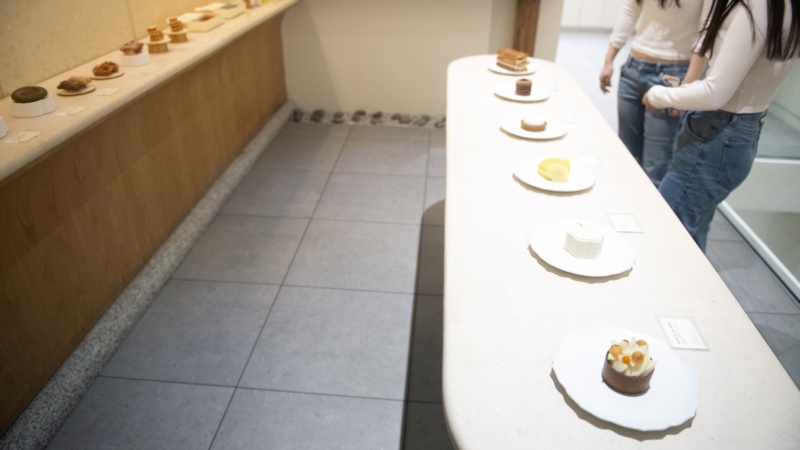
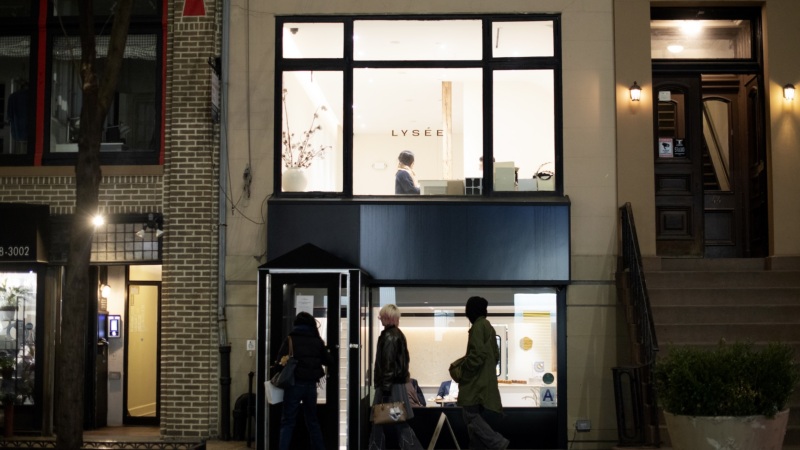
At chef Lee’s Lysée, a two-tiered studio space on East 21st Street in Manhattan, there’s an entire gallery of desserts on display at the upstairs café — a culinary atelier all her own. Downstairs, it’s a tour de force: In a small dining room, they serve a prix-fixe multi-course tasting drawn from Lee’s own biography, building upon the saccharine salons of Manhattan’s early aughts, places like Room 4 Dessert, Pong, and ChikaLicious.

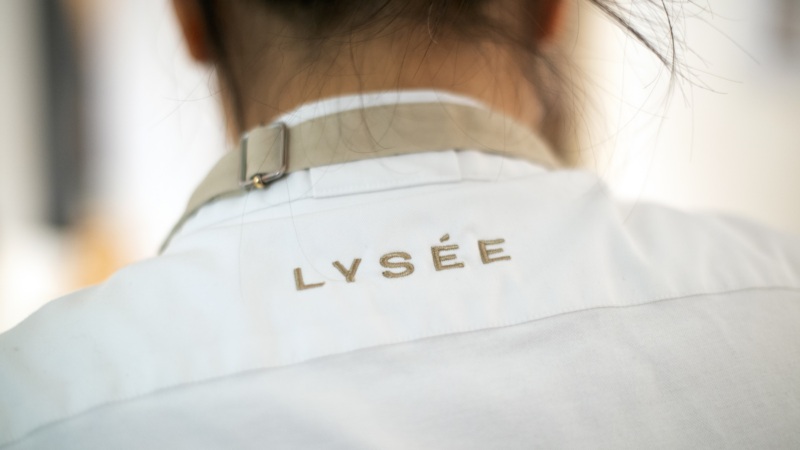
Born in South Korea, Lee trained in France for more than a decade, working for chef Alain Ducasse at Le Meurice in Paris for four years, under the prolific (and now Instagram famous) pastry chef Cédric Grolet. She moved to New York in 2016 to run the pastry program at Michelin-starred Korean restaurant Jungsik. And finally, in 2022, she opened Lysée, with her husband and business partner, Matthieu Lobry. Lysée is a portmanteau of musée, the French word for museum, and Lee’s last name.

Lee is quiet and concentrated, her food more subtle than splashy, yet profound with interior depth. With Lysée, she has recast what refined desserts can be — it’s an exploration of excellence that’s excited critics and is approachable enough for the quotidian croissant. It’s this simple mastery that’s garnered her a Food & Wine Best New Chef accolade (2023) and multiple James Beard Awards nominations. This month, she debuted a new weekly tasting menu experience, reserved for just 16 guests on Thursday evenings, combining savory bites and her signature plated desserts, influenced heavily by the regional purveyors with whom Lee works most closely.

Since Lysée opened nearly four years ago, it has since become a destination showroom for the next wave of pastry’s art nouveau in New York City, and I wanted to get a glimpse into how it pulls that off, by visiting on a wintry Friday.


Photo by Michael Harlan Turkell for Resy

9:46 a.m.

Even though I thought I arrived early, just after 9 a.m., I hear that the chefs started well before sunrise, already beginning to apply finishing touches, like gold leaf, that are tweezered on the V.I.C. (Very Important Chocolate Cake).

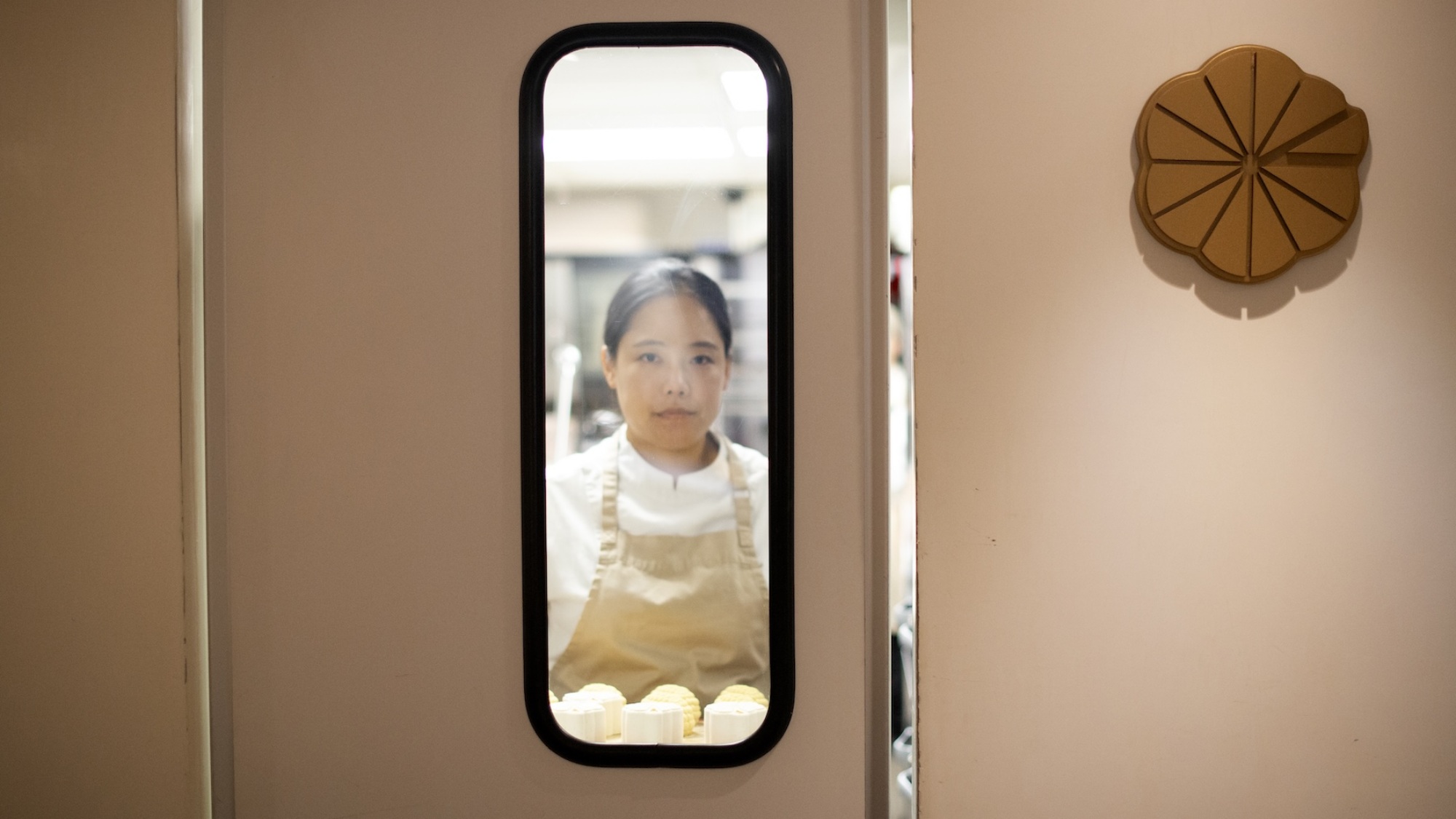
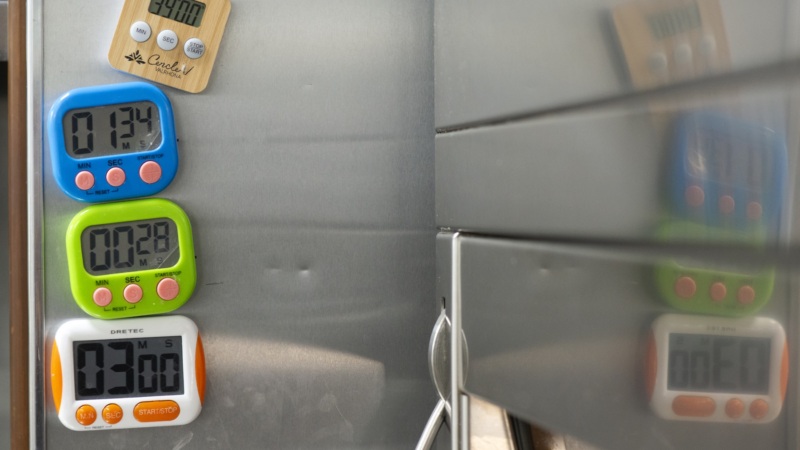
I find many of the chefs downstairs, behind a single set of double Dutch doors that leads into a small, boxy back-of-house, densely populated by pastry chefs waiting for countless columns of kitchen timers to go off in syncopation. Check to see how the brioche bread is proofing … Time to take the sablés out of the oven … De-pan the madeleines. A lengthy rectangular pale marble island dominates the small kitchen, which takes up much of the room. It’s perfect for chocolate work, and is the sole work surface for everything else, from cutting croissant triangles to slicing slivers of housemade citron preserves.
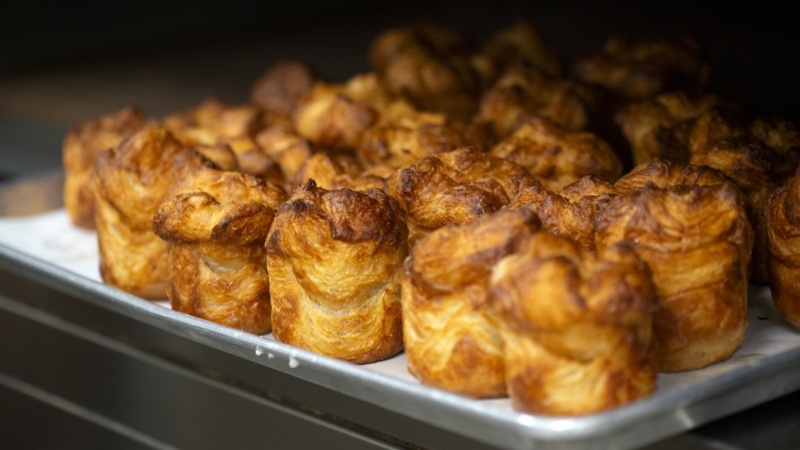
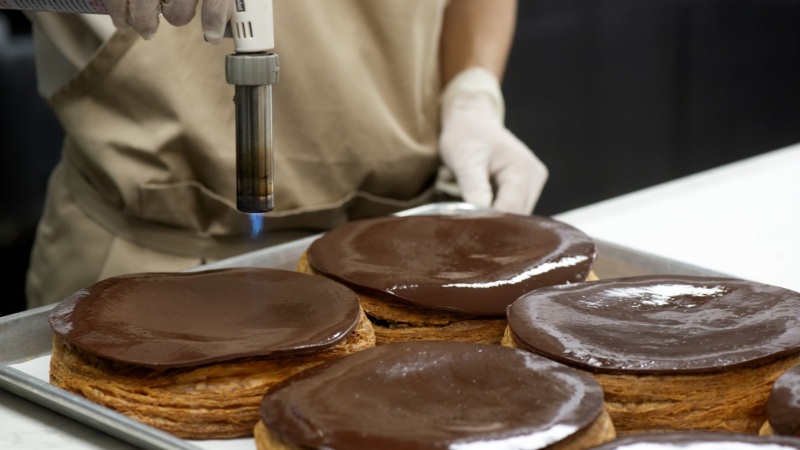
Photo by Michael Harlan Turkell for Resy

Photo by Michael Harlan Turkell for Resy

10:04 a.m.

Weekends are for viennoiserie, and I count myself lucky to be here on a Friday. Lee’s luxurious croissants are layered with French Isigny AOP butter from Normandy, and they’re a study in contrast; shatteringly crunchy, caramelized kouign-amann (seen here), have a center of pillowy brioche, filled in the core with silky corn crémeux (a sweetened, infused cream), and are only available from Friday to Sunday.

Photo by Michael Harlan Turkell for Resy

Photo by Michael Harlan Turkell for Resy

10:05 a.m.

Pastry cook Sungjin Lee is making a limited edition galette des rois (king cake), one of many desserts that’s not only seasonal, but ephemeral in its appearance. For the finishing touch, he places a large chocolate ganache frisbee over the layers of flaky, buttery puff pastry, using a hot air gun to heat it slightly until it drapes over the edges. Finally, a handful of chocolate sablé cookie crumbs are scattered on top, adhering to the softened ganache.
While he’s doing this, I hear the familiar sounds of pastry kitchens, which always have a soundtrack composed of the clattering of stainless-steel drawers; they’re a gearhead’s wonderland: whisks and offset spatulas, handheld immersion blenders, and infrared thermometers for tempering chocolate.

Photo by Michael Harlan Turkell for Resy

Photo by Michael Harlan Turkell for Resy

10:33 a.m.

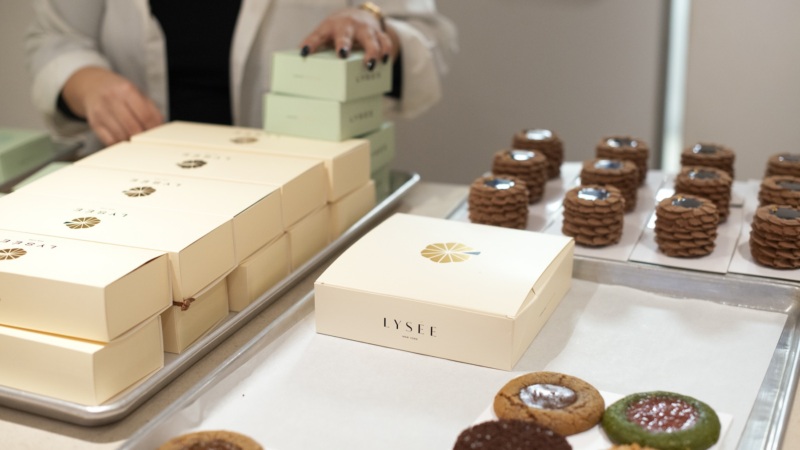
Well before customers really arrive, the front-of-house team is packing pastries for pre-orders. Bountiful boxes are assembled downstairs before being brought to the upstairs café to pick up. Many of the items are curated collections — like a recent quartet of cookies in flavors like matcha strawberry, milk chocolate banana caramel, white chocolate macadamia, and triple chocolate. I see the milk chocolate banana cookie is being sold solo (along with the matcha strawberry cookies), so I sink my teeth in the soft, toasty tropical crunch.
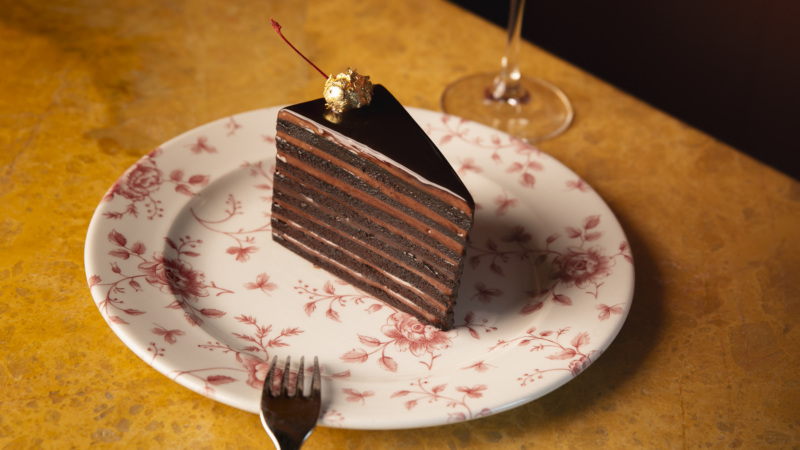
Photo by Michael Harlan Turkell for Resy

Photo by Michael Harlan Turkell for Resy

10:38 a.m.

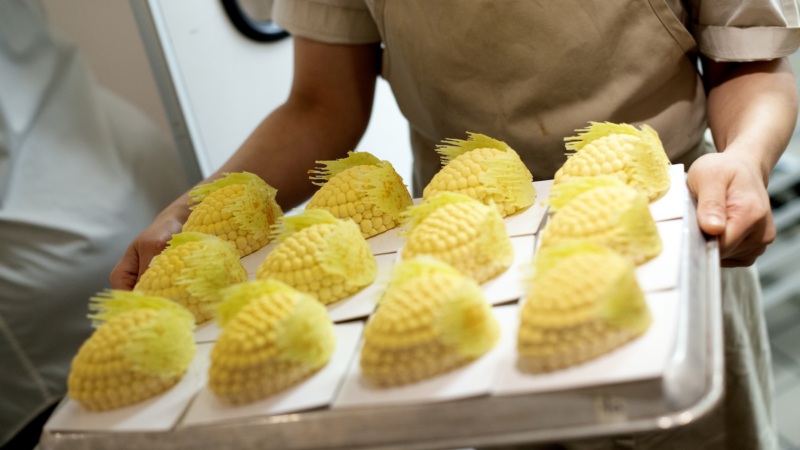
“In Korea, corn snacks are enjoyed around 3 to 4 p.m.,” Lee tells me, reminiscing about the steamed or grilled corn on the cob her mother and grandmother used to make for her. Corn has found a place of prominence at Lysée, too, with more than 50 cobs shucked in the kitchen there every day, an extension of Korea’s profound fascination with corn’s sweet-savoriness, which was bolstered by an influx of canned goods during the 1950s. Lee’s “Corn” has become emblematic of Lysée. Here, a corn mousse cake is fabricated to look like a squat ear of fresh corn. The pastry highlights fresh, roasted, buttered, and dehydrated applications, exhibiting the humble ingredients’ versatility. “Corn is not super intense by itself; I didn’t want to use any other ingredients than corn to reinforce the flavors,” Lee explains.

Photo by Michael Harlan Turkell for Resy

Photo by Michael Harlan Turkell for Resy

10:41 a.m.

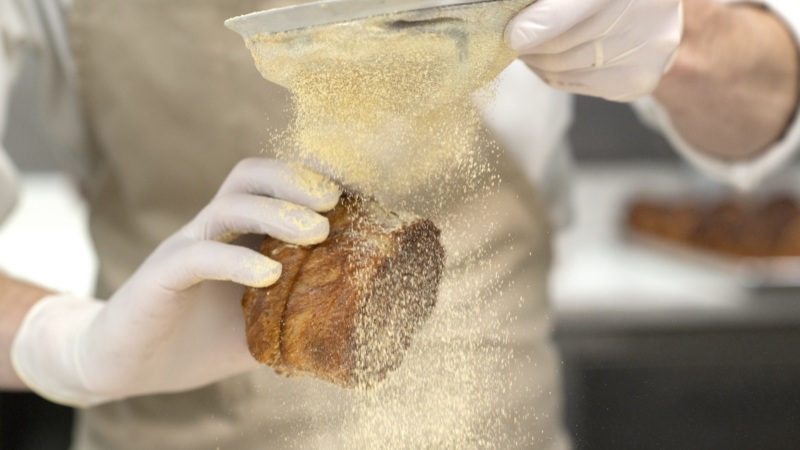
Another paean to corn: This round of brioche has already been filled with corn crémeux, and is now getting a dusting of dehydrated corn powder, with a roasted corn crumble to follow as a crunchy topping.

Photo by Michael Harlan Turkell for Resy

Photo by Michael Harlan Turkell for Resy

10:47 a.m.

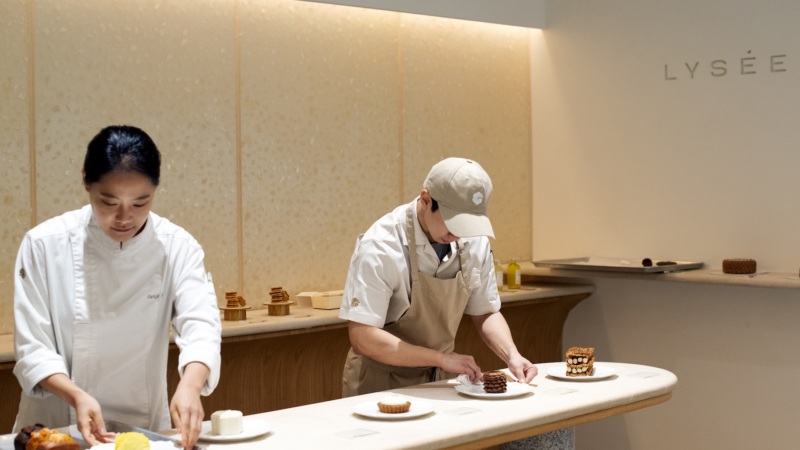
Each morning, Lee and her team choose an exemplary rendition of each pastry, plate it, and display it in the gallery of the second-floor café. At first glance, they seem like classic French pastries, but they’re filled with Korean culture, made for and admired by metropolitan sophisticates.

Photo by Michael Harlan Turkell for Resy

Photo by Michael Harlan Turkell for Resy

11:30 a.m.

Working with a palate of warm tones and earthy ecru, in both product and design, Lysée’s aesthetic extends from the upstairs café to the half dozen two-top tables in the downstairs space and the private dining room which was made to resemble a sarangchae (Korean guest house).

Photo by Michael Harlan Turkell for Resy

Photo by Michael Harlan Turkell for Resy

11:31 a.m.

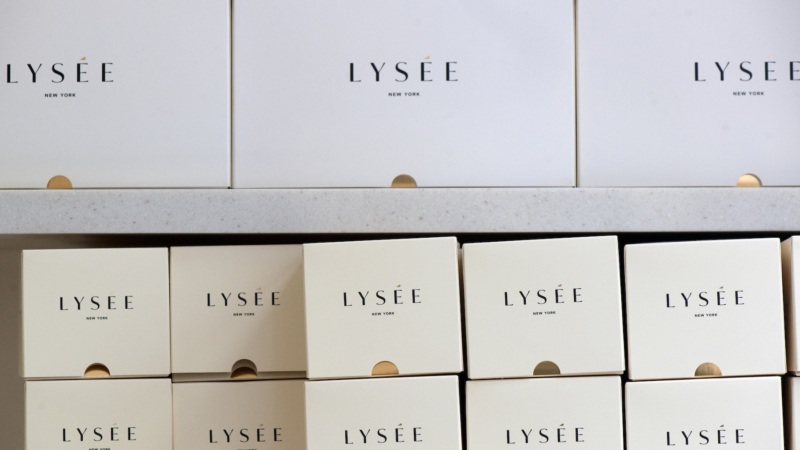
A cluster of custom boxes gets bundled and bought as coveted gifts to go in the upstairs café. They’re constructed as quickly as customers come … soon enough, a queue starts to form, with some customers coming as far as Korea and France, while many others live in the neighborhood and are regulars, picking up their gâteaux de voyage for the road.

Photo by Michael Harlan Turkell for Resy

Photo by Michael Harlan Turkell for Resy

11:32 a.m.

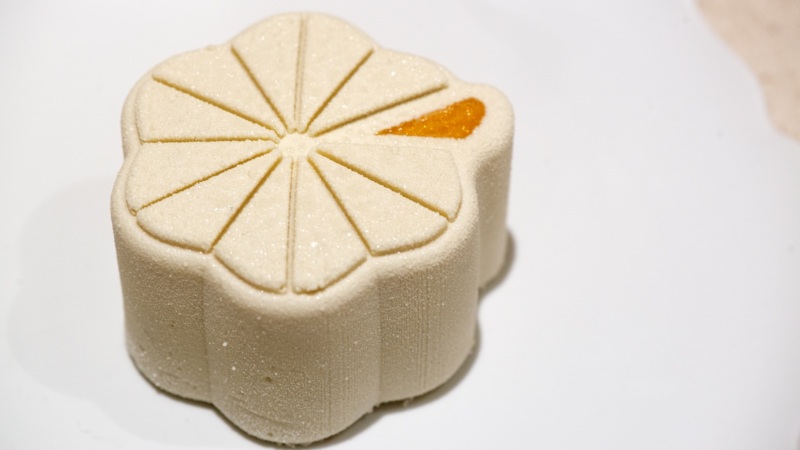
The crystalline exterior of Lee’s signature dish, the Lysée, belies a complex interior in which toasted brown rice mousse meets caramel and layers of pecan sablé, studded like fancy cookie dough bites inside. Served on a custom plate created by South Korean ceramic studio KwangJuYo, it’s a prime example of the curation that has gone into every aspect of Lysée.

Photo by Michael Harlan Turkell for Resy

Photo by Michael Harlan Turkell for Resy

11:37 a.m.

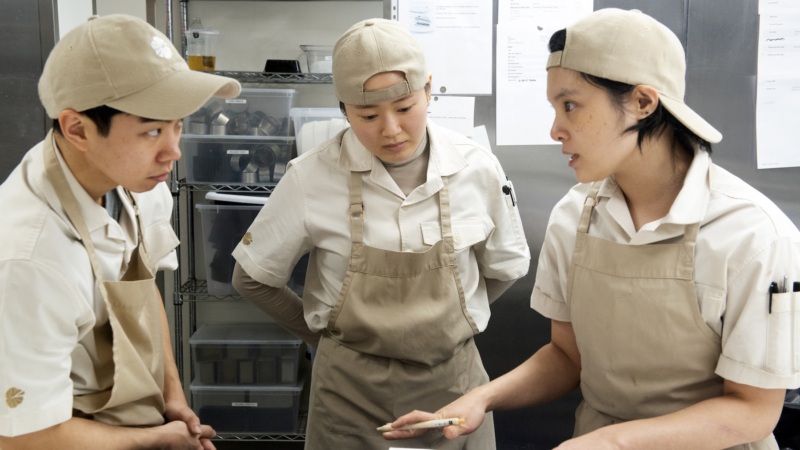
Chefs (from left to right: pastry cook Sungjin Lee, sous chef Sihyeon Ha, and sous chef Annie Lee) do a deep clean of the countertop surface and its surroundings every morning from 11:00 to 11:30 a.m. After lunch, they do a quick check-in before starting prep again for the afternoon.

Photo by Michael Harlan Turkell for Resy

Photo by Michael Harlan Turkell for Resy

12:48 p.m.

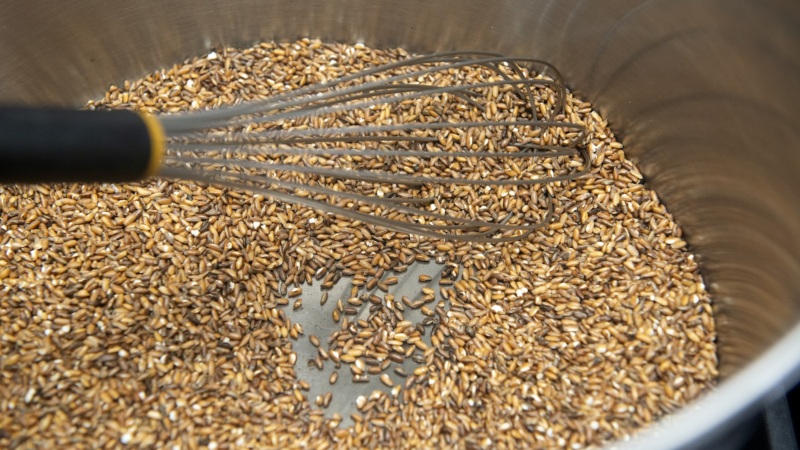
Toasted brown rice is a base flavor that imbues many of Lysée’s desserts, from vanilla bean-infused and -sweetened milks for the signature latte, to the eponymous Lysée pastry. You can also buy the milk on its own, suggested as a side dunk for their milk chocolate banana cookies.

At Lysée, it’s all about the layers of flavors: Madeleines have decadent daechu (jujube) cream piped inside, made from a sweet date-like fruit commonly found in southern Asia. They’re then glazed with the flavors of sujungwa, a Korean cinnamon punch spiked with ginger — the syrup itself is also made into a chai-like latte.

Photo by Michael Harlan Turkell for Resy

Photo by Michael Harlan Turkell for Resy

1:37 p.m.

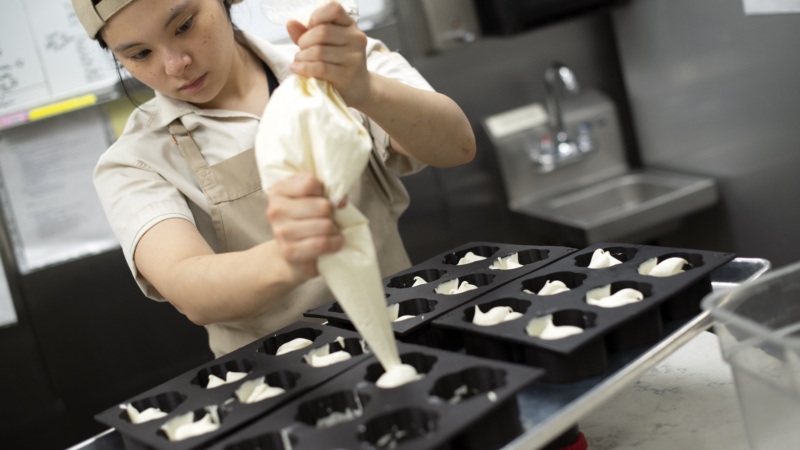
Executive sous chef Annie Lee pipes the Lysée Korean toasted brown rice mousse into custom silicone molds from Paris, which she forcefully tamps down so that there are no air pockets before she layers on the other ingredients.

Photo by Michael Harlan Turkell for Resy

Photo by Michael Harlan Turkell for Resy

2:10 p.m.

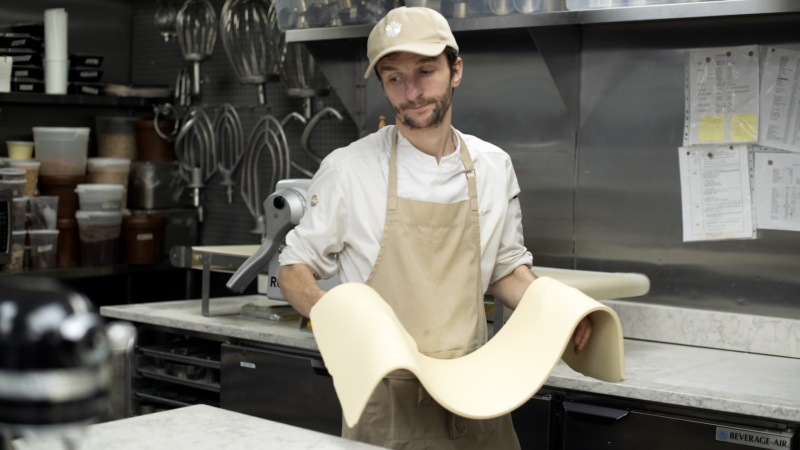
Lee met her husband and partner Matthieu Lobry while working at Le Meurice in Paris. Lobry’s in charge of their dough product, which constantly comes in-and-out of a big Bongard proofer, while laminated doughs defrost on chilled sheet trays. Lobry’s aim is for a fresh-churned butter flavor between each and every layer, running roll after roll through the Rondo Dough-how & More tabletop sheeter. A braided babka round is made with twists of croissant dough, unlike any other babka you may have seen around town, and filled with a homemade pâte à tartiner, Lee’s version of Nutella.

Photo by Michael Harlan Turkell for Resy

Photo by Michael Harlan Turkell for Resy

2:16 p.m.

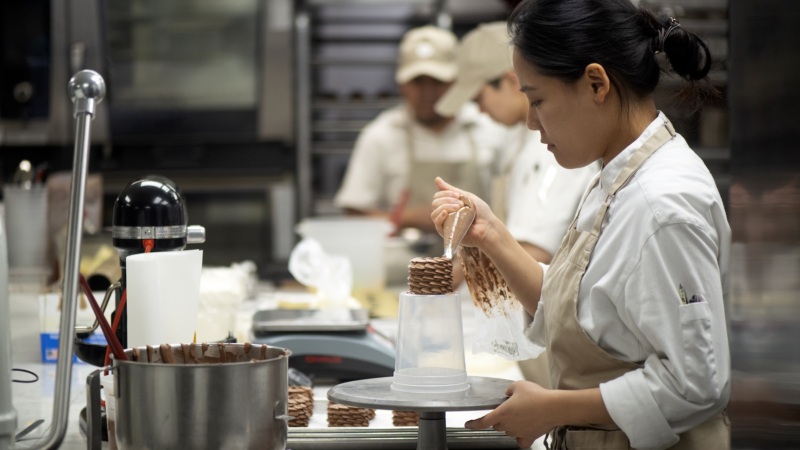
Lee uses a ribbon piping tip to create a ripple effect on the V.I.C. (Very Important Chocolate Cake), which stems from Lee’s love of American steakhouses. The dish is a massive multi-layered chocolate cake, striated with a decadently dark chocolate crémeux atop a dozen or so sponge cake levels. A tingly timut pepper caramel provides a contrast or at least conjures conversation. The V.I.C. comes in personal and shareable, larger-format sizes, as do the Lysée and Corn.

Photo by Michael Harlan Turkell for Resy

Photo by Michael Harlan Turkell for Resy

3:00 p.m.

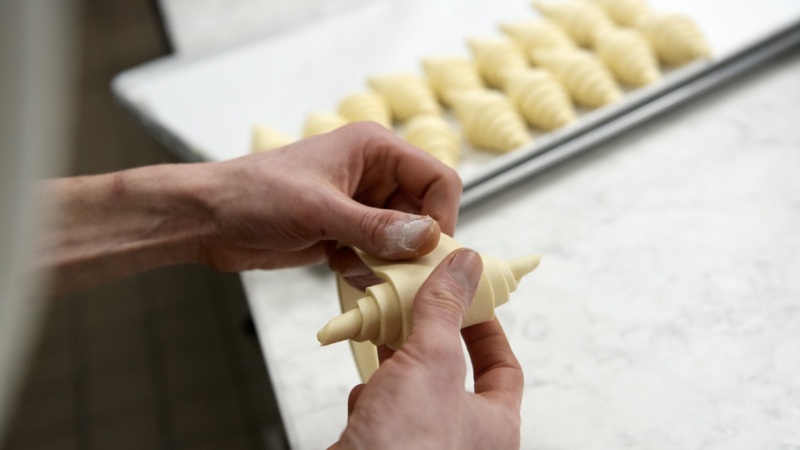
Lobry hand rolls all the croissants, meticulously stretching each piece to yield the finest flakiest layers, which, once baked, Lee says, are best consumed immediately, but can be held up to 24 hours in a dry, cool place. I didn’t wait a day and had mine (a pain au chocolat) warm. It was unequivocally wonderful.

Photo by Michael Harlan Turkell for Resy

Photo by Michael Harlan Turkell for Resy

3:06 p.m.

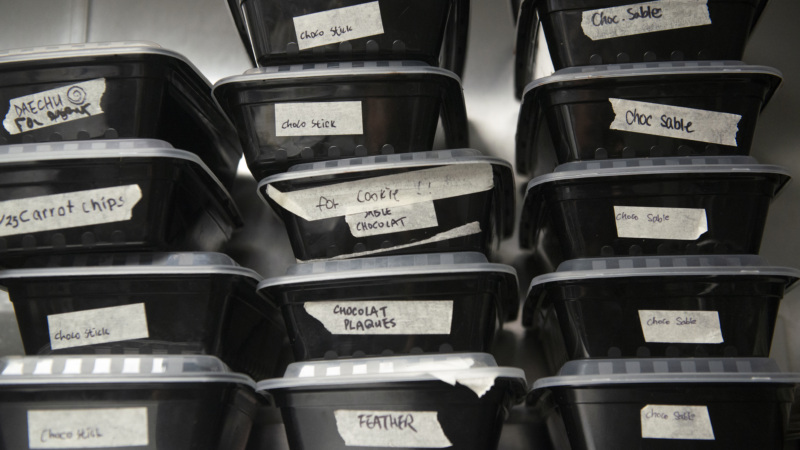
Every chef loves organization of some sort. Lysée’s kitchen has to-go tubs filled with finishing touches, from hand-chopped chocolate sablé crumbs (used to top the Pain Au Chocolat 2.0), carrot chips, and chocolate plaques, which become canvases for personalized greetings (e.g. happy birthday, happy anniversary).

Photo by Michael Harlan Turkell for Resy

Photo by Michael Harlan Turkell for Resy

3:48 p.m.

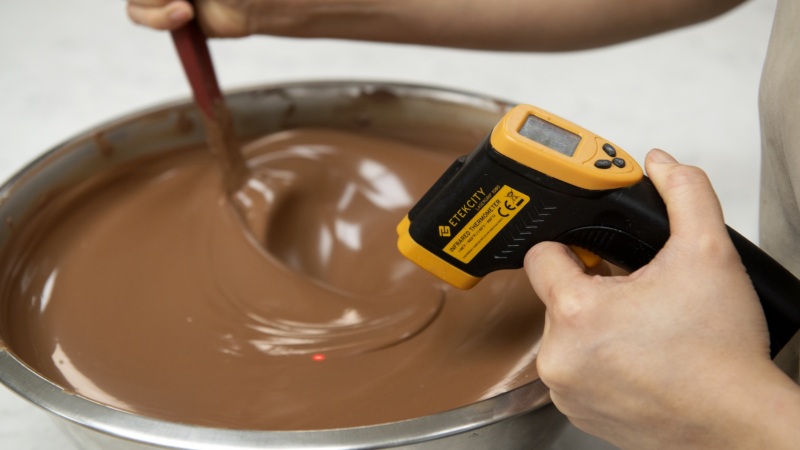
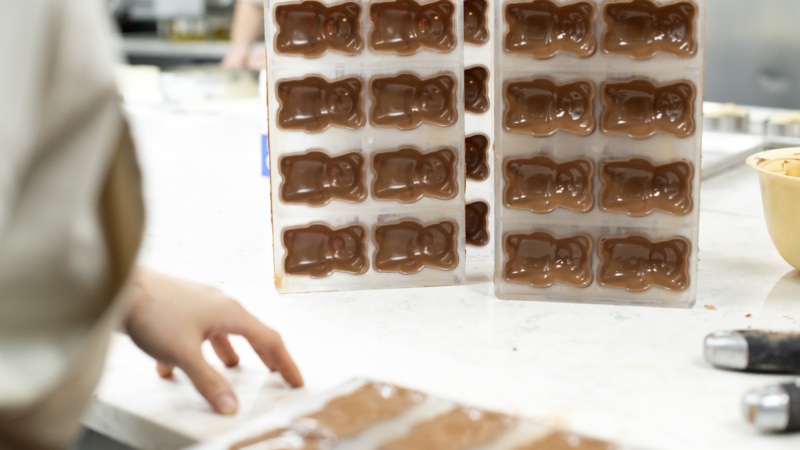
Lee checks to see if the chocolate is tempered correctly before pouring it in teddy bear madeleine molds. She’s aiming for exactly 29 degrees Fahrenheit.

Photo by Michael Harlan Turkell for Resy

Photo by Michael Harlan Turkell for Resy

4:36 p.m.

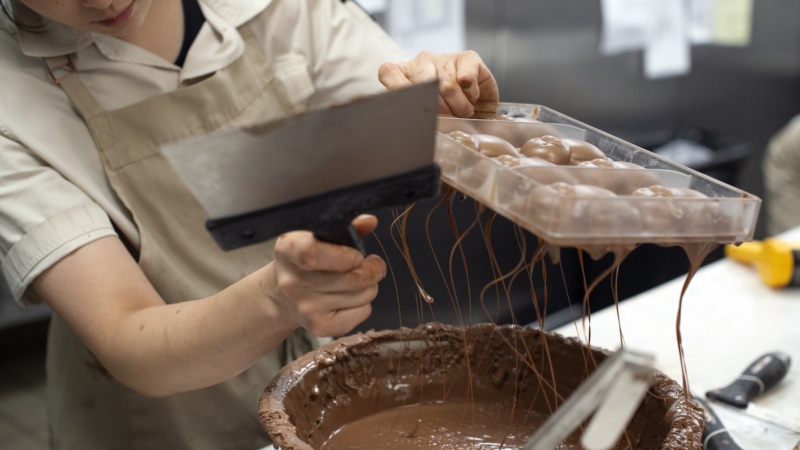
Any excess chocolate used to form the teddy bear chocolate mold is knocked out, leaving behind a thin, teddy bear–shaped shell.

Photo by Michael Harlan Turkell for Resy

Photo by Michael Harlan Turkell for Resy

4:37 p.m.

The teddy bear exoskeleton then sits to dry and harden before being affixed to the underneath There’s a multitude of layers even in the smallest bite at Lysée.

Photo by Michael Harlan Turkell for Resy

Photo by Michael Harlan Turkell for Resy

5:00 p.m.

Lee works service in a front-of-house/back-of-house position, greeting guests downstairs, coming out from behind the pass to touch tables and talk — bringing a welcome openness to the open kitchen window.

Photo by Michael Harlan Turkell for Resy

Photo by Michael Harlan Turkell for Resy

5:13 p.m.

Patronage is encouraged — come see the pastries, take photos, but heed the sign that says: “Please Do Not Touch Display Items.”

Photo by Michael Harlan Turkell for Resy

Photo by Michael Harlan Turkell for Resy

5:29 p.m.

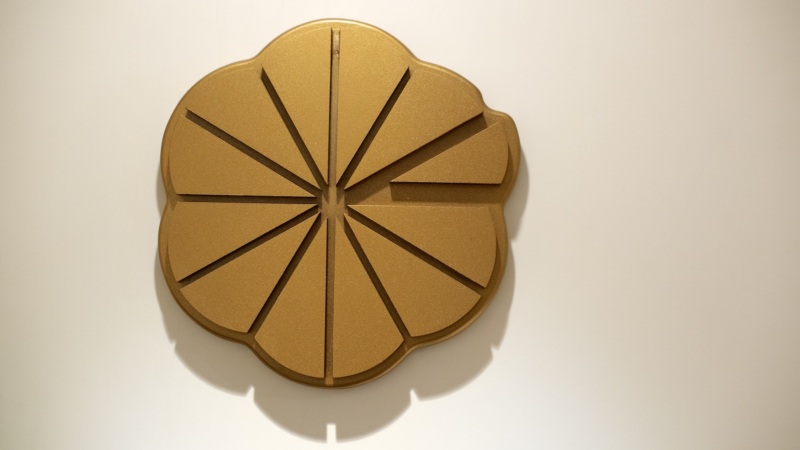
Lysée’s logo (and signature dessert) resembles a giwa, or traditional Korean roof tile. The piping pattern seen on the V.I.C. is supposed to emulate this idea, too.

Photo by Michael Harlan Turkell for Resy

Photo by Michael Harlan Turkell for Resy

5:38 p.m.

In a city that never sleeps, the lights are almost always on at Lysée.

Photo by Michael Harlan Turkell for Resy

Photo by Michael Harlan Turkell for Resy

5:59 p.m.

I leave Lysée with the realization that Lee is the embodiment of Lysée — and it’s rare we get to see retrospective on display in real time.

Photo by Michael Harlan Turkell for Resy