Sidle Up to Saddle Peak Lodge for a Historic Taste of Malibu Magic
Published:
For those who’ve made their way from elsewhere to build a new life in glittering Los Angeles, you aren’t a true Angeleno until you’ve been baptized in Hollywood’s true temples of old-school dining. Only once you’ve clinked dirty martinis at Musso & Frank’s and spun up a fork of spaghetti at Dan Tana’s are you officially part of the fold. Think you’re an Angeleno before ironically (or unironically) enjoying Chateau Marmont on a Saturday night? You’re kidding yourself. Hey, don’t look at me — I don’t make the rules.
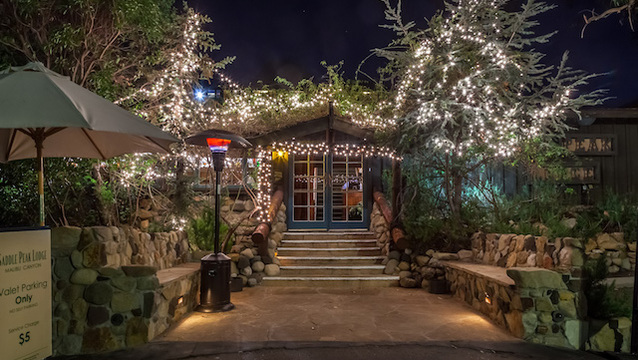
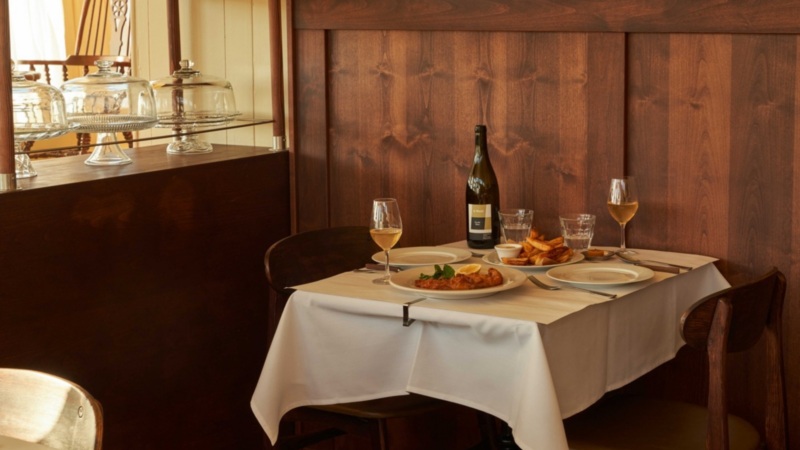
But there’s one more L.A. institution, nestled in the fennel fronds and elderflowers of the Santa Monica mountains, that’s often overlooked despite being one of the oldest in town. For a taste of edible history on the far west side, you’ll have to head to Malibu’s Saddle Peak Lodge. The rugged home of some of L.A.’s most interesting historical nuggets, this is where you come for a white table-clothed education, complete with grilled elk and just-rare venison loin.
While I’ve been to Saddle Peak Lodge on many occasions, I’ll never forget my first time. It was the surprise location of a first date with the son of a reasonably successful porn director whom I’d met, ironically, in my religious studies class at Pepperdine University. He was short and jocular in a way that made him kind of charming, with a mixture of self-assuredness and self-deprecation you’d only find from someone who claimed to hate their father yet had no problem accepting a new Porsche from him.
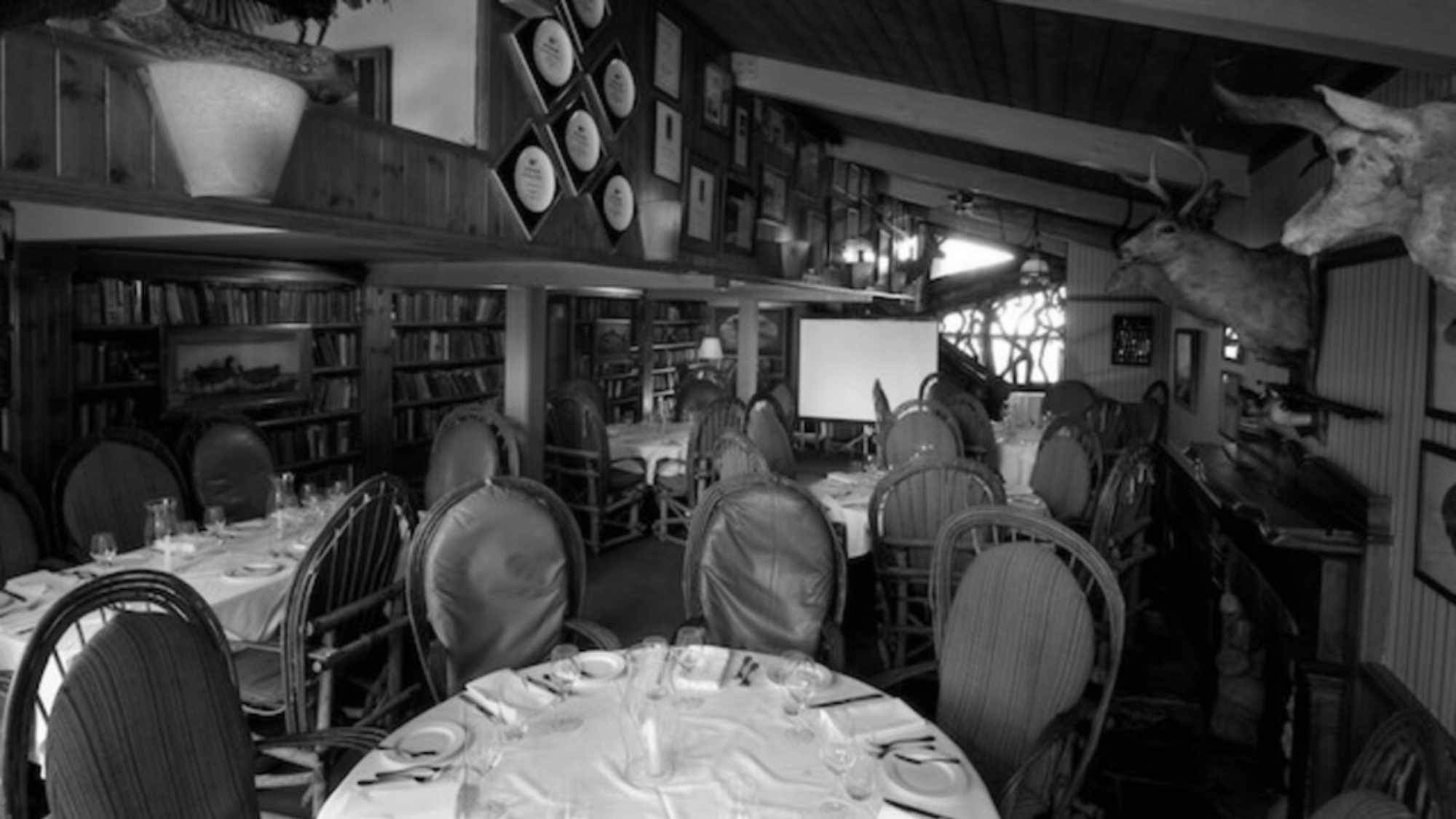
What ensued was one of the most Los Angeles-y evenings I’ve ever had. Zack proceeded to order the game trio tasting menu for me (without asking what I wanted), and a well-done filet mignon for himself that was sent back not once but twice (and with great ferocity) for being undercooked. If the waiter who had worked at Saddle Peak since time immortal was at all bothered by this treatment from a 21-year-old, he deserves the part in his latest audition. All the while, my date spoke mainly about himself (or his father), beneath the giant taxidermied animal heads lining the wall, their eyes as dead as the prospect of our relationship.
“Is there anything you two have in common?” I asked.
He thought for a while, chewing on a morsel of what could only be described as incinerated leather.
“Maybe that we both think this is the best restaurant in Malibu,” he conceded.
MORE FROM RESY
For nearly 4,000 years, the Chumash people of Malibu called the meeting of the sea and the mouth of the river at Malibu beach Humaliwo, meaning “the surf sounds loudly.” By 1920, all 19 square miles of Malibu’s scenic coastal land was the private property of oil and electric tycoon Frederick Rindge, an unparalleled personal estate he named Rancho Malibu. After years of legal battles to keep the government from invoking eminent domain to use part of the Rindge’s land to connect Los Angeles to the rest of what would become the Pacific Coast Highway, Frederick’s widow, May Rindge, begrudgingly waved the white flag.
And so, on the site of one of Los Angeles’ largest personal estates in history, Rindge began developing Malibu into a hideaway for Hollywood’s rich and famous. By the late 1920s, Malibu Movie Colony was flourishing. Beach bungalows on stilts designed by studio propmasters housed everyone from Charlie Chaplin to Barbara Stanwyck; future famous residents would include the likes of Neil Diamond and Linda Ronstadt. As Malibu began to grow into the strange collection of residents that now define it (Pepperdine University students, surfer bums, celebrities), only one restaurant has been there to witness every part of its evolution: Saddle Peak Lodge.
When Zack dropped me off at my student beach shack after our date, he went in for the kiss. I deflected, and he burned off in his Porsche, leaving me in a cloud of dust on the side of PCH. To this day, it is one of my favorite bad dates and favorite bad date stories to tell. (I’ve kept it PG for the folks at home.)
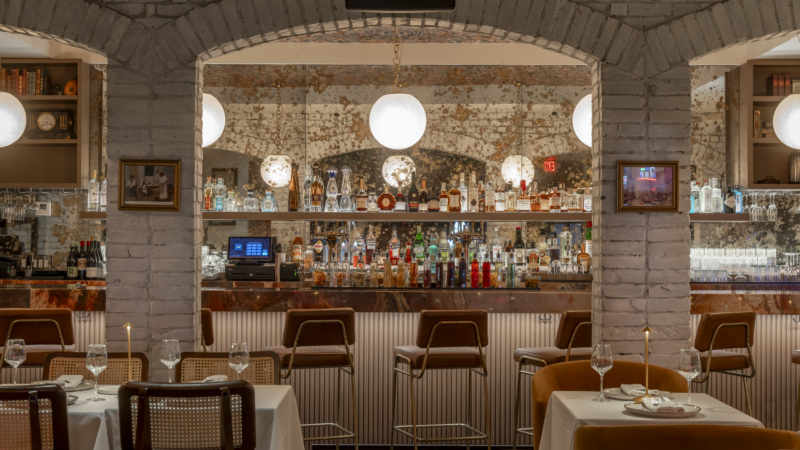
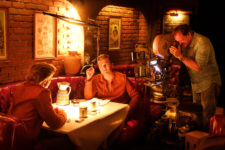
A not insignificant part of what makes the story so perfect is where it took place. Saddle Peak Lodge is a place where all kinds of wonderfully weird things happen (according to some, table 41 is haunted), and where some of the best stories in L.A. are born. You don’t want Saddle Peak Lodge to be perfect — you want it to be exactly what it is, which is the complete spiritual opposite of shiny neighbors like Nobu and Soho House.
You aren’t a true Angeleno until you’ve been baptized in Hollywood’s true temples of old-school dining.
Saddle Peak has lived many lives since it was built in the early 19th century (exact date: unknown). Originally erected as a ramshackle pony express stop, the saddle peak “property” (a.k.a. a rustic one-room cabin) drew gold miners making their way to upper Ojai on their quest to strike it rich. Later, in the 1920s, the property expanded and became Crater Camp, a collection of rustic cabins along the winding river that flows through Las Virgenes Canyon. Guests would fish, hike, and take in the great outdoors, long before Los Angeles became synonymous with concrete and carpool lanes.
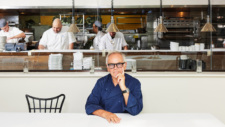
The lodge has had many owners, each of whom has added their own touch of Western-style/hunting lodge ephemera to the space as the years have moseyed along. Today, carrying on the torch are father-and-son team Deep and Hargun Sethi. As the owners of iconic Beverly Hills restaurant Bombay Palace, the Sethis are used to a certain degree of innovating while keeping the history of a multi-generational space alive and its respective clientele happy.
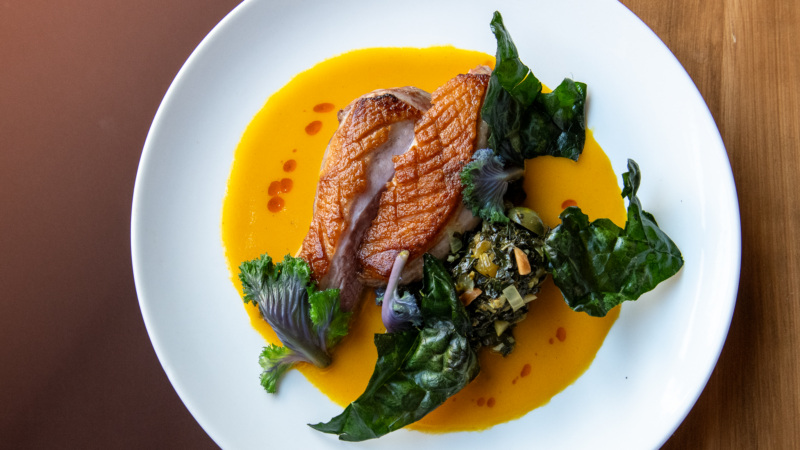
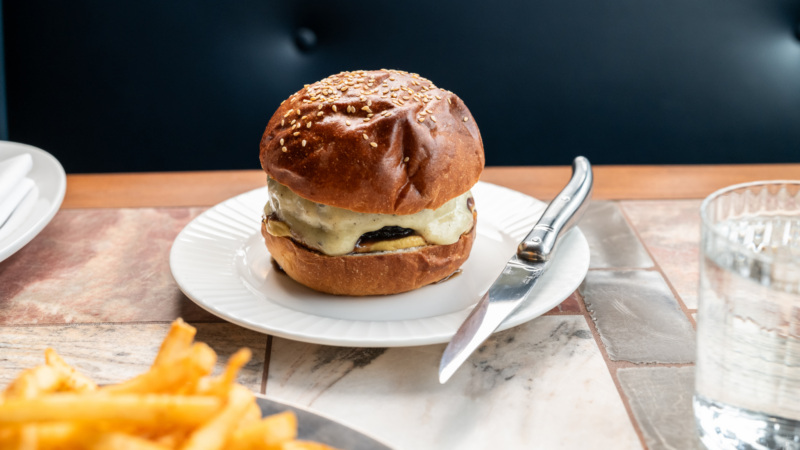
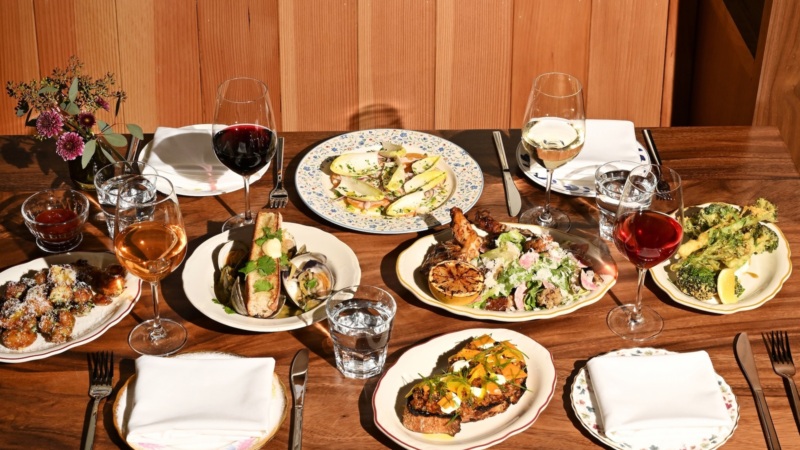
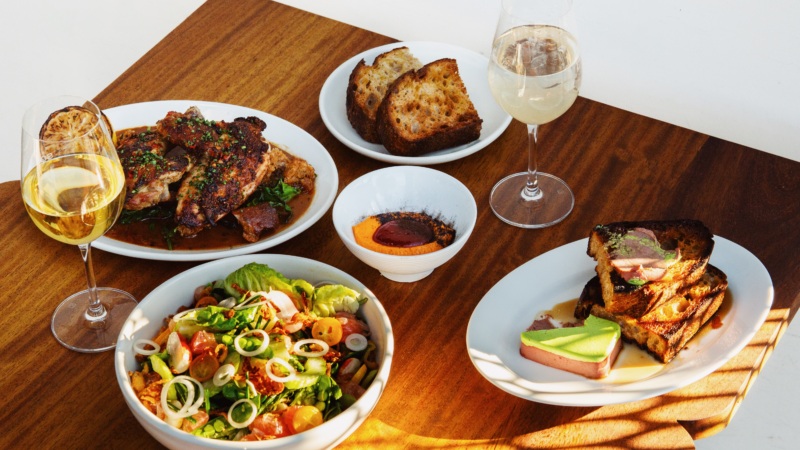
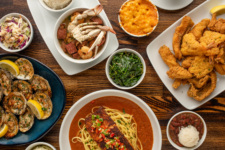
In the kitchen, chef Cooper Bogard turns out old-school Saddle Peak favorites, attending to the classics that have become the soul of the restaurant, such as the game trio, with wild boar, stuffed quail, and elk tenderloin painted in a rich madeira sauce; and cast-iron johnny cakes that perfume the dining room with the sweet smell of caramelized cornmeal. There’s a handful of newer offerings, too: plump white shrimp in a punchy cocktail sauce, hand-rolled cavatelli in a Périgord truffle sauce, and a one-pound ribeye cooked over open flame. The menu doesn’t reinvent the wheel, because it doesn’t need to.
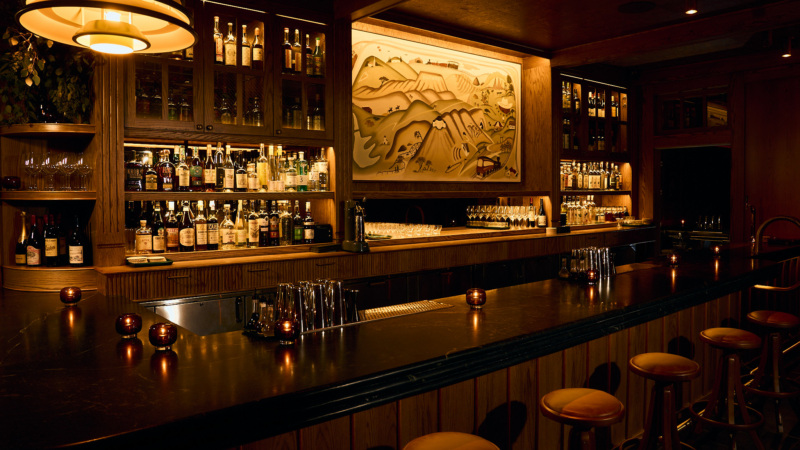
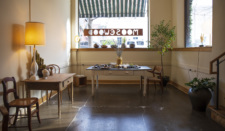
When so much of the romance of California, and Los Angeles in particular, is based on old Hollywood, it’s refreshing that a piece of California’s history that leans on Hollywood’s connection to the rugged Wild West is still so untouched, over 100 years later. Much of the restaurant that you visit today is the same as a guest might have experienced in the 1960s.
While the Sethis are relatively new custodians to the space, their customers are not. “Some of our guests have been coming here for 40 years already,” Hargun says. The same can be said for their staff, some of whom have been with the lodge for decades. And while the clientele may skew a bit older, just take it as a sign that with age comes wisdom.
There are only a handful of restaurants in Los Angeles that can boast about staying open for as long as Saddle Peak Lodge. Classics like this give us a chance to touch an era we wish we could have experienced firsthand, at least for an evening. And Saddle Peak is a living testament to Malibu’s myriad evolutions — and, with any luck, will stick around for generations to come.