How Electric Bleu Became Mar Vista’s Defining Neighborhood Bistro
Published:
It’s the afternoon before Electric Bleu’s big anniversary bash, and Mai Sakai already feels “buoyant.”
“Uplifted is a good word, too,” she says. “Some of the regulars came to celebrate with us yesterday, and that’s so personal, you know? It’s like a friend’s birthday, not a restaurant’s.”
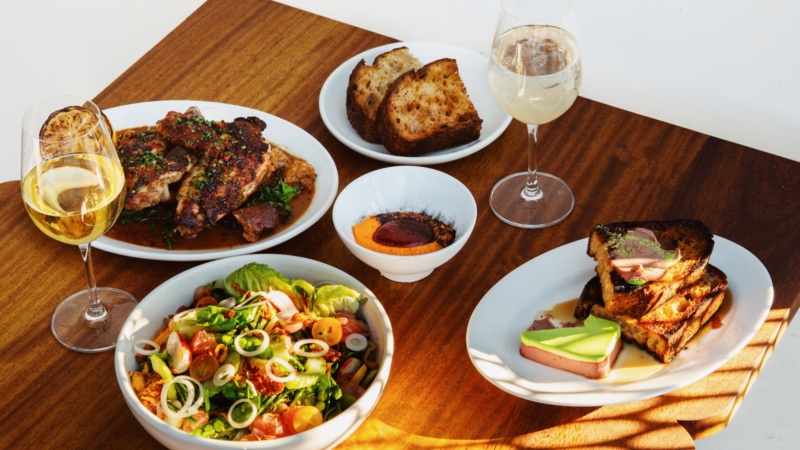
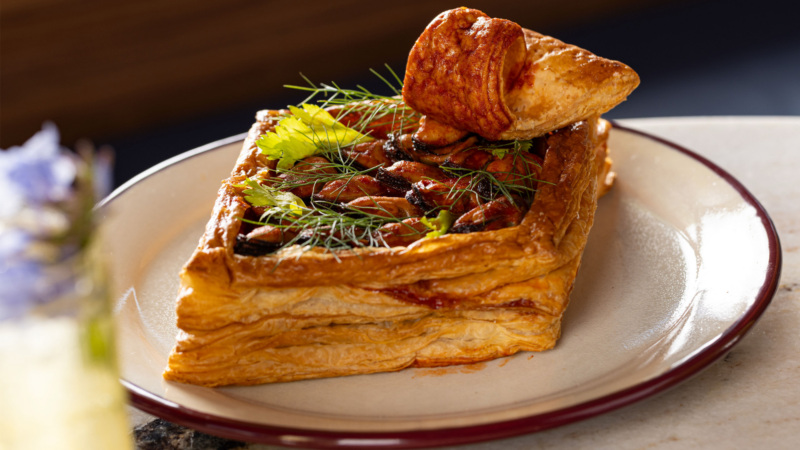
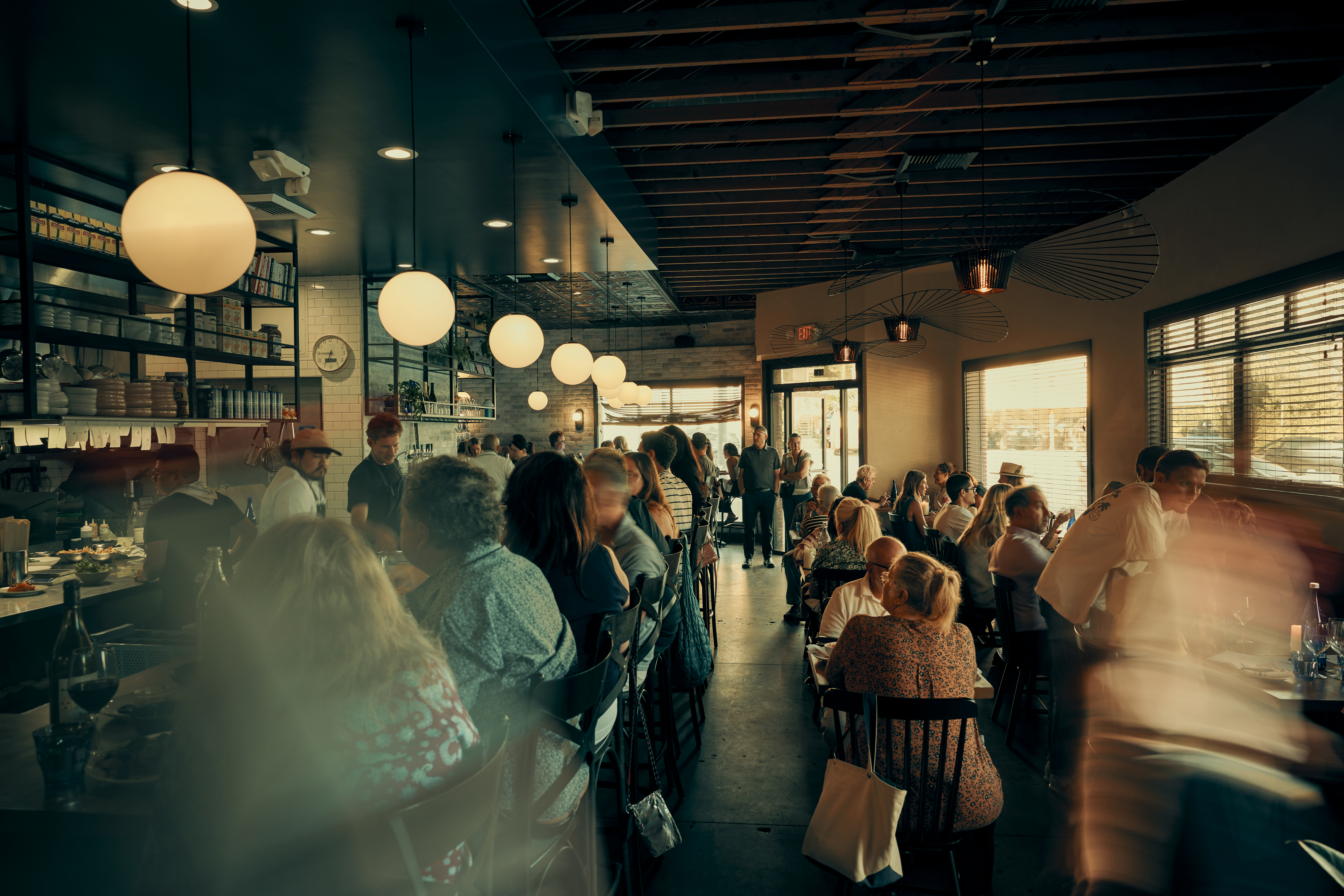
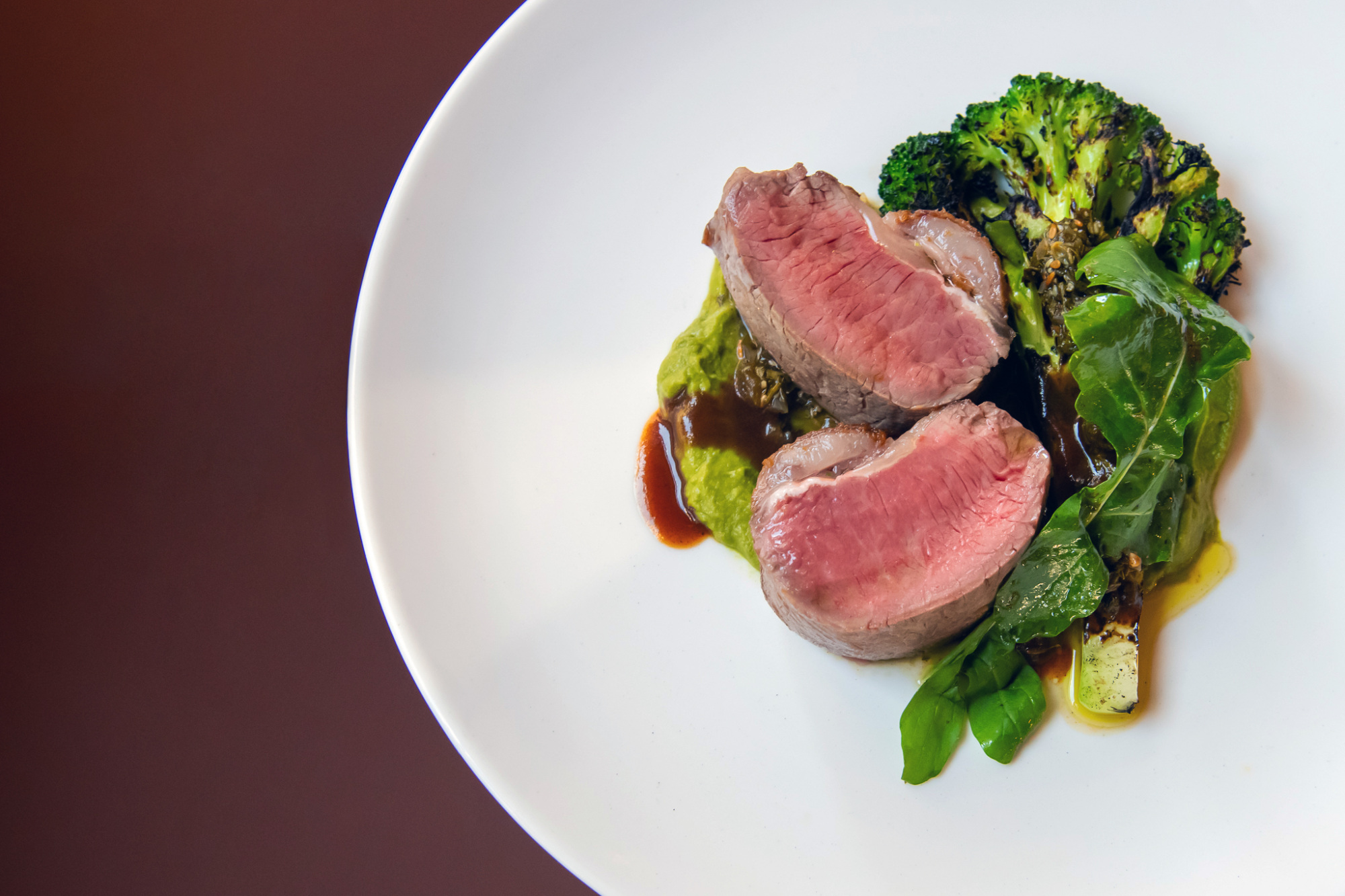
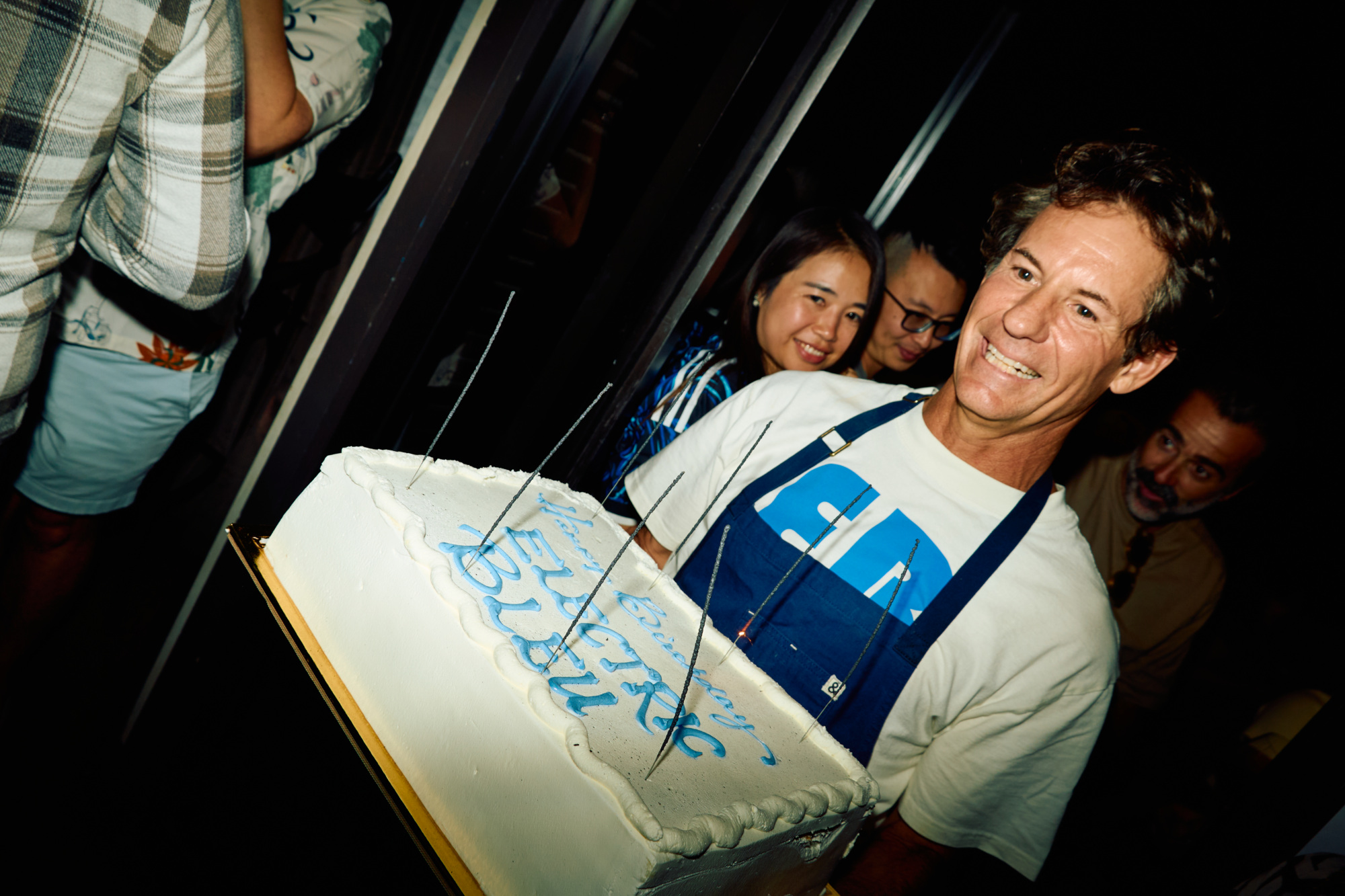
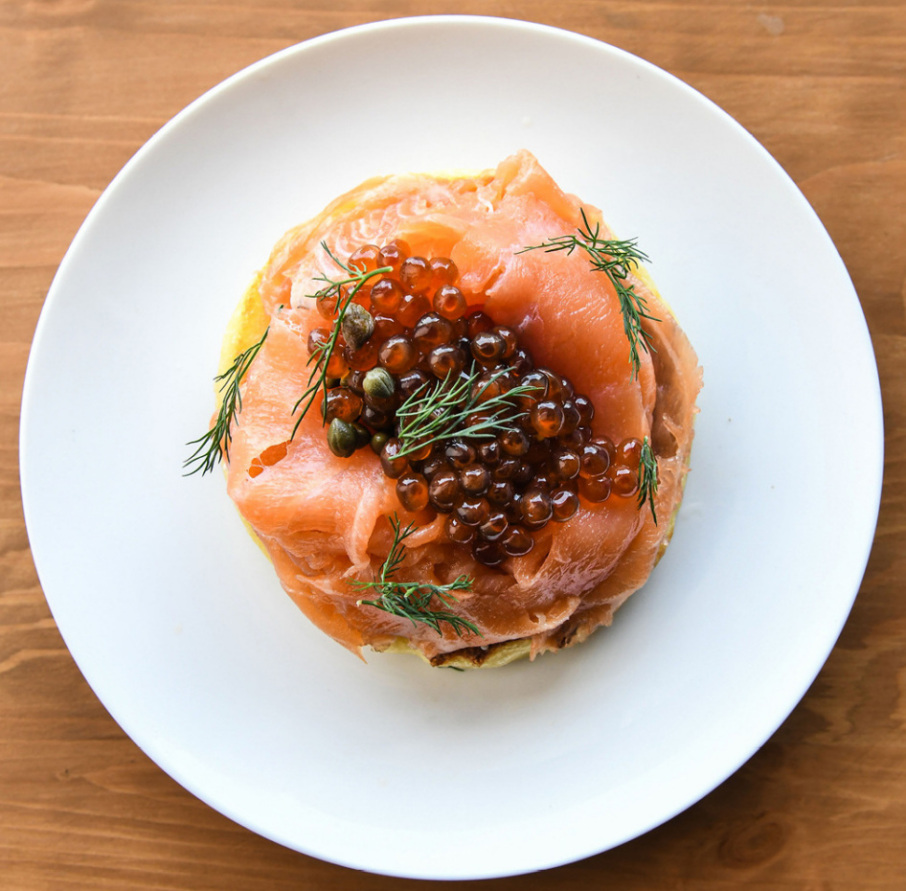
From the Mar Vista dining room, the day seems totally ordinary. But 24 hours from now, the neighborhood will celebrate the French-Cali bistro with a summer block party: ice cream and cake for all, shrimp on the barbie, and a night on Centinela Avenue where no one can tell the difference between guests and staff. To celebrate, Electric Bleu rolled out a new anniversary tasting menu, five courses of fan favorites, including smoked salmon blinis, an heirloom tomato salad, and crispy pommes dauphine, the tater tot’s sophisticated French cousin.
In short, co-owners Craig Hopson and Mai Sakai have every reason to be frazzled, stressed, and somewhat miffed by the presence of a writer with a legal pad asking them an endless stream of questions. But they aren’t. Instead, they are generous with their time and effusive in their praise for one another, as they reflect on the past year together. “I think your food has become more free,” notes Sakai to Hopson. “At the beginning, we were a bit more timid, like, ‘is everybody going to be okay with this?’ And now, it’s more like, ‘you know what? Let’s try it.”
When Electric Bleu opened, it was a rarity: a restaurant that knew who it was from inception. It ran with a certain level of finesse, the kind you don’t always see from new openings, especially not ones under the leadership of first-time owners. But Electric Bleu sprung onto Centinela Avenue fully formed, like Athena born from Zeus’s skull, except instead of the goddess of wisdom, in this case, it was a quirky French restaurant with a blue hue and a sprinkle of chicken salt, the kind of place where a disco ball hangs in the bathroom.
MORE FROM RESY
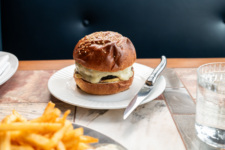
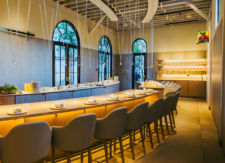
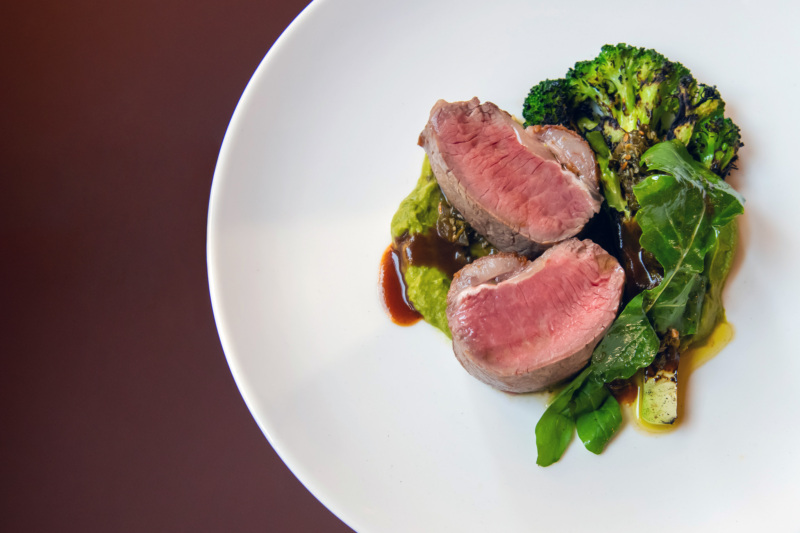
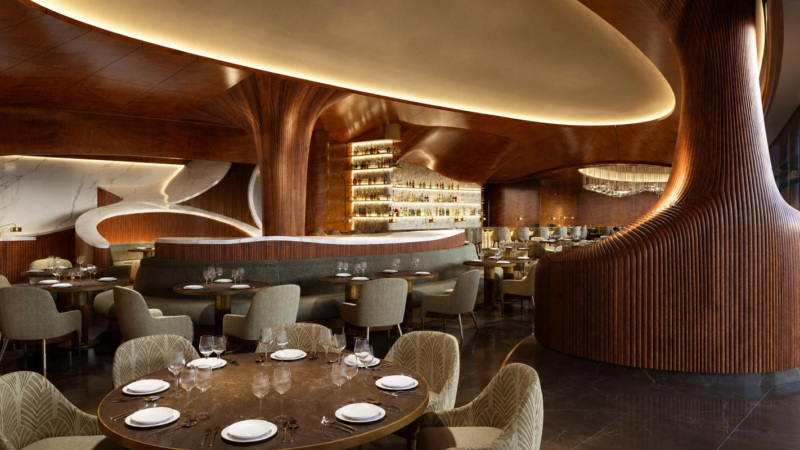
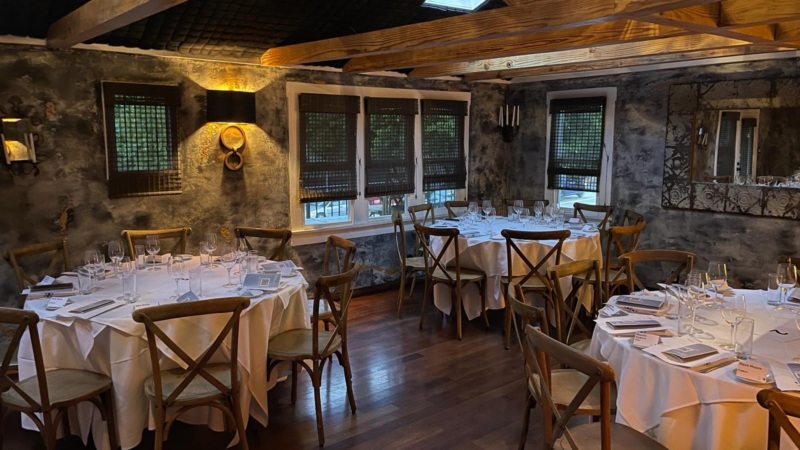
Our conversation unfolds against the backdrop of a busy restaurant preparing for service: two cooks stand in the open kitchen, chatting amiably while they julienne vegetables. Canisters of cornichons and kosher salt sit, meticulously stacked, on the shelves. Sapphire accents—cabinets, glassware, stripes on linen napkins, a painting—dart across the dining room. A satchel brimming with deep-purple passion fruits hangs out on a nearby table. “As of yesterday, passion fruits are back on the menu,” says Hopson, proudly pushing the bag of the egg-shaped fruits across the table. “They’re from our backyard, which is exciting. And the figs are from our front yard. There’s other stuff, too.” He goes on to list nasturtiums, shiso, and lemon balm; he’s built entire dishes around what he and Sakai find, literally, around their house in Inglewood.
Over the past year, Electric Bleu has evolved around this idea, that the menu can change at the drop of a hat, and that a new fruit in the garden is reason enough to invent new dishes. Hopson earned this right, surely. Name a temple of haute cuisine—Le Cirque, Guy Savoy, Picholine—and the Australian-born chef has likely cooked there; he’s spent decades in fine dining kitchens, mastering the art of French cooking. Now, he’s relishing the freedom of running his own restaurant for the first time. “I don’t have any restrictions here. I can cook what I want,” he explains. “You can come on a Tuesday night after work, and have a great meal and a great quality glass of wine in a fun atmosphere. You can pop in for 45 minutes, and that’s it. If I didn’t work here, I’d come here all the time.”
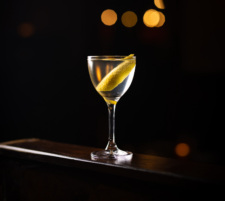
Let’s talk about that glass of wine, for a second. Electric Bleu’s list c’est magnifique, a serious French compilation with a few thoughtful detours (California, skin-contact bottles, sake, and cider, to name a few). Champagnes and sparkling wines hover near the top, followed by whites and reds, sorted by region—Bordeaux, Burgundy, the Loire, Rhône, Alsace, Beaujolais, and Languedoc. Most bottles sit below $100, and the list’s range is something to behold: diners can enjoy a $16 glass of Crémant or a $390 bottle of Chassagne-Montrachet 1er Cru, their mood depending. It’s the vision of Benjamin Phan, Electric Bleu’s general manager. “People ask me, ‘are you a sommelier?’ No, I’m the guy who likes wine and food,” he says. “My grandfather was a big wine collector, and he’s French-Vietnamese. He made me try some crazy wine when I was young, and it shocked me. But now, I feel like he still guides me.”
The last year has been a whirlwind, but no matter how busy the restaurant gets, it’s small potatoes, compared to Electric Bleu’s debut. “Literally, on the second day, we did 140 covers and we were understaffed,” says Phan, before quickly adding: “It’s a blessing, don’t get me wrong.” (For context, Electric Bleu’s dining room seats, comfortably, approximately 60 people.) “We were more successful than we thought we were going to be,” Hopson adds. “On day two, it was me and one other person and one dishwasher in the kitchen. There were, like, three people in the front of house.”
Sakai interjects: “Are you going to mention that I worked the line, as well?”
Despite having no professional cooking experience, Sakai—whose background is in event production—was put to work on the salad station that day. Did she follow the French brigade procedures, and respond to her husband, using “oui, chef?”
“Hells no,” she responds, with a laugh.
Away from the restaurant, Sakai is known for her two-decade career as an art director. She was born in Kobe, Japan, and received an Emmy nomination for her work on the big football game’s halftime show in 2010. In her own unique way, Sakai has bridged the gap between her two seemingly disparate worlds. “What I find remarkable about this journey is the fact that I think building and operating a restaurant isn’t all that different from event production,” she says. “It’s all about the human condition and human assembly. What makes people happy is the same. It’s connection.” She pauses, before adding: “There’s also an element of, something like mayhem, you know, herding cattle, that I’m trained for.”
Although they’re from different backgrounds, it’s clear why these two souls, partners in both business and life, work well together. There’s a natural affinity for the other’s world: Hopson, for example, devised the idea for the restaurant’s banquette seating. “It’s very clever, because it’s modular,” notes Sakai. She’s always loved food, and still remembers the first time she tasted Hopson’s cooking—a summertime duck dish beset by peaches—and was “blown away.”
“I secretly decided back then that I was going to support this endeavor of opening a restaurant,” says Sakai. “Even if this doesn’t work out, I’m still going to support you.”
As 2025 drew to a close, Hopson told Resy his hopes for Electric Bleu: “As I get older, I don’t want pretension. I want a relaxed atmosphere and a good time, but I still want to eat really great food.” How does that statement land, one year later?
“We nailed it,” Hopson declares.
“It’s been a learning experience, kind of building the plane as we’re flying, but I’m looking forward to the future,” Hopson says. “Every busy night we have, you’ve got to be grateful because people might stop coming the next day. You gotta keep moving forward in restaurants. Restaurants that stay still, die.”
Mar Vista is here for Electric Bleu. “The comments are always, ‘thank you for being in our neighborhood.’ Not a day goes by when I don’t hear that,” says Hopson. “The neighborhood’s been our bread and butter.” And now, Electric Bleu’s ready to take on the world. “It’s a part of our year two strategy,” Sakai explains. “We are loved by our neighbors, so we want to be loved by all of Los Angeles.”
Kat Hong is a food writer living in Los Angeles. Follow her on Instagram or check out her very professional website. While you’re at it, follow Resy, too.