Hip Hop Belongs at the Table — When Understood as an Ingredient
When fine dining misreads Hip Hop, it becomes a vibe without a vocabulary. But in the right hands, it can…
Published:
The rusty, inoperable car at a pioneering pizzeria was an outdoor art sculpture. The overlapping band stickers on dimly lit bathroom walls, with the luminous, tomato-scented hand soap peeking through — muted and loud sounds in the room that make a meal flavorful. Like the breakout 1980s Memphis Milano design aesthetic, black-and-white stripes, bold pastel colors, and circles and triangles, our end-of-year conversation around music in restaurants will be side-eyed, studied, and bookmarked. Celebrating what we ate — and listened to — marks a fresh start.
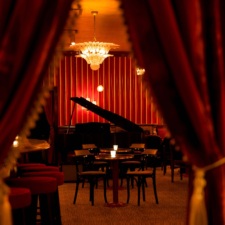
We put together a group of writers and creatives to explore how music is being played in dining spaces. We made sure to show how ragtime, New Orleans big band, and gospel music are showing up in restaurant culture. As we get more selective about reserving spots to recharge, you’ll get our two cents on vinyl records dominating eating and drinking places, and a 101 on piano bars in New York City. The genre that rang loudest in dining rooms was hip-hop, and we weighed in on rap music as “an ingredient.”
It’s the chefs, their instruments, and the many hands in the kitchen that keep us returning. A band of vibrant, playful creatives controls the soundtrack.
When fine dining misreads Hip Hop, it becomes a vibe without a vocabulary. But in the right hands, it can…
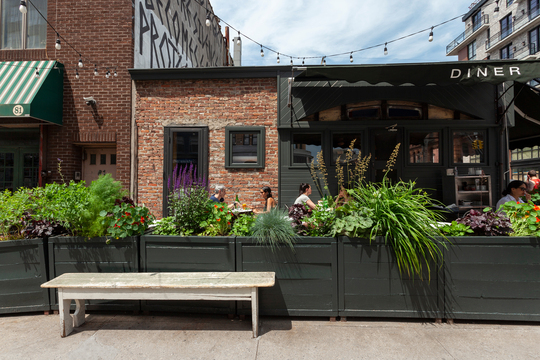
In 2011, Wiz Khalifa’s “Black and Yellow” was released, and the first time I heard the song was at Diner, the iconic Andrew Tarlow restaurant that still stands. I was sitting at the corner seat of their packed bar inside the restaurant that is an old Pullman dining cart, where the servers write the daily menu on the white paper tablecloth. My dinner companion whipped out her phone to Shazam the song title for me. (Diner is now 21 years old and is outliving iPhone upgrades.)
The Tarlow team’s newest concept, Borgo in Manhattan, features a playlist that hums under a roaring fire, while the fried delicata squash dances in your mouth and you can hear every conversation clearly at a table of five. The tunes are delivered at the perfect temperature.
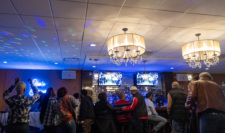
And I can’t leave out the good times at Public Records in Gowanus, a listening lounge that doubles as a place to get both coffee, cocktails, and food. From catching up with friends to having a good time at Wine for Me, a natural wine community and meet-up, what I always remember the most is walking into the moody sound room with their burl wood-like encased hi-fi speakers and communing with strangers. If the dishes in the Atrium space were all vegan, I can’t recall.
What we hold close in these moments are the feelings — the places that keep our spine straight are on the forever hit list.
With diners having so much access to what food looks like before they step through the doors, elements of surprise, like the playlist, are the exclamation point. The current state of music in restaurants is a lesson on how restaurants move at the speed of culture. People want to listen to a bit of the past, taste the now, and touch the future.
The current state of music in restaurants is a lesson on how restaurants move at the speed of culture. People want to listen to a bit of the past, taste the now, and touch the future.— Nicole A. Taylor
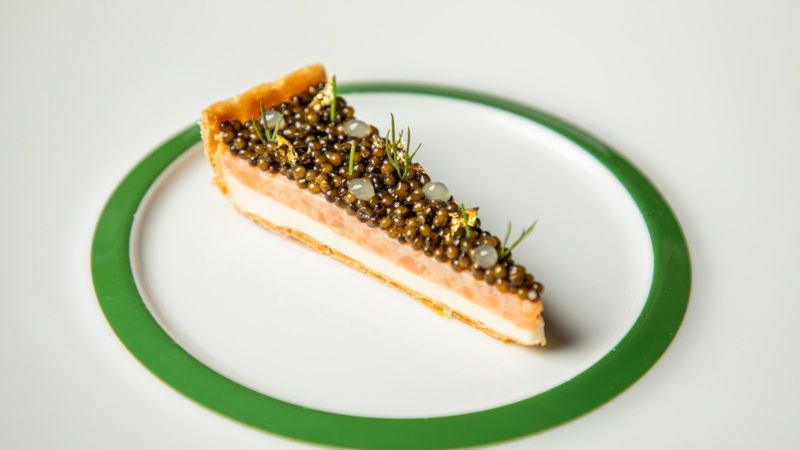
Nostalgia is bringing us together to enjoy golden french fries with dollops of crème fraîche and carefully spooned caviar, accompanied by bottles of Delamotte Champagne. We are in a time when popular music is determined by viral TikTok dance challenges, and cassette tape players are being sold in the flagship MoMA store — analog everything is in fashion.
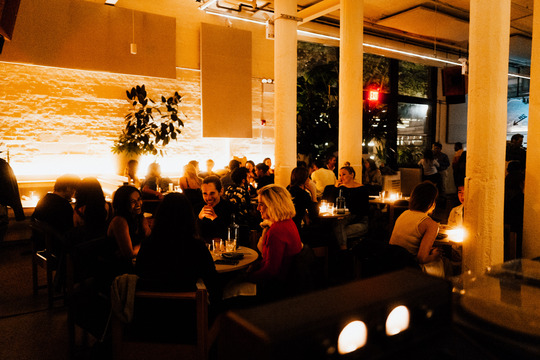
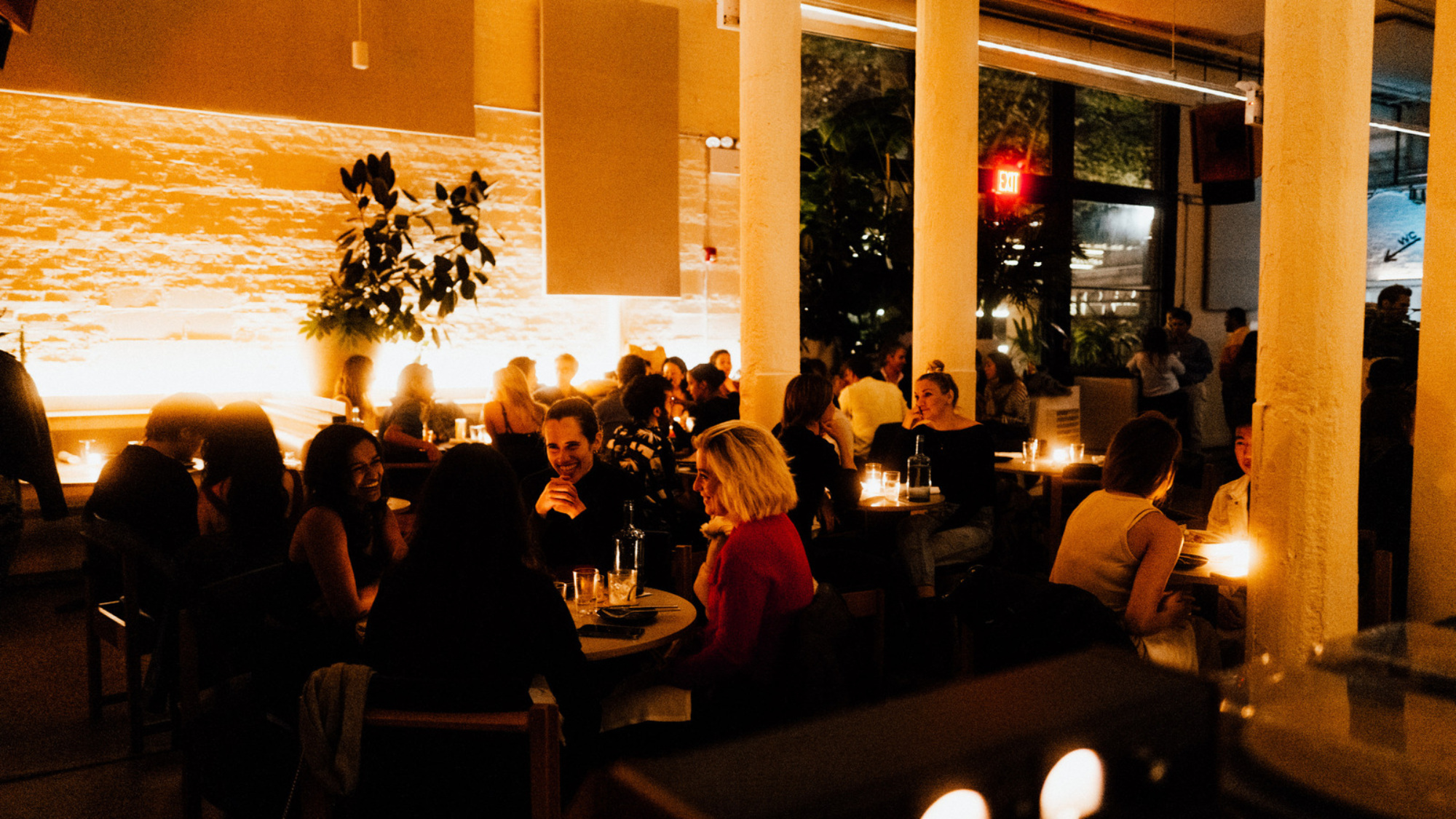
Dining out is expected to have an aura. Elements such as the wallpaper in the water closet, skinny tree-shaped table lamps, split-leaf philodendron plants, tableside hand-washing service, oversized chef-made artwork, and music playing in the room are essential elements that enhance guests’ experiences. The restaurants that nail sensory gestures are exceeding expectations, even if it feels like a trend. Identity seeps out of every corner of brands that do more than their food well. From the plates clanking at the pass, ice being carefully positioned in highball glasses, the crisp southern drawl of the server reciting the chilled reds on the wine list, the rhythm and sound being delivered inspire us to come again.
The way music is served in restaurants mirrors the fusion of cuisines that many chefs are presenting on their plates and the hours of planning more than the courses of a tasting menu. Restaurant music programs are a reflection of the colorful personalities of chefs and the teams they’ve built. The music wafting towards the servers’ stand is the single most remembered spice in today’s most talked-about and classic restaurants.
In the late 1800s and early 1900s, ragtime — a syncopated piano music style with its roots in the Midwest United States — emerged in bars, taverns, and white tablecloth establishments. Also, this time marked the beginning of eating out as a leisure activity. Black Americans’ creativity laid the foundation for early dining experiences, where music played in the background or foreground, often serving as a backdrop to conversations.
I went down the rabbit hole by listening to a podcast featuring Juilliard professor and ethnomusicologist Dr. Fredara Hadley, which led me to explore the works of composer and baritone Henry T. Burleigh. His work helped usher in the transition of restaurant music from ragtime, or “cakewalk tunes,” into the “prettiest airs of the musical shows and light operas, interspersed with music from grand opera and the older composers” at America’s first fine dining steakhouse and the Waldorf Astoria. According to a March 16, 1909 New York Times article, “Ragtime music is dead, according to the managers of the various hotels and restaurants in the city, and there is no longer a demand for the tunes that used to cause jig steps to come to the feet.” Just like fashion, New York diners were moving on to jazz.
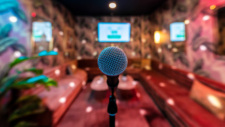
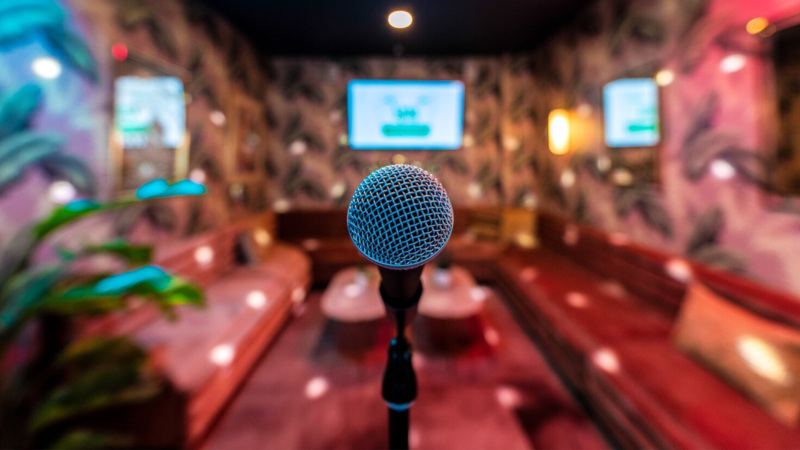
Today, many restaurants, whether it’s Manhattan piano bars or listening rooms with D’Angelo nights, are building on a history of America’s drinking and dining culture. The jukebox is the equivalent of picking your own vinyl at upstairs barrooms. The banjo player, accompanied only by his harmonica, is the identical stamp of a rising artist belting out classics at super-packed barbecue joints or music coming from a hand-built vintage Italian sound system. Bathrooms are being transformed into personal karaoke rooms, or Sunday afternoons are reserved for Bingo and cocktails.
The person playing the music constantly changes. The pendulum will continue to go back and forth as sound journeys across bar tops and circles around power lunches. But what I know for sure is that emotions will carry us to the next place, and many places stay on repeat.
We escape, we hear the notes in more than one way.
Nicole A. Taylor is a James Beard Award-nominated food writer, home chef, and producer. She is also the author of “Watermelon & Red Birds,” the very first cookbook to celebrate Juneteenth. In addition to her other cookbooks, “The Up South Cookbook ” and “The Last O.G. Cookbook.” Nicole has written for The New York Times, Bon Appétit, and Food & Wine, and has been featured in the Los Angeles Times, BET, Today, Wall Street Journal, Today, Washington Post, NPR, Apple, and Oxford American. Brooklyn Magazine named Taylor to its list of 100 influential people in Brooklyn culture, and her cookbooks have graced more than two dozen “best” lists. Follow her on Instagram and X. Follow Resy, too.