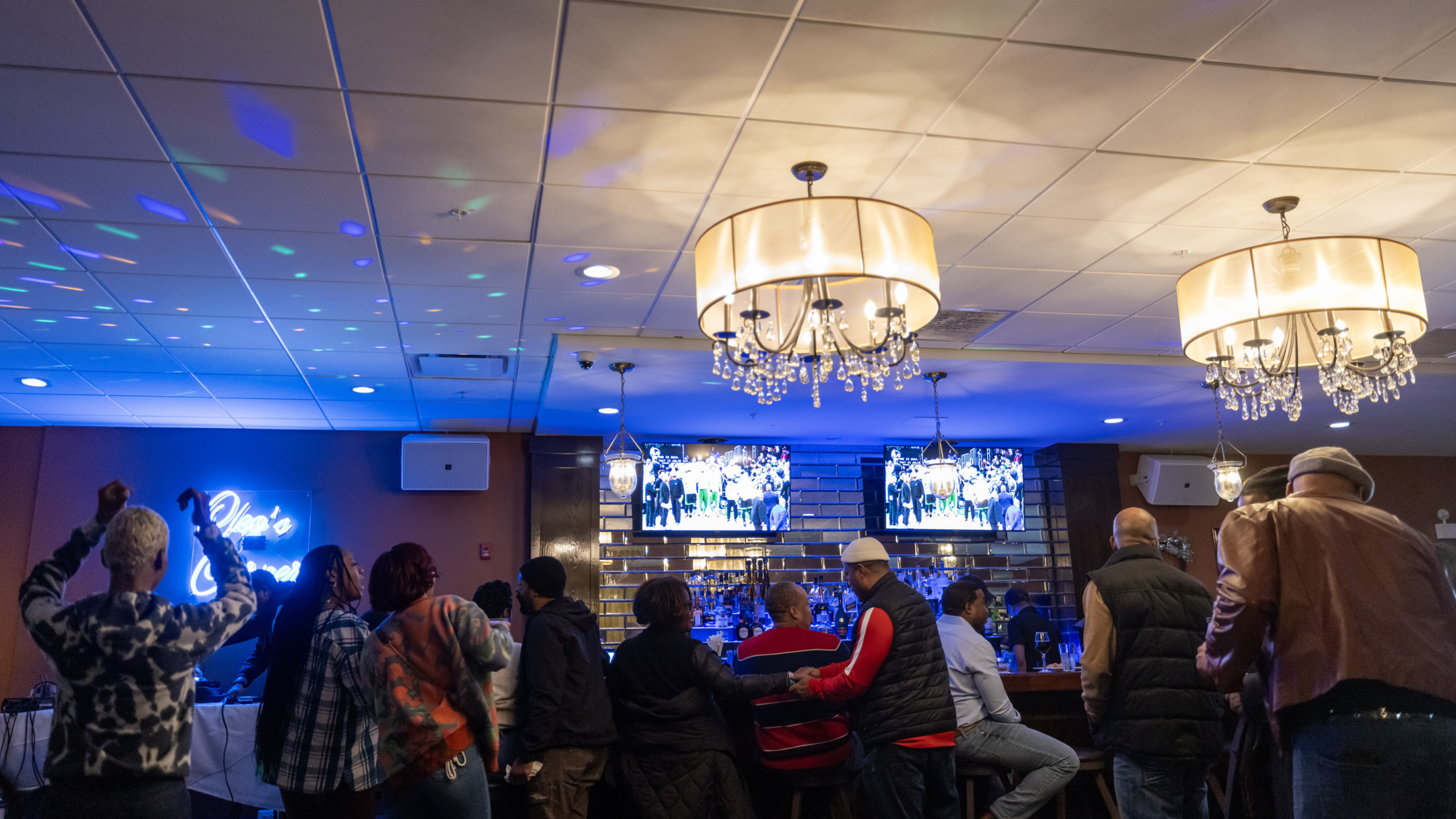
A Holy Ghost Time: Chicago’s Rhythm and Booze
Published:
Too often, the narratives and legacies of Black-owned eateries and bars exist tepidly in memory and in oral histories that are seldom spoken of.
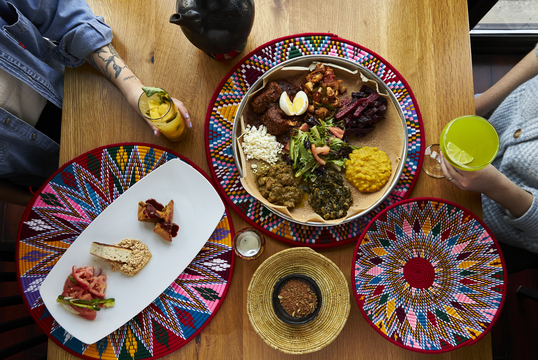
During my most recent jaunt to Chicago, my friend introduced me to Demera Ethiopian Restaurant, on the corner of N. Broadway and West Lawrence Ave., in the Uptown neighborhood, dubbed as the city’s entertainment hub. I sipped Star premium lager from Nigeria, and he ordered the Merkato Old Fashioned (Santa Teresa 1796 Rum, Shai Honey, Bittercube Cacao Spice Bitters). Neon signs of century-old theaters shone through a plethora of windows, as did the Green Mill, one of the nation’s oldest jazz clubs, a former haunt of Al Capone.
Universally, for generations, food can be comforting, celebratory, and cooperative. The same holds true for imbibing. However, too often the narratives and legacies of Black-owned eateries and bars exist tepidly in the memory, and oral histories that are seldom spoken.
I view brunch with the same reverence, an important institution among family and friends. It was the repast during the brief moments of respite that was a crux for Negro spirituals, work songs, often rooted in bondage and biblical stories that have informed all subsequent genres of American music, including Gospel, Blues, and Jazz. Music and food have been paramount in these traditions. Gathering around seats at the table has long been a function of our existence.
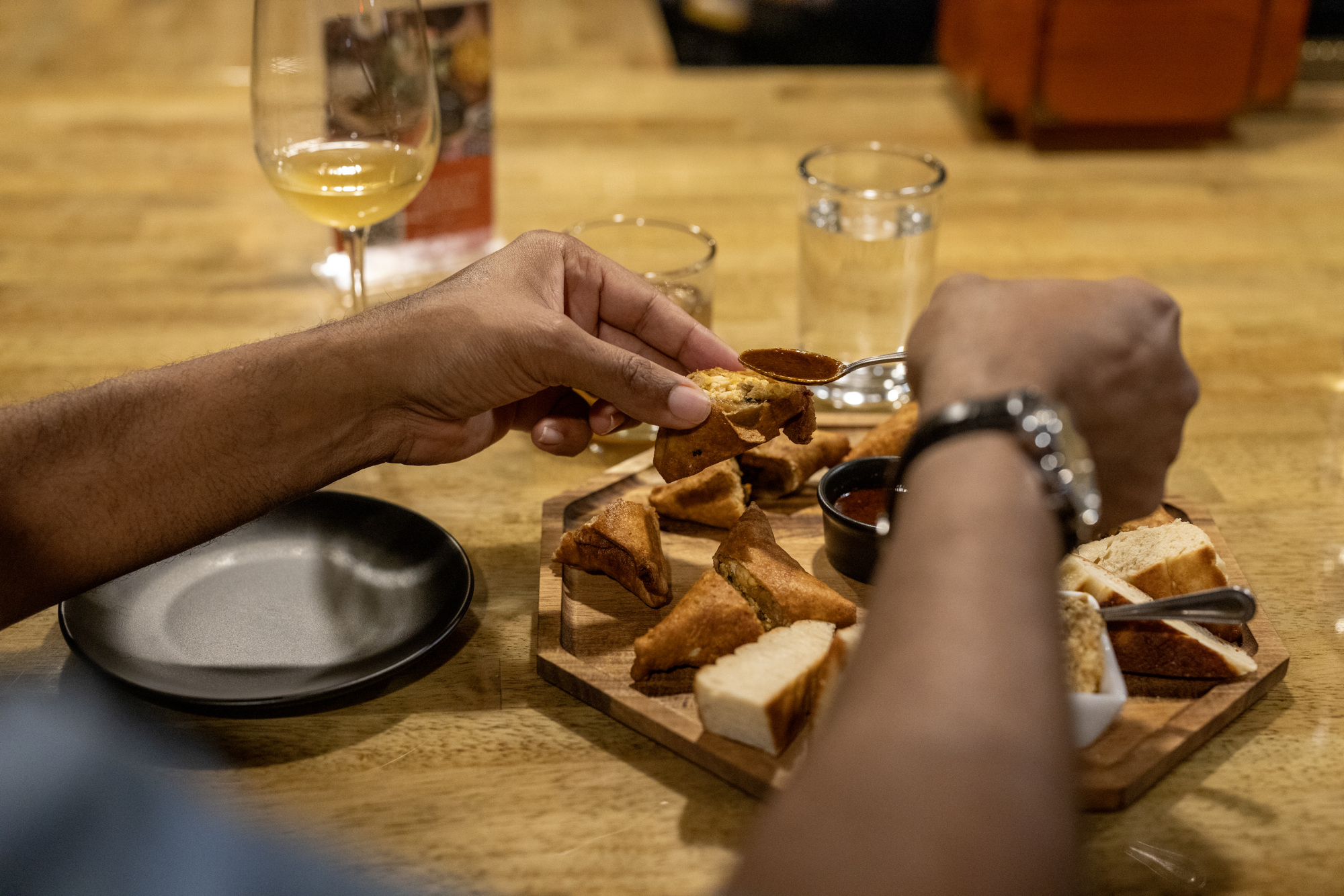

My earliest memories of brunch are with my parents, after church, in New Orleans, my hometown. I was a preteen and we feasted at Algiers Landing (1983-1995), a large restaurant situated on an old wharf that overlooked the Mississippi River and the French Quarter, known for its jazz brunches. It was demolished in 1999.
But New Orleans brunch traditions go back much further: The mind can’t comprehend the prices for meals that Elizabeth Kettenring Dutrey Begue served at her New Orleans eatery, Dutrey’s Coffee Exchange, established in 1867. It was on Decatur Street across from the butcher’s market in the French Quarter. Responding to the need of her customers, chiefly hungry butchers and dock workers, whose shifts often started before sunrise, Begue started a second breakfast at 11am, as their work days concluded. The meals could be up to seven courses, always with eggs, wine and chicory coffee and lasted hours.
More recently, my gospel brunch examinations took me back to Chicago.
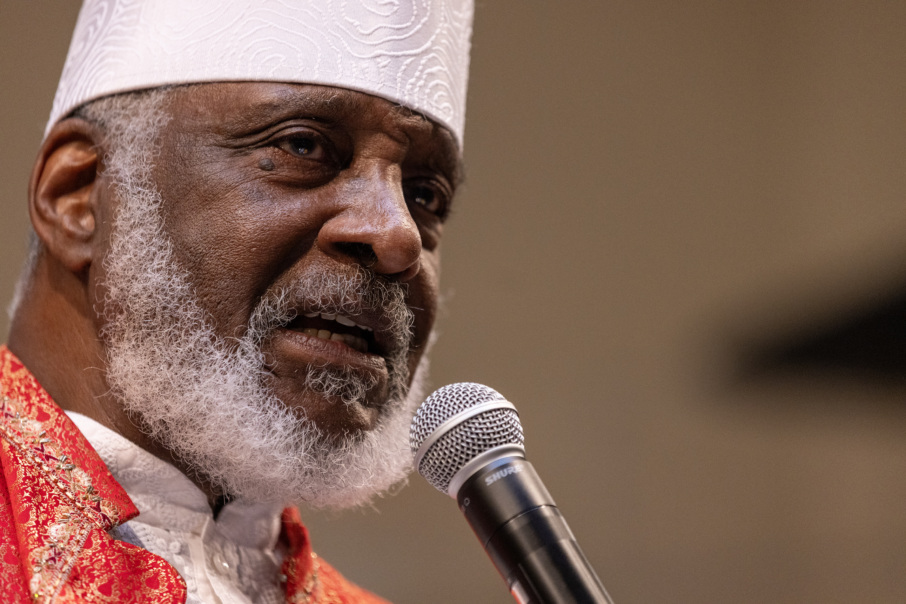
Pastor T.L. Barrett, 81, is New York-born, Chicago-raised, and has deep southern roots. He defines gospel brunch as the “soul spirit influences of our ancestors.” Brunch is the vodka of spirits, and can be whatever you desire: gospel, jazz, boozy, and burlesque – perhaps even concurrently. Barrett requires his catfish fried hard, his syrup warm, and his gospel music soulful and sanctified.
“So, it’s a soulful spirit haunting us that makes us long for that community, that sense of community,” Barrett said about Black folk gathering for their daily bread.
Two years ago, I cold-called his church, twice. I was captivated by his music, and compelled to learn more about his story: expelled from high school with meager beginnings, who found love, married, and his relentless drive garnered him notoriety in ministry and music. My online research merely yielded results on Barrett’s music. So, I needed to know more about the man. Within months, we went from emails, to Zoom calls, to family meals. Over the last 16 months, I visited Chicago five times and shared dinner, brunch and breakfast with him.
Brunch is the vodka of spirits, and can be whatever you desire: gospel, jazz, boozy, and burlesque – perhaps even concurrently.
For 58 years, since 1966, Barrett has authored a legacy that includes tragedies and triumphs, including a rediscovered discography of soulful gospel albums. In 1976, Barrett established a church in the Southside of Chicago (the Life Center Center Church of God in Christ); at its peak, with his soulful choir and poignant sermons, his church overflowed. In 2016, Kanye West, a son of Chicago, and polarizing rapper and producer, altered Barrett’s professional life by sampling his music on his 2016 album, “The Life of Pablo.”
But in addition to the music, he has been feasting. Music and food have been paramount in Barrett’s life, and he asserts that the gathering around seats at the table has long been a function of our existence. I wanted to know about this seemingly innate requirement for people throughout the African Diaspora to convene over food.

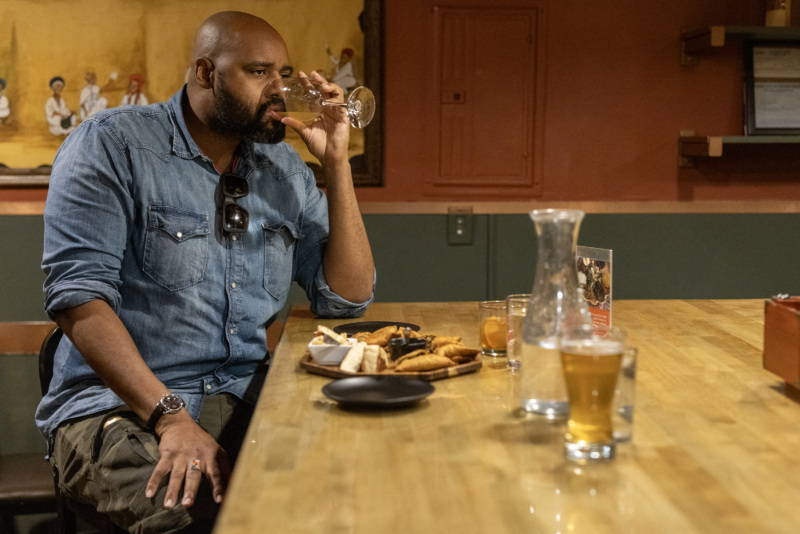
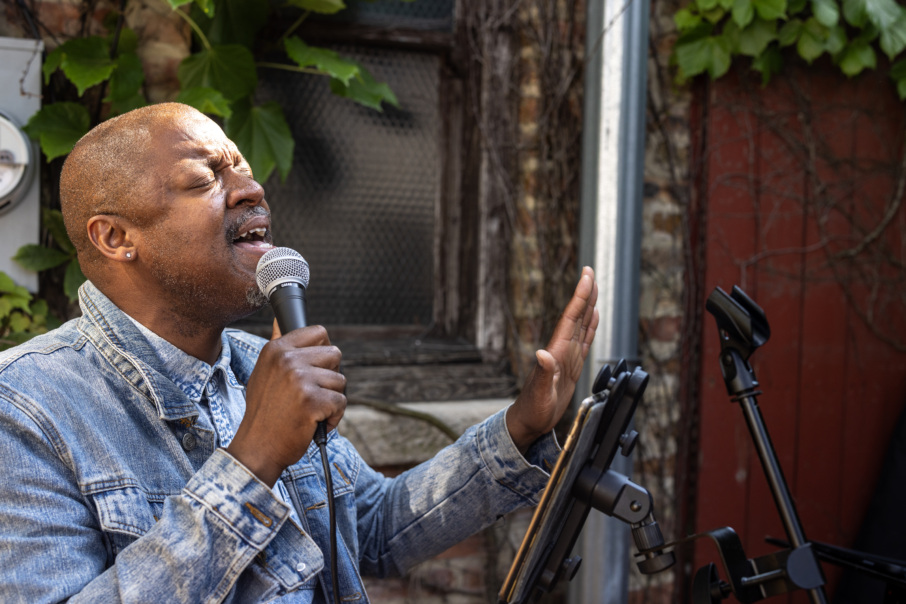
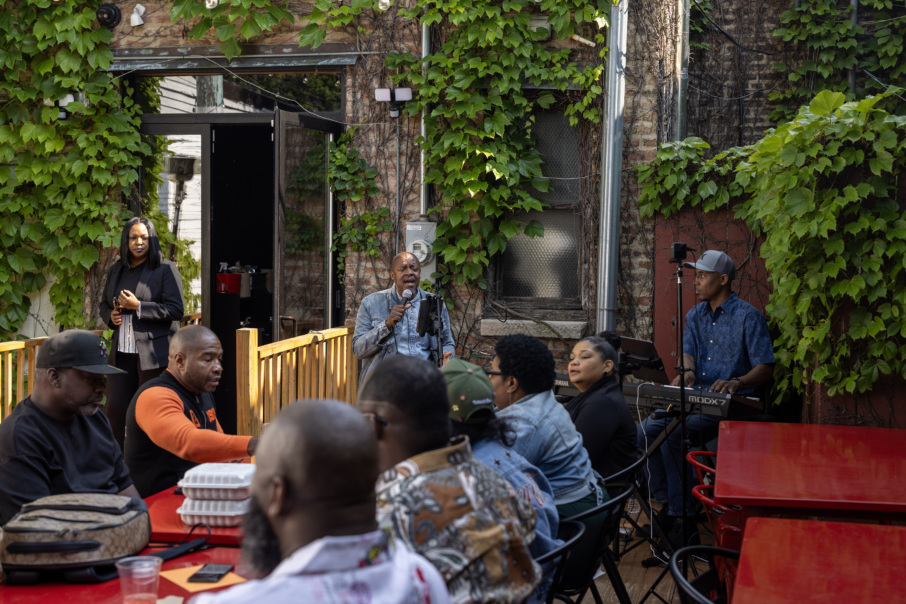
After a recent Sunday church service, Barrett was regaled in an all-white suit, trimmed in gold with a matching kufi, as he gathered with family and friends for brunch, at The Park Supper Club, within a contemporary three-story apartment building developed by his son, Torrey Barrett, now a co-pastor at the church that his father built. The restaurant marries elegance while remaining warm and inviting, with plush sofas, floor-to-ceiling windows, and bar seating. It’s open Thursday to Sunday, with guest DJs each night and live music on special occasions. Boozy Brunch Sunday features bottomless mimosas, and on that day, the dining room was abuzz with intergenerational patrons; mimosas flowed and chicken and waffles were served.
The cuisine at the Park is influenced by Torrey’s time at Louisiana State University and in New Orleans — it was the reverse migration of Louis Armstrong and so many other Blacks from the South. The Park’s vibe differs at various times of the day: Saturdays at 11 a.m. is about the food, drinks and conversations; and at night, one might experience food, drinks and dancing.
Barrett feasted on a plate of catfish and sat in his regular section, near DJ Bipolar. Tracks from The Neptunes, Jay-Z, and other hits pulsated from the windows to the walls. Then, the DJ shifted eras, from drum machines to soulful musicians. Barrett closed his eyes and nodded with the music overhead. An equally powerful and beautiful baritone voice started the verse: “Whoa I said it long time ago, I said it long ago, I love you so…”
A woman darted to the DJ:
“Who is this?”
“That’s Pastor T.L. Barrett,” he replied while pointing.
She looked over, full of surprise.
“I gave people a place to worship,” Barrett said. “Now my son has provided a place for people to stay, and play.”
Since 2018, L. Kasimu Harris has documented Vanishing Black Bars & Lounges. The project began in New Orleans and has expanded to Chicago, Clarksdale, Detroit, Pittsburgh, Los Angeles, and St. Lucia. Currently, works from this series are on exhibition in Denver, Detroit, New Orleans, Pittsburgh. And five works from the series were acquired by the Museum of Modern Art (MoMA) for their permanent collection and is included in New Photography 2025: Lines of Belonging.