Hip Hop Belongs at the Table — When Understood as an Ingredient
Published:
When fine dining misreads Hip Hop, it becomes a vibe without a vocabulary. But in the right hands, it can be a symphony of culture, memory, and taste.
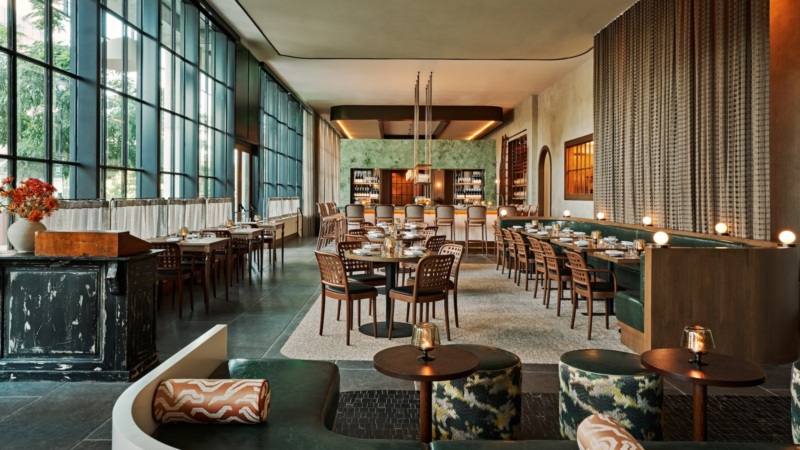
So when Tupac’s “Brenda’s Got a Baby” began playing over the speakers mid-meal, something in the room collapsed. My friend and I — two Black diners in a sea of white marble tables, white wine, and white people — recognized the opening notes immediately. An echo from our cultural memory. But this wasn’t nostalgia. It was grief.
The song played in full, an epic poem about a young girl, just 12, carrying a burden no child should bear. Released in 1991, “Brenda’s Got a Baby” was Tupac Shakur’s debut single, marking his arrival not only as a rapper but also as a social commentator. The video, burned into the memory of anyone who came of age in the early ’90s, opens with a young girl carrying a bundle, the camera tracking her despair as she makes her way down a city street. Then there’s an alleyway. A dumpster. Police tape. These images aired on BET after school — no trigger warnings, just truth. And yet here, in this carefully curated dining room, dinner service didn’t pause. Polite conversation continued as forks clanked on ceramic plates. Glassware shimmered. Waiters glided past like it was just another moody beat. Only we seemed to feel the weight of it.
This wasn’t homage. This was ambient trauma. A soundtrack curated by someone experimenting with mood but illiterate in meaning.
On the other hand, I also have a vivid memory of sitting in a sleek Midtown Manhattan lounge a few years back, the kind that serves “elevated small plates” on slabs of slate. There might’ve even been a fig reduction involved. Drake’s “Passionfruit” floated through the speakers like a scented candle, pleasant and designed not to offend. I bopped along like everyone else. It was a vibe. That’s all it needed to be.
And then there were the bottomless brunches of my post-grad years. Music was half the reason we showed up, so when “Back That A– Up” came on, the room erupted — forks down, bottoms up. That song didn’t play in the background. It took over.
These moments have stayed with me, not just because of what they reveal about the restaurants, but what they reveal about how Hip Hop is being used, and misused, in spaces that have only recently decided to welcome it.
Hip Hop has entered the dining room, but not every dining room knows what to do with it. What once boomed from subwoofers and block parties now plays softly between courses, repackaged for a new class of culinary cool.
There are chefs and restaurateurs — many of them steeped in the culture — who understand Hip Hop as an ingredient. They don’t just play the music. They cook with it.— Donovan X. Ramsey
But the genre was never meant to be mood music — it’s testimony, memory, politics, and play. Hip Hop, born in the Bronx in the 1970s, is a cultural movement rooted in five core elements: MCing, DJing, breakdancing, graffiti, and knowledge. It’s a system of expression forged by Black and Brown youth to narrate survival and celebrate style in the face of systemic neglect.
In the wrong hands and stripped of context, the art is reduced to noise. Thankfully, there are chefs and restaurateurs — many of them steeped in the culture — who understand Hip Hop as an ingredient. They don’t just play the music. They cook with it.
There’s no Biggie on loop at Southern National in Atlanta. Chef Duane Nutter, raised between Louisiana and Seattle, came of age in the era of Boom Bap and Jazz Rap, absorbing the rhythm and storytelling that now shape his food. For him, Hip Hop is also a blueprint for how he builds a room.
Nutter builds his playlist with the precision of a DJ — carefully reading the room, controlling the energy, and never letting the volume overpower the food or the conversation. “You want it just above a whisper,” he says. “Everybody should be able to talk and have a good time, but you don’t want anything too familiar. You don’t want everybody singing — you still want them eating.”
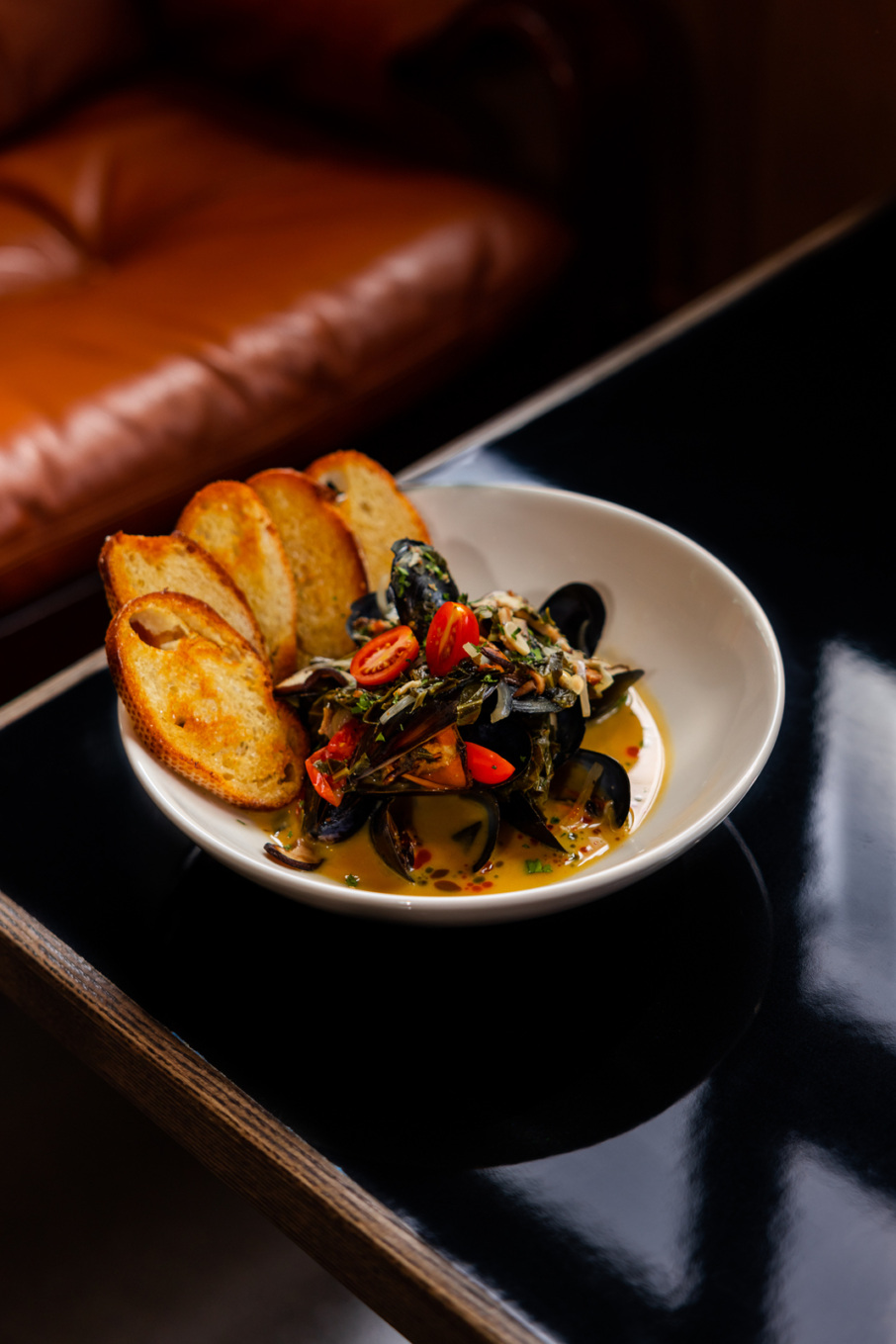
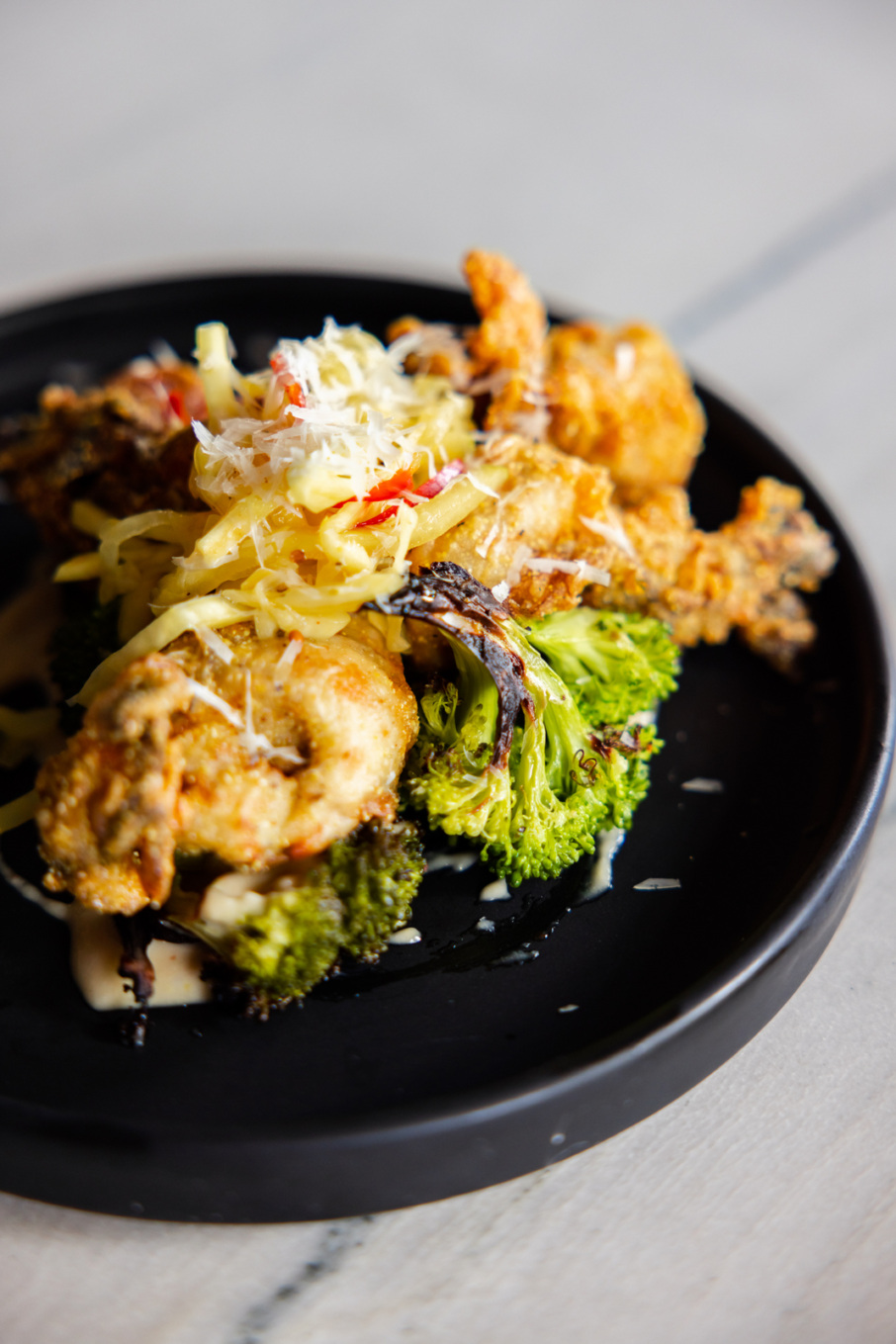
Chef Geoff Davis, the mind and hands behind Burdell in Oakland, understands that Hip Hop isn’t just a genre. It’s a method. A lineage. A way of assembling the old into something new.
No careless drops of Tupac between appetizers, which here mean warm boiled peanuts served in a miso sauce and chicken liver mousse over cornmeal waffles. No algorithmic playlist designed to make you feel cool but somehow leave you cold. Instead, what you’ll hear at Burdell — a standout restaurant that opened in 2023 — is the ghost of a sample you recognize, filtered through vintage speakers, wrapped in soul, and simmering under the hum of conversation. The space itself is a study in nostalgia: mustard yellow walls lined with family photos, walnut-stained wood, vintage Corelle plates in shades of brown, all curated with the same intentionality as the menu.
Davis, an audiophile with a deep crate-digging habit, designs Burdell’s playlists himself. He doesn’t rely on streaming services to set the tone. Instead, he maps out how the music should evolve over the course of a service — starting soft and soulful as the room fills, rising as the energy builds, always attuned to the moment. Hip Hop is in the mix, but never just for show.
Chef Christian “Lucke” Bell, who runs a Westside Atlanta restaurant inspired by his mother’s kitchen, takes a similar approach. For him, curating music at Oreatha’s At The Point is part of curating care. “We were inspired by the first chefs we all know and love — our mothers,” he says. “So I make sure the music is something your mother or grandmother would be fine listening to, too.”
For Bell, the playlist is an extension of the restaurant’s soul. That depth of understanding comes naturally to Bell, who grew up in Chicago during Hip Hop’s golden era — listening and living it. He breakdanced, tagged walls, and recorded music. “I am Hip Hop,” he says, with clarity. His relationship to the culture runs deeper than soundtracking a space — it’s foundational, shaping how he cooks, curates, and creates comfort.
When Hip Hop emerged, it was deemed too aggressive, too vulgar, too low for refined taste. And yet, over the decades, it has migrated into dining rooms, once deemed sacred and suited only for the quiet restraint of “classical” music.
Hip Hop’s near omni-presence today is not accidental. It coincides with a broader cultural recalibration — an embrace of Black aesthetic codes as emblems of cool, authenticity, and rebellion. Hip Hop’s migration from subwoofer to go-to playlist is part of a larger, generational project to rewrite who gets to define taste.
But the genre is not merely a “mood,” or even just a genre. It’s an art form inextricably tied to the experiences of the Black people that created it. As such, it holds all of the violences and poetries of Black life in America. Sometimes they’re undecipherable to the untrained ear. More often than not, they’re loud and clear but ignored.
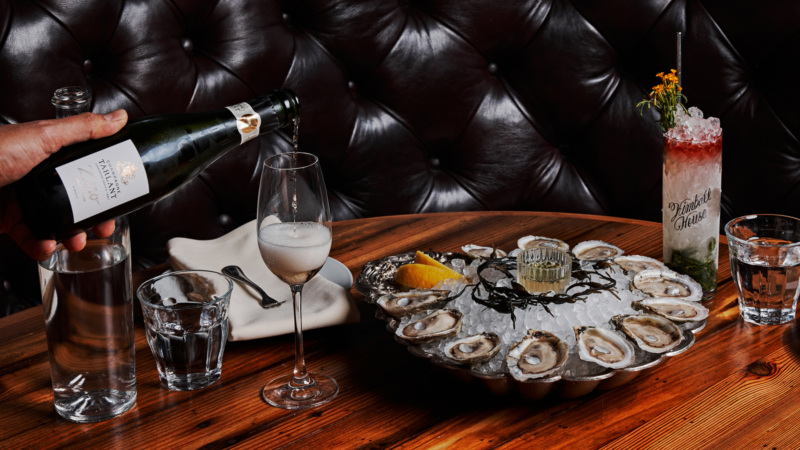
So when “Brenda” plays while people eat oysters with carrot mignonette, it’s a misreading worse than a bad pairing. It’s like quoting James Baldwin’s bitterest prose at happy hour.
For Bell, the playlist is an extension of the restaurant’s soul.— Donovan X. Ramsey
Bell has witnessed firsthand what happens when restaurants prioritize mood over meaning. “There’s a spot here in Atlanta that couldn’t figure out why they couldn’t get a lunch crowd,” he says. “Well, it’s because you’re blasting Sexyy Red at noon. If my mother walked in there, she’d be like, ‘The tacos may be good, but let’s get them to go’.” His point is clear: careless music can alienate diners just as easily as bad food.
For Davis, the key is respect. Respect for the music, for the lyrics, and for the setting. He doesn’t believe in censorship; if a song has language that might disrupt a guest’s experience, it doesn’t make the list. Instead, he digs deeper. He plays the songs that inspired the songs. The samples behind the hits.
“It’s about tone,” Davis says. “You can’t have an N-word drop when there’s a grandma celebrating her 70th birthday at table six. But that doesn’t mean Hip Hop doesn’t belong here. You just have to understand which parts of it work in this space.”
Bell’s version of that same ethos plays out every last Thursday of the month, when he hosts “Throwback Thursdays” at Oreatha’s. He plays a rotating playlist of edited Hip Hop and R&B classics from the ’80s, ’90s, and early 2000s. “You’ll hear Erick Sermon over a Marvin Gaye sample,” he says. “You might get Jill Scott, then Marvin, then Ashanti … It’s music people grew up on, and it helps them feel at home.”
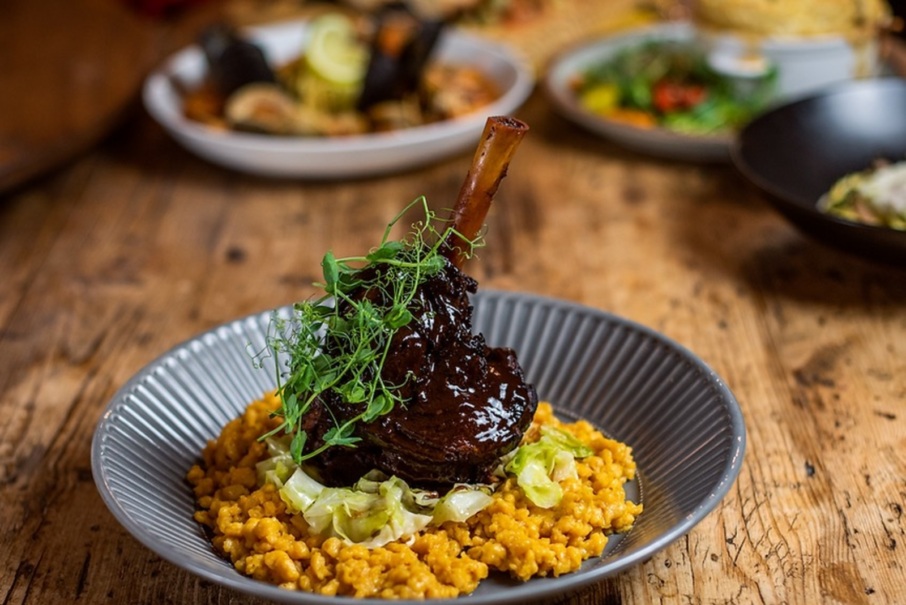
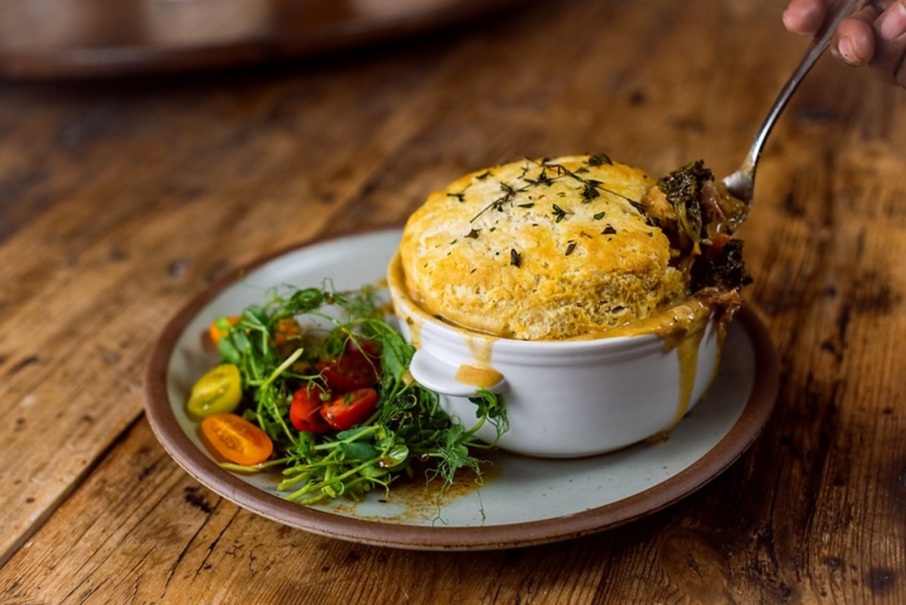
Over at Southern National, Nutter takes a similar approach with his food, remixing childhood staples into grown-up dishes. One menu standout is his “Lamb Burger Helper”— a nostalgic nod to boxed dinners he made as a kid, elevated with North African spices and technique. “At first glance it’s just pasta and red sauce,” he says. “But once you taste it, you catch the smoked paprika, the cumin. It’s got more going on than it lets on.” Like a great rap sample, it hits differently once you recognize the layers.
The vibe here is less “turn up,” more listening room. “It’s like you’re in my basement and we’re just cooking and playing records,” he says. “A little OutKast, some Guru, maybe a Jamiroquai track that takes someone back to 1992.” He’s setting the mood and telling a story in stereo.
These chefs and their restaurants don’t just cook with Hip Hop. It’s hospitality rooted in cultural fluency. They cook in Hip Hop.
It’s a new kind of fine dining experience, one where the music doesn’t just fill the silence, but deepens the story.— Donovan X. Ramsey
Each plate carries history, memory, improvisation, and style, repurposing the past to tell a modern, deeply personal story. It’s a new kind of fine dining experience, one where the music doesn’t just fill the silence, but deepens the story. Where Hip Hop is treated as a serious art form with culinary parallels: improvisation, precision, history, edge. The result is food that doesn’t stand still. It moves. It riffs. It rides the beat.
Yes, Hip Hop belongs at the table, but only when the people setting it know the difference between a vibe and a voice. Only when they understand that some songs aren’t just songs. That some stories should be served whole, or not at all.
Because when you really listen — you hear more than just music. You savor it.
That’s not ambiance. That’s seasoning — layered, intentional, and to taste.
Donovan X. Ramsey’s writing explores identity, culture, and power in America. He is the author of “When Crack Was King: A People’s History of a Misunderstood Era” and “Had Happened,” a weekly newsletter. His reporting and commentary have appeared in The Atlantic, GQ, The New York Times, and beyond.