One Great Dish Washington D.C.
Supra’s Khachapuri Is an Ideal Gateway to Georgian Cuisine
Published:
When lawyer Jonathan Nelms and his wife, Laura, lived in Moscow for three years, he recalls that they ate at more Georgian restaurants than Russian ones. “I always say over there, Georgian food is like the Mexican food of the former Soviet Union. They’re the neighbor to the south,” he explains.
But when the couple returned to D.C., they were surprised to realize that such a large city contained barely any Georgian restaurants. To them, the nation’s capital needed an introduction to the colorful cuisine and in November 2017, the Nelmses opened Supra in Shaw. Their goal was to reproduce the epic feasts for which the restaurant is named. And no Georgian meal is complete without khachapuri.
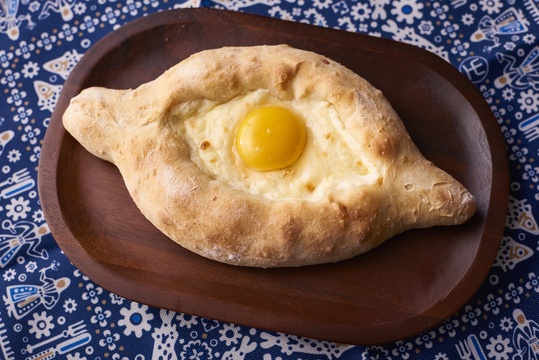
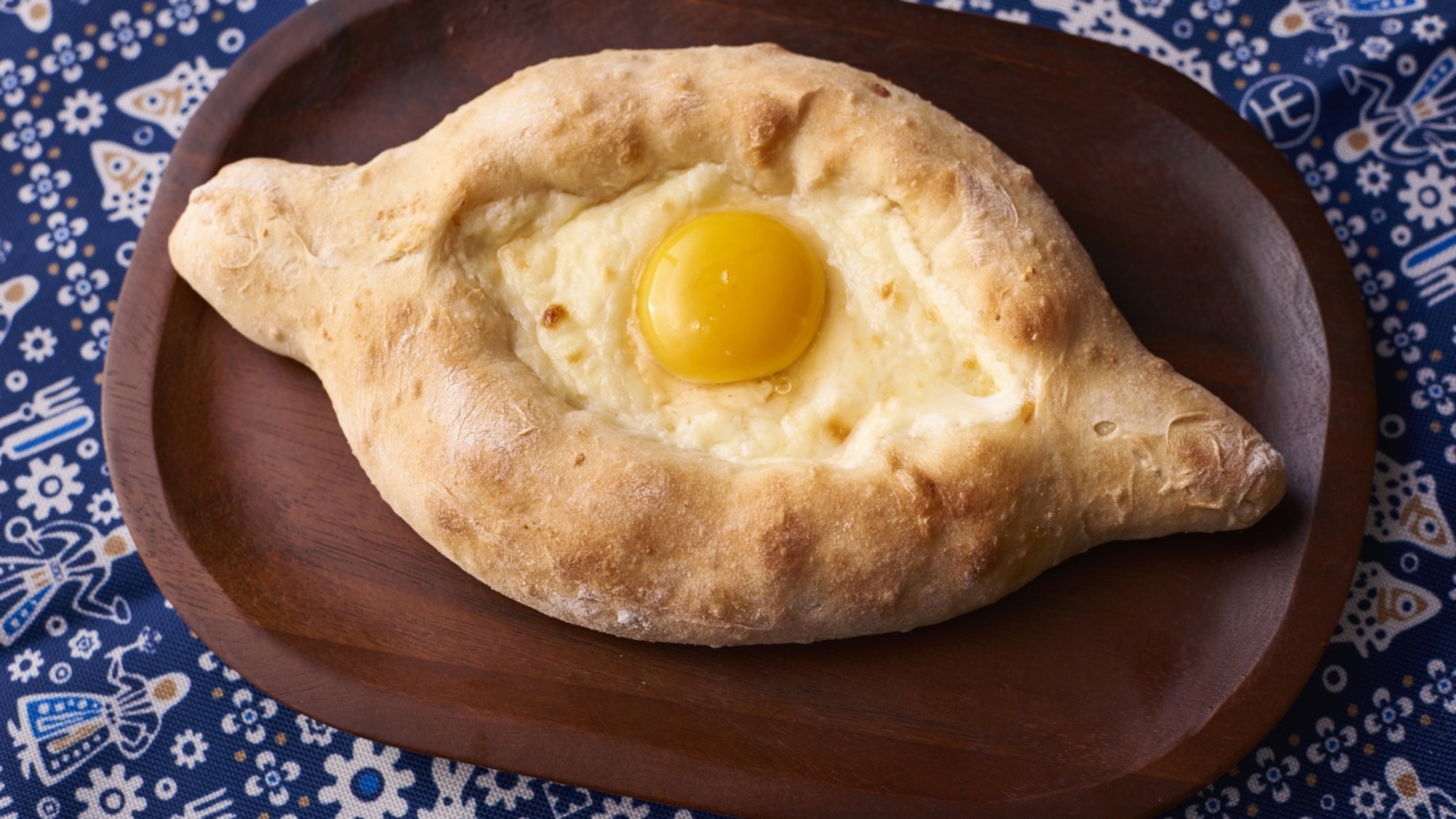
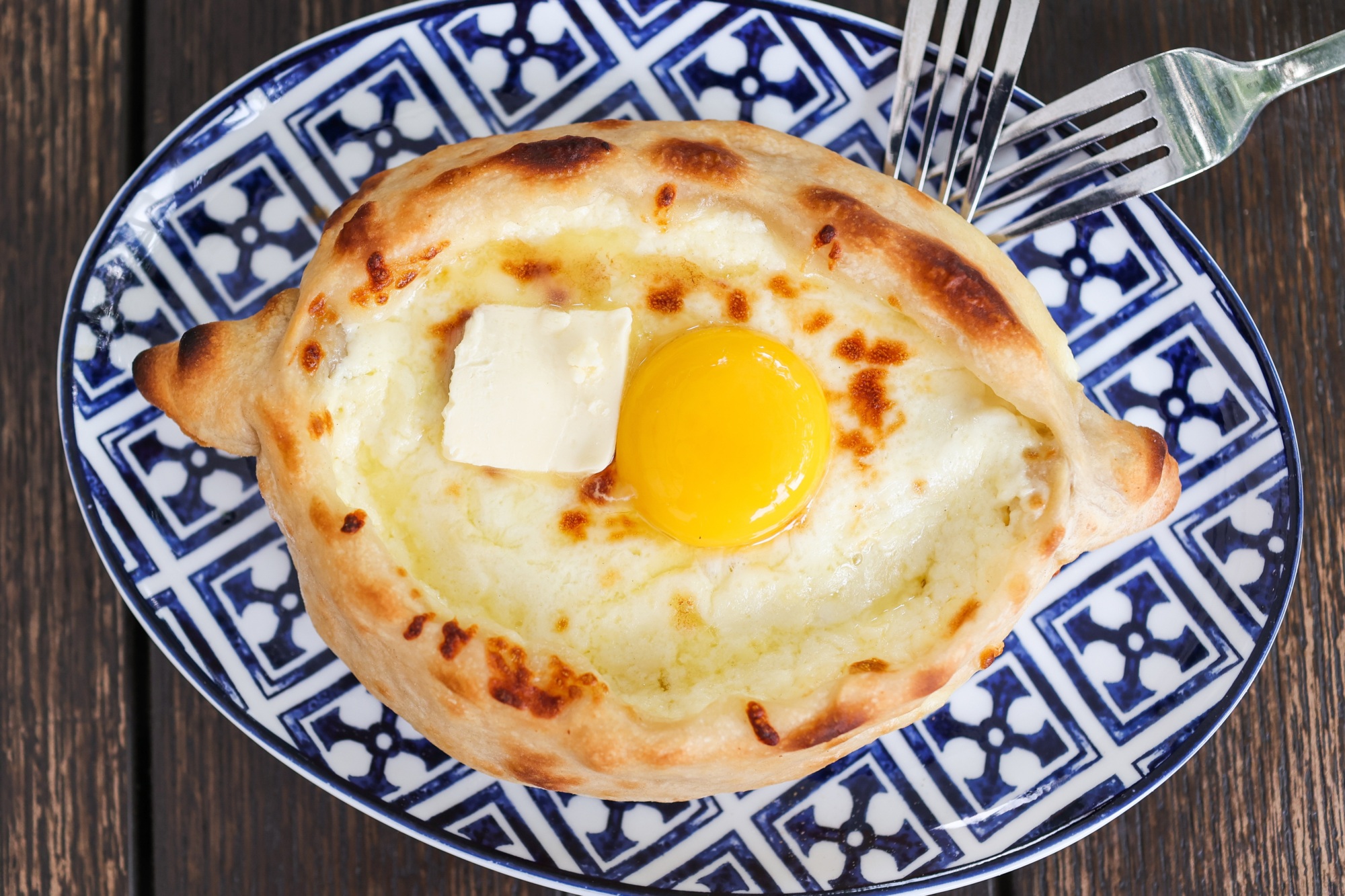
The cheese bread exists in many regional permutations — Supra has six versions — but none is as iconic as the Ajaruli khachapuri. Named for the southwestern region of Adjara, which borders both Turkey and the Black Sea, the crisp, boat-shaped creation shares visual attributes with Turkish pide, but what’s inside is Georgian through-and-through.
That’s because the Supra culinary team crafts tangy Georgian sulguni cheese in-house for their khachapuri. Meanwhile, Executive Chef Richard Wagner recently reimagined the cheese blend used in the savory pastry. The combination, which also includes imported, smoked sulguni, is based on versions that he tried while staging at restaurants in Georgia last summer. The result is a just-right profile of acidic, smoky, and salty flavors.
Related Stories
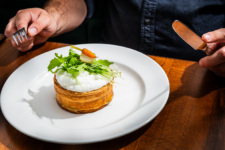
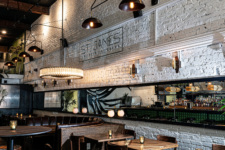
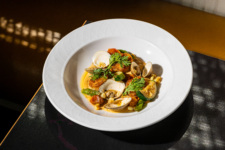
Cook Giorgi Matcharadze, a native of Georgia, has also honed his craft with the dish in recent years. Nelms says that the way he shapes the pizza-like dough is now upgraded from years past, resulting in thinner walls that shatter as diners bite into the oozy cheese.
As soon as the Ajaruli khachapuri leaves the oven, Matcharadze adds an egg yolk and butter to make the dish even more indulgent. Upon arriving at a diner’s table, a server mixes the ingredients to choruses of “Wait, let me get my camera.” The tableside custom is a theatrical one and Nelms says that “the servers all have their routine down of not just stirring it but pulling [the stretchy cheese] up.”
Pairing it with a light amber wine from the dish’s homeland is practically a requirement to cut through the richness of the cheese. But no matter what diners choose to imbibe, there’s no getting away from the dish’s impact.

“I was talking to one of our servers that’s been with us for a long time the other day, and I was asking him how many Ajaruli khachapuris he’s served and stirred up and pulled the cheese,” Nelms remembers. “He rolled his eyes, and he was like, I don’t know, like every table I’ve ever served.”
Nelms estimates that since Supra opened, that’s been about 75,000 Ajaruli khachapuris, or 1,200 per month, not including the roughly 800 other types of khachapuri they sell, including the round Imeruli, mushroom-filled Sokos, and bean-stuffed lobiani. “We’ll probably hit 100k right around our tenth anniversary,” he says proudly.
Georgian culinary terms aren’t yet the love language in the United States that they deserve to be. For those of us who remember a time before xiaolongbao was a household term, many hope that the time will come for khinkali (Georgia’s own soup dumplings), ajika, tkemali, and other Georgian sauces will one day be on market shelves. But until the cuisine attains widespread familiarity, diners should consider their first bites of cheesy, comforting Ajaruli khachapuri a perfect entrypoint. And there’s nowhere better to do so than at Supra.