Letter of Recommendation New York
This Mexican Steakhouse in Midtown Is a Cut Above the Rest
Published:
Like many New Yorkers, Rockefeller Center is an area of the city I tend to avoid — especially when dining out. Although known for its iconic entertainment venues and soaring cityscape views, the neighborhood remains dominated by cookie-cutter American steakhouses and chain restaurants (though additions like Jupiter and Naro are leaving an indelible mark). So when I heard about Cuerno, I was intrigued for numerous reasons.
Like many of us, I love Mexican food. Contrary to some cuisines, the options feel limitless without ever sacrificing flavor — and as an agave fanatic, the beverages are equally exciting.
As a whole, the classic “Midtown steakhouse” vibe generally errs on the side of unchanged consistency: High-ceilinged, ornate rooms with foot-long menus, gargantuan portions of food sometimes prepared tableside, and formally dressed servers shuffling platters of sizzling sides, seafood, and sauces to feed a small army.
And after hearing much buzz about how Cuerno was doing things differently both as a steakhouse and Mexican restaurant, I was curious to experience it for myself.
More From Resy

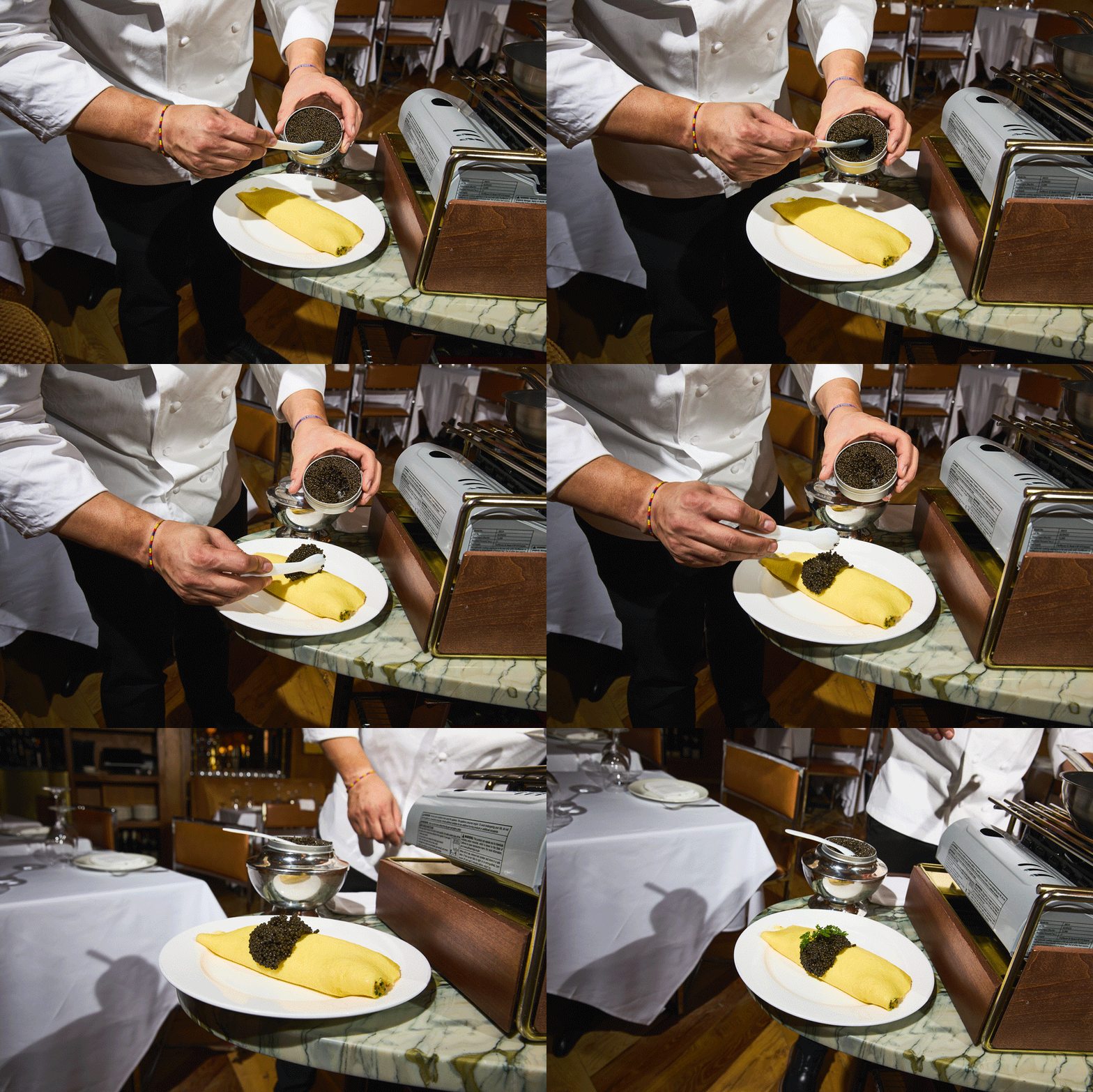

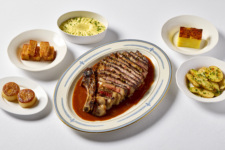

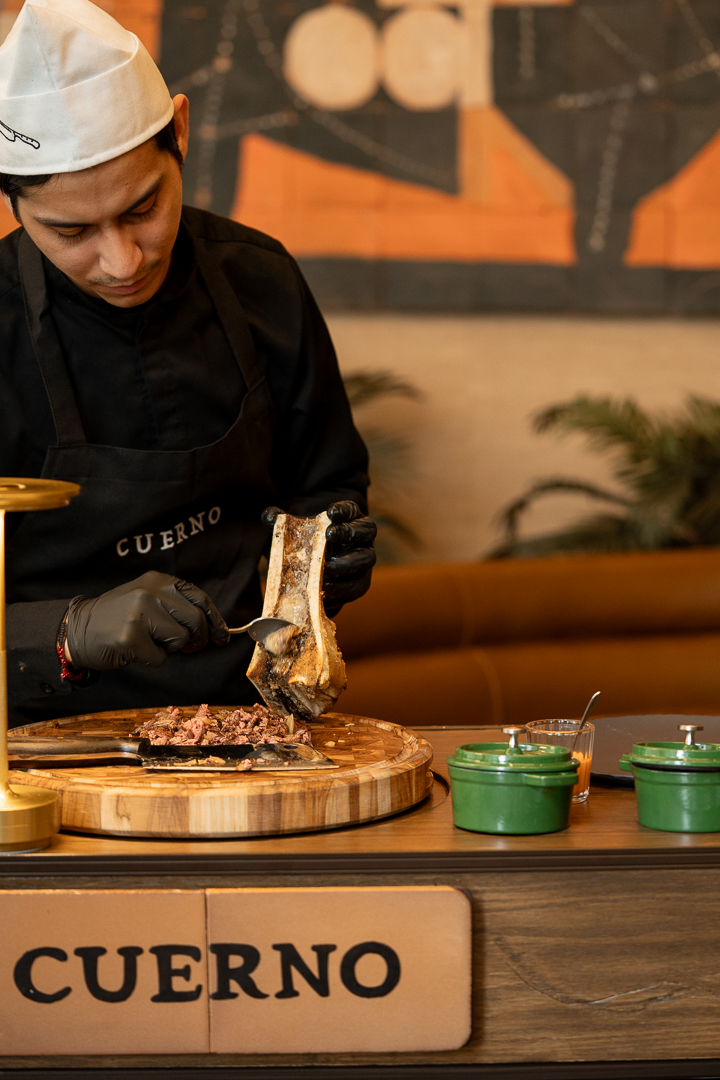
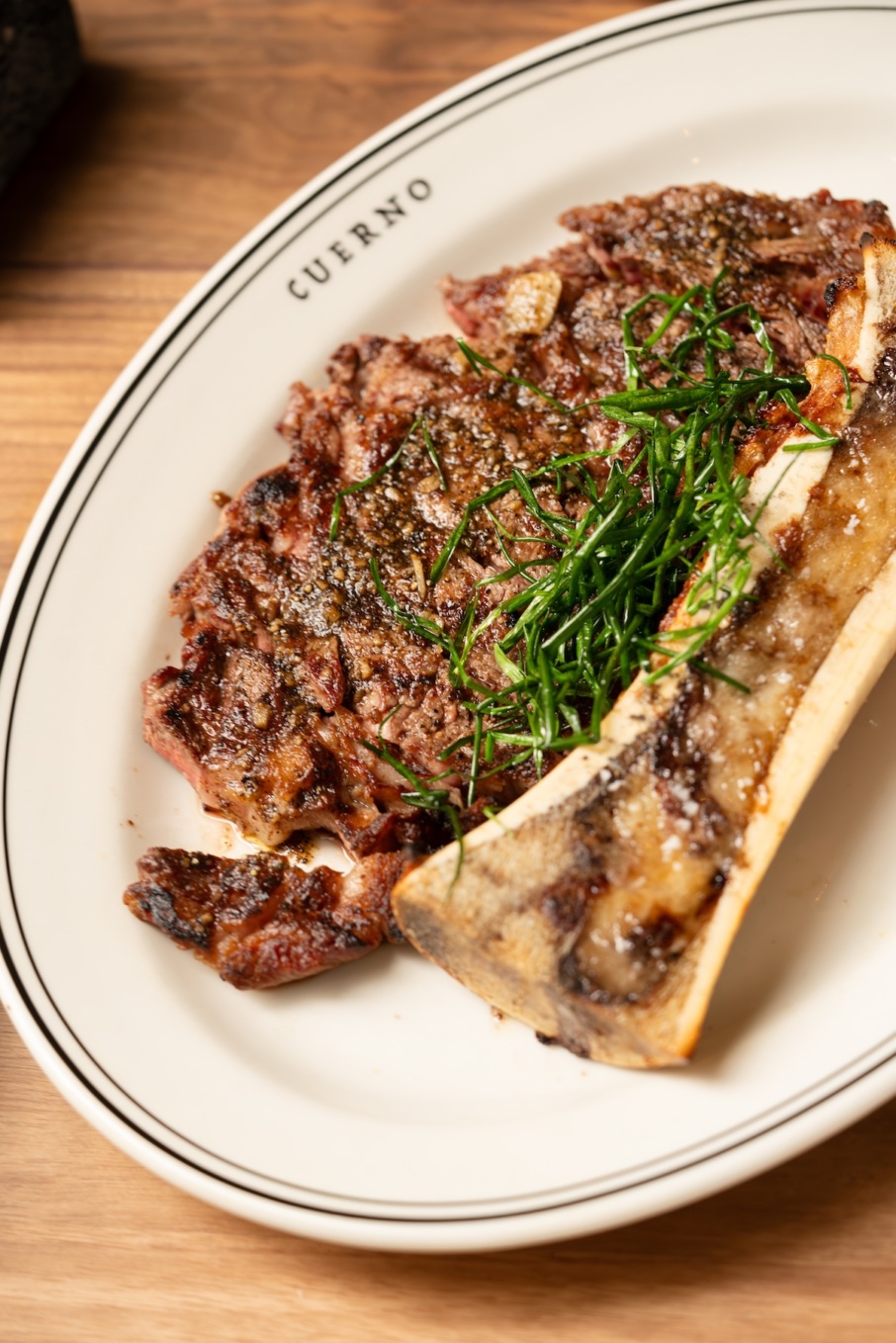
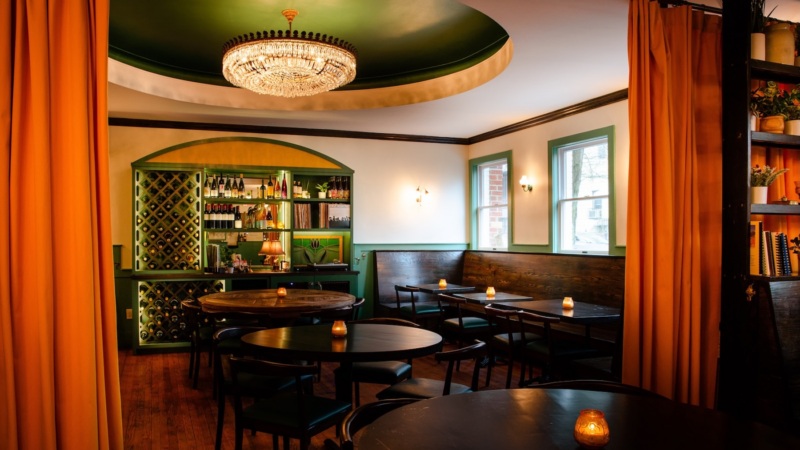
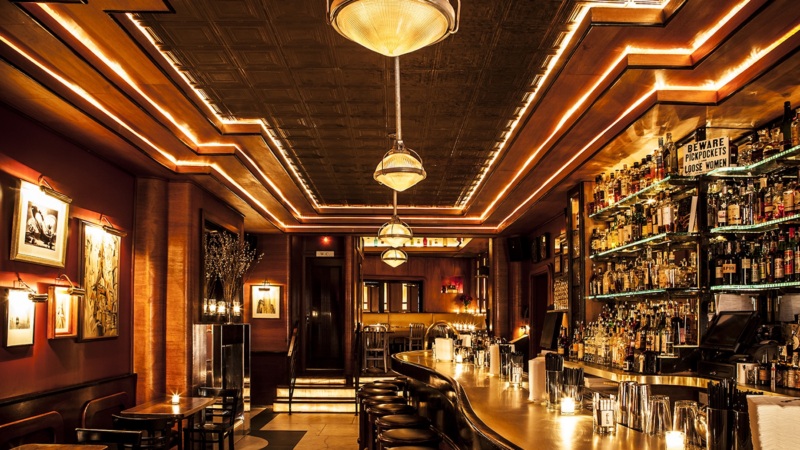
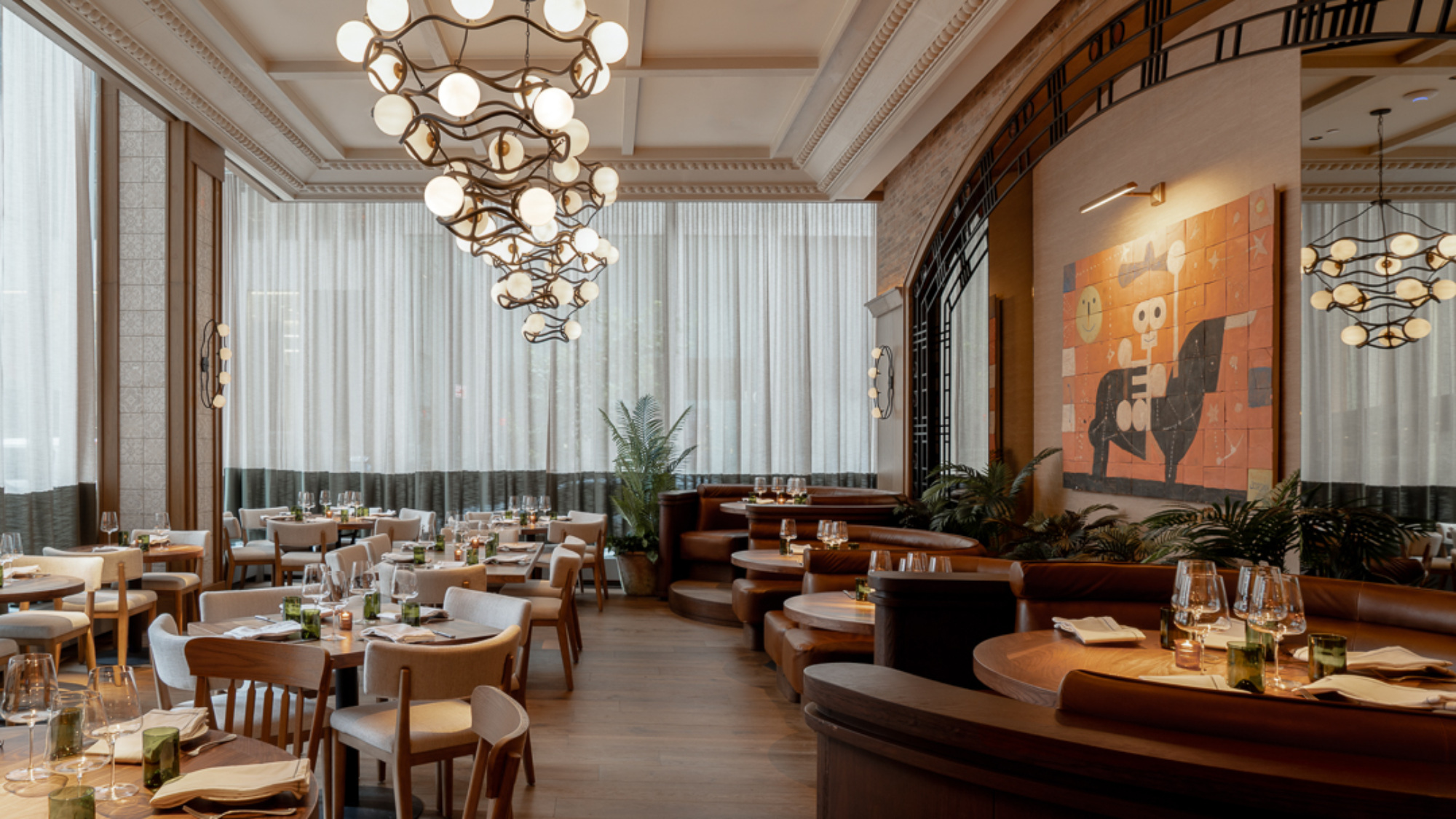
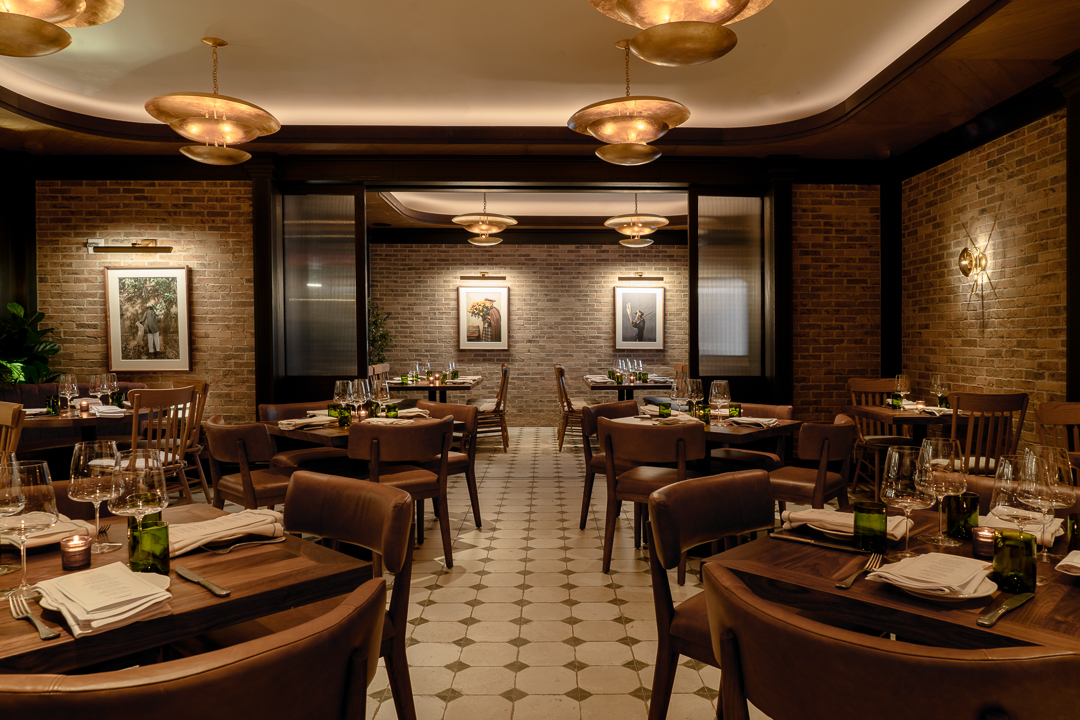
Walking into Cuerno is a far cry from the stereotypical Midtown steakhouse ambiance. The brainchild of Alberto Martínez and Victor Setién, two lifelong friends from Torreón, Mexico, the restaurant’s decor comes inspired by the art and traditions of northern Mexico. The walls are adorned with hand-carved woodwork and exposed brick, dotted with custom leather benches for an overall ambiance that feels breezy and spacious, and more open-air hacienda than historic ballroom. In the dining room, numerous carts slowly roll around tableside preparing skirt steak tacos with flame-roasted bone marrow, emitting a fire-kissed scent that could cause even the fullest stomachs to grumble.
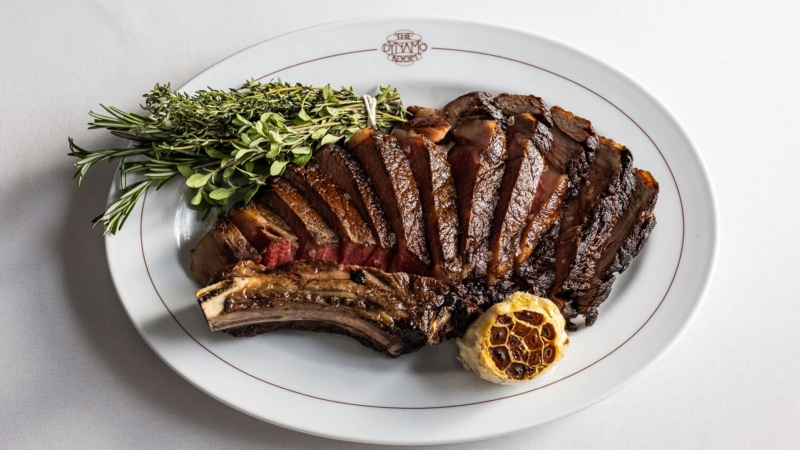
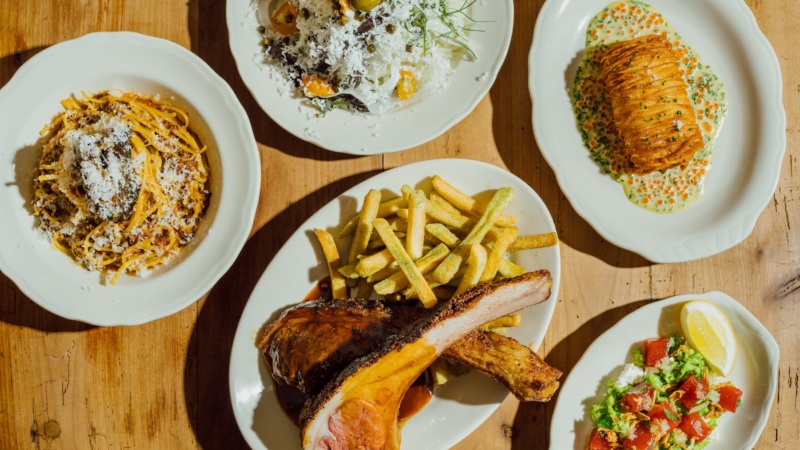
“Cuerno was born from the fire that shapes life in northern Mexico,” Martínez tells me, referring to the signature Josper Charcoal Oven in the heart of the restaurant’s kitchen, which is spearheaded by executive chef Oriol Mendivil. Mendivil sensibly divides Cuerno’s menu into four main sections: Carne Asada, Tacos de Autor, Pescados y Mariscos, and Verduras Asadas, the majority of which is prepared via direct-fire grilling.
“I grew up around the grill on Sunday afternoons, where families gathered, neighbors dropped by, and children ran around while adults shared stories,” Martínez recalls, describing the collective assimilation of meats, tortillas, and cold six-packs by neighbors. “Suddenly, there was a feast, because there is always a reason to gather, even if the only reason is being together,” he says.
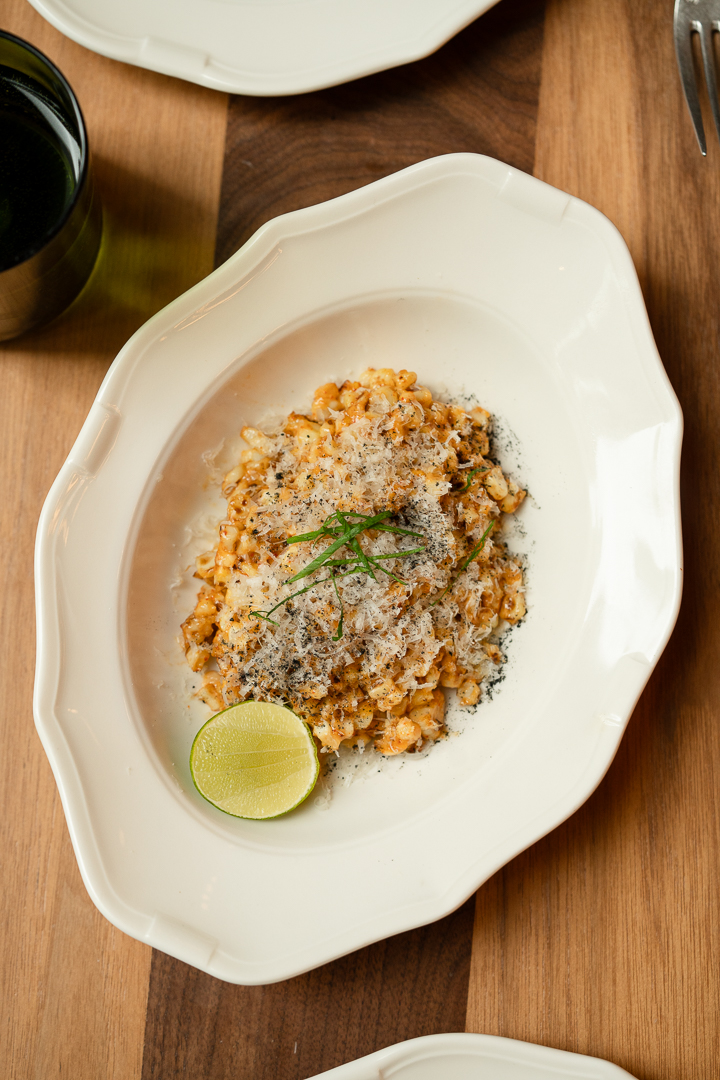
This notion of gathering is one that stuck with me throughout the whole dining experience, a feeling I don’t often find across even the most lauded dining rooms of New York. The open room concept and carts shuffling tacos and agave-based liquors around made the meal feel more collective than individual, even if I was only joined by one other person at my table. Guests exchanged glances and inquiries surrounding neighboring tables’ meals brought a warmth to the space beyond the one provided by the kitchen’s flames — a feat that’s especially impressive in this city of ours.
“Our dream has always been to represent Mexico in a way the world has not seen, rooted in culture, vibrant flavor, tradition, and the spirit of hard-working people,” says Martínez. He adds that although Cuerno’s foundations begin with the fire that anchors northern cooking, it continues in the people who prepare its food, many of whom learned from family back home. “You taste it in our ingredients and you feel it in the way we welcome guests, because in Mexico hospitality is warm, personal, and sincere,” he says, emphasizing that the restaurant’s dishes are made to be shared and talked over, the same way meals unfold in Mexico.
I grew up around the grill on Sunday afternoons, where families gathered, neighbors dropped by, and children ran around while adults shared stories.
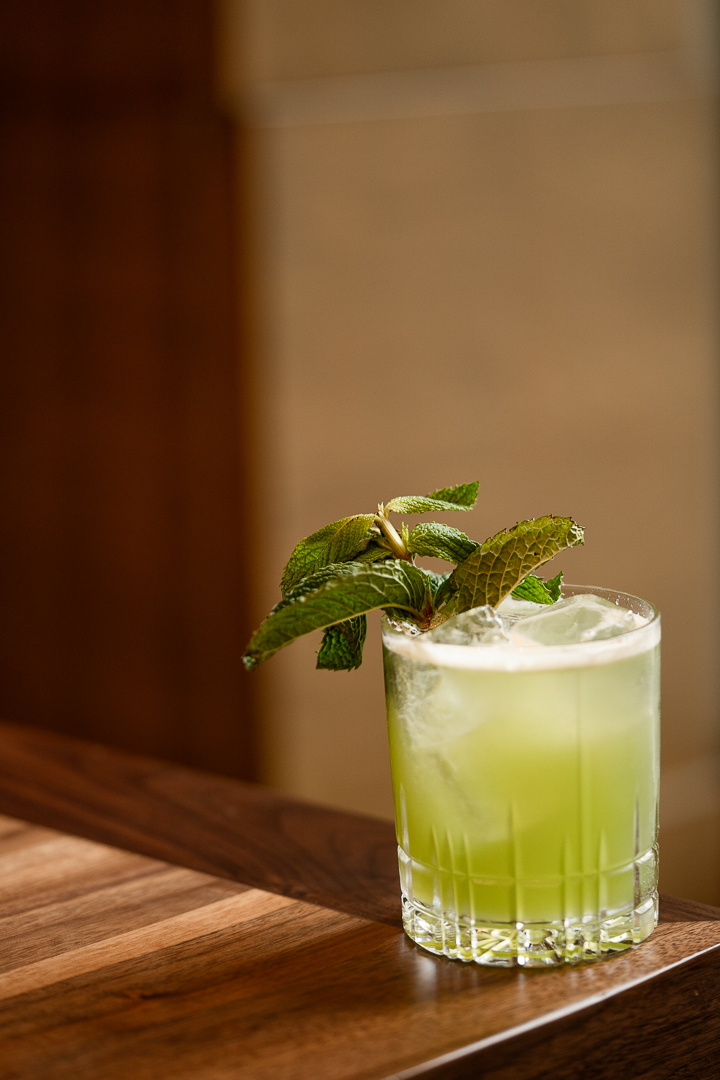
Mexican culture is also highlighted beyond the plate, through Cuerno’s beverage program. In addition to its signature, smoky Cuerno Margarita, the drink list showcases seasonal agua frescas and a full page of Mexican wines, along with a curated agave program with hand-selected bottles of Tequila, mezcal, and sotol.
“Our inspiration came from the drinks people actually enjoy everyday in Mexico, the ones that are delicious but rarely make it onto menus outside the country,” says Ernesto Coronado, Cuerno’s beverage director. Coronado reveals that the goal was to move beyond the stereotypical Margarita or Paloma and showcase a wider universe of Mexican cocktails that speak to heritage, creativity, and identity.
Take, for example, the Cantarito, a citrusy Tequila punch served in clay cups. “This drink is famously poured at family gatherings and markets; it is simple, refreshing, and deeply tied to memory,” says Coronado. Similarly, Cuerno’s chelada program is rooted in one of Mexico’s most beloved drinking traditions.
“A chelada is essentially a dressed Mexican lager, brightened with lime, salt, salsa, or spice, and enjoyed at cookouts, after work, or with friends,” he explains. Because Mexican beers tend to be lighter, Coronado notes that dressing them with additional flavor adds personality, as well as highlights Mexico’s love of citrus. “In short, our program celebrates how Mexico actually drinks: Refreshing, regional, and full of character,” he adds.
Moreover, Martínez reveals his deep admiration of American steakhouses, particularly for their sense of occasion, confidence, and respect they give to great cuts of meat.
“At Cuerno, we honor those foundations but reinterpret them through the soul of northern Mexico, and reimagine classics in a way that connects both cultures,” he says. While the dry-aged program and sourcing at Cuerno are serious, the salsas, tortillas, flame, and honesty of northern grilling make it unmistakably northern Mexican. “We are not trying to replicate the American steakhouse, but to bridge two traditions by bringing our roots and stories to the experience, creating something that feels both new and deeply familiar,” he says.
Above all, Cuerno is driven by the philosophy of “el servicio más chingón” (loosely translated to “the most badass service”), which captures the spirit of Mexican warmth at its core.
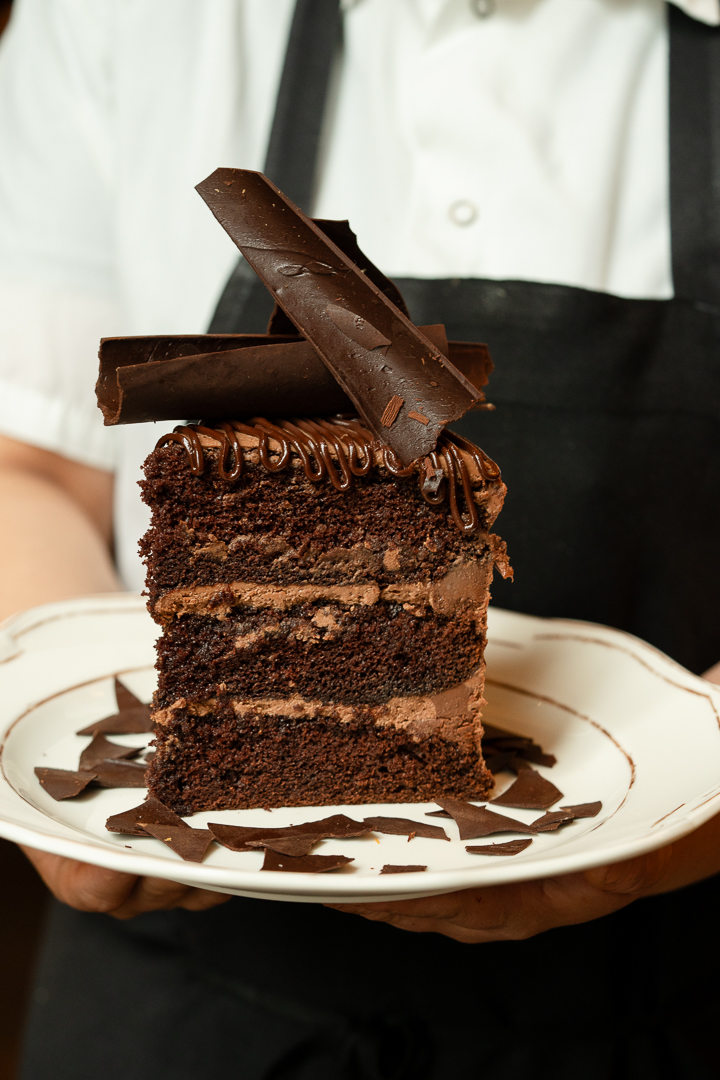
Leaving Cuerno, I recalled memories of getting lost in Mexico City, purchasing tortillas from gracious men and women at street carts, who smiled at my broken Spanish and served their food with pride. I remember feeling the heart in simplicity, the heart in a perfectly executed tortilla served on a colorful plastic plate.
“I hope Cuerno feels like an invitation to discover a Mexico that is vibrant, proud, generous, and full of soul,” Martínez tells me. “More than anything, I hope guests leave remembering how we made them feel warm, welcomed, and [a] part of something — that is the magic of Mexican hospitality, and it is the story we came here to share.”
Where one generally feels overlooked amongst the crowds of Midtown, Martínez and his team make everyone feel looked after.
Cuerno is open on weekdays from 11:30 a.m. to 11 p.m. from Monday to Thursday, and until 12 midnight on Friday. Weekend hours are from 12 noon to 12 midnight on Saturday and 11 p.m. on Sunday.
Vicki Denig is a wine and travel journalist based between New York and Paris. Her work regularly appears in Food & Wine, Decanter, Condé Nast Traveler, Matador Network, and more. Follow her on Instagram. Follow Resy, too.